A mining company spent $580,000 building a giant hillside mill, then ran it for only about four years. That’s a lot of concrete for such a short run.
Today the bones of it still climb a slope like a stairway for giants.
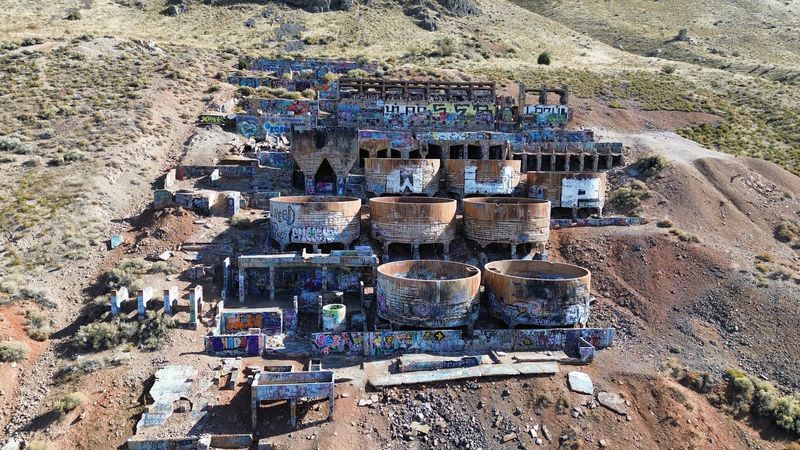
The structure rises about as tall as an eight-story building. It was built to use gravity, so ore tumbled downhill from one step to the next.
The machines are long gone, but the massive foundations refuse to leave.
I love that this ruin sits in plain view in rural Utah. It isn’t hiding in some canyon.
It just stands there, covered in graffiti and color, daring you to ask questions.
There’s a catch, though, and it’s a big one. So how do you enjoy a landmark you’re not allowed to touch?
A Short-Lived Giant With A Very Expensive Backstory
Back in 1919, the Tintic Standard Mining Company started building something huge. The Tintic Standard Reduction Mill took until about 1921 to finish, and it cost $580,000.
That was serious money in those days. The company was founded by Emil J.
Raddatz, and the mill was designed by W. C.
Madge.
The plan made a lot of sense on paper. Ore from a mine near Eureka would come here to be processed into valuable metals.
Those metals included silver, copper, gold, and lead. All of it came from the famous Tintic Mining District, one of the busiest mining areas in Utah.
At its peak, the mill handled 200 tons of ore every single day. That’s a mountain of rock moving through one building.
Yet the whole operation lasted only from 1921 to 1925. Four or five years, and then it was over.
I can’t imagine pouring that much money and effort into a project with such a quick ending. Still, that short life is exactly why the place feels so mysterious.
A giant was born, worked hard, and then went quiet almost overnight.
The Odd Chemistry Trick That Made This Mill One Of A Kind
Most mills in the early 1920s had moved on to newer methods. This one went old school, and it went all in.
The Tintic mill was the only American mill of that time to use the Augustin process. Historians often call that method antiquated, which is a polite way of saying old-fashioned.
So what did it actually do? The Augustin process involved roasting ore with salt, leaching it with a strong brine solution, and then using copper to precipitate the dissolved silver.
In simple terms, it was a chemistry recipe for pulling treasure out of rock. Think of it like soaking a stain out of a shirt, but with much harsher ingredients.
The Augustin process was already considered antiquated when the mill adopted it, and the mill eventually closed because the mine could no longer supply sufficient ore of the required grade and railroad shipping rates had declined.
At the same time, the ore coming from the mine was getting lower in quality. By 1925, there just wasn’t enough good rock to keep things going.
Two problems at once proved too much. That combination shut the doors on a mill that had barely gotten started.
It’s a strange lesson in timing. Sometimes the smartest-looking plan on paper still runs out of luck.
Gravity Did The Heavy Lifting On This Hillside
Why build a mill on the side of a mountain? Because gravity works for free.
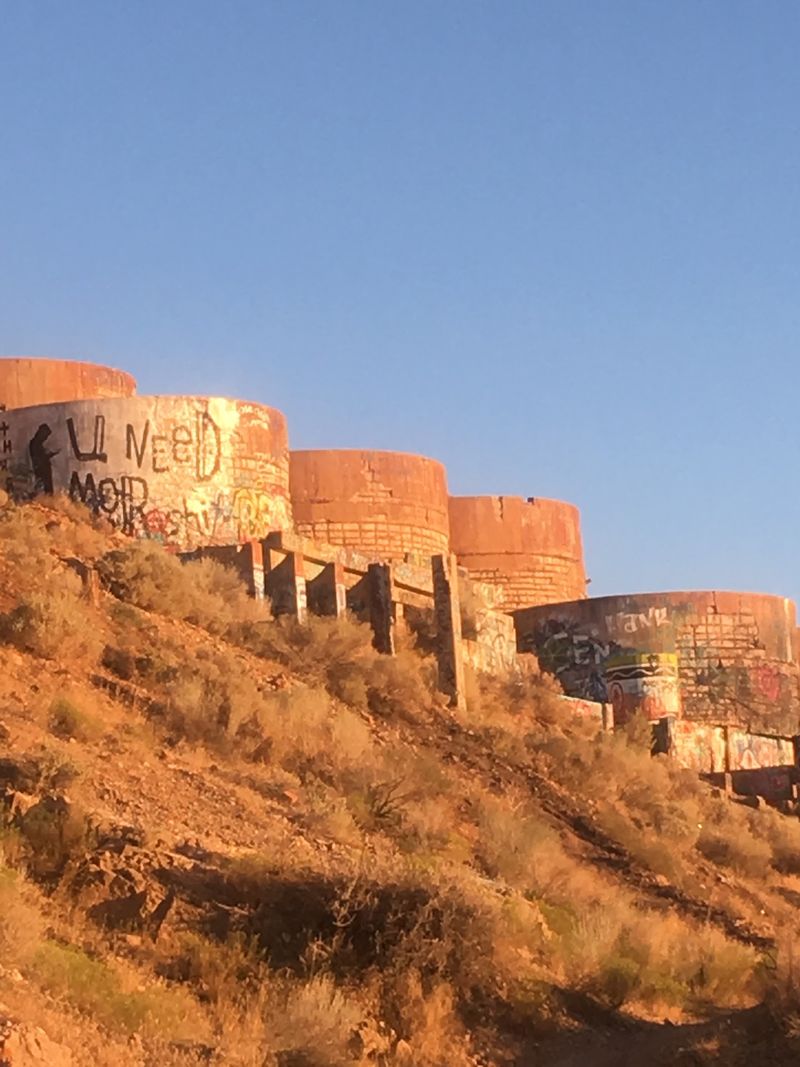
The builders placed the mill on the west slope of Warm Springs Mountain. Ore started near the top and moved downhill through each stage of processing.
No fancy elevators needed for most of the trip. The rock simply fell from one level to the next as the work went on.
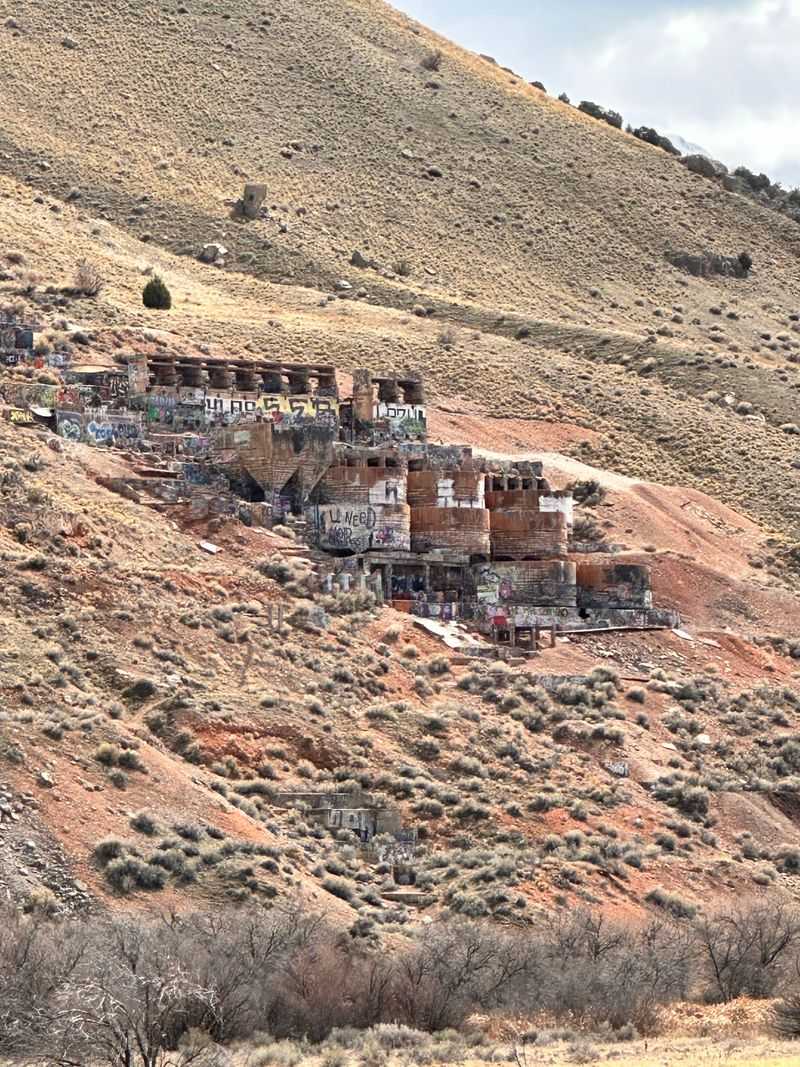
That clever design explains why the ruins look like giant concrete steps. The whole structure spans an elevation equal to an eight-story building.
From a distance, it almost looks like an ancient temple. Up close, you’d realize every level once had a specific job.
Some levels held ore bins, while others held crushing rolls. Further down sat roasters, leaching tanks, and drain boxes, each one feeding the next.
I like how the layout tells the story even without the machines. You can trace the path of the rock with your eyes from top to bottom.
It’s basically a giant flowchart made of concrete. Engineers from a century ago left behind a lesson you can read from the road.
Every Concrete Shape Once Had A Job To Do
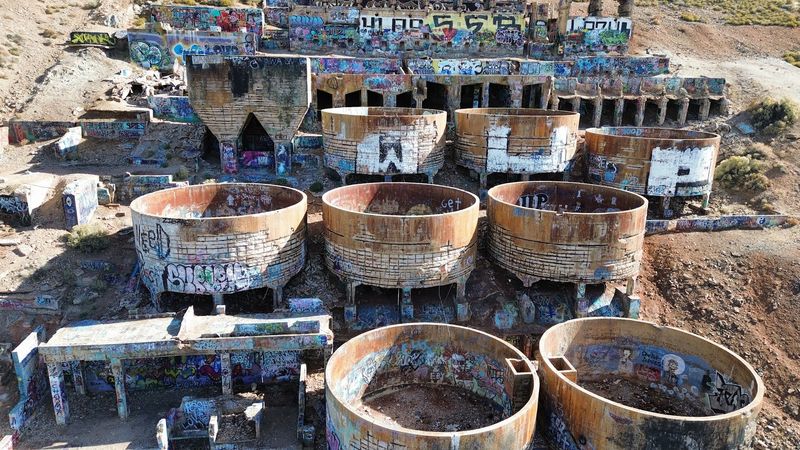
Water tanks, ore bins, and crushing rolls. That’s just the start of what once stood on these foundations.
The concrete you see today held some serious equipment. There were Holt-Dern roasters, iron boxes, leaching tanks, and drain boxes too.
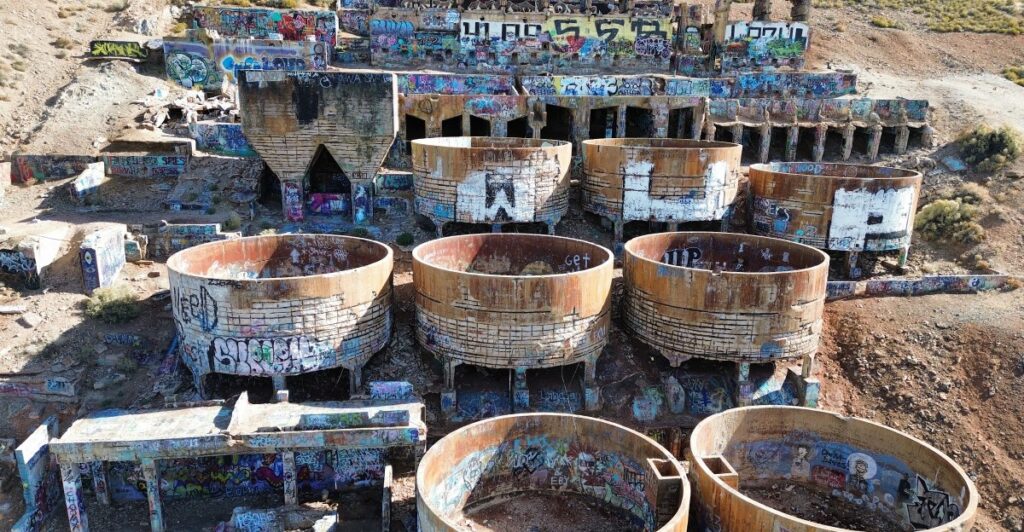
The leaching tanks are the easiest to spot. Look for the round, circular structures sitting among the blocky walls.
Those circles are where the chemistry happened. Ore soaked in solution there so metals could be pulled out.
The roasters had their own important role. Ore was heated in them before the chemical steps could work properly.
Every piece of original machinery is gone now. Only the heavy concrete stayed behind, probably because it was far too massive to haul away.
That leaves a puzzle for curious minds. Each odd shape and opening hints at a missing machine that once rumbled there.
Bring binoculars if you want to play detective from a distance. Matching the circles and squares to their old jobs is surprisingly fun, and it costs nothing but a little patience.
Spray Paint Turned Old Concrete Into A Giant Canvas
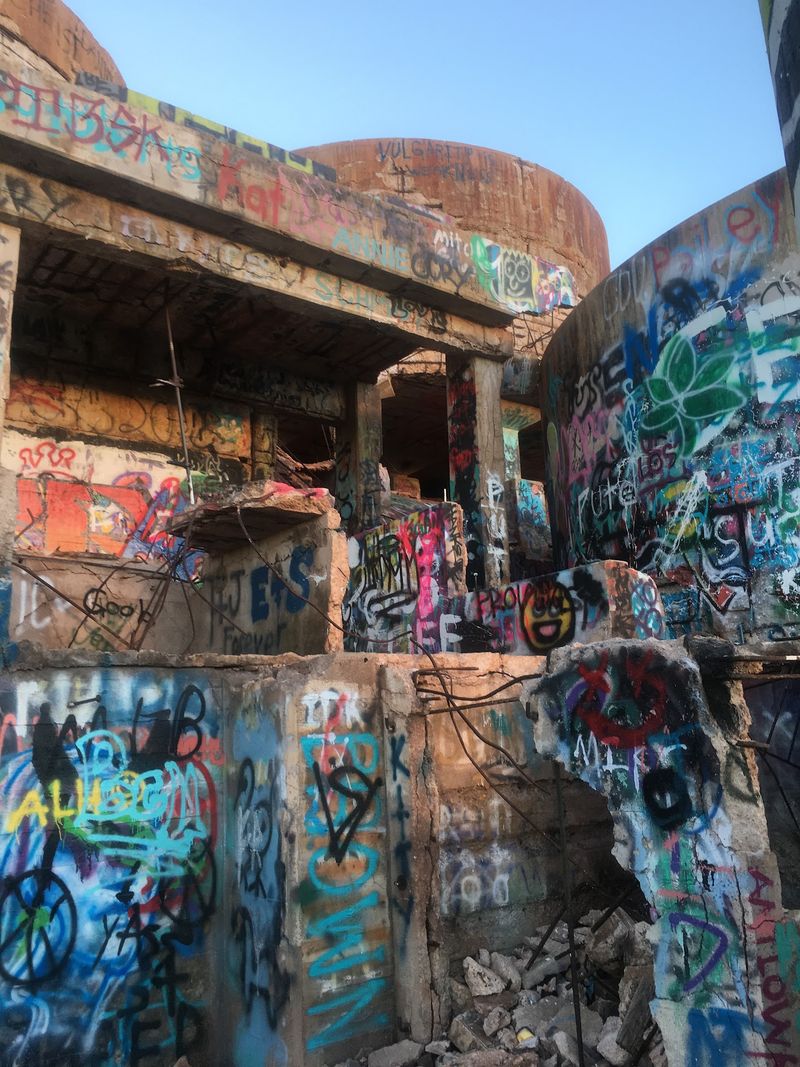
Gray concrete didn’t stay gray for long. Graffiti artists have covered much of the Tintic Standard Reduction Mill in bright colors and bold shapes.
The result is a ruin unlike almost any other. Faded industrial walls now carry splashes of paint that catch your eye from far away.
Some people see vandalism, and others see a strange kind of art. Either way, the colors are now a big part of how the mill looks today.
Those painted walls make the ruins stand out against the dry hillside. Brown slopes, blue sky, and rainbow concrete create quite the combination.
Photographers love this mix of old and new. Rough industrial history sits right next to modern street-style color.
Just remember the artists’ gallery is not open to visitors. The paint is best admired from outside the fence, where your camera can do the exploring.
A good zoom lens helps a lot here. You can pick out details and patterns without taking a single risky step closer.
Honestly, it’s one of the few museums where staying back actually gives you the better view of the whole collection.
Stay Behind The Fence Because The Dust Is No Joke
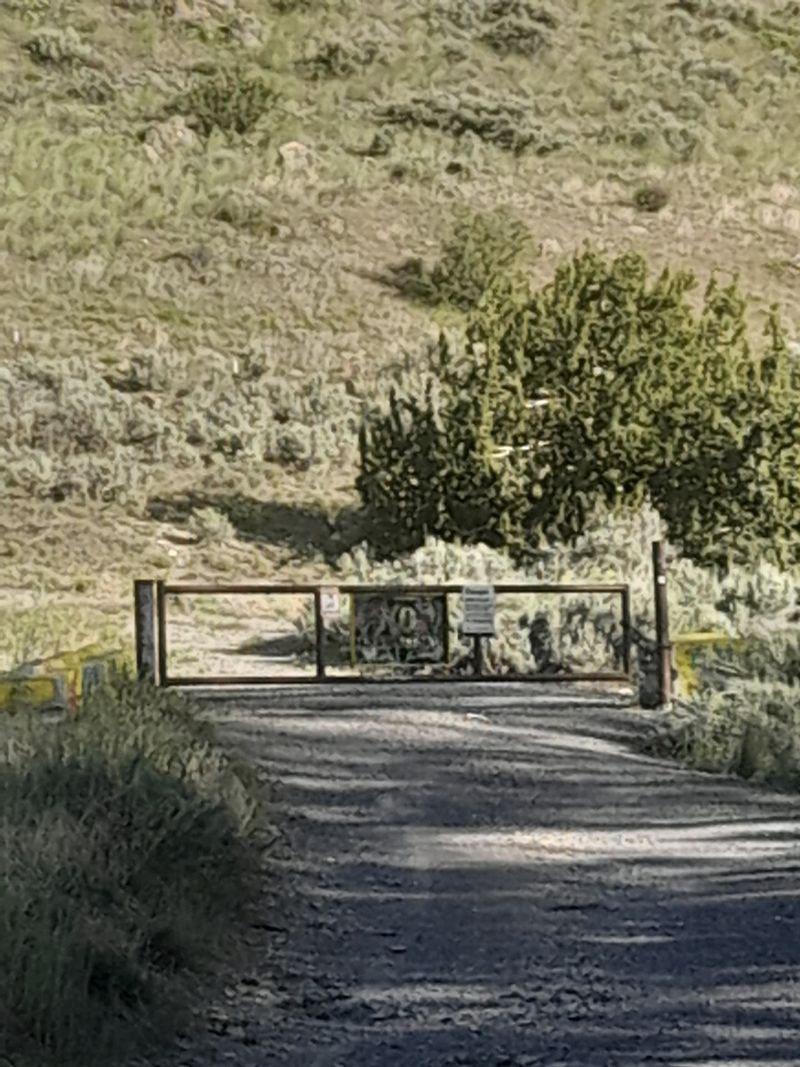
Arsenic and lead. Those two words explain why the gates stay closed.
The site is officially closed to the public for good reasons. High levels of arsenic and lead show up in the water, rock, and dust.
Breathing or touching that stuff can cause serious health problems. On top of that, the concrete is crumbling and the floors are unsafe.
Barbed wire fencing and No Trespassing signs mark the boundary. Video surveillance watches the area, so sneaking in is a bad idea.
People caught inside face citations and fines. The property is managed by the Utah Division of Wildlife Resources, and they take the rules seriously.
So what’s the smart move? Enjoy the mill from a safe distance and keep your shoes clean.
Kids especially should stay well back from the fence line. A history lesson is great, but nobody needs to bring toxic dust home in the car.
Think of the fence as the price of keeping this landmark standing. Respecting it helps protect both your health and the ruins for the next curious traveler.
Grab The Best Views Without Breaking Any Rules
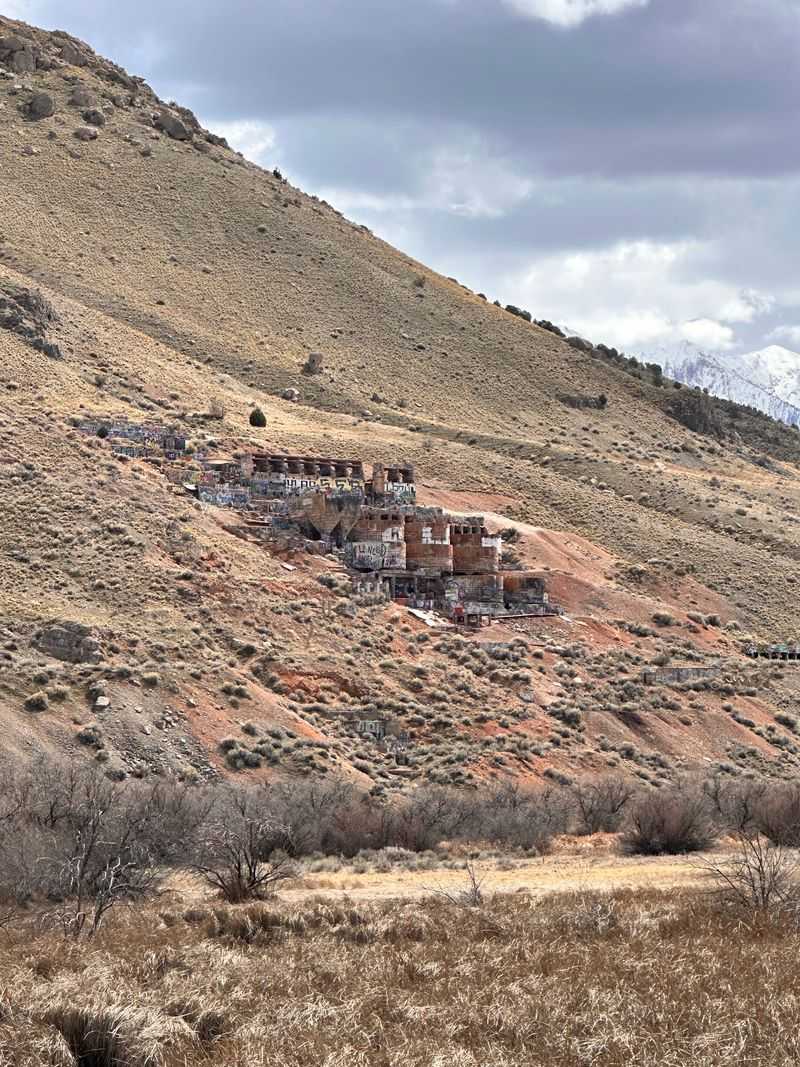
Good news for photographers. You don’t need to step inside to get a great shot.
The old railroad bed near the fence offers a solid viewing spot. From there, you can see the full stair-stepped shape of the ruins.
The mill sits on South Warm Springs Road on the southern edge of Genola. Map apps point to X44W+X2, Genola, UT 84655, United States, which makes finding it easy.
The hillside location works in your favor. Because the ruins rise so high, they’re visible from quite a distance.
Wide shots show off the massive scale against the slope. Zoomed shots capture the graffiti, circular tanks, and broken walls.
Try different times of day for different moods. Morning and evening light can make the concrete glow with softer colors.
The site is a popular subject for photography and filming. That makes sense, since few places in Utah look quite this dramatic.
Pack water, sunscreen, and a camera with good zoom. Then enjoy the view from the legal side of the fence, which still feels like a front-row seat.
Panoramic Valley Views Come Free With The Ruins
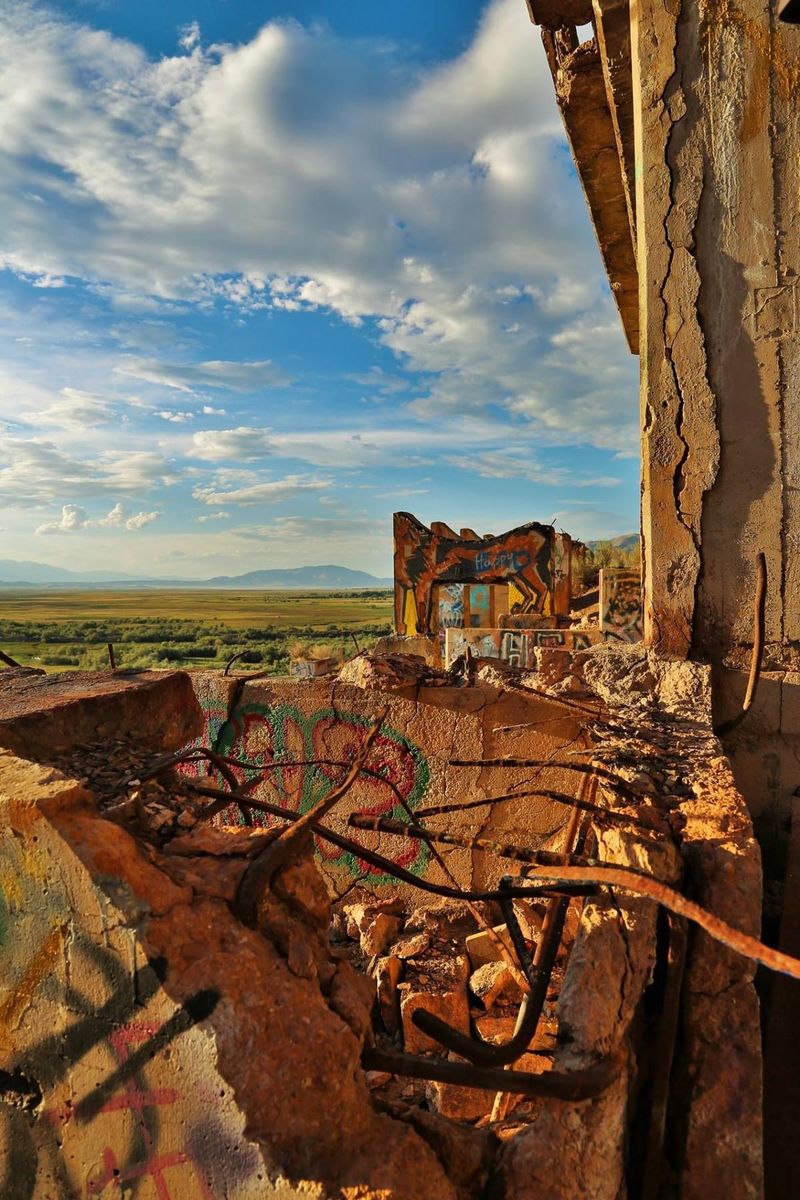
Not every abandoned mill comes with a scenic bonus. This one sits high enough on Warm Springs Mountain to show off the land around it.
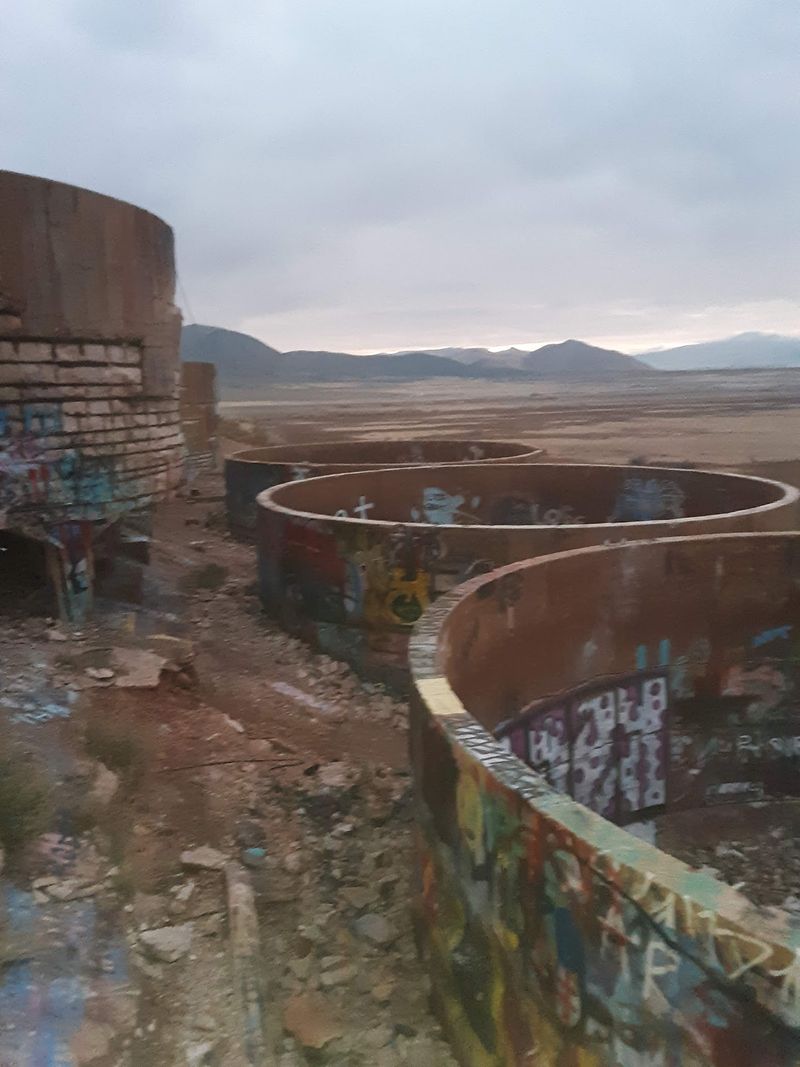
The hillside setting gives sweeping views across the surrounding area. Open desert, rolling hills, and distant mountains stretch out in nearly every direction.
Those builders chose the slope for gravity, not for the scenery. Still, they accidentally picked a spot with a pretty impressive backdrop.
I believe that’s part of what makes the ruins so memorable. The concrete giant and the big open landscape seem to frame each other perfectly.
Bring a sense of adventure but stay on safe ground. You can soak in the scenery without wandering onto the restricted property.
Wide-angle photos work great for this kind of view. Try including the mill on one side and the valley stretching away on the other.
The changing sky adds even more drama. Clouds rolling over the mountains can turn an ordinary snapshot into something worth framing.
Just don’t forget to look up from your screen now and then. Some views deserve a moment without a lens in the way.
Officially Historic And Still Standing Strong
September 13, 1978, was a big day for this old mill. That’s when it joined the National Register of Historic Places.
The honor recognized its unusual place in mining history. After all, no other American mill in the early 1920s used the Augustin process.
Ownership later moved to the Utah Division of Wildlife Resources in 1986. Today the agency keeps watch over the property and its fragile ruins.
You might hear other names for the place too. Some folks call it the Tintic Mill, while others know it as the Harold Mill.
Whatever you call it, the Tintic Standard Reduction Mill remains a powerful reminder of the region’s mining past. It tells a story about big dreams, fast changes, and tough luck.
That story still pulls people in a century later. Not bad for a building that only worked for about four years.
So next time you’re cruising through central Utah, keep an eye on that hillside. A forgotten empire is waiting there, painted, crumbling, and still impossible to ignore from a respectful distance.