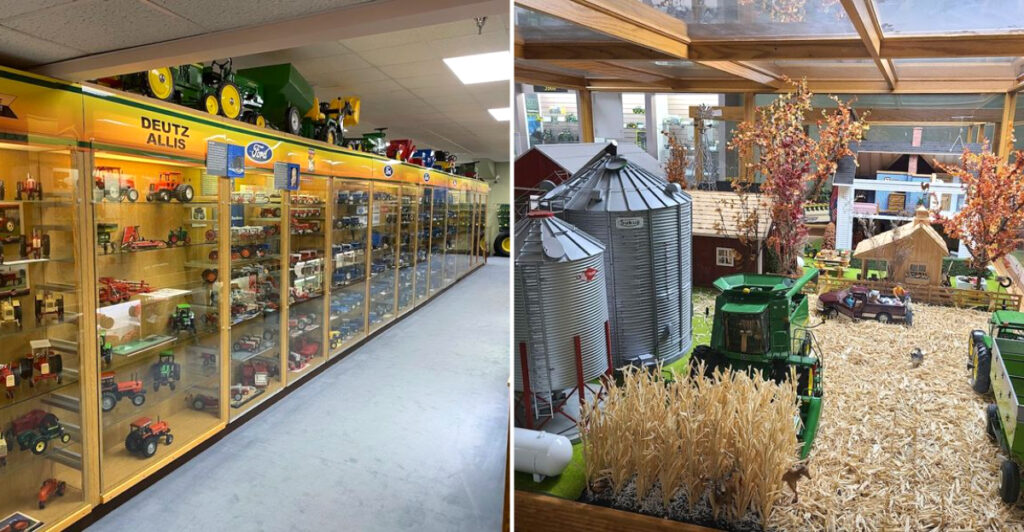
Iowa farming history gets surprisingly big when it is told through tiny tractors. In Dyersville, a small museum turns shelves of miniature machines into a thoughtful look at rural life, farm families, and the equipment that helped shape American agriculture.
The idea sounds niche at first, then the collection starts doing its work. Thousands of farm toys, detailed displays, warm staff, and stories behind the brands all come together in a way that feels far more engaging than a room full of little metal models has any right to be.
This is the kind of Iowa stop that sneaks up on you. You walk in expecting a quick look around, then leave with a new appreciation for how much history can fit inside one tiny tractor.
The Story Behind the Collection
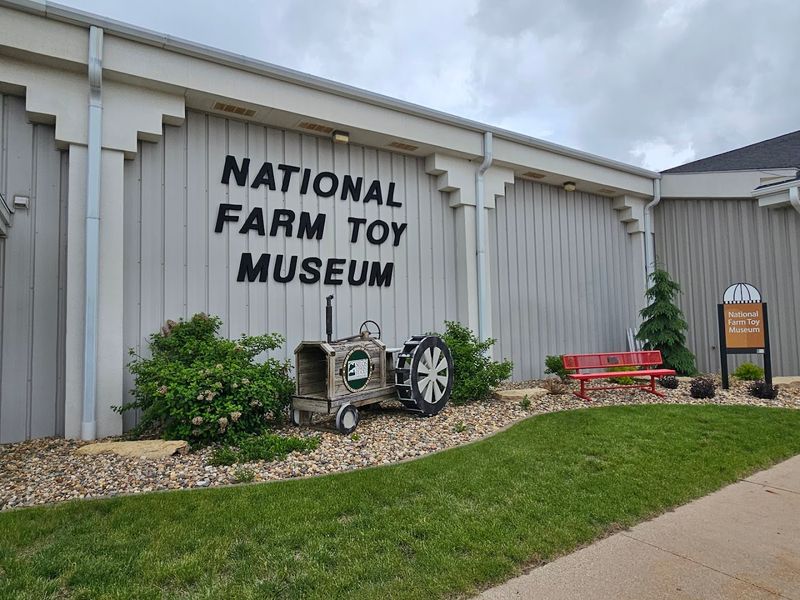
Most museums build their identity around paintings, sculptures, or artifacts behind glass, but this one takes a wonderfully Iowa approach.
The National Farm Toy Museum celebrates toy tractors, and somehow, that tiny idea opens the door to a much bigger story about farming, family, and rural life.
Dyersville was already known as the farm toy capital of the world before the museum became part of the picture, so the location feels exactly right. The collection grew from that legacy, preserving thousands of pieces that show how deeply farm equipment and farm culture are woven into American history.
The displays include everything from small die-cast John Deere models to larger replicas of vintage machinery that once worked real fields. What makes it engaging is not just the number of toys, but the context behind them.
I went in thinking I would simply look at rows of mini tractors, then quickly realized each one had its own little job to do in telling the story. You can find the National Farm Toy Museum at 1110 16th Avenue Court SE, Dyersville, IA 52040.
Two Floors of Agricultural History
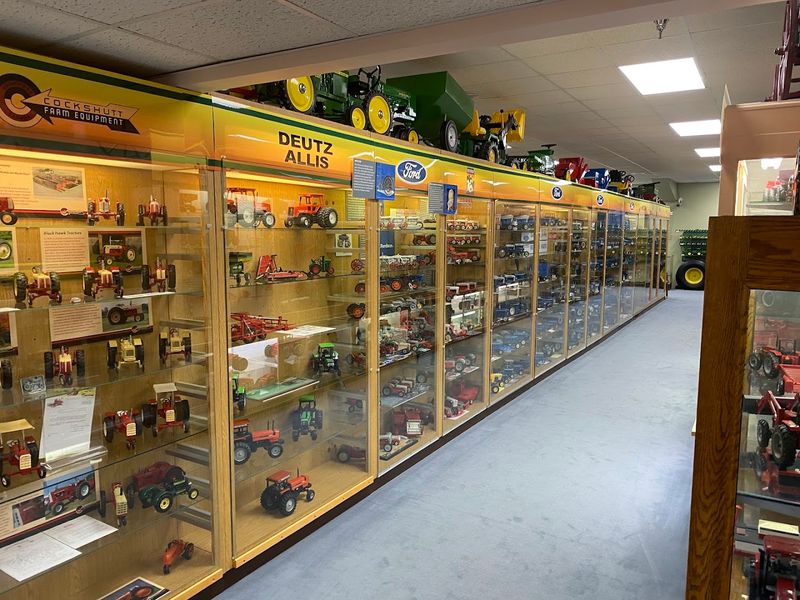
The museum spreads across two full floors, and that detail matters more than it sounds because there is genuinely enough content here to fill every square foot of both levels.
My self-guided tour took just over an hour at a comfortable pace, though I could easily have spent two hours reading every label and watching every video presentation available throughout the building.
The layout flows naturally from one era to the next, so you are not jumping randomly between decades but instead moving through farming history in a way that actually makes sense.
Each floor has a dedicated children’s play area, which I appreciated even as an adult without kids in tow, because it showed real thoughtfulness about making the space welcoming for families of all kinds.
The upper level had some of my favorite displays, including a section focused on the evolution of tractor design from early hand-painted cast iron models to the precision die-cast replicas produced in more recent decades. The progression across those two floors felt like flipping through a very well-organized history book, except every page was three-dimensional.
The Toys That Started It All
Cast iron farm toys have been around since the late 1800s, and the museum has some genuinely old examples that look nothing like the smooth, detailed replicas sold in stores today.
Early farm toys were heavy, simple, and painted in bold colors that faded with use, and you can see all of that character preserved in the cases on the ground floor.
What struck me most about these early pieces was how clearly they reflected the real machines they were modeled after. Even a child in 1910 could look at a cast iron toy and recognize it as the same kind of plow or wagon their family used every day.
The progression from those rough cast iron originals to the highly detailed die-cast models of the mid-20th century is one of the most visually interesting journeys in the entire museum.
Each step forward in toy manufacturing mirrored a step forward in actual farming technology, so the toys are not just playthings but tiny time capsules.
Holding one in your imagination, even through glass, connects you to a version of rural American life that most people today have never personally experienced.
Famous Brands, Famous Machines
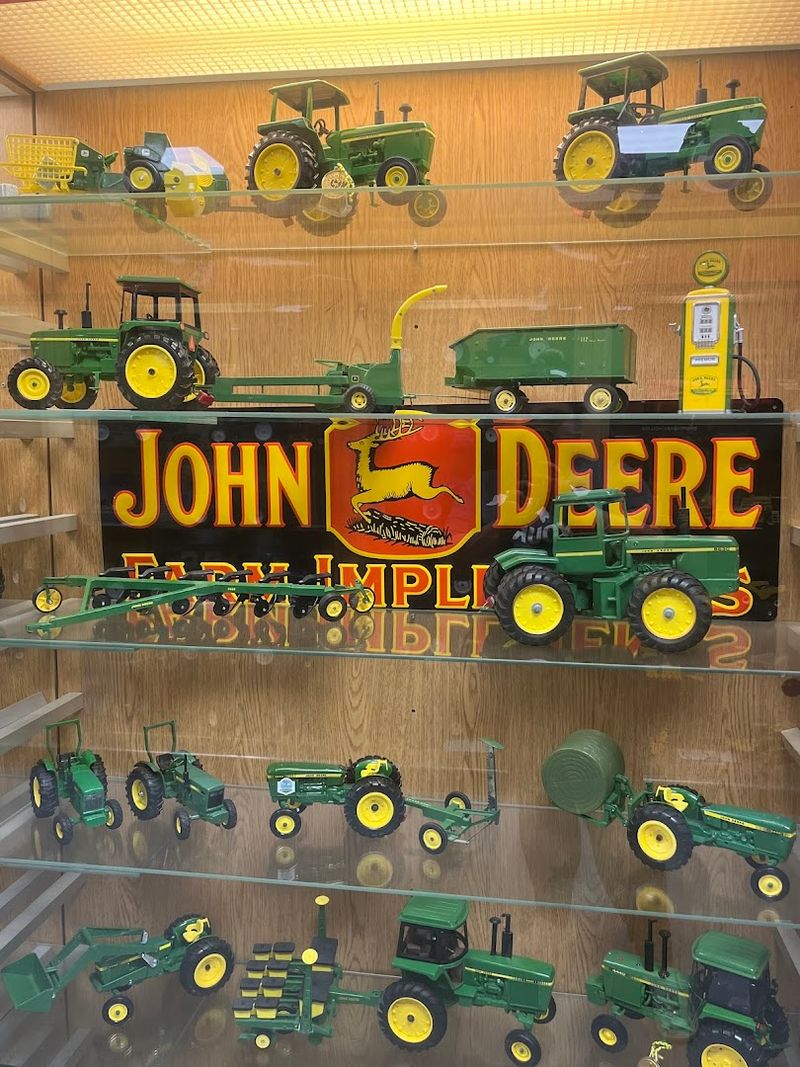
Brand loyalty runs deep in farming communities, and the museum does a wonderful job of honoring that tradition by organizing sections around the major manufacturers that defined American agriculture.
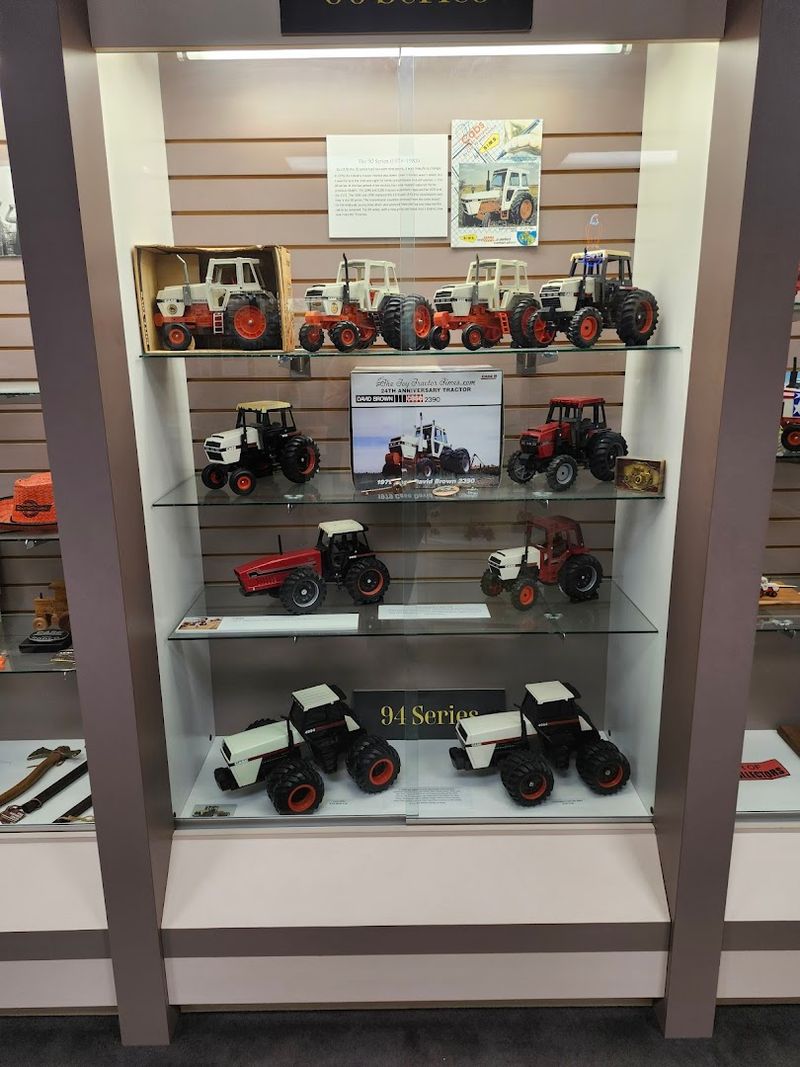
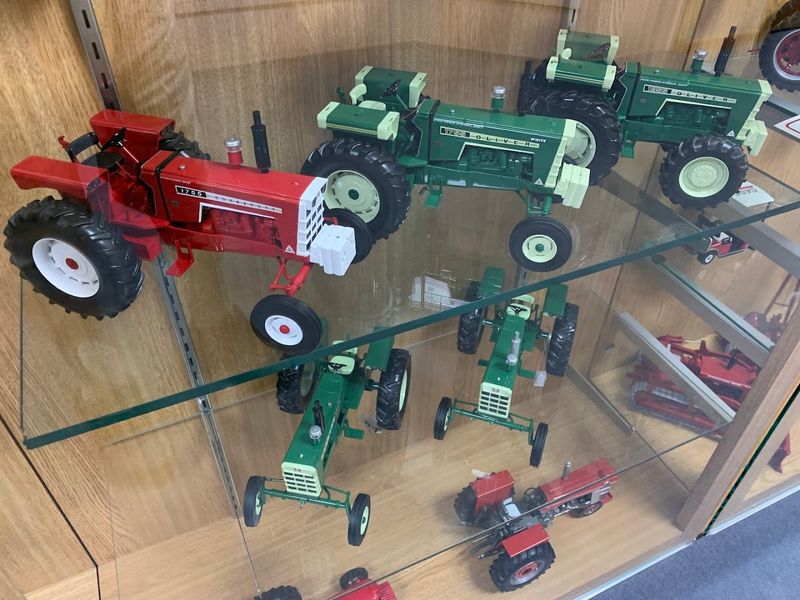
John Deere, Case, International Harvester, Massey Ferguson, and many other names appear throughout the exhibits, each represented by dozens of scale models spanning multiple decades of production.
For collectors and enthusiasts, seeing so many makes and models gathered in one place is the kind of experience that is hard to replicate anywhere else in the country.
I found myself lingering longest at the International Harvester section, partly because the red paint on those old models is just so vivid, and partly because the historical notes explained how the brand shaped Midwestern farming culture for generations.
The museum does not play favorites, which I respected. Each brand gets fair and informative treatment, with context about the company’s history, its innovations, and its relationship with the farming families who depended on its equipment.
By the time I finished moving through the brand exhibits, I had a much clearer picture of how competitive and creative the farm equipment industry really was throughout the 20th century.
The People Who Bring It to Life
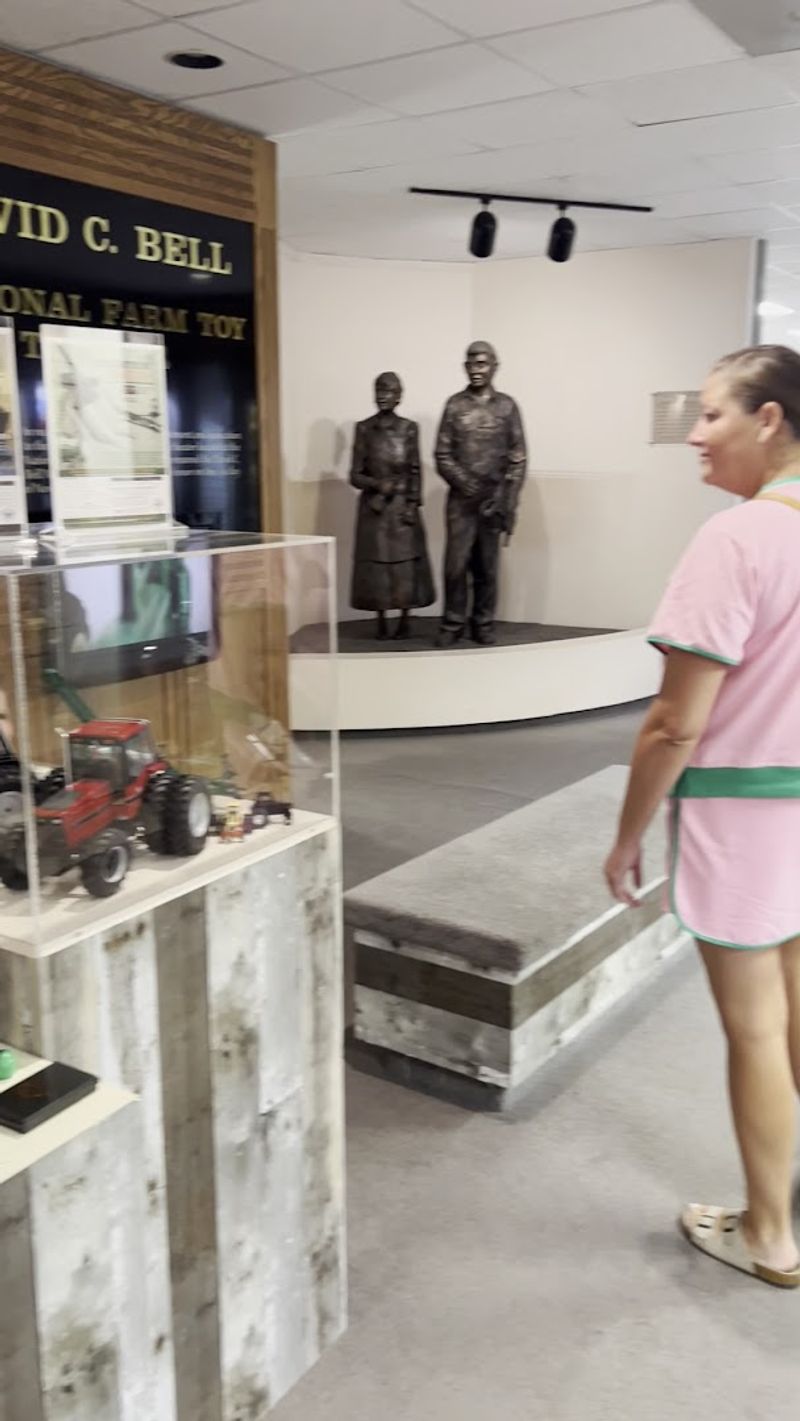
A museum is only as good as the people who work inside it, and this one has some genuinely exceptional staff members who take real pride in sharing what they know.
During my visit, I had the good fortune of crossing paths with Bernie Kluesner, a volunteer guide whose knowledge of farming history and personal storytelling ability turned a simple walkthrough into something much more meaningful.
Bernie is also a master woodworker with his own exhibit inside the museum, which adds a layer of craftsmanship to his presence there that felt completely in keeping with the spirit of the place.
The personal stories he shared about farming life, the toys connected to it, and the families who collected them gave the whole experience a warmth that no amount of well-written signage could fully replicate.
Other staff members I encountered at the gift shop were equally friendly and genuinely happy to answer questions or point out exhibits worth a second look.
That kind of human connection is what separates a truly memorable museum visit from one you forget by the time you reach the parking lot, and the team here clearly understands that.
Fun for Kids of Every Age
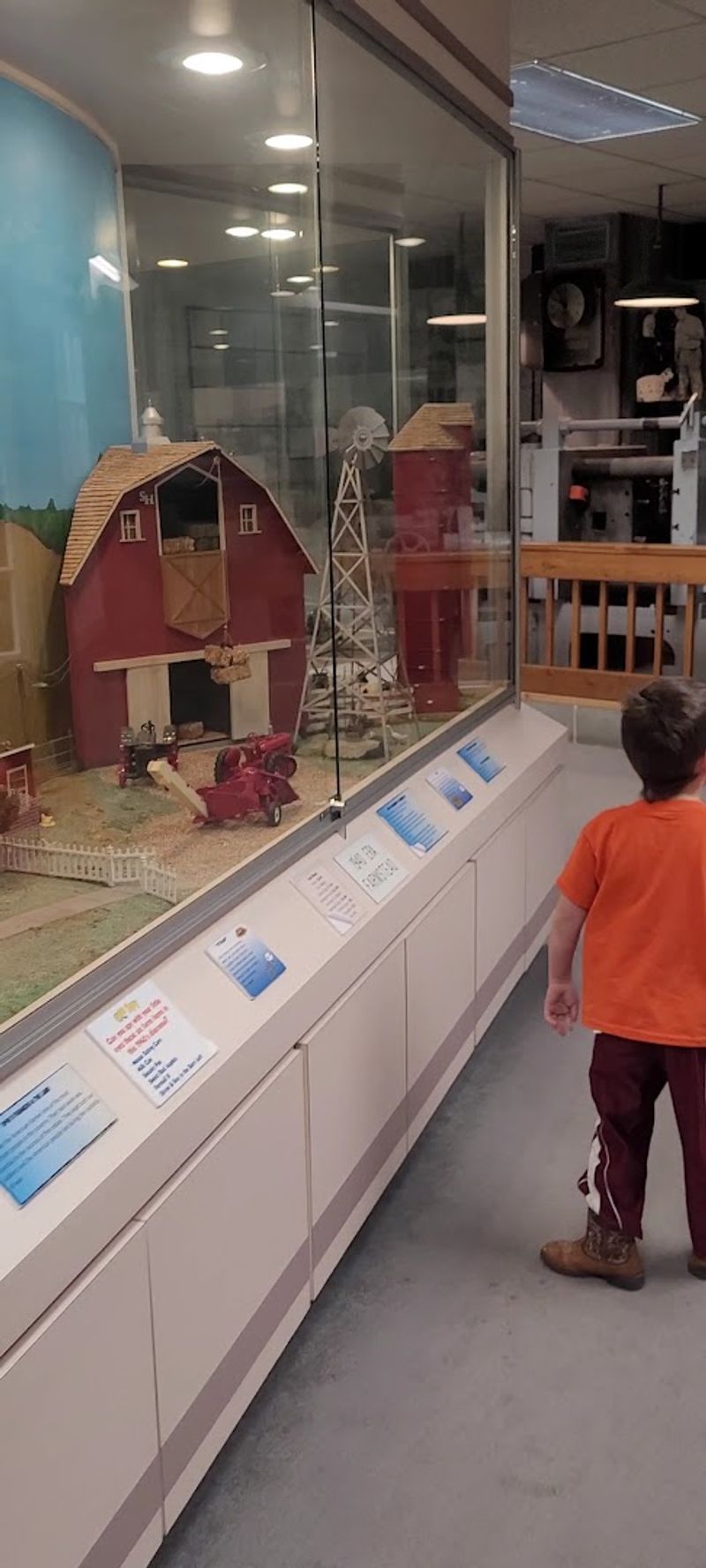
Not every museum manages to be genuinely fun for children, but this one earns that description without any exaggeration.
Both floors include dedicated play areas where younger visitors can get hands-on with toys rather than just staring through glass, which is a smart design choice that keeps kids engaged throughout the visit.
There are also stationary pedal toys available for younger guests, and I will admit that I watched a few adults look just as tempted by the hands-on fun as any child in the room.
The eye-spy activity scattered throughout the small farm dioramas is another touch that families with young children will appreciate, turning a passive viewing experience into an active and interactive one.
Parents I spoke with during my visit mentioned that the toy displays being behind glass was actually a relief rather than a disappointment, because it meant kids could see everything clearly without the risk of anything getting damaged or lost.
From a five-year-old discovering what a tractor even is to a grandparent pointing out the exact model they once owned, the museum manages to connect meaningfully across a genuinely wide age range.
Small Farm Dioramas That Steal the Show
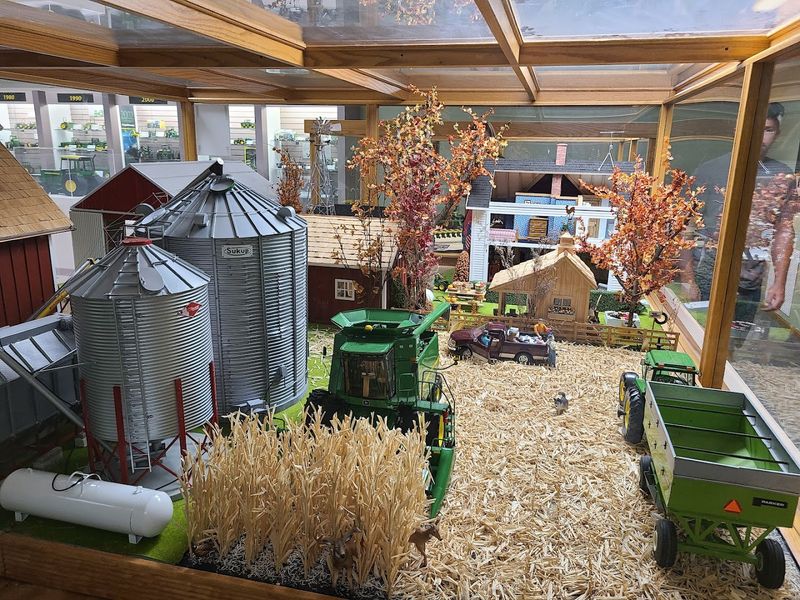
Scattered throughout the museum are small farm dioramas that stopped me in my tracks more than once, and I was not expecting that reaction at all.
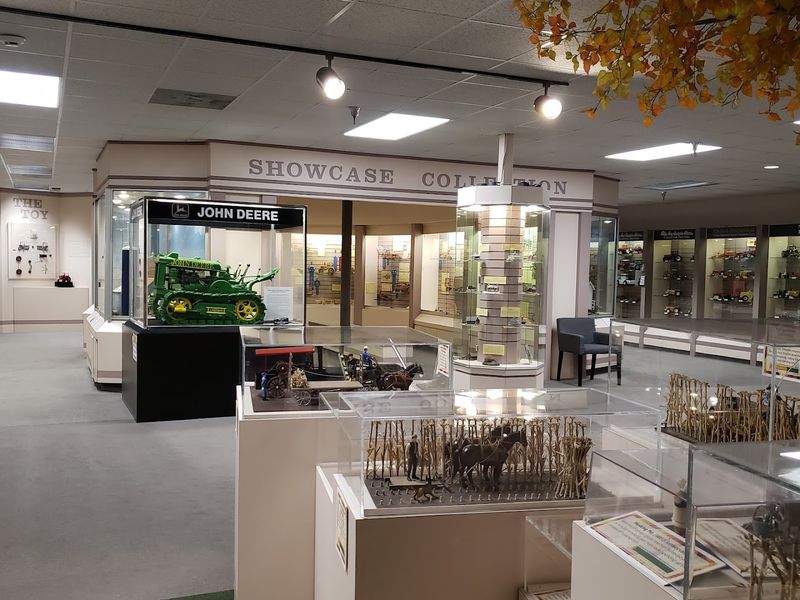
These miniature scenes recreate working farms from different eras with remarkable attention to detail, complete with tiny barns, fences, animals, crops, and of course, scale-model tractors doing their jobs in the fields.
The craftsmanship in these displays is genuinely impressive, and several of them were built by local artisans whose woodworking and modeling skills deserve far more recognition than they typically receive.
What makes the dioramas especially effective is the way they place the toys in context. A lone tractor in a glass case is interesting, but the same model positioned inside a tiny working farm suddenly becomes part of a story you can actually follow.
The eye-spy elements hidden within some of these scenes add a playful layer that children love and adults find surprisingly hard to resist.
After spending time with the dioramas, I came away with a much stronger sense of how interconnected farm life, farm equipment, and farm toys really were for the rural communities that built this country.
Videos, Panels, and Interactive Learning
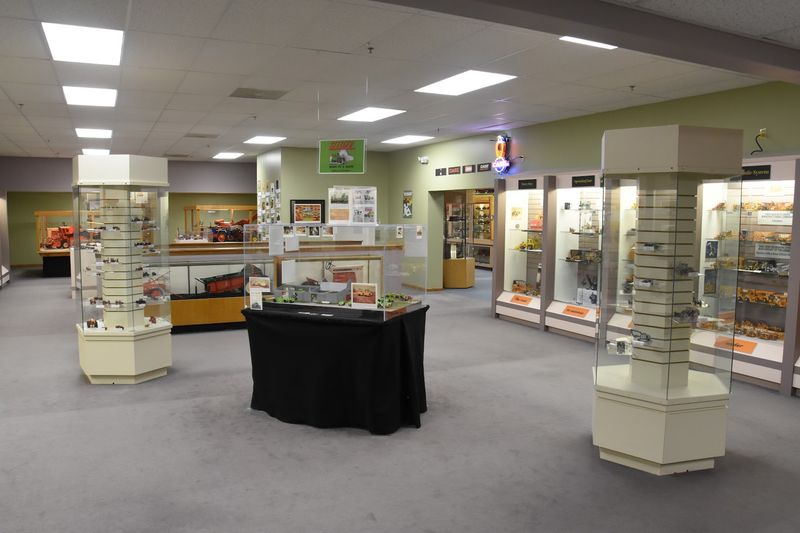
The museum does not rely solely on physical objects to tell its story, and that choice makes the whole experience richer than a simple walk past display cases would be.
Video presentations are available at several points throughout both floors, covering topics like the history of farm toy manufacturing, the evolution of real agricultural equipment, and the cultural significance of farming in the American Midwest.
The informational panels alongside each display are well-written and accessible, striking a balance between enough detail to satisfy a serious enthusiast and enough clarity to keep a casual visitor fully engaged.
I particularly appreciated the sections that connected specific toy models to actual historical moments in farming, like the introduction of diesel tractors or the shift from horse-drawn equipment to mechanized machinery during the early 20th century.
That kind of layered storytelling is what elevates the museum beyond a novelty and into something genuinely educational.
Whether you arrive knowing nothing about farming history or you grew up on a working farm yourself, the combination of objects, videos, and written context gives everyone something new to take away, and that is a harder balance to achieve than most museums make it look.
The Gift Shop and What to Bring Home
The gift shop sits near the entrance, and it is the kind of place where you should probably decide on a budget before you walk in, because the selection of farm toys and collectibles is genuinely tempting.
Die-cast tractor models, farming books, branded merchandise, and various collectibles fill the shelves, covering a range of price points that makes it easy to find something whether you are shopping for a child or a serious adult collector.
The staff in the gift shop were some of the friendliest people I encountered during my entire visit, happy to make recommendations and share a little extra history about specific pieces on the shelves.
Admission to the museum is very reasonable, and the gift shop gives you a chance to bring a piece of that experience home without spending a fortune.
Some visitors mentioned wishing the gift shop carried more throwback toys from earlier decades, and that is fair feedback, though the current selection still offers plenty of interesting options.
Walking out with a small die-cast model tucked under my arm felt like the right ending to the visit, a tiny reminder of everything I had just learned about the surprisingly deep world of farm toys.
Planning Your Visit to Dyersville
Dyersville is a small city in northeast Iowa, and the museum fits perfectly into the character of a community that has always taken its agricultural roots seriously.
The museum is open Monday through Saturday from 9 AM to 6 PM, and on Sundays from 10 AM to 4 PM, giving visitors plenty of scheduling flexibility whether they are passing through on a road trip or making a dedicated day trip out of it.
Most visitors spend between one and two hours inside, though people who stop to read every panel and watch every video often find themselves there longer than they planned.
The admission price is affordable for individuals and reasonable for families, and the museum is accessible enough that visitors of nearly any age or mobility level can navigate the space comfortably.
Dyersville itself is also worth exploring beyond the museum, as the town carries a lot of Iowa agricultural history in its streets, businesses, and community identity.
For anyone curious about farming culture, American manufacturing history, or just a genuinely unique museum experience, the drive to Dyersville is one that pays off in ways that are hard to fully anticipate until you are standing inside and realizing just how much story a tiny tractor can hold.