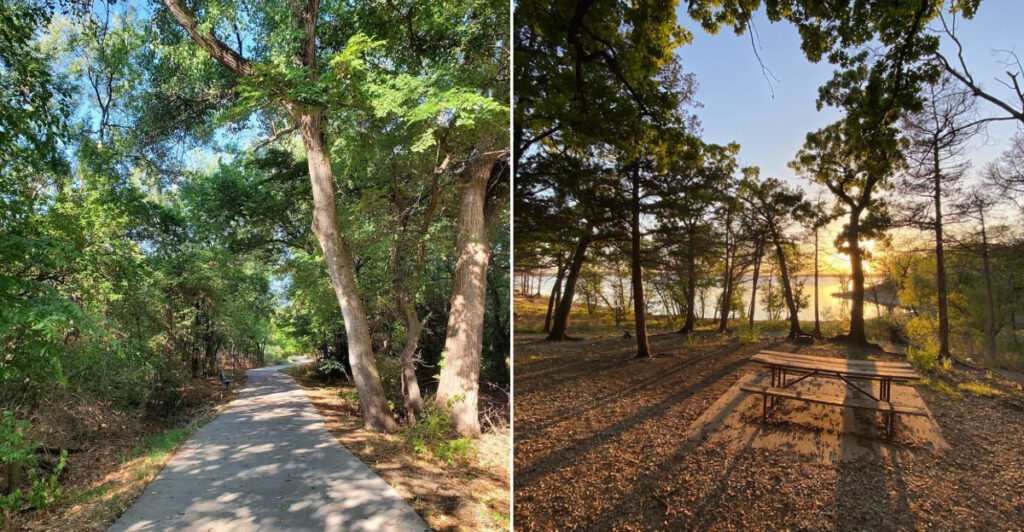
You do not need heroic calves or a backpack full of gear to enjoy a great summer hike in Kansas. Some trails are better suited to beginners who want the fun without turning the afternoon into a survival test.
The right route gives you enough challenge to feel accomplished, but not so much that every uphill stretch starts a personal argument.
Kansas is especially good for easing into hiking because many trails let you focus on the experience instead of constantly watching your footing.
That makes them ideal for first-timers, families, or anyone who simply wants a relaxed excuse to get outside.
My own beginner mistake was assuming every hike had to leave me completely exhausted to count. I learned pretty quickly that I enjoy the trail a lot more when I still have energy left at the end.
These days, I would rather finish smiling than prove anything to a hill.
1. Bottomland Nature Trail, Tallgrass Prairie National Preserve, Strong City
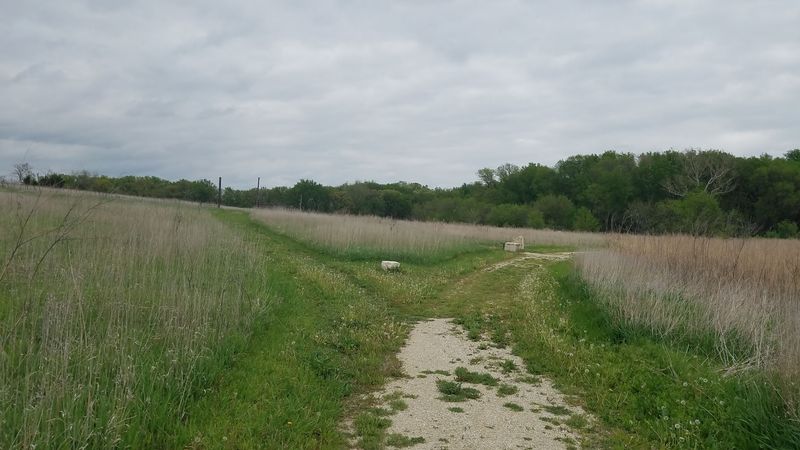
Big bluestem taller than a middle schooler grows along this quiet Flint Hills path.
The Bottomland Nature Trail sits inside Tallgrass Prairie National Preserve near Strong City, and it stays refreshingly flat the whole way.
The route follows low ground near a creek, so cottonwoods and elms throw shade across the trail during hot afternoons.
Bring binoculars, because dickcissels and meadowlarks perch on stems right beside the path and sing without much shyness.
Only about 4 percent of the original tallgrass prairie still exists, which makes this preserve genuinely rare rather than merely pretty.
Bison roam other parts of the property, so read the posted signs before choosing your route for the day.
Start at the Bottomland trailhead south of preserve headquarters, where a small parking lot, information kiosk, restrooms, benches, and picnic tables make getting oriented easy.
Compass plant, coneflower, and butterfly milkweed all take their turn through summer.
Sturdy sneakers work fine here, though morning dew soaks socks quickly, so pack a spare pair in the car. Look for the trailhead along County Road 227, just west of downtown Strong City, Kansas.
2. Split Boulder Trail, Kanopolis State Park, Marquette
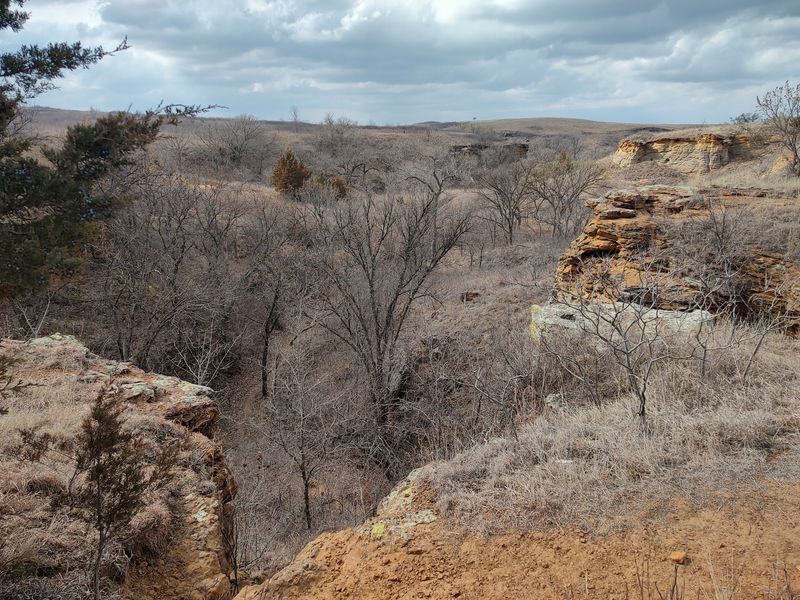
A giant sandstone rock cracked clean down the middle waits at the end.
Split Boulder Trail runs roughly two miles total inside Kanopolis State Park near Marquette, making it one of the shortest paths in a park known for miles of rugged canyon routes.
Dakota sandstone gives this corner of Kansas its unexpected drama, with reddish bluffs, caves, and buttes that surprise first-time visitors.
The trail surface stays mostly packed dirt, though a few sandy patches slow you down just enough to notice the scenery.
Kanopolis holds the title of oldest state park in Kansas, opened in 1959, and Split Boulder Trail is a fine sampler for anyone who wants the views without committing to a long day.
Summer heat builds fast in these open canyons, so aim for the first two hours after sunrise. Lizards dart across the path, turkey vultures ride the thermals overhead, and wildflowers cling to the rock ledges.
Wear closed shoes, since prickly pear cactus grows close to the trail edges here. Trail access sits within Kanopolis State Park at 200 Horsethief Road, Marquette, Kansas.
3. Agave Ridge Nature Trail, Cedar Bluff State Park, Ellis
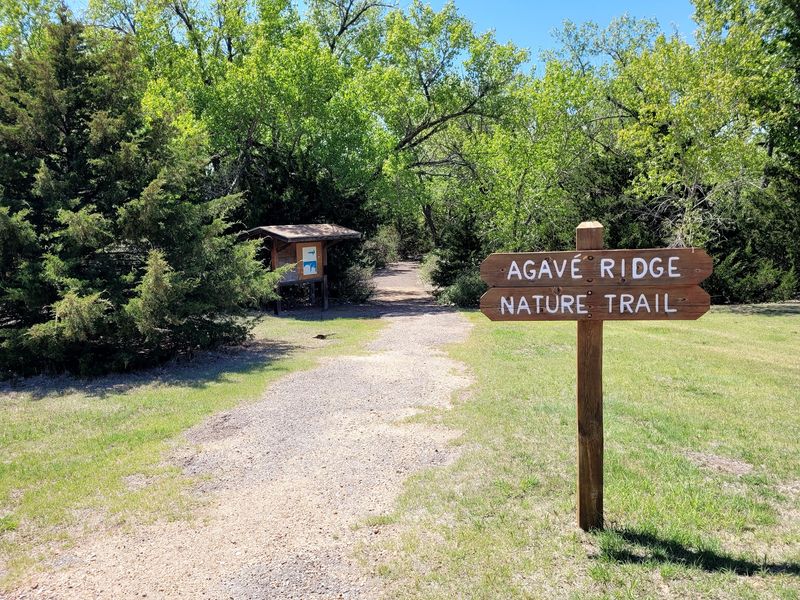
Yucca plants line a chalky ridge above shining reservoir water here.
Agave Ridge Nature Trail at Cedar Bluff State Park near Ellis is short, clearly signed, and packed with things worth stopping for.
Interpretive markers explain the plants that survive on thin soil and relentless western Kansas wind.
The reservoir below sits in Smoky Hill River country, where limestone bluffs rise in pale layers that glow gold near sunset.
Views from the ridge stretch far enough that you can watch weather rolling in from miles away.
Beginners appreciate the length, which allows a relaxed pace with plenty of photo breaks. Families often pair the walk with an afternoon swim at the park beach.
The soft chalk in this region holds marine fossils, a reminder that a shallow sea once covered the plains. Keep your eyes down occasionally and you may spot shell fragments in the rock.
Shade is scarce on the ridge, so a wide brim hat earns its keep, and two water bottles beat one every time.
Find the trail inside Cedar Bluff State Park at 32001 147 Highway, Ellis, Kansas.
4. ADA Hike/Bike Trail, Hillsdale State Park, Paola
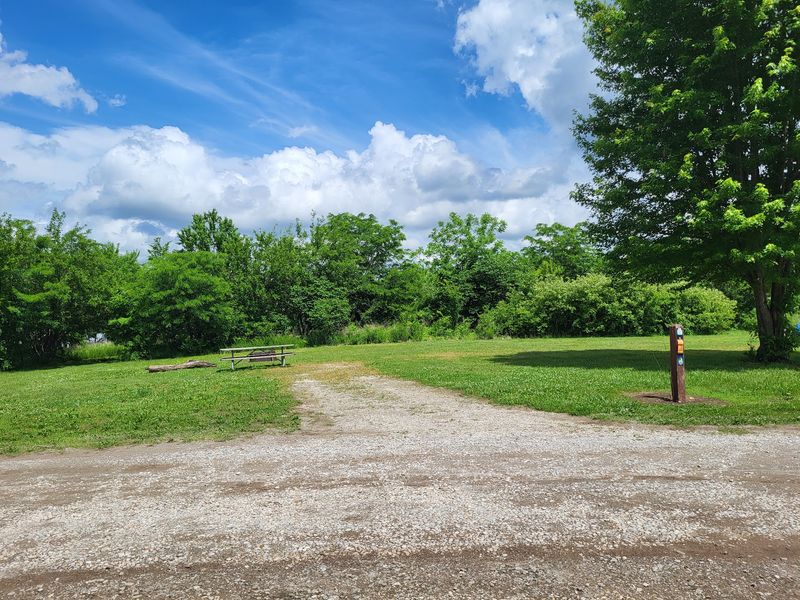
Smooth pavement means wheels, strollers, and wobbly first-time hikers all fit fine.
The ADA Hike/Bike Trail at Hillsdale State Park near Paola was built with accessibility in mind, offering a firm, level surface through woods and along lake edges in eastern Kansas.
Hillsdale Reservoir covers around 4,500 acres, and glimpses of blue water appear between oaks and hickories as you move along. Great blue herons work the shallows, while barn swallows swoop over the pavement chasing insects.
Because the grade stays mild, this route suits grandparents and toddlers on the same outing, which is rarer than it should be. Benches along the way make good spots for snack stops and lazy bird watching.
Morning light filters through the trees beautifully, and the shade holds temperatures down longer than open prairie trails manage.
Afternoon storms build quickly in this part of the state, so check the radar before setting out.
Mountain bikers share other trails at Hillsdale, so cyclists sometimes pass through here too. A friendly wave keeps everyone moving happily.
Head to Hillsdale State Park, 26001 West 255th Street, Paola, Kansas.
5. Post Oak Trail, Fall River State Park, Fall River
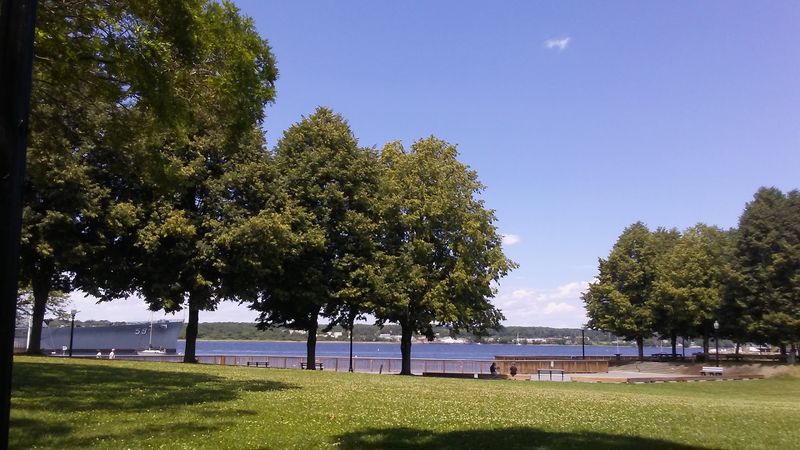
Gnarled post oaks lean over this trail like curious old neighbors.
Post Oak Trail at Fall River State Park winds through hardwood timber between Cross Timbers and Flint Hills country, where sandstone and stubby oaks replace the flat farmland stereotype entirely.
Length stays manageable for newcomers, and the tree canopy provides real relief on July mornings. Deer slip through the brush regularly, and wild turkeys leave tracks in the softer dirt.
Fall River Reservoir sits nearby, so many visitors combine the walk with fishing for crappie or channel catfish. Anglers here talk about the lake with obvious affection.
Post oak wood is dense and slow growing, which is why these trees stay short and twisty rather than tall and straight. Their thick bark helps them survive prairie fires that once swept through regularly.
Ticks are active through summer in eastern Kansas woods, so long socks and a quick check afterward are smart habits.
Rain can leave a few muddy stretches, though nothing that decent sneakers cannot handle. The trailhead is inside Fall River State Park at 2381 Casner Creek Road, west of Fall River, Kansas.
6. Western Heritage Trail, Tuttle Creek State Park, Manhattan
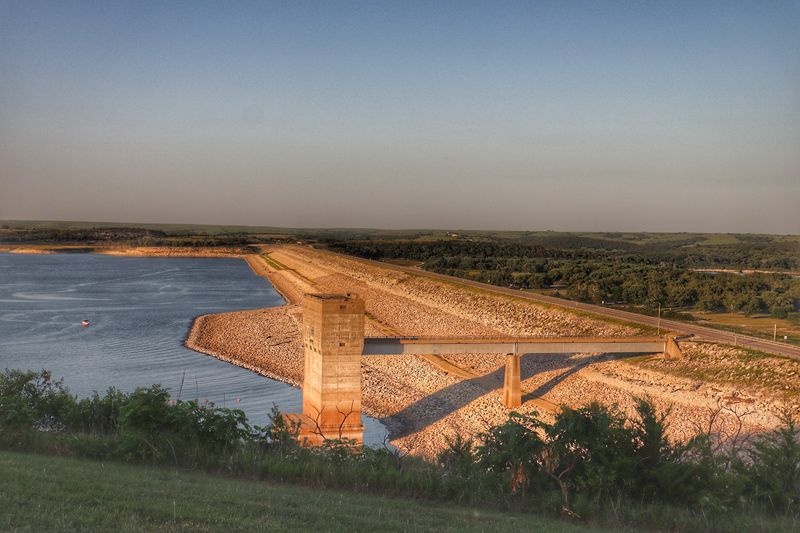
Blue River scenery lines this easy path at Tuttle Creek State Park.
The Western Heritage Trail at Tuttle Creek State Park near Manhattan follows a paved route beside the Blue River through Rocky Ford area, ending at the Dyer Barnes Road bridge.
The Blue River runs beside the trail through the Flint Hills, and several openings along the route frame the water nicely.
Cottonwoods rustle overhead, pelicans sometimes pass through, and the breeze off the river feels like a small mercy in August.
Distance stays friendly for beginners, with pavement rather than rough terrain. The straightforward route keeps navigation simple, which builds confidence for anyone new to hiking alone.
The dam was completed in 1962 after years of local opposition, though the Western Heritage Trail is a recreational route rather than a dam-history walk.
College students from nearby Manhattan use the park heavily on weekends, so a weekday visit brings more quiet.
Sunrise here paints the hills a soft copper color. Bug spray matters near the water, especially at dusk.
Look for Tuttle Creek State Park at 5800 River Pond Road, Manhattan, Kansas.
7. Steve Mathes Nature Trail, Prairie Dog State Park, Norton
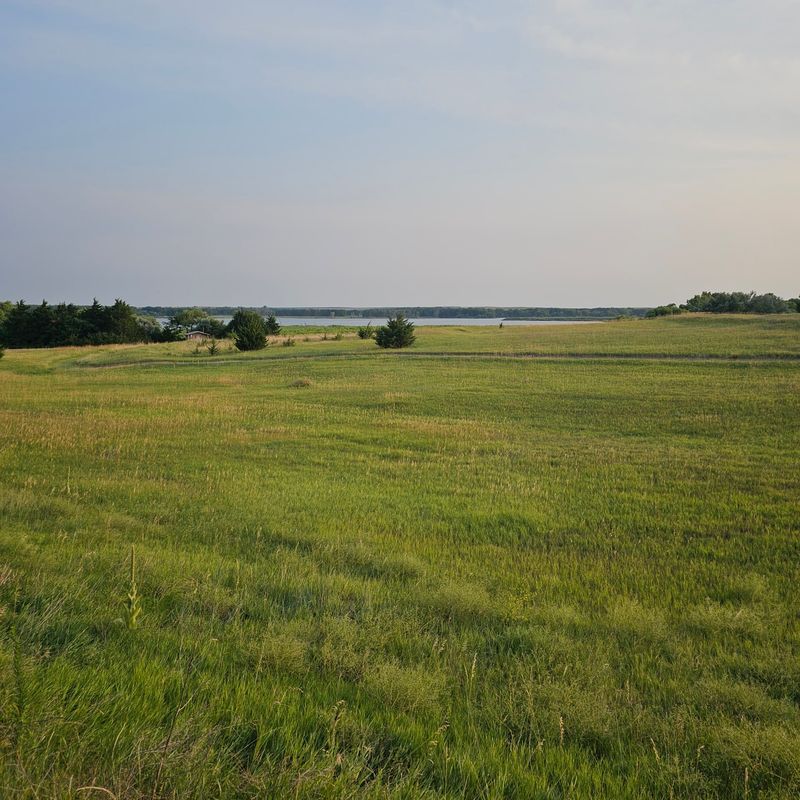
Chirping prairie dogs pop up like whack-a-mole champions beside the grass.
Steve Mathes Nature Trail at Prairie Dog State Park near Norton runs short and flat through shortgrass country in northwest Kansas, which makes it ideal for young legs and cautious first-timers.
Black-tailed prairie dogs live in a protected town within the park, and their alarm calls carry surprisingly far across open ground. Burrowing owls occasionally share those tunnels, so scan the mounds carefully.
The park also protects the last remaining adobe house in Kansas along with a restored one-room schoolhouse, giving the visit a history angle beyond the wildlife.
Keith Sebelius Reservoir sits nearby for fishing and paddling, and the combination makes a full day out of a very small trail. Sunsets here go on forever because nothing blocks the horizon.
Shade is limited, so early morning walks beat midday every time in July. Rattlesnakes do live in the region, so stay on the path and skip the tall grass shortcuts.
Directions point to Prairie Dog State Park, 13037 State Highway 261, Norton, Kansas.
8. Chisholm Creek Park Nature Trail, Wichita
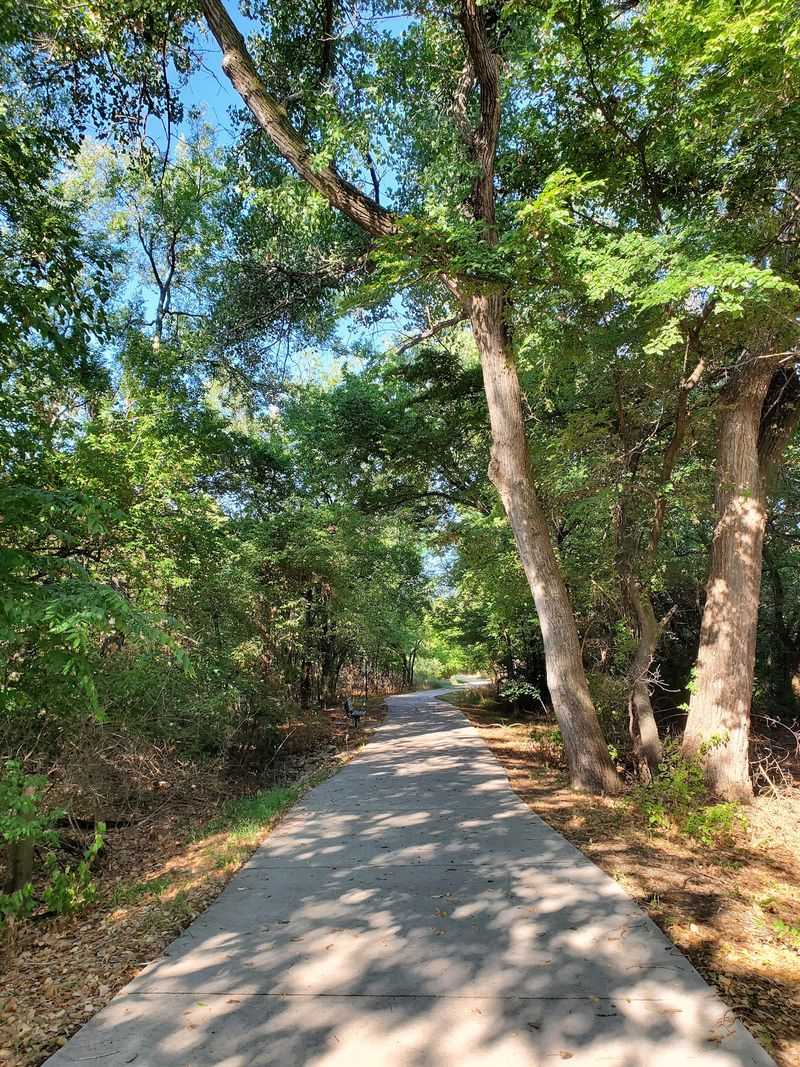
City limits and cattail marshes rarely sit this close together.
Chisholm Creek Park Nature Trail in Wichita loops through restored prairie, woodland, and wetland, all inside Kansas’s largest city. Paved sections and boardwalks make the walking easy in regular shoes.
The Great Plains Nature Center anchors the park, but its building is temporarily closed for foundation repairs.
The surrounding park and trails remain open, so visitors can still explore the area while the indoor facility is unavailable.
Ponds along the route attract wood ducks, dragonflies, and the occasional beaver working the banks. Interpretive signs identify plants and birds, so beginners learn something instead of just walking.
Distance runs a couple of miles total across connected loops, and you can shorten it easily by cutting back toward the parking area. Benches appear often enough that resting never feels far away.
Summer evenings bring out fireflies over the grass, which is reason enough for a second visit after supper. Shade varies, so water still belongs in your bag.
Trailhead parking sits at the Great Plains Nature Center, 6232 East 29th Street North, Wichita, Kansas.
9. Post-Oak Self-Guiding Nature Trail, Elk City State Park, Independence
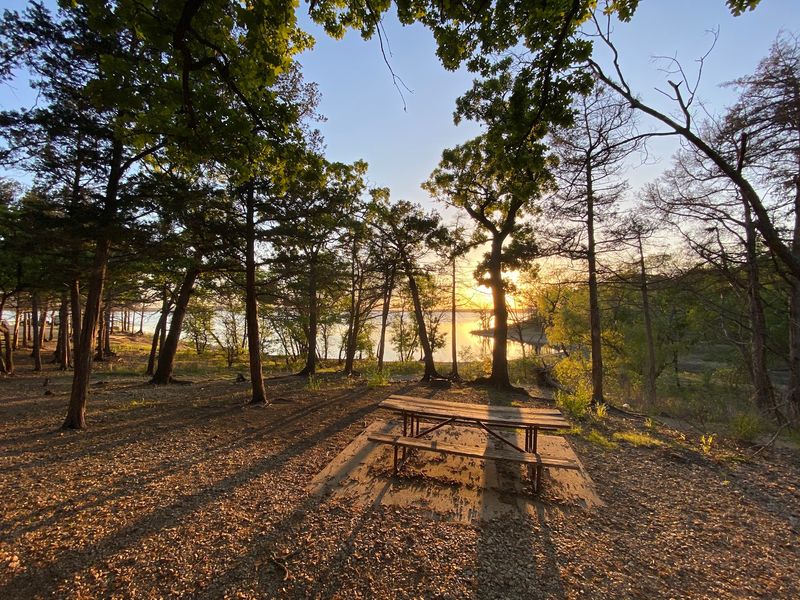
Numbered posts turn a short stroll into a free outdoor lesson.
The Post-Oak Self-Guiding Nature Trail at Elk City State Park near Independence pairs a printed guide with markers along the route, explaining trees, rocks, and animal signs as you go.
Southeast Kansas shows off sandstone ledges and thick oak woods here, a landscape that feels closer to the Ozarks than the wheat belt. Root-crossed dirt keeps footing interesting without becoming difficult.
Elk City Lake nearby is popular for crappie fishing, and the park connects to the longer, rockier Elk River Hiking Trail for anyone who catches the hiking bug later.
Kids especially like the self-guided format because finding each numbered post feels like a treasure hunt. Chipmunks, woodpeckers, and box turtles show up regularly along the way.
Humidity runs high in this corner of the state during summer, so plan a morning start and carry more water than seems necessary.
Poison ivy grows near the trail edges, so learning the three-leaf pattern before you go pays off. Reach the trail through Elk City State Park, 4825 Squaw Creek Road, Independence, Kansas.
10. Stumpy Arroyo Loop, Meade State Park, Meade
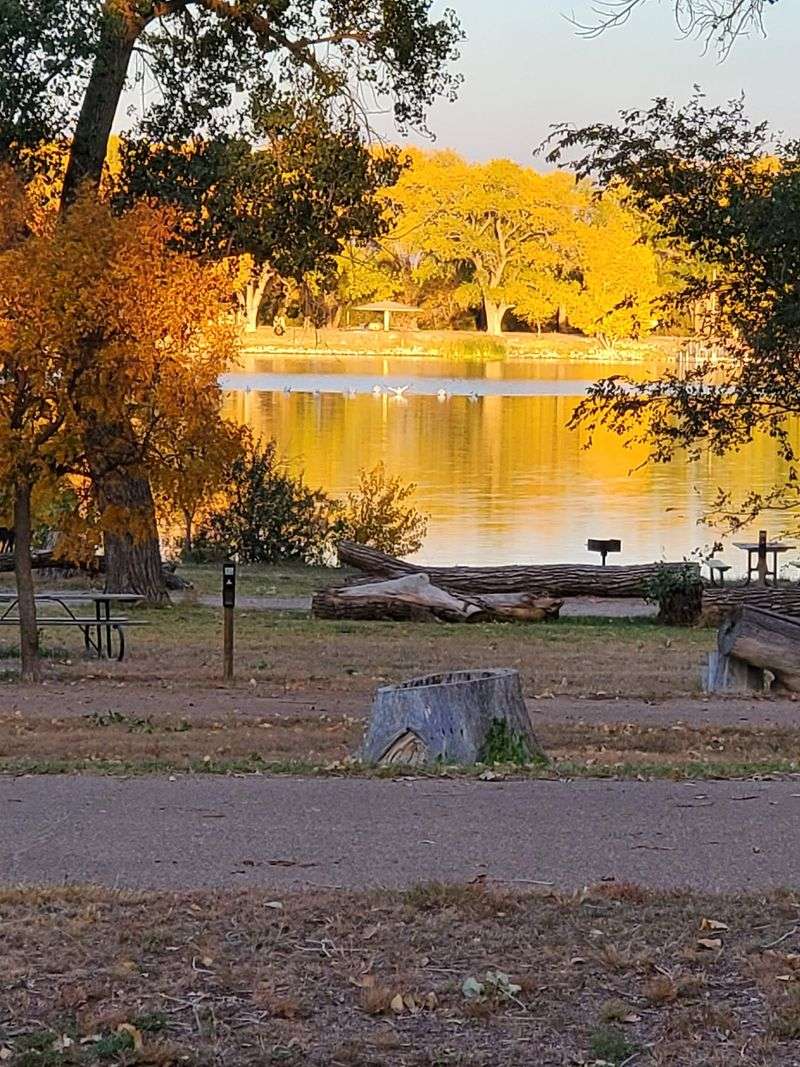
Sand sage, cottonwoods, and a shallow arroyo make up the scenery.
Stumpy Arroyo Loop at Meade State Park near Meade is a compact circuit through southwest Kansas grassland, but the park’s entire trail system is currently closed.
The park surrounds a spring-fed lake in a region where standing water counts as a genuine event. Waterfowl gather here, and the contrast between blue lake and pale sand hills stays striking all summer.
Meade State Park is home to the state-threatened Arkansas darter, a tiny fish that survives in the spring-fed waters. Not many small state parks can claim that.
Terrain along the loop is rated easy, with sandy soil and only minor dips through the arroyo itself. Save camera plans until KDWP reopens the trail system.
Heat arrives early out here, so a sunrise walk followed by a shady picnic works better than a noon attempt. Snakes and cactus both prefer the off-trail grass, so keep boots on the path and everyone stays happy.
The park entrance is 12165 South V Road, Meade, Kansas, via Highway 23.
11. Waconda Springs Replica Trail, Glen Elder State Park, Glen Elder

A replica spring mound tells a story now hidden under the lake.
Waconda Springs Replica Trail at Glen Elder State Park in Glen Elder is brief, level, and heavy on meaning. The original Waconda Spring was a sacred site for Plains tribes before Waconda Lake covered it in the 1960s.
Interpretive signs along the walk explain the spring’s history and the cultures that traveled long distances to reach it. The replica gives visitors a sense of the mineral mound’s shape and scale.
Beyond the history, the trail offers open views of the reservoir, which draws pelicans, eagles in cooler months, and steady walleye anglers year round.
Distance is short enough for a quick stop, making it a good starter hike for anyone easing into outdoor walking. Grass and gravel underfoot keep it simple.
Wind blows steadily across this part of north central Kansas, which cools you down and steals hats with equal enthusiasm.
Pair the walk with a lakeside picnic and the afternoon plans itself. Visit Glen Elder State Park at 2131 180 Road, Glen Elder, Kansas.