What does Minnesota taste like? The answer depends on who is cooking.
The state’s food story was built in more than one kitchen, and that variety is exactly what makes it interesting. Some dishes come from family traditions carried across generations. Others grew out of mining towns, local waters, or fairground cravings.
You can move from something hearty and familiar to something deeply regional without ever leaving Minnesota comfort food behind.
That is what gives these classics their staying power. They are not just old recipes. They are pieces of local history that still show up on plates today.
If I wanted to understand Minnesota through food, this is exactly where I would start.
1. Tater Tot Hotdish
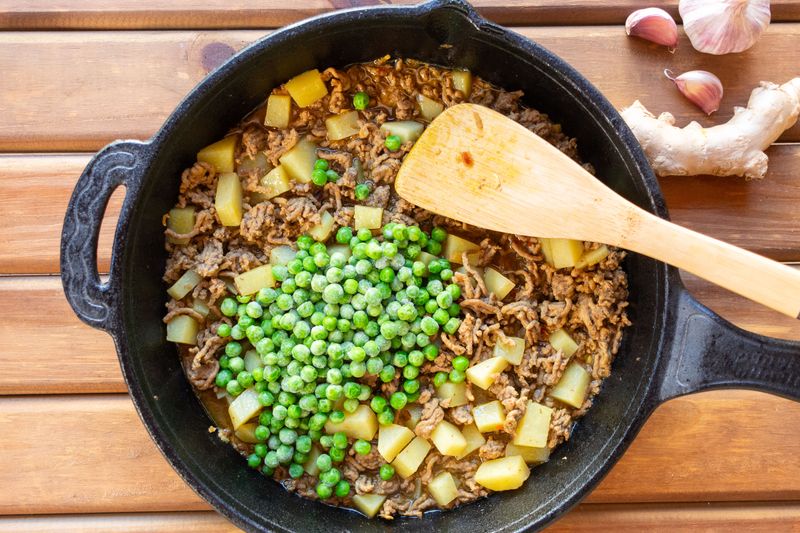
Few foods announce Minnesota comfort as clearly as a pan covered edge to edge with crisp tater tots.
Tater tot hotdish belongs to the broader Upper Midwest hotdish tradition, a casserole category usually built around a starch, protein, vegetables, and some kind of creamy binder.
It is not simply another name for every casserole, but in Minnesota the word carries plenty of cultural weight.
A familiar version starts with browned ground beef, condensed cream-of-mushroom soup, and vegetables such as green beans or corn. Frozen tater tots form the top layer before everything goes into the oven.
As the dish bakes, the potatoes turn crisp while the filling underneath stays soft and creamy. Some versions add shredded cheese, while others keep the ingredient list especially simple.
That flexibility is part of the appeal. You can make a large pan without complicated preparation, take it to a gathering, and serve a crowd from one baking dish.
For a first introduction to Minnesota hotdish culture, the tater tot version gets straight to the point.
2. Juicy Lucy
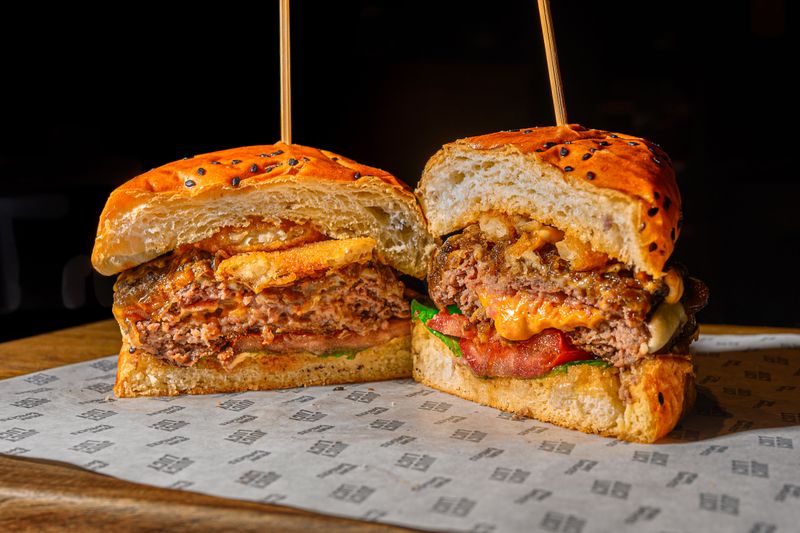
The first surprise is hidden inside the burger.
A Juicy Lucy seals cheese between two layers of ground beef before the patty reaches the grill. Once cooked, the center turns molten, so the cheese arrives inside the meat instead of sitting on top.
Two Minneapolis restaurants have long competed over the origin story. Matt’s Bar serves the Jucy Lucy, deliberately dropping the first “i,” while the 5-8 Club uses the more conventional Juicy Lucy spelling.
The restaurants are roughly three miles apart along Cedar Avenue, making it possible to compare both versions without crossing the entire city.
The basic technique requires a good seal around the edges so the cheese stays inside while the beef cooks. That also explains the one piece of practical advice worth remembering: give the center a moment before taking a big first bite. The melted cheese can be extremely hot.
Pickles, onions, and familiar burger toppings may join the plate, but the cheese-filled center remains the whole point.
3. Minnesota Wild Rice Soup
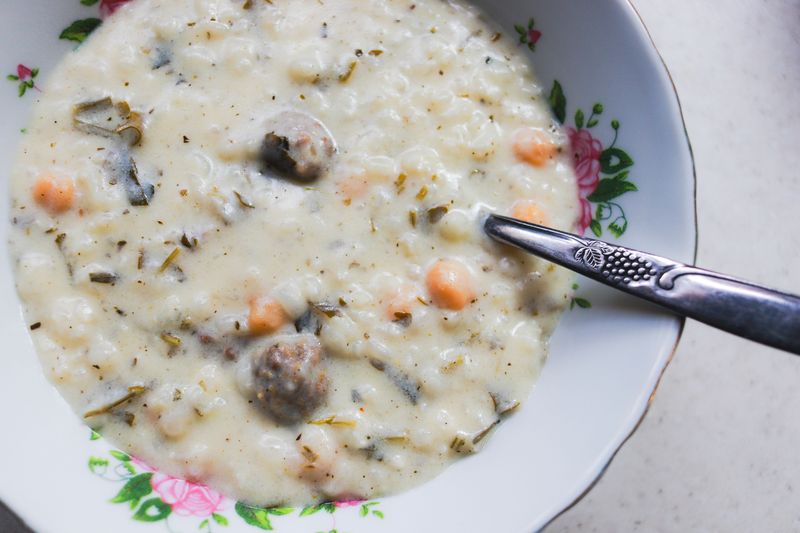
Wild rice brings one of Minnesota’s oldest food traditions into a bowl that has become a cold-weather favorite.
Despite its name, wild rice is not the same plant as ordinary rice. It is an aquatic grass that grows naturally in shallow lakes and streams, and Minnesota designated it the official state grain in 1977.
Long before creamy soup versions appeared, wild rice held deep importance for Ojibwe communities. Traditional harvesting continues in parts of Minnesota, with rice gathered from canoes using wooden knocking sticks.
In modern kitchens, wild rice often appears in creamy soups with chicken, carrots, celery, onions, herbs, or mushrooms. There is no single required formula, which means one bowl may be thick and dairy-rich while another keeps the broth lighter.
The grain itself gives the soup its distinctive character. Wild rice stays pleasantly chewy and brings a nutty, earthy flavor that holds up well beside chicken and vegetables.
Add bread if you want a larger meal, but the wild rice is what makes the bowl unmistakably Minnesotan.
4. Walleye
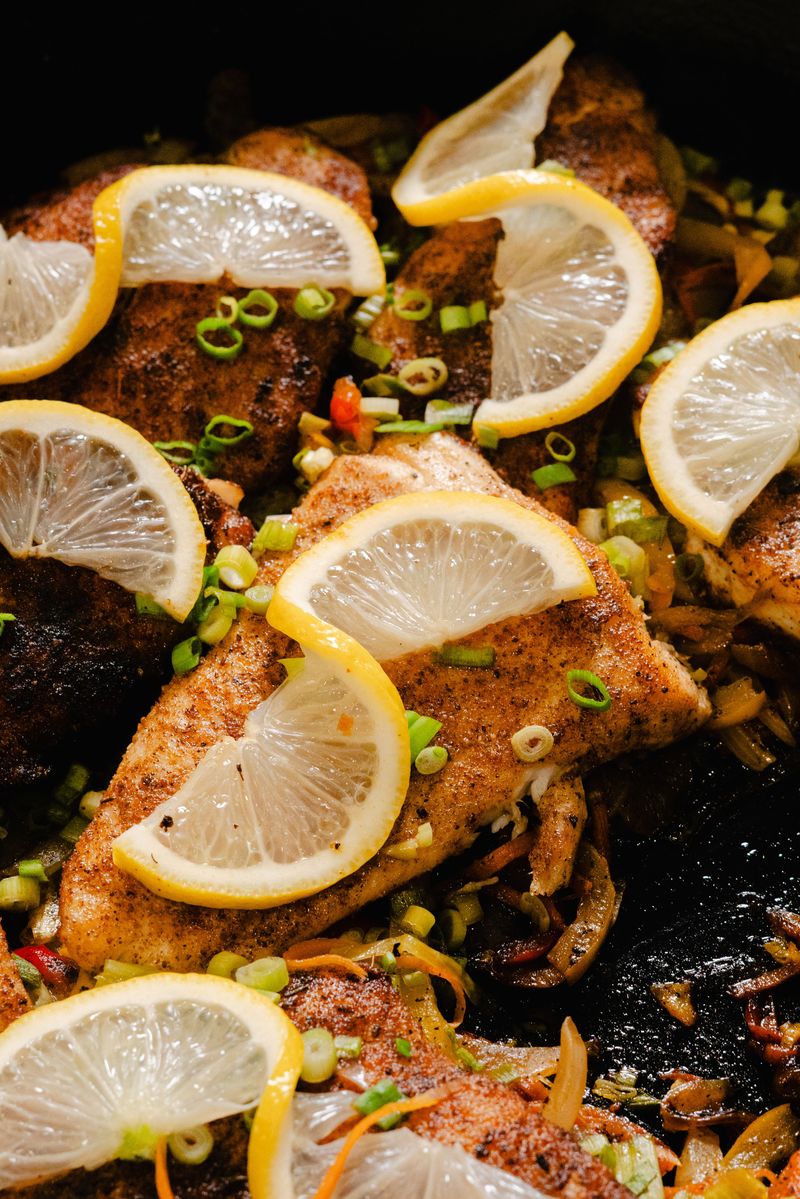
Minnesota made walleye its official state fish in 1965, and the species still has an unusually strong hold on the state’s food identity.
The fish lives in lakes and rivers across Minnesota and remains one of the state’s most sought-after catches. Its flesh is white, mild, and flaky, making it easy to prepare without heavy seasoning.
Pan-frying is one classic route. A light breading or coating gives the outside some texture while leaving the fish itself at the center of the plate. Restaurants also serve walleye grilled, baked, breaded, or tucked into sandwiches.
Lemon, potatoes, vegetables, and simple sauces are common partners because none needs to overpower the fish.
If you spend time around Minnesota lake country, walleye connects dinner directly to the state’s fishing culture. Not every lake contains it, but the species is widespread enough that anglers and restaurants keep it closely associated with time on the water.
For visitors who want one straightforward taste of Minnesota lake food, walleye makes the case without needing much embellishment.
5. Lefse
A hot griddle, a grooved rolling pin, and a long wooden turning stick can tell you that lefse making is underway before the first piece reaches the table.
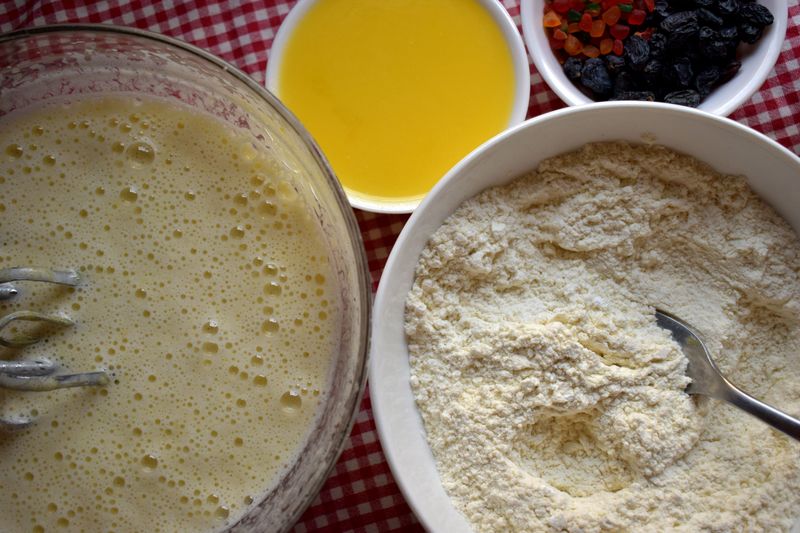
Potato lefse has a strong place in Minnesota’s Norwegian-American food traditions. The dough commonly combines mashed potatoes, flour, butter, and milk or cream before being rolled extremely thin.
Each round cooks briefly on a flat griddle until light brown spots begin to appear. The finished lefse stays soft and flexible enough to fold or roll.
Butter and sugar make one familiar Minnesota serving style. Cinnamon or jam may appear too, while some families use lefse in savory ways.
The specialized tools are part of the process. A grooved rolling pin helps flatten the dough, while the slender turning stick makes it easier to move the delicate round without tearing it.
Lefse often appears around the holidays, but its Minnesota connection goes well beyond December. For many Norwegian-American families and community groups, making it remains as important as eating it.
6. Lutefisk
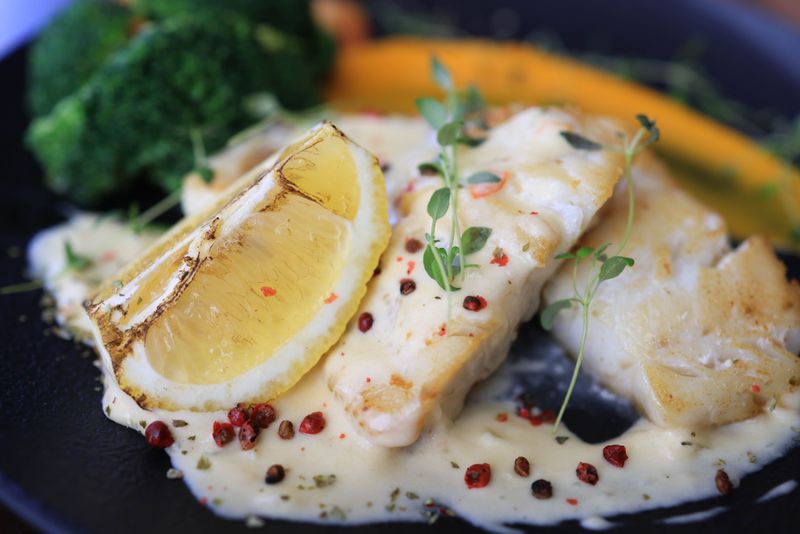
Lutefisk might be one of Minnesota’s most discussed heritage foods precisely because the preparation is so unusual.
The dish begins with dried whitefish. It is soaked in water, treated with lye, and then soaked repeatedly in fresh water to remove the lye before cooking. That lengthy process changes both the texture and appearance of the fish.
Once prepared, lutefisk is often served simply, with melted butter, boiled potatoes, or other Scandinavian holiday accompaniments.
Its Minnesota connection comes largely through Norwegian-American communities. Some churches in the state continue to hold seasonal lutefisk dinners, preserving a tradition that once played an even larger role in community holiday calendars.
It remains a distinctive heritage dish rather than an everyday staple across the state. Lutefisk has always inspired strong reactions, even among people who grew up around it.
That is part of what makes it interesting. Few dishes illustrate the state’s Scandinavian-American heritage quite as directly, especially when served at a church dinner alongside other familiar holiday foods.
7. Swedish Meatballs
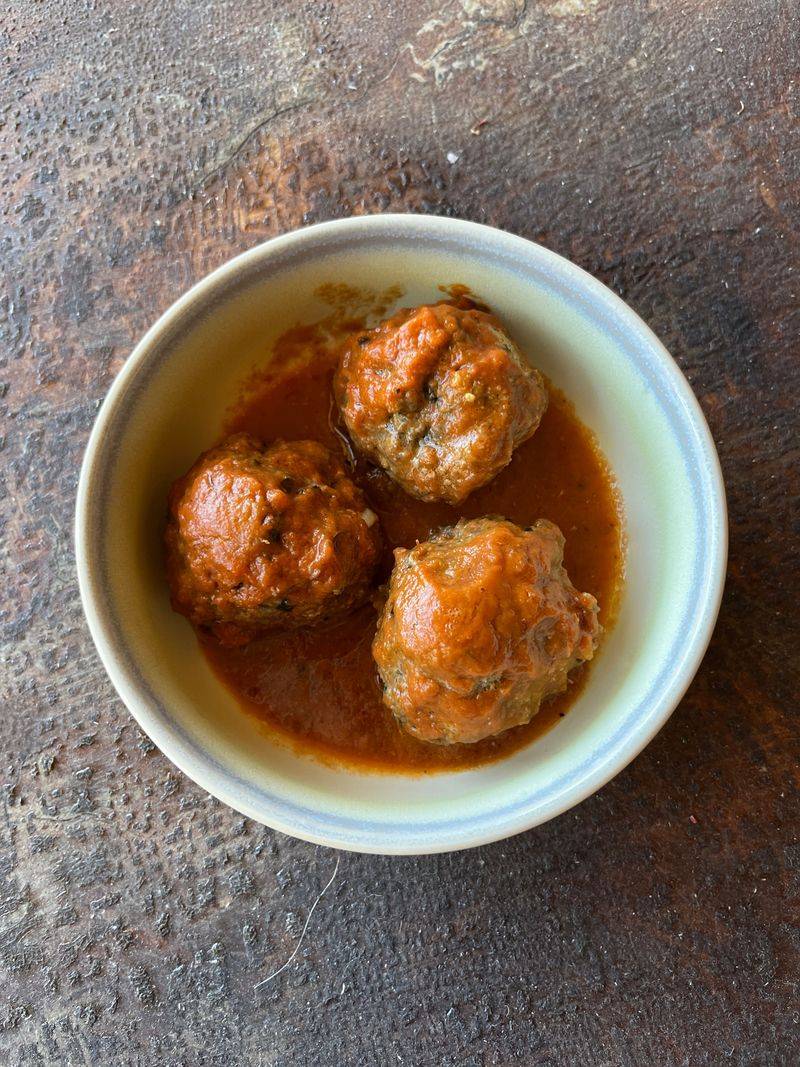
Swedish meatballs belong to Minnesota’s Scandinavian-American food story rather than to one uniquely Minnesotan recipe.
Traditional versions often combine beef and pork with mild seasonings before the mixture is rolled into small meatballs and browned. A creamy gravy follows, giving the finished dish its familiar richness.
Mashed potatoes make a natural partner, while lingonberry preserves bring a tart contrast to the savory meat and sauce.
In Minnesota, Swedish meatballs have long appeared at Scandinavian-American holiday meals, church gatherings, and family celebrations. Allspice and other warm spices may season the meat, though recipes differ considerably from household to household.
That variation matters. Some versions use different meat ratios, some change the gravy, and others serve the meatballs with noodles rather than potatoes.
If you are building a Minnesota table around Scandinavian heritage foods, these sit comfortably beside lefse and other holiday staples without needing to claim that every household serves them the same way.
The creamy gravy and small, tender meatballs remain the recognizable core.
8. Booyah
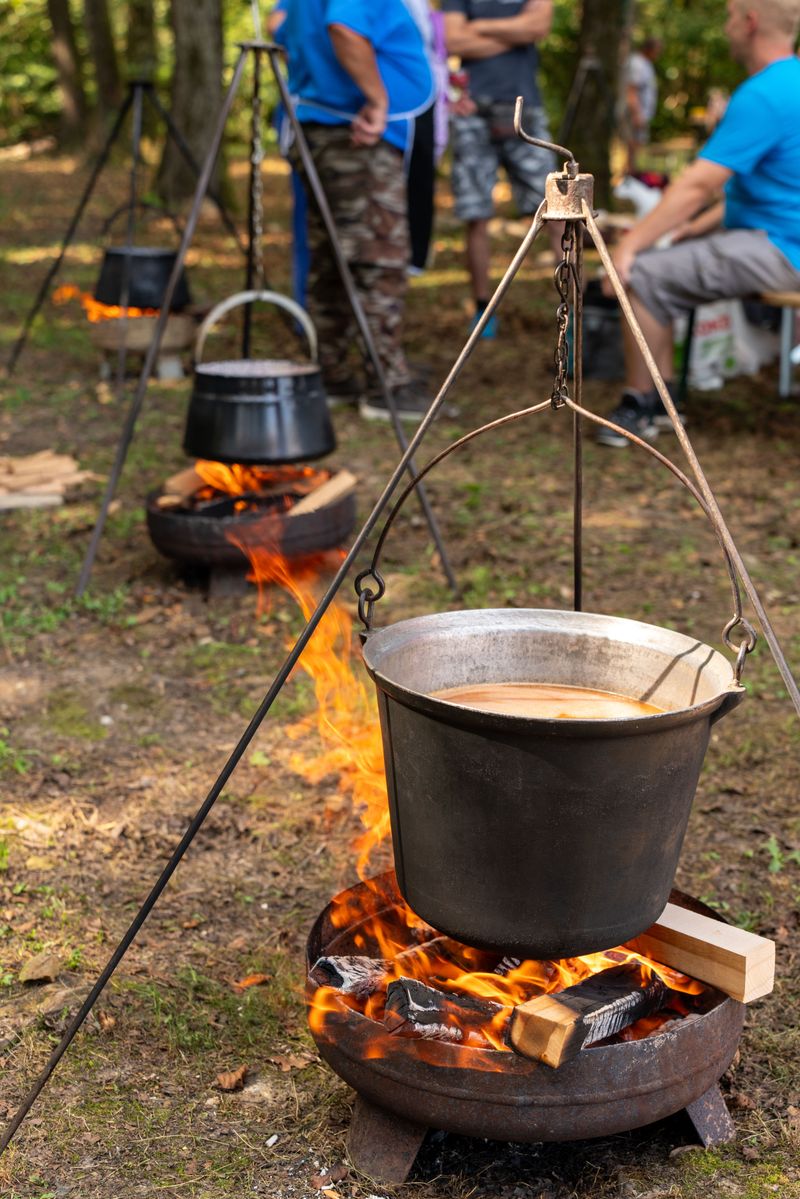
Booyah is as much about the pot as what goes into it.
The tradition is especially associated with St. Paul and parts of Minnesota, though it also extends into Wisconsin and the wider Upper Midwest. Large community batches may cook for hours in enormous kettles, often outdoors.
Recipes vary dramatically. Chicken or beef can form the base, followed by potatoes, carrots, cabbage, onions, tomatoes, and other vegetables depending on the cook.
Because the batches are so large, booyah became closely connected with community events. Churches, clubs, fire departments, and local organizations have prepared it for gatherings and fundraisers over the years.
There is no universally accepted explanation for the unusual name, and there is no single recipe that settles what belongs in the pot.
That looseness is part of the tradition. Booyah is less about perfect measurement than long cooking, large quantities, and feeding many people at once.
When you encounter it in Minnesota, you are looking at a community-food tradition rather than an ordinary bowl of stew.
9. Iron Range Porketta
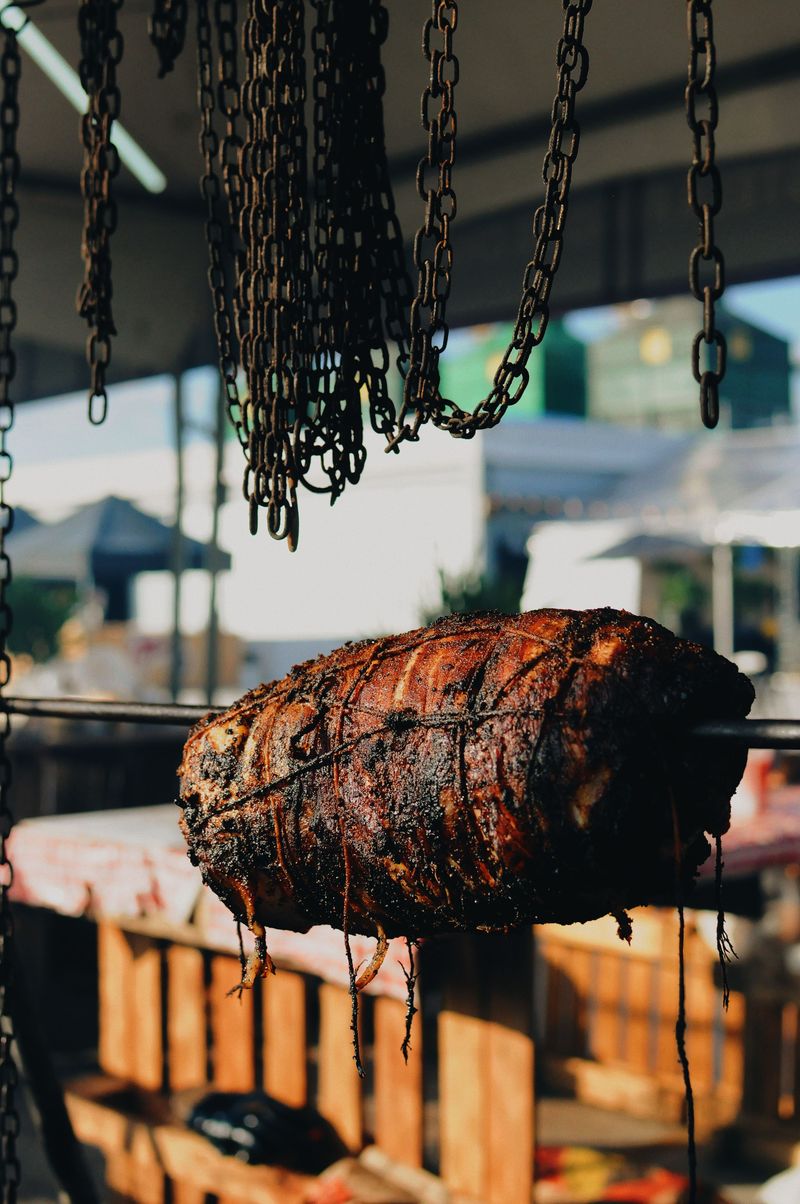
Drive north toward Minnesota’s Iron Range and the spelling changes along with the pork.
Porketta developed from Italian porchetta traditions brought into Iron Range communities and adapted into a regional specialty. Pork shoulder or pork butt commonly serves as the base, with fennel and garlic doing much of the seasoning work.
Black pepper and additional herbs or spices can join the mixture before the pork cooks slowly until tender.
The fennel is especially important. Its distinctive flavor separates Iron Range porketta from a plain roast pork dinner and gives the meat its recognizable character.
You can eat porketta sliced on a plate or pile it onto a roll for a substantial sandwich. Grocery stores and meat markets around the Range have also sold seasoned roasts ready for home cooking.
Over time, the Iron Range version developed its own name, seasoning profile, and regional identity.
That evolution made porketta one of the foods most closely associated with the Range.
10. Iron Range Pasties
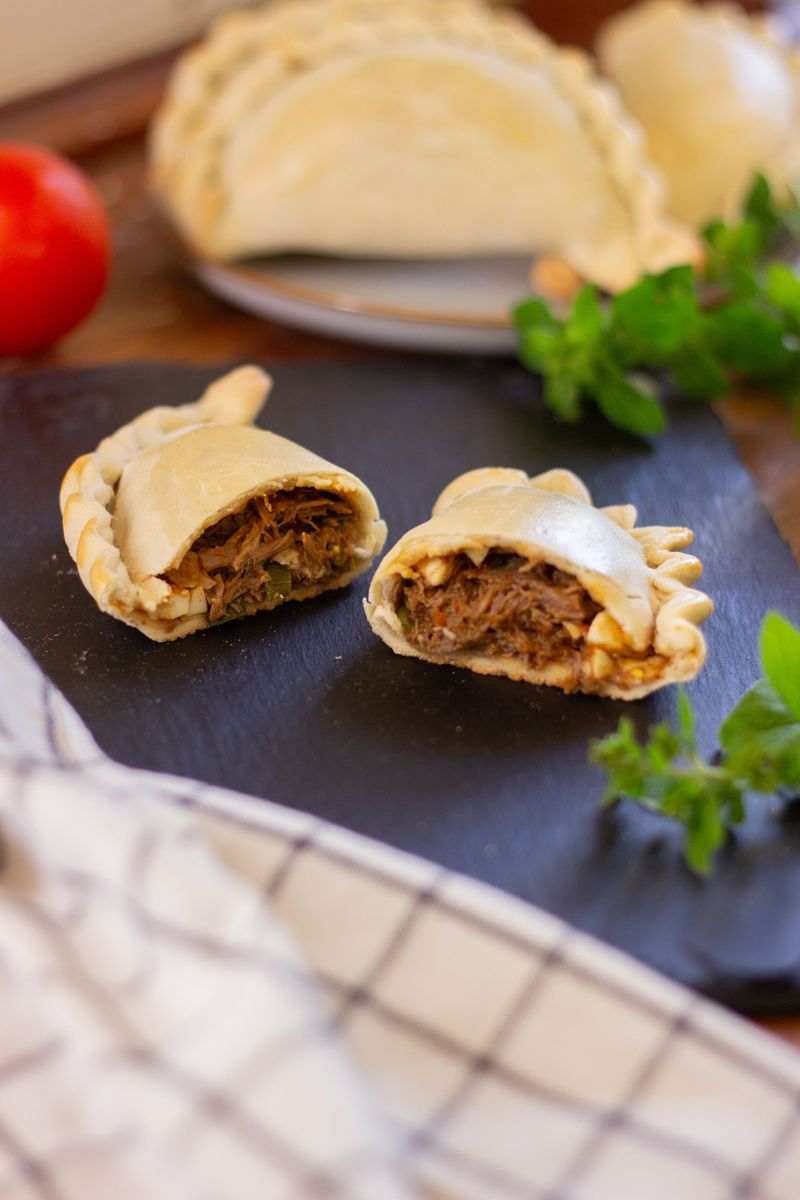
Pasties made sense underground long before they became road-trip food.
Cornish miners brought the filled pastries into mining regions, and they became part of the food culture of Minnesota’s Iron Range as different European communities settled there.
A sturdy pastry crust usually surrounds a mixture of beef, potatoes, onions, and carrots. Rutabaga appears in some versions, adding another earthy vegetable to the filling.
Their compact construction made pasties practical meals for workers. Instead of carrying several separate foods, a miner could bring meat, vegetables, and pastry together in one portable package.
Iron Range bakers and restaurants continue making them, and individual shops often develop their own versions. Some diners eat pasties plain, while others add gravy or ketchup.
Its lasting appeal comes from that practical design and the mining communities that adopted it. Today, a hot pasty still works as a compact, filling meal with deep Iron Range roots.
11. Hot Beef Commercial
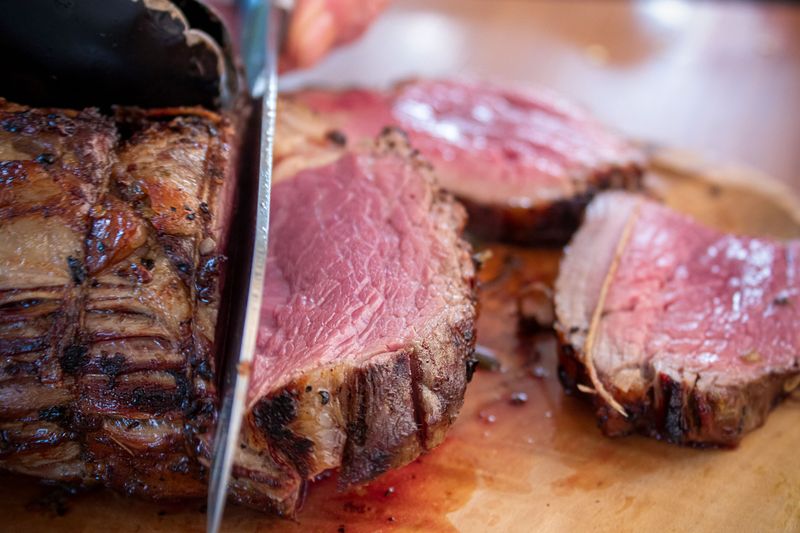
The hot beef commercial is one of those Minnesota diner dishes that looks exactly like what the name fails to explain.
The plate usually starts with white bread topped with sliced roast beef. Mashed potatoes join the sandwich before brown gravy covers almost everything.
It is especially associated with western and rural Minnesota cafes, where the combination became a substantial lunch or dinner rather than a neat handheld sandwich.
The word “commercial” is the mysterious part. Its exact origin is uncertain. One theory connects the name to traveling salesmen or other commercial workers who needed a filling meal while moving between towns.
Whatever started the terminology, Minnesota diners held onto it.
The dish itself is easier to understand. Bread soaks up gravy, potatoes add weight, and sliced beef turns the whole thing into a fork-and-knife meal.
If you see “commercial” on a Minnesota cafe menu, do not expect an advertisement. Expect beef, potatoes, bread, and enough gravy to tie everything together.
12. Potica
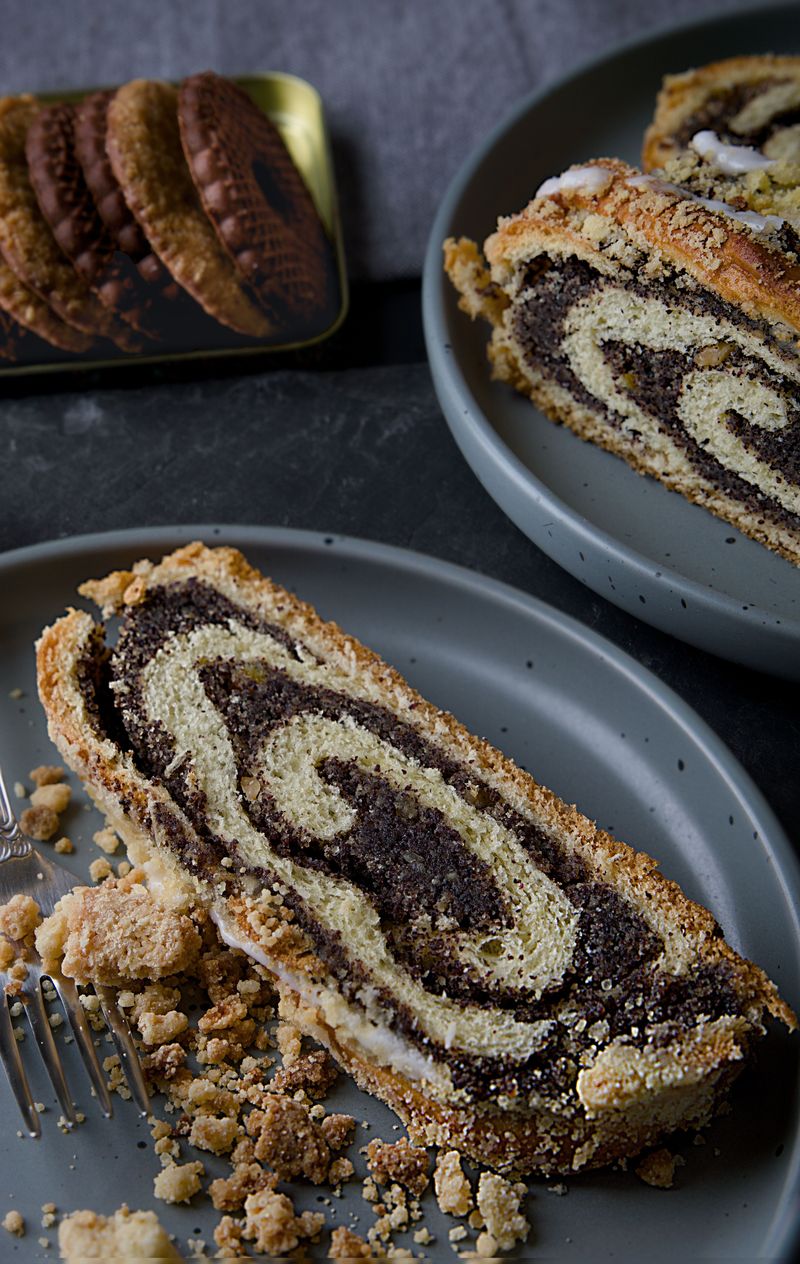
Cut through potica and the filling reveals itself in tight spirals through the dough.
The rolled pastry has deep Central and Eastern European roots and became especially associated with communities on Minnesota’s Iron Range. Slovenian, Slovak, and neighboring traditions all contributed to the versions found in the region.
Walnut is one of the classic fillings. Poppy seed versions also have a long history, while other recipes introduce honey or additional sweet ingredients.
The dough is rolled or stretched thin before filling, then shaped into a loaf or ring and baked. That process produces the layered interior that makes each slice immediately recognizable.
Potica often appears around holidays and celebrations, when the amount of work involved in preparing it makes a full loaf especially welcome.
Minnesota’s Iron Range connection remains strong enough that regional bakeries and producers have continued making it commercially, including versions sold beyond the Range.
Each spiral carries part of the Central European food heritage that shaped northern Minnesota.
13. Pronto Pups
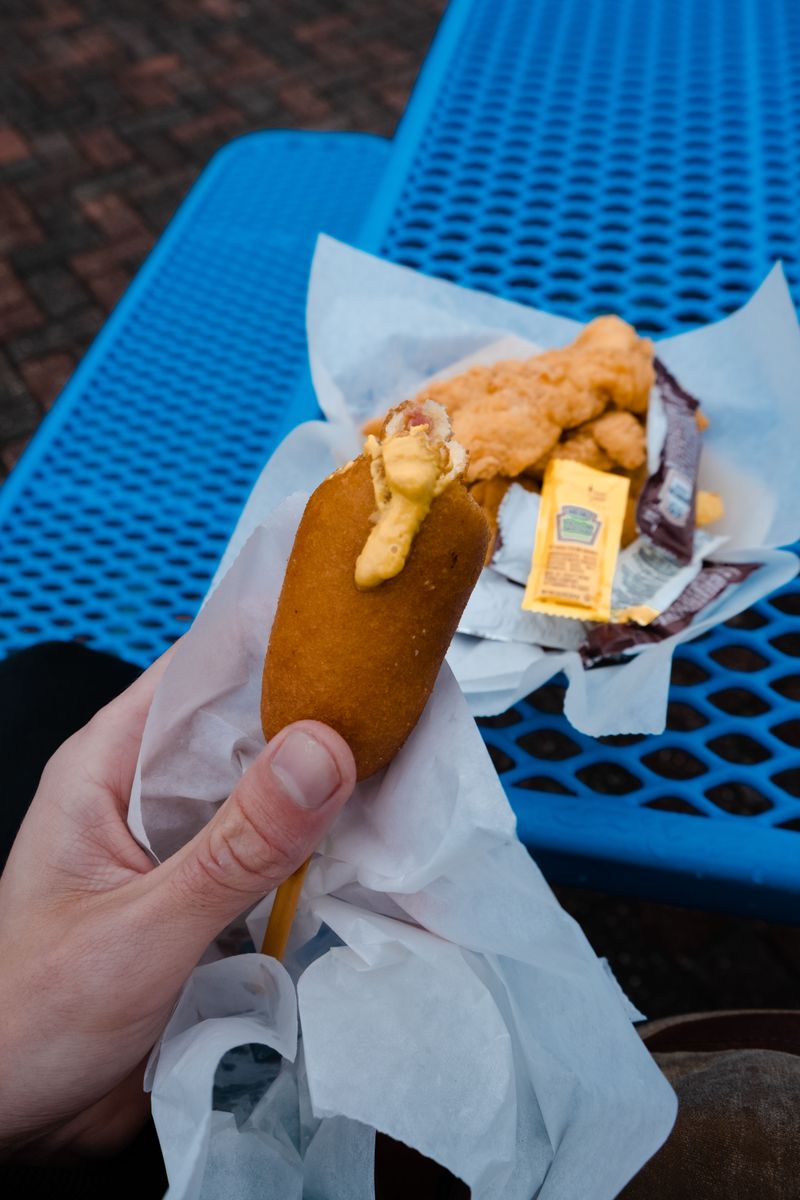
Minnesota State Fair food on a stick did not start with an endless parade of novelty snacks. Pronto Pups were there early.
They debuted at the Minnesota State Fair in 1947 and are credited by the fair as its first food served on a stick.
At first glance, a Pronto Pup resembles a corn dog. The difference is in the coating. Its batter uses a proprietary flour blend that includes cornmeal along with other flours, creating a texture and flavor that distinguish it from many standard corn dogs.
The hot dog goes onto a stick, gets coated in batter, and fries until the exterior turns golden.
Mustard and ketchup keep the toppings simple, which suits a food designed to be carried around the fairgrounds.
More elaborate State Fair foods have arrived since 1947, but Pronto Pups remain closely tied to the Great Minnesota Get-Together.
If you want one food that connects Minnesota fair history, portable eating, and decades of summer tradition, this battered hot dog has been making that case for generations.