There is a moment after sunset when the last bit of color disappears and the sky suddenly looks much bigger than it did five minutes earlier. That is the moment worth chasing here.
August brings excellent Milky Way viewing to New Mexico, and several certified dark sky destinations make it easy to find serious darkness without guessing where to go. The settings are half the fun.
One night might begin beside dinosaur tracks, while another starts near centuries-old stone walls. Then the stars take over.
Some locations host ranger-led astronomy programs, and others have observatories or dedicated viewing areas that make planning easier. You can also keep things simple with a folding chair and a red flashlight.
Give your eyes twenty minutes away from bright screens and look up. The pale band overhead starts gaining texture.
Soon, dark lanes appear and the night feels far more crowded than you expected.
1. Clayton Lake State Park and Dinosaur Trackways, Clayton
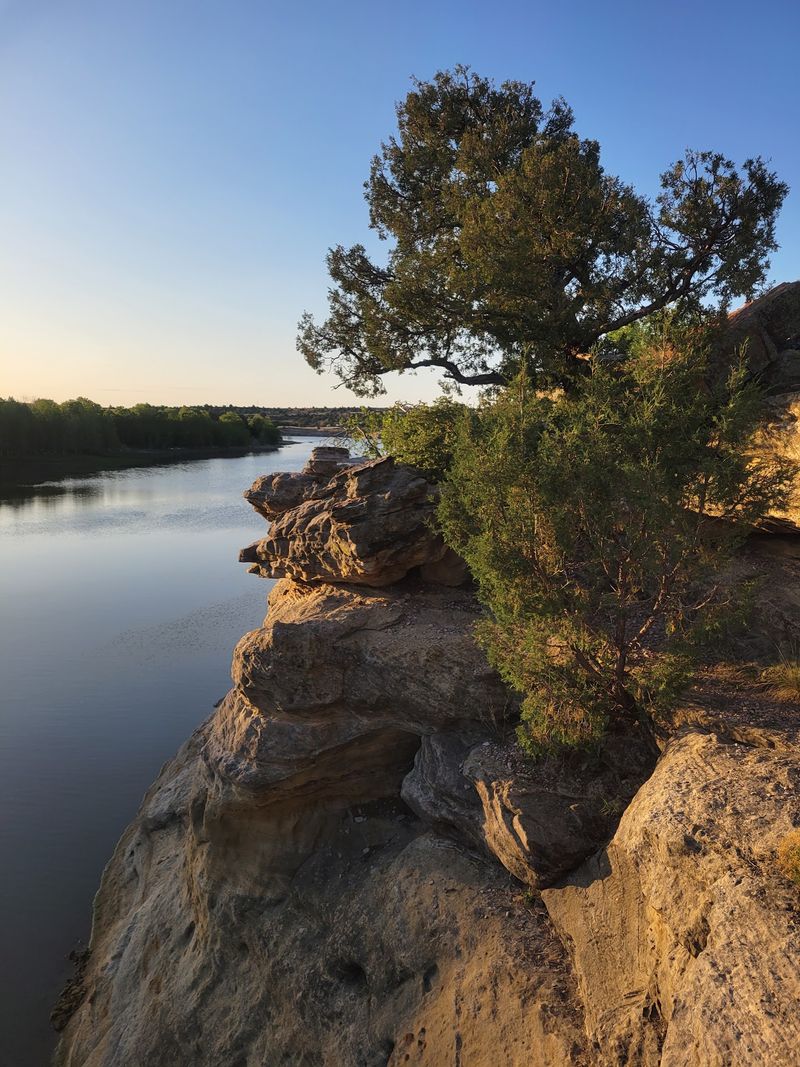
Dinosaur footprints by day and star clusters by night make an odd but wonderful pairing. Clayton Lake State Park sits roughly fifteen miles north of the town of Clayton, in Union County, located in the far northeastern corner of the state.
Park staff earned the first International Dark Sky Park title in New Mexico here, complete with a Gold level certification. That badge means the darkness is not just good, it is protected on purpose.
I love that the park keeps a fourteen inch Meade telescope at its lake observatory for public use. Monthly stargazing events are timed with the new moon, when the sky goes at its inkiest and the Milky Way looks almost solid.
Before the sun drops, take the interpretive boardwalk near the lake spillway. More than five hundred preserved dinosaur tracks are pressed into the rock there, left behind by at least three different species long before anyone thought to name a constellation.
The lake itself is a modest reservoir ringed by rolling grasslands, volcanic rock, and sandstone bluffs. Canoes and kayaks remain allowed, but the boat ramp is closed and motorized vessels are prohibited.
Practical tips matter out here. Fill your gas tank in Clayton, bring layers because grassland nights cool off fast, and swap your white flashlight for a red one so your eyes stay adjusted.
Camping on site is the smartest move if you want to stay up past midnight. Rolling back into town on a dark two lane road after hours of sky gazing is not my favorite way to end an evening.
August brings warm days and comfortable nights, plus the chance of Perseid meteors streaking through your field of view. I keep a cheap pair of binoculars handy for scanning star fields, since even modest lenses reveal surprising detail.
Bring a blanket and lie flat on your back for ten quiet minutes. That is when the faint dust lanes inside the galaxy start to separate and the whole thing gains depth.
Few places let you stand in ancient tracks at sunset and count galaxies by ten.
2. Chaco Culture National Historical Park, Nageezi
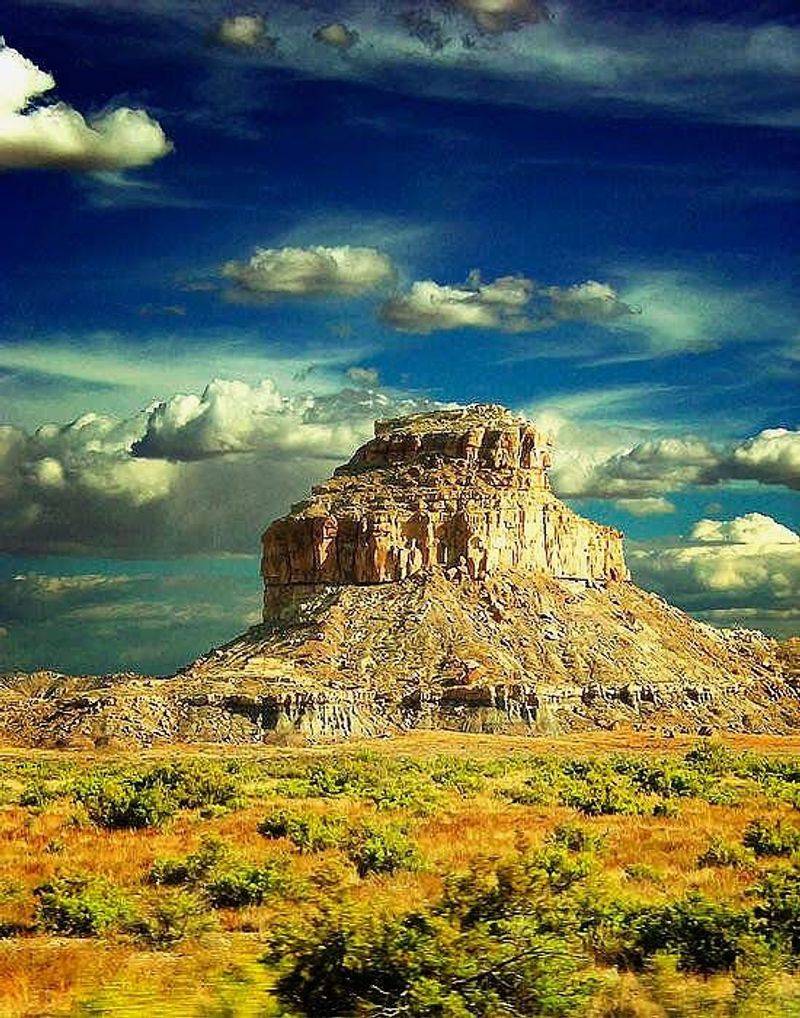
Ancient builders here watched the sky so carefully that their walls still line up with solstice light. Chaco Culture National Historical Park sits at 1808 CR 7950 in Nageezi, deep in the remote high desert of the northwest.
Certification as an International Dark Sky Park came in recognition of skies that stay remarkably pristine. Very little glow reaches this basin, which is exactly why the stars behave so dramatically.
This UNESCO World Heritage Site protects the massive masonry great houses of the ancestral Puebloans. Walking among those doorways and courtyards, I kept thinking about people tracking the same stars I planned to watch that evening.
Night sky programs and lectures on ancestral Puebloan astronomy run during the warmer months. A permanent observatory near the visitor center houses telescopes aimed at nebulae, star clusters, and distant galaxies.
The access road deserves respect. Long stretches of dirt lead in, and rain can turn them slick, so check road conditions before you commit and drive slowly with plenty of fuel.
Gallo Campground is your best bet for overnight stays, and reservations go quickly in summer. Once you set up camp, you can wander a short distance and have the whole sky to yourself.
Services are almost nonexistent nearby, so haul in water, snacks, and anything else you might want. I learned to pack extra batteries after my red headlamp quit halfway through an evening.
August evenings can bring quick monsoon storms in the late afternoon that clear out by dark. Those cleaned out skies often turn into the sharpest viewing of the whole trip.
Give your eyes a full twenty minutes without looking at a phone screen. The Milky Way slowly thickens overhead until you can trace it from one edge of the canyon to the other.
Daytime tours through Pueblo Bonito add real context to what you see later. Understanding how carefully these structures track celestial cycles makes the night feel less like scenery and more like conversation.
I left with dusty boots, a stiff neck, and a head full of stars.
3. Capulin Volcano National Monument, Capulin
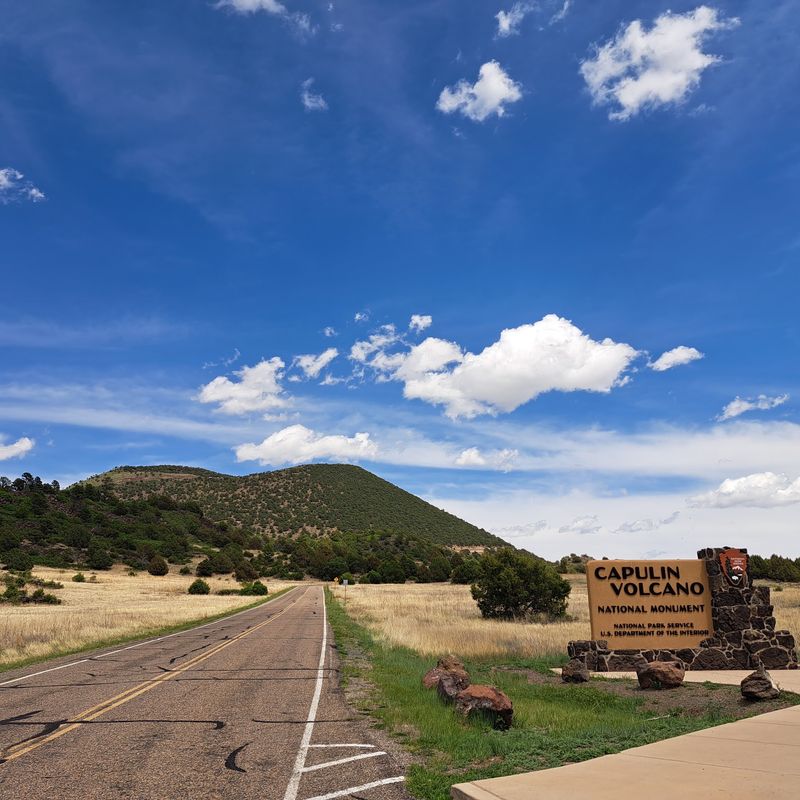
Standing on the rim of an extinct cinder cone while the galaxy rises is hard to top. Capulin Volcano National Monument sits at 46 Volcano Highway in Capulin, Union County, out in the northeastern grasslands.
Gold Tier status arrived here from the international dark sky community, which reserves that ranking for truly exceptional darkness. High elevation and bone dry air do most of the heavy lifting.
A paved road spirals up the cone to a parking area near the top. Short trails then take you around the crater rim, where the view sweeps across four states worth of plains.
Star Parties run seasonally from spring into early fall, usually with ranger talks and telescopes set up for the public. Planets, nebulae, and faraway galaxies all make appearances on clear nights.
What I appreciate most is the dedicated night sky viewing area near the base, open around the clock. If you cannot make an official program, you can still pull in and look up whenever the mood strikes.
Rim access at night follows specific rules, so ask a ranger about current hours before you plan a summit sit down. Wind up there can be brisk even in August, so bring a windbreaker.
My favorite plan is a late afternoon hike on the crater rim trail as the light turns gold. Watching the shadow of the volcano stretch across the plains never gets old.
The village of Capulin is tiny, and the town of Raton offers more lodging and food options within an easy drive. Fuel up before dark since services close early in the area.
Bring a red filtered light, sturdy shoes for uneven volcanic gravel, and a reclining chair if you have space. Neck strain is the only real hazard of a great stargazing night.
Meteor watchers do well here in mid August when the Perseids peak. The wide open horizon means you catch streaks low in the sky that trees would normally hide.
Volcanoes are usually about fire, but this one gave me a night of quiet light.
4. Gran Quivira, Salinas Pueblo Missions National Monument, Mountainair
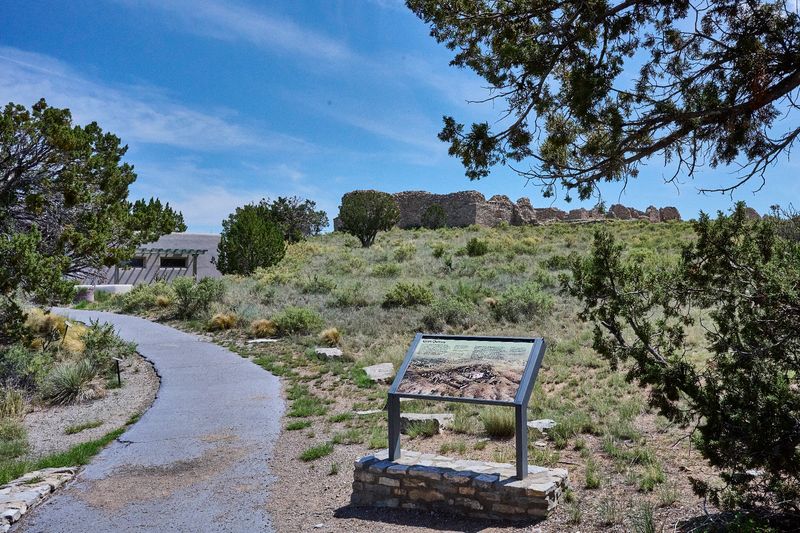
Ruins of a Spanish mission church and an ancestral Puebloan village share a hilltop here, and the views run for miles. Gran Quivira sits along NM-55 near Mountainair in Torrance County, part of Salinas Pueblo Missions National Monument.
Accreditation from DarkSky International honors how little artificial light reaches this quiet corner. The Manzano Mountains to the west block distant town glow like a natural curtain.
Panoramic sightlines stretch roughly a hundred miles on clear days. At night that openness means the Milky Way climbs from a completely uncluttered horizon rather than peeking over rooftops.
Current 2026 dark sky programs are scheduled at Abó. Those events can include ranger-guided sunset walks through the mission and pueblo, followed by stargazing with park telescopes after dark.
Visitors are asked to bring red filtered flashlights to help preserve their night vision. That simple precaution matters because one stray white beam can force nearby stargazers’ eyes to readjust to darkness again.
Daytime exploring is worthwhile on its own. Stone walls, kiva outlines, and church foundations tell the story of a trading community that once thrived on this windy limestone ridge.
Mountainair is your base town for meals, fuel, and a bed. The drive out to Gran Quivira is straightforward, which makes a daytime visit easy to plan around the current posted summer park hours.
Check current hours ahead of time, because Gran Quivira is not open all night for casual visits. Summer hours end at 5 p.m., and 2026 night events are scheduled at Abó.
Pack a light jacket even in August. The elevation cools things off quickly once the sun drops behind the mountains, and standing still for an hour makes you feel it.
Binoculars help you pick out the star clouds in Sagittarius, which sit high and bright during late summer evenings. Rangers often point out where to aim.
Combining a walk through centuries old walls with a telescope view of Saturn is my kind of double feature. History and astronomy trade places without missing a beat.
I drove back to town grinning like someone who had just been let in on a secret.
5. El Morro National Monument, Ramah
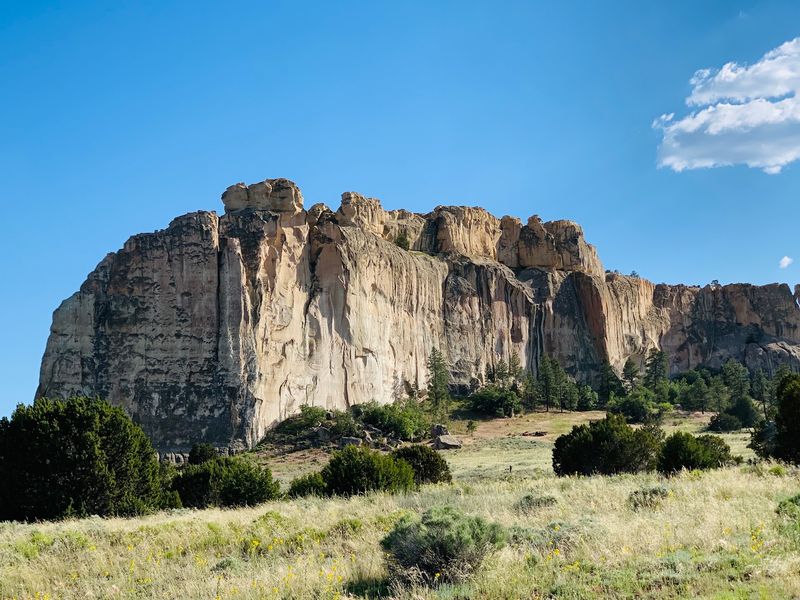
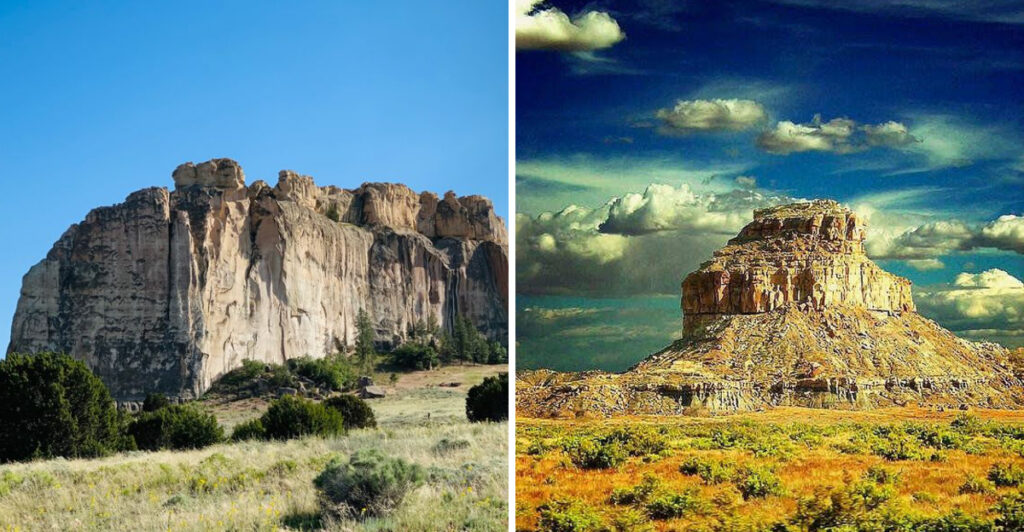
Travelers have been leaving their marks on this sandstone bluff for centuries, and the sky above it is just as memorable. El Morro National Monument sits along NM-53 near Ramah in Cibola County, out in the northwestern high country.
Certification as an International Dark Sky Park came in December of a recent year, and the park has leaned into that identity ever since. Staff work with neighbors nearby to keep outdoor lighting shielded and low.
Inscription Rock is the star attraction during daylight. Thousands of carvings cover the stone, left by ancestral Puebloans, Spanish explorers, and later American settlers who all stopped at the dependable pool of water at its base.
A steeper trail climbs to the top of the bluff, where the ruins of an ancestral Puebloan village sit above the valley. The climb is worth it for the wide views alone.
Once the desert air cools, elevation and clean atmosphere combine into ideal conditions. The Milky Way appears as a wide band running horizon to horizon, and it looks almost close enough to touch.
Stargazing events happen periodically, so a quick call or website check before your trip pays off. Trail hours are limited, so plan your hiking earlier and your sky watching after.
A small campground operates near the visitor center on a first come basis, which makes staying late much simpler. Sites are basic, quiet, and close to open sky.
Grants and Gallup are the nearest towns with full services. I always top off my tank and grab groceries before heading out along NM-53, since options thin out quickly.
August afternoons often bring brief storms that scrub the air clean. Watching the clouds break apart at sunset feels like the opening act for the main show.
Bring a star chart app with a red night mode and let the phone stay dim. Learning to spot the Summer Triangle takes about five minutes and improves every night that follows.
Old signatures on stone below, brand new galaxies overhead, and nothing but crickets for company.
6. Valles Caldera National Preserve, Jemez Springs
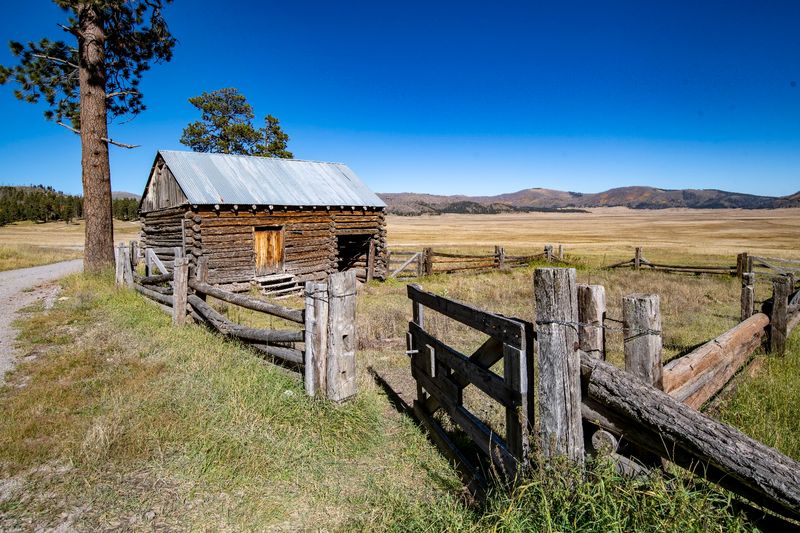
A collapsed supervolcano crater filled with enormous grassy meadows makes an unforgettable place to watch meteors. Valles Caldera National Preserve sits at 39201 NM-4 in Jemez Springs, up in the northern Jemez Mountains.
Dark sky designation arrived here most recently among the state parks and monuments on this list. The broad, treeless valley floor gives you sightlines in every direction with almost nothing in the way.
Daytime brings elk grazing in the distance, winding streams, and hiking trails that lead into ponderosa forest. Wildlife watching in early morning is a treat if you can manage the early alarm.
Pullouts along NM State Route 4 look out over Valle Grande and stay open around the clock. Parking at one of those overlooks and stepping out into the cold air is the easiest stargazing setup imaginable.
Rangers and park partners offer monthly night sky programs, with full moon hikes plus new moon stargazing and astrophotography. Late summer events fill fast, so check the schedule before you drive up.
August is prime time here for the Perseid meteor shower. Streaks come in bursts, and the surrounding mountain ridges frame them beautifully.
Elevation is high, so nights get genuinely chilly even after warm afternoons. I wore a fleece and wool socks in August and did not regret a single layer.
There is no camping inside the preserve, so plan on lodging in Jemez Springs or Los Alamos, or nearby national forest campgrounds. Entrance hours for the interior road are limited, which is why the highway pullouts matter so much.
Cell service is spotty along NM-4, so download maps ahead of time. Wildlife crosses the road at night, so keep your speed low on the drive out.
Bring a reclining chair, a warm blanket, and patience. Meteor watching rewards people who settle in for an hour instead of glancing up for five minutes.
Sitting inside an ancient crater with the galaxy overhead is the closest I have come to feeling small in the best possible way. This preserve wraps up any tour of New Mexico skies with real style.
My cocoa went cold, and I did not care one bit.