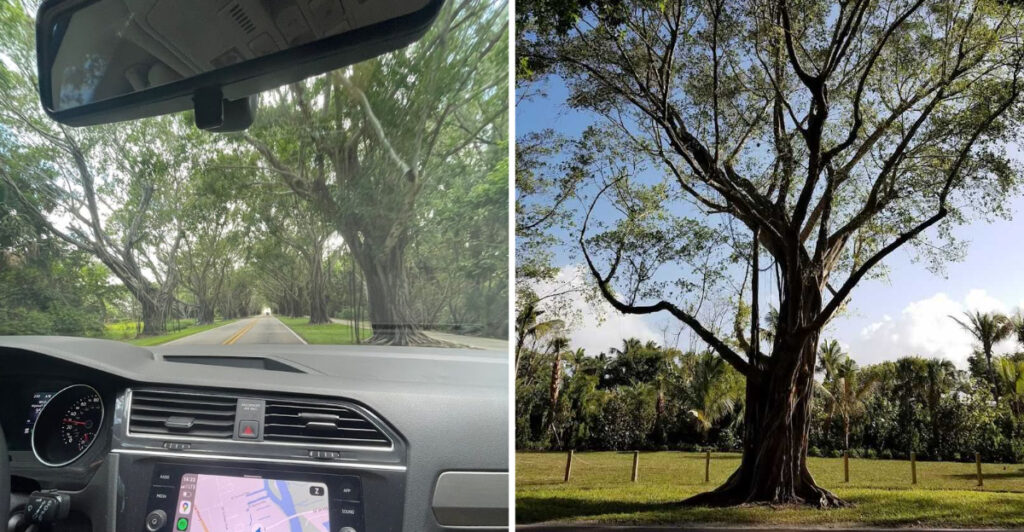
Some drives feel routine. This one changes the mood almost immediately.
Just outside the usual Florida pace, a quiet road pulls you into something slower, cooler, and a little unexpected. The trees lean in, the light softens, and the whole stretch starts to feel less like a shortcut and more like a moment you do not want to rush through.
It does not last for miles and miles, and that is part of what makes it work. The effect is short, focused, and just strong enough to leave an impression without wearing it out.
By the time the canopy opens and the ocean comes into view, the drive already feels complete. This Florida stretch of road proves you do not need distance to create something memorable.
What Makes The Tunnel Of Trees So Special
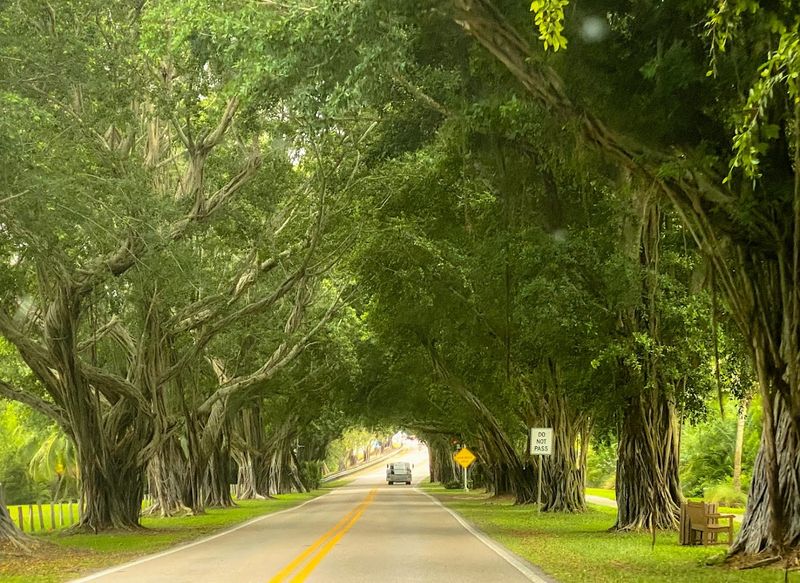
The moment the branches close in overhead, everything changes.
The Tunnel of Trees along SE Bridge Road in Hobe Sound, Florida, is formed by a dense row of banyan trees whose branches stretch and interlock overhead, creating a natural archway above the road.
Banyan trees are not common across the United States, which makes this spot genuinely rare for road trippers and nature lovers alike.
The canopy effect is not something that was designed or engineered by anyone. It simply grew that way over many decades, shaped by the trees themselves reaching toward each other across the narrow lane.
Sunlight filters through the leaves in soft, golden patches, casting a glow that changes depending on the time of day and the season.
Even on a bright afternoon, the road beneath the canopy feels cooler, quieter, and somehow separate from the rest of the world outside it. That combination of nature and atmosphere is what keeps people coming back.
The tunnel runs along SE Bridge Road in Hobe Sound, Florida 33455, which is accessible from US-1 heading east toward the coast.
The Banyan Trees, Most Dramatic Street Lining
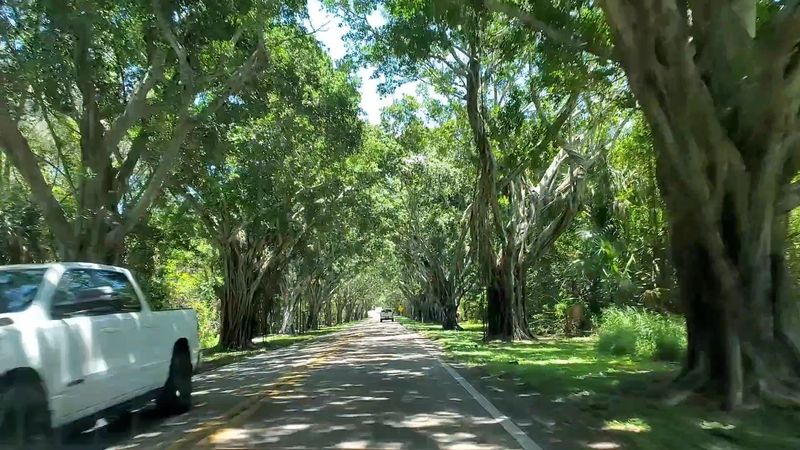
These are not just trees, they reshape the entire road.
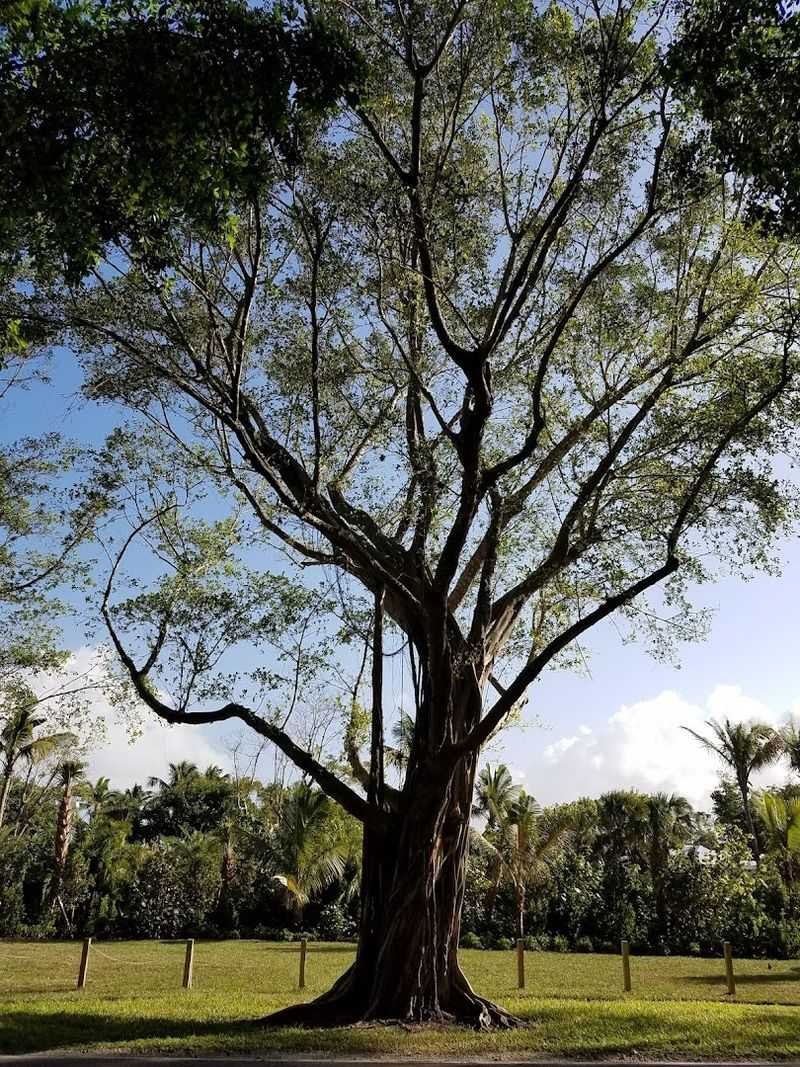
These towering giants grow aerial roots that drop from their branches all the way down to the ground, creating a layered, almost cave-like structure that looks more like a fantasy set than a real Florida street.
The banyans lining SE Bridge Road are mature trees with thick, gnarled trunks and wide-spreading canopies that have had years to develop into their current dramatic shape.
One of the oldest trees in the tunnel survived a tornado that swept through the area in June 2024, which says a lot about how deeply rooted and resilient these trees truly are.
Banyan trees originally come from South Asia and were introduced to Florida over a century ago, eventually thriving in the warm, humid climate the state is known for.
Seeing them line a road so completely, branch touching branch across the sky above, is a reminder that the natural world has a flair for the theatrical that few other states can match.
How Long Is The Tunnel And What Should You Expect
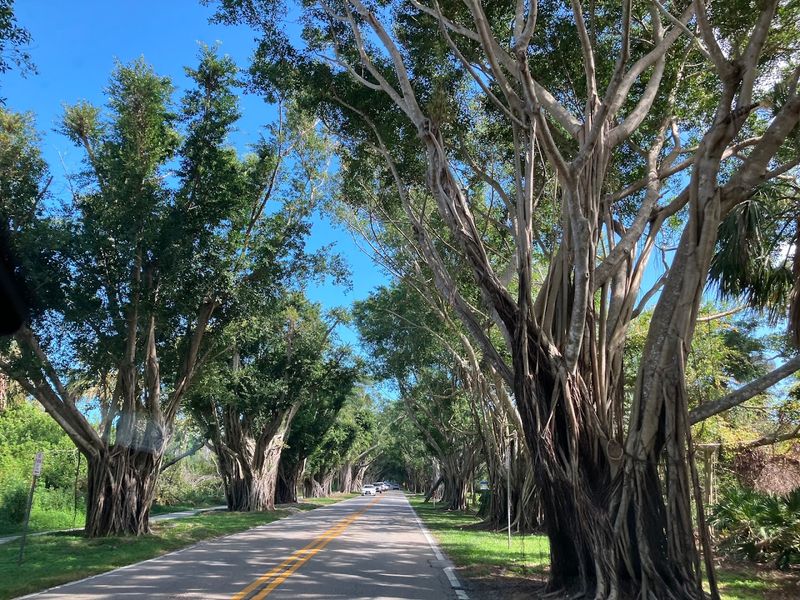
Honest expectations go a long way when planning a visit to the Tunnel of Trees.
The tunnel itself is not a 20-mile stretch of unbroken canopy. The densest and most photogenic section of the tree-lined road is roughly half a mile to one mile long, concentrated along SE Bridge Road near Hobe Sound Beach.
Some visitors have arrived expecting something much longer and left feeling surprised by the scale, but that reaction misses the point entirely.
The quality of the experience is not measured in miles. The depth of the canopy, the stillness of the air underneath it, and the visual beauty of banyan branches weaving together overhead are what make this stretch memorable.
The road also leads directly to a beach parking area, so the drive through the tunnel ends with a bonus reward waiting at the other side.
Combining the tunnel with a beach visit turns a short scenic drive into a genuinely full and satisfying half-day outing worth the trip.
The Best Time To Visit For That Magical Light
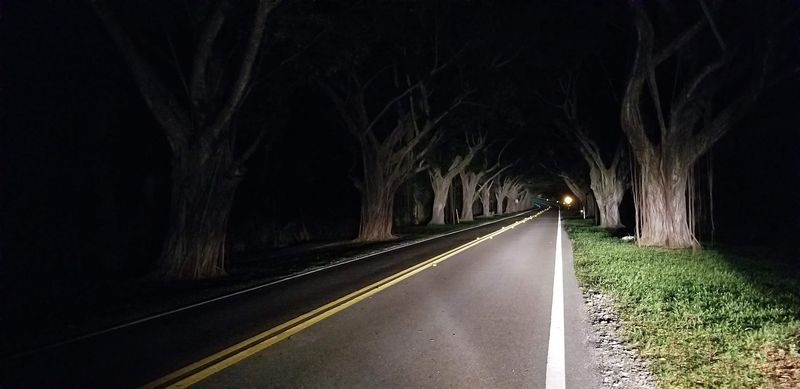
Timing turns a nice drive into something unforgettable.
Sunset is widely considered the best time to pass through, when the low Florida sun sends warm golden light slicing through the gaps in the canopy and painting the road in shades of amber and green.
Early morning visits offer a completely different mood. The air is cooler, the light is soft and diffused, and the road is usually quiet enough to stop, step out, and take it all in without feeling rushed.
Midday visits are perfectly fine but tend to produce harsher shadows and brighter contrasts that can be less flattering for photography, though the dappled light is still beautiful in its own way.
The tunnel is accessible around the clock, every day of the week, which means there is no wrong time to visit.
Visiting on a weekday morning tends to mean fewer cars and more room to slow down, pull over safely, and really absorb the atmosphere that makes this Florida landmark so hard to forget.
Walking And Biking Through The Canopy
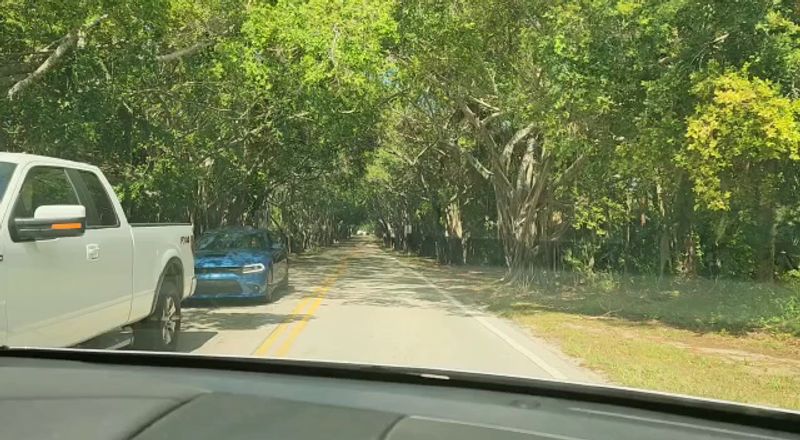
Driving through the Tunnel of Trees is one experience, but traveling it on foot or by bike is something else entirely.
Slowing down to a walking pace allows visitors to notice details that blur past a car window: the texture of banyan bark, the way aerial roots hang like curtains between trunks, and the sound of birds calling from somewhere deep in the canopy above.
The road is used by runners, cyclists, walkers, and golf cart riders, making it a lively little corridor that feels like a shared community path as much as a tourist attraction.
Biking through the tunnel is especially popular with visitors staying in the Hobe Sound area, since the route connects directly to the beach and makes for a scenic and practical route all in one.
The road surface is paved and manageable, though staying alert to passing cars is always a smart habit on any shared road.
For anyone who wants to feel fully immersed in the canopy rather than just passing through it, arriving on two wheels or two feet is absolutely the way to go.
The Reward At The End Of The Road
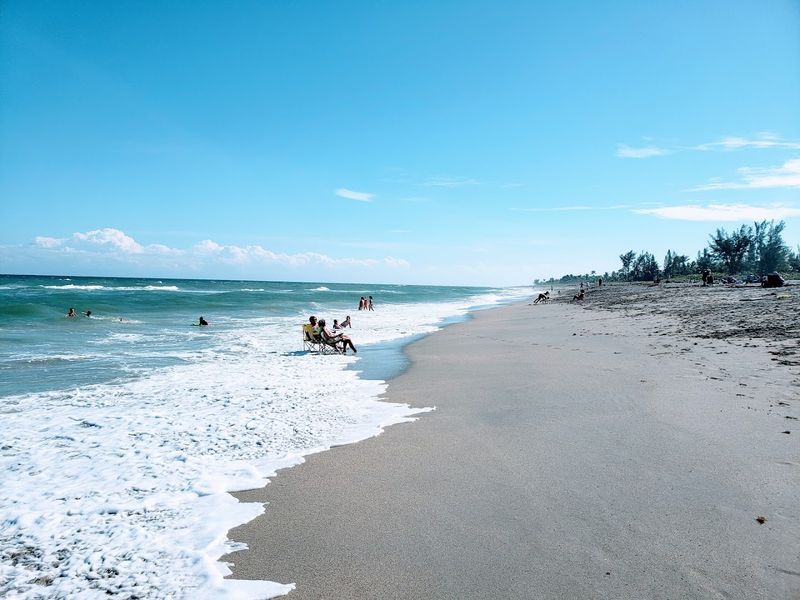
The tunnel does not end at a traffic light or a strip mall.
It opens up into the parking area for Hobe Sound Beach, one of the quieter and more unspoiled stretches of Atlantic coastline in Florida, which makes the entire drive feel like a journey with a genuinely satisfying destination.
The beach sits on a barrier island and is known for its natural setting, with sea grape plants and dune vegetation lining the shore rather than rows of hotels and souvenir shops.
Sea turtle nesting activity is common along this stretch of coast, and the area is managed with conservation in mind, which helps preserve the calm and undeveloped feel that sets it apart from busier beaches.
A small parking lot near the beach gives visitors a place to stop, stretch their legs, and take in the view before or after passing through the tunnel.
Pairing the canopy drive with even an hour at the beach turns the whole outing into one of the more complete and relaxing experiences the area has to offer.
Photography Tips For Capturing The Tunnel
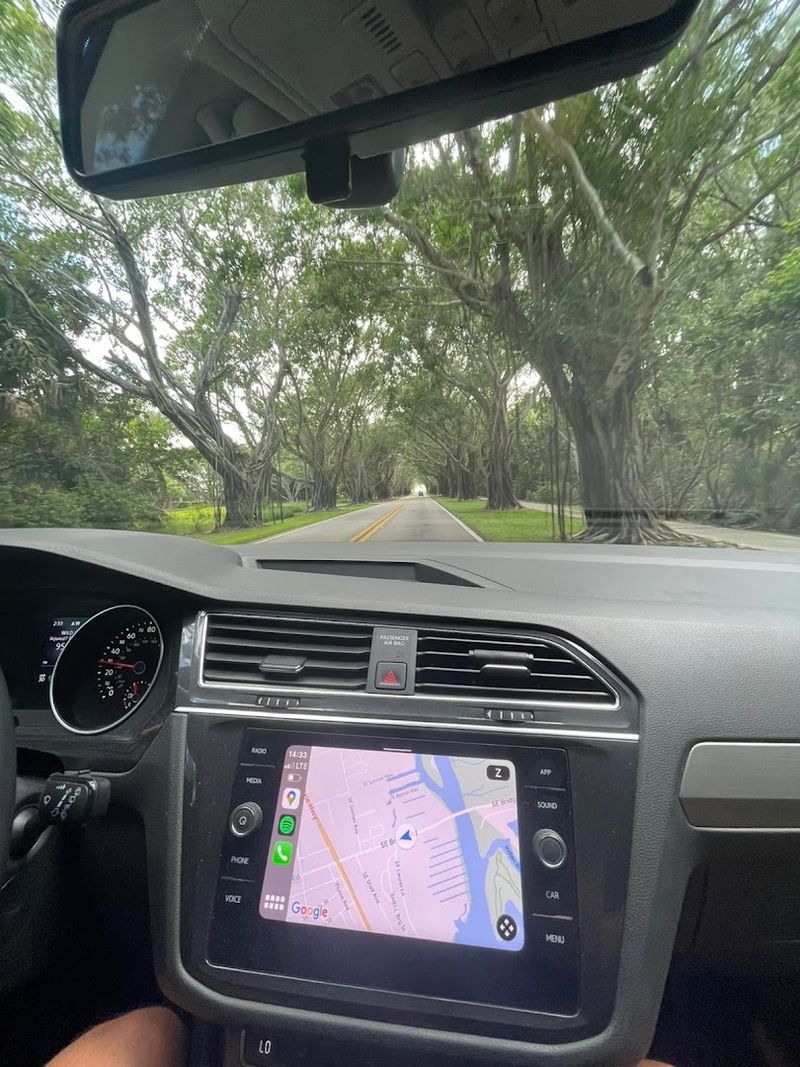
This is one place where angles make all the difference.
Shooting during the golden hour, either just after sunrise or in the hour before sunset, produces the most dramatic light as warm rays break through gaps in the canopy and create natural spotlights on the road below.
Standing low and pointing the camera upward toward the interlocking branches gives a sense of scale and depth that a straight-on shot simply cannot capture.
There is a pull-off area on the right side of the road heading toward the beach where visitors can park temporarily and step out for photos without blocking traffic.
Using a wide-angle lens or the widest setting on a smartphone camera helps capture the full arch of the canopy from one side to the other.
Early weekday mornings offer the cleanest shots with the fewest cars passing through, which makes composition much easier and the final images far more peaceful-looking than a busy weekend afternoon would allow.
The Tornado Of 2024 And The Trees That Bounced Back
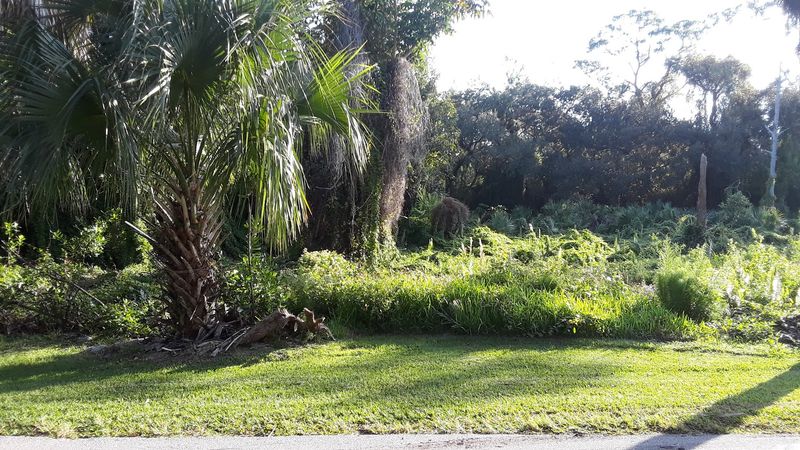
Nature built the Tunnel of Trees, and in June 2024, nature also tested it.
A tornado touched down near Hobe Sound and caused damage along parts of SE Bridge Road, toppling and damaging approximately 22 trees within the tunnel corridor.
The response from the local community was immediate. Damaged trees were pruned, and several that had been knocked over were re-rooted and propped back up in an effort to preserve as much of the canopy as possible.
Remarkably, the oldest tree in the tunnel survived the storm without being uprooted, which became a small symbol of the resilience that the area is known for among its residents.
As of recent visits, the tunnel still looks beautiful. The section closest to Dixie Highway took the hardest hit, while the stretch near the beach retained most of its original canopy character.
The recovery of the Tunnel of Trees is ongoing, and many who visit today are pleasantly surprised to find that the experience still delivers the same sense of wonder it always has.
Getting There And Finding Your Way Around
Finding the Tunnel of Trees is straightforward once you know what to look for on the map.
Hobe Sound sits in Martin County, roughly halfway between West Palm Beach and Fort Pierce, making it a convenient stop for anyone traveling along Florida’s Treasure Coast.
The coordinates for the tunnel entrance are approximately 27.0630 degrees north latitude and 80.1262 degrees west longitude for those using GPS navigation.
Parking is available near the beach at the eastern end of SE Bridge Road, and there is also a small pull-off area along the tunnel stretch itself for brief stops and photos.
The road is open around the clock, so there is no need to plan around specific hours or worry about arriving too early or too late.
Coming from the south via I-95, take the Hobe Sound exit and follow the signs toward the beach to reach SE Bridge Road without any confusion.