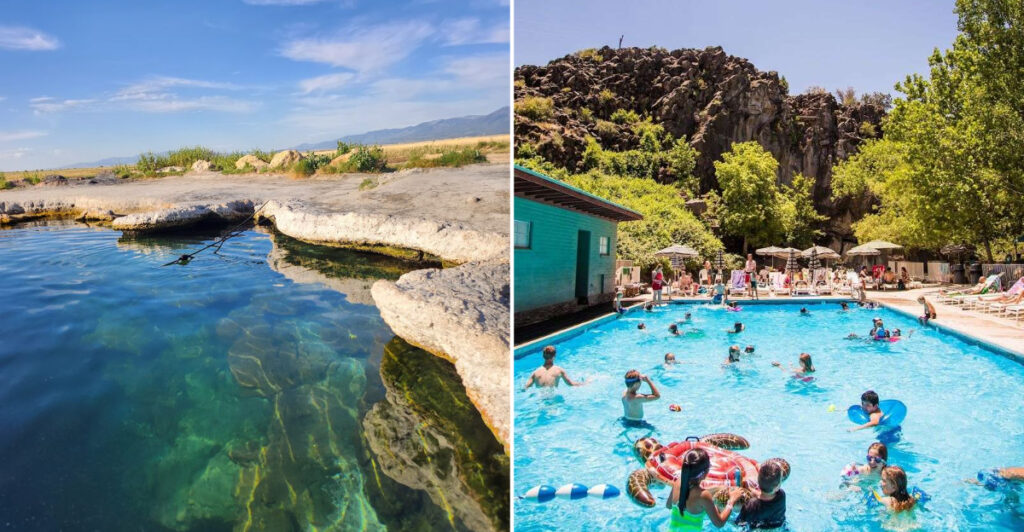
A great hot spring does not need marble tiles to feel unforgettable. Sometimes the magic is a rough road, a huge sky, and water warm enough to make your phone seem unimportant.
Out in the quieter stretches of Utah, soaking feels less like an amenity and more like the entire reason you came. Some pools are polished and easy, while others trade changing rooms and cocktail menus for open country, simple surroundings, and plenty of breathing room.
That contrast is part of the fun. You can stretch out, watch the light shift, and let the day lose its urgency one minute at a time.
Before heading out, bring a towel, check road and weather conditions, and be ready for fewer frills than usual. The reward is straightforward: warm water, wide views, and nowhere else you need to be.
For travelers crossing Utah, that kind of pause can become the highlight.
1. Zion Canyon Hot Springs, La Verkin
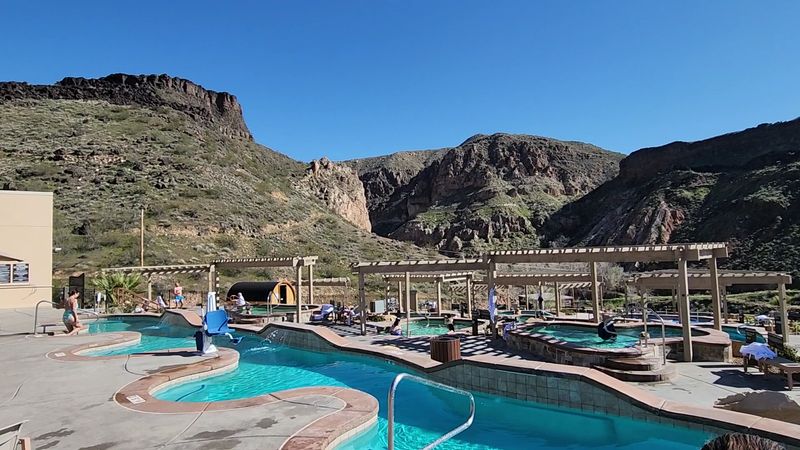
Scale is the first thing to notice at Zion Canyon Hot Springs. In a state with many small natural pools, this La Verkin property goes big, with 32 natural mineral hot spring pools, plus additional mineral pools and freshwater areas for visitors who like options.
Zion Canyon Hot Springs sits at 202 W 300 S in La Verkin, a practical base area for travelers moving between southern Utah towns and Zion National Park country. The site is open daily and operating in 2026, which makes planning easier than chasing a remote spring after a long drive and discovering your map app has been overconfident again.
The appeal here is not rugged solitude. It is space, variety, and a soaking setup built for lingering without asking everyone in your group to agree on one temperature or one pool.
Families can appreciate the developed layout, couples can pick a quieter corner, and road trippers can turn a stiff-car-leg afternoon into actual recovery. For anyone wanting an enormous hot spring experience in Utah with resort-style structure, this is the heavyweight on the list.
2. Crystal Hot Springs, Honeyville
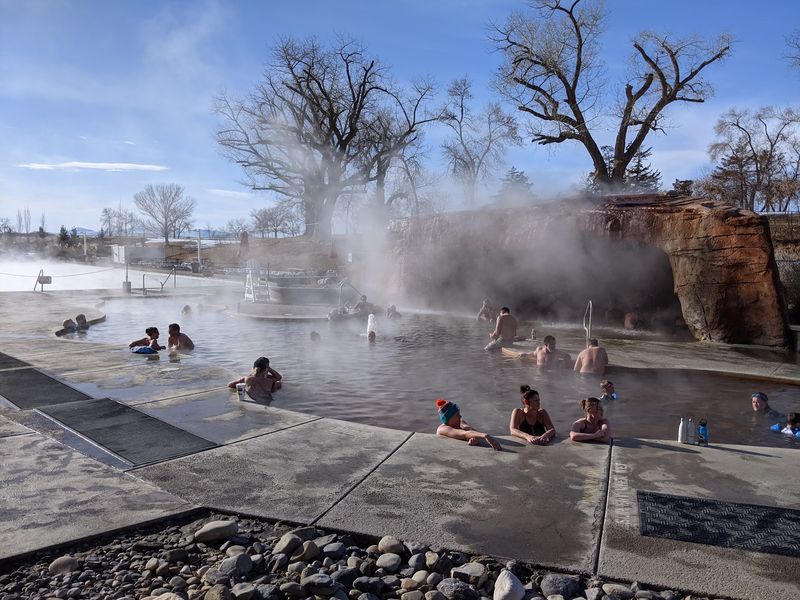
A good soaking complex should not require a committee meeting, and Crystal Hot Springs helps by offering several ways to get wet. Located at 8215 N Highway 38 in Honeyville, the year-round property has several hot pools, a large soaking pool, a swimming pool, and additional water features.
Crystal Hot Springs is often discussed for its mineral water, and the developed setting makes it one of northern Utah’s most approachable large hot spring stops. Instead of a single rocky basin where everyone politely pretends not to notice each other’s elbows, visitors get a broader complex with room to choose how long and how warm the visit should be.
That variety matters for mixed groups. One person may want a long soak, another may want a swim, and someone else may simply want to sit without turning the outing into a backcountry project.
Because it is open year-round, Crystal Hot Springs also works as a cold-season plan when outdoor recreation can get complicated. Check current hours before going, then let the pools settle the debate over who planned the better day.
3. Belmont Hot Springs / Udy Hot Springs, Garland
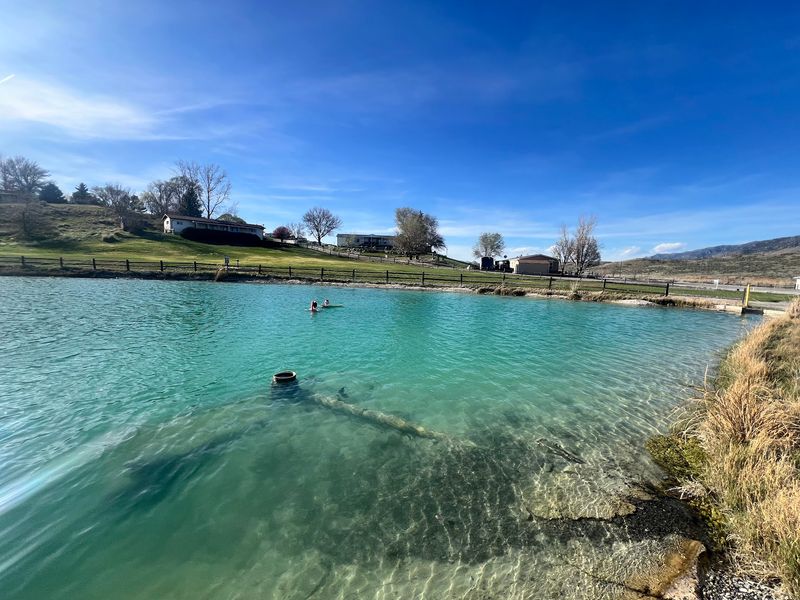
Belmont Hot Springs / Udy Hot Springs has the useful confidence of a place that keeps the focus simple. The Garland property, at 5600 W 19200 N, currently lists two natural hot spring pools, with temperatures around 97 degrees and 104 degrees.
Those two temperatures give visitors a clear choice: warm enough for a long, mellow soak or hotter when you want the classic mineral pool experience. Current information lists hot spring access from 9 a.m. to 10 p.m., which gives travelers a wide planning window without needing to build the entire day around one narrow time slot.
The setting is in northern Utah farm country, and the destination is more straightforward than flashy. That can be a virtue.
Belmont Hot Springs / Udy Hot Springs is not trying to win anyone over with a maze of features; it is built around geothermal water, soaking time, and the rare pleasure of not overcomplicating a recreational plan. For readers who want an established hot spring rather than a rough roadside scramble, Garland’s option stays satisfyingly direct.
4. The Homestead Crater, Midway
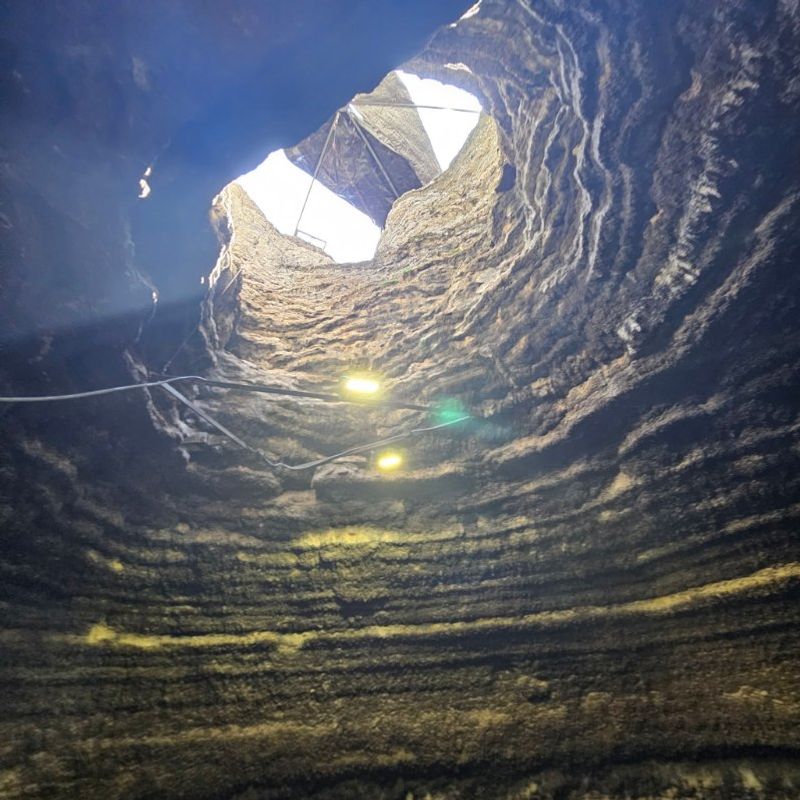
Few hot springs in Utah make an entrance quite like The Homestead Crater. Instead of a normal pool set into the ground, visitors enter a huge limestone dome in Midway, where geothermal water fills a crater more than 65 feet deep.
The formation itself is the headline. The limestone dome is more than 200 feet across, making it one of the state’s most memorable individual geothermal features.
Current soaking and swimming sessions operate seven days a week, and the developed access helps make the experience more controlled than wandering up to a wild spring with a towel and a hopeful attitude.
The Homestead Crater is especially useful for travelers who want scenery with structure. The water is indoors within the crater, so the visit feels different from open-air soaking pools elsewhere on this list.
Reservations and session details should be checked through the current operator before heading to Midway, since organized time slots are part of the experience. For anyone who likes geology served with their relaxation, this crater adds a solid dose of wonder to the soak.
5. Meadow Hot Springs, Meadow
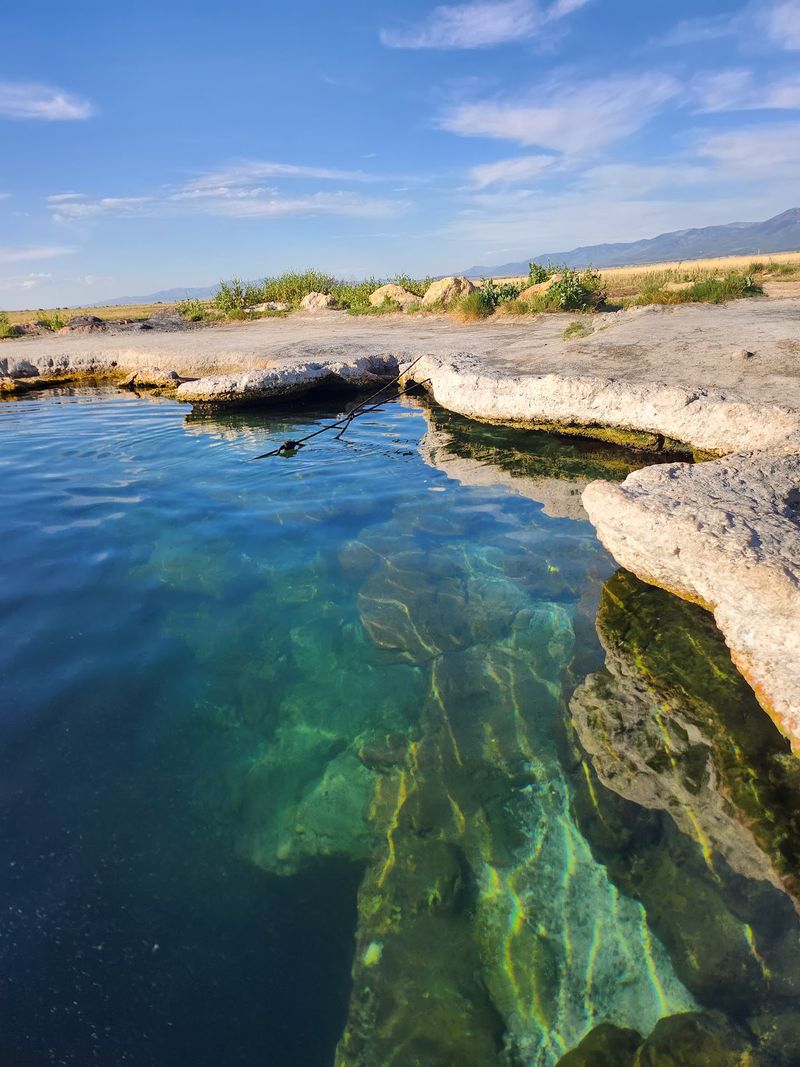
Meadow Hot Springs is the kind of place where the setting does half the explaining. West of the town of Meadow, three natural pools sit on privately owned land where visitors are permitted, a generous arrangement that depends on respectful use.
The main pool is the best-known feature: clear, deep, and averaging around 100 degrees. That combination gives Meadow Hot Springs a different feel from shallow soaking tubs or developed resort pools.
It is accessible year-round, but the unbuilt nature of the site means visitors should arrive prepared, pack out trash, and avoid treating private land like a theme park with worse signage.
Because this is not a managed commercial complex, practical judgment matters. Road conditions, weather, and personal comfort with rural access should shape the plan.
Meadow Hot Springs rewards travelers who like a simpler, more open Utah soak, but it asks for better manners than some public places receive. Keep dogs, noise, and litter under control, and the experience remains what makes it appealing: warm water, broad space, and very little unnecessary decoration.
6. Mystic Hot Springs, Monroe
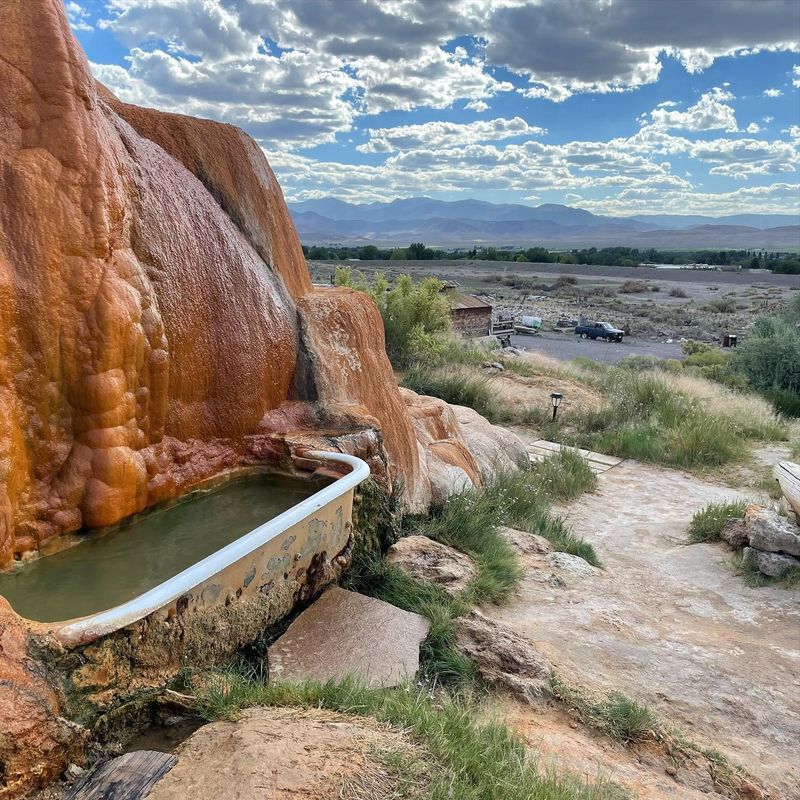
Mystic Hot Springs has a personality before anyone even reaches the water. The Monroe property is known for multiple soaking pools and its distinctive individual soaking tubs, where mineral deposits create orange-toned terraces that look like the plumbing has been collaborating with geology.
Located at 475 E 100 N, Mystic Hot Springs is open and taking soaking reservations in 2026. Temperatures are listed around 100 to 111 degrees, which gives soakers a range from mellow to properly toasty.
The reservation system is important, since this is not a casual drop-in-anytime public spring.
The place also carries a strong sense of reuse and oddball design, especially with the old tubs set into the mineral landscape. That makes Mystic Hot Springs feel different from both polished resorts and remote desert pools.
Visitors should confirm reservation times, rules, and current conditions before going, then arrive ready for a soak with a little visual character. Among Utah hot springs, Mystic earns its place by mixing geothermal water with a setting that refuses to look corporate, which is rarer than it should be.
7. Saratoga Hot Springs, Saratoga Springs
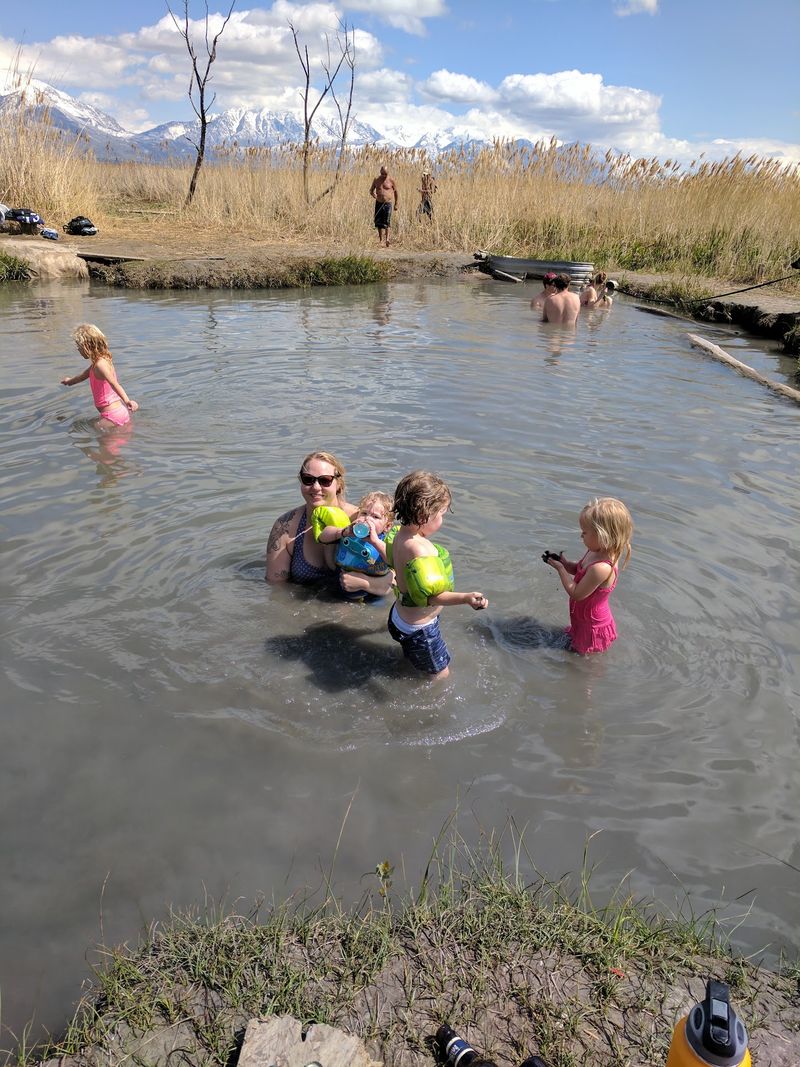
Not every hot spring asks you to leave the city far behind. Saratoga Hot Springs sits by Utah Lake in Saratoga Springs, with access from Inlet Park, making it one of the more urban-adjacent natural soaking areas in the state.
The city identifies Inlet Park as the trailhead for Saratoga Hot Springs, and the park is open daily from 6 a.m. to 10 p.m. The natural spring area includes multiple soaking pools beside the lake, so the experience is less like a resort and more like a public-access shoreline soak that happens to come with warm geothermal water.
That public setting calls for realistic expectations. Conditions can vary, and visitors should follow posted rules, respect the park hours, and avoid assuming natural pools will feel as controlled as a paid facility.
Saratoga Hot Springs belongs on this list because it combines multiple pools, lake scenery, and easy city access in a way that is unusual for Utah. It is a practical option when you want warm water without turning the outing into a full expedition.
8. Gandy Warm Springs, Near Gandy
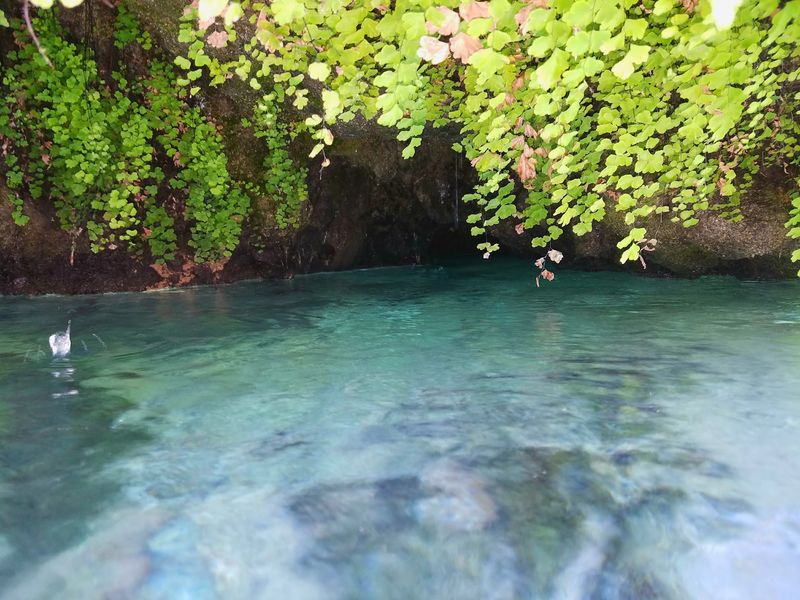
Gandy Warm Springs proves that temperature is not the only measure of a memorable soak. In remote western Millard County, near Gandy, the spring system includes clear pools, a warm creek, small waterfalls, and a cave, which gives the place more variety than its modest 81-degree water might suggest.
Because the water is warm rather than hot, Gandy is better suited to mild-weather soaking and water play than the deep winter fantasy of steaming in a snowstorm. Current BLM-related planning documents recreational use here, including soaking, so it remains a recognized place for visitors rather than a mystery pin passed around in group chats.
The remoteness is part of the planning, not a decorative detail. Travelers should understand that services are limited in this part of Utah, roads may require extra caution, and self-sufficiency matters.
Gandy Warm Springs fits the enormous theme through its spread-out spring system and varied water features rather than a single hot pool. Bring the practical supplies, leave the cave and pools cleaner than you found them, and do not expect resort handrails to appear from the sagebrush.
9. Veyo Pool, Veyo
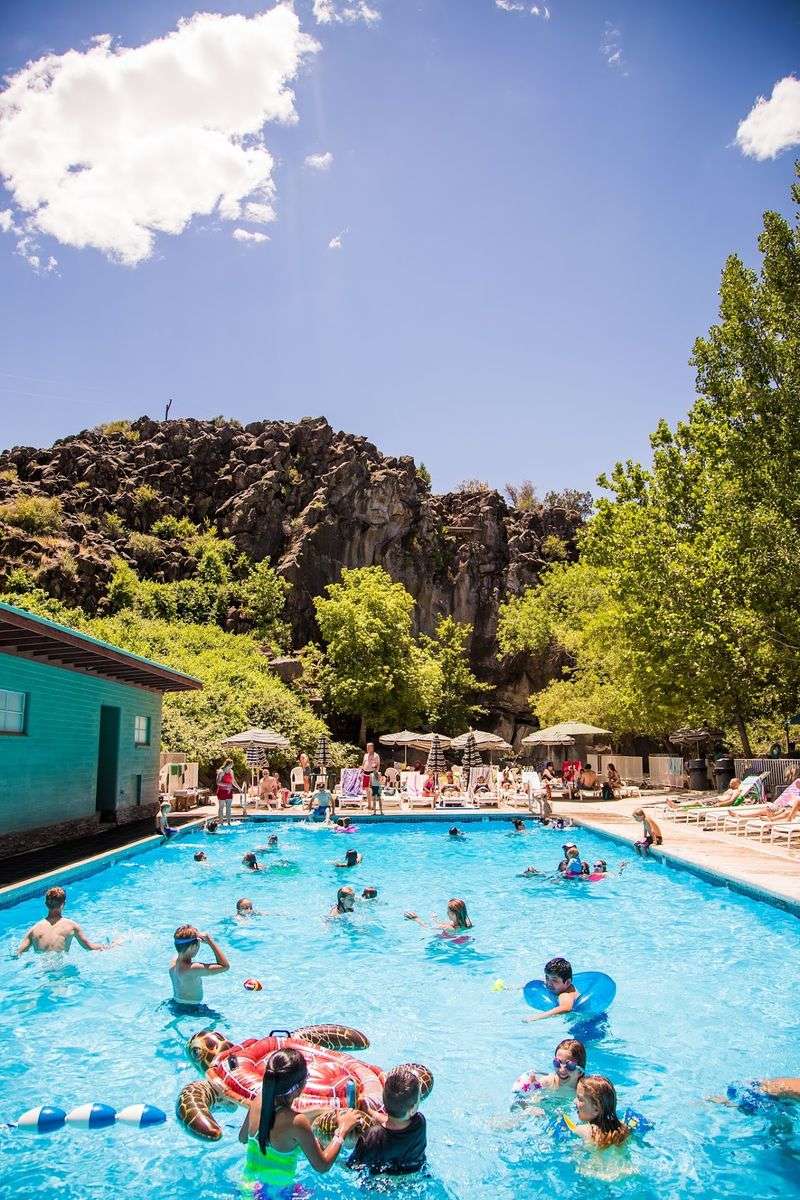
Veyo Pool earns its place with size and friendliness rather than classic hot spring heat. The large natural spring-fed swimming pool at 287 E Veyo Resort Rd in Veyo runs about 89 degrees, so think warm spring swimming, not simmering mineral bath.
That distinction matters, especially for travelers picturing a very hot soak. Veyo Pool is open for its 2026 season and operating through October, giving southern Utah visitors a seasonal water stop that feels more active than a quiet soaking tub.
The big pool format makes it a different kind of entry on this list, useful for families or groups who want room to move around.
Veyo also sits in Washington County’s red rock region, where warm water can be a welcome change after dry hikes, long drives, or the kind of vacation schedule that accidentally becomes a spreadsheet. Check the current season schedule before going, since this is not a year-round hot spring.
For readers who care more about spacious spring-fed water than maximum temperature, Veyo Pool is refreshingly honest about what it offers.
10. Blue Lake, Western Tooele County
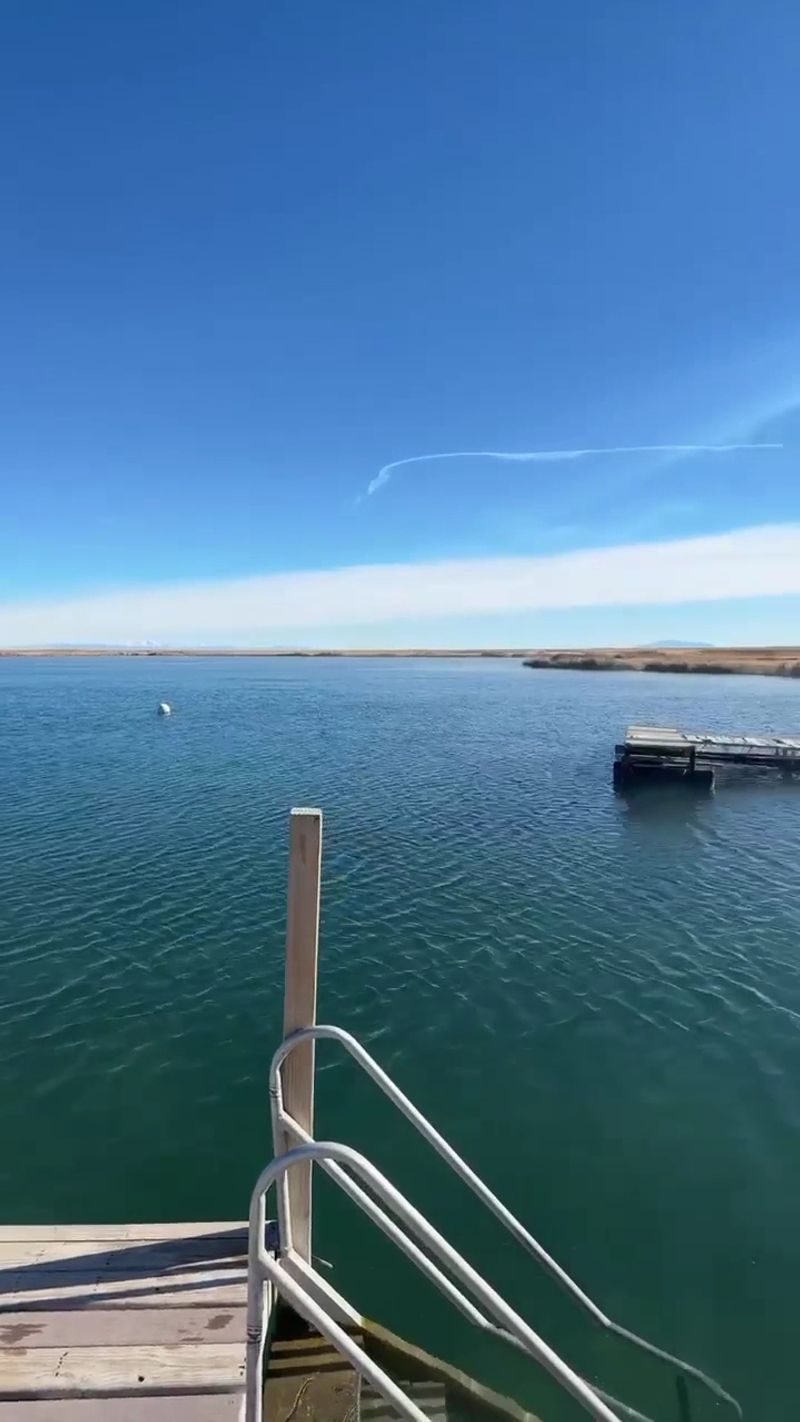
Blue Lake is enormous in the most literal way on this list. South of Wendover in western Tooele County, it is identified by the Utah Geological Survey as the state’s largest natural geothermal pool, covering about nine acres.
The water stays around 84 degrees, which makes Blue Lake a warm geothermal lake rather than a hot soaking pool. That temperature difference is important.
Visitors expecting a spa-like hot spring may be puzzled, while people interested in unusual desert water recreation will understand the appeal much faster.
Blue Lake is currently accessible for water recreation, and its scale sets it apart from every tub, crater, and pool listed here. The landscape is remote, so travelers should check conditions, bring what they need, and treat the site with the extra care that open public recreation areas require.
In a state famous for dramatic geology, Blue Lake adds a quieter surprise: a broad, warm, natural pool sitting in Utah’s west desert. It may not deliver the hottest soak, but it does make the word enormous do honest work.
11. Baker Hot Springs, West of Delta
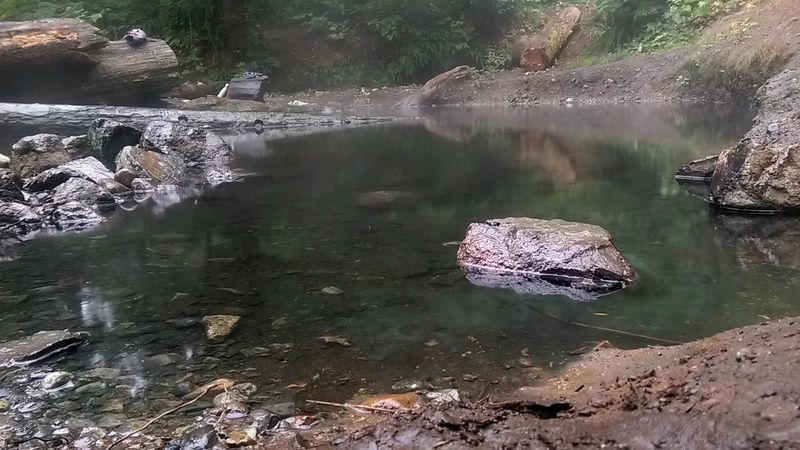
Baker Hot Springs is the honest outlier, and that makes it useful to include carefully. About 30 miles northwest of Delta, the site has three constructed soaking tubs fed by very hot geothermal water and tempered with cooler water.
Millard County Tourism currently lists Baker Hot Springs as accessible, but visitors should not mistake it for a giant developed complex. The tubs are small compared with the largest entries here, and the experience is simple, rural, and self-directed.
Water temperature can vary because visitors control the mix of hot and cool water, so careful testing matters before climbing in.
The surrounding west desert location is part of the practical calculation. Bring drinking water, check road and weather conditions, and do not count on nearby services to solve forgotten supplies.
Baker Hot Springs belongs in a Utah hot springs article because it is a legitimate geothermal soaking site with very hot source water, but it is not enormous. Consider it the compact finale: less grand pool, more old-school soak, and absolutely no room for pretending your towel packed itself.