A town this tiny should come with a magnifying glass. tInstead, it comes with enough personality to hijack your Saturday.
The community counts only 36 residents. That number sounds like trivia until you arrive and realize how quickly a near-invisible dot can become the whole point of the drive.
There is no grand entrance and no carefully staged reveal. The place simply catches you off guard. One stop stretches into two.
A quick look becomes lunch. The afternoon quietly cancels whatever you thought mattered later.
That is the joke here: almost nothing happens, yet leaving early suddenly seems ridiculous.
This corner of Montana is for travelers who still enjoy being surprised. It asks for curiosity, not a schedule, and gives the day room to become better than planned.
You may arrive because the road happened to lead you there. You will remember it because almost everyone else keeps driving.
The Town Keeps Its Footprint Remarkably Small
This town is proof that a ZIP code does not require a crowd.
The community is an unincorporated census-designated place in Beaverhead County. The 2020 Census counted 36 residents across less than one square mile, placing a very small group of neighbors inside a very large landscape.
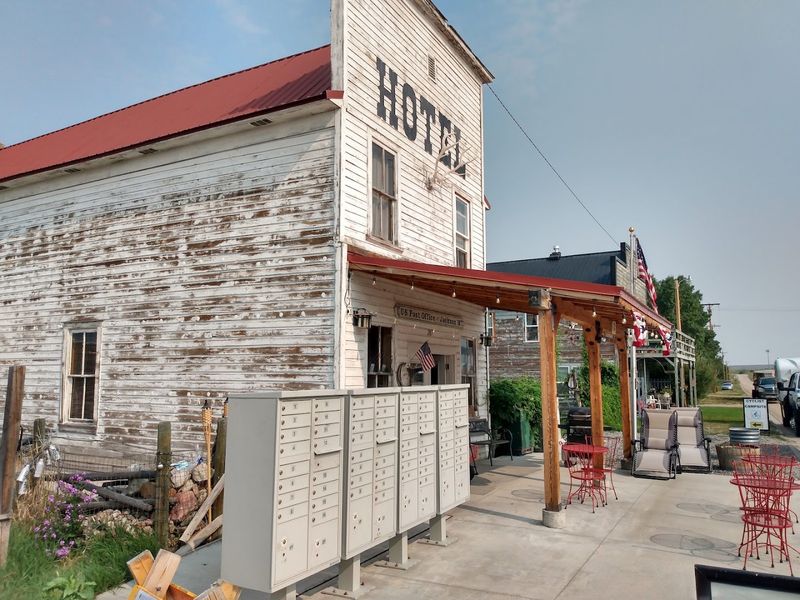
Its official history begins with the mail. The Jackson post office opened on August 1, 1896, and the community was named for Anton H. Jackson, its first postmaster and the proprietor of an early local hotel.
Jackson developed along the route now known as Montana Highway 278, south of Wisdom and northwest of Dillon. It never expanded into a conventional town center with blocks of storefronts and civic buildings.
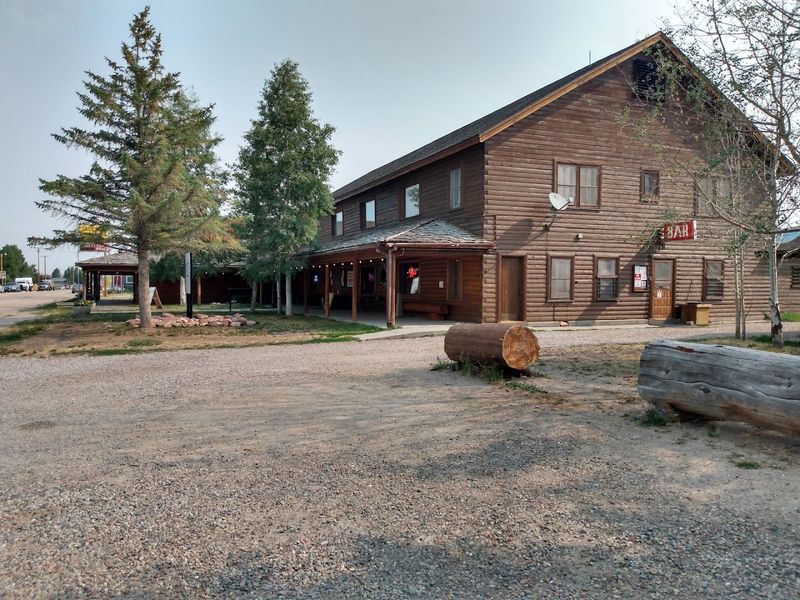
You still find an active rural community rather than an abandoned settlement. The post office, school, lodging, dining, ranch properties, and hot springs keep Jackson connected to the wider county.
The scale changes how you explore. You are not circling for parking or racing between attractions. You are visiting a living settlement where homes and services share space with a working valley.
Its census population could fit inside one tour bus. The surrounding Big Hole could make that bus look like a misplaced breadcrumb.
The Big Hole Valley Gives Empty Space A Starring Role
The Big Hole takes its name seriously, and your camera roll may soon follow.
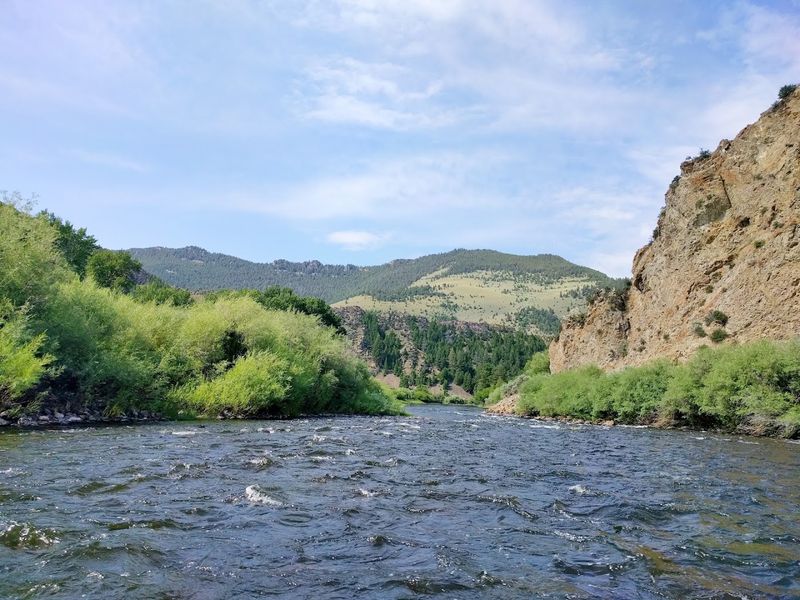
The National Park Service describes it as one of the highest and widest broad mountain valleys in western Montana. Near Jackson, the floor sits close to the headwaters of the Big Hole River, which gathers water from the surrounding high country before flowing north.
Mountains give the basin its unmistakable outline. The Beaverhead Range rises along the western and southwestern sides, the Pioneer Mountains stand to the east, and the Anaconda Range closes the northern distance.
The openness does not mean the land is unused. Hay production has long shaped the Big Hole River Valley, and ranches occupy broad stretches of the floor.
Summer brings green fields and long daylight, while colder seasons can arrive with severe weather and difficult roads. Check forecasts and road reports before heading out, particularly outside the warmest months.
Once you arrive, the geography does nearly all the work. Roads cross pastureland, mountain walls hold the horizon, and the lack of dense development lets you view the valley as a connected whole.
The horizon handles most of the conversation here, and it never asks for a microphone.
Highway 278 Makes The Arrival Part Of The Trip
Highway 278 does not hurry its introductions. Jackson Hot Springs is listed 47 miles from Dillon along the highway, giving you nearly an hour of paved-road travel before the community comes into view.
The route leaves the interstate corridor, crosses open southwestern Montana terrain, and drops toward the Big Hole basin.
Sagebrush slopes gradually give way to hayfields, ranch entrances, creeks, and wider views. The road has curves and elevation changes, but it is a regular state highway rather than a remote dirt track.
The landscape can look farther removed from services than the pavement suggests. Weather, snow, livestock, wildlife, and long distances still deserve your attention on a maintained route.
Give yourself time beyond the basic driving estimate. Pullouts and broad views can slow the trip for good reasons, and rushing defeats the best part of taking it.
Dillon makes a practical place to check fuel, supplies, weather, and road conditions before turning northwest. Jackson also lies about 17 miles south of Wisdom, so Highway 278 can become part of a longer valley route.
By the time you reach town, the road has already edited much of the city noise out of your day.
Jackson Hot Springs Brings Heat To The High Country
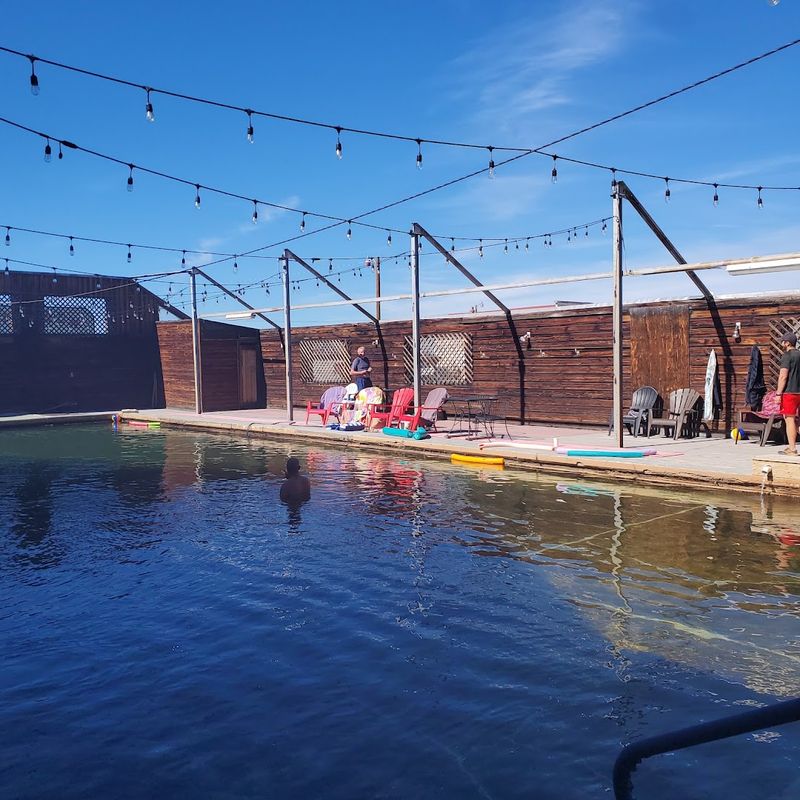
Jackson Hot Springs Lodge operates at 108 Jardine Avenue, Jackson, Montana, where a spring-fed outdoor pool turns the valley into a high-country soaking setting. Montana tourism materials describe the water as geothermally heated and mineral-rich.
This is a managed commercial pool rather than an undeveloped spring beside the road. The property also offers lodging and an on-site restaurant, giving you the option to stay instead of immediately retracing the highway.
The open-air setting provides the memorable contrast. Warm water meets cool mountain air, while the surrounding valley replaces elaborate pool scenery with a broad western horizon.
Current operations are limited to certain days of the week and can change with closures or events. Check the official schedule before making the 47-mile drive from Dillon, especially when the pool is your main reason for visiting.
The stop keeps the day pleasantly simple. You can explore the valley, soak for a while, eat nearby, and leave enough blank space in the schedule to enjoy where you are.
The community may be tiny, but its bathwater makes a persuasive argument for staying awhile.
The Pioneer Mountains Refuse To Stay In The Background
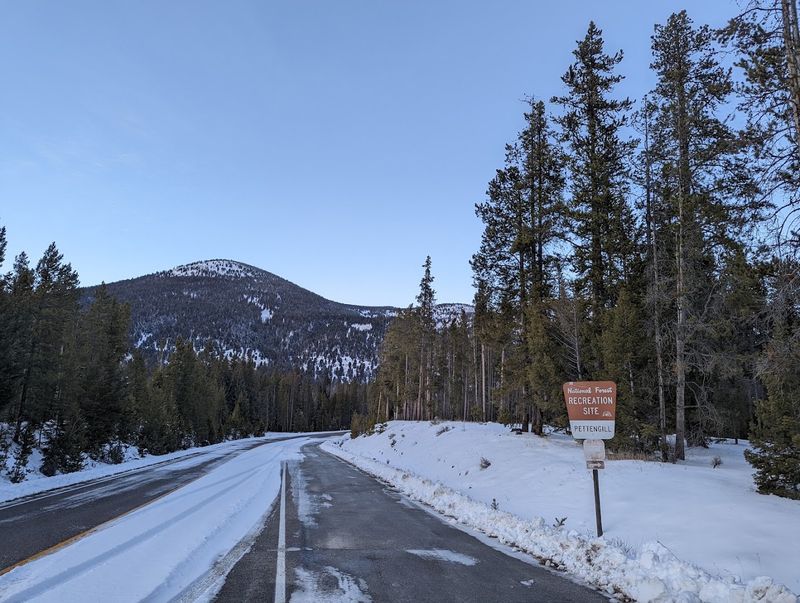
The eastern skyline eventually stops posing and hands you driving directions.
Pioneer Mountains Scenic Byway follows Forest Road 73 for approximately 49 miles between Montana Highway 278 and Highway 43. Its southern entrance lies southeast of Jackson, making the route a natural extension when you are exploring by car.
The byway cuts through the Pioneer Mountains rather than tracing their edge. Campgrounds, trailheads, picnic areas, forest roads, and historic mining country turn the drive into a full outing with several possible detours.
Ordinary vehicle access is mainly a warm-season proposition. Snow and weather can affect the road, and individual recreation sites follow seasonal schedules, so Forest Service conditions should guide your plans.
You do not need to stop at every turnoff. Changing elevation, forested sections, open meadows, and mountain views already give the road enough personality to justify the mileage.
Crystal Park provides the best-known hands-on stop, while the old Coolidge mining area and several campgrounds sit elsewhere along the corridor. Choose according to time, conditions, and how muddy you are willing to become.
The byway turns a side trip into a full sentence, then adds enough scenic commas to slow your punctuation.
Crystal Park Lets You Bring Home The Evidence
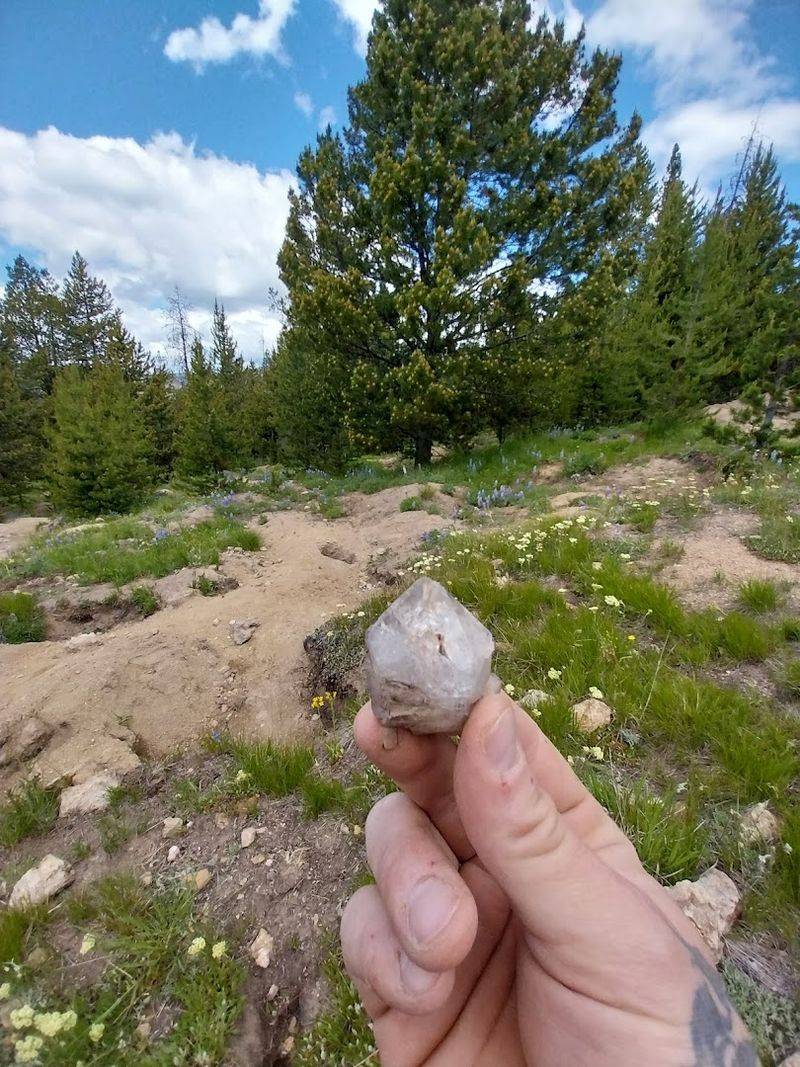
Crystal Park gives treasure hunting a legal parking lot.
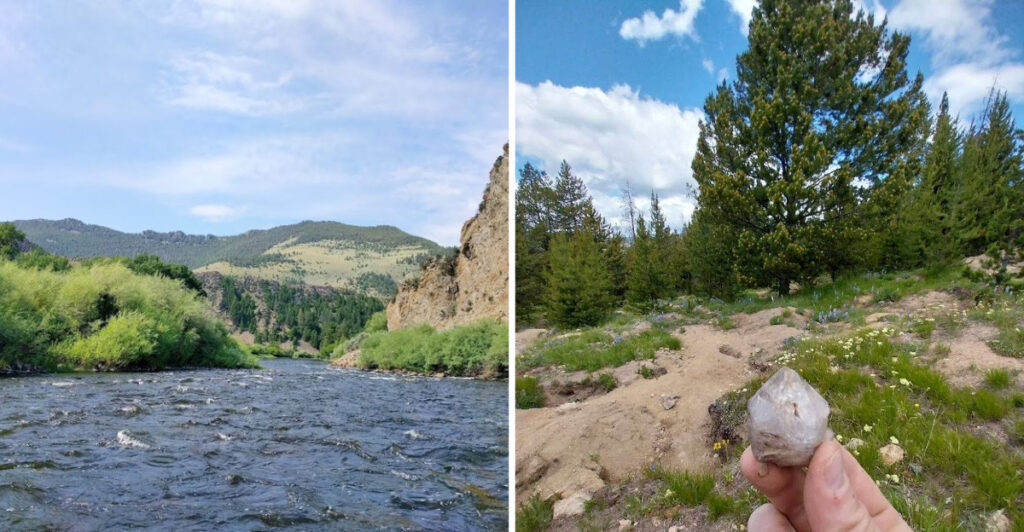
The Forest Service manages this 220-acre mineral-collection area at an elevation of 7,800 feet. Quartz crystals lie throughout decomposed granite, and visitors can search for clear, cloudy, white, gray, smoky, and purple examples.
You may keep crystals within the site’s rules, making this more than a look-but-do-not-touch geology lesson. Hand tools are permitted, tunneling is prohibited, and each person is limited to five digging days per season.
The park operates for day use and charges an entry fee. Its usual season runs from mid-June through mid-October, although snowpack and weather determine the actual dates.
Facilities include picnic sites, toilets, drinking water, information signs, a paved trail with benches, and an overlook. Those additions help mixed-age groups, even when not everyone wants to crouch over granite all afternoon.
Reach the site from Highway 278 by turning onto Pioneer Mountains Scenic Byway Road 73 and continuing about 17 miles. Check current conditions before climbing into the high country.
You may leave with dusty knees, quartz in your pocket, and a new suspicion that every ordinary rock deserves an interview.
Wisdom Adds A Small-Town Pause To The Valley Drive
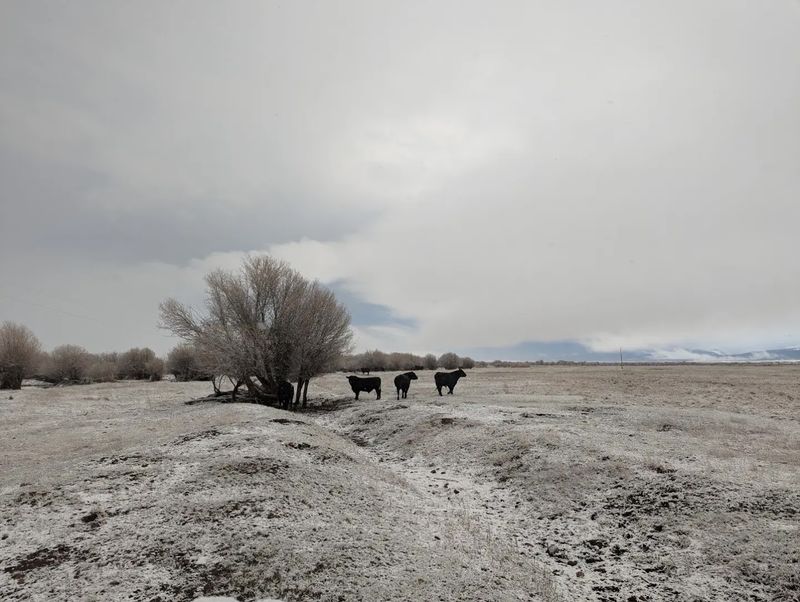
Jackson may whisper, but nearby Wisdom is hardly shouting.
A drive north through the Big Hole Valley brings you to another small community surrounded by ranchland, distant peaks, and enough open space to make your navigation screen look unusually ambitious.
Wisdom gives you a natural turnaround point without pulling the trip into a busier setting.
The town was named for the Wisdom River, the earlier name associated with what is now the Big Hole River. That waterway passes through the valley before continuing north between the surrounding mountain ranges.
This area is often called the Valley of 10,000 Haystacks, a nickname connected to the ranching landscape and the traditional beaver-slide hay stackers once commonly used here.
Their tall wooden frames became a recognizable part of the valley, helping ranchers pile loose hay before modern equipment changed the process.
You can still see working ranches, open hayfields, weathered fences, and occasional pieces of older agricultural equipment along the drive. Nothing needs to be arranged for visitors because the valley already has a strong visual character of its own.
Wisdom also gives you a useful chance to stretch your legs before continuing toward other parts of southwestern Montana. The community is small enough that stopping does not derail the relaxed pace you came here to find.
Jackson introduces you to the valley’s quiet side. Wisdom proves the silence has plenty of room to travel.