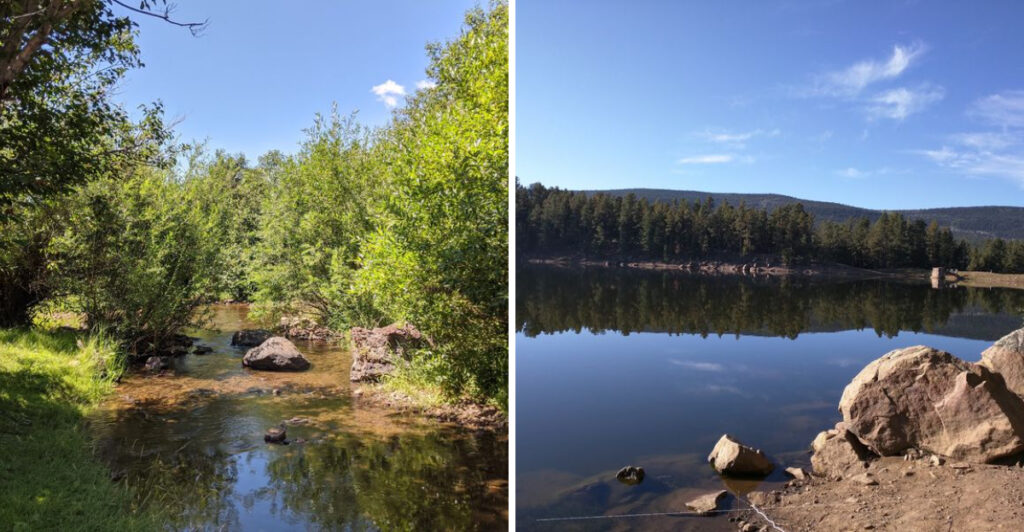
There is something satisfying about finding a state park that somehow missed your radar. The parking lot may be smaller and the road may be quieter, but the story behind the place can be far more interesting than expected.
New Mexico has plenty of parks like that. You can spend a morning beside a high mountain lake or walk past old mine shafts without turning the day into a major expedition.
History shows up in unexpected places too. One park marks the site of the 1916 Columbus raid, while another was created around the idea of letting visitors collect rocks for themselves.
These are not the names that usually lead major travel guides. That makes them especially fun to discover.
These state parks could easily turn a simple weekend drive into the kind of trip you end up talking about long after you finally get home again.
1. Morphy Lake State Park, Mora
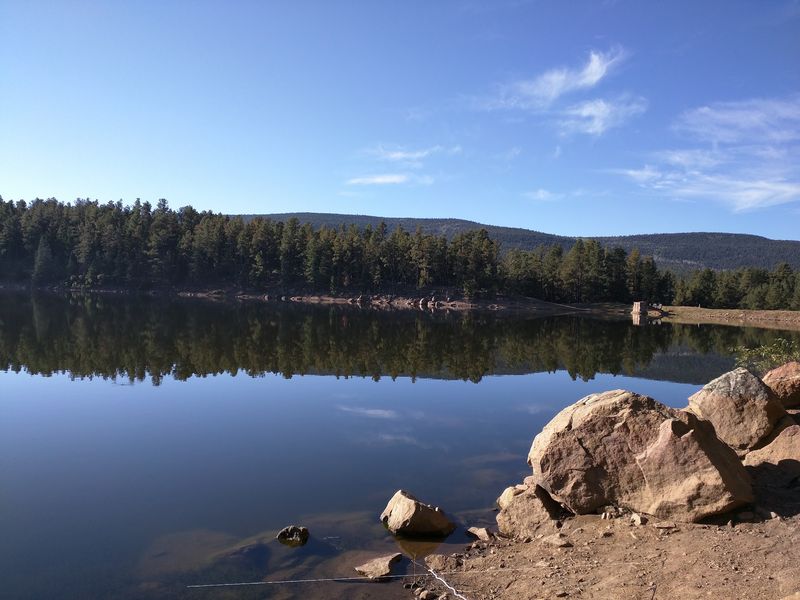
A narrow, winding dirt road stands between you and one of the quietest lakes in northern New Mexico. Morphy Lake State Park sits about seven miles southwest of Mora, tucked into the Sangre de Cristo Mountains at Morphy Lake Road, Mora, NM 87732.
The centerpiece is a fifteen-acre lake ringed by pine forest, with the Pecos Wilderness rising beyond. Anglers come for rainbow trout and kokanee salmon, both stocked regularly in the cool water.
Cold months turn the surface solid, and ice fishing becomes the main event. Warmer weather brings canoes, kayaks, and paddle boats, since gas-powered motors are not allowed here.
Camping leans rustic in the extreme. No running water, vault toilets only, and a night sky so dark the stars practically crowd each other out.
Anyone used to full hookups should adjust expectations before loading the car.
I find it charming that the hardest part of the trip is the access road itself, which filters out casual traffic better than any gate could. Low-clearance vehicles will want to take it slowly.
Small size works in the park’s favor, since it never feels crowded even on pleasant weekends. Bring your own water, plenty of firewood, and a jacket for the chilly mountain evenings.
Few places in the state reward a little tire dust quite like this one.
2. Cerrillos Hills State Park, Cerrillos
Turquoise pulled people to these hills for well over a thousand years, and the tunnels they left behind are still visible. Cerrillos Hills State Park sits along the Turquoise Trail National Scenic Byway south of Santa Fe, with its visitor center at 37 Main Street, Cerrillos, NM 87010.
Interpretive markers along the trails explain the ancient turquoise and galena workings that drew Indigenous miners first and prospectors from around the world much later. Reading them turns an ordinary walk into a history lesson with a view.
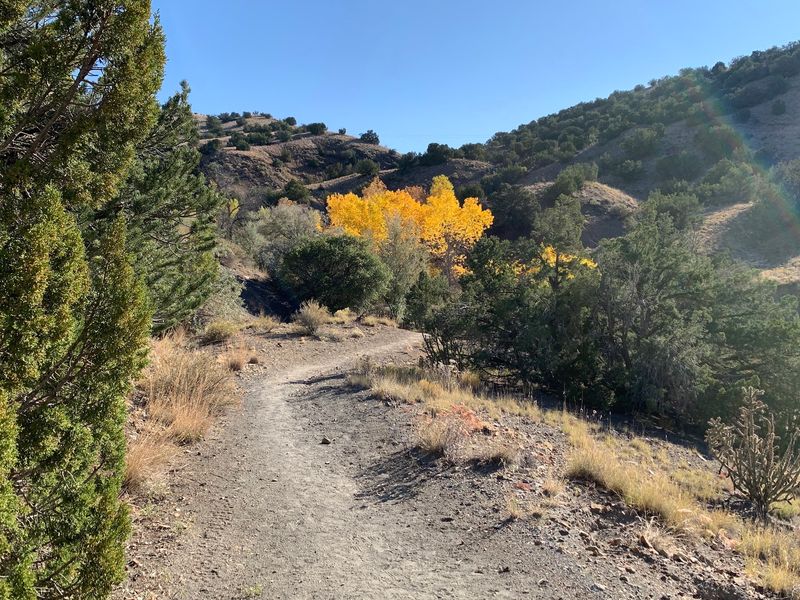
Roughly five miles of trail wind through pinon and juniper, open to hikers, mountain bikers, and horseback riders. Guided rides are sometimes offered for those who prefer four legs to two.
Ridgelines deliver long looks at the Sandia, Ortiz, Jemez, and Sangre de Cristo ranges, which is a generous payoff for modest elevation gain. Spring wildflowers add color, and wildlife turns up throughout the year.
The village of Cerrillos itself deserves a slow lap, with dirt streets and weathered buildings that have appeared in more than one Western film. It pairs beautifully with a park visit.
Shade is scarce, so a hat and extra water matter here more than most people expect. Morning light on those hills is the reward for an early start.
3. Pancho Villa State Park, Columbus
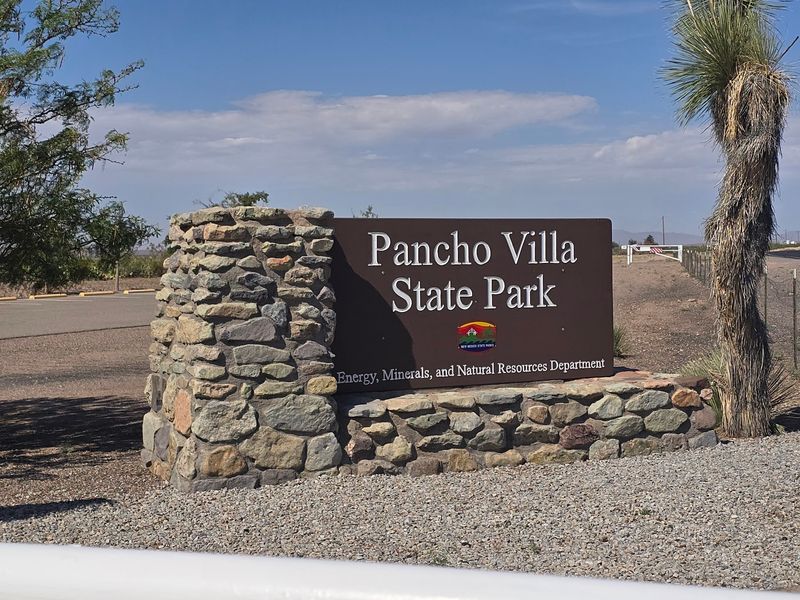
History textbooks skip over Columbus, and that is a shame. Pancho Villa State Park, at 400 West Highway 9 in Columbus, NM 88029, marks the site of the raid that made this tiny border town famous, remembered as the last time foreign soldiers crossed into the continental United States.
An exhibit hall and surviving structures from Camp Furlong tell the story in detail, including the Punitive Expedition led by General John Pershing that followed. The campaign also marked the first American military use of motorized vehicles and airplanes in a conflict, which is a detail that always stops me mid-paragraph.
Beyond the history, the grounds function as a working desert botanical garden. Cactus, ocotillo, and agave fill the landscaping, and the blooms in spring can be startling against the dry ground.
Birdwatching draws steady interest, and easy hiking and biking routes let visitors cover the site at their own pace. Educational tours go deeper for anyone who wants the full account.
Camping options range from primitive tent sites to RV spots with utility hookups, making it a practical overnight stop in southern New Mexico. Winter is the comfortable season here, since summer heat arrives early and stays late.
Quiet ground with a very loud past.
4. Mesilla Valley Bosque State Park, Mesilla
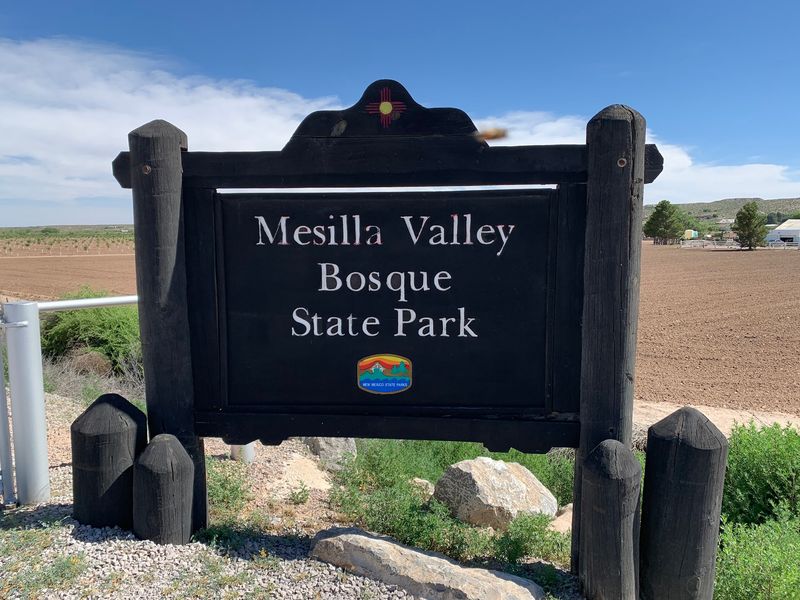
Birders talk about this place with the enthusiasm usually reserved for rare concert tickets. Mesilla Valley Bosque State Park, at 5000 Calle del Norte in Mesilla, NM 88046, protects more than three hundred acres of Rio Grande riverside woodland just west of town and minutes from Las Cruces.
The park sits where the Chihuahuan Desert meets the river, creating an unusually rich mix of habitats. Restored wetlands sit alongside stands of cottonwood and willow.
Audubon recognizes it as an Important Birding Area, and it forms part of the New Mexico Birding Trail. More than 175 species have been recorded, including quail, raptors, hummingbirds, and seasonal songbirds passing through.
About 2.3 miles of flat, self-guided nature trails make the walking easy for nearly everyone. Benches and shaded stretches help during warmer months.
Camping is not permitted, so plan it as a day trip. Picnicking, ranger-led tours, and educational programs fill out the visit, and the hacienda-inspired visitor center comes with a native plant garden worth circling.
Early morning delivers the best bird activity and the coolest temperatures, a combination that is hard to argue with. Binoculars are practically part of the dress code.
Historic Mesilla’s plaza sits close enough to fold into the same afternoon.
5. Coyote Creek State Park, Guadalupita
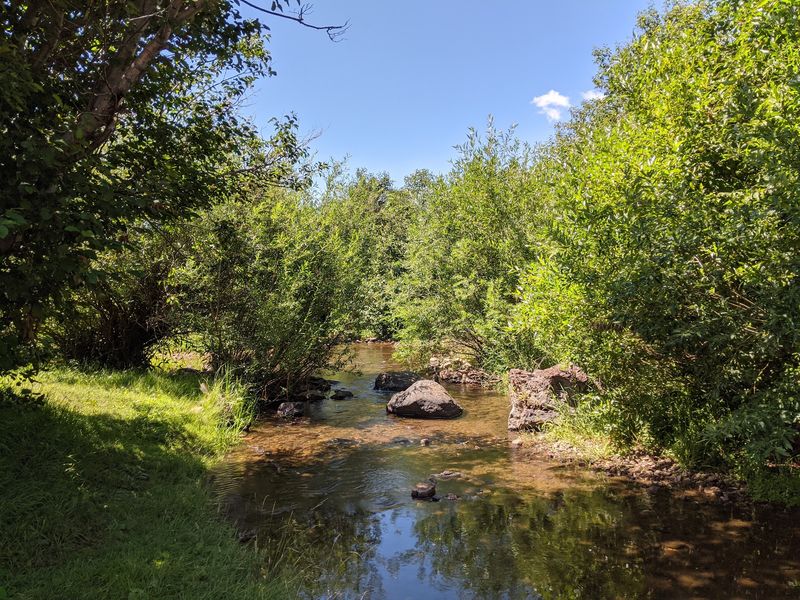
Green is not the color most people associate with this state, which makes Guadalupita Canyon a pleasant shock. Coyote Creek State Park sits along Highway 434 near mile marker 17 in Guadalupita, NM 87722, roughly an hour southeast of Taos in the Sangre de Cristo Mountains.
Coyote Creek runs straight through the park, cutting a meandering line across lush meadows framed by spruce and pine. Fly anglers work the water for trout, which the New Mexico Department of Game and Fish stocks throughout the season.
Wildflowers are the park’s quiet claim to fame. Geraniums, sunflowers, iris, and primrose spread across the valley floor once the weather warms, and the display shifts week to week.
Campsites here are unusually generous with space, spread far enough apart that neighbors feel optional. Some come with electric hookups for those who like a fan or a coffee maker.
Trails thread through the forested slopes, and wildlife sightings run from deer and elk down to beavers working the creek and raccoons raiding anything left unsecured. Store food carefully.
Elevation keeps summer nights cool, so a warm sleeping bag earns its place in the trunk. Anyone expecting cactus will be pleasantly disoriented by all that mountain grass.
6. Rockhound State Park, Deming
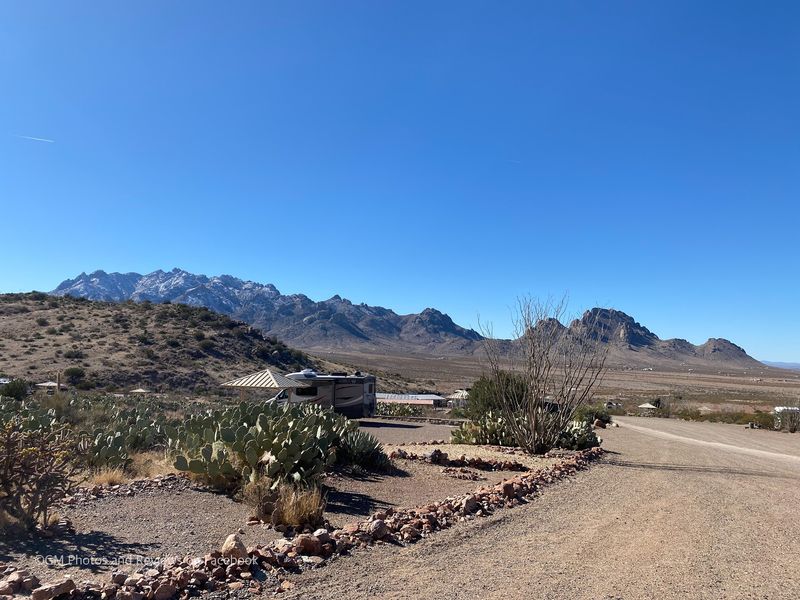
Very few parks let you leave with your pockets full of the scenery. Rockhound State Park, at 9880 Stirrup Road SE in Deming, NM 88030, was the first state park in the country to invite visitors to collect rocks and minerals for personal use.
Up to fifteen pounds per person can go home with you. The hillsides in the Little Florida Mountains hide quartz crystals, geodes, jasper, perlite, and agates for anyone willing to poke around.
Two units make up the park. The main Rockhound area handles camping and collecting, while Spring Canyon works as a day-use spot with a good supply of picnic shelters.
The Jasper Trail crosses ground streaked with red and green stone, and the Thunder Egg Trail leads toward the geode hunting grounds. Sturdy shoes and gloves are not optional on this terrain.
Volcanic hills and wide Chihuahuan Desert views set the stage, and the sunsets here run through every shade of orange available. More than a hundred bird species have been recorded across the park.
Campsites accommodate larger RVs, which makes it a comfortable base for a multi-day treasure hunt. Bring a small hammer, a bucket, and considerably more water than feels necessary.
7. Villanueva State Park, Villanueva
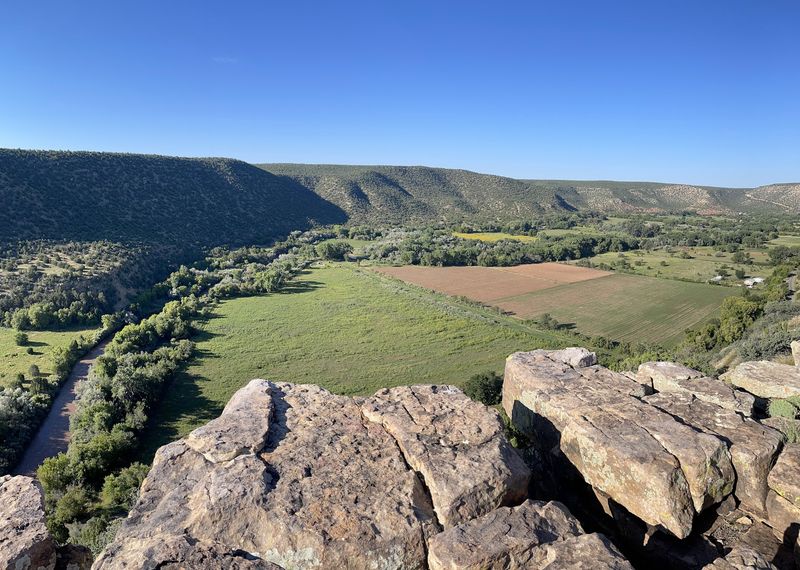
Red and yellow sandstone bluffs rise on both sides of the Pecos River here, and the canyon does most of the talking. Villanueva State Park, at 135 Dodge Road in Villanueva, NM 87583, sits beside a Spanish colonial village of the same name in northern New Mexico.
Giant cottonwoods line the riverbank and shade the campsites, which is exactly what you want in July. Sites handle RVs up to forty feet, and a group shelter makes family gatherings simple to organize.
Fishing shifts with the seasons, with catfish in summer and trout in the colder months. Tubing on the Pecos is a favorite way to cool off when the water cooperates.
The Canyon Rim trail climbs for wide views and passes historical markers along the way, including old Spanish ruins and a grain threshing pit. Various Indian tribes lived in this canyon for thousands of years before that.
Wildflowers appear in seasonal waves, and birdwatching stays productive across the whole calendar. A park that layers geology and human history this neatly is a rare find.
Cell service is spotty, which most campers here treat as a feature. Load your maps before the last turn off the highway.
8. Oasis State Park, Portales
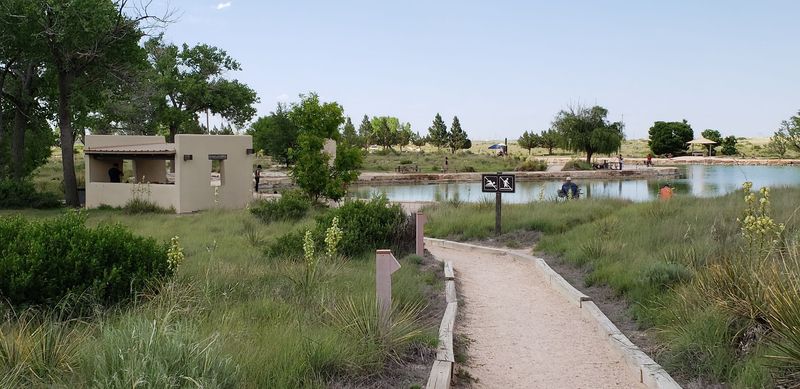
Out on the flat, wind-scoured Llano Estacado, a cluster of cottonwoods and a small lake come as a genuine relief. Oasis State Park sits at 1891 Oasis Road, roughly seven miles north of Portales, NM 88130, and the name is not marketing exaggeration.
White sand dunes made of quartz and gypsum crystals surround the water, and the contrast between pale sand and sparkling pond gives the place its odd beauty. Mature cottonwoods supply the shade that makes summer visits bearable.
The three-acre pond gets stocked with catfish in warm months and rainbow trout in winter, with accessible fishing features for visitors of all abilities. Kids tend to have good luck here.
Birders have logged more than eighty species, including great blue herons and the roadrunner that shows up on every state souvenir. Dawn brings the most activity.
Easy trails loop around the lake and through the sandy ground, short enough for young legs and interesting enough for adults. Picnic tables under the trees handle the rest of the afternoon.
Twenty-nine campsites are available, some with full RV hookups, making this a comfortable overnight break on a long eastern drive. Sunset over the dunes deserves a few extra minutes outside the car.
9. Manzano Mountains State Park, Mountainair
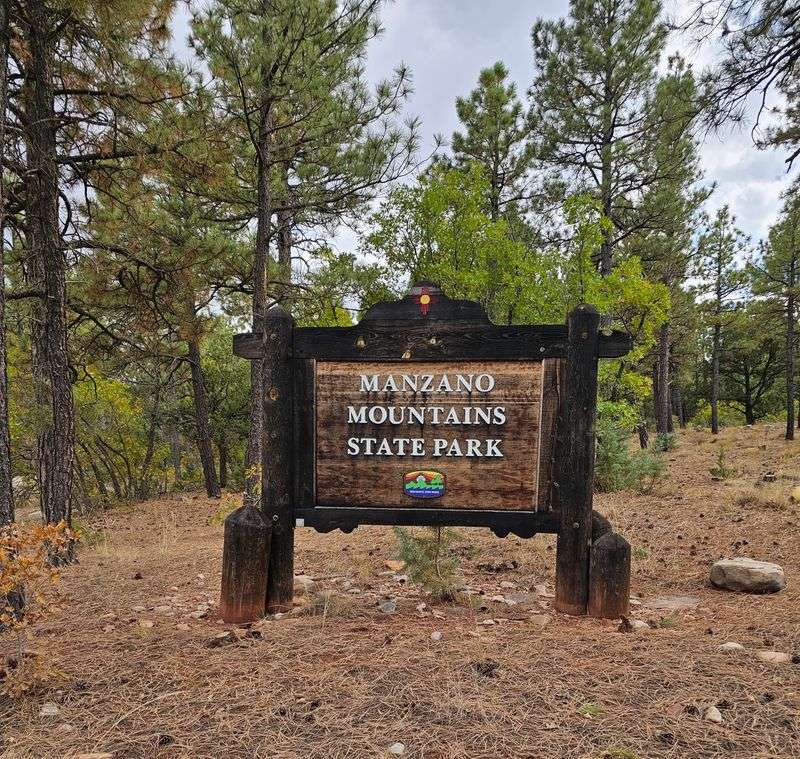
Autumn is the season that gives this park away. Manzano Mountains State Park sits at mile marker 3 on Highway 131 near Mountainair, NM 87036, on the wooded eastern flank of the Manzano range.
Manzano means apple in Spanish, a nod to the historic orchards in the nearby village that are believed to be among the oldest in the country. The park itself grows something different: Gambel oak, pinon, ponderosa pine, and alligator juniper packed close enough to form real shade.
Nearby canyons hold big stands of Rocky Mountain and big-toothed maple, and when those turn, the hillsides light up in red and orange. Photographers plan whole weekends around it.
Raptor watchers have their own reason to show up. These mountains form a major flyway during spring and fall migration, and the birds pass through in impressive numbers.
Trails run easy to moderate through the pine forest and connect into the surrounding Cibola National Forest for longer outings. Wildlife viewing stays good year-round for those who walk quietly.
Compact size keeps everything within reach of the campground, and the elevation makes summer afternoons far kinder than the valley below. Salinas Pueblo Missions sites nearby round out the trip nicely.
10. Living Desert Zoo And Gardens State Park, Carlsbad
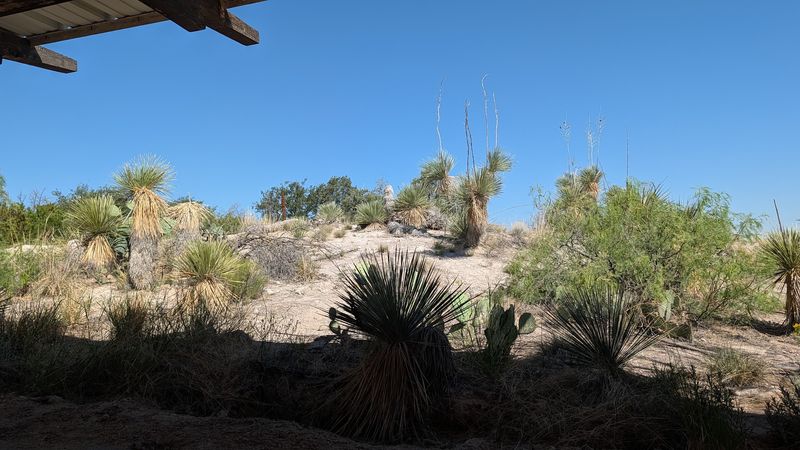
Part zoo, part botanical garden, part hiking trail, and entirely unlike any other park on this list. Living Desert Zoo and Gardens State Park occupies the Ocotillo Hills at 1504 Skyline Drive in Carlsbad, NM 88220, with the Pecos River valley spread out below.
A paved, self-guided walking tour runs about 1.3 miles through recreated Chihuahuan Desert habitats, moving from sand hills and arroyos into pinon-juniper woodland. Interpretive exhibits explain what you are looking at as you go.
More than forty native animal species live here, among them pronghorn, bobcats, mule deer, and endangered Mexican wolves that are part of a recovery program. The walk-through aviary puts golden eagles and roadrunners at close range.
Hundreds of plant varieties from desert regions worldwide fill the gardens, which makes spring blooming season especially rewarding. Cactus lovers could spend an entire morning on one section.
Shaded benches appear at useful intervals, and the hilltop views over Carlsbad are a bonus nobody advertises. The blend of education and open-air recreation is handled unusually well.
Morning visits mean cooler temperatures and more active animals, particularly in the warmer half of the year. Carlsbad Caverns sits close enough to make it a natural pairing.