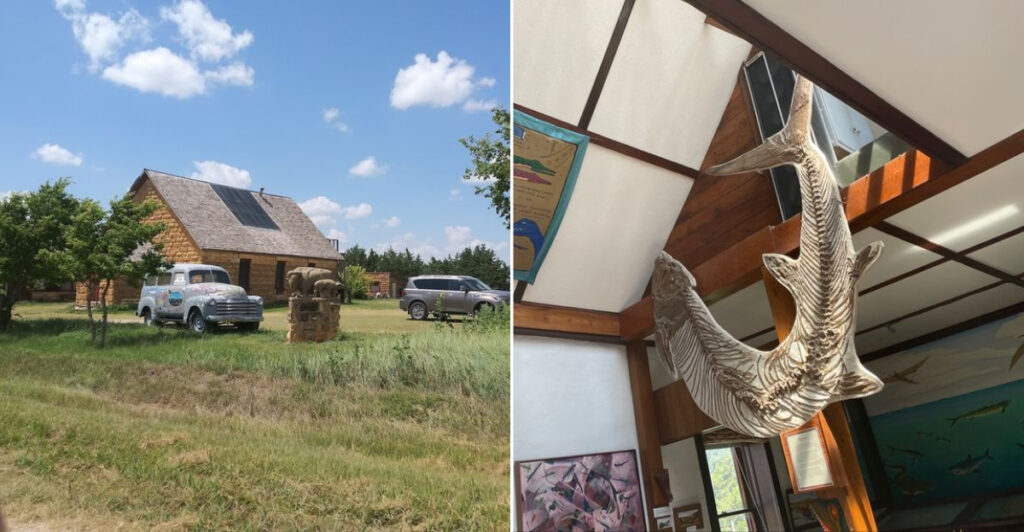
A church filled with fossils already sounds like the start of a road trip story worth hearing.
This Kansas stop has the kind of unexpected twist that makes travelers do a double take: one moment you are thinking about a small-town landmark, and the next you are face-to-face with traces of an ancient underwater world.
That is the fun of it. The setting feels surprising, the history feels huge, and the whole visit turns into a reminder that Kansas was once far wilder than most people imagine.
It is part science, part mystery, and part “how is this not better known?” adventure.
Places like this make curiosity feel easy. I love when a stop completely rewrites my expectations, especially when I walk in expecting something quiet and leave thinking about sea creatures that lived millions of years ago.
The Ancient Inland Sea That Once Covered Kansas
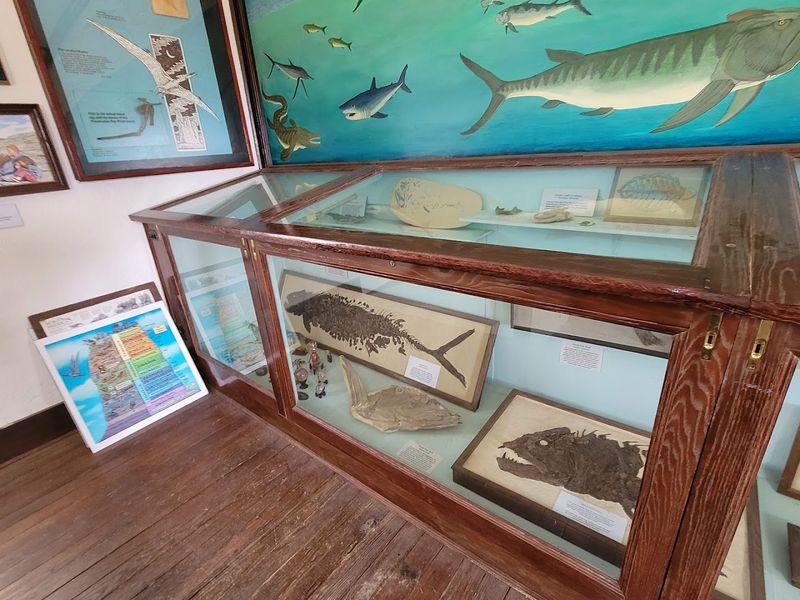
About 85 million years ago, a massive body of water called the Western Interior Seaway split North America right down the middle, and Kansas sat deep beneath its waves.
This was not a small pond or a shallow lake. It was a warm, thriving ocean stretching from the Gulf of Mexico all the way up to the Arctic, and it was packed with enormous creatures that most people have never heard of.
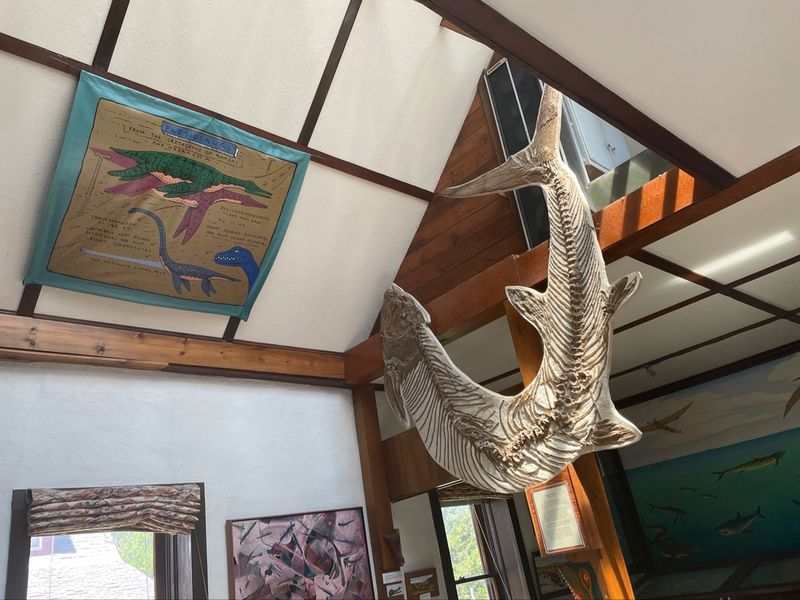
The fossils found near Scott City and displayed at Keystone Gallery are direct evidence of this lost underwater world.
Mosasaurs, ancient fish, and flying reptiles all lived and perished in these waters.
Their remains eventually settled into the chalky sediment that became the Kansas ground we walk on today. It is a mind-bending thought that this wide-open prairie was once a thriving ocean floor.
The Historic 1916 Church Building That Houses It All
There is something wonderfully unexpected about walking into a century-old church and finding prehistoric shark teeth staring back at you from a display case.
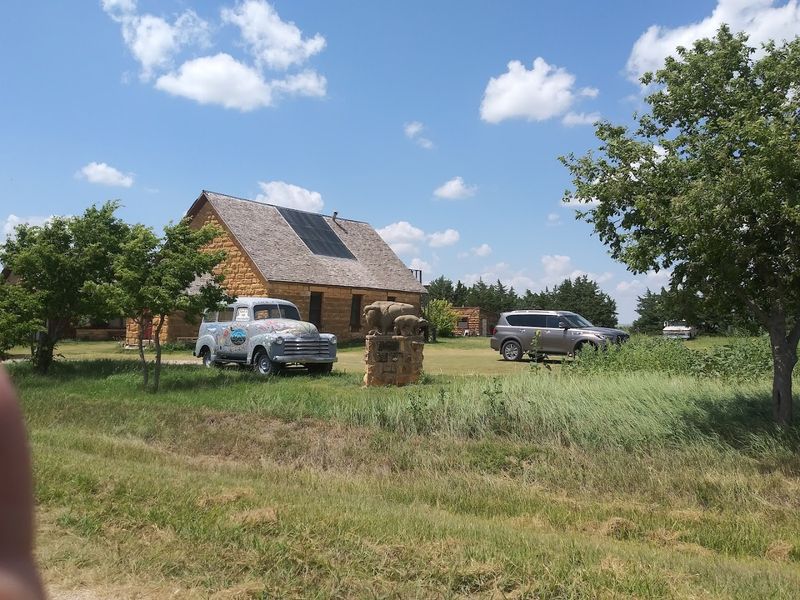
The building that houses Keystone Gallery was constructed in 1916 using massive limestone blocks, giving it the kind of solid, permanent presence that feels right at home on the Kansas plains.
Over the decades, the structure has been repurposed into something far more adventurous than its original design ever imagined.
The thick stone walls now protect fossils, artwork, crystals, and curios instead of a congregation.
The architecture itself tells a story of Kansas history, and the conversion from sacred space to scientific curiosity is both clever and charming.
Stepping through the front door feels like crossing a threshold between two completely different worlds, separated by millions of years.
Mosasaur Fossils Found Right Here In Kansas
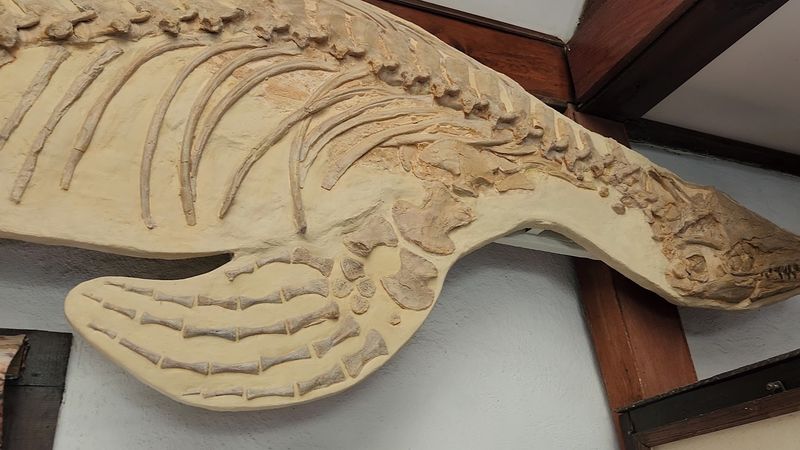
Mosasaurs were enormous marine reptiles that ruled the ancient seas, and Kansas happens to be one of the best places in the world to find their remains.
These creatures could grow over 50 feet long, with powerful jaws lined with cone-shaped teeth designed to crush prey.
They were the apex predators of the Western Interior Seaway, and their fossils have been turning up in Kansas chalk beds for over 150 years.
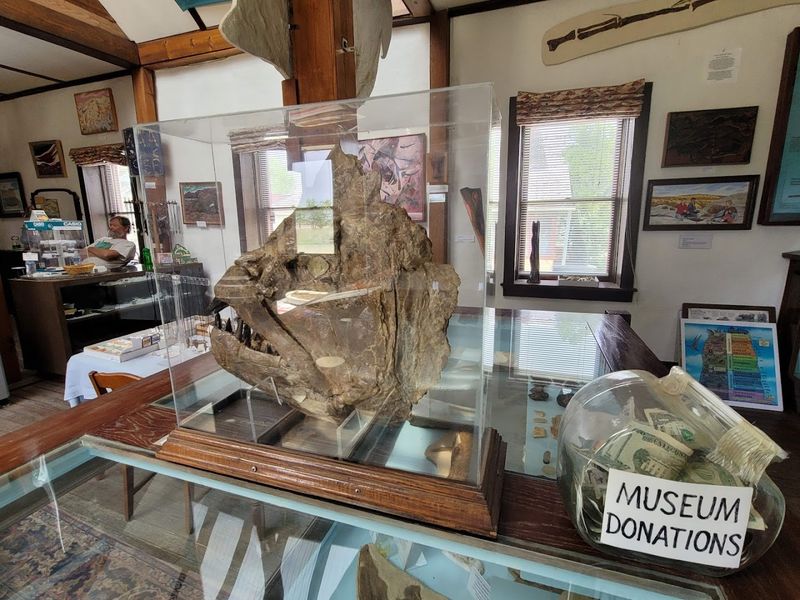
Keystone Gallery displays specimens that were actually recovered in the surrounding Scott County region, making the connection between the display and the landscape outside immediately real and personal.
Seeing a mosasaur jaw up close, knowing it was pulled from Kansas soil just miles away, is a different experience entirely from seeing one in a big-city natural history museum.
The local origin makes every fossil feel like a neighborhood discovery.
Free Admission And A Donation-Based Model
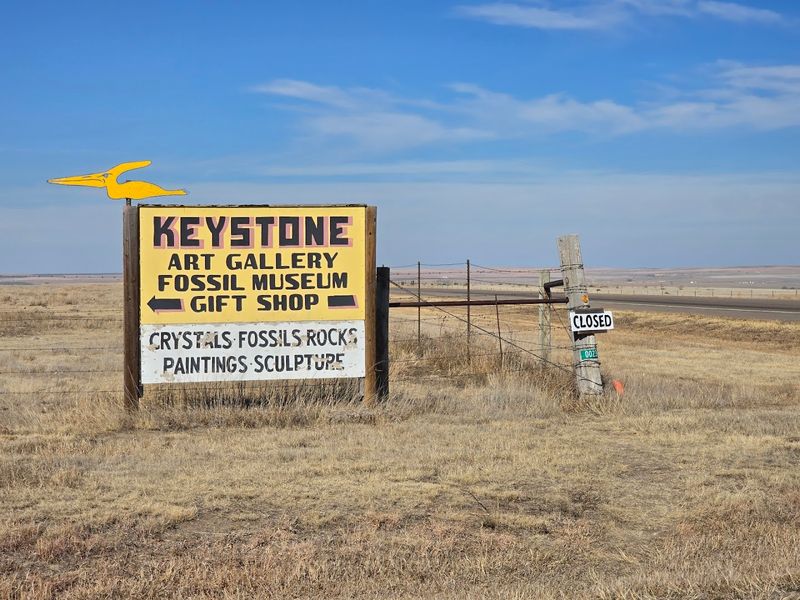
Not every great museum charges a hefty entry fee, and Keystone Gallery is proof that some of the most rewarding cultural stops in Kansas operate purely on goodwill.
Entry to the gallery is completely free, though donations are warmly welcomed and genuinely help keep the lights on and the fossils properly displayed.
It is a refreshingly old-fashioned arrangement that puts access ahead of profit. This approach also changes the energy of the visit.
There is no pressure to rush through or feel like you need to get your money’s worth because the only currency being exchanged is curiosity and appreciation.
For road-trippers passing through western Kansas on a budget, this makes Keystone Gallery an especially easy yes.
You can spend as long as you like soaking in 85 million years of natural history without watching the clock or your wallet.
The Painted 1948 Suburban Parked Outside
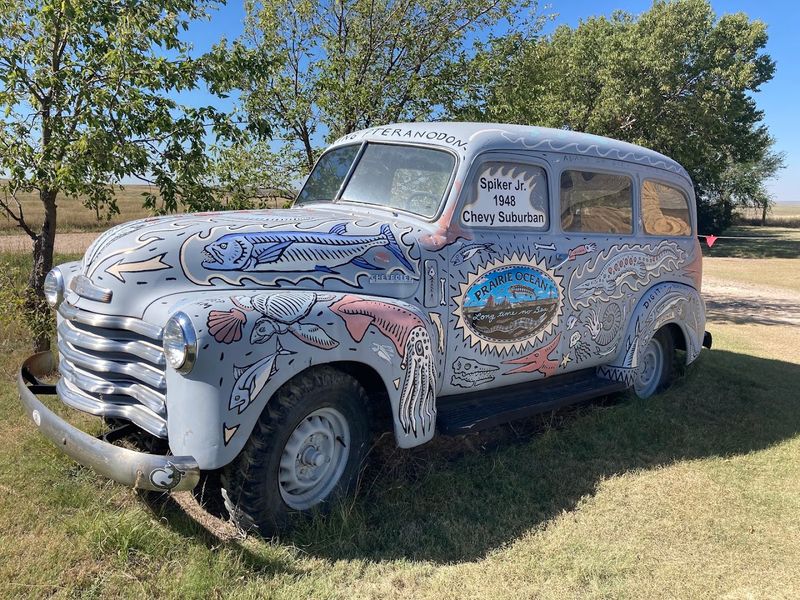
Before you even step inside Keystone Gallery, something outside grabs your attention and refuses to let go: a painted 1948 Chevrolet Suburban covered in vivid, hand-applied artwork.
This vehicle is not just a quirky decoration. It is a statement about the spirit of the place, bold, creative, and completely unbothered by convention.
It signals immediately that whatever is inside this old Kansas church is going to be unlike anything you expected.
The Suburban has become something of a landmark in its own right, drawing curious drivers off the highway before they even know what the building is.
It functions as the world’s most effective and most colorful roadside advertisement.
Art and paleontology sharing the same parking lot might sound unusual, but at Keystone Gallery, that combination feels completely natural.
The painted truck is essentially a preview of the creative energy waiting for you inside.
The Bonner Family And The Fossil Genus Named For Them
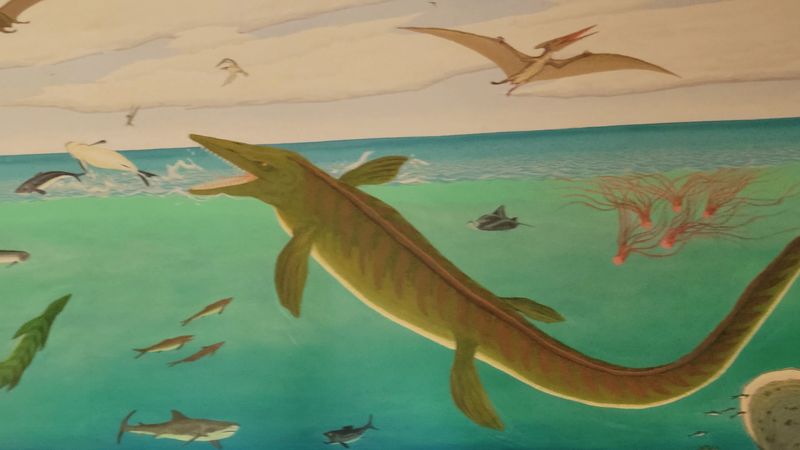
It takes a special kind of dedication to put a fossil genus on the map, and the Bonner family earned that distinction through decades of fieldwork in the Kansas chalk.
Chuck Bonner has spent years collecting, studying, and preserving specimens from the region surrounding Scott City, building a collection that rivals displays found in much larger institutions.
His passion for Kansas paleontology is evident in every corner of Keystone Gallery.
Beyond his scientific contributions, Chuck is also an accomplished visual artist whose paintings and collages are displayed and sold alongside the fossils.
The combination of rigor and artistic expression gives the gallery a personality that feels entirely its own. Having a fossil genus bear the family name is the kind of legacy most scientists only dream about.
For visitors who connect with Chuck in person, hearing the story behind that honor directly adds an unforgettable layer to the whole experience.
Fossil Fish, Shark Teeth, And Other Sea Creatures on Display
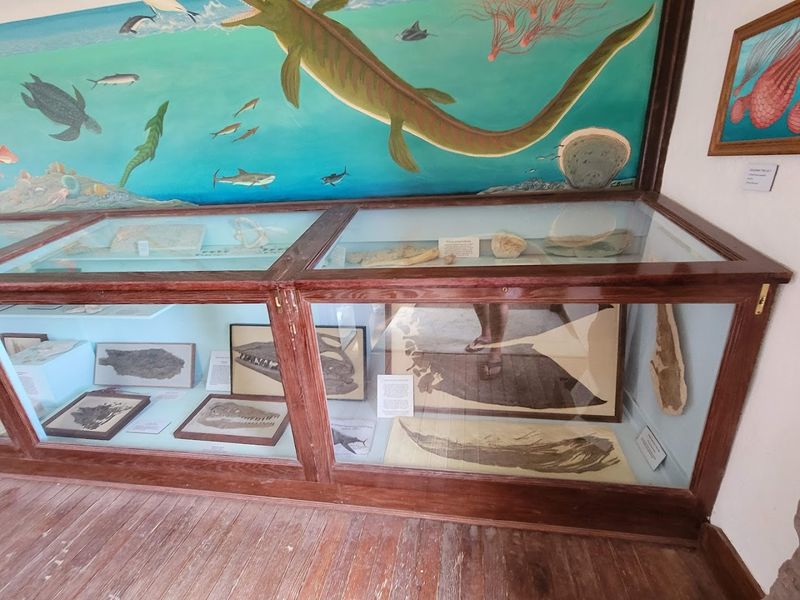
Kansas might be the last place most people would expect to find a jaw-dropping collection of prehistoric shark teeth and ancient fish fossils, but that surprise is exactly what makes Keystone Gallery so satisfying.
The Western Interior Seaway supported an incredibly diverse ecosystem, and the fossils recovered from the surrounding chalk formations reflect that variety in remarkable detail.
Fish species that have been extinct for tens of millions of years are represented here by beautifully preserved specimens.
Shark teeth from the Cretaceous period are among the most visually striking items in the collection. They are large, serrated, and completely alien-looking compared to anything swimming in modern oceans.
For anyone who grew up fascinated by prehistoric life, standing in front of these cases in a converted Kansas church and realizing these creatures once swam overhead is the kind of moment that stays with you long after the drive home.
The Gallery’s Location Near Monument Rocks And Little Jerusalem
Geography sometimes does a traveler a genuine favor, and the location of Keystone Gallery near two of Kansas’s most dramatic natural landmarks is a perfect example of that.
Monument Rocks, also called Chalk Pyramids, are towering Cretaceous chalk formations rising dramatically from the flat Kansas plains about nine miles from Keystone Gallery.
They are among the most visually striking natural features in the entire state.
Little Jerusalem Badlands State Park, another chalk formation preserve, is also close by and offers marked hiking trails through an otherworldly landscape that feels nothing like the Kansas most people picture.
Keystone Gallery sits at a natural crossroads for anyone exploring this corner of western Kansas, making it an ideal first stop before heading out to the formations.
The fossil context the gallery provides makes the rock formations outside feel even more alive and historically layered than they already are.
Original Artwork, Souvenirs, And A Thoughtful Gift Shop
A museum that also sends you home with something beautiful is a museum worth returning to, and the gift shop at Keystone Gallery delivers that experience without feeling commercial or rushed.
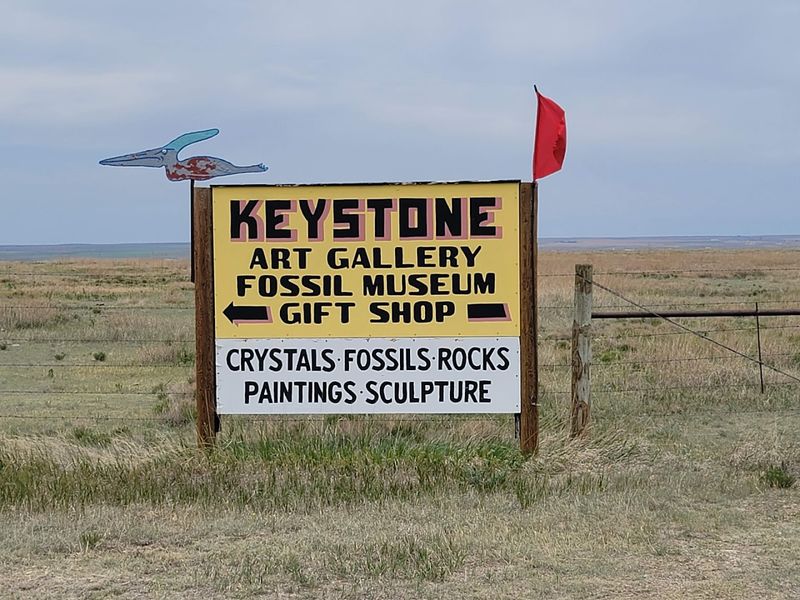
Chuck Bonner’s original paintings and collages are available for purchase alongside fossils, crystals, stones, and a range of locally themed souvenirs.
The artwork spans a wide variety of styles and mediums, meaning there is something visually interesting for almost every taste.
T-shirts featuring custom artwork tied to Monument Rocks have become popular keepsakes, as have the gallery’s distinctive mugs.
Even a simple sticker from the shop carries a story worth telling back home.
The pricing is described by many visitors as fair and reasonable, which is refreshing for a shop selling genuinely unique, locally made goods.
Taking home a piece of this Kansas roadside treasure feels less like shopping and more like preserving a memory in tangible form.
Visiting Hours, Location Details, And Practical Tips
Planning a stop at Keystone Gallery is straightforward, but knowing the schedule ahead of time saves a lot of frustration on a long road trip through western Kansas.
The gallery’s hours are seasonal and flexible, especially in winter, so visitors should check Facebook, call ahead, or stop and take a chance.
Summer hours are often posted as 9 AM to 6 PM most days, but the daily phone message is the safest source before driving out.
The full address is 401 US-83, Scott City, KS 67871. The website at keystonegallery.com also carries useful information for first-time visitors.
Arriving with a bit of extra time built into your schedule is a smart move. This is not a five-minute stop, and the fossils, art, and conversation inside genuinely deserve an unhurried afternoon.