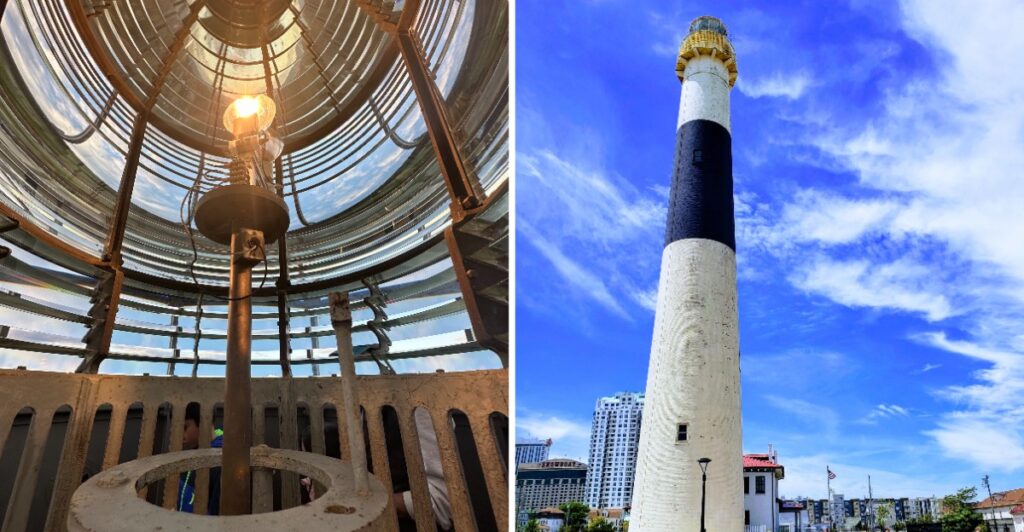
Before phones could tell you where you were, the coast had giant blinking towers for that job.
Subtle? Not really.
Effective? Absolutely.
New Jersey still has a whole collection of them, and they are far less alike than you might expect.
One comes with a serious staircase workout.
Another sits low beside the water.
Elsewhere, the tower shares the scene with marshes, keeper houses, or ships moving past offshore.
They were built for navigation, but now they tell a much bigger coastal story.
And a few are still flashing away after all these years.
Not bad for buildings whose original job was basically yelling, “Land is over here.”
1. Cape May Lighthouse: The Southern Star of the Shore
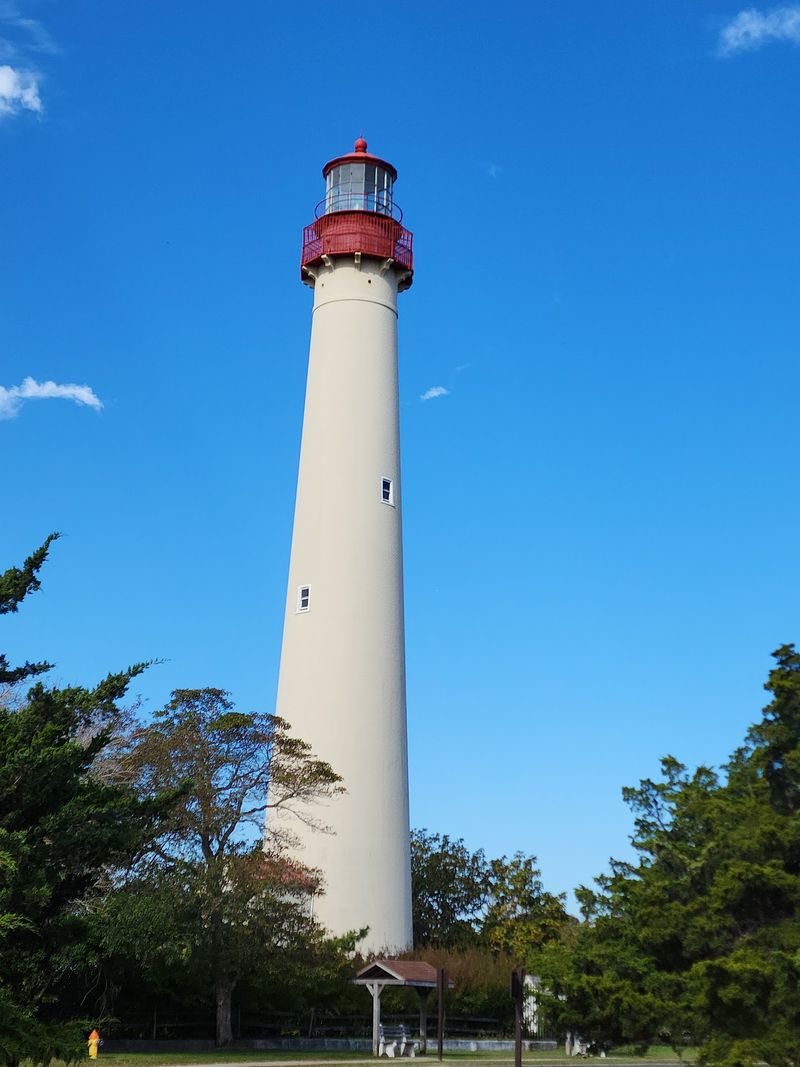
The view starts getting interesting long before you reach the top. Through the narrow windows of the spiral staircase, pieces of Cape May Point appear between stretches of brick.
tAt the watch gallery, Delaware Bay and the Atlantic Ocean spread out in different directions, with beaches, trees, and the surrounding shoreline filling the space between.
Built in 1859, Cape May Lighthouse remains an active aid to navigation. It is the third documented lighthouse at this location, a reminder that the coastline has changed enough to require new structures over time.
The present tower rises about 157 feet, and its original cast-iron staircase has 199 steps to the top gallery.
Not eager to climb all those stairs without a break? There are landings where you can pause and read about lighthouse keepers and the tower’s operation.
Closed-toe, comfortable shoes make more sense than sandals with loose straps, especially on the open metal stair treads.
The setting deserves time at ground level, too. Cape May Point State Park surrounds the lighthouse with trails, ponds, and birdwatching opportunities.
Autumn migration is a particularly interesting season, but the combination of coastal landscape and maritime history works throughout the year.
A ticket is required for the climb, and opening times change seasonally. You can also explore the grounds and the nearby park without climbing. The restored oil house provides a ground-level option for a closer look at the lighthouse story.
One easy plan is to climb first, enjoy the park afterward, and save the Victorian streets of nearby Cape May for later in the day. You get a panoramic introduction to the coastline before exploring it at street level.
Address: 215 Lighthouse Ave, Cape May Point, NJ 08212.
2. Barnegat Lighthouse
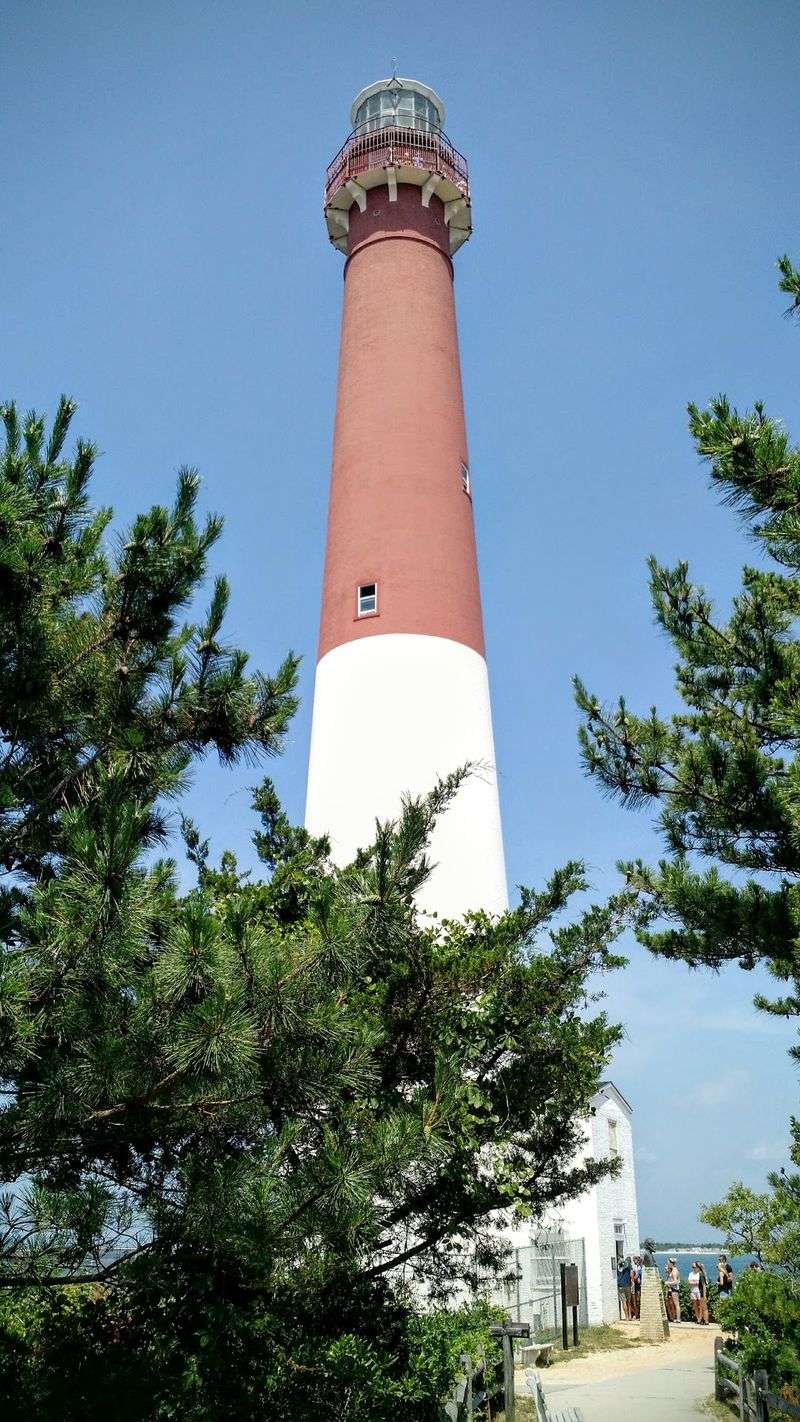
At the northern end of Long Beach Island, the familiar red-and-white tower rises above a landscape of fishing boats, sand, and open water.
The inlet is the main attraction here, and the lighthouse gives you a higher vantage point on the channel that connects the bay with the Atlantic.
Barnegat Lighthouse first shone in 1859. Known affectionately as Old Barney, it returned to service as an official navigational aid in 2009 with a modern light. Its alternating bands of color make the structure easy to recognize even before you reach the state park entrance.
At Barnegat Lighthouse, the climb involves 217 steps, so decide early whether you’re in a stair-climbing mood. On a clear day, the top offers views of the inlet, Island Beach, Barnegat Bay, and Long Beach Island.
Tower climbing is seasonal and weather-dependent, rather than something to count on every day of the year.
There’s an alternative if stairs aren’t part of your plans. Cameras installed near the top send live views to the interpretive center, letting visitors appreciate the outlook from below. It’s a thoughtful way to include people who cannot make the climb.
Outside, take a walk through the park and look toward the rock-lined shoreline where vessels travel through the inlet. The area also has a maritime forest trail, offering a change from the broad, exposed water views.
Morning light can make the lighthouse colors especially striking. Wind near the inlet can be brisk, so a light layer is useful even when the beach forecast looks pleasant. Allow time for the park rather than treating the tower as a quick photo stop.
Address: 208 Broadway, Barnegat Light, NJ 08006.
3. Absecon Lighthouse
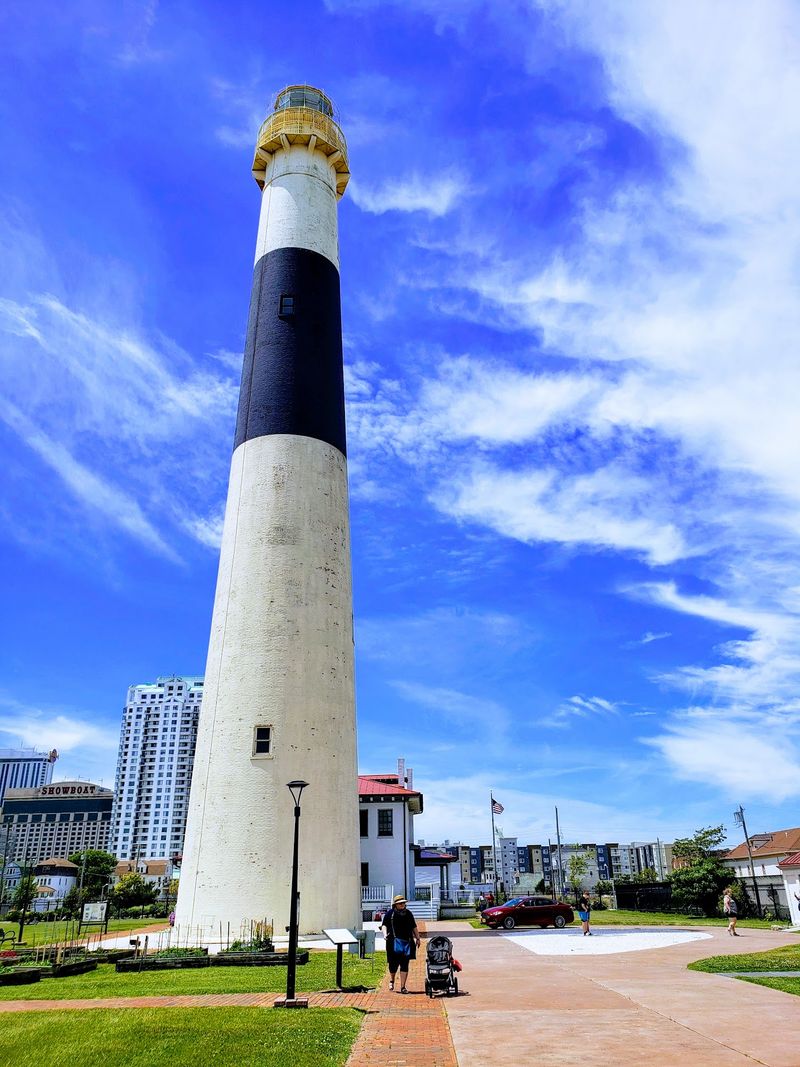
It’s easy to think of Atlantic City as a beachfront skyline, but a lighthouse offers another way to understand the coast. From above, the towers and streets of the city sit beside a broad sweep of ocean, with back-bay scenery stretching in the opposite direction.
At about 171 feet high, Absecon Lighthouse is New Jersey’s tallest lighthouse. Its light was first illuminated in 1857, and the historic structure still holds its original first-order Fresnel lens.
The black-and-yellow exterior bands are distinctive enough to identify the building from nearby streets.
Reaching the top requires 228 steps. That is a real climb, although you can take it at your own pace.
The reward is not just the view; you also get an unusually close look at the glass prisms of the large lens and the engineering that helped coastal vessels navigate before modern electronics.
The restored keeper’s house and museum add context to the staircase experience. Exhibits explore maritime navigation and the working routines of the people who cared for the light.
Spending some time downstairs also makes the visit satisfying for companions who prefer not to climb.
The site operates on a seasonal schedule, with shorter visiting weeks during much of the year. Plan around the final climb time rather than arriving near closing. There is an admission fee for tower climbing.
Afterward, explore the nearby neighborhood or continue toward the beach. Your day can include both a busy seaside setting and a quieter look at the practical architecture that once served the same shoreline.
Address: 31 S Rhode Island Ave, Atlantic City, NJ 08401.
4. Sandy Hook Lighthouse
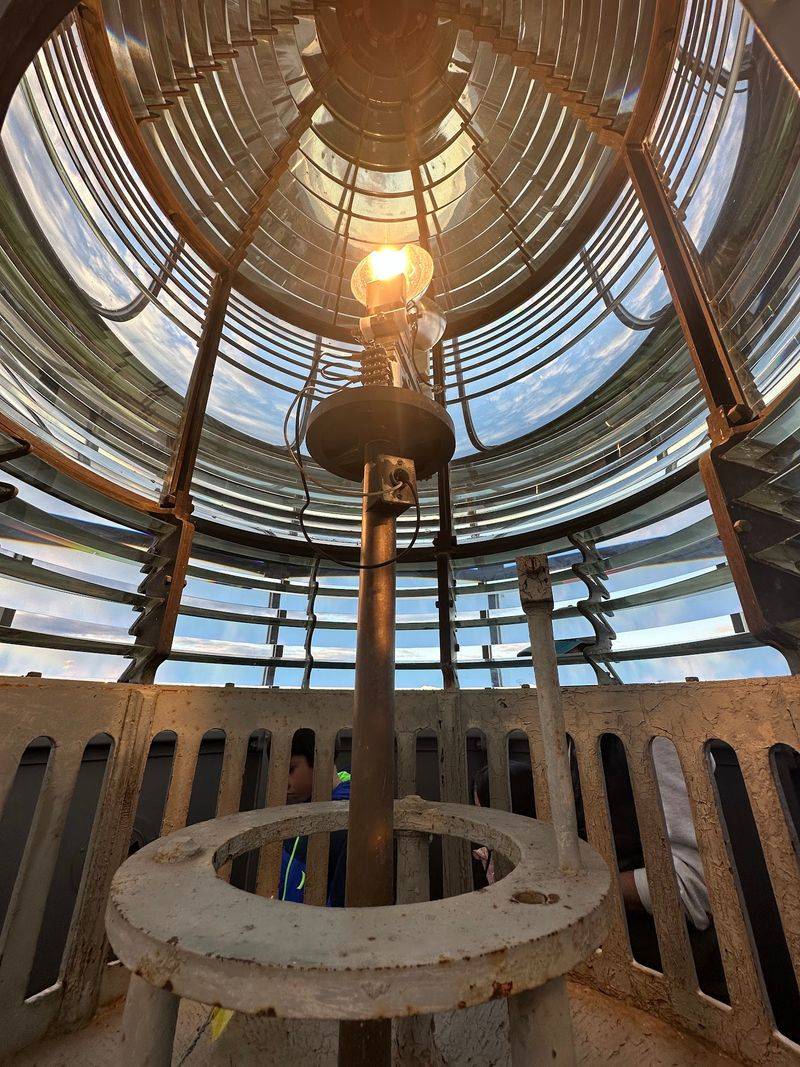
Long before the surrounding peninsula became a national recreation area, a sturdy stone tower was already guiding ships toward New York Harbor. It first shone in 1764, making it the oldest continuously operating lighthouse in the United States.
The lighthouse stands within the historic Fort Hancock area of Gateway National Recreation Area. The pale, eight-sided tower has a straightforward design, in contrast with the more decorative lighthouse structures built later along the coast.
Its location also tells a story about changing geography: sand accumulated around Sandy Hook over the centuries, shifting the relationship between the tower and the peninsula’s tip.
A visit to the lantern requires joining a ranger-guided tour. The ascent includes 95 stairs and a short ladder, and children must meet a minimum height requirement of 48 inches. Tours are seasonal, free, and typically arranged through same-day signups at the visitor center.
Not climbing? There’s still plenty to see. The adjacent keeper’s quarters, the Fort Hancock setting, and the surrounding coastal landscape offer a full historic outing.
Paths and roads across the peninsula lead toward beaches and views of the bay, while the New York City skyline can appear in the distance on clear days.
Because Sandy Hook Lighthouse tours have limited capacity, make the lighthouse your first stop if a climb is your priority.
Then use the rest of the visit for the grounds, exhibits, and shoreline. It’s a satisfying combination of an early American landmark and a broad coastal nature area.
Remember that summer parking arrangements in Sandy Hook can differ from the cooler seasons, even though the lighthouse tour itself is free.
Address: Sandy Hook Lighthouse, Fort Hancock, Sandy Hook, NJ 07732.
5. Twin Lights Historic Site
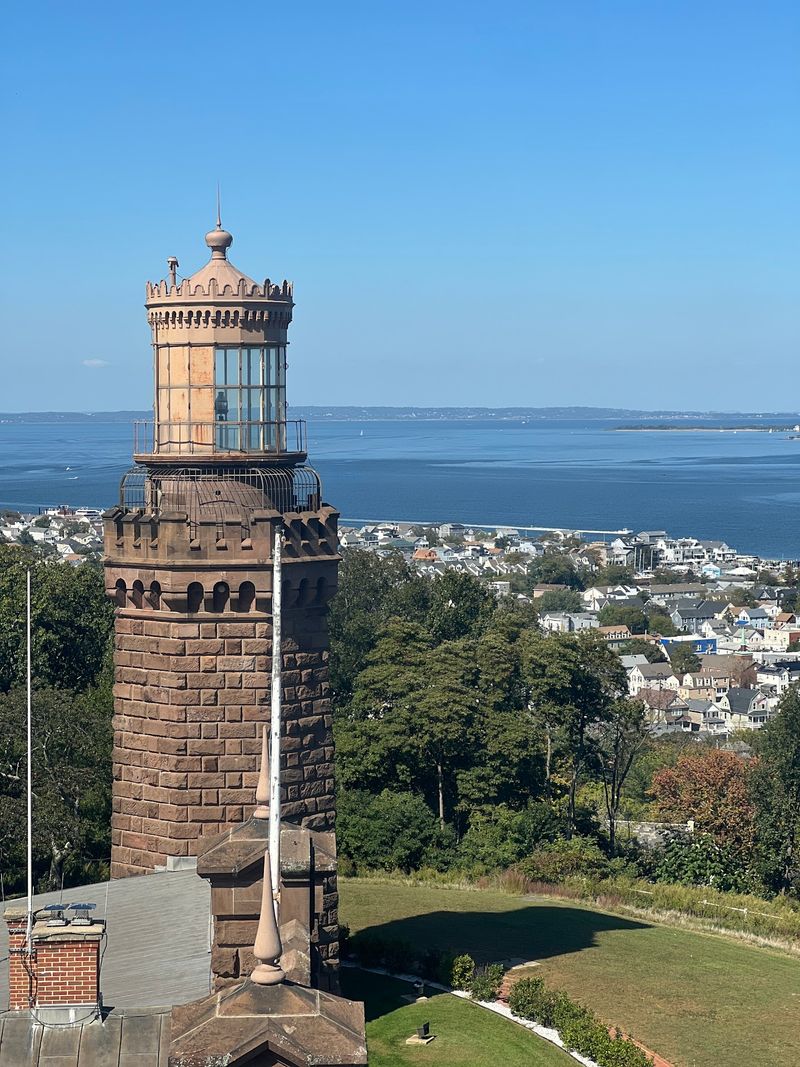
One tower is square and the other octagonal. Together, they frame a fortress-like brownstone building perched high above Sandy Hook and the entrance to New York Harbor.
The unusual silhouette is enough to make this historic site memorable before you even step inside.
The present structure was completed in 1862, replacing an earlier light station established in 1828. Its elevated position helped mariners distinguish the coast as they approached a busy shipping corridor.
Years later, the site became an important testing ground for advances in lighting and communication.
In 1899, Guglielmo Marconi used the station in a wireless telegraph demonstration connected with yacht racing offshore. Exhibits also explore the use of Fresnel lenses and the brighter electric equipment that changed lighthouse technology.
At Twin Lights, take a walk through the museum before you climb. Knowing what the lights once communicated makes the harbor panorama even more interesting.
The observation tower has far fewer steps than the very tall shore towers farther south, although stairs are still part of the experience.
From the grounds and tower viewpoints, look across Sandy Hook, the Atlantic, and the waters leading toward New York City. The elevated setting creates a different kind of waterfront view: you’re looking down over the coast rather than standing right beside it.
The grounds and museum have free admission, while seasonal tower climbing may require a separate ticket. Opening schedules vary during the year, so choose a visit time that allows both exhibits and the lookout.
If you prefer to linger, the lawns and exterior viewpoints are pleasant places to take in the surrounding landscape before heading back downhill.
Address: 2 Lighthouse Rd, Highlands, NJ 07732.
6. Hereford Inlet Lighthouse
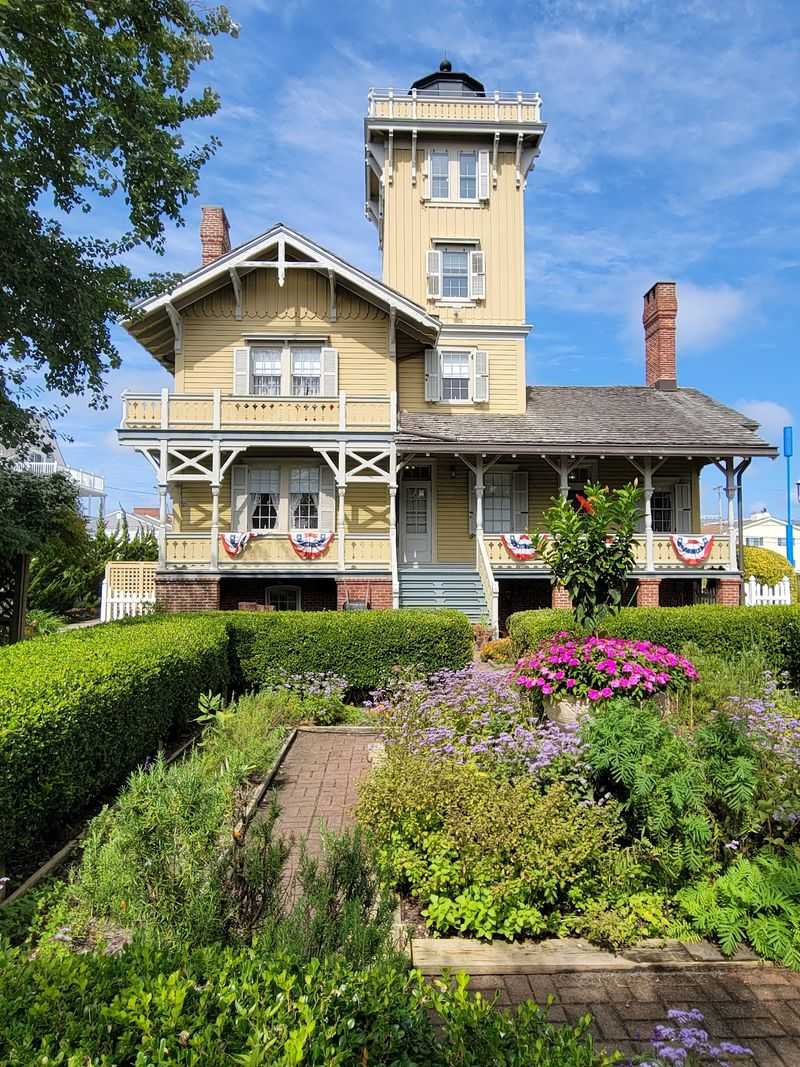
A Victorian-style house with a lantern rising from its roof is a refreshing change from the usual tall tower. This North Wildwood landmark looks almost residential, and that is exactly part of its story: the keepers and their families lived where the light was maintained.
The station was first lit in 1874. It was designed in a richly detailed wooden style, with decorative trim that gives the structure a distinctive appearance. After a storm damaged its foundation in 1913, the building was moved roughly 150 feet west to preserve it.
Today, the rooms introduce visitors to domestic life at a lighthouse station, along with equipment and other pieces of local maritime history. The light itself remains an active navigational aid. Its original Fresnel lens is preserved as part of the site’s exhibits.
At Hereford Inlet Lighthouse, the gardens provide a second reason to come. Paths curve through plantings near the building, leading toward a seawall overlooking Hereford Inlet.
Rather than heading immediately to the next landmark, take a few minutes to watch the movement of the water and boats near the channel.
Unlike a long tower ascent, this visit offers a mix of indoor history and outdoor strolling. It’s also convenient to combine with a day exploring North Wildwood’s shoreline. Garden access extends beyond the indoor visiting hours, giving you a little more flexibility.
Admission to the lighthouse is free, although tours and special activities follow posted schedules. The changing seasons bring a different feel to the gardens, from flowering beds in warmer months to more open views of the landscape when leaves are sparse.
Address: 111 N Central Ave, North Wildwood, NJ 08260.
7. Sea Girt Lighthouse
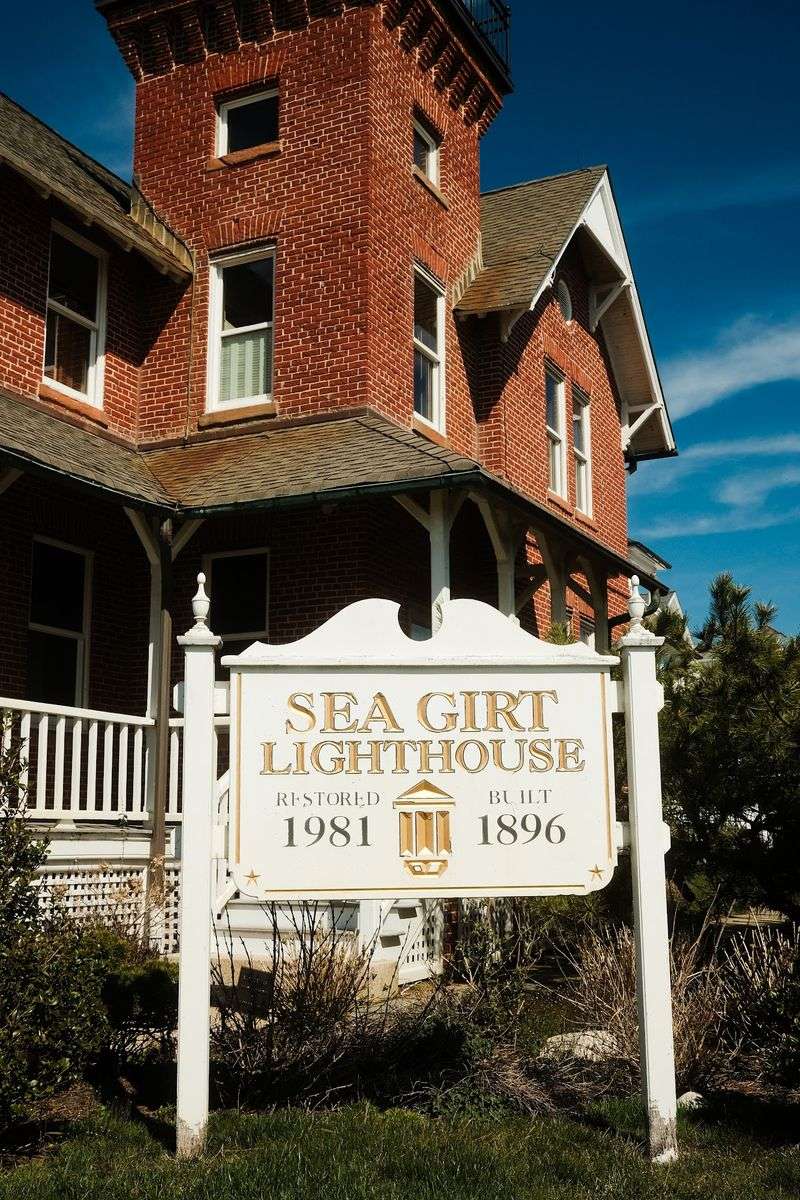
A brick keeper’s house and attached square tower sit just a short walk from the beach in Sea Girt. This is a lighthouse on a neighborhood scale, where the building looks at home among nearby streets rather than standing alone on an isolated headland.
The light first shone in December 1896 to address a gap along the coast between the Navesink lights and Barnegat Lighthouse.
Its compact arrangement connected the residential quarters directly to the tower, letting keepers reach the lantern without going outside during difficult weather.
In 1921, the station became a pioneering location for a radio fog-signal system. The technology mattered because sound and radio could help vessels navigate when poor visibility made a light harder to see.
The building eventually lost its original operational role but was preserved and restored through local efforts.
Inside, historical photographs and exhibits trace the lighthouse’s working years and later restoration.
A guided tour may include the lantern area, depending on current arrangements. You’ll see how tightly the keeper’s living rooms and the navigational equipment were connected.
If your plans are flexible, choose a Sunday afternoon during the tour season. The lighthouse’s published schedule generally provides a short weekly visiting window rather than daily opening. That makes checking the calendar especially useful here.
After your tour, head toward the waterfront for a walk with ocean breezes and a view of the beach. The nearby shore adds a relaxed finish to an outing that begins with a surprisingly technical chapter of navigation history.
Address: 9 Ocean Ave, Sea Girt, NJ 08750.
8. Tinicum Rear Range Lighthouse
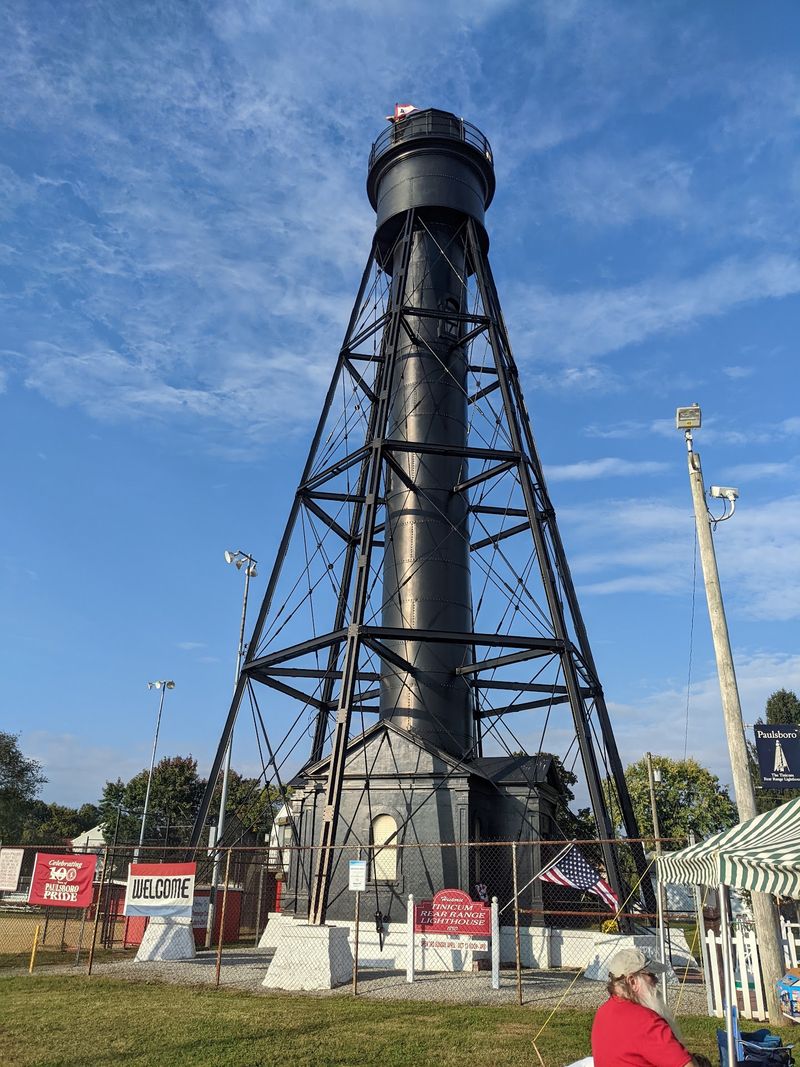
An open iron frame is not what most people picture when they imagine a lighthouse. Along the Delaware River in Paulsboro, that skeletal outline is the feature that makes this navigational landmark stand out.
Its tall, dark structure has more in common with an industrial tower than a white seaside beacon.
The range light began operating in 1880. It was built to work with a separate front range light: when mariners aligned the two lights, they could follow the correct channel. It remains an aid to navigation for traffic using the river today.
The tower is about 85 feet tall and contains 112 steps. Its elevated light stands above a riverside landscape where large vessels still travel toward the ports around Philadelphia and Camden.
Looking at that traffic helps make the old range-light concept understandable without needing a diagram.
Tower climbs are occasional events organized around limited opening dates, not a standard daily attraction. A ground-level visit gives you the distinctive architecture and a sense of the surrounding river corridor even if the stairs are unavailable.
It’s also a stop that rewards curiosity about overlooked kinds of maritime structures. Range lights needed to communicate a precise alignment, so their locations and shapes were built around navigation rather than the scenic isolation associated with coastal towers.
At Tinicum Rear Range Lighthouse, bring binoculars if shipwatching appeals to you. A passing vessel can make the scale of the river especially clear, while the black ironwork creates interesting patterns against the sky.
Allow a little extra time to find the tower near the recreation fields. The river may not have crashing ocean surf, but it offers a different and equally relevant part of New Jersey’s maritime history.
Address: 70 Second St, Paulsboro, NJ 08066.
9. Finns Point Rear Range Lighthouse
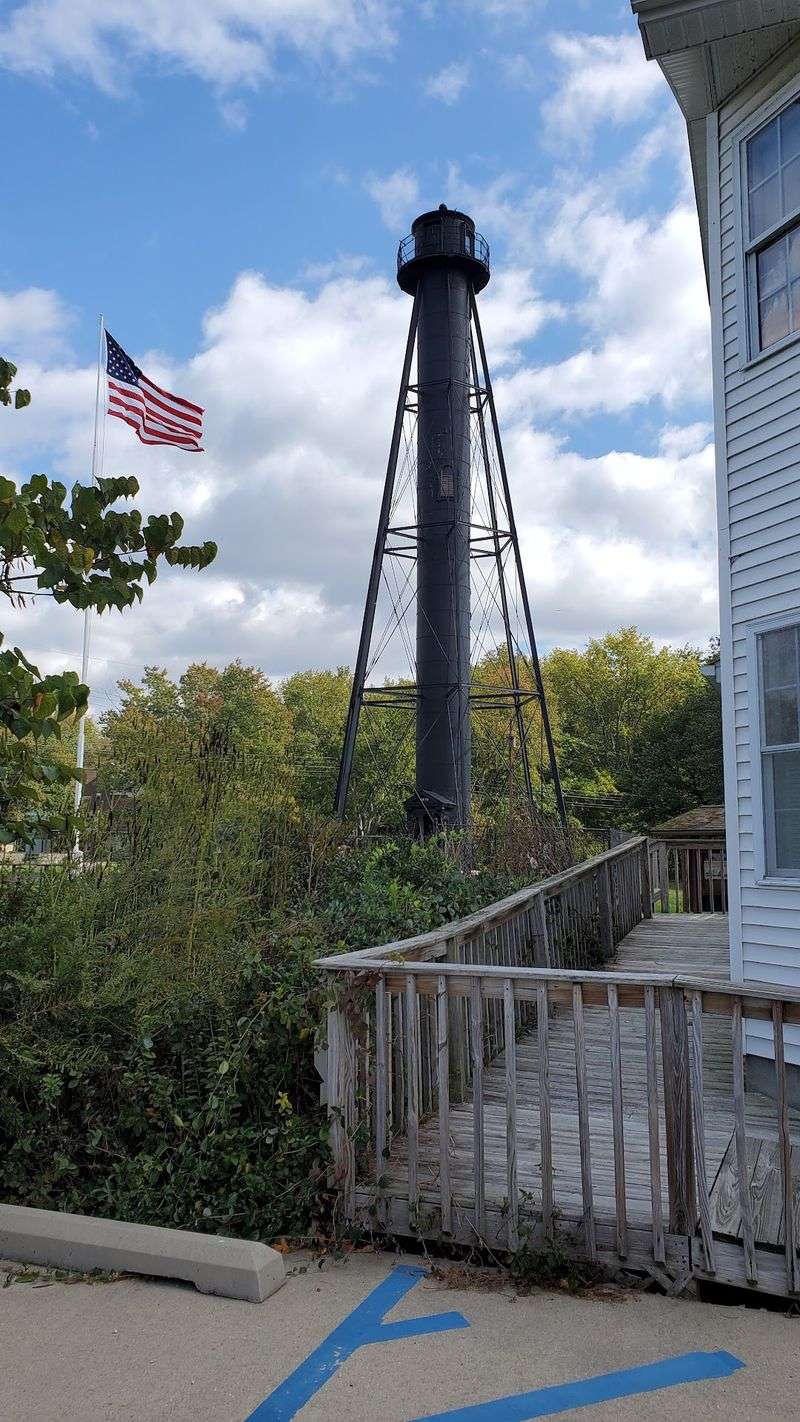
The scenery changes again in Pennsville, where wetlands and open skies surround an iron range-light tower. Instead of a beach promenade or inlet jetty, the landscape here is shaped by tidal marshes and the Delaware River’s broad estuary.
Finns Point Rear Range Lighthouse was built in 1877. Its open metal frame rises to roughly 115 feet, with a central stair enclosure leading toward the lantern.
As a rear range light, it helped ships maintain their course by lining up with another light along the navigation channel.
The historic tower stands within Supawna Meadows National Wildlife Refuge, an area that also protects important habitat for migratory birds. Depending on the season, you may see wading birds, waterfowl, or raptors using the grasslands and marsh edges.
A visit requires more planning than a stop at a roadside lighthouse. Public openings of the tower are scheduled on select dates and depend on weather and refuge conditions.
The lighthouse is not a freely accessible walk-up attraction at all hours, and access into the refuge from Lighthouse Road is prohibited.
Use designated public trails and the refuge’s announced lighthouse-opening arrangements rather than attempting to approach the tower directly from Lighthouse Road.
The Grassland Trail and Forest Habitat Trail offer ways to experience the surrounding marsh and woodland landscape without entering restricted areas.
On a clear day, the skeletal steelwork is especially striking against the sky. Binoculars are useful for birdwatching and for appreciating the extent of the wetlands without leaving permitted paths.
This stop works best for visitors interested in the quieter overlap between coastal ecology and navigational history. Choose a scheduled lighthouse opening if the tower itself is your priority; otherwise, plan a refuge visit around the designated trails and observation areas.
Refuge contact address: Supawna Meadows National Wildlife Refuge, 197 Lighthouse Rd, Pennsville, NJ 08070.
10. Tucker’s Island Lighthouse Replica
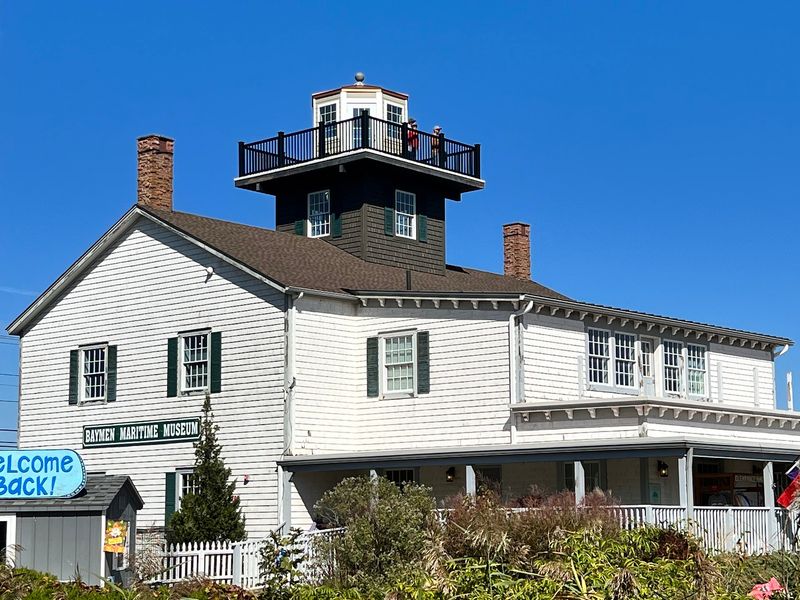
One of the most unusual lighthouse visits in New Jersey begins with a structure that isn’t the original at all. At Tuckerton Seaport, a white wooden replica recalls a lighthouse that once stood on a barrier island gradually reshaped by the sea.
Tucker’s Island had a settlement, summer visitors, and maritime infrastructure. Its lighthouse, rebuilt in 1868, eventually toppled into the water in 1927 after years of coastal erosion.
The replica offers a way to understand a landmark and landscape that can no longer be visited in their original form.
The replacement building serves as an interpretive center for the seaport, with displays about coastal life and lighthouse history.
Visitors can climb within the replica and look across the museum grounds and nearby water, although this is a different experience from ascending an operating lighthouse on the open shore.
The surrounding seaport extends the story beyond navigation. Exhibits explore the work of local bay communities, including fishing, decoy carving, boats, and other regional traditions. Boardwalk-style routes and waterfront areas offer space to walk between displays.
Allow more time than you would for a single tower. You might begin with the replica to learn the island’s story, then wander through the larger museum before looking toward Tuckerton Creek.
The buildings and displays give context to the relationship between working communities and the surrounding bay.
This stop is an especially useful choice for mixed-age groups, since the combination of indoor exhibits and outdoor space offers ways to explore without committing to a long stair climb. Admission applies, and hours vary with the season.
The replica closes the trip with an important reminder: a lighthouse can preserve coastal history even when the shoreline it once marked has changed completely.
Address: 120 W Main St, Tuckerton, NJ 08087.