Small town, big main-character energy.
This Michigan lakeside community counted just 865 residents in the 2020 Census, yet its reputation stretches far beyond that number.
Artists, beachgoers, and curious travelers have been finding their way here for generations.
The story did not start with tourism. Lumber and river commerce shaped the early years before galleries, beaches, and a growing creative scene changed the rhythm.
That contrast is what makes the place worth watching. The population stays tiny, but the pull keeps getting bigger.
Some towns grow by spreading out. This one grew by becoming unforgettable.
So how did a place this small end up carrying such a large Michigan reputation?
The Population Is Still Surprisingly Small
Look around during a busy summer stretch, and you might assume thousands of people live here year-round.
The real number is much smaller.
The 2020 Census counted 865 residents, making Saugatuck’s outsized travel reputation even more striking.
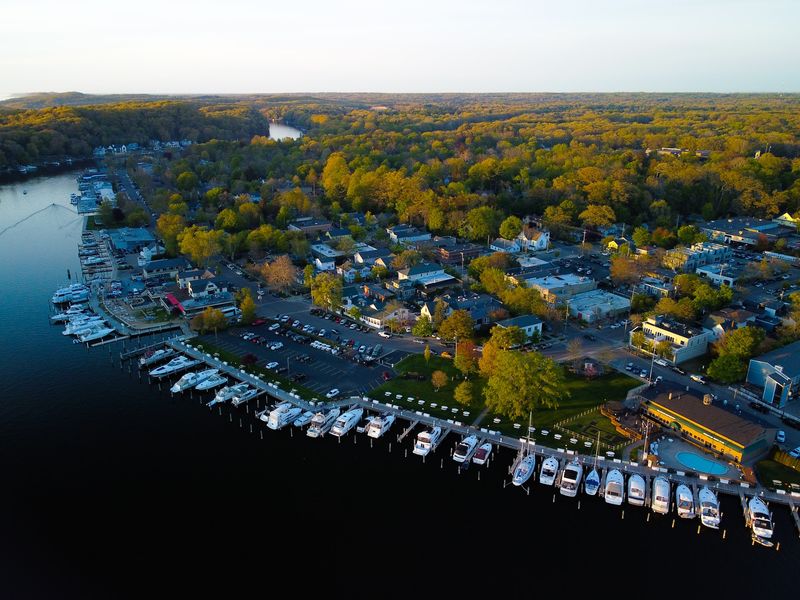
You could fit that population into some large apartment complexes. Yet this incorporated city in Allegan County has a downtown, waterfront parks, galleries, restaurants, shops, and marinas packed into a compact footprint.
That small scale becomes part of the experience once you start moving through downtown. Storefronts, parks, riverfront spaces, and side streets sit close together, so the city rarely loses its intimate proportions.
Recent planning work shows how much that character matters locally. The city’s strategic planning materials emphasize its small-town atmosphere, history, natural resources, recreation, and cultural role.
The current master-planning work considers how future development can remain consistent with established community character.
That makes the population more than a trivia question.
It helps explain why questions about growth, parking, development, and preservation carry so much weight in a place this small.
Tourism Has Become A Major Part Of Daily Life
Then the busy season arrives, and the scale changes quickly.
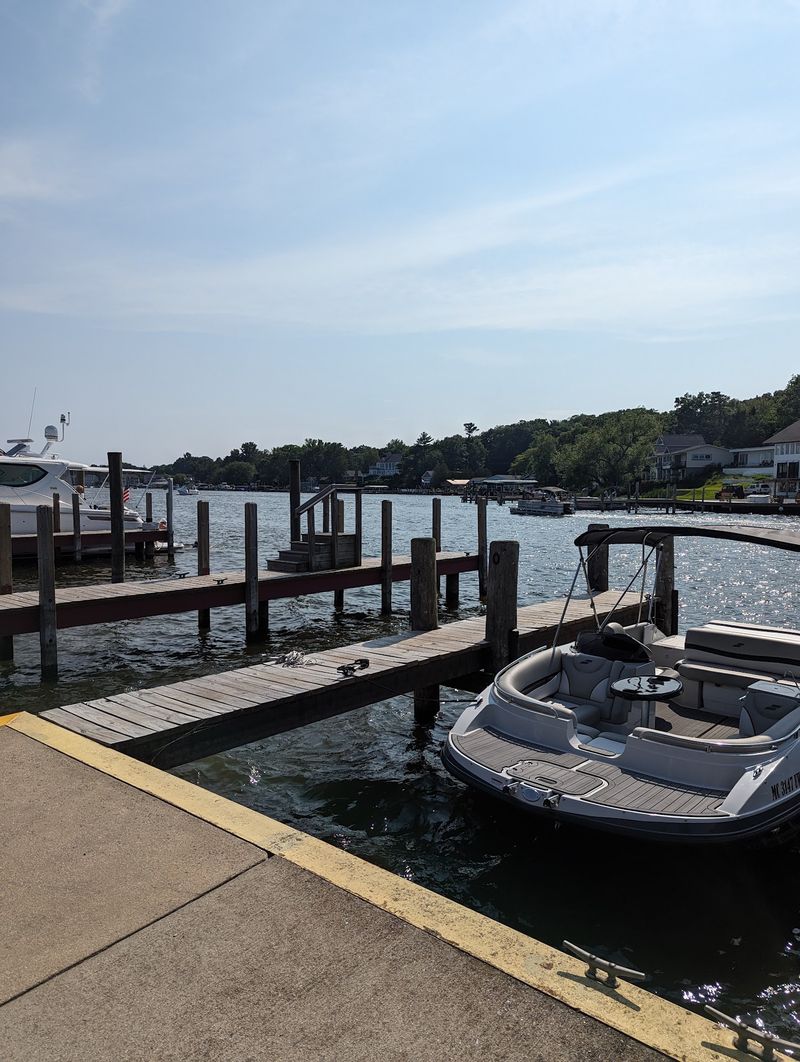
Visitors add far more activity to restaurants, shops, beaches, sidewalks, parking areas, and waterfront spaces than the permanent population could produce on its own.
Tourism has been part of the city’s identity for generations. The community is described as a Midwest destination for artists, beachgoers, and nature lovers for more than a century.
The roots stretch back even farther. City records point to deliberate efforts to attract visitors in the late nineteenth century, including the village’s 1884 purchase of Mount Baldhead and lakefront land that would later become Oval Beach.
That popularity affects more than businesses catering directly to travelers.
Parking is one of the clearest examples. A 2026 city parking study gathered extensive public feedback about peak-season crowding, downtown parking, traffic, and the challenge of handling visitor demand in a small community.
If you arrive during a busy summer period, you are seeing a tiny city working at a much larger scale.
Tourism is no longer something happening around the edges. It is part of the rhythm of daily life.
The River Once Meant Business
Before beach weekends and gallery browsing entered the picture, the river had a very different job.
The nineteenth-century community developed around the Kalamazoo River, access to Lake Michigan, lumber, shipping, and the movement of goods. The waterfront was practical long before it became a place visitors came to admire.
As the lumber era declined, the area began building another identity.
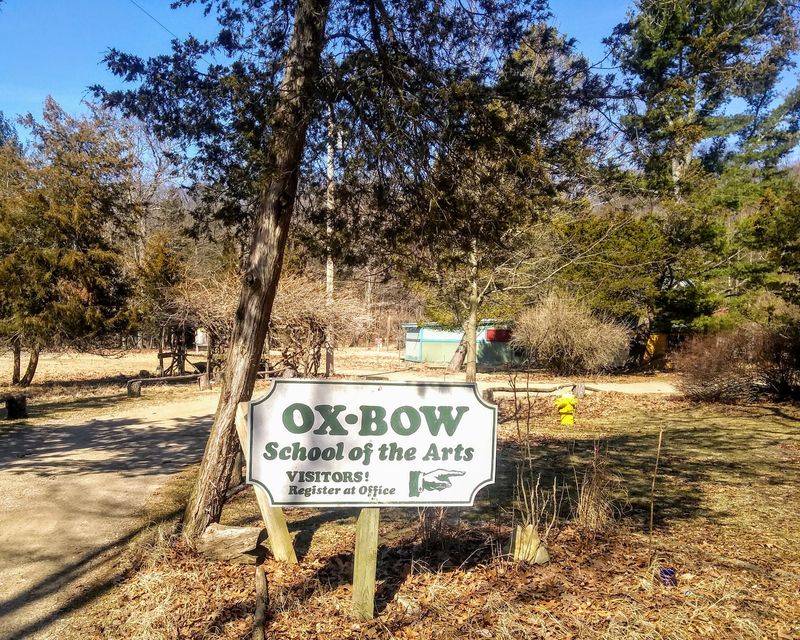
Artists became increasingly connected with the community around the turn of the twentieth century, and that creative history gained a permanent home with the founding of the Ox-Bow School of Art in 1910.
Ox-Bow began as the Summer School for Painting and has remained connected to the area for more than a century. Its campus grew on the site of the former Riverside Inn, a property tied to travelers and the historic lumber trade.
The shift changed the town’s trajectory.
A working river community became increasingly associated with artists, studios, galleries, and seasonal travelers. You can still see that legacy in the city’s cultural identity today.
The river, dunes, and art scene are not separate stories competing for attention.
Together, they explain how a tiny working community gradually became a place known far beyond its year-round population.
One Famous Beach Changed The Travel Equation
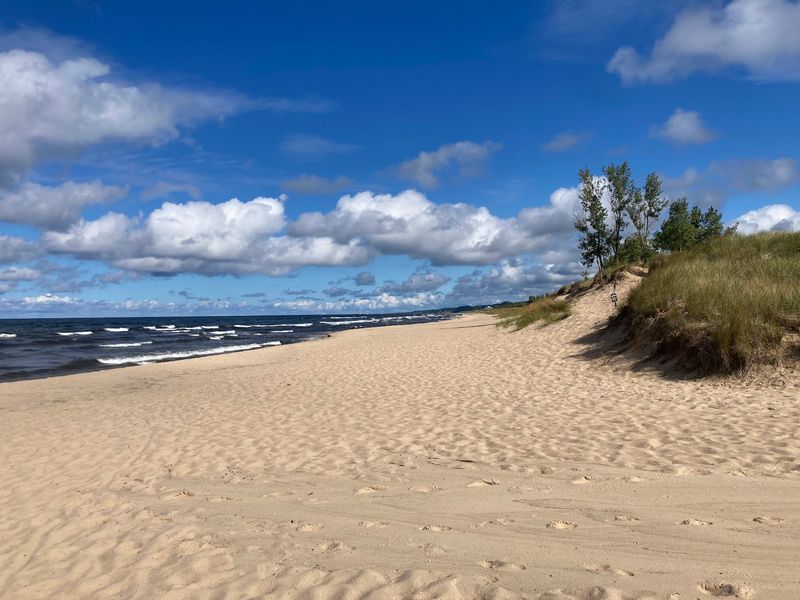
Sometimes one attraction does an impressive amount of work for a town’s reputation.
Oval Beach certainly helps.
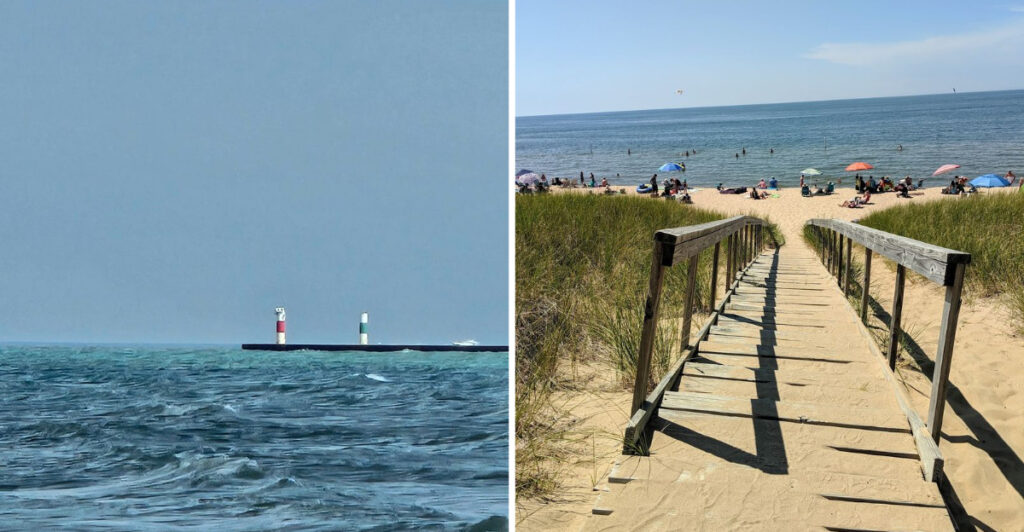
Located along Lake Michigan west of downtown, the beach combines open water, sand, and the coastal dunes that define this stretch of western Michigan.
If you have never stood beside one of the Great Lakes, the scale can be surprising. The water reaches the horizon, producing a shoreline scene with the sweep of a coast despite the inland setting.
The dunes add another layer.
Oval Beach is a nationally recognized shoreline, and it has dunes, seclusion, and visitor services. The beach has appeared on prominent rankings over the years, giving this small community a travel calling card much larger than its population.
The recreation area also connects naturally with Mount Baldhead and routes toward the river.
That means you can move from compact downtown streets to a historic ferry crossing, a steep dune climb, and the Lake Michigan shoreline within the same small area.
For a city of only 865 residents at the last census, that is an impressive concentration of scenery.
One look at the water and dunes makes the town’s popularity much easier to understand.
Summer Can Completely Change The Pace
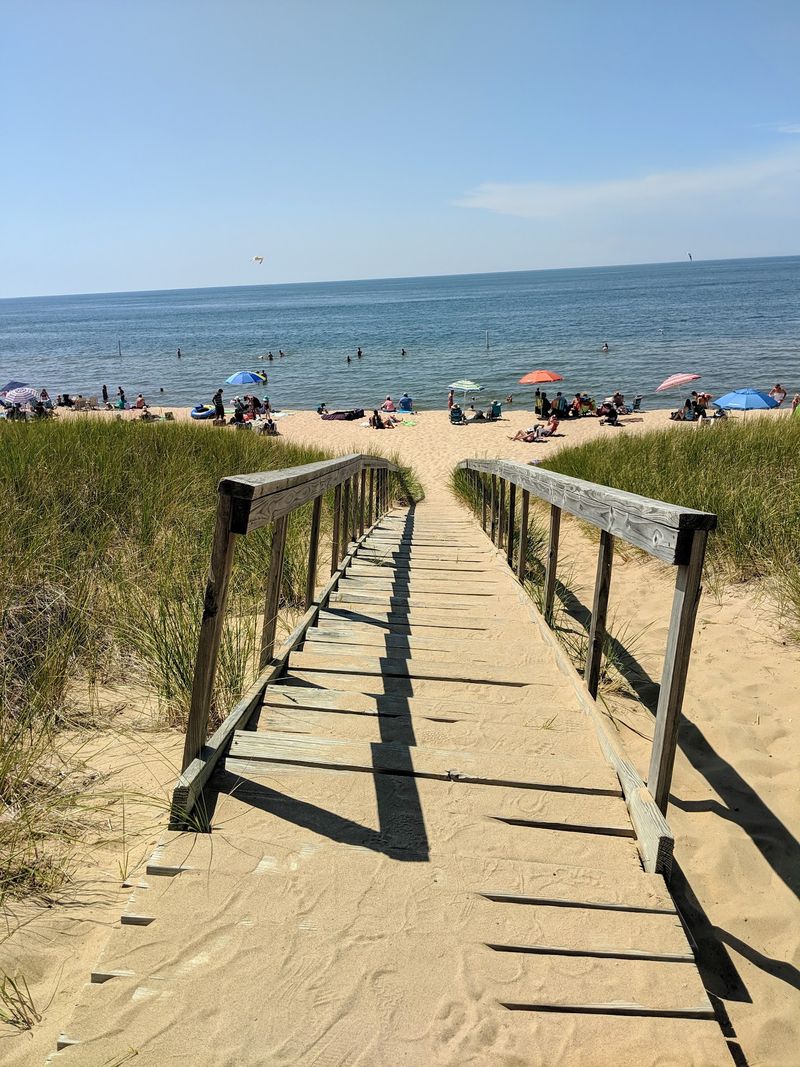
The easiest way to understand the town’s modern growth is to compare ordinary daily life with peak-season demand.
The physical footprint stays the same, but the number of people using it does not.
Parking surveys collected by the city in 2026 show that seasonal crowding is a real subject of local concern. Respondents repeatedly discussed downtown parking pressure and the difficulty of accommodating peak tourism within a small-town street network.
That tension is easy to understand.
The compact layout is part of what visitors come to enjoy. Downtown does not spread across miles of multilane roads and enormous parking fields. Shops, parks, restaurants, and waterfront spaces are clustered closely together.
The same layout that makes exploring convenient also creates limits when visitor numbers rise.
You can see why growth becomes such a complicated subject here.
Travelers support local businesses and help sustain the tourism economy. At the same time, increased seasonal demand places additional pressure on streets, parking, waterfront access, and public spaces designed around a much smaller permanent community.
The contrast has become part of the town’s modern identity.
It can be quiet and compact, then remarkably active when travel season reaches full stride.
Some Of The Best Attractions Are Delightfully Old-School
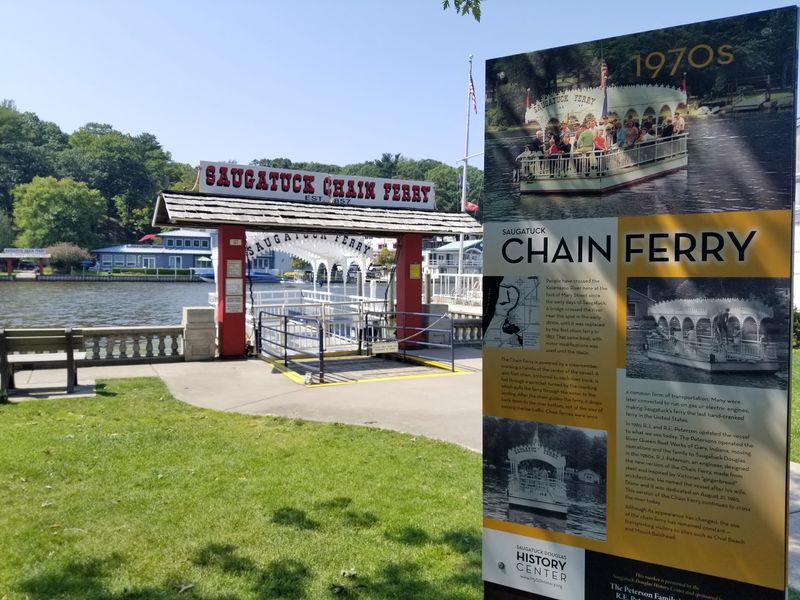
For all the attention the town receives today, two of its most recognizable attractions rely on wonderfully simple ideas.
The Chain Ferry is one of them.
The small ferry crosses the Kalamazoo River using a hand-operated chain system. It is the only remaining chain-driven ferry of its kind in the country, carrying pedestrians and cyclists across the water in a wonderfully low-tech fashion.
Then there is Mount Baldhead. Here, the challenge is vertical.
Reaching the summit requires a climb of roughly three hundred steps, followed by elevated views across the surrounding landscape. From the recreation area, routes continue through the dunes toward Oval Beach and the lakeshore.
The ferry and dune climb stand out because neither needs elaborate technology or a flashy modern attraction.
One gets you across the river by hand. The other asks you to climb. Together, they turn the town’s natural geography into part of the experience.
The river, dunes, and shoreline were shaping this place long before modern tourism became such a powerful force, and these old-school attractions still send you straight into that landscape.
Staying Small May Be The Biggest Challenge Yet
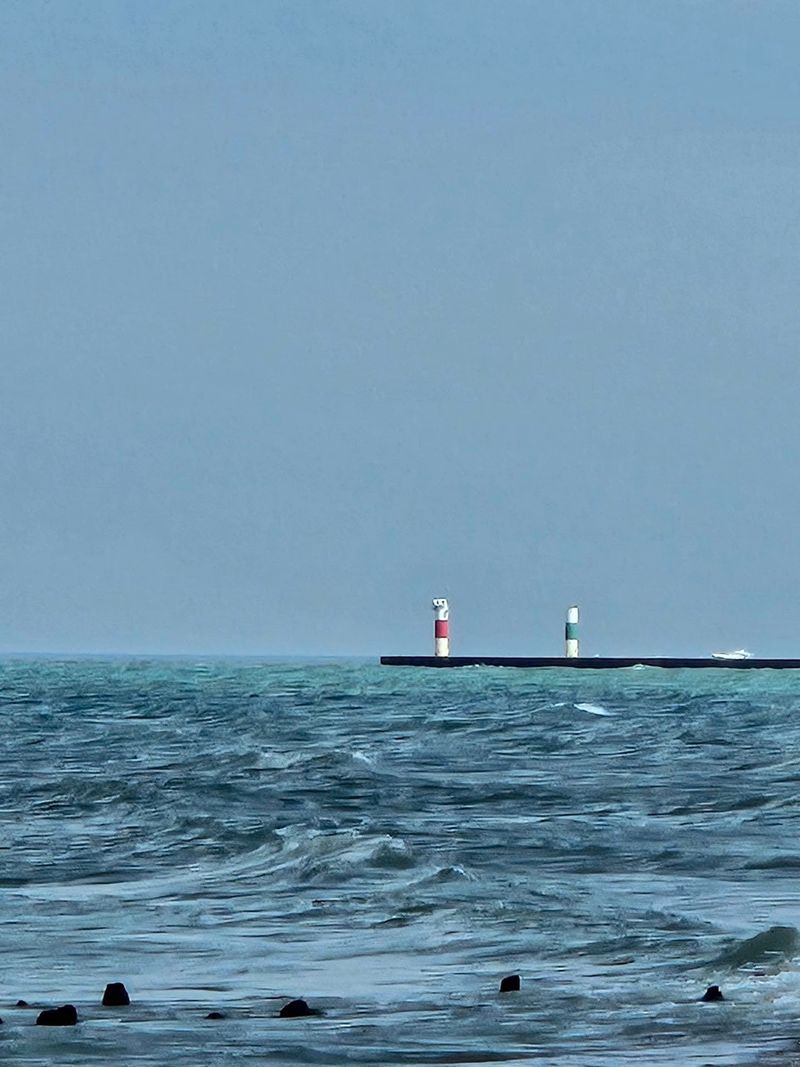
Popularity sounds simple until a town has to decide how to accommodate it. That is where this community finds itself today.
Current strategic planning identifies small-town atmosphere, history, natural resources, recreation, and cultural activity as important parts of the city’s future.
Planning work in 2026 has also focused on ensuring that future growth and development remain aligned with established community character.
That creates a delicate balance.
Visitors support restaurants, galleries, shops, lodging businesses, recreation, and other parts of the local economy. Growth can also increase pressure on parking, infrastructure, public spaces, and the compact development pattern people value.
The qualities attracting visitors are often the same qualities that can be changed by too much development.
For now, this little Michigan city still looks remarkably small beside the reputation it carries.
You can move through downtown and remain close to the river. The dunes rise between town and lake, the historic ferry still crosses the water, and an art school founded in 1910 remains part of the cultural landscape.
The town has already moved through several lives: lumber community, artist retreat, beach destination, and popular vacation stop.
Its next chapter may depend on doing something far harder than simply growing.
It has to keep welcoming attention without letting that attention erase the small-town character people came to find.