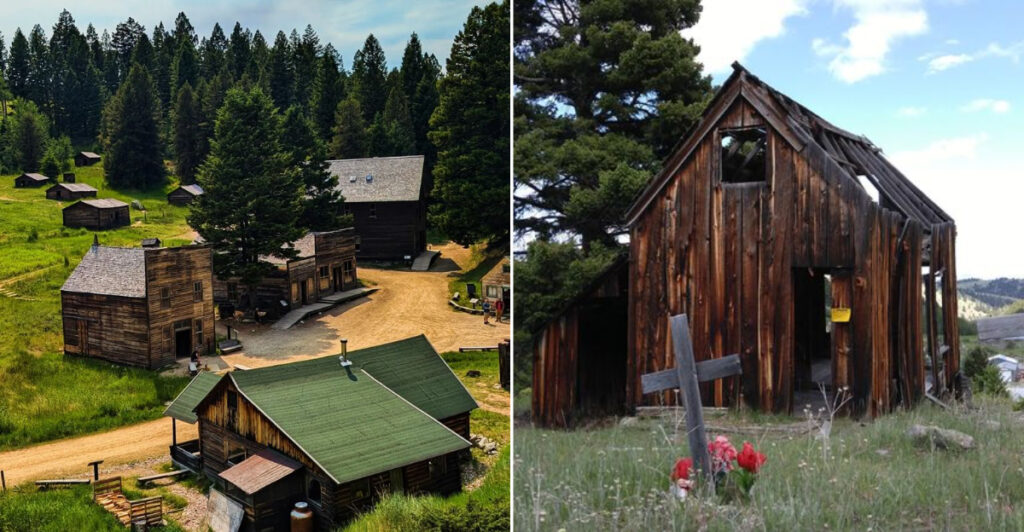
Old wooden buildings on a hillside. Empty streets that once carried the weight of an entire gold rush.
Montana is full of ghost towns, and every single one of them has a story that deserves to be heard. Miners came here chasing dreams.
Merchants built whole lives from scratch. Families planted roots in places that the rest of the world had not even heard of yet.
And then, almost as quickly as it started, the rush was over and the silence moved in. What does it actually feel like to walk the same streets those early settlers once called home?
Some of these towns have been forgotten by time. Others have been carefully preserved so that curious travelers can experience exactly that feeling for themselves.
Nine ghost towns made this list, each one more fascinating than the last. Montana is handing out one of its most extraordinary road trips completely free of charge. Ready to step into a chapter of history that most people drive right past without ever knowing it exists?
1. Bannack State Park
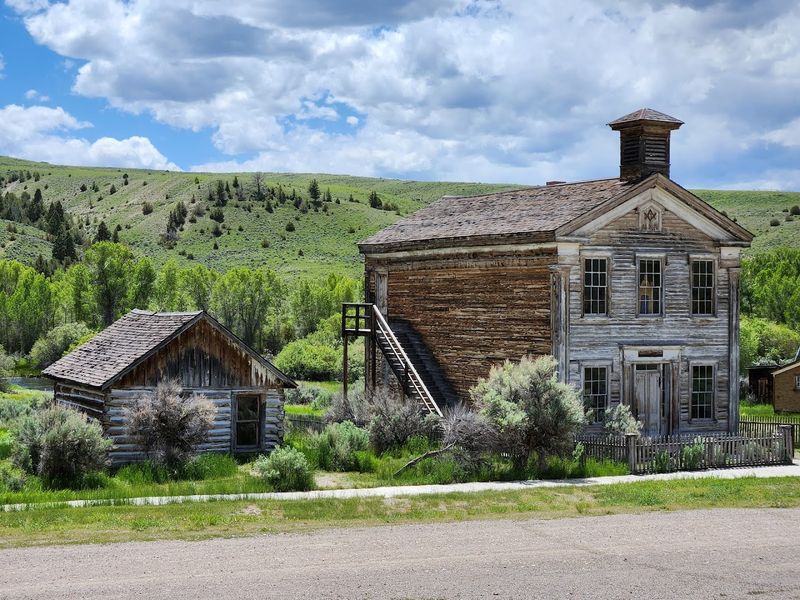
Montana’s story really begins here. Bannack was the site of the state’s first major gold discovery in 1862, and it quickly became Montana’s first territorial capital.
At its peak, thousands of people flooded in hoping to strike it rich.
Today, Bannack State Park stands as one of the best-preserved ghost towns in the entire country. More than 50 original buildings still stand, and walking through them feels like flipping through a living history book.
You can peek inside the old hotel, the schoolhouse, and even the former seat of territorial government.
Every summer, the park hosts Bannack Days, a popular event where reenactors dress in period clothing and bring the 1860s back to life. It is the kind of event that makes history feel personal and real, not just something you read about in a textbook.
Kids and adults alike tend to leave this place with a long list of questions and a serious appreciation for how tough pioneer life really was. The landscape surrounding the town is wide and open, giving the whole visit a cinematic quality that is hard to describe until you see it yourself.
Plan to spend at least half a day here because there is more to explore than you might expect. Bannack State Park is located at 4200 Bannack Rd, Dillon, MT 59725.
2. Granite Ghost Town State Park
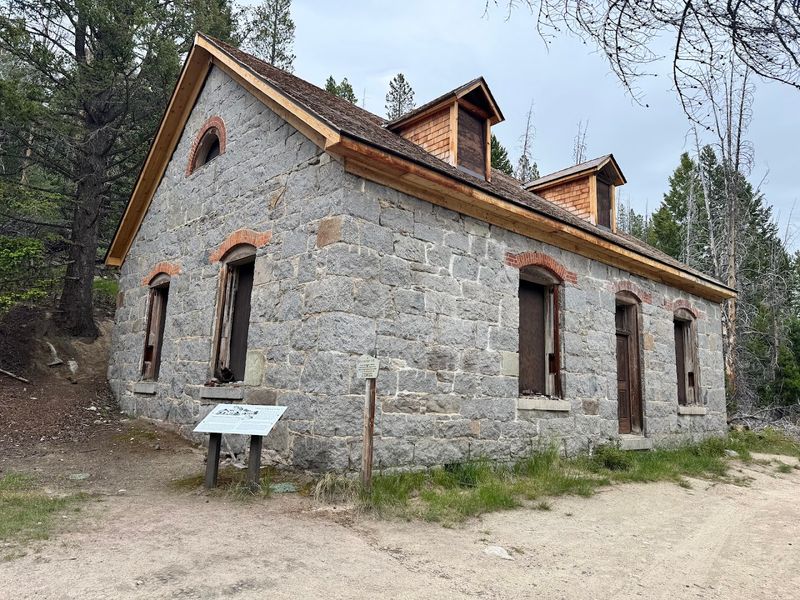
Perched high in the Sapphire Mountains, Granite Ghost Town State Park offers a road trip stop that combines dramatic scenery with serious mining history. Silver was the big draw here, and during the late 1800s, Granite was one of the richest silver-producing towns in the entire country.
At its height, several thousand people lived and worked on this mountain.
What remains today are the striking stone ruins of the mine superintendent’s house and the Miners’ Union Hall, both of which have aged in a way that makes them look almost sculptural against the Montana sky. Photographers tend to love this place, and it is easy to see why once you arrive.
The hike up to the ruins is part of the experience. The trail is not extremely long, but it is uphill, so wear comfortable shoes and take your time. The views from the top make every step worth it.
Granite played a central role in Montana’s mining industry during the late 19th and early 20th centuries, and visiting gives you a real sense of the ambition and hard work that shaped this state. There is something quietly powerful about standing among those stone walls and looking out over the valley below.
Granite Ghost Town State Park is located near Philipsburg, MT 59858, off Montana Highway 1 on Granite Mountain Road.
3. Elkhorn State Park
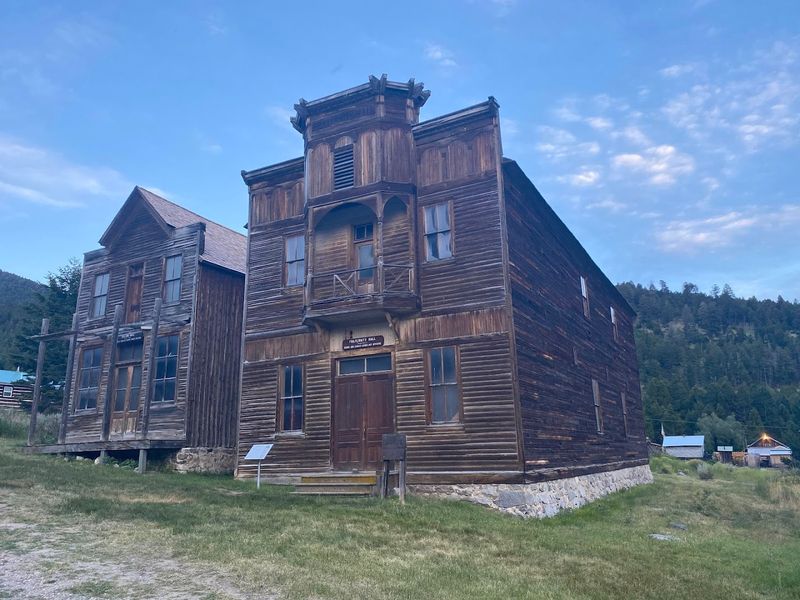
Small but mighty, Elkhorn State Park holds its own as one of Montana’s most charming historic sites. It is actually the smallest state park in Montana, which somehow makes it feel even more personal to visit.
The town of Elkhorn boomed in the 1880s when silver mining was at its most profitable in this part of the state.
Two buildings have survived the years and now serve as the centerpieces of the park. Fraternity Hall, built in 1893, and Gillian Hall are both well-known among history lovers and photographers.
They stand side by side in an open meadow setting that practically begs you to take a picture.
Unlike some ghost towns that require a lot of imagination to appreciate, Elkhorn gives you something tangible and photogenic right away. The buildings are in solid condition and the surrounding landscape adds a natural frame that changes beautifully with the seasons.
Summer and fall are the best times to visit because the access road can get rough during winter and early spring. If you time your visit for early autumn, the golden colors in the surrounding hills make the whole experience feel like something out of a painting.
Bring a picnic and take your time soaking in the quiet. Elkhorn State Park is located about 12 miles south of Boulder, MT, off Elkhorn Road, Jefferson County, MT 59632.
4. Coolidge Ghost Town
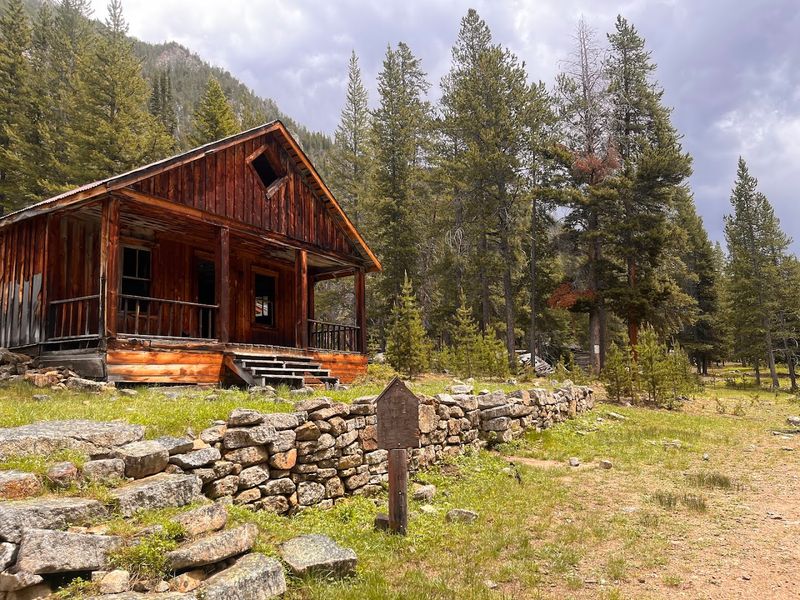
If your idea of adventure includes driving a winding forest road to find a nearly forgotten piece of history, Coolidge Ghost Town is exactly your kind of stop. Located deep in the Beaverhead-Deerlodge National Forest in southwestern Montana, this remote site is not on most tourists’ radar, which makes it all the more rewarding to find.
Coolidge was a silver mining town that had its moment in the early 20th century. At its peak, it had a full community including a school, homes, and mining operations that kept hundreds of people employed.
When the silver market dropped, the town emptied out quickly, leaving behind a remarkable collection of wooden structures.
The old mill building is the most striking feature of the site. It rises several stories above the forest floor and gives you an immediate sense of the industrial scale that once operated here.
Several cabins and other structures are also still standing, scattered through the trees in a way that feels almost cinematic.
Access to Coolidge requires a high-clearance vehicle and some patience with rough roads, but the payoff is a ghost town experience with almost no crowds. This is the kind of place where you can stand in total silence and actually hear the wind move through the old buildings.
Coolidge Ghost Town is located near Polaris, MT 59746, in the Pioneer Mountains of Beaverhead County.
5. Garnet Ghost Town
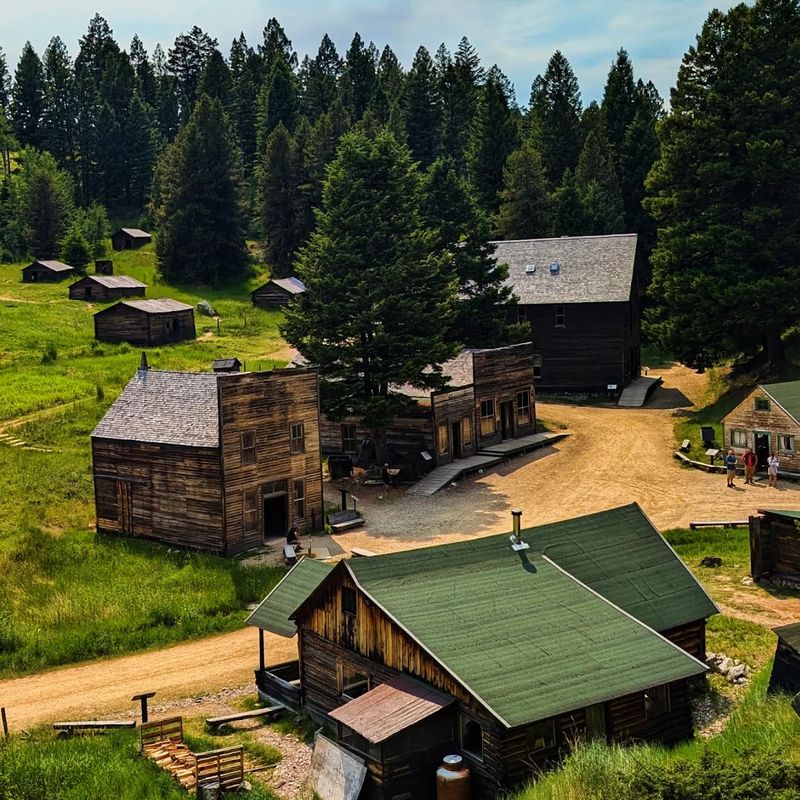
Not every ghost town gets a lot of foot traffic, and Garnet is perfectly fine with that. Placed into the mountains east of Missoula, this is one of Montana’s most authentic and least commercialized historic sites.
Gold was first discovered in Bear Creek here in 1865, and by 1898 nearly 1,000 people called this rugged place home.
The Bureau of Land Management now maintains Garnet, and they have done a thoughtful job of keeping it real. There are no souvenir shops or flashy signs here.
Instead, you get self-guided trails, interpretive signs, and a genuine sense of what a 19th-century mining camp actually looked like.
Several original buildings are open for visitors to explore, and many still contain old tools, furniture, and everyday items left behind when residents moved on. It is the kind of place where you find yourself standing in a doorway, quietly imagining what life here once sounded like.
Garnet is open year-round, though winter access can be challenging due to snow. If you visit in warmer months, the drive through the surrounding hills is scenic and refreshing on its own.
This spot rewards curious travelers who enjoy a slower, more reflective kind of adventure. Garnet Ghost Town is located at Garnet Range Rd, Drummond, MT 59832.
6. Highland City
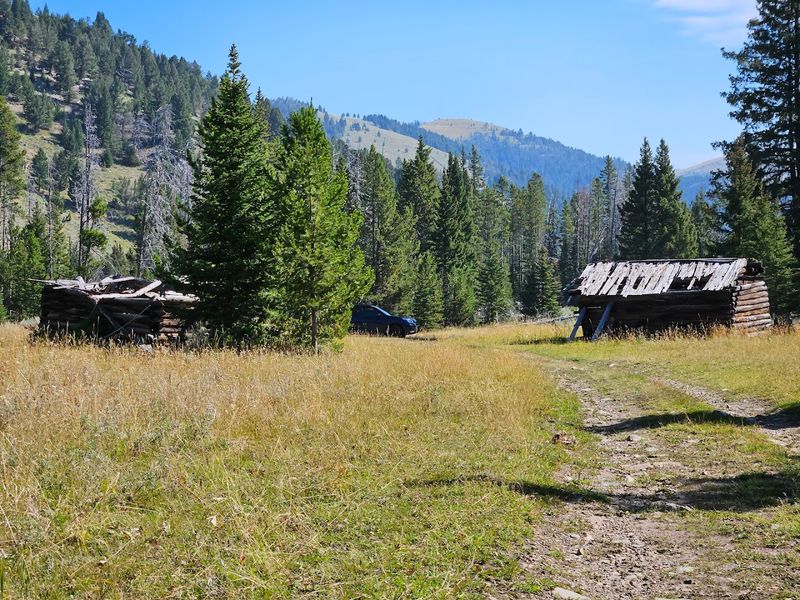
Just outside of Butte, Highland City is one of those places that history almost completely swallowed up. The town had its heyday in the 1860s and 1870s as a placer gold mining camp, and at one point it was a lively community with its own post office and a steady stream of hopeful prospectors.
Today, Highland City is far more rugged and raw than the more polished ghost towns on this list. There are no visitor centers or maintained trails here.
What you get instead is a genuine sense of stepping into a forgotten corner of Montana that most people drive right past.
The remains include scattered foundations, old mining equipment, and some structural remnants that give you a solid picture of what the camp once looked like. It takes a bit of curiosity and a willingness to look carefully, but the experience is genuinely memorable for those who appreciate unfiltered history.
The area around Highland City is also beautiful in its own rugged way, with open mountain terrain that rewards anyone who enjoys hiking or photography. You do not need a tour guide here, just a good map and a sense of adventure.
This is the kind of spot that makes you feel like a real explorer rather than a tourist. Highland City is located off Unnamed Rd, Butte, MT 59701, in Silver Bow County.
7. Marysville Ghost Town
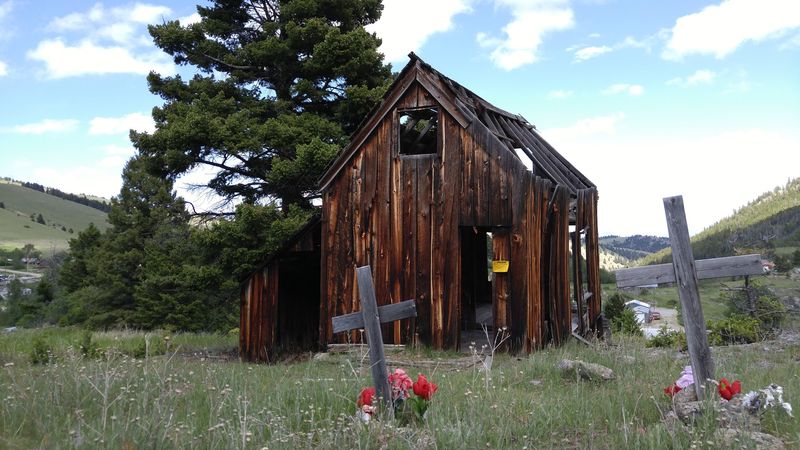
There is a great story behind the name of this town. Marysville was named after Mary Ralston, who discovered gold there in 1876, making her one of the few women credited with founding a Montana mining community.
That detail alone makes this place worth a visit.
The town grew rapidly in the 1880s thanks to the incredibly productive Drumlummon Mine, which became one of the most profitable gold mines in Montana history. At its peak, Marysville was a thriving community with hotels, stores, a school, and a population that numbered in the thousands.
Today, Marysville is considered a semi-ghost town, meaning a small number of residents still live there while historic structures from its mining days remain standing throughout the community. The old schoolhouse is a highlight, and remnants of the mining operations are visible for those who take time to look around.
The drive to Marysville through the Helena National Forest is scenic and enjoyable on its own. The town sits at a higher elevation, so the air feels crisp and clean, and the surrounding landscape is gorgeous in every season.
It is a relaxed and unhurried kind of stop, perfect for history lovers who also enjoy a quiet mountain setting. Marysville Ghost Town is located at Marysville Rd, Marysville, MT 59640, northwest of Helena in Lewis and Clark County.
8. Castle Town
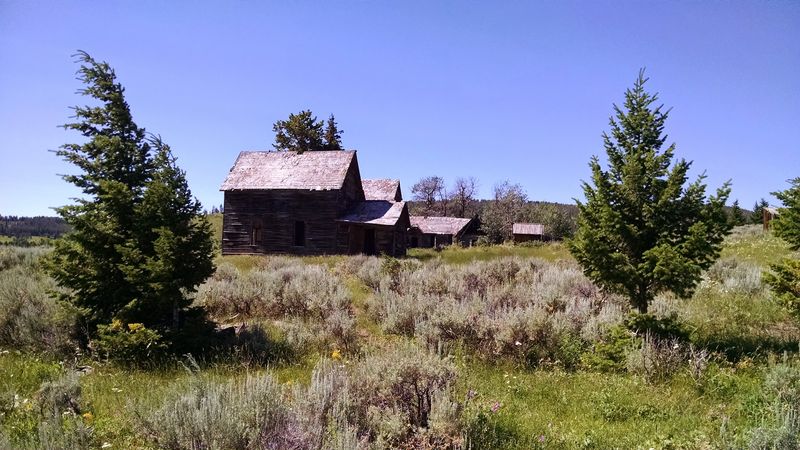
Castle Town has a name that sounds like it belongs in a fairy tale, and the story behind it is just as dramatic. Located in the Castle Mountains of central Montana, this silver mining town exploded to life in the late 1880s and quickly grew to a population of around 2,000 people.
It had newspapers, hotels, and all the energy of a place that believed it would last forever. It did not. When silver prices collapsed in 1893, Castle Town emptied out almost overnight.
That sudden departure is actually part of what makes visiting so fascinating. The town was not gradually abandoned. It stopped almost all at once, leaving behind a frozen-in-time quality that you can still feel today.
Several original wooden structures remain scattered across the site, including old cabins and commercial buildings that have weathered over a century of Montana seasons. The setting in the Castle Mountains is remote and scenic, with sweeping views that make the long drive feel completely justified.
Access requires a good vehicle and some navigation skills since the roads are unpaved and can be rough depending on the season. Spring and summer offer the best conditions for a visit.
Castle Town is one of those places that rewards travelers who are willing to go a little off the beaten path. Castle Town is located near White Sulphur Springs, MT 59645, in Meagher County.
9. Comet/Rumley Mine
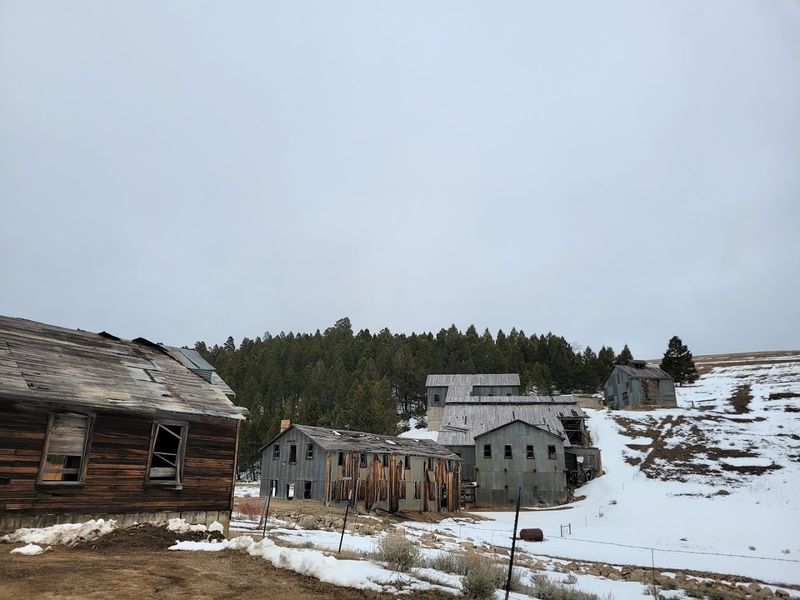
Comet is the kind of ghost town that serious history travelers tend to seek out specifically. Located in the Belt Creek area of Cascade County, this former silver, lead, and zinc mining camp had its most active years in the 1870s and 1880s.
At its peak, Comet was a productive and busy place, with a full mining operation that drew workers from across the region.
What makes Comet particularly interesting today is the remarkable number of structures that are still standing. The old mill building is the crown of the site, rising impressively above the surrounding landscape and offering a vivid picture of the industrial scale of 19th-century mining.
Scattered cabins, outbuildings, and mining remnants complete the scene.
The Rumley Mine, closely associated with the Comet site, adds another layer of history to the visit. Together, these two locations offer one of the more complete looks at what a working Montana mining operation once looked like from the outside.
Because Comet is not heavily promoted or heavily visited, you often have the place largely to yourself. That kind of quiet exploration is increasingly rare and genuinely special for anyone who loves history without the crowds.
Bring water, wear layers, and give yourself enough time to walk the full site. The Comet/Rumley Mine area is located near Neihart, MT 59465, in Cascade County along U.S. Highway 89.