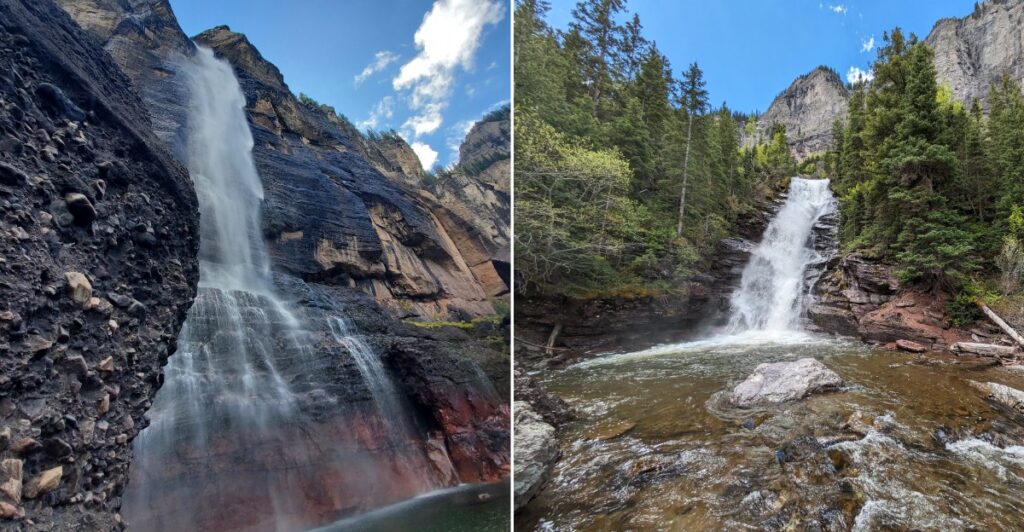
A 365-foot waterfall freezes solid every winter, and a working power plant from 1907 still sits on top of it. Yes, a real power plant, perched on a cliff edge like a mountain goat with a job.
That plant still sends renewable power to the town below. In the cold months, the falls become a giant pillar of ice at the end of a box canyon.
I believe this is one of the most dramatic winter sights in Colorado. Getting close, though, is a different story.
Avalanches, rockfall, and deep unstable snow make the winter climb far riskier than it looks.
So most people admire it from a distance, and honestly, that is the smart move. But what exactly makes this frozen giant so tricky, and how can you still enjoy it safely?
You Will Not Believe How Tall This Ice Curtain Gets
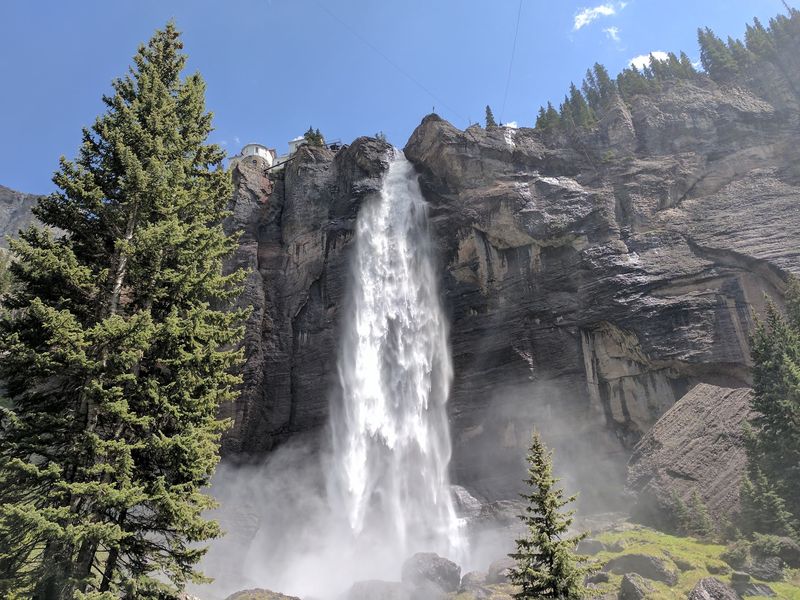
Bridal Veil Falls holds the title of Colorado’s tallest free-falling waterfall. The water drops a whopping 365 feet down a sheer cliff.
That is taller than a 30-story building. Now picture it frozen, and your neck may need a stretch.
Every November, the falls start to freeze over. The rushing water slowly turns into a huge column of blue and white ice.
The shape is pretty special too. Bridal Veil Falls splits into two prongs, so the frozen version looks like twin icy ribbons.
The falls sit at the very end of a box canyon east of Telluride. Steep walls wrap around the area on three sides, which makes the scene feel closed in and grand.
Summer brings roaring water and peak flow from May through October. Winter brings silence, frost, and a waterfall that seems to freeze in mid-motion.
Both seasons are worth seeing, but the frozen look feels almost unreal. It is the kind of view that makes you forget your cold toes for a minute.
Just remember that the best way to enjoy it in winter is from below. The ice is stunning, but the slopes above deserve plenty of respect.
A 1907 Power Plant Is Still Working Up There
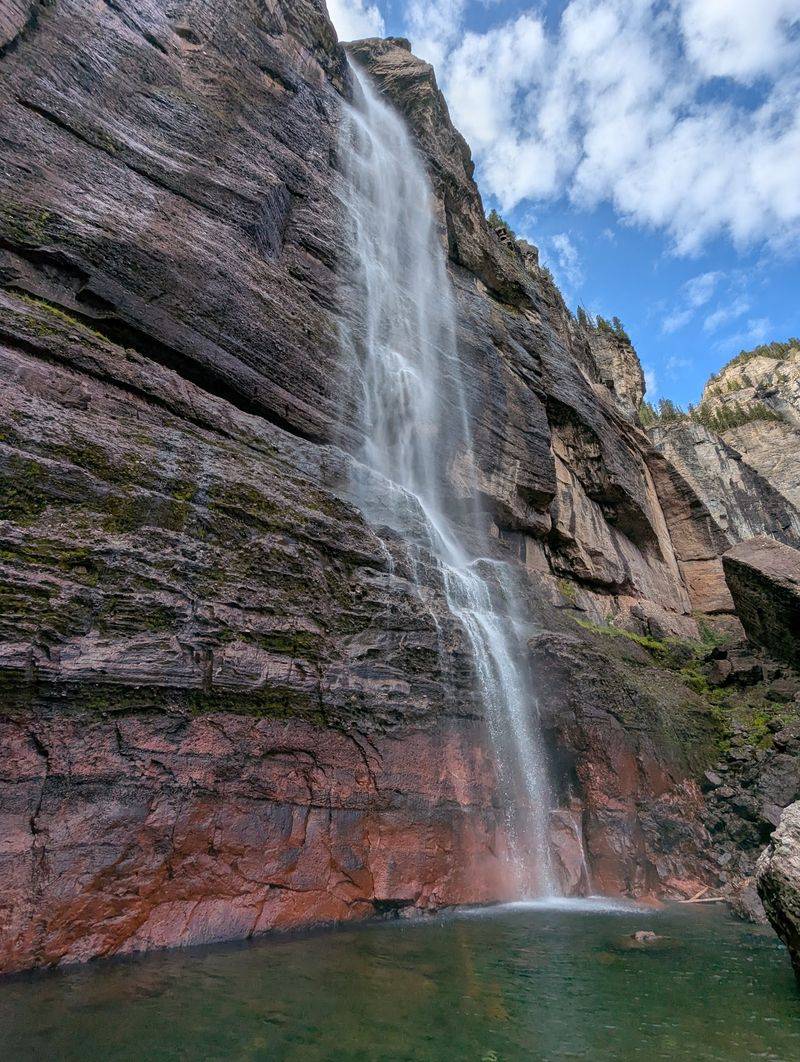
Most waterfalls do not come with a job. This one has kept a power plant busy for over a century.
The Smuggler-Union Hydroelectric Plant sits right on top of the falls. It was built in 1907 and first powered the Smuggler-Union Mine until the 1950s.
After years of sitting quiet, the plant got a second life. Eric Jacobson restored it and reopened it in 1991.
Today it houses the second-oldest operating AC generator in the United States. That is a fun fact to drop at dinner.
The plant supplies about 25 percent of Telluride’s electricity demand. So the falls help light up homes and shops in the town below.
It has been on the National Register of Historic Places since 1979. Seeing the little building cling to the cliff edge is a big part of the charm.
One catch, though. The plant and residence are privately owned and generally closed to the public.
They only open during special open house events. So admire the history from a distance, and save your snooping for the photos.
Why The Winter Climb Is Riskier Than It Looks
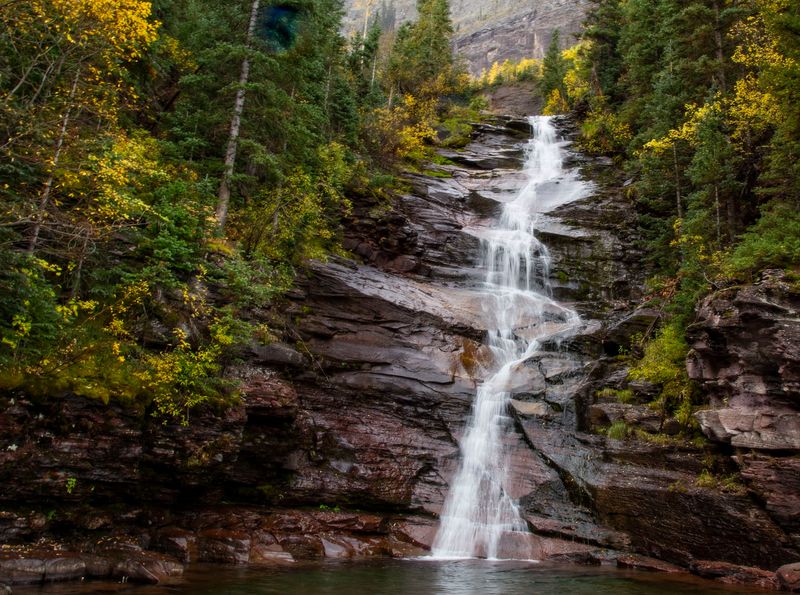
Avalanches are the big reason this winter hike gets a firm thumbs down. The slopes around the falls are highly prone to sliding snow.
Crews often handle avalanche control in the winter months. That work can include deliberate shelling to bring snow down on purpose.
Falling rock is another serious hazard during the cold season. Ice and freezing temperatures can loosen rocks on the steep canyon walls.
Then there are the giant snow piles. Avalanche deposits can stack up 50 to 60 feet deep, and they are not always stable.
If that snow gives way, a person could fall a similar distance onto rocks below. Local deputies have warned people to stay clear for exactly this reason.
Official sources actively discourage hiking and snowshoeing to the falls in winter. That is a pretty clear message.
The scene can look calm and peaceful from the road. But calm-looking snow can hide a lot of danger underneath.
So treat this one as a look-but-do-not-climb winter wonder. Your future self will thank you for staying on the safe side.
The Safest Winter View Comes From The Canyon Floor
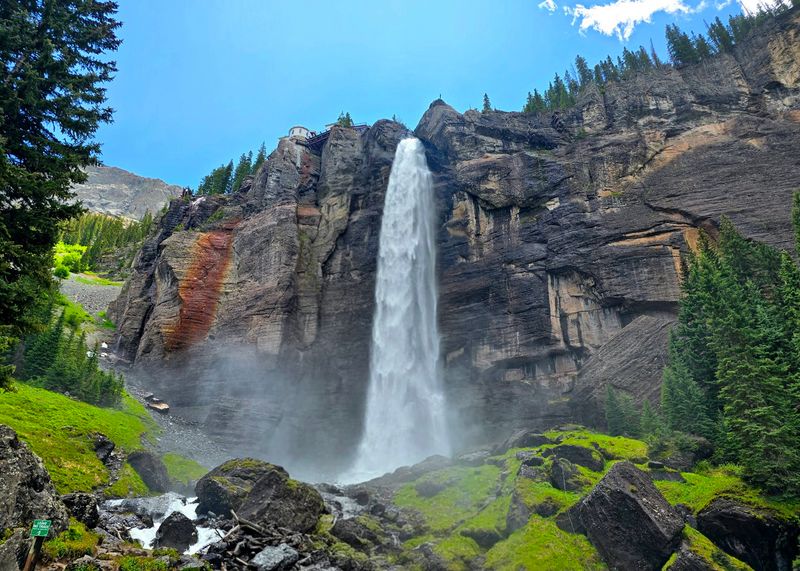
Good news for winter visitors. You can usually still drive to the end of the box canyon and view the frozen falls from below.
Head east out of Telluride along Colorado Avenue. Keep going until you reach the parking area near the historic Pandora Mill.
From there, the frozen falls rise high above the valley. You get the big view without wading into avalanche country.
The 4-wheel drive road up to the falls closes to vehicles in winter. So the base of the canyon is really your best seat in the house.
Bring binoculars if you have them. They help you spot the power plant and the details in the ice.
A good camera with zoom works well too. The cliffs are huge, so wide shots and close-ups both tell a story.
Dress warmly, since the canyon can feel chilly and shady. Layers, gloves, and a hat will keep you happy longer.
This viewpoint is easy, quick, and rewarding. Sometimes the smartest adventure is simply knowing where to stand.
Thin Air Adds An Extra Challenge
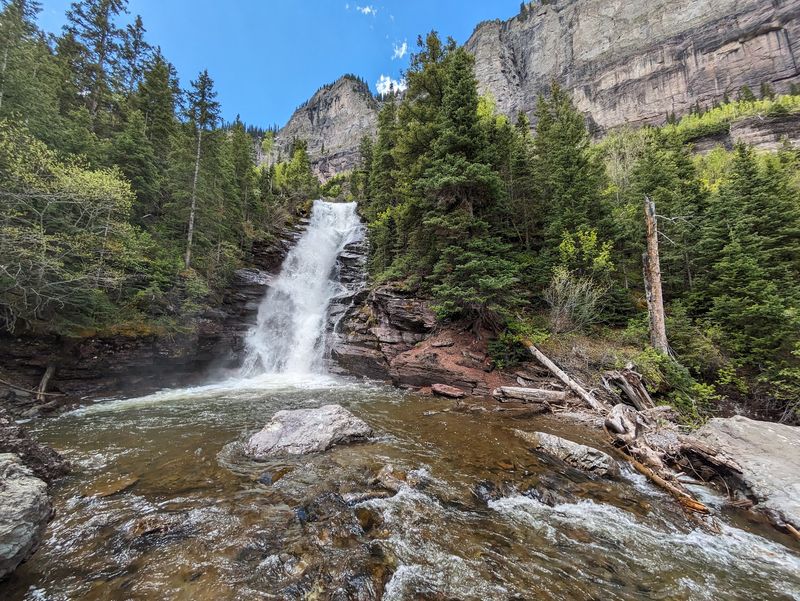
Telluride sits at nearly 9,000 feet above sea level. The falls are even higher than that.
At that height, the air holds less oxygen. Even a short walk can leave you breathing harder than you expect.
Visitors from lower areas often feel it fast. Headaches, tiredness, and shortness of breath can sneak up on you.
Winter makes everything tougher. Snow can be knee-deep in many sections of the trail, and every step takes more effort.
Put thin air and deep snow together, and a simple outing turns into a workout. That is one more reason winter trips should stay low and easy.
A few smart habits help a lot. Drink plenty of water, take breaks, and give your body time to adjust.
Plan to rest your first day in town before doing anything active. Your lungs will appreciate the warm-up time.
Listen to your body and turn back if you feel unwell. Mountains are not going anywhere, and neither is this frozen beauty.
Summer Turns The Road Into A Rocky Adventure
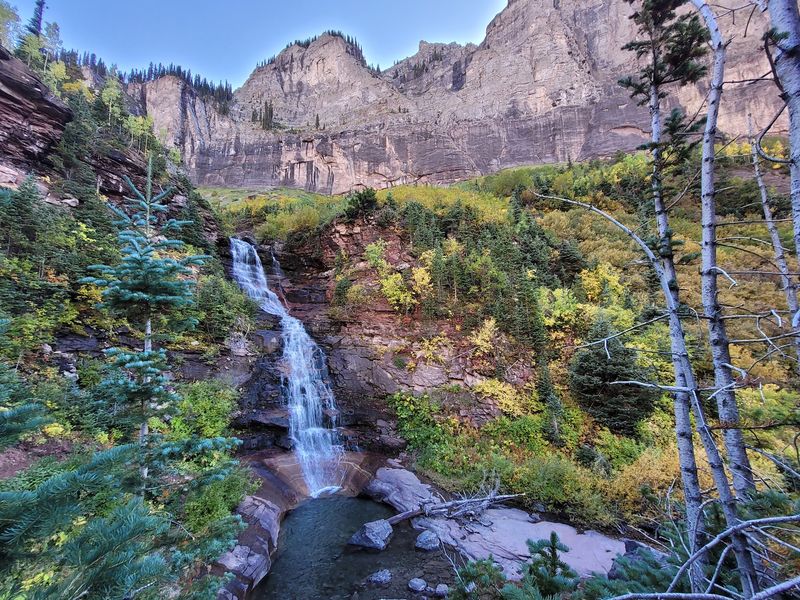
Switchbacks, rocks, and a waterfall finish line. That is the warm-season version of this trip.
The route up to the falls follows Bridal Veil Falls Road, also called Black Bear Pass Road. It is County Road K69, and Bridal Veil Falls sits along it at County Road K69, Telluride, CO 81435.
The road climbs about 1.8 to 2.4 miles up rocky switchbacks. Hikers and mountain bikers can use it too.
Driving it calls for a high-clearance 4×4 vehicle. A regular sedan will not enjoy this ride.
Above the power plant, the road becomes one-way, downhill only. So do not plan on heading up past the falls.
Parking near the top is limited. Many people park near the Pandora Mill and start from there.
May through October is the best window for this route. Trails are clear, and the water is flowing at its peak.
If you would rather not drive, guided Jeep tours run in the warmer seasons. Let someone else handle the bumps while you enjoy the views of Colorado’s high country.
A Newer Trail Gives Hikers Their Own Path
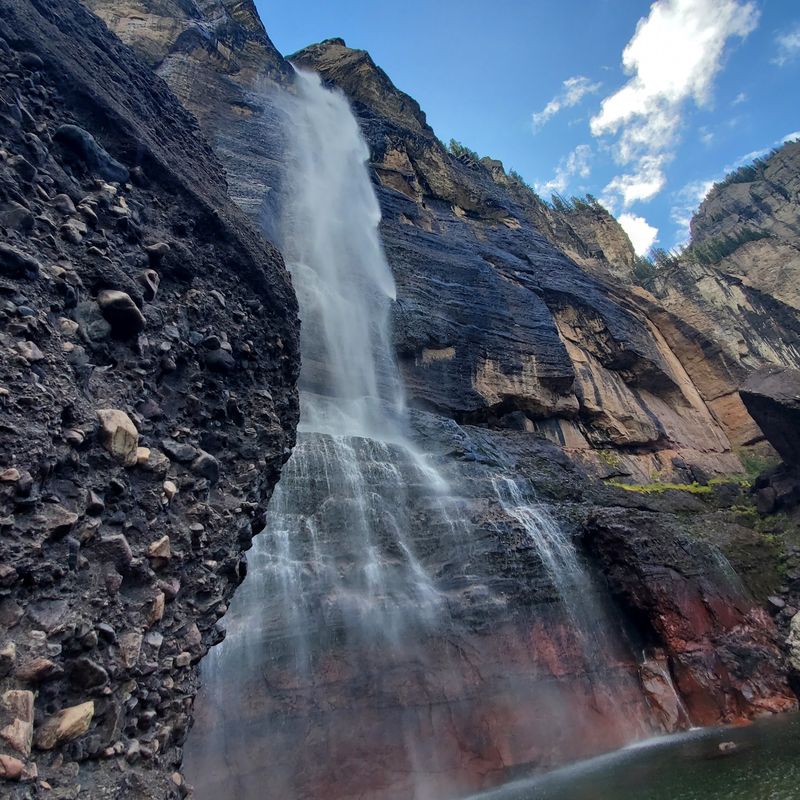
Back in May 2020, hikers got a big upgrade. The Bridal Veil Falls Trail opened as a dedicated path separate from the road.
It starts at the Idarado Mine parking area. From there, it runs about 1.12 to 1.2 miles one way to the base of the falls.
Do not let the short distance fool your legs. The trail gains around 840 to 859 feet in elevation.
It is considered moderately challenging to difficult. The terrain is rough, so sturdy shoes are a must.
Here is a fun bonus. The trail passes two additional waterfalls along the way, so you get a little preview before the main event.
Mountain bikes are not allowed on this trail. It is for hikers only, which keeps things calmer on the climb.
Guided hikes are also available if you want a leader. That can be helpful for first-timers in the area.
The Bridal Veil Trail is seasonally closed from December 1 through April 30 because of hazardous winter conditions.
Ice Climbers Made It Famous, But It Is Off-Limits Now
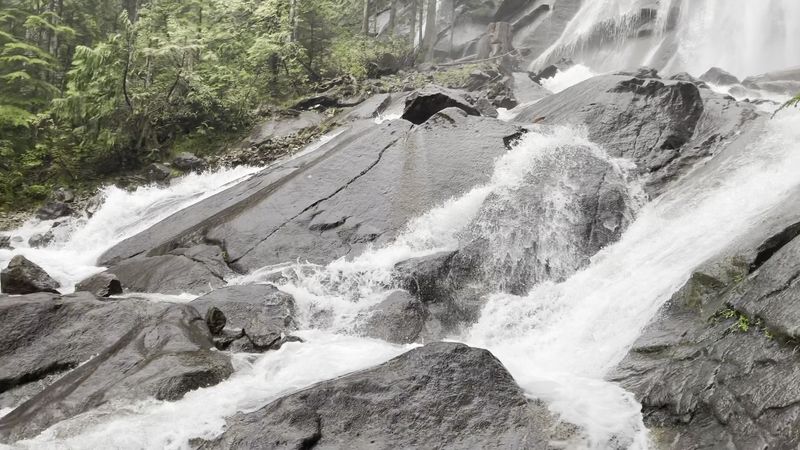
In 1978, climbers made the first documented ice climb to the top of Bridal Veil Falls. That climb helped put the frozen falls on the map.
The giant ice column became a legendary challenge for expert climbers. It is easy to see why, with all that vertical frozen water.
Ice climbing at Bridal Veil Falls was restricted for much of the 1990s and 2000s, but legal access reopened in December 2008 under a revocable agreement with the landowner.
Qualified ice climbers may climb Bridal Veil Falls when access is permitted, but they must follow county regulations, register at the designated kiosk, and avoid restricted areas around the power plant.
The story still adds something to the view. Knowing people once scaled that ice makes it feel even taller.
For most of us, looking up is plenty of thrill. The frozen falls are impressive without anyone hanging off them.
Colorado has other places where ice climbing is allowed. Those spots are the better choice for anyone itching to swing a tool.
At Bridal Veil Falls, the best move is simple. Admire the ice, snap your photos, and let the history do the climbing.
Plan Smart And The Views Pay You Back
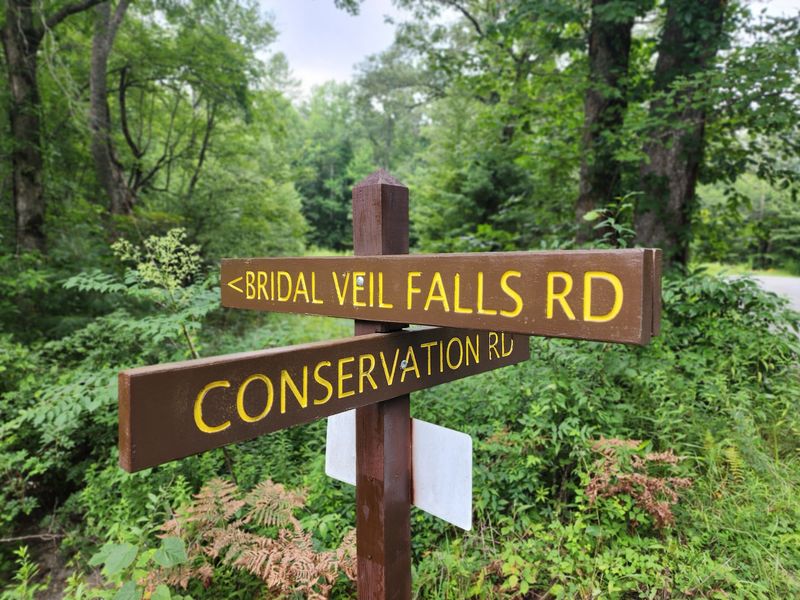
Timing is everything with this Colorado favorite. Pick your season, and the experience changes completely.
Winter is for viewing the frozen falls from the canyon floor. Summer and early fall are for hiking, biking, or riding up to the base.
From higher up, the views open wide. You can see Telluride, the surrounding box canyon, and Bridal Veil Canyon.
Blue Lake is also part of the scenery in this area. It is one more reason the warm months draw so many hikers.
Before heading out, check current road and trail conditions. Snow can linger, and closures can change things quickly.
Pack water, snacks, layers, and sun protection. Mountain weather can shift fast, even in summer.
Respect private property signs near the power plant. Staying on public routes keeps everyone happy.
Bridal Veil Falls rewards people who plan ahead. Choose the safe season for climbing, the canyon floor for winter views, and you will get the best of both worlds.