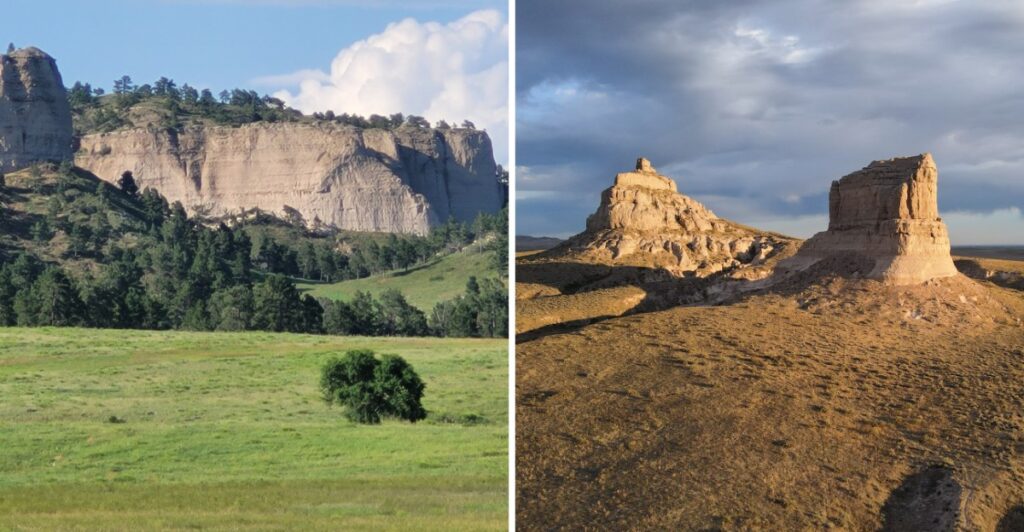
Pioneers had no GPS, so they steered by giant rocks that looked like buildings. Some of those same landmarks still rise beside the highway, right where wagon trains once stared at them.
That alone would make a solid road trip. Then western Nebraska starts adding curveballs, like spiral burrows dug by ancient beavers and a tower built for watching trains.
A few of these stops take minutes to enjoy, while others could swallow an entire afternoon. Several sit miles from the nearest town, and at least one involves dozens of gray-painted cars.
The list mixes pioneer history, fossils, badlands, and pure roadside weirdness. Grab the keys and a full water bottle, because the open road is about to show off.
1. Chimney Rock National Historic Site
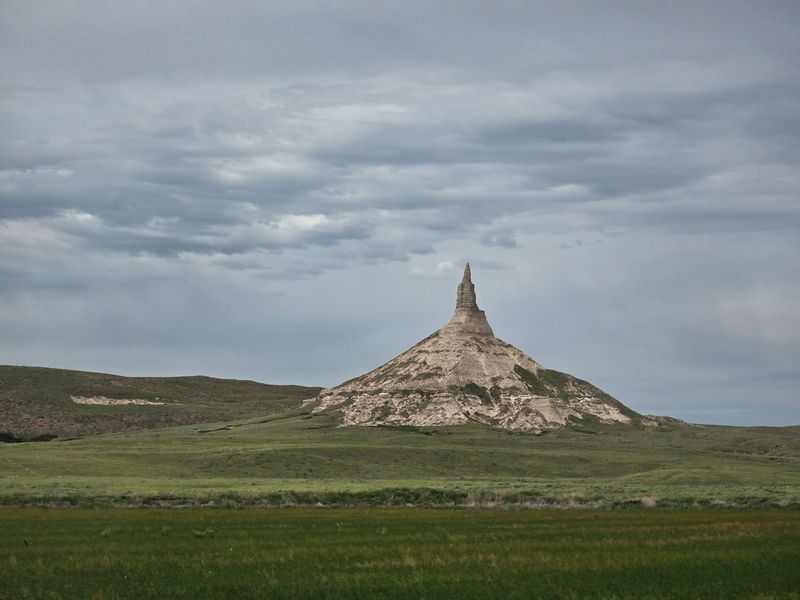
Pioneer diaries are full of mentions and sketches of this skinny spire. It’s widely considered the most famous landmark on the Oregon, California, and Mormon Trails.
The sandstone spire rises high above the North Platte Valley like an upturned funnel. Erosion and lightning have worn it down over time, but it still stands tall.
It became a National Historic Site in 1956. History Nebraska runs the Ethel and Christopher J. Abbott Visitor Center nearby.
Inside, a wagon-loading simulation asks you to decide what a pioneer family could carry. It quickly shows how tough those packing choices were.
A short film and hands-on exhibits round out the visit. There’s a gift shop inside, too.
The rock even made it onto Nebraska’s state quarter in 2006. The design shows an ox-drawn covered wagon rolling past the spire.
Loren Pospisil has managed the visitor center for more than three decades. He started when it operated from a small trailer near the highway in 1994.
From May through September, the visitor center opens daily from 9 a.m. to 4 p.m. From October through April, the visitor center is open Tuesday through Saturday, from 9 a.m. to 4 p.m. Mountain Time.
The site sits just south of Bayard, about 1.5 miles off Highway 92. Scotts Bluff is only about 24 miles away, so pairing the two is easy.
Address: 9822 County Road 75, Bayard, NE 69334.
2. Scotts Bluff National Monument
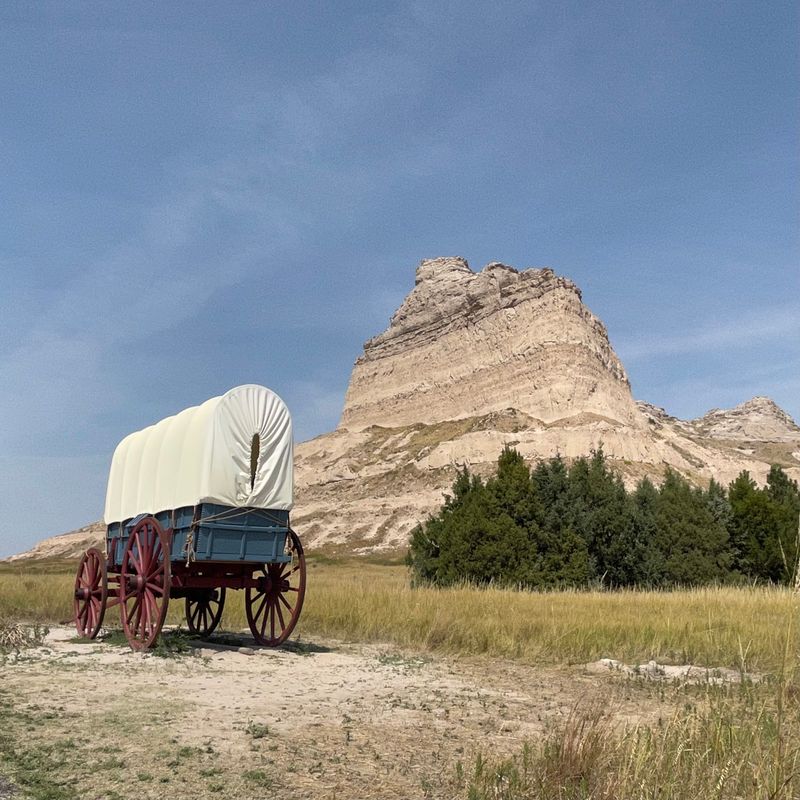
Pioneers once guided their wagons past an 800-foot bluff, and now a road climbs all the way to the top. It’s the most visited National Park Service site in Nebraska, and the view explains why.
The monument covers about 3,000 acres of sandstone bluffs along the North Platte River. Gering sits about three miles east of the headquarters area.
Summit Road is the star of the show for drivers. Crews built it between 1933 and 1937, and it passes through three tunnels on the way up.
It’s also the oldest concrete road in Nebraska. A rehabilitation project is underway, so check the road status before you go.
Each year, an estimated 30,000 to 40,000 vehicles make the drive up. Oversized vehicles have damaged the tunnels in the past, so check size limits first.
Prefer to hike? The Saddle Rock Trail climbs about 1.6 miles each way from the visitor center.
Along the way, the trail even passes through a tunnel in Saddle Rock. At the top, the North and South Overlook Trails are short and easy.
Back at the base, the visitor center has a museum and a gift shop. Nearby, Mitchell Pass marks the gap where wagons once rolled between the bluffs.
The site became a national monument back in 1919. Chimney Rock is less than half an hour away if you’re building a loop.
Address: 190276 Old Oregon Trail, Gering, NE 69341.
3. Carhenge
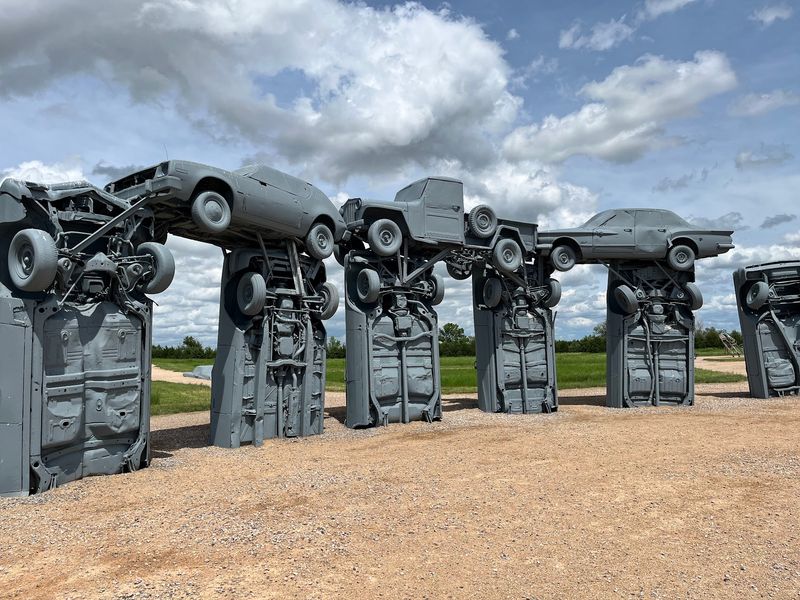
A 1962 Cadillac plays the role of the heel stone here. The rest of the circle uses dozens of vintage American cars, each painted gray.
Jim Reinders built it as a tribute to his father, on the farm where his father once lived. He had studied Stonehenge up close while living in England.
Family and friends helped him finish it, and it was dedicated at the June 1987 summer solstice. The ring measures about 96 feet across, closely copying the original’s layout.
Some cars are half-buried, while others sit welded across the top like stone beams. Three foreign cars were even buried on site, with a tongue-in-cheek sign marking the spot.
The site sits about three miles north of Alliance on Highway 87. A large gravel lot makes it an easy stop for RVs.
Beyond the circle, the Car Art Reserve adds more sculptures. Spawning Salmon bursts from the ground, and The Ford Seasons depicts the stages of wheat grown nearby.
Admission is free, and the site is open year-round. A small visitor center and gift shop sell souvenirs during the summer months.
The city of Alliance has owned Carhenge since 2013. It also inspired a roadside attraction featured in the Disney+ series Cars on the Road, which premiered in 2022.
The site sat in the path of the 2017 total solar eclipse. Crowds gathered here to watch the sky go dark over the cars.
Address: 2151 County Road 59, Alliance, NE 69301.
4. Fort Robinson State Park
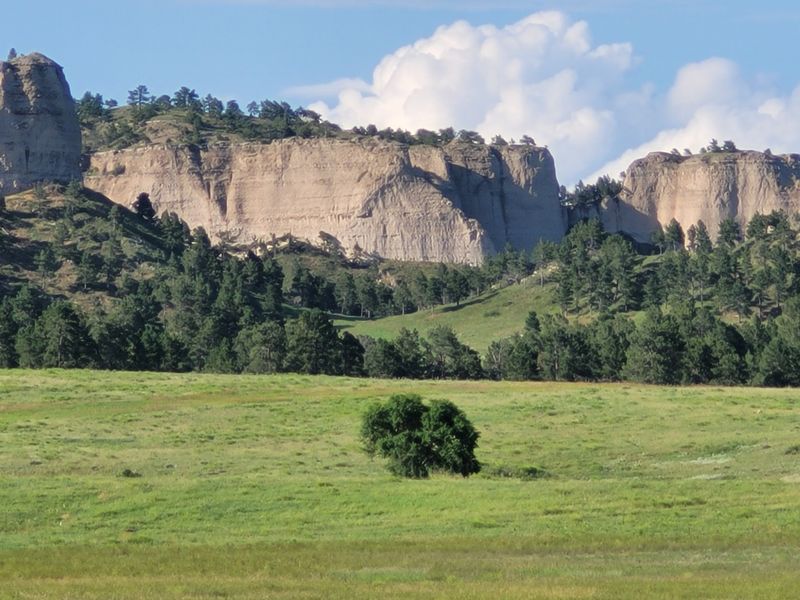
Herds of bison and longhorn cattle roam the state’s largest park. The grounds stretch across more than 22,000 acres of Pine Ridge buttes.
The fort’s buildings date from 1874 to 1909, and many now serve as guest lodging. The park sits about 3 miles west of Crawford along Highway 20.
Over the years, the post served as a cavalry remount station and a K-9 dog-training center. It later became a beef research station before turning into a state park in 1962.
Lakota leader Crazy Horse is also part of the fort’s story. A historic plaque marks a site connected to him.
The Fort Robinson Museum covers the post’s long history, including the Buffalo Soldiers. The Trailside Museum of Natural History adds geology and fossils to the mix.
From Memorial Day to Labor Day, you can try jeep tours, stagecoach rides, and horseback trail rides. Buffalo stew cookouts and summer theater at the Post Playhouse keep the evenings lively.
Hikers get 60 miles of trails, plus 20 miles for mountain biking. The state calls it Nebraska’s top park for hiking enthusiasts.
Some activities and trails are closed for part of 2026 after the South Fork Fire. Check with the park office for updates before planning a 2027 trip.
Lodging runs from April 1 through November 30. Rooms and cabins can host anywhere from two to 60 people.
Address: 3200 Highway 20, Crawford, NE 69339.
5. Agate Fossil Beds National Monument
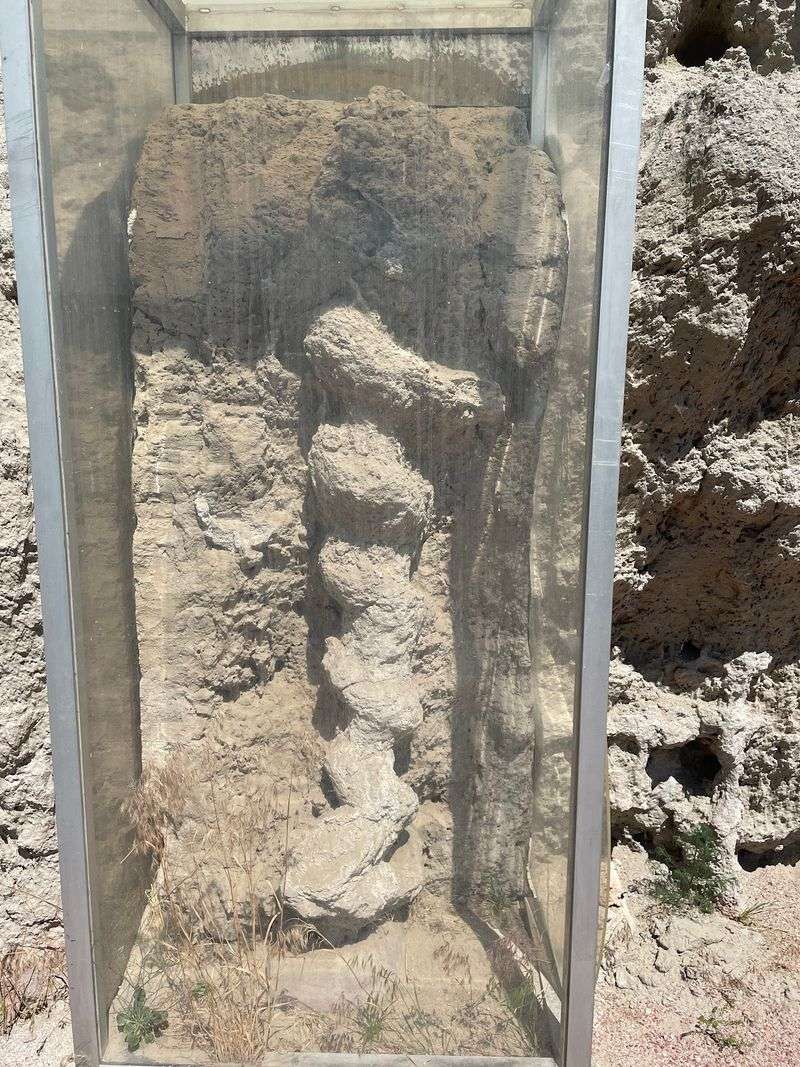
About 19 to 20 million years ago, a drought drew strange mammals to a few shallow water holes here.
Their fossils turned these quiet hills into an internationally recognized site.
Finds include Menoceras, a small rhino, and Moropus, an odd horse relative with claws. Dinohyus, a giant pig-like beast, also turned up in the quarries.
The visitor center sits along the Niobrara River in Sioux County. It’s about 34 miles north of Scottsbluff, so it fits nicely into a Panhandle loop.
Then there are the Devil’s Corkscrews, known as Daemonelix. These spiral burrows were dug by an ancient land beaver called Palaeocastor.
The 1-mile Daemonelix Trail shows those twisting burrows right where they formed. The 2.8-mile Fossil Hills Trail leads to the historic dig sites on Carnegie and University Hills.
Fossil Hills Trail has interpretive signs, but no fossil displays right now. A side path leads to Bone Cabin, the old homestead of Harold Cook.
Inside, the Cook Collection grew out of a lifelong friendship. Rancher James Cook met Lakota Chief Red Cloud in the 1870s, and the two stayed close for decades.
Red Cloud’s shirt and moccasins are among the gifts on display. A roughly 12-minute film tells the story of the fossils and the ranch.
Red Cloud and his band often camped outside the Cook ranch house in summer. His final visit to the ranch came in 1908.
Address: 301 River Road, Harrison, NE 69346.
6. Courthouse And Jail Rocks
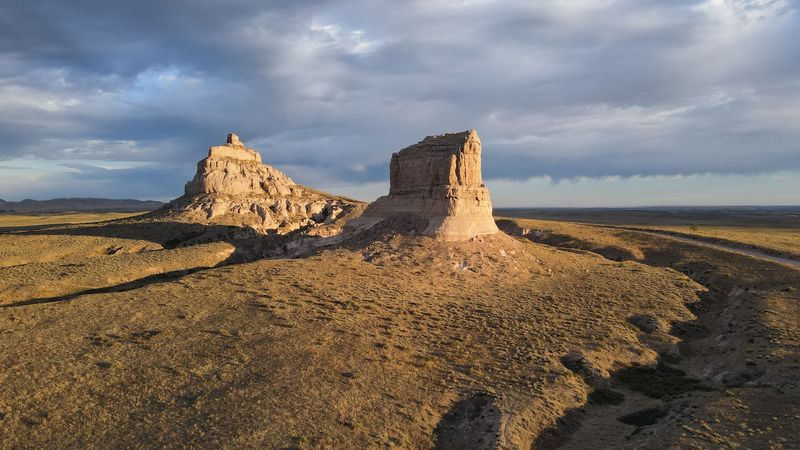
An 1845 traveler thought the bigger rock looked more like the Capitol than a courthouse. The courthouse name stuck anyway, and its smaller neighbor became Jail Rock.
Explorer Robert Stuart first recorded the rocks in 1812. By 1837, travelers were already using the courthouse name.
Coming from the east, these were the first big promontories along the trail. Some emigrants strayed up to five miles off course just to see them.
The Oregon-California, Mormon, Pony Express, and Sidney-Deadwood trails all passed nearby. A Pony Express station once operated close to the rocks.
The rocks are made of Brule clay, Gering sandstone, and volcanic ash. Wind and water slowly carved them into their castle-like shapes.
At the end of the access road, a hiking trail leads toward Courthouse Rock. You can climb partway up the side before the slope gets too steep.
There are no restrooms or staff on site, so plan ahead. Access is free from sunrise to sunset year-round.
The rocks sit about five miles south of Bridgeport on Highway 88. For more trail history, Bridgeport’s Pioneer Trails Museum is close by.
Address: Highway 88, Bridgeport, NE 69336.
7. Toadstool Geologic Park
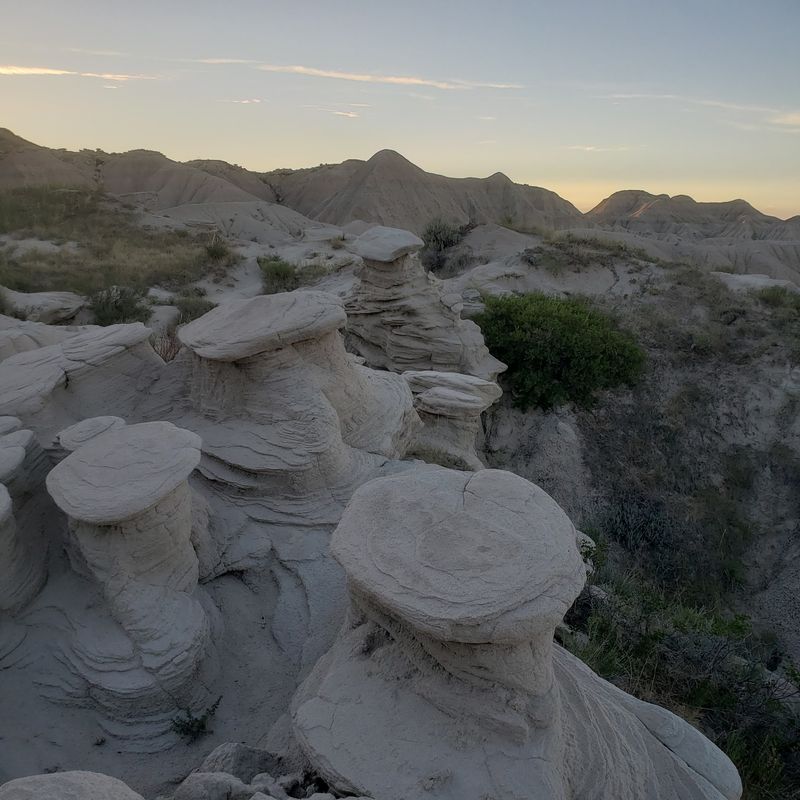
Sandstone slabs balanced on skinny clay pedestals gave this badlands park its name. Many of the biggest toadstools have already toppled, so the survivors feel extra special.
Reaching the park means following Toadstool Road north of Crawford, then watching for signs. Dirt and gravel roads lead in, so check conditions before you go.
A one-mile loop trail winds through the strangest formations. Interpretive stops along the way explain how the formations took shape.
The first stretch starts flat, then climbs into a field of oddly eroded hills. Sturdy shoes help on the uneven ground.
Fossils and artifacts here are protected by federal law. Look closely, snap photos, and leave each find where it sits.
The Bison Trail heads 3 miles to the Hudson-Meng Education and Research Center. That site holds a bonebed of ancient bison about 10,000 years old.
In 1984, the Forest Service built a sod house near the site of a 1929 original. Stepping inside shows how homesteaders made do on the treeless plains.
A small campground sits next to the trailhead, but there’s no water. The Oglala National Grassland around it is the best place in Nebraska to spot pronghorns.
A small day-use fee applies in summer. Bring plenty of water, since the park has none to offer.
Address: Toadstool Road, Crawford, NE 69339.
8. Ash Hollow State Historical Park
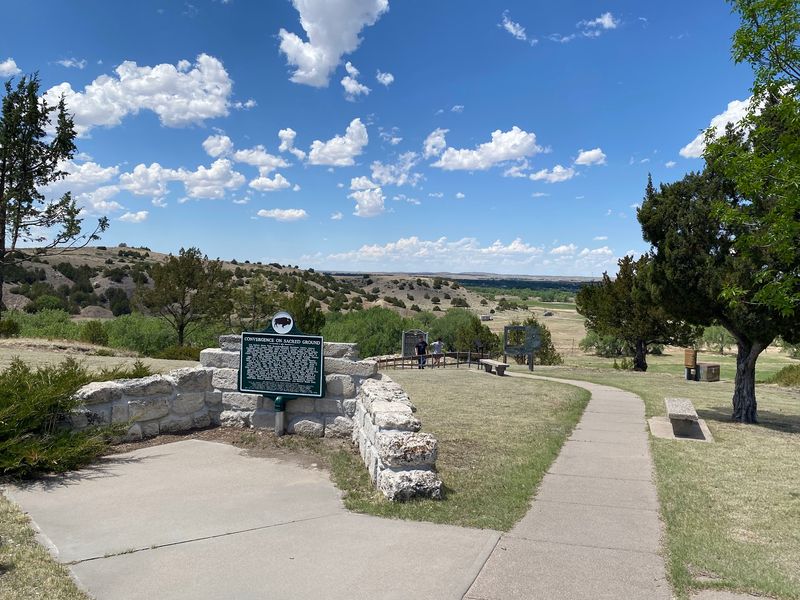
Wagons rolled down Windlass Hill on a 25-degree slope, and the ruts are still visible. Pioneers rough-locked their wheels and used ropes to ease the descent.
At least five scars of wagon ruts run down the hillside today. A paved but steep path climbs to the top for a wide view.
Sweet spring water made this spot a major stop on the Oregon and California trails. After a long, dry tableland, the wooded hollow offered a welcome rest.
Early peoples camped near Ash Hollow Cave for several thousand years. An interpretive center now protects the cave entrance.
The cave became a National Historic Landmark in 1966. Tours of the cave and a 1903 stone schoolhouse run during visitor center hours.
The visitor center sits on a bluff about three miles southeast of Lewellen. Windlass Hill is a separate section about 2.5 miles south.
The park offers nine miles of hiking on four trails. From the bluff, you can look out over the hollow and the old Overland Trail.
The visitor center and cave are open from Memorial Day to Labor Day. A Nebraska park permit is required for entry.
The park hosts the Ash Hollow Rendezvous each fall. Halloween in the Hollow adds a spooky twist later in the season.
Address: 4265 Highway 26, Lewellen, NE 69147.
9. Golden Spike Tower And Visitor Center
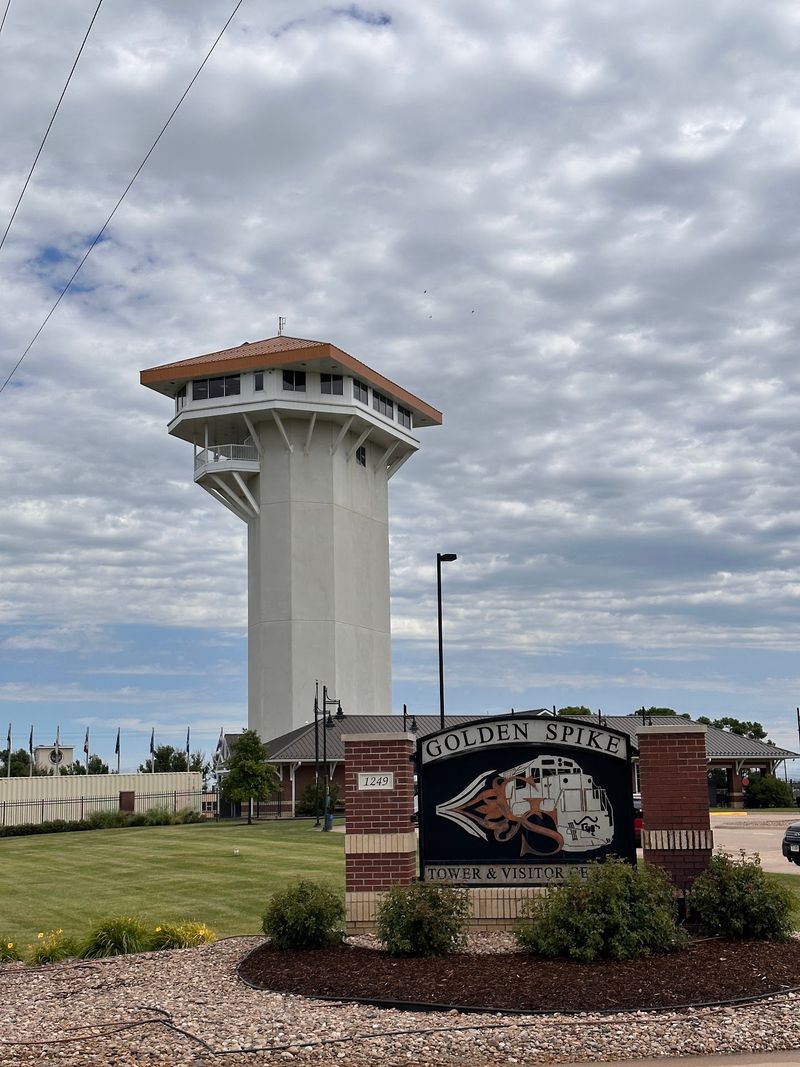
Shaped like a giant railroad spike, an eight-story tower stands guard over the largest rail yard in the world. Below it, Union Pacific’s Bailey Yard sorts trains around the clock.
Bailey Yard covers about 2,850 acres and stretches roughly 8 miles.
The yard handles around 10,000 railcars daily, with approximately 3,000 sorted in its classification yards.
The seventh floor has an open-air deck full of sights and sounds. One floor up, an enclosed deck offers 360-degree views, which helps on windy days.
The yard was dedicated in 1968 and named for former Union Pacific president Edd H. Bailey. He released the very first rail car at the new yard himself.
The yard handles an average of about 139 trains per day. It also houses one of the largest locomotive repair centers in North America.
The tower itself was dedicated in 2008. Its lobby Hall of Fame tells the stories of people who helped build the yard.
Out in the courtyard, colorful flags represent the states Union Pacific serves. The ground floor also has a souvenir shop and educational displays.
The tower bills itself as the only place to watch the yard from seven and eight stories up. Nearby, the Cody Park Railroad Museum adds a restored depot to your train day.
The tower is just minutes off Interstate 80. Train fans can easily lose an hour watching cars get sorted.
Address: 1249 North Homestead Road, North Platte, NE 69101.