The deli counter is an oral exam, and the person holding the slicer already knows you skipped class.
In New Jersey, spelling becomes only a suggestion once certain Italian-American foods enter the conversation. Read every letter aloud, and your order may arrive with a side of raised eyebrows.
Use the family version, and suddenly the ticket number sounds like a membership card. This is not broken Italian or a single statewide secret code.
These pronunciations grew from southern Italian dialects, then shifted again in American neighborhoods, where they still vary from family to family.
Your friend’s “rigott” may be somebody else’s “ree-goat,” and both can carry generations of history.
New Jersey turned those inherited sounds into table language: quick, warm, and impossible to learn from packaging alone.
Step up confidently, but keep your ears open.
The menu gives you the spelling. The room gives you the pronunciation, and the room has been taking attendance for generations.
1. Capicola Becomes Gabagool
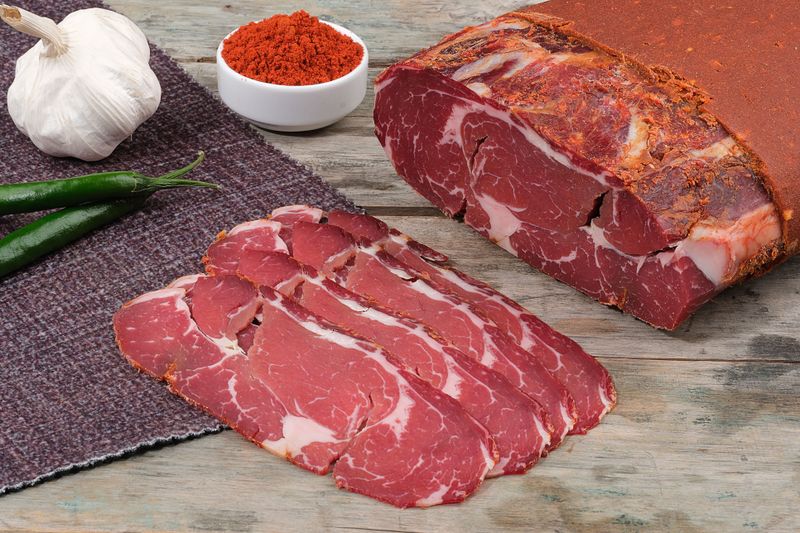
The spelling says capicola. The deli line may answer with gabagool.
That famous form is rooted in southern Italian speech carried to the Northeast by immigrants and preserved in Italian-American families.
Linguists point to several sound changes working together: consonants can become voiced, unstressed vowels shift, and the final vowel disappears.
Capocollo or capicola can therefore travel a long way before landing as gabagool.
It is not the only accepted family pronunciation, and it is not standard Italian. That distinction matters because the word reflects inherited dialect rather than careless speech.
Pop culture later handed gabagool a much larger audience, but the pronunciation came from older Italian-American dialect patterns. The joke traveled widely. The family history behind the word had already been doing the serious work.
The food is cured pork taken from the neck and shoulder, usually sliced thin for sandwiches and antipasto. Its marbled texture explains why a small pile can disappear while you are supposedly still deciding what to order.
Say capicola and you will be understood. Say gabagool naturally, and the counter may decide you have done your homework.
2. Mozzarella Gets Cut Down To Mootz
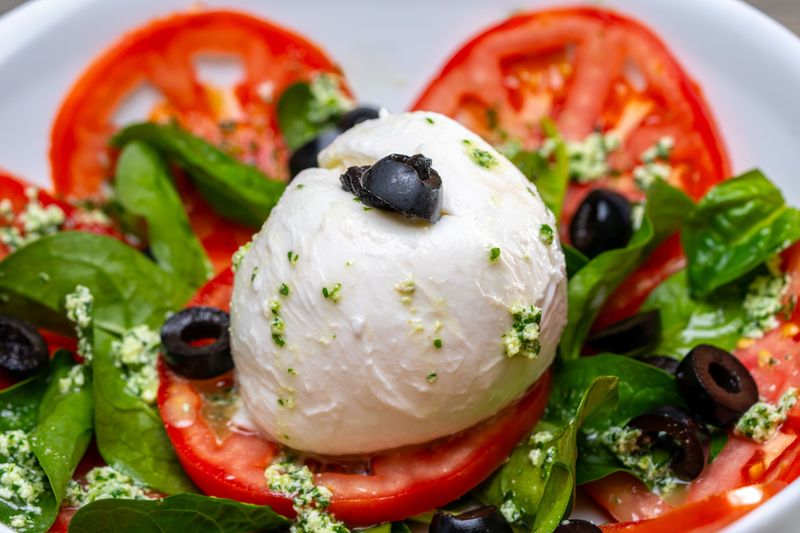
Fresh mozzarella rarely survives the full name once the deli gets busy.
Mootz is the sharpest shorthand, while mutzadell or mootzarell keeps more of the older dialect shape.
The exact sound changes by household, and plenty of New Jersey residents simply say mozzarella. The regional versions are clues to family speech, not an official password.
The cheese itself can be made from cow’s milk or water buffalo milk. Fresh versions are soft, moist, and best handled gently, especially when sliced for sandwiches or served soon after production.
The shortened name also matches the product’s pace. High-moisture mozzarella is a soft, unripened cheese that may contain milky liquid. Mootz simply reaches the sandwich faster, without making four syllables report for unnecessary deli duty.
At many New Jersey deli counters, mootz commonly means fresh mozzarella, though usage can vary by shop, neighborhood, and family. Context usually solves the mystery faster than a pronunciation guide.
Ask for a pound, and nobody needs a lecture on phonology. Still, shortening four syllables to one has undeniable deli efficiency.
3. Ricotta Lands As Rigott
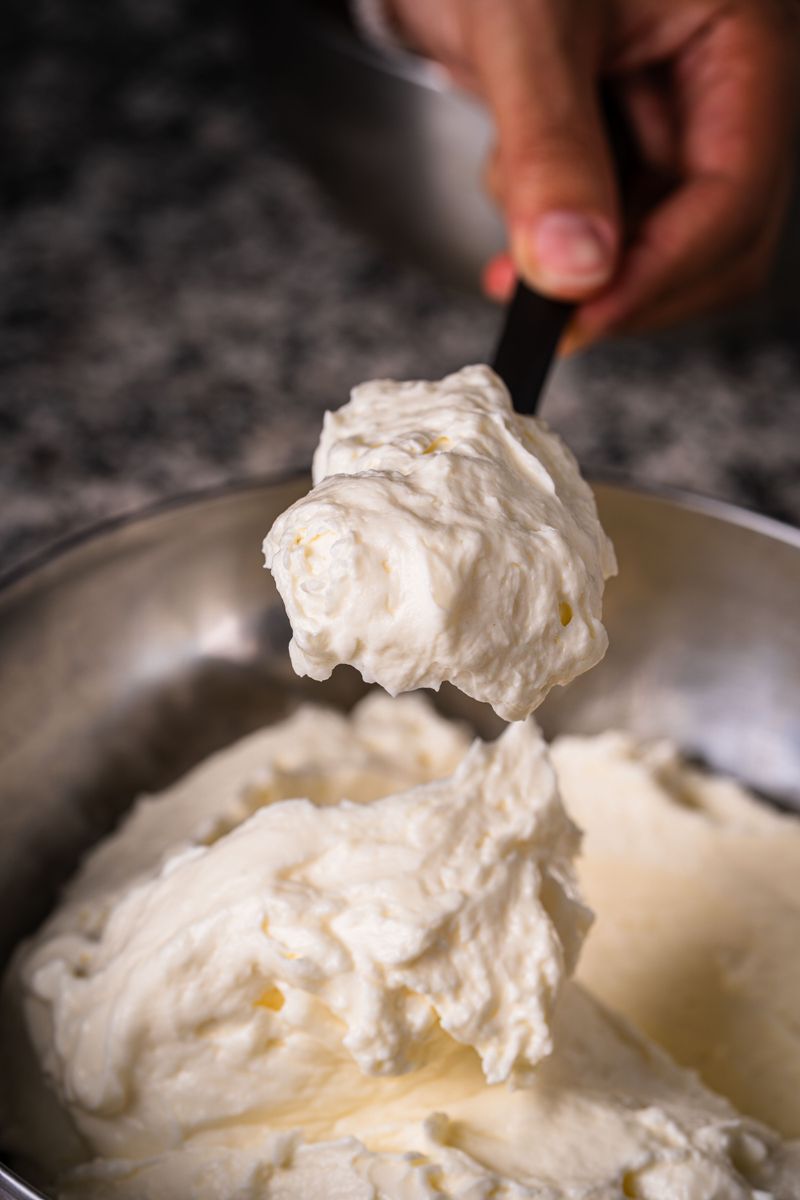
Ricotta loses its final vowel before some families finish saying lasagna.
Rigott, rigawt, and ree-goat are approximate English spellings for related Italian-American forms.
The versions reflect dialect differences and generations of speech crossing between Italian and English. There is no single pronunciation shared by every household in North Jersey.
Ricotta is traditionally made by reheating whey left from another cheesemaking process, which explains its name’s connection to being cooked again. The result is mild, soft, and useful in both savory and sweet dishes.
You will find it in filled pasta, baked pasta, pastries, and cannoli cream. Recipes vary enough that arguing about texture can occupy an entire kitchen before the oven even warms.
Ricotta can be soft, creamy, and slightly grainy, giving texture debates real material. One family wants it smoother, another defends every curd, and somebody’s aunt has apparently issued the final ruling from her own kitchen.
Standard Italian, standard American English, and family dialect forms can all exist at the same table.
Rigott carries heritage, not a pronunciation police badge.
4. Prosciutto Drops The Final O
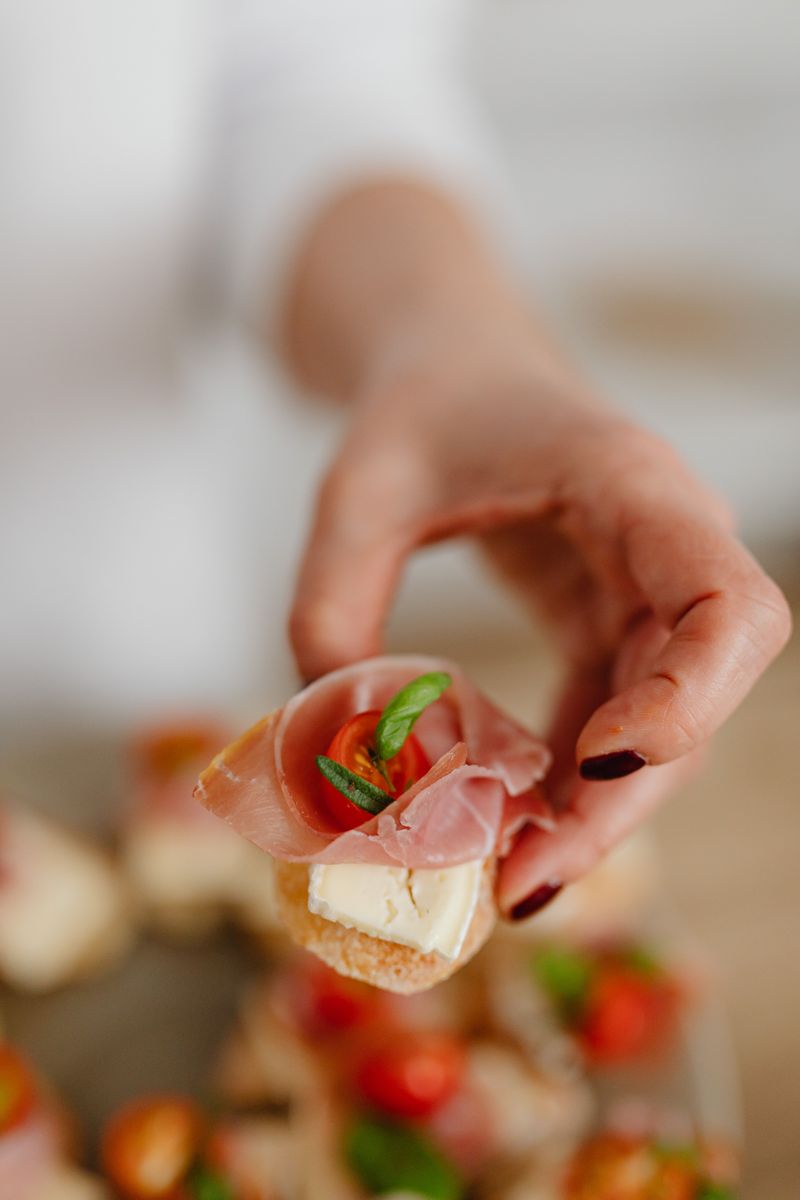
Prosciutto enters with four written syllables and often leaves the deli with two.
Proshoot and pruh-zhoot are approximate common Italian-American versions. The final vowel disappears, while the middle sound compresses into something faster.
Linguistic accounts record pruh-zhoot among the food words associated with the New Jersey and New York Italian-American accent.
Prosciutto is traditionally served in very thin slices, sometimes compared with paper. Pronounce it however your family taught you. Then watch the slicer closely, because lunch is now entirely in that capable machine’s hands anyway.
A deli counter is not a citizenship ceremony. People use different pronunciations depending on family, age, neighborhood, and comfort with Italian.
Use proshoot when it comes naturally. Use prosciutto when it does not.
The slicer cares more about thickness, and that machine has heard every version already.
5. Manicotti Turns Into Manigott
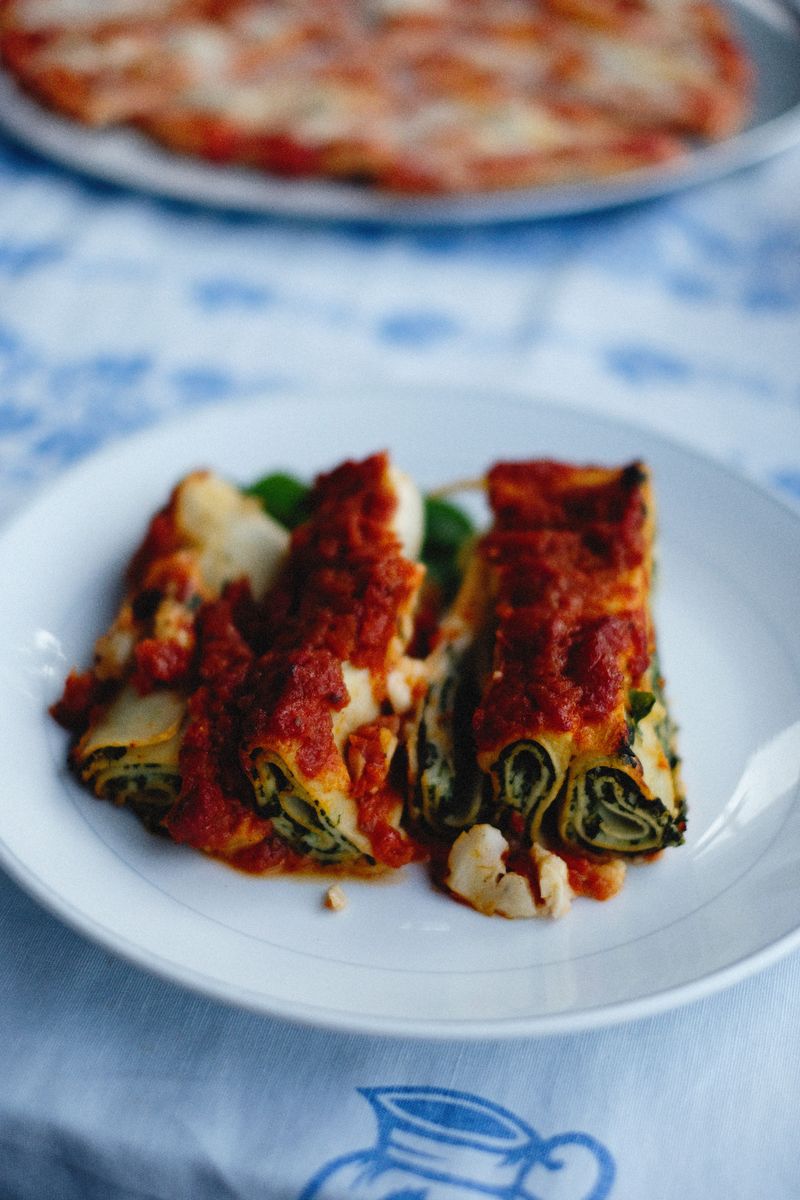
Manicotti is where the written ending quietly packs its bags.
Manigott, manigot, and similar forms appear in Italian-American speech, with the final vowel dropped and the hard consonant softened or voiced. Italian-American cultural sources and food lexicons record pronunciations close to manigott, though household versions still vary.
In the United States, manicotti usually means large pasta tubes filled with ricotta mixture, covered with sauce, and baked. Some cooks use delicate crepes instead of dried tubes, which can start a family debate before anyone reaches the pronunciation.
The dish already has enough structure without the word carrying every syllable too. One cook guards the filling, another guards the sauce, and everybody guards the pronunciation like the family recipe came with legal counsel.
The word comes from the Italian plural of manicotto, meaning a sleeve or muff. That image fits the filled shape far better than the English spelling prepares you for.
Calling the dish manigott can signal the speech you heard growing up. It does not make the fully pronounced version wrong.
The pasta arrives stuffed. The word travels lighter.
6. Cavatelli Answers To Gavadeel
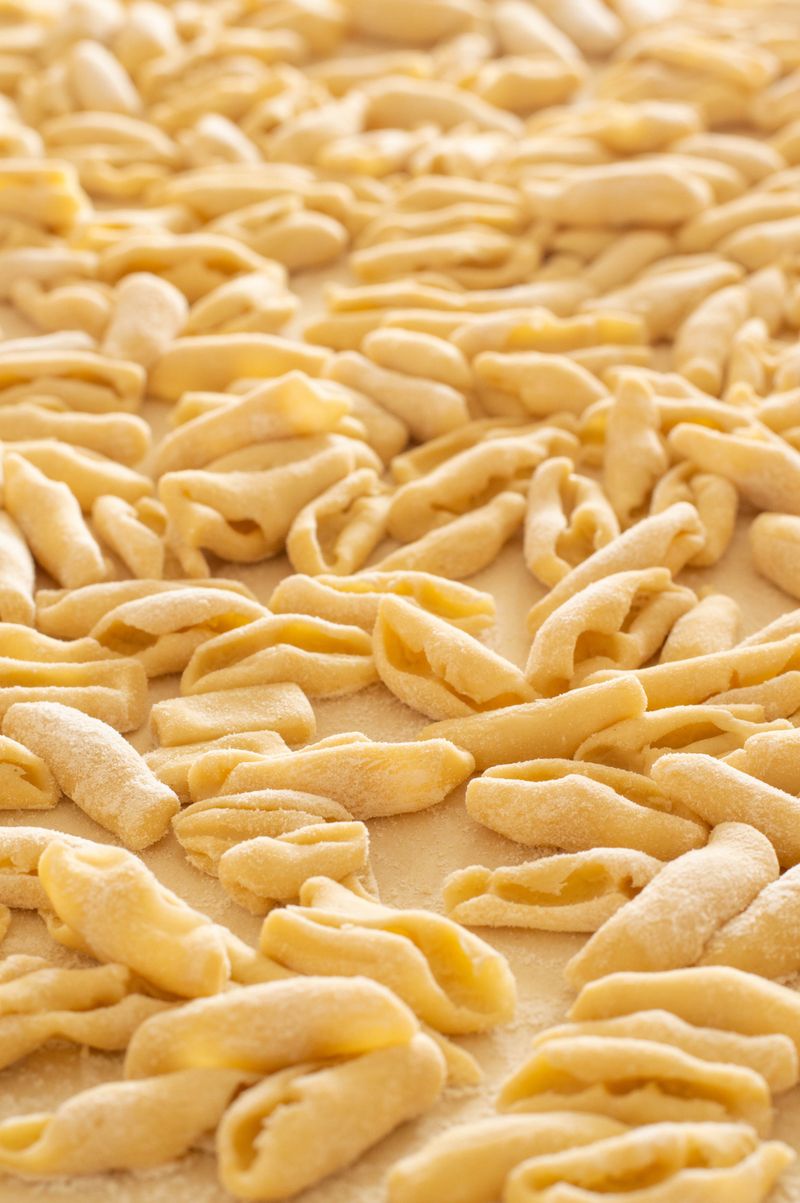
Cavatelli takes one look at its spelling and heads in another direction.
Gavadeel is a well-documented North Jersey family pronunciation. Chef Peter Klein told Food & Wine that he grew up using gavadeels for cavatelli, only later discovering that restaurant workers elsewhere did not always recognize the term.
The pasta consists of small pieces of dough shaped into curls or hollowed forms. Some versions use ricotta in the dough, while others rely on flour and water. Their shape holds sauce well without requiring every piece to look identical.
Traditional cavatelli are shaped by hand from semolina-and-water dough, with a hollow pressed into each piece. They do not need precision. Sauce finds the curves, while grandparents reserve the right to inspect every batch.
Broccoli and garlic is a familiar pairing, but cavatelli also handles tomato sauces, vegetables, and richer preparations.
Gavadeel shows how a local word can feel completely ordinary at home and strangely secret elsewhere.
Order it confidently. Just be ready to translate when the server looks at you like you requested a password reset.
7. Pasta E Fagioli Becomes Pasta Fazool
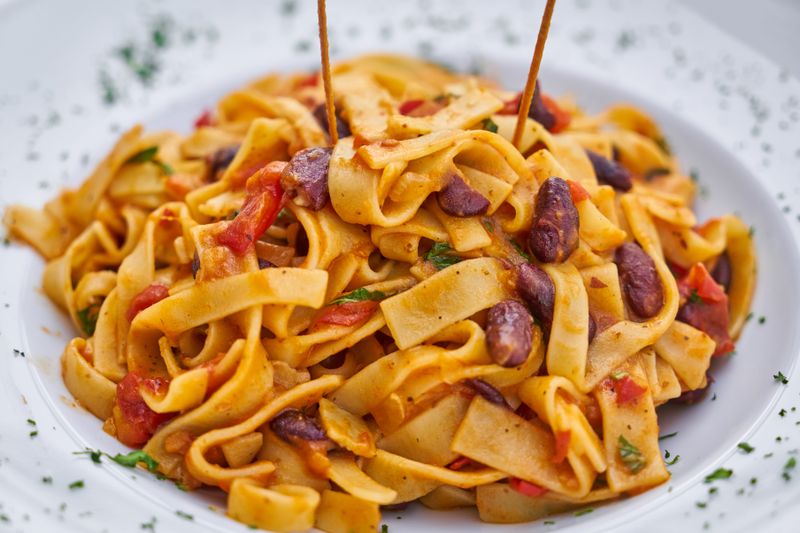
Pasta fazool sounds invented until the dialect history walks into the kitchen.
The phrase comes from pasta e fagioli, meaning pasta and beans, through a form associated with Neapolitan speech. Fazool is not a random American joke. It preserves a southern Italian route into English that immigrant families carried with them.
The dish has no single mandatory consistency. Some pots are brothy, others thick, and family recipes may include tomato, greens, vegetables, or different beans. Pasta remains the dependable part of the agreement.
Beans and pasta have already done enough work without referring to the pronunciation debate. The bowl stays quiet while the table forms committees, alliances, and one firm opinion nobody remembers requesting in the first place anyway.
Pasta fazool also demonstrates why this list needs flexibility. The sounds are inherited, but they are not frozen. One family may say fazool, another fajool, and another use the full Italian name.
The beans accept all three and continue doing the heavy lifting.
8. Braciole Arrives As Brajole
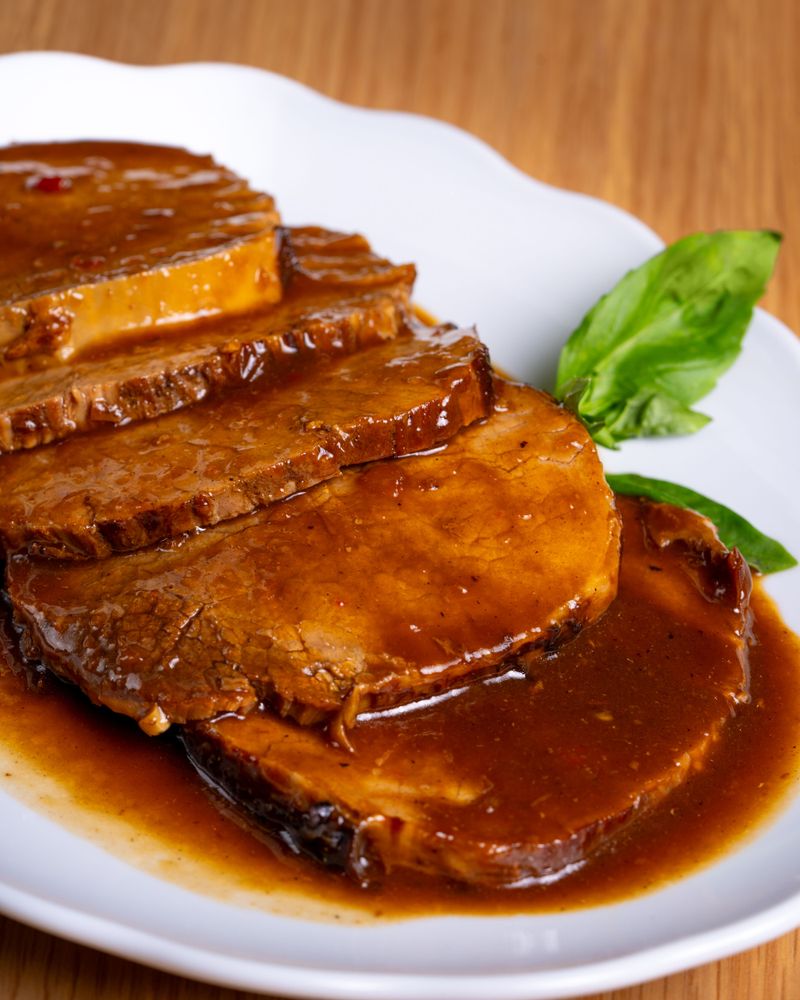
Braciole looks complicated on paper and becomes brajole before dinner.
The approximate Italian-American forms brah-jool and bra-jole are widely recorded, though the exact vowel depends on family and regional background. The spelling cannot fully capture the sound, which is part of the fun and half the confusion.
In Italian-American cooking, braciole commonly refers to thin slices of meat rolled around a savory filling, secured, browned, and braised in sauce. Beef is common, but recipes may use other meats and very different fillings.
The rolled shape saves its argument for the first slice. Cut through the center, and every cook’s preferred filling appears. The pronunciation debate may finish, but the recipe debate has only started clearing its throat.
One useful correction belongs here: braciole is plural, while braciola is singular in standard Italian. American usage does not always preserve that distinction, especially when one rolled piece is casually called a braciole.
That linguistic looseness mirrors the recipe. Every cook seems to inherit a preferred filling and one opinion too many about everybody else’s.
You can pronounce it perfectly and still start an argument by mentioning breadcrumbs.
9. Cannoli Gets Shortened To Ganol
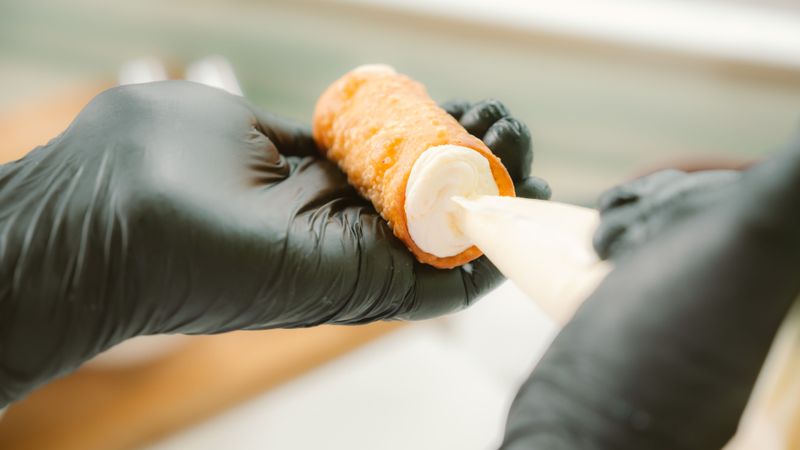
Cannoli has survived fame, television, and countless bakery boxes. Its final vowel is less fortunate.
Ganol, often written ganol’, appears in Italian-American food lexicons and family speech around the New York and New Jersey area. The first consonant becomes voiced, and the ending drops away.
Some speakers stretch the final sound, giving the word more ceremony than the pastry strictly requires.
Cannoli is already plural. The standard Italian singular is cannolo, although American English commonly uses cannoli for one pastry or several.
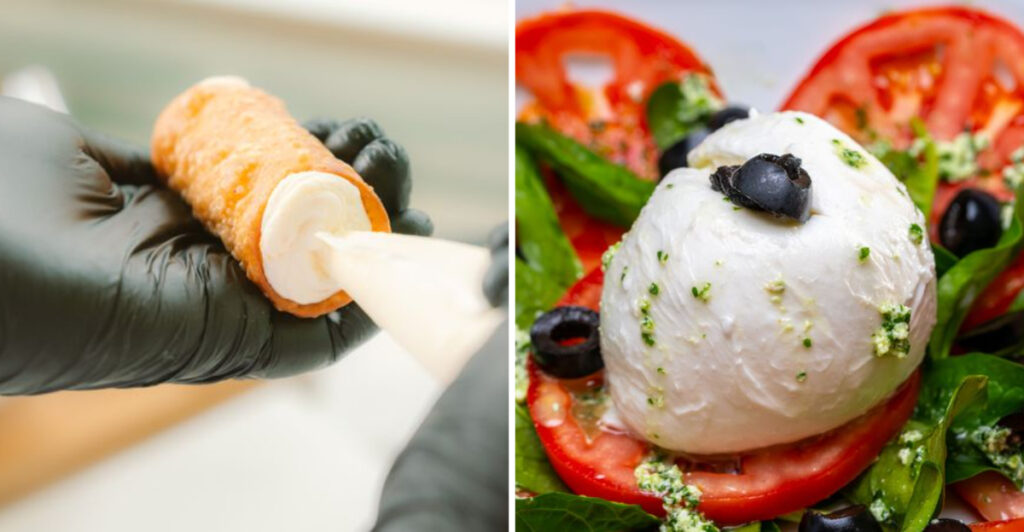
A traditional cannolo has a fried pastry shell filled with sweetened ricotta cream. Chocolate, candied fruit, pistachios, and other additions depend on the bakery. The original claim that chocolate chips belong in every filling needed to be removed.
Crispness matters because filled shells soften as they sit. That is why many bakeries fill them close to serving time.
Bakery pronunciation gets even trickier when quantities enter. Someone may request one cannoli without pausing over grammar, while another uses cannolo carefully. Nobody checks a dictionary once powdered sugar begins landing all over their shirt.
Call it cannoli or ganol. Just do not spend so long choosing that somebody else buys the last one.
10. Sfogliatelle Tests The Entire Line
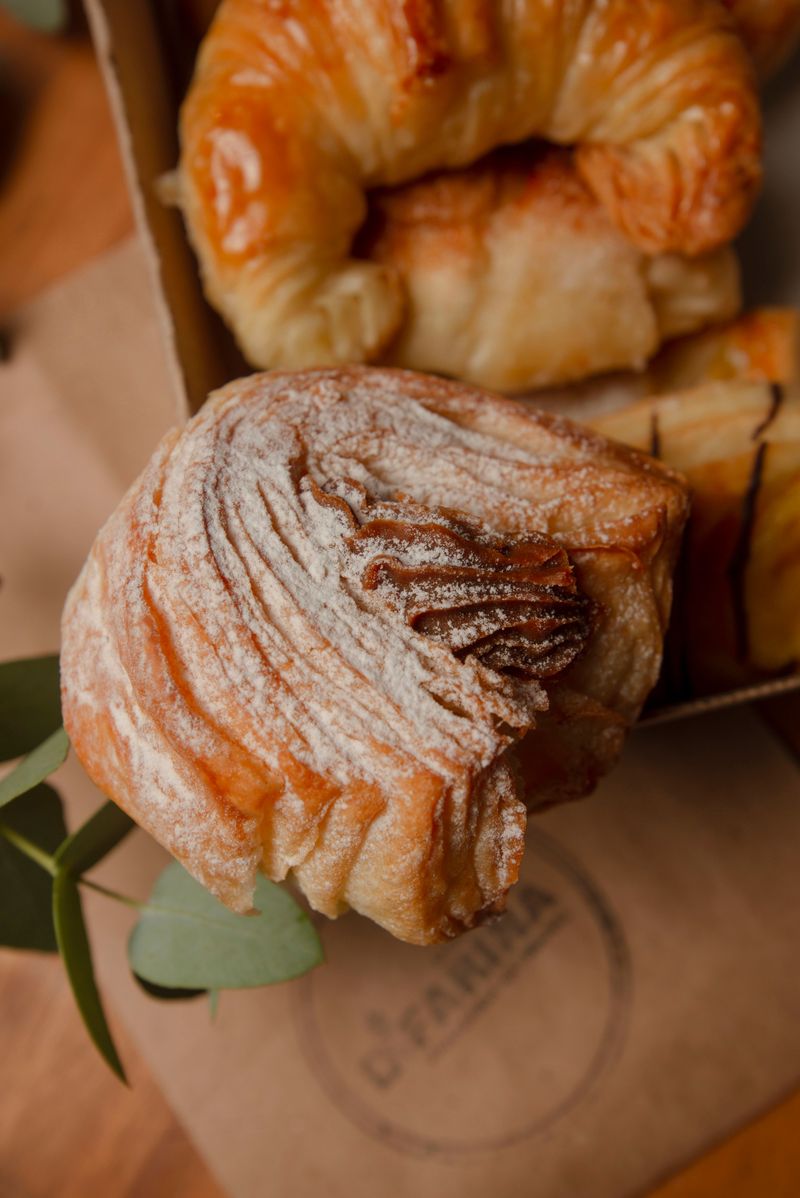
Sfogliatelle is the word that makes confident customers study the ceiling.
Shfooyadell is one Italian-American rendering, and shvulyadell or nearby variants also circulate. The family pronunciation reflects the same broader habits found elsewhere in this list, including compressed syllables and the loss of a final vowel.
Standard Italian sfogliatelle is plural, while sfogliatella is singular. The best-known version, sfogliatella riccia, uses many thin, crisp layers formed into a shell. Traditional fillings often combine semolina, ricotta, sugar, and citrus or candied fruit.
Sfogliatella riccia gets its crisp layers from dough sheets laminated with fat before shaping, filling, and baking. Mispronouncing it is understandable. Eating one neatly may be the more ambitious challenge once those layers begin escaping.
A smoother shortcrust version, sfogliatella frolla, is a different pastry under the same family name.
Say it slowly at first. Nobody receives extra pastry for speed.
Once the box opens, pronunciation becomes the least messy part of the experience.