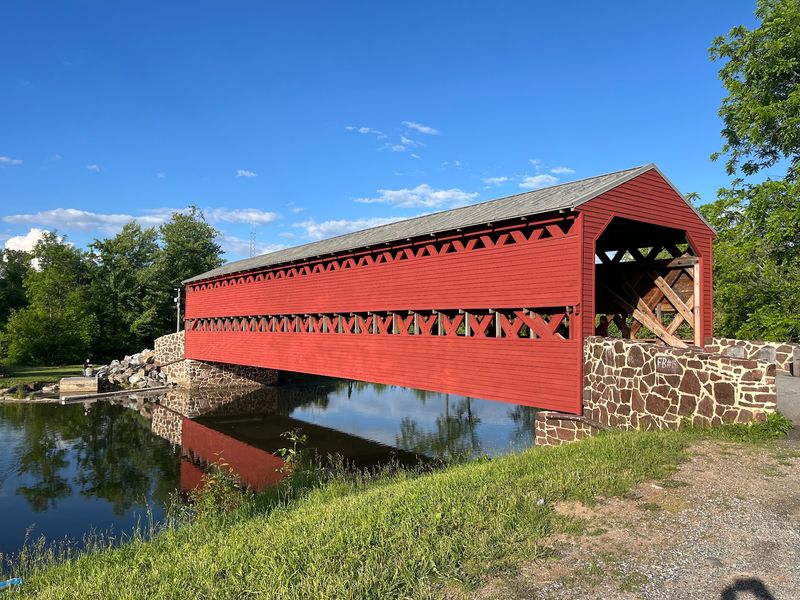
Some of the best surprises hide down quiet country roads in Pennsylvania, waiting for anyone willing to take the long way home. Picture rolling up to a weathered wooden tunnel, then feeling your tires thump softly over old floorboards as sunlight slips between the timbers.
There is something wonderfully unexpected about a bridge that still lets you drive right through its history. Here are nine remarkable spots where you can do exactly that.
1. Hunsecker’s Mill Covered Bridge (Lancaster County)
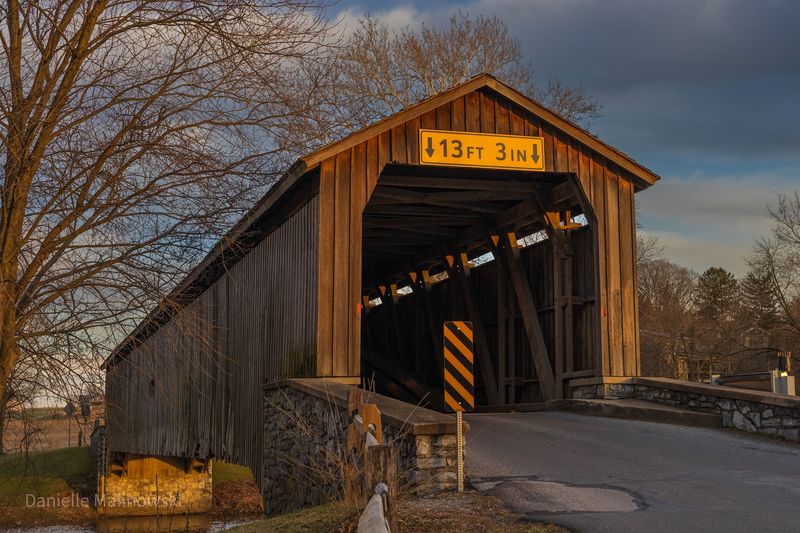
Feel a gentle rumble under your wheels and you will understand why this crossing sticks in people’s memories. Built back in 1843 by John Russell, it survived, rebuilt, and kept right on carrying cars.
Stretching 180 feet over the Conestoga River, it holds the title of Lancaster County’s longest single-span covered bridge. The double Burr arch truss design gives it real muscle beneath that classic wooden skin.
Its best trick is a set of horizontal floorboards that hum in a steady rhythm as you roll across. What could be an ordinary crossing turns into a tactile little adventure you feel in your seat.
2. Weaver’s Mill Covered Bridge (Lancaster County)
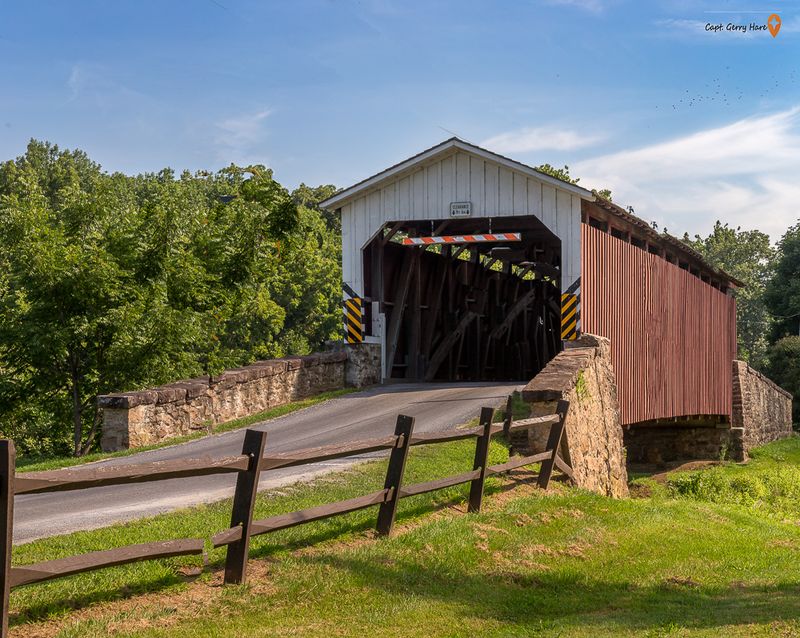
Slow down here and you might share the road with an Amish horse and buggy clip-clopping toward the timbers. That living scene gives this 1878 bridge a timeless, storybook quality.
Carter and Stauffer built the 85-foot span with a double Burr arch truss, and it crosses the Conestoga River in the heart of Amish country. Painted the traditional Lancaster County red inside and out, with crisp white approaches, it looks like a postcard come to life.
Recognition arrived in 1980, when it landed on the National Register of Historic Places. Drive through and you get more than a shortcut, you get a glimpse of a slower way of life.
3. Bitzer’s Mill Covered Bridge (Lancaster County)
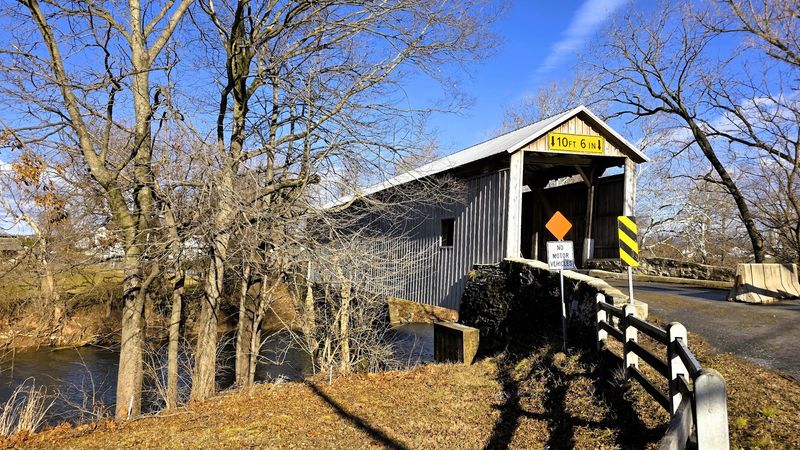
Old-timer status has to be earned, and this bridge wears it proudly as the oldest working covered bridge in Lancaster County. George Fink and Sam Reamsnyder raised it in 1846, and it is still on the job.
The 141-foot Burr arch truss reaches across the Conestoga River, quietly strengthened over the years with steel I-beams tucked beneath its oak plank deck. A red exterior, unpainted interior, and white approaches keep the look honest and rustic.
Back in 1962, a concrete replacement nearly ended its story, but neighbors rallied and saved it. Watch for the 10-foot-6-inch height limit, and tip your hat to the crowd who kept it standing for the 1980 Register listing.
4. Thomas Covered Bridge (Indiana County)
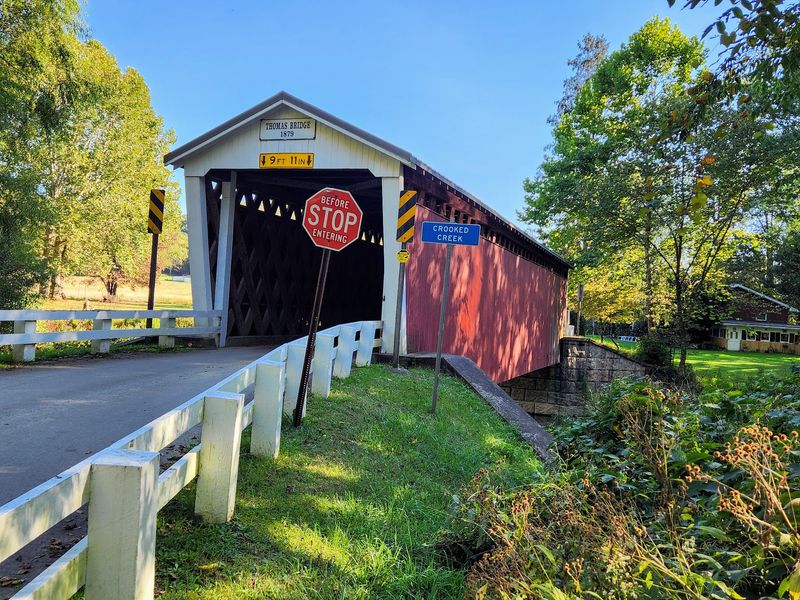
One of a kind in its own county, this is the only covered bridge in Indiana County still open to cars. That solo status makes every drive through feel a little special.
Amos Thomas first built it in 1879 across Crooked Creek, and the original featured a rare single supporting chord in its Town Lattice truss. After an oversized truck damaged it, crews rebuilt the whole thing in 1998 for over a million dollars.
Today it carries a 20-ton weight limit and a spot on the National Register of Historic Places. Local pride basically holds this one together, and you can feel that care as you cross.
5. King Covered Bridge (Greene County)
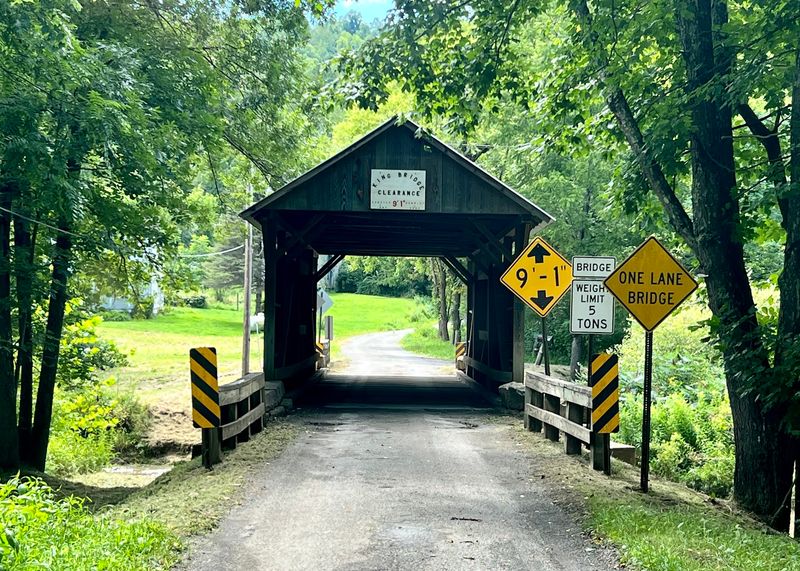
Tucked close to the West Virginia line, this little bridge trades flashy paint for honest, weathered wood. Its unpainted vertical siding and steel roof give it a plainspoken country charm.
Dating to 1890, the Queenpost truss span reaches just 46.5 feet across Hoover Run. A 2004 restoration added five steel beams, helping it shrug off the years and the passing traffic.
Set among quiet fields, it makes a lovely photo stop for anyone wandering Greene County’s back roads. It joined the National Register of Historic Places in 1979, quietly proving that small can still be memorable.
6. Woods Covered Bridge (Greene County)
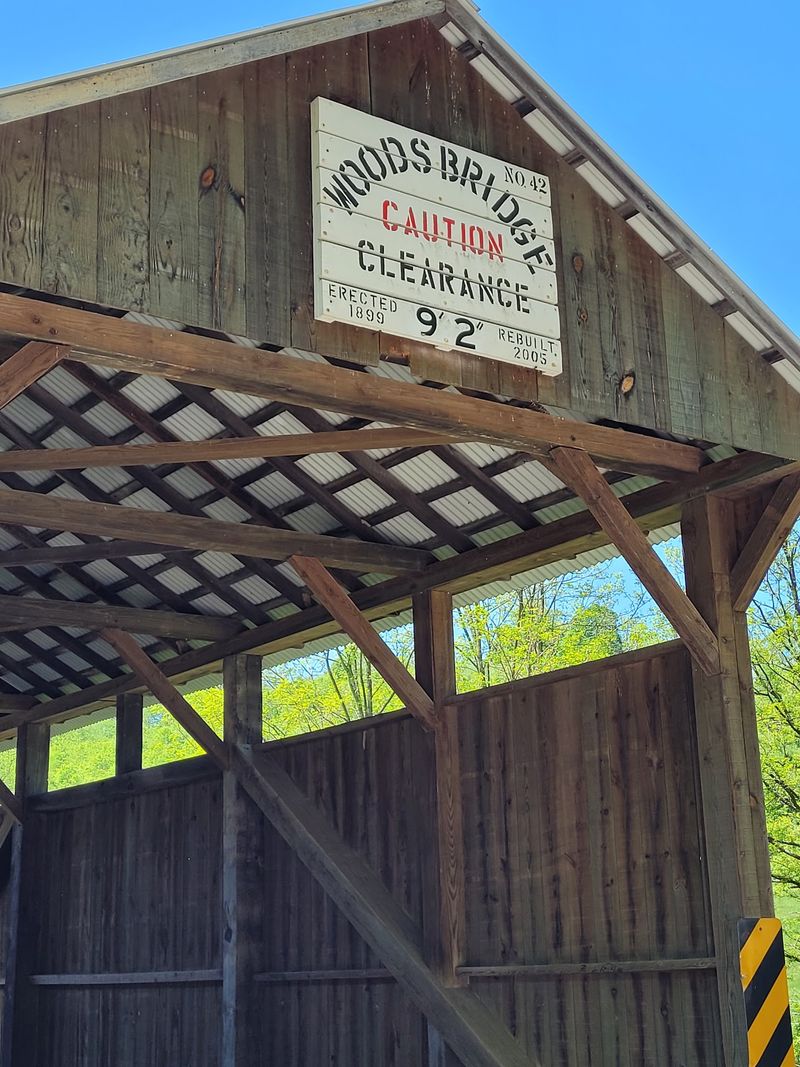
Named for Civil War veteran Edward “Neddie” W. Wood, this bridge carries a story in its very name.
It stands as the oldest covered bridge still surviving in Greene County.
Lisbon Scott built it in 1882, a 40-foot Queenpost truss reaching over Pursley Creek. Bare vertical plank siding keeps its look wonderfully authentic, like something pulled straight from an old photograph.
A 2005 rehabilitation added six steel I-beams so it can keep welcoming vehicles across its sturdy frame. Listed on the National Register in 1979, it still connects one generation of travelers to the next.
7. Forksville Covered Bridge (Sullivan County)
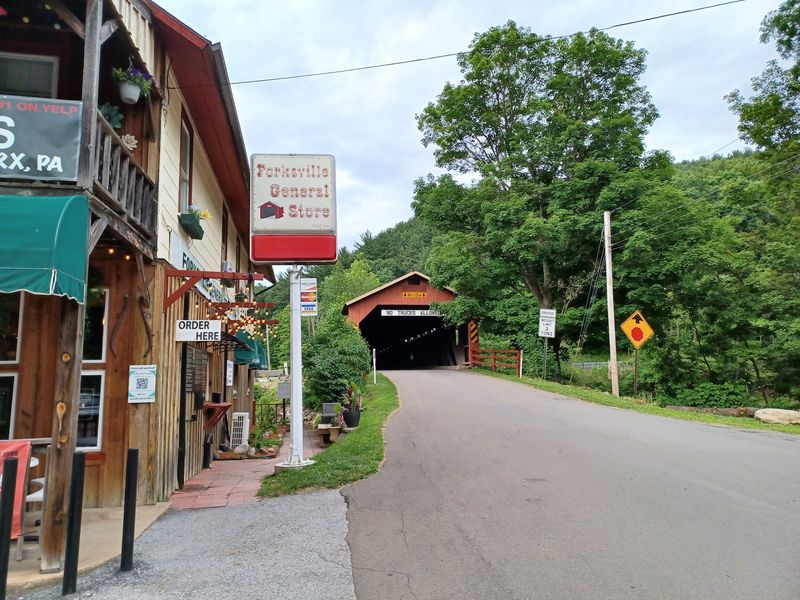
Imagine an 18-year-old supervising the build of a 152-foot bridge, and you have the story of this Sullivan County gem. Sadler Rogers pulled it off around 1850, and folks still marvel at the result.
The Burr arch truss stretches nearly 153 feet across the rocky Loyalsock Creek, in a setting many call one of Pennsylvania’s prettiest. It is the most direct route into Forksville borough and handles about 240 vehicles a day.
Restored in 1970 and again in 2004, it asks drivers to ease down to a nostalgic 15 mph with a 3-ton limit. Slow crossings suit this one perfectly, and its 1980 Register listing seals the deal.
8. Dellville Covered Bridge (Perry County)
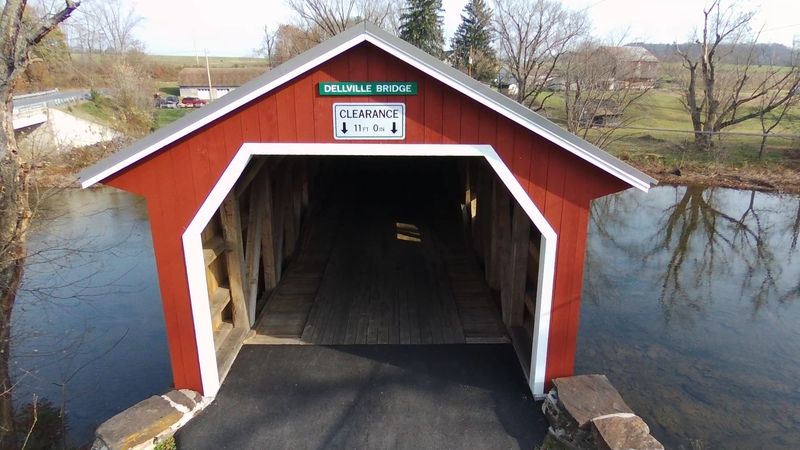
Talk about a comeback story. This Perry County landmark has been knocked down more than once and rebuilt every single time.
Andrew Clouser first raised it in 1889, a 174-foot Burr Arch Truss span reaching over Sherman Creek. After storm damage in 1972 and an arson fire in 2014, crews rebuilt it in 2019 using the original plans, restoring its barn-red exterior and clean white accents.
All that grit earned it the honor of being the longest and widest covered bridge in the county. On the National Register since 1980, it stands as living proof that a community can bring its landmarks back.
9. Pack Saddle Bridge (Somerset County)
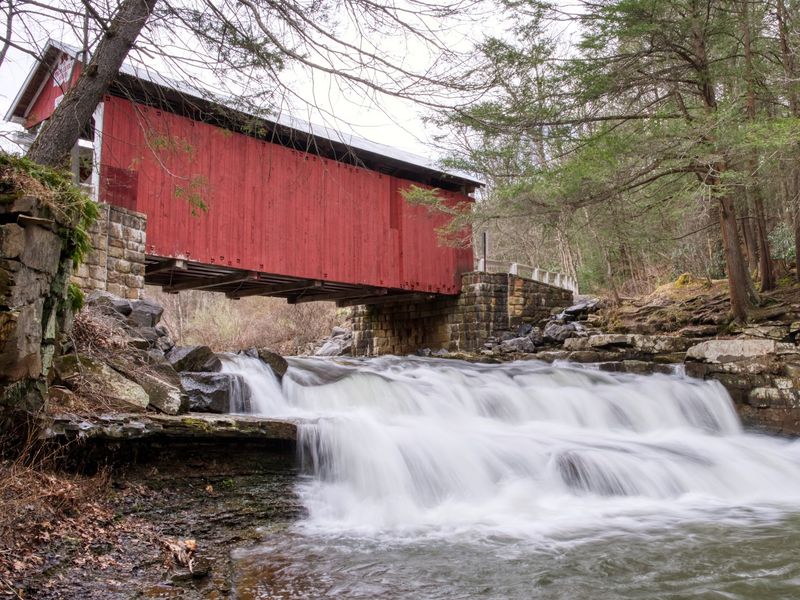
Here is a bridge with a jaw-dropping party trick. Perched over Brush Creek, it is the only covered bridge in Pennsylvania built directly above a natural waterfall.
Dating to 1870 or 1877, the 48-foot Multiple Kingpost truss span ranks among the most photographed bridges in the whole state. One look at that cascading backdrop and you will understand why cameras come out fast.
Flood damage in 1996 and hungry insects meant a 2020 rehabilitation, yet it still carries traffic with a 9-foot-11-inch clearance. Added to the National Register in 1980, it saves a scenic showstopper for last.