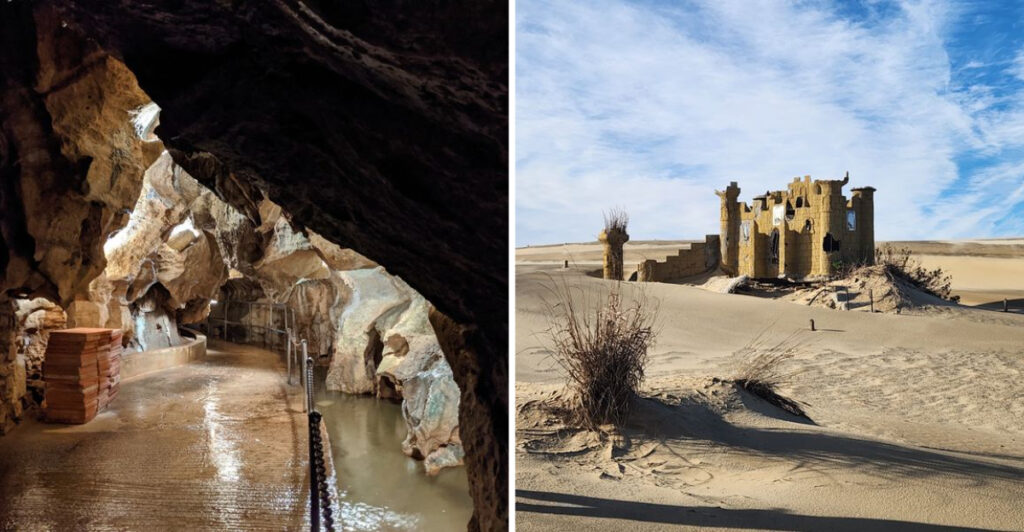
Earth called. North Carolina is making it look suspicious.
One part of the state resembles a desert beside the Atlantic. Another hides a cool limestone world beneath the forest. Elsewhere, plants catch their own dinner and stone formations make the landscape look like somebody changed the channel.
Then the weirdness keeps going.
You can find giant wind-powered sculptures, mysterious tunnels, ancient carvings, and places that seem much farther from ordinary than the map suggests.
No special effects. No movie set. Just a state with a talent for making familiar scenery take a very strange turn.
Keep the map close because the next stop may have you checking twice to make sure you are still in North Carolina.
1. Mystery Hill
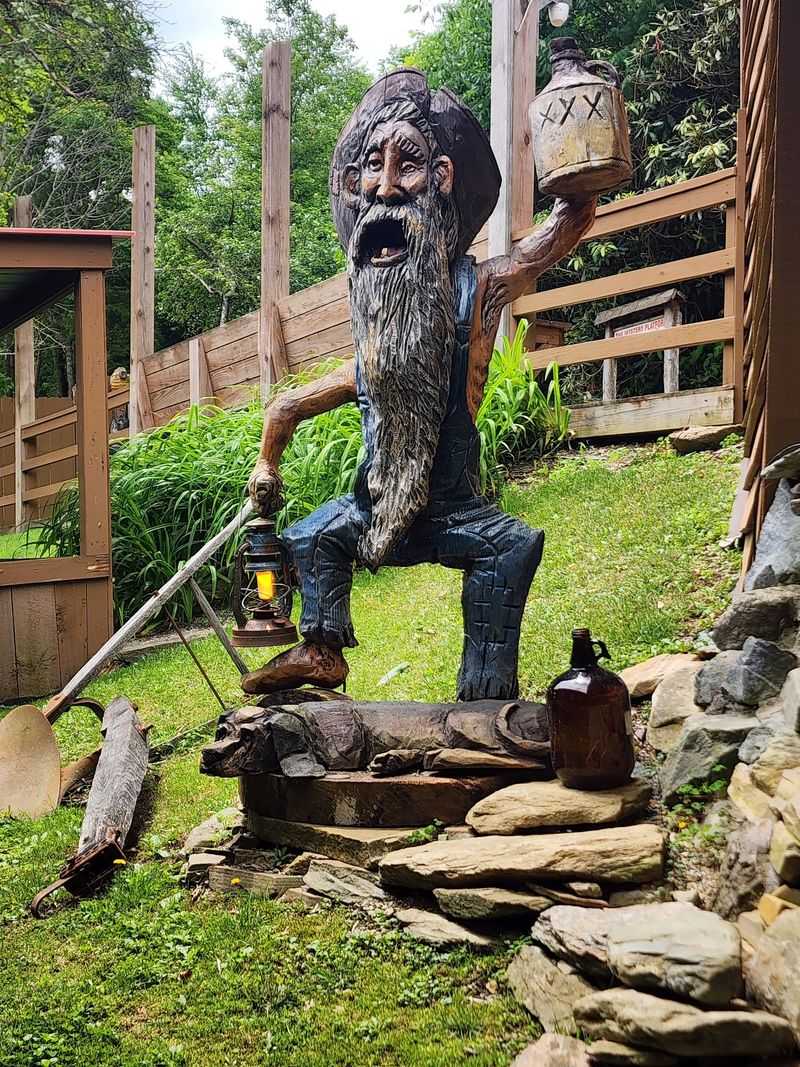
Water heads in the wrong direction. People seem to change height depending on where they stand. A tilted room starts a small argument between your eyes and the rest of your body.
That collection of optical tricks belongs to Mystery Hill in Blowing Rock, an active roadside attraction currently open daily in 2026. Its Natural Gravitational Anomaly tour includes the Mystery House, optical illusions in the Hall of Mystery, and Bubblerama.
Balls and water appear to travel uphill, while visitors can stand at angles that look impossible in photographs.
Elsewhere on the property, the Hall of Mystery adds hands-on optical and science exhibits, while Bubblerama lets guests create human-scale bubbles.
You do not have to believe gravity actually filed for the afternoon off. The photographs will look strange either way.
Address: 129 Mystery Hill Lane, Blowing Rock, NC 28605.
2. Linville Caverns
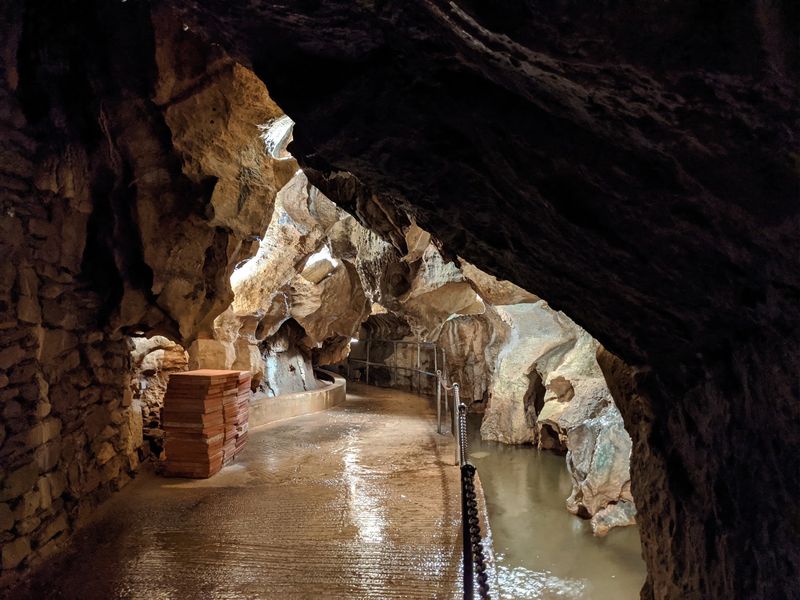
Drive through the mountains near Marion and the landscape above ground gives very little warning about what sits underneath.
A guided tour slips inside Humpback Mountain through narrow passages, dripping formations, underground water, and sections where the ceiling drops low enough to make taller visitors pay attention.
The temperature inside Linville Caverns stays around 52 degrees throughout the year. Tours are guided, normally last roughly 35 to 40 minutes, and are limited to relatively small groups because of the confined passages.
Trout live in the cavern water, along with salamanders, bats, cave insects, and other underground wildlife.
The caverns are currently open Thursday through Monday during the March-to-November schedule, with reduced winter operation. Sundays begin later than the other open days.
Bring a layer even when August outside is doing its best impression of an oven. The mountain controls the thermostat down here.
Address: 19929 US 221 North, Marion, NC 28752.
3. Land Of Oz
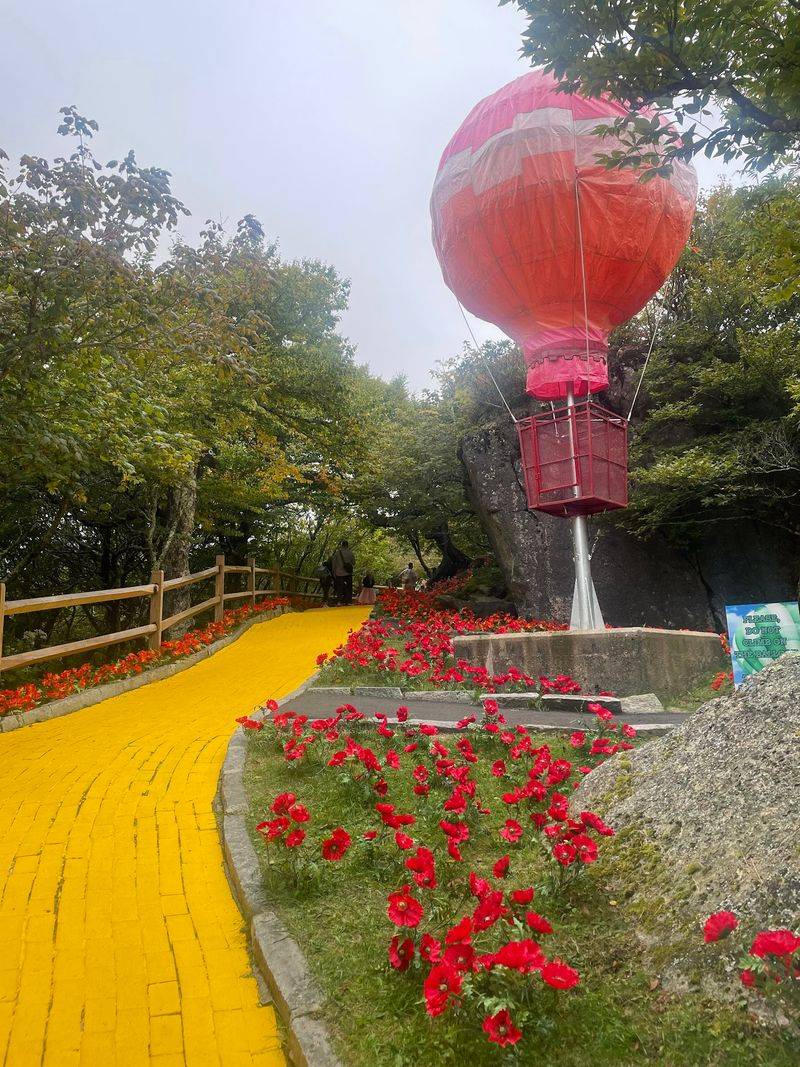
A yellow road winds across a mountaintop more than a mile above sea level.
It passes a Kansas farmhouse, a tornado cellar, familiar characters, and a temporary Emerald City assembled for the annual fall celebration.
This place originally operated as a full theme park from 1970 through 1980. Parts of the original property survived, and seasonal events eventually returned, including the Autumn at Oz festival that began as an annual tradition in the early 1990s.
For 2026, Autumn at Oz runs September 11–13, September 18–20, and September 25–27.
The Yellow Brick Road stretches roughly three-quarters of a mile and contains 44,000 gold-glazed bricks. Characters and live performances appear along the route during festival dates.
Comfortable shoes make more sense than ruby slippers. The historic attraction includes slopes, stairs, and uneven paths, and Beech Mountain weather can change quickly.
Tickets are required in advance for Autumn at Oz. The mountain has Dorothy covered. You handle the footwear.
Location: Beech Mountain, NC 28604.
4. Jockey’s Ridge State Park
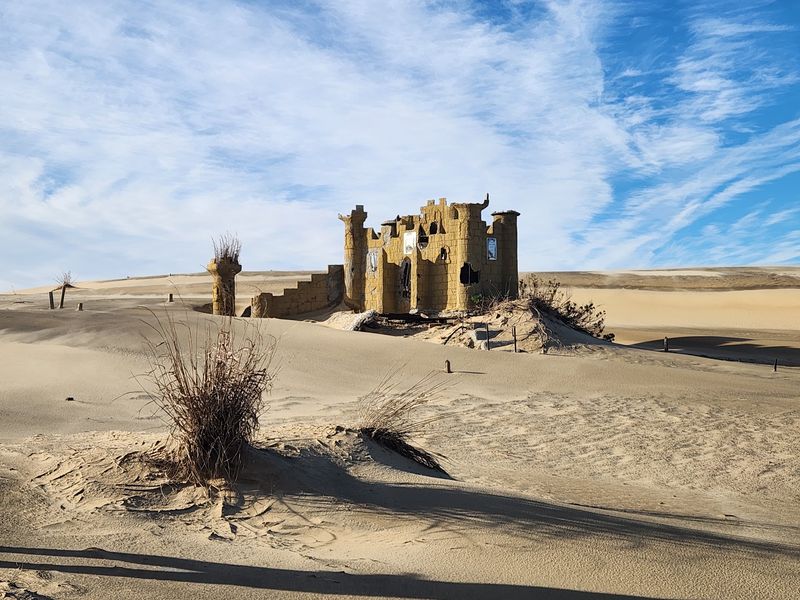
The first landscape barely looks like the East Coast at all.
Sand rises into enormous shifting ridges with little shade and almost nothing blocking the wind. From higher points, Roanoke Sound appears to the west while the Atlantic side of the Outer Banks lies nearby to the east.
Jockey’s Ridge State Park protects the tallest living sand dune system on the Atlantic coast. Wind continually reshapes the dunes, which is why the contours can change rather than remaining fixed like a conventional hill.
Hang gliding is one of the park’s signature activities, with lessons offered by a private concessionaire. Kite flying and sandboarding also fit naturally into all that open space.
Summer visitors should remember how little cover exists on the main dunes. Water and sun protection matter, especially during the hotter part of the afternoon.
There is also a separate Soundside Access with paddling, windsurfing, kiteboarding, and swimming opportunities. An August 2026 water-quality advisory currently warns against swimming at that Soundside area, so check the latest park alert before entering the water.
The main dunes need no extra decoration. Wind keeps redesigning them for free.
Address: 300 W. Carolista Drive, Nags Head, NC 27959.
5. Road To Nowhere
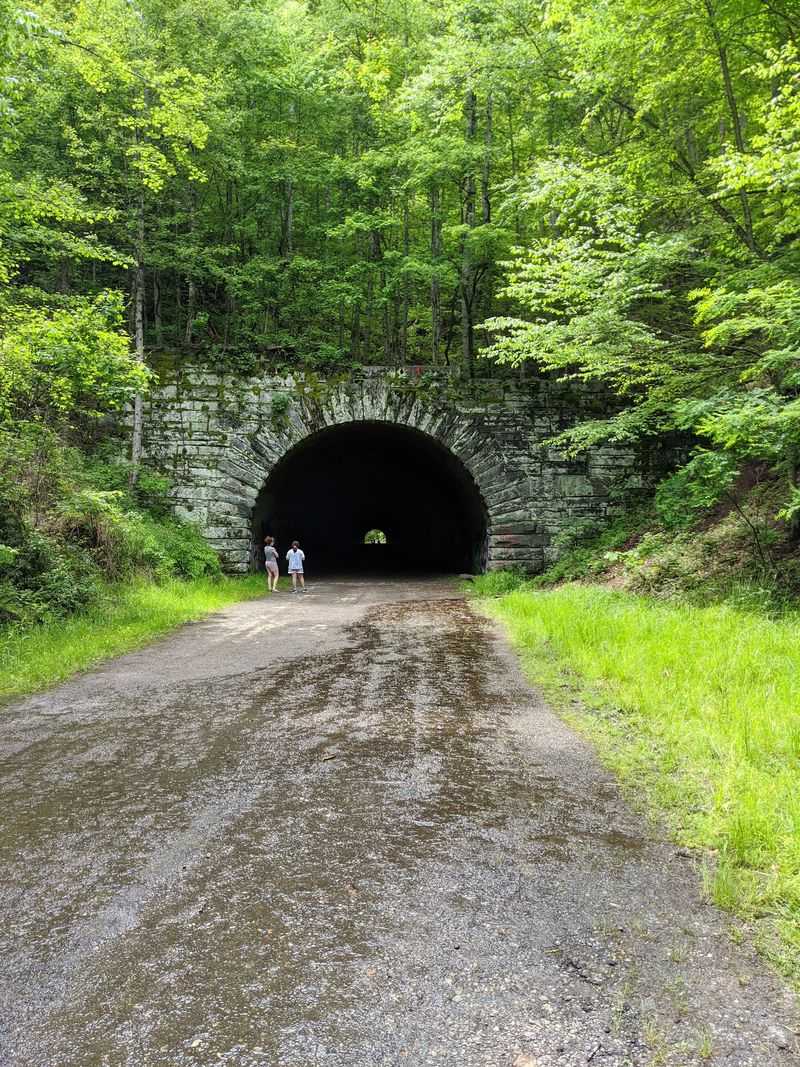
The pavement climbs away from Bryson City through Great Smoky Mountains National Park.
Then it simply stops.
A parking area replaces the highway, and beyond it waits a 1,200-foot tunnel permanently closed to motorized traffic.
Lakeview Drive is better known locally as the Road to Nowhere. Construction began in the 1960s as part of an agreement intended to restore access to communities and cemeteries cut off following the creation of Fontana Lake.
The instability of slope, environmental problems, and rising costs halted the project in 1972.
Today the paved road runs 5.7 miles from the park entrance to the tunnel, with several overlooks and trail connections along the way.
Walk through the unlit Lakeview Drive Tunnel, and hiking routes continue on the other side, including Lakeshore Trail and Goldmine Loop. A bypass trail also goes around the tunnel.
Bring a flashlight if darkness sounds less entertaining once you are standing inside it.
The far opening looks very small from the middle.
Location: End of Lakeview Drive, Great Smoky Mountains National Park, Bryson City, NC 28713.
6. Vollis Simpson Whirligig Park
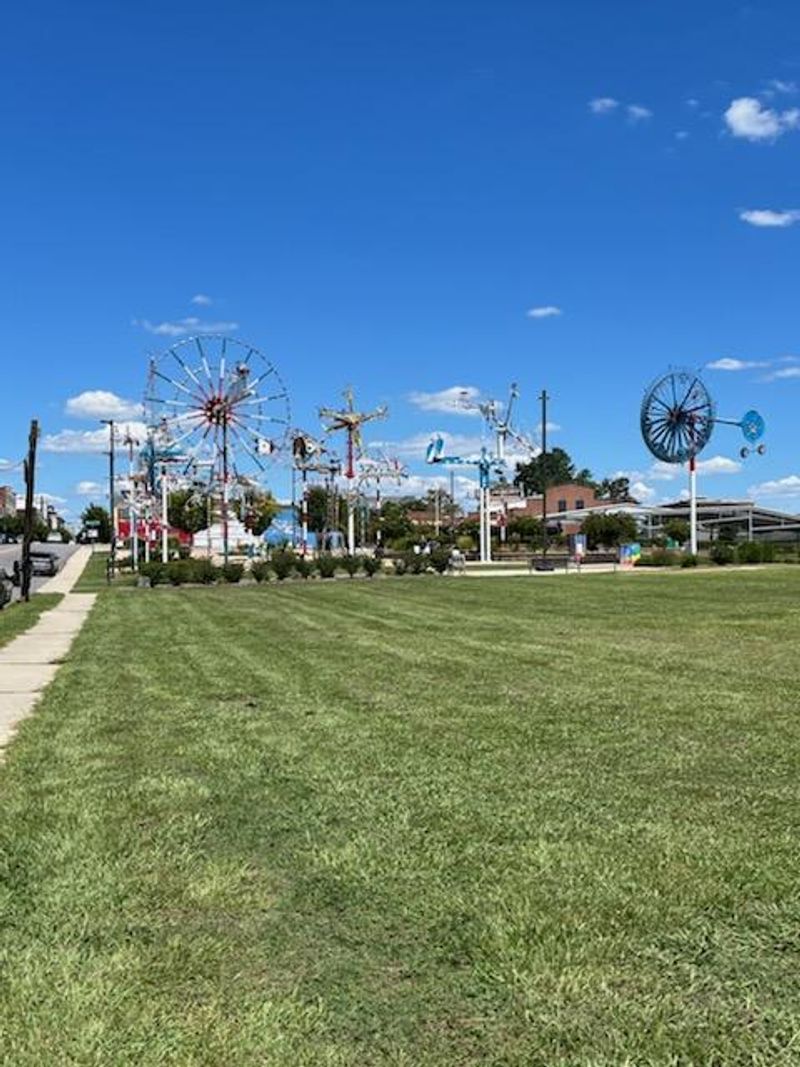
Downtown Wilson has thirty enormous machines waiting for the wind.
Some reach about 50 feet into the air, their metal arms, reflectors, wheels, and moving parts rotating overhead as the breeze changes.
The collection fills the two-acre Vollis Simpson Whirligig Park, where restored works by North Carolina folk artist Vollis Simpson have been gathered and preserved.
Simpson built his kinetic sculptures from repurposed industrial materials and mechanical pieces. A multi-year conservation effort moved the works from his farm, repaired them, and eventually installed the thirty-piece collection downtown.
The park itself is currently open daily from 5 a.m. until midnight. A separate museum and gift shop operates nearby Tuesday through Saturday.
No two breezy visits need to sound exactly alike. The sculptures decide how much moving they are willing to do.
Address: 301 S. Goldsboro Street, Wilson, NC 27893.
7. Cloud Chamber For The Trees And Sky
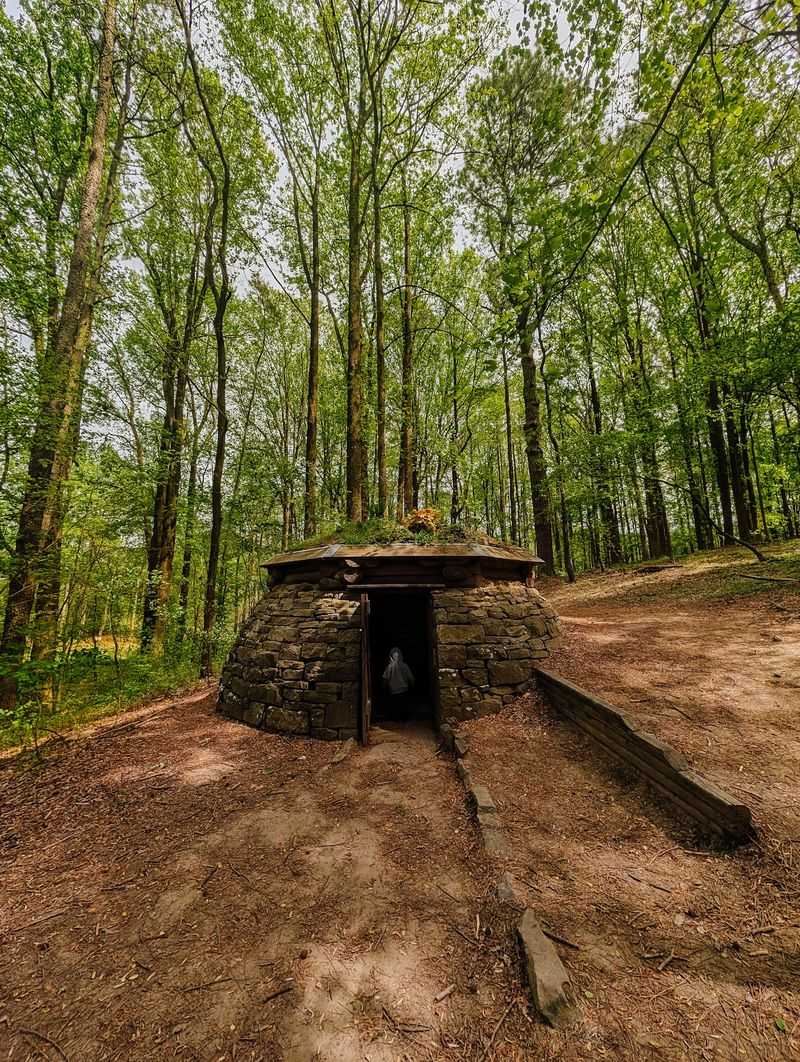
At first, it is only a dark stone room.
Close the door, and sit for a while. Slowly, the trees and sky begin appearing where the floor should be.
Artist Chris Drury created Cloud Chamber for the Trees and Sky in 2003 for the North Carolina Museum of Art’s outdoor park in Raleigh. The roughly 12-foot-wide structure functions as an oversized camera obscura.
A small aperture in the roof admits light and projects an inverted image of the world above onto the interior floor and walls.
Your eyes need time to adjust to the darkness, so rushing inside for ten seconds rather defeats the trick. The museum instructs visitors to close the door, sit, and allow the projection to emerge gradually.
The sculpture remains on view in the Museum Park.
Nothing mechanical flips the image. One tiny opening does all the work.
Address: North Carolina Museum of Art, 2110 Blue Ridge Road, Raleigh, NC 27607.
8. Carolina Beach State Park’s Flytrap Trail
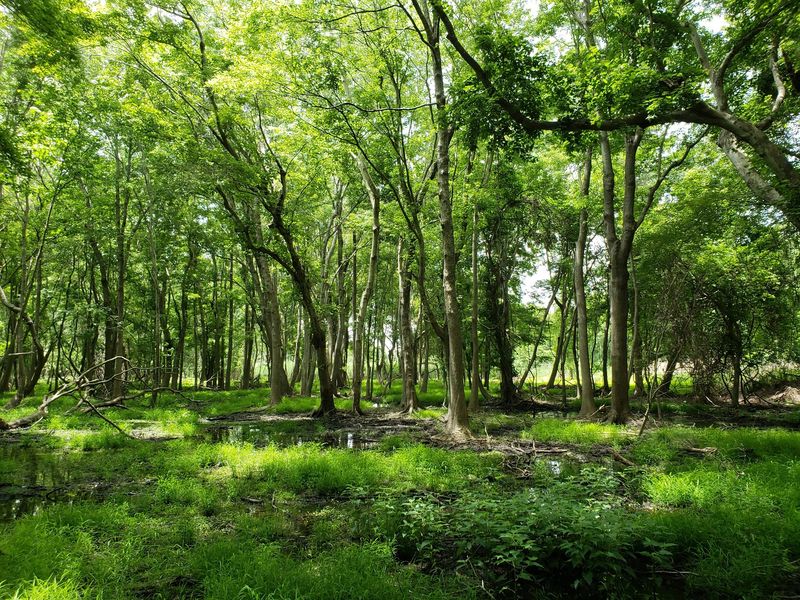
Look down carefully.
The strange attraction here may be smaller than your thumb.
Venus flytraps grow naturally along portions of the half-mile Flytrap Trail, where pocosin wetlands meet longleaf pine forest and wiregrass savanna.
That trail sits inside Carolina Beach State Park near the Cape Fear River. The route is easy, wheelchair accessible, and partly carried across wet areas on wooden boardwalks.
Flytraps can be seen along the edges of the pocosin, but staying on the trail is important because the plants are small and fragile.
Other carnivorous species occur in this coastal region as well, including sundews, pitcher plants, butterworts, and bladderworts.
No feeding demonstration is required. The plants have been managing their own menu for a very long time.
Address: 1010 State Park Road, Carolina Beach, NC 28428.
9. Judaculla Rock
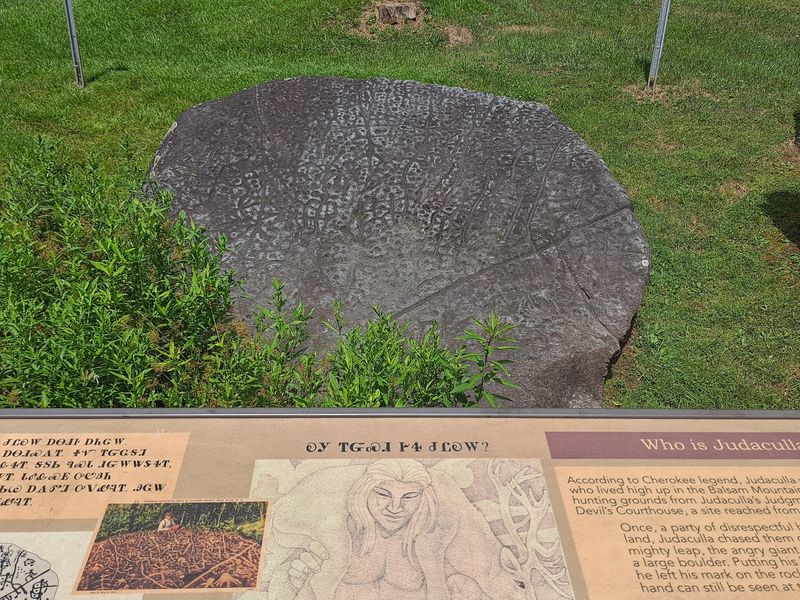
A boardwalk crosses a quiet patch of Jackson County countryside. At the end sits one enormous soapstone boulder covered in symbols.
More than 1,000 petroglyph motifs have been recorded on Judaculla Rock, making the site one of the most remarkable concentrations of Indigenous rock carvings in the southeastern United States.
Jackson County maintains a viewing platform and walking trail around the historic site.
The carvings include circles, lines, tracks, and abstract forms spread across the stone surface.
Cherokee tradition connects the site with Judaculla, or Tsul ’Kalu, an important supernatural figure in Cherokee stories.
The viewing platform keeps feet away from the soft soapstone, which should never be touched, chalked, traced, or rubbed to make the carvings easier to see.
Give the patterns time. The longer you look, the more marks begin separating from the stone around them.
Address: 552 Judaculla Rock Road, Cullowhee, NC 28723.
10. Stone Mountain State Park
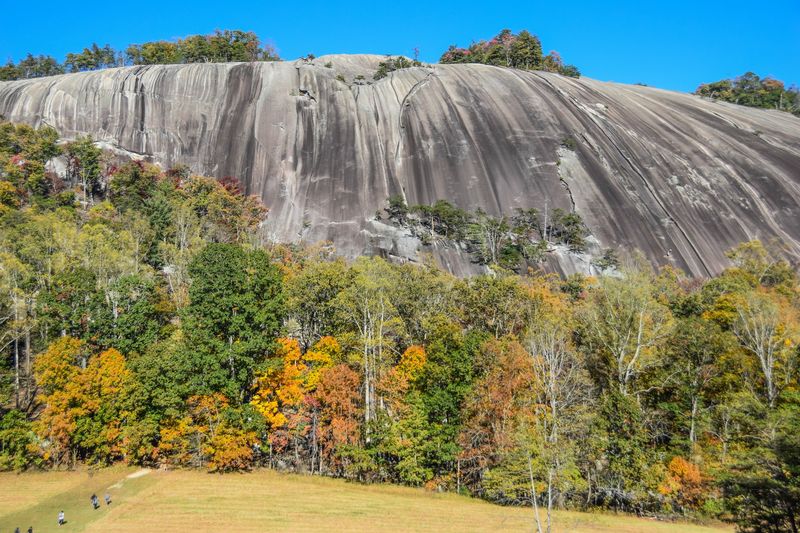
The forest suddenly gives way to a wall of pale granite.
It rises roughly 600 feet above the surrounding landscape, creating a rounded dome broad enough to dominate several viewpoints around the park.
Stone Mountain is designated a National Natural Landmark and anchors the state park that carries its name. The property also includes trout streams, waterfalls, camping areas, and the restored mid-19th-century Hutchinson Homestead.
One major 2026 restriction changes the usual hiking plan.
Stone Mountain Falls and part of the Stone Mountain Loop Trail are currently closed for a stair-replacement project that began in November 2025.
The closure affects the route from the chimney near Upper Trailhead Parking down toward the Middle Falls and Lower Falls area.
The park itself remains open, so visitors can still see the granite dome and use unaffected areas and trails.
That rock face does not need a full loop to make an entrance.
Address: 3042 Frank Parkway, Roaring Gap, NC 28668.
11. Pilot Mountain State Park
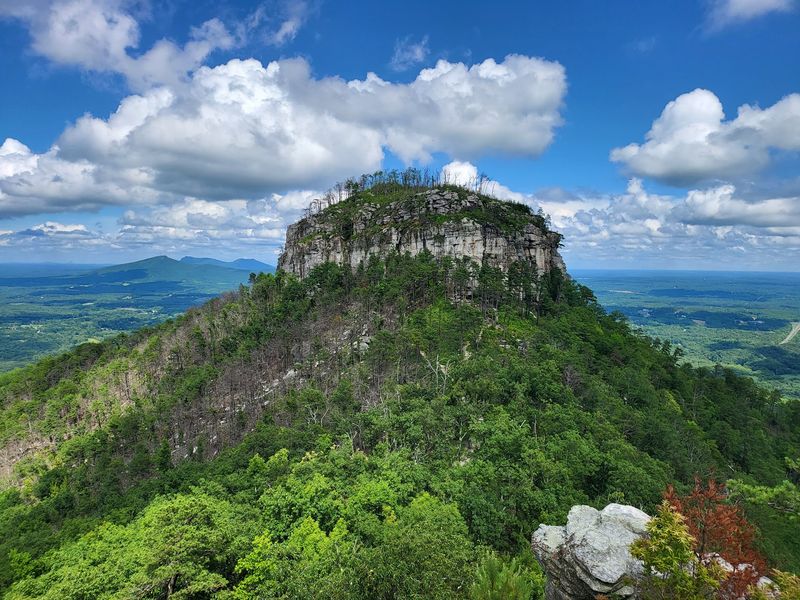
One knob rises above the Piedmont so distinctly that spotting it from the highway becomes its own roadside game.
The mountain has served as a regional landmark for generations, with its rounded Big Pinnacle standing well above the lower ridges and farmland surrounding it.
That unmistakable formation anchors Pilot Mountain State Park.
Hiking, horseback riding, climbing, camping, and river recreation are currently available across the park’s mountain and Yadkin River sections. The hiking and bridle trail system is open in August 2026.
Visitors can explore trails around the mountain rather than climbing the protected Big Pinnacle itself. Overlooks near the summit area provide close views of the knob and the country beyond.
Weekend and holiday traffic can create delays in the mountain section, so earlier arrivals have an advantage.
The shape does most of the announcing long before you reach the entrance.
Address: 1721 Pilot Knob Park Road, Pinnacle, NC 27043.
12. Looking Glass Rock
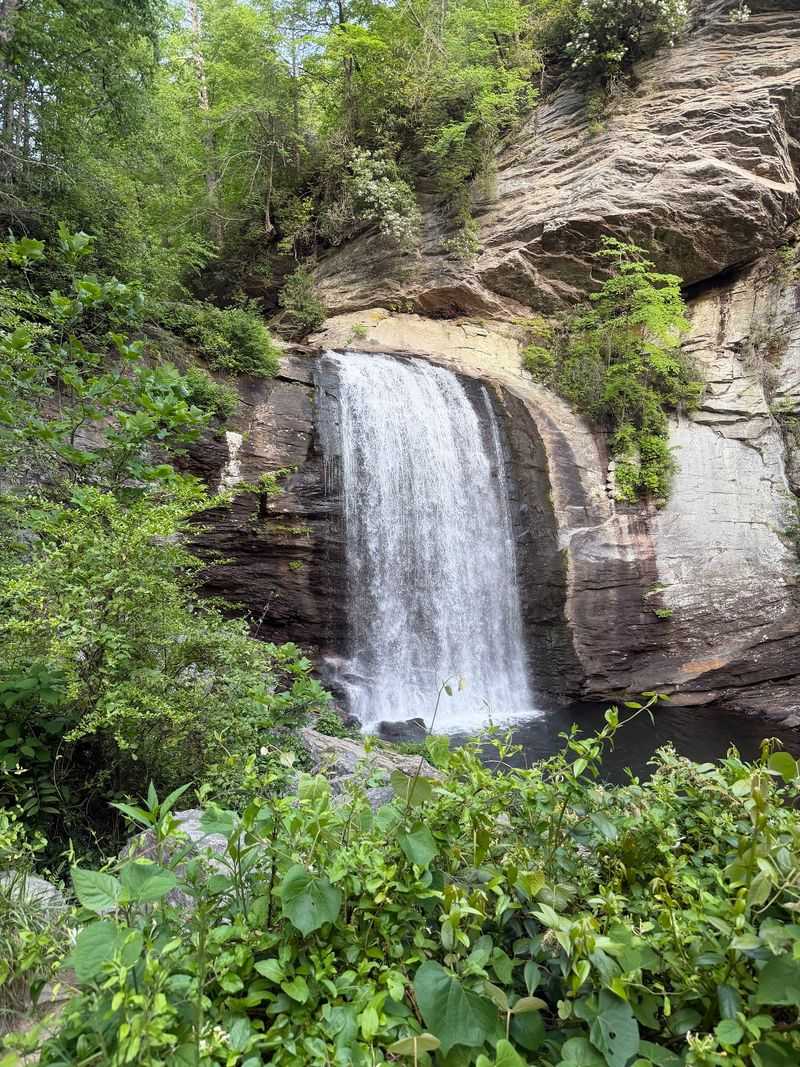
Miles of Pisgah National Forest spread across the mountains, and then one giant dome starts pushing above the trees.
Its exposed granite face can catch sunlight, ice, or water and appear strikingly bright from distant viewpoints.
Looking Glass Rock rises in the Pisgah Ranger District near Brevard. The U.S. Forest Service currently lists the Looking Glass Rock Trailhead as open.
The hike to the top is a substantial mountain outing rather than a roadside stroll, climbing through forest before reaching exposed rock and broad views across the surrounding ridges.
Climbers use separate routes on the granite face, while hikers approach from the trail system below.
There is an easier option for anyone who would rather admire the shape than stand on top of it.
Several road and Blue Ridge Parkway viewpoints around the Pisgah area provide distant looks at the enormous monolith without requiring the summit hike.
After dunes, underground passages, carnivorous plants, spinning machines, strange tunnels, and gravity tricks, North Carolina saves one final oversized piece of rock for the horizon.
Location: Looking Glass Rock Trailhead, Pisgah National Forest, near Brevard, NC.