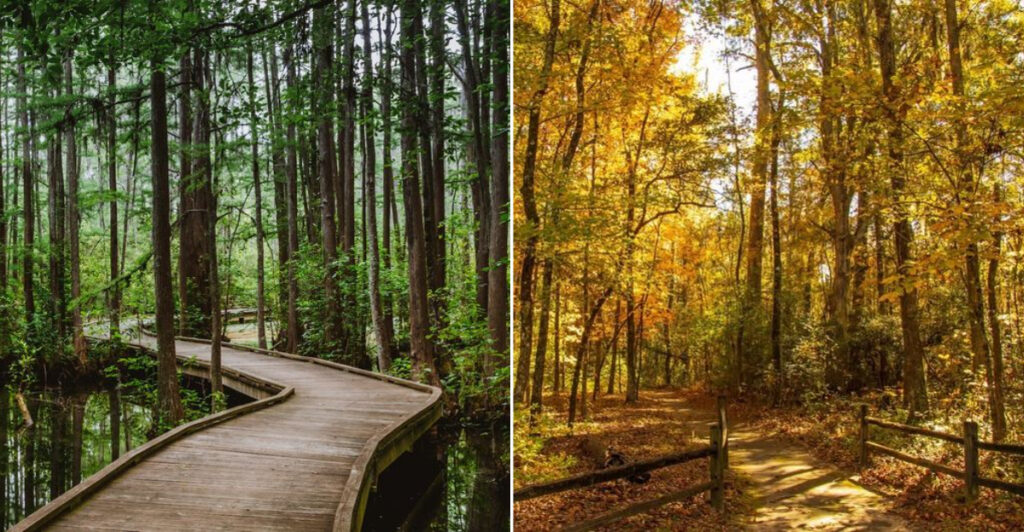
Some outdoor escapes make a big first impression. This one sneaks up on you.
Sometimes you just need a place that helps you slow down and breathe a little deeper. The moment you arrive, the pace changes.
The noise drops. This is the kind of spot that pulls you away from the noise and makes it easier to notice what is right in front of you. The air feels thicker, calmer, and a little more mysterious in the best way.
You are not rushing through a place like this. You slow down, look around, and start paying attention to the small things, like ripples on the surface, movement in the brush, or the sudden call of a bird overhead.
It is the kind of setting that makes a canoe ride feel more adventurous and a simple walk feel a lot more immersive. There is real fun in visiting somewhere that still feels quiet, uncrowded, and a little unexpected.
You get the beauty, the atmosphere, and the breathing room all at once, which is exactly what makes this overlooked park such a rewarding find in South Carolina.
What Makes This Place So Rare

You notice the stillness here almost immediately. Carolina bays are one of the strangest and most fascinating landforms in North America.
Woods Bay is one of the best-preserved examples you will find anywhere in South Carolina, and that alone makes it worth the visit.
These oval-shaped depressions are scattered across the coastal plain from New Jersey all the way down to Florida, but most have been drained or developed over the years. Woods Bay survived.
The result is a living, breathing wetland that has stayed largely intact for thousands of years.
The bay itself covers around 1,541 acres, with open water in the center surrounded by layers of shrub bog, hardwood swamp, and upland forest. Each zone supports its own community of plants and animals, creating a patchwork of habitats packed into one compact area.
Have you ever stood somewhere and felt like the land itself had a story to tell? Woods Bay gives you that feeling almost immediately.
The dark water, the cypress trees, and the unusual silence all point to something older and more complex than a typical park landscape.
This is not just a pretty place to take photos. It is a functioning natural system that has survived human pressure and time, and visiting it feels like a small act of appreciation for something genuinely irreplaceable.
Wildlife Watching At Every Turn
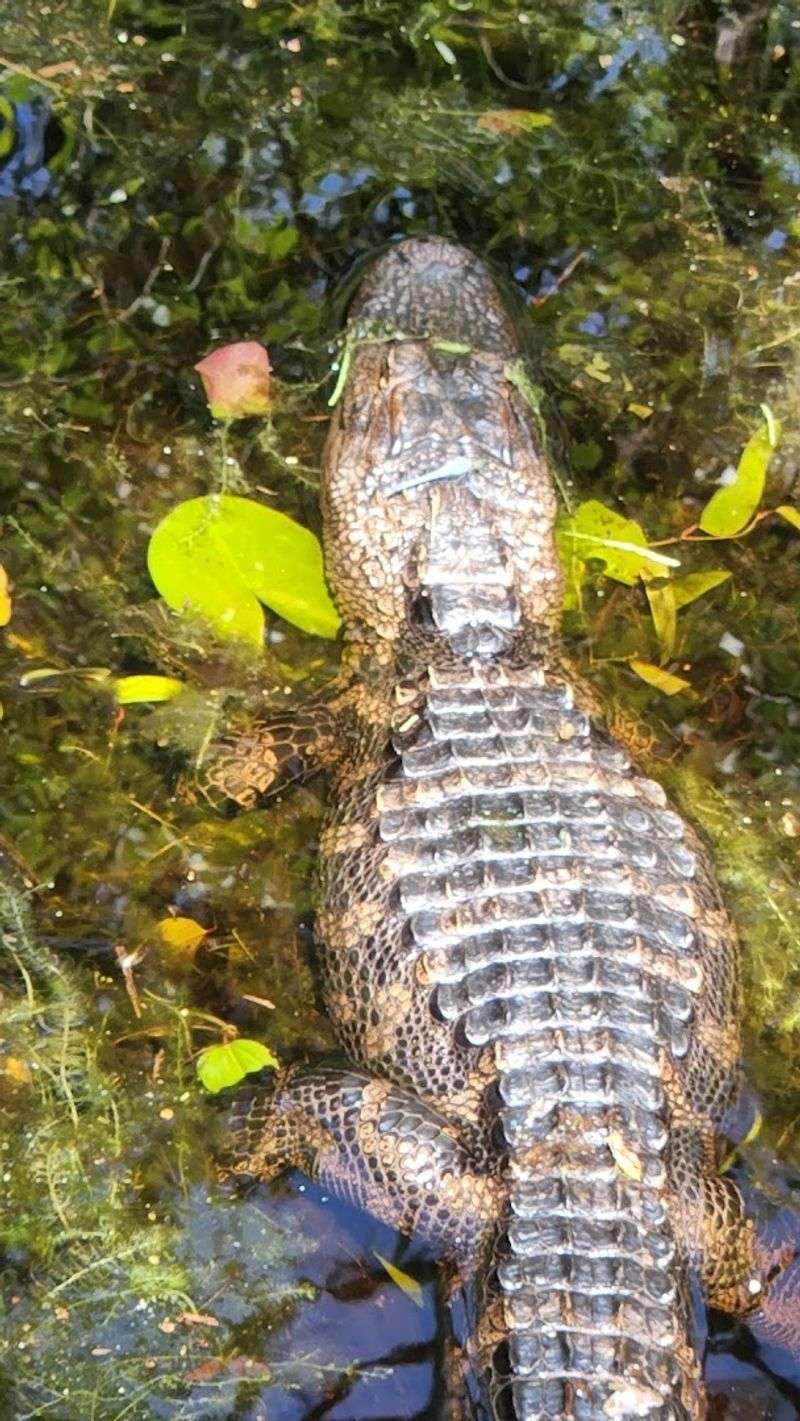
This stretch feels peaceful without ever feeling boring. Woods Bay is a wildlife watcher’s dream, and the variety of animals living here will catch you off guard if you are not expecting it.
The park supports an impressive range of species across its different habitat zones.
Birds are the most visible residents. Great blue herons, great egrets, wood ducks, and osprey are all regular sights. During migration season, the park becomes a stopping point for warblers, shorebirds, and other species passing through the Southeast.
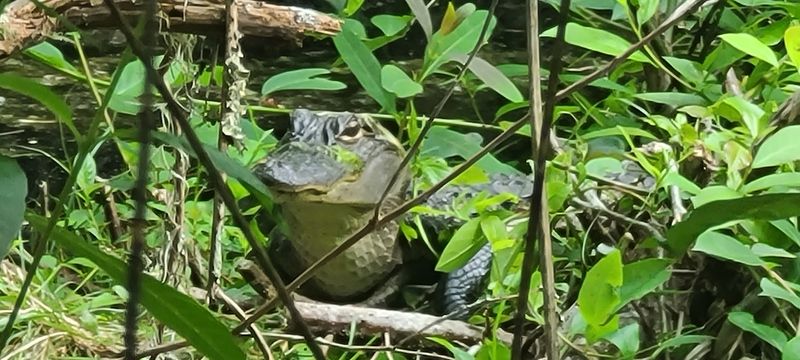
Reptiles are well represented too. Cottonmouth snakes, various turtle species, and American alligators all live here. Alligators are not aggressive toward visitors who keep a respectful distance, but spotting one gliding silently through the dark water is a memorable experience.
The surrounding forest and shrub bog support white-tailed deer, river otters, raccoons, and a wide variety of frogs and salamanders. Spring and early summer bring out the most activity, with calling frogs creating a constant background soundtrack during evening hours.
Pitcher plants grow in the bog areas, which is a detail that surprises many visitors. These carnivorous plants trap insects inside their tube-shaped leaves, and seeing them in the wild feels genuinely unusual.
Paddling The Blackwater Like You Own It
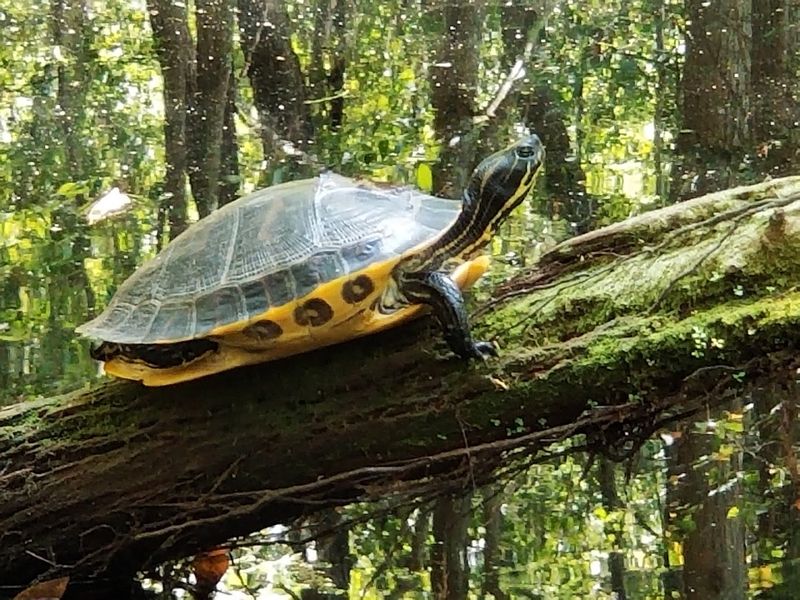
The canoe trail at Woods Bay is the heart of the whole experience. You launch from a small wooden dock, push off into water the color of strong tea, and suddenly the world gets very quiet very fast.
The dark color of the water comes from tannins released by decaying plant material. It looks dramatic but it is completely natural, and the stillness of the surface makes the reflections of cypress trees almost look like a painting.
The trail winds for about 4.5 miles through the bay, and you can paddle at your own pace with no current pushing you around. Most visitors take between two and three hours to complete the loop, depending on how often they stop to look around.
Canoes are available to rent at the park for a small fee, so you do not need to bring your own equipment. Kayaks are also welcome if you prefer a sit-inside option.
Life jackets are provided and required, which is a smart policy given that some sections feel genuinely remote.
Wildlife sightings on the water are common. Herons stand like statues in the shallows. Turtles stack themselves on logs. Ospreys circle overhead.
If you paddle slowly and keep your voice down, you will see far more than you expect. What could be better than floating through a thousand-year-old wetland on a calm morning? Honestly, very little. The canoe trail alone is worth the drive to Olanta.
The Trails On Dry Land
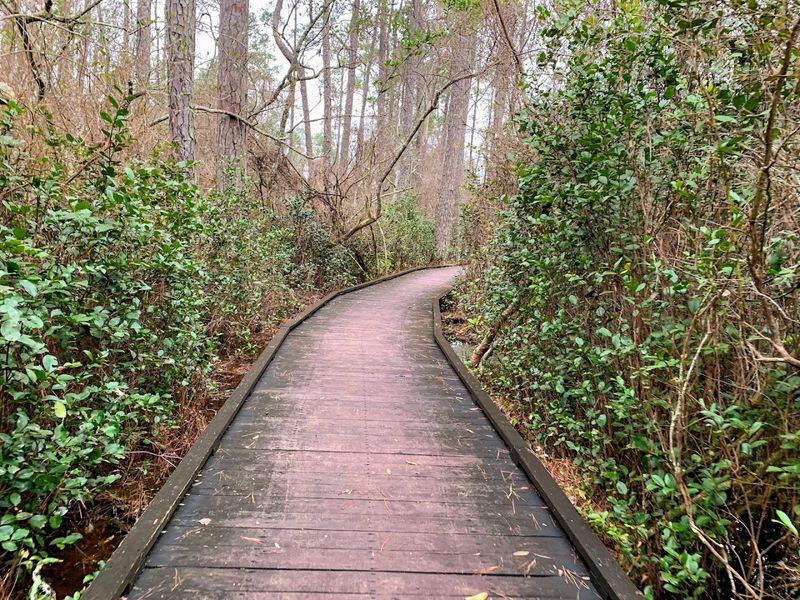
The beauty here is subtle at first, then impossible to ignore. Not everyone wants to get in a boat, and Woods Bay has you covered on that front.
The park offers walking trails that cut through the upland forest and run along the edge of the bay, giving you a ground-level look at the landscape.
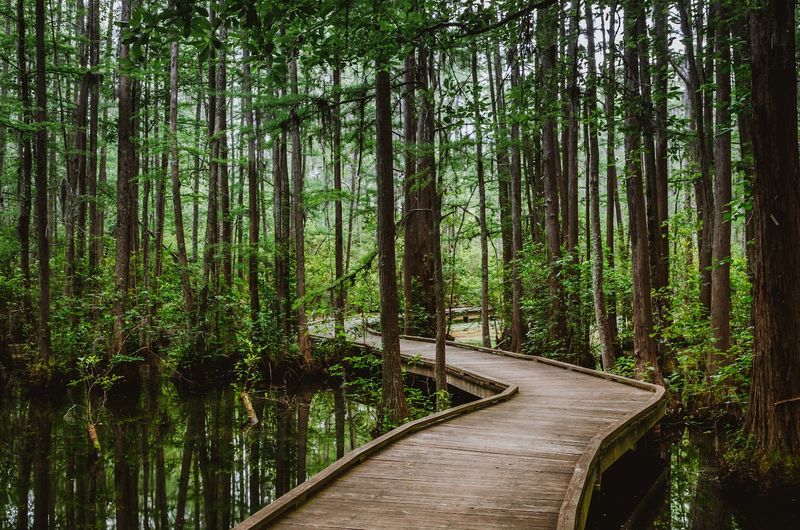
The main boardwalk trail is a short but rewarding walk that takes you out over the water on a raised wooden platform. From there, you can look down into the blackwater and spot turtles, fish, and aquatic plants without getting your feet wet.
The surrounding forest trail winds through areas of longleaf pine and mixed hardwoods, which is a habitat type that has become increasingly rare across the Southeast. Walking through it gives you a quiet appreciation for how much of this landscape once covered the region.
Trail distances are modest, which makes the park very accessible for families with young children or visitors who prefer a shorter outing. You are not going to be hiking for hours, but the quality of what you see along the way more than makes up for the length.
Bring good walking shoes, especially after rain. Some sections of the trail can get soft underfoot, and the boardwalk can be slippery when wet.
Insect repellent is a smart addition to your bag, particularly from spring through early fall.
Could a 45-minute walk through ancient forest and over dark water be the highlight of your weekend? At Woods Bay, that outcome is more likely than you might think.
The Best Time Of Year To Visit
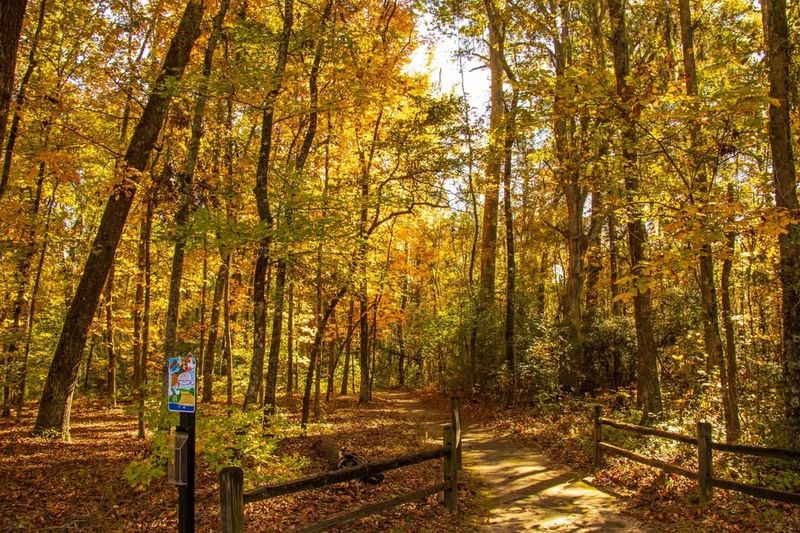
Timing your visit to Woods Bay can make a real difference in what you experience. The park is open year-round, but each season brings something different to the table.
Spring is widely considered the best time to visit. Migratory birds are moving through, wildflowers bloom along the trail edges, and the temperatures are comfortable for paddling and walking.
March through May offers the ideal combination of mild weather and active wildlife.
Summer brings lush green vegetation and long days, but the heat and humidity in South Carolina can be intense. Early morning visits during summer are the smart move.
By 10 a.m. the temperature is already climbing, so arriving right when the park opens puts you ahead of both the heat and any other visitors.
Fall is underrated for this park. The cypress trees turn a warm rust color before dropping their needles, and the cooler air makes paddling much more comfortable.
Insects thin out considerably by October, which is a welcome change from the summer months.
Winter visits are surprisingly pleasant on mild days. The bare trees allow for better wildlife viewing, and the park feels even more solitary than usual.
Waterfowl numbers increase in winter, making it a good season for birders specifically. What season speaks to you most?
Getting There Without The Stress
Finding Woods Bay State Park is straightforward once you know where you are headed. The park sits off Woods Bay Road in Olanta, South Carolina, a small town in Florence County in the heart of the Pee Dee region.
From Florence, the drive takes roughly 30 minutes heading southwest. From Sumter, you are looking at a similar travel time heading east.
The roads are flat and easy, passing through farmland and pine forest that give you a real sense of the rural South Carolina landscape.
The full address is 11020 Woods Bay Rd, Olanta, SC 29114, and most GPS apps will take you directly to the park entrance without any trouble. Just watch for the brown state park signs, which appear as you get closer.
Parking is free and the lot is small but rarely full. That is one of the first signs that you have found somewhere genuinely uncrowded.
There are no toll booths, no long entry lines, and no need to book a parking spot weeks in advance.
Getting here is one of the easiest parts of the whole trip.
Who This Park Is Perfect For
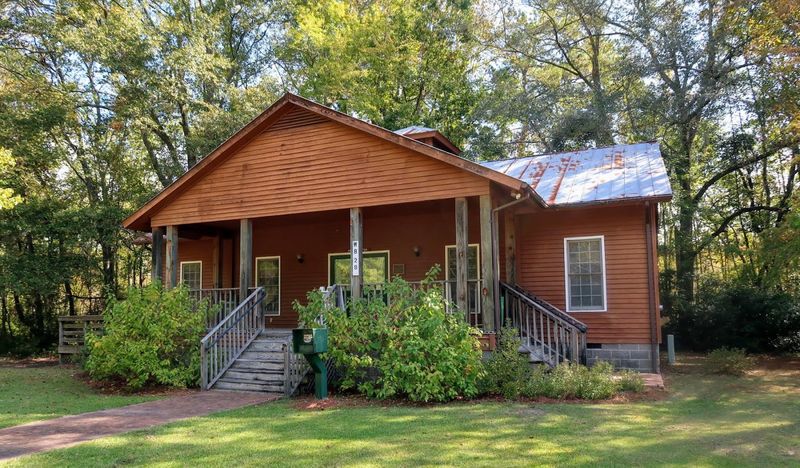
This is where the quiet really starts to work on you. Woods Bay is one of those rare parks that works well for a surprisingly wide range of visitors.
You do not need to be an experienced outdoors person to enjoy what it has to offer.
Families with children will find the park approachable and safe. The trails are short, the canoe rental process is simple, and there is enough wildlife to keep kids genuinely engaged.
Spotting a turtle or a heron tends to create the kind of excitement that no screen can replicate.
Photographers love this place for the dramatic contrast between the dark water and the bright green or rust-colored vegetation. The reflections on calm mornings are particularly striking, and the light in the early hours has a soft quality that makes even simple shots look thoughtful.
Solo travelers looking for a quiet, restorative experience will find the park’s low visitor numbers to be a real asset. There is something genuinely calming about paddling through a large wetland without another person in sight.
Birders and naturalists will appreciate the diversity packed into a relatively compact area. The combination of open water, shrub bog, and upland forest creates multiple habitat types that support very different communities of plants and animals.
Practical Tips Before You Go
A little preparation goes a long way when visiting Woods Bay, and a few simple steps will make your experience noticeably more comfortable and enjoyable.
Water is essential. The park does not have a restaurant or vending machines, so bring more than you think you will need, especially in warmer months.
Snacks are a good idea too, since there are no food vendors on site.
Insect repellent is non-negotiable from April through September. The wetland environment supports a healthy mosquito population, and going in without protection will make the experience uncomfortable quickly.
A long-sleeved shirt adds an extra layer of defense.
Sunscreen matters even on cloudy days. The open water sections of the canoe trail offer little shade, and the reflected light off the surface can surprise you.
A hat with a brim is a smart addition to your packing list.
The park charges a small admission fee per person, which is very reasonable given the experience on offer.
Cell service in the area can be limited, so download a map or the trail information before you arrive. The South Carolina State Parks app is a helpful resource for this.
Planning ahead takes maybe 15 minutes, and it turns a good visit into a great one. Woods Bay rewards visitors who show up ready to pay attention.