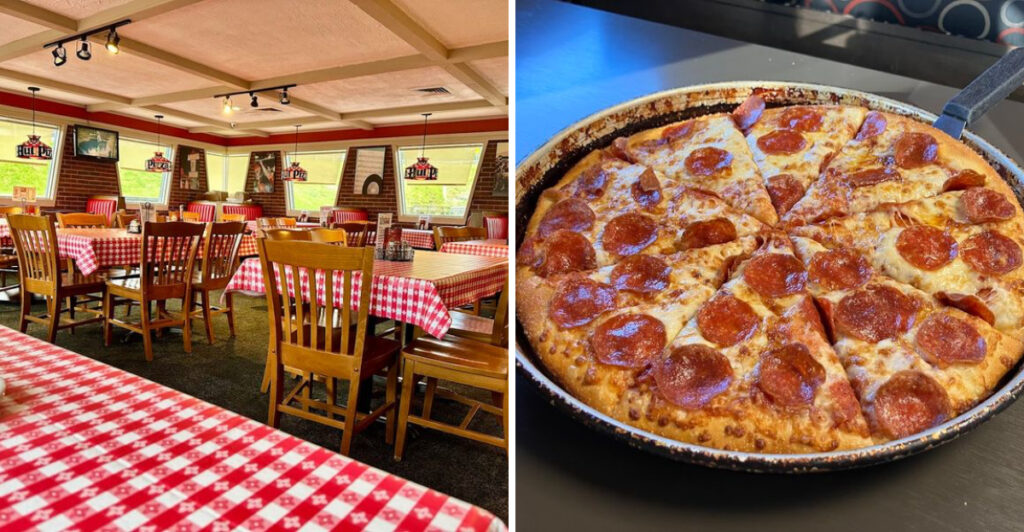
You are not prepared for how this place was going to make you feel. It is a Pizza Hut. In a small Pennsylvania town.
And I felt immediate nostalgia walking through the door.
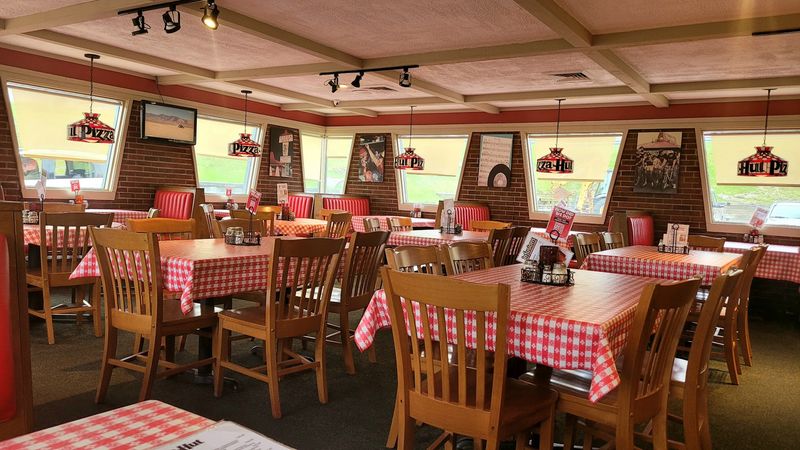
The stained glass lamps are still there, still lit, still casting that exact warm glow over the red vinyl booths. The checkered tablecloths, the red plastic cups, the salad bar fully stocked in the corner. A real server came to my table and handed me an actual menu.
This is not a throwback concept or a branded experience someone designed to feel retro. This is just a Pizza Hut that never stopped being a Pizza Hut, and somehow that is one of the most extraordinary things I have seen in years.
Pennsylvania truly never fails to amaze you.
The Iconic Red Roof That Everyone Notices Immediately
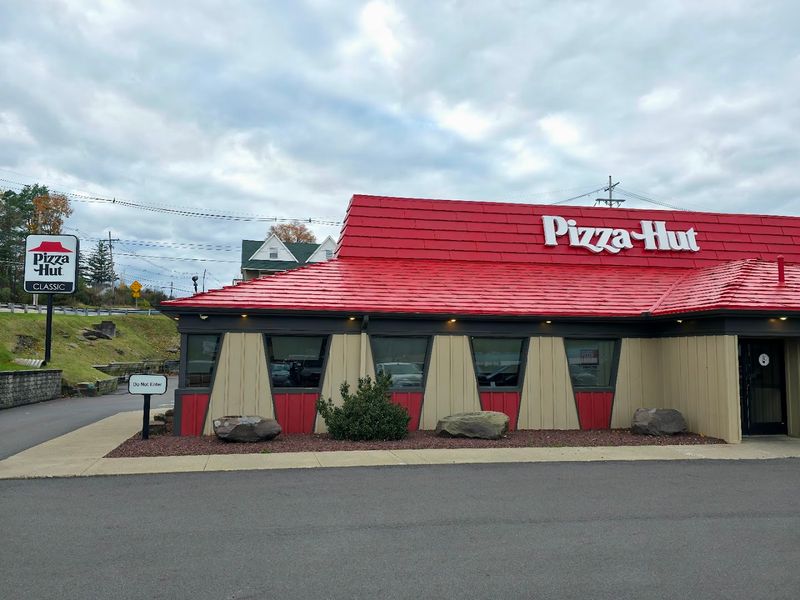
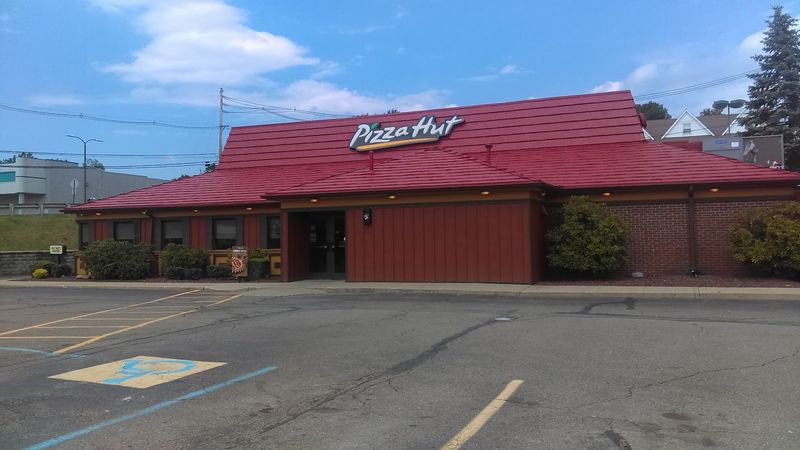
Pull up to this address and the building does all the talking. The signature red roof, pitched and proud, is one of the most recognizable shapes in American fast food history, and this location has kept every inch of it intact.
The beige and maroon exterior color scheme matches exactly what Pizza Hut looked like during its peak dine-in era in the 1980s and early 1990s.
Most locations across the country have been converted, demolished, or replaced with entirely different structures, making this one genuinely rare to find.
Standing outside and taking it in tends to hit people before they even open the door. The architecture alone is enough to stop travelers mid-drive, and many pull over just to photograph the exterior.
It is the kind of building that makes adults feel like kids again before a single bite of pizza is taken. Pizza Hut is located at 828 US-6, Tunkhannock, PA 18657.
Stained Glass Lamps That Defined A Generation
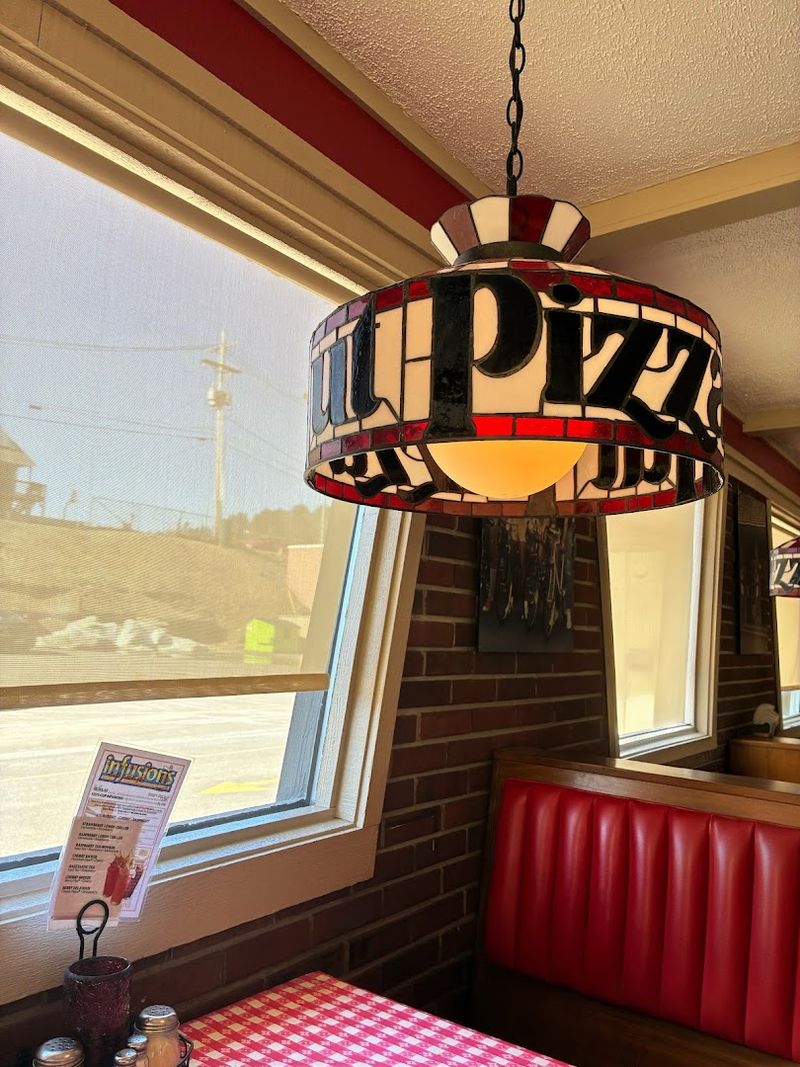
Few design details are more closely tied to the Pizza Hut dine-in experience than those hanging stained glass lamps. Warm, amber-toned, and printed with the classic logo, they cast the kind of glow that feels softer and more welcoming than anything a modern restaurant chain would install today.
This Tunkhannock location still has them, right above the tables where they have always been.
The light they produce is genuinely different from overhead fluorescents or LED strips, and it changes the entire mood of the room in a way that is hard to describe until you are sitting under one.
For many visitors, spotting those lamps the moment they walk in is the moment the nostalgia fully lands. It is one of those design choices that was so specific to Pizza Hut that it became a cultural symbol on its own.
Seeing them still in use, still lit, still doing their job, feels quietly extraordinary in the best way possible.
Red Vinyl Booths And Checkered Tables Still Going Strong
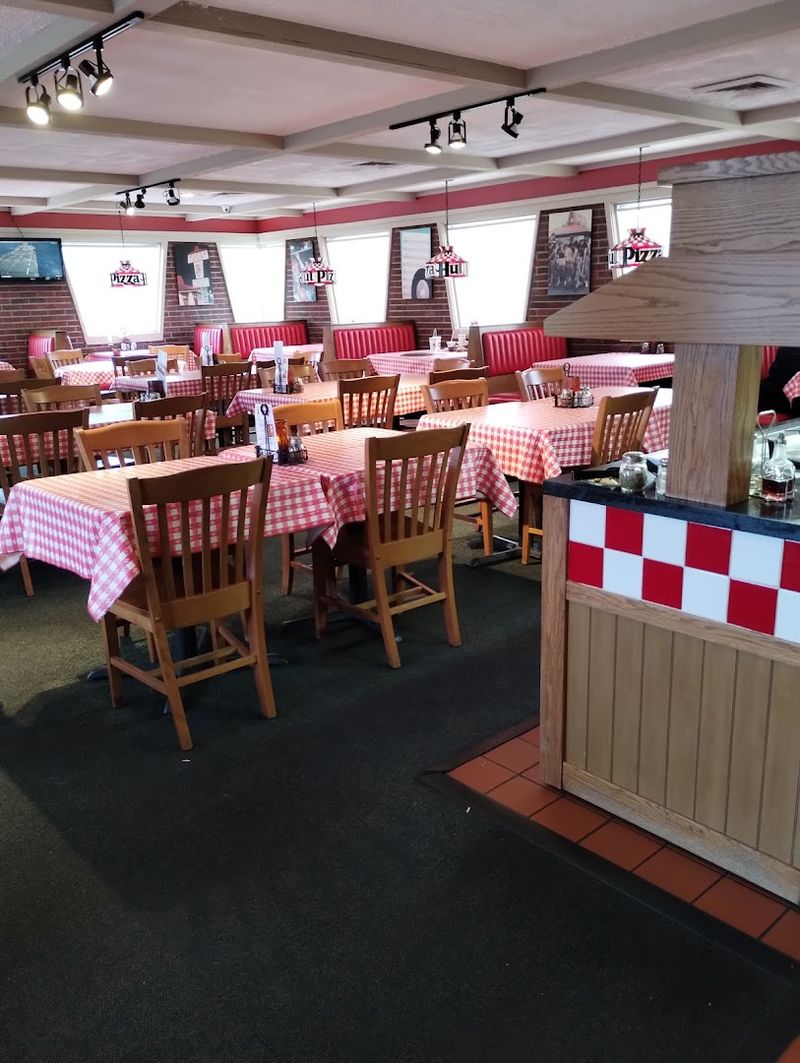
Red vinyl booths and red-and-white checkered tablecloths are two details that defined the Pizza Hut dine-in experience for millions of families. They were practical, colorful, and unmistakably Pizza Hut, and this location has held onto both without compromise.
Sliding into one of those booths feels like muscle memory for anyone who grew up eating here. The seating is comfortable in that familiar, no-fuss way, and the checkered tables set the tone for a relaxed, unhurried meal rather than a rushed fast food stop.
There are no touchscreen kiosks here, no digital menu boards flashing rotating promotions, and no counter service replacing the sit-down format.
The dining room functions the way it always did, with table service and a pace that encourages people to actually stay and enjoy the meal.
For families visiting with kids who have never experienced this format, it tends to be a genuinely eye-opening contrast to what modern chain dining typically looks like today.
The Salad Bar Is Still Here And Still Fully Loaded
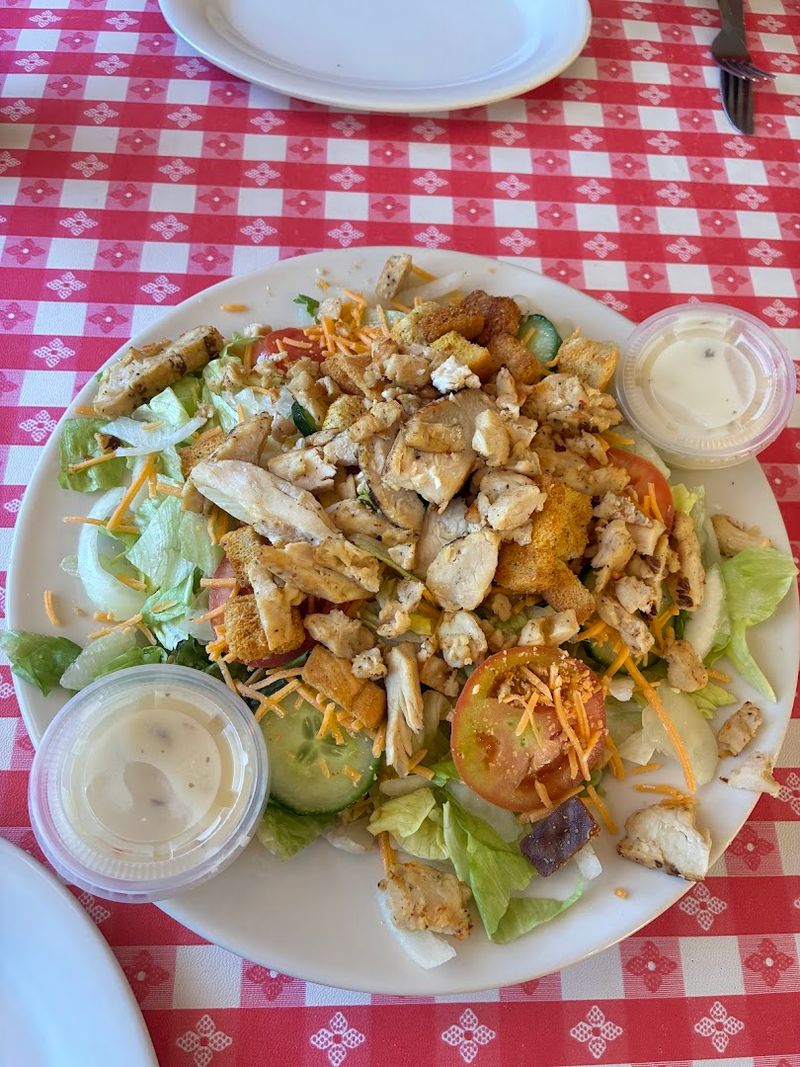
The salad bar was once a staple of the Pizza Hut dine-in experience, and finding one still operational feels like spotting something from another era.
This location keeps it stocked, clean, and available as part of the full dining experience that made the original format so popular with families.
It is the kind of offering that modern Pizza Hut locations simply do not have anymore, which makes it feel like a bonus on top of an already nostalgic visit.
Guests can load up on fresh greens and toppings before the pizza arrives, which adds a practical, satisfying layer to the meal that carry-out and delivery simply cannot replicate.
The salad bar also reinforces the pacing of the visit, giving people something to enjoy while waiting and encouraging a slower, more communal style of eating. It is a small detail in the grand scheme, but for longtime fans of the classic format, seeing it still in use carries a surprising amount of emotional weight and genuine practical appeal.
Book It Posters On The Walls Bring Back Big Feelings
The Book It program was one of the most beloved school-and-restaurant partnerships in American history, and those posters became as familiar as the pizza itself for kids growing up in the 1980s and 1990s.
Earning a personal pan pizza by reading books was a genuinely exciting incentive, and the memory of it tends to hit hard when adults spot those posters again.
This location displays Book It materials on its walls as part of its broader commitment to preserving the full Pizza Hut experience.
It is a small touch that carries enormous sentimental weight for a specific generation of visitors, and it consistently draws reactions from people who had completely forgotten about the program until they see it again.
Details like this are what separate a nostalgic atmosphere from a truly immersive one.
The restaurant is not just decorated to look old, it is preserved in a way that feels intentional and respectful of the culture that grew up around it. That difference is something visitors tend to notice and appreciate almost immediately upon arrival.
Those Red Plastic Cups Are An Unexpected Emotional Trigger
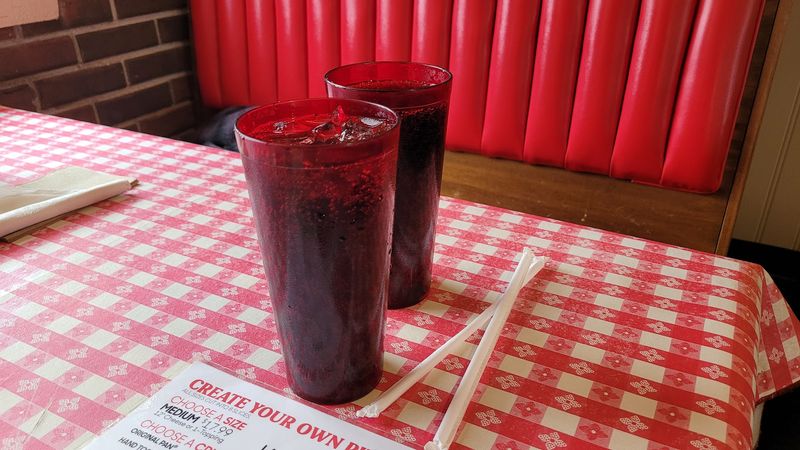
Nobody expects a plastic cup to carry this much weight, but for people who grew up eating at Pizza Hut, the red plastic cups are a surprisingly powerful detail.
They were everywhere in the classic dine-in era, and their continued presence at this location is one of the most frequently mentioned highlights among visitors who make the trip.
It sounds like a small thing until you are actually holding one again. The shape, the color, the way it looks on a checkered tablecloth under those stained glass lamps, it all adds up to something that feels genuinely complete rather than partially recreated.
The cup is part of the full sensory picture that this location has worked to preserve.
Visitors from across multiple states have specifically called out the red cups as a standout moment of their visit.
For something so simple, it speaks to how thoroughly this location has maintained the original atmosphere, right down to the details that most people did not even realize they were still carrying around in their memories.
Wall Photos And Clippings That Tell Pizza Hut’s Full Story
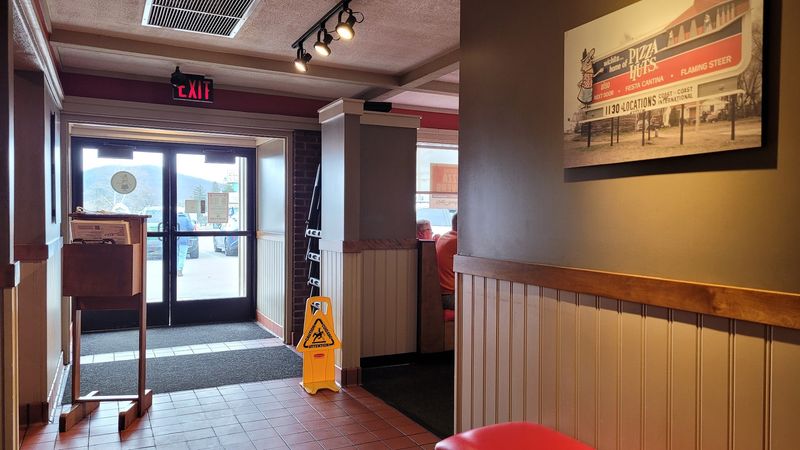
The walls inside this location do more than just fill space.
Framed photographs and historical clippings about Pizza Hut’s origins and growth over the decades are displayed throughout the dining room, turning an ordinary meal into something closer to a casual museum visit for fans of the brand.
Pizza Hut has a genuinely interesting history as one of the chains that helped define American casual dining, and seeing that story laid out visually while eating adds context and depth to the overall experience.
It gives visitors something to read and look at between bites, which slows the pace of the meal in a pleasant, unhurried way.
For younger visitors who did not grow up with the classic format, the wall displays offer an accessible introduction to why the location matters so much to the people traveling hours to reach it.
For older visitors, they serve as a timeline of personal memories. Either way, the walls add genuine substance to what could otherwise simply be a pizza dinner.
No Kiosks, No Digital Boards, Just Real Table Service
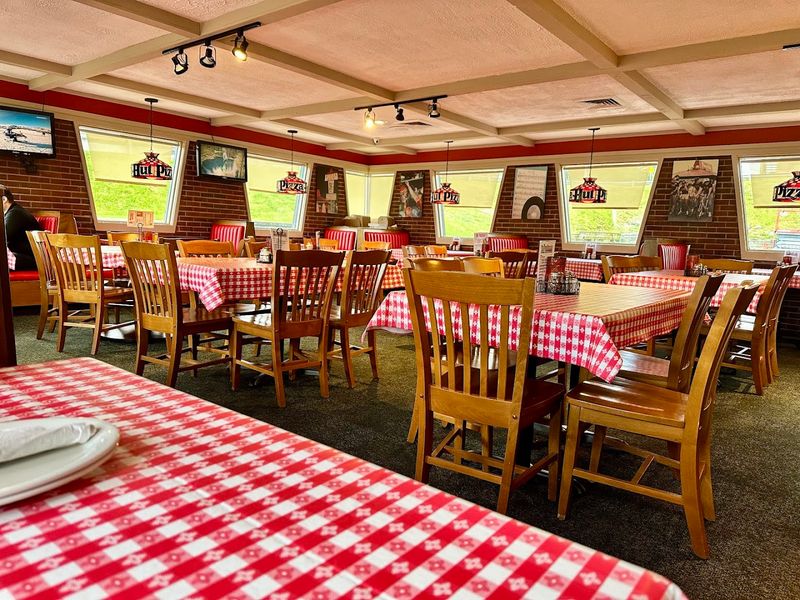
Modern chain restaurants have largely replaced human interaction with touchscreen kiosks, app-based ordering, and digital menu boards that rotate faster than most people can read.
This location operates none of that. Guests are seated, greeted, and served by actual staff at the table, the way Pizza Hut always worked during its dine-in peak.
That format changes the feel of the entire visit in ways that are hard to fully anticipate until experienced.
There is a natural rhythm to being seated, handed a menu, and having someone check back on the table that simply does not exist in the modern fast-casual model. It slows things down in a way that most people find genuinely relaxing rather than inconvenient.
The staff here tend to receive consistent praise for their attentiveness and warmth, which adds to the overall sense that this is a place that takes the dining experience seriously.
For families with children, the traditional service format also provides a low-pressure, comfortable environment that feels more welcoming than a counter-service line or a self-order screen.
People Are Traveling From Multiple States To Eat Here
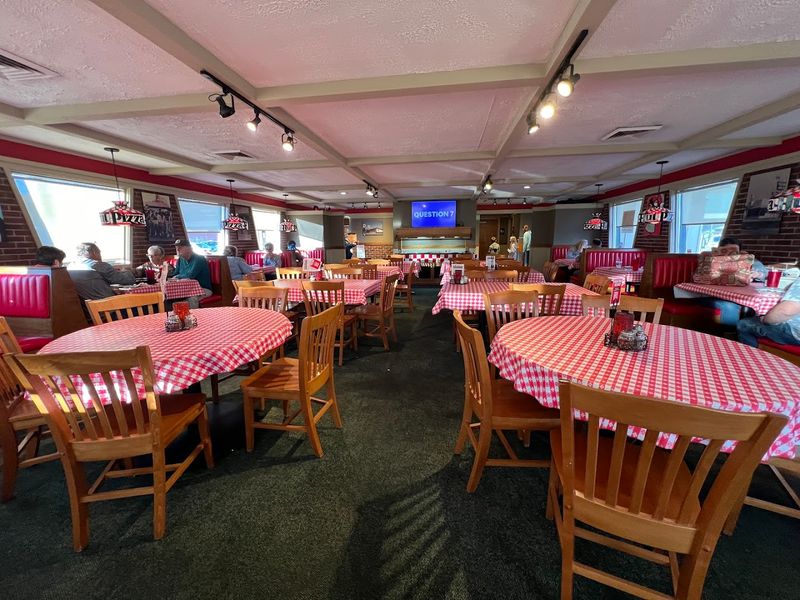
Road trips built entirely around a pizza dinner might sound unusual, but that is exactly what is happening here.
Visitors have been documented traveling from New York, Philadelphia, Wisconsin, Oregon, and Michigan specifically to eat at this Tunkhannock location, often planning full day trips around the visit.
The draw is not just nostalgia in the abstract sense. It is the specific, physical experience of sitting inside a building that looks, smells, and functions the way Pizza Hut did decades ago.
That combination is rare enough now that people are willing to drive significant distances to access it, treating the restaurant the way others might treat a historic landmark or a specialty destination.
Social media has amplified the effect considerably, with visitors recording videos and sharing experiences that reach audiences who then add the location to their own travel lists.
The cycle of attention and visitation has been building steadily, and the restaurant’s national media coverage in outlets like The New York Times has only expanded its reach further beyond Pennsylvania.
The Pan Pizza Here Tastes Like The Original Recipe
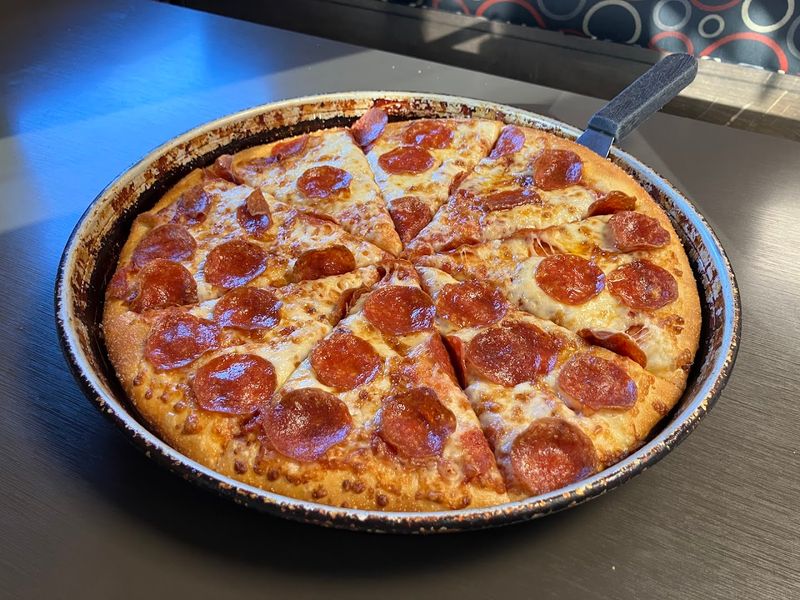
Pan pizza was the dish that built Pizza Hut’s reputation, and the version served at this location is widely described by visitors as tasting the way it did during the brand’s dine-in golden age.
The thick, golden crust, the layered sauce, and the overall construction of the pizza feel noticeably different from what most modern Pizza Hut carry-out locations produce today.
Part of what sets it apart is the sauce, which is reportedly made in-house rather than arriving pre-packaged, a distinction that comes through in the flavor for anyone paying attention. The difference is subtle but real, and it is the kind of detail that turns a good pizza into a memorable one.
Visitors frequently describe the food as exceeding their expectations, particularly those who arrived primarily for the atmosphere and considered the pizza itself secondary.
Getting both the nostalgic setting and genuinely satisfying food in the same visit tends to elevate the experience considerably beyond what most people anticipate when they first pull into the parking lot.
Why This Location Is Considered One Of The Last Of Its Kind
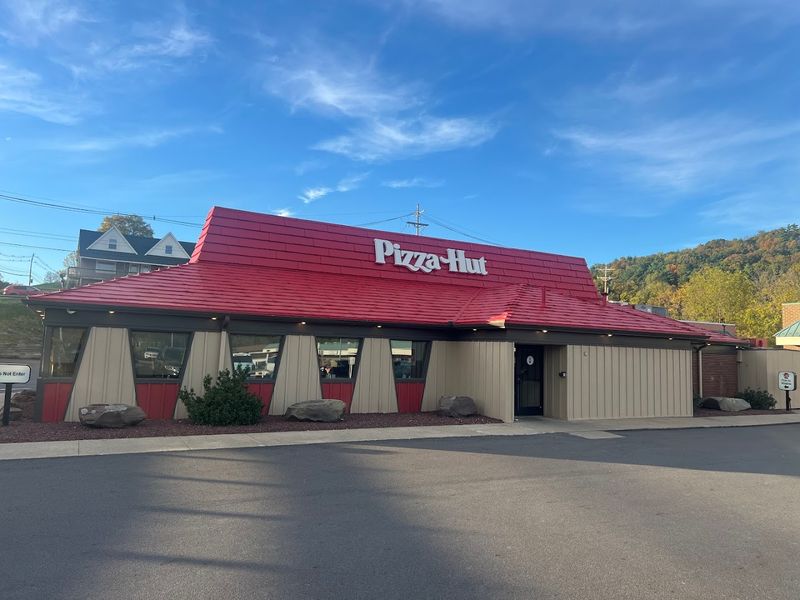
The conversion of Pizza Hut locations away from the dine-in format happened gradually over decades, driven by shifting consumer habits, rising real estate costs, and the growth of delivery and carry-out services.
Most of the original hut-style buildings were sold, repurposed, or demolished entirely, leaving the classic format nearly extinct in much of the country.
This Tunkhannock location is widely regarded as one of the last, if not the only, remaining Classic Pizza Hut in Pennsylvania.
That distinction carries real weight for people who grew up with the original format and have spent years watching it disappear from their own cities and towns.
Finding one still fully operational, with the original decor, service style, and menu format intact, is genuinely uncommon at a national level.
The restaurant converted to the classic format roughly a decade ago, a decision that has since driven a notable and sustained increase in business.
That choice to lean into preservation rather than modernization has turned a single location in a small Pennsylvania town into a destination with national recognition and a loyal following that keeps growing.
Planning A Visit To Tunkhannock Worth Every Mile
Tunkhannock is a small borough in Wyoming County, Pennsylvania, situated along the Susquehanna River and accessible via Route 6, which runs directly past the restaurant.
The area has a quiet, unhurried character that actually complements the kind of slow, deliberate visit that this Pizza Hut tends to inspire in people who make the trip.
Arriving on a weekday tends to offer a calmer experience, as weekends and lunch hours can draw larger crowds given the location’s growing reputation.
The restaurant does have a drive-through option for those who prefer carry-out, but the full dine-in experience is the main reason most people make the journey in the first place.
Bringing a camera or phone for photos is practically expected at this point, and the staff appears comfortable with guests documenting their visit.
The experience rewards a relaxed pace, so planning enough time to sit, eat, and take everything in makes the trip considerably more satisfying than a rushed stop.