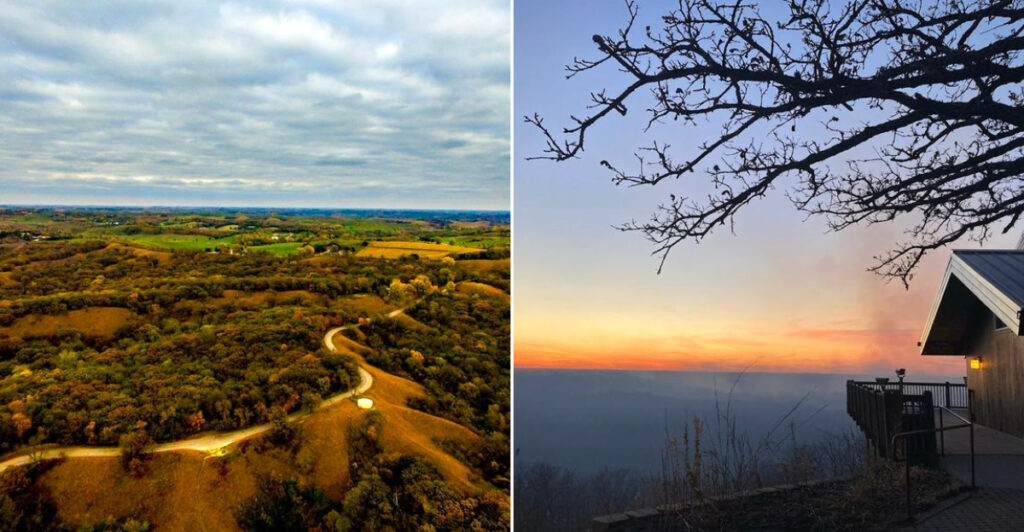
Iowa keeps its best scenery a little off the obvious exits.
The road can start in open farm country, then suddenly slip into bluff shadows, sandstone passages, river overlooks, prairie ridges, and caves cool enough to make summer feel temporarily defeated.
These 11 road trip stops show the Heartland with more texture than the postcard version ever gets credit for. Limestone cliffs rise above the Mississippi.
Creek valleys cut through the trees. Loess Hills roll toward big western skies, and quiet parks prove that beauty does not need a billboard.
The miles do not just connect places here. They change the version of Iowa you thought you knew.
1. Effigy Mounds National Monument, Harpers Ferry
Ancient earthworks shaped like bears and birds stretch across the bluffs above the Mississippi River here, and the experience of standing beside them feels genuinely humbling.
Effigy Mounds National Monument in Harpers Ferry, Iowa, protects more than 200 prehistoric mounds built by Indigenous peoples over many centuries, with some conical mounds beginning about 2,500 years ago and effigy forms appearing later.
Many of the mounds are only visible from above, but the trails leading to them wind through some of the most stunning woodland scenery in the entire region.
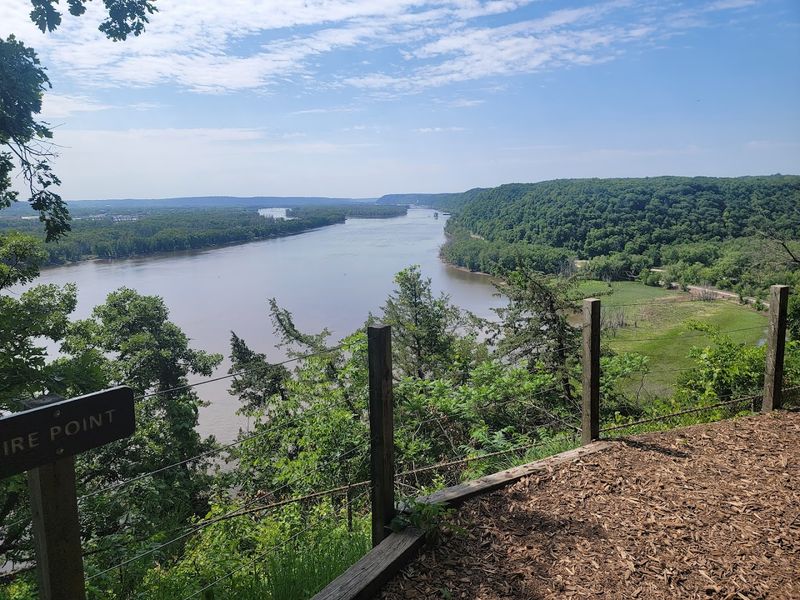
The Fire Point Trail is a favorite for good reason. It climbs through dense hardwood forest before opening onto a sweeping overlook of the Mississippi River valley that stretches for miles in every direction.
Spring and fall are the best times to visit, when wildflowers or changing leaves add extra color to the already beautiful landscape.
The visitor center does a thorough job of explaining the cultural and spiritual significance of the mounds, so plan to spend at least 20 to 30 minutes there before hitting the trails.
Wear sturdy shoes since some paths are steep and uneven.
The monument is fee-free year-round, though winter trail conditions can be icy.
This is one of those places that reminds you how much history is quietly waiting beneath the surface of the American Midwest.
2. Pikes Peak State Park, McGregor
Forget Colorado for a moment, because Iowa has its own Pikes Peak, and the view from the top might actually surprise you more.
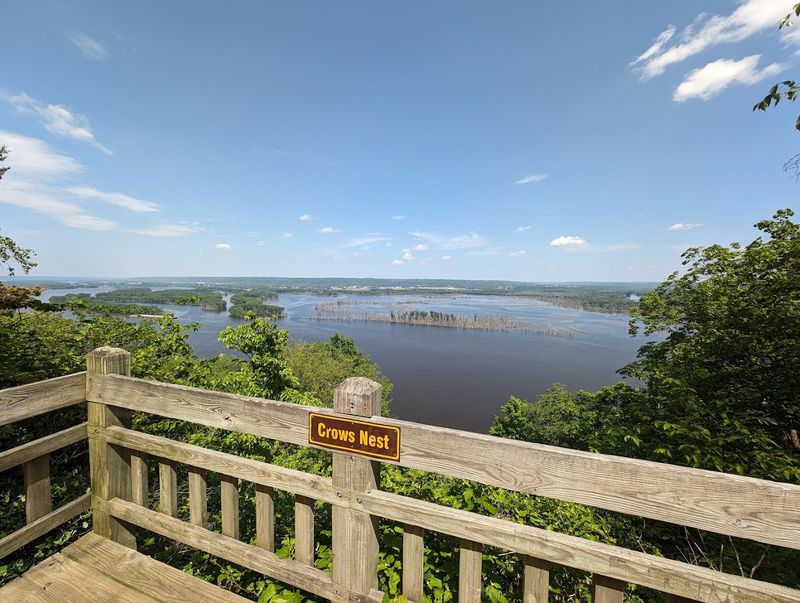
Pikes Peak State Park sits just outside McGregor, Iowa, and it offers one of the highest bluffs above the Mississippi River in the entire state, rising about 500 feet above the water below.
On a clear day, you can see the confluence of the Wisconsin and Mississippi Rivers from the overlook, a sight that explorers like Marquette and Joliet once described in their journals.
The park has a well-maintained trail system that passes through thick forest, along creek beds, and past a beautiful little waterfall called Bridal Veil Falls.
That waterfall alone is worth the detour, especially after a good rain when the flow is strong and the surrounding ferns are bright green.
Fall is arguably the best time to visit because the bluffs explode with orange, red, and gold foliage that reflects off the river below.
Picnic areas near the overlook make it easy to linger longer than planned, which is exactly what you should do.
The park is free to enter, and parking is straightforward even on busier weekends.
Pack a camera with a wide lens because no phone photo will fully capture just how big that river view really is.
3. Backbone State Park, Dundee
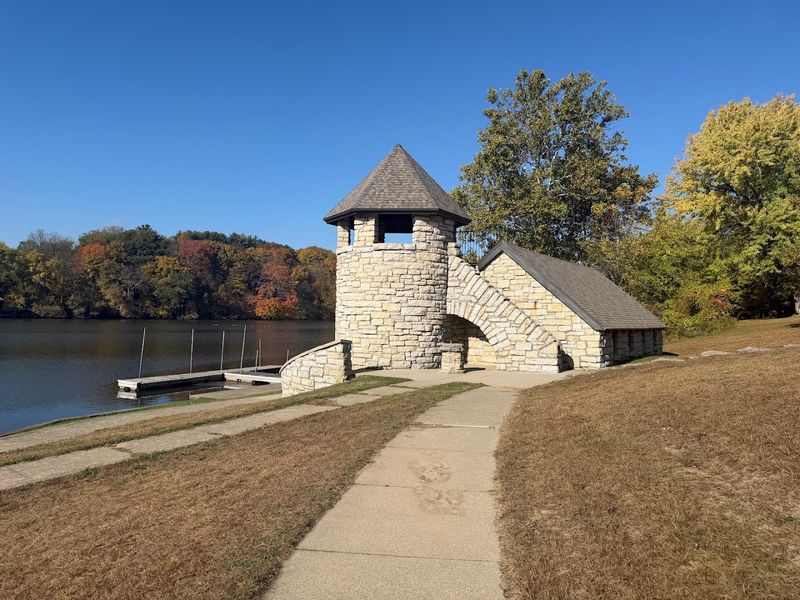
Iowa’s oldest state park has a nickname that tells you exactly what you are in for: the Backbone, a narrow limestone ridge that juts sharply above the Maquoketa River like the spine of some ancient creature.
Backbone State Park near Dundee, Iowa, has been welcoming visitors since 1920, and the landscape here feels genuinely rugged compared to the rolling farmland that surrounds it.
The park covers nearly 2,000 acres and offers a wide variety of trails ranging from easy riverside walks to challenging climbs along the rocky ridge itself.
Swimming, fishing, canoeing, kayaking, and paddle boating are all popular around Backbone Lake and the park’s clear trout stream, making this a great multi-activity stop.
The trail that crosses the actual Backbone ridge is the highlight, a narrow path with steep drop-offs on both sides that gives you a real sense of elevation without requiring any technical climbing skills.
Cabins and camping are available if you want to spend a night, and the firefly displays on summer evenings are genuinely spectacular.
Wildlife sightings here include white-tailed deer, wild turkey, and a variety of hawks that ride the thermal currents above the ridge.
Early morning visits reward you with mist rising off the river and total quiet that feels rare and precious.
Backbone rewards every season, but summer and fall are especially hard to beat.
4. Maquoketa Caves State Park, Maquoketa
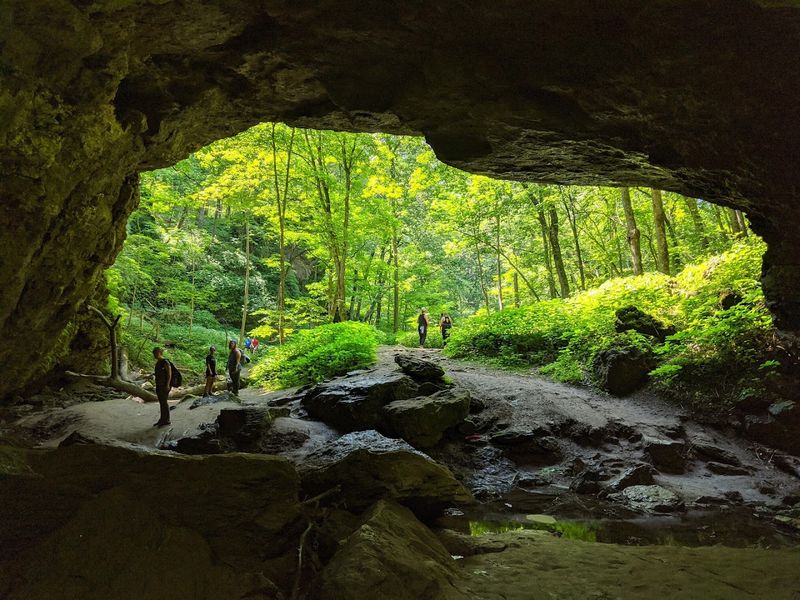
Most people do not expect to find a cave system in Iowa, which makes Maquoketa Caves State Park one of the most genuinely surprising stops on any Heartland road trip.
Located near the town of Maquoketa in eastern Iowa, this park contains the largest concentration of caves open to the public in the entire state, with 13 caves ranging from walk-through passages to tight crawlways that require getting on your hands and knees.
The most popular cave is Dancehall Cave, a massive cavern about 1,100 feet long that you can walk through without any special equipment.
Bring a flashlight for the caves beyond the lighted portions because the formations are worth a close look.
The trails above ground are equally rewarding, winding through wooded ravines and past dramatic rock formations that tower over the path.
Natural Bridge, a limestone arch formed by centuries of erosion, is one of the most photographed features in the park and a short walk from the main parking area.
Spring and summer are the best times to visit for lush greenery and active cave exploration, but fall colors against the grey limestone create a striking contrast that photographers love.
Wear clothes you do not mind getting dirty, especially if you plan to explore the smaller crawl-through caves.
The park is free to enter and fills up quickly on summer weekends, so arriving early is a smart move.
5. Mines of Spain State Recreation Area, Dubuque
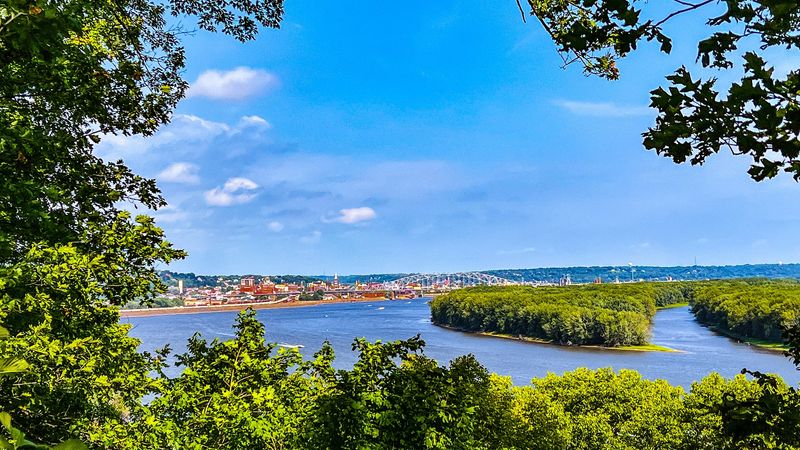
History and nature collide at this remarkable recreation area on the southern edge of Dubuque, Iowa, where ancient bluffs drop sharply toward the Mississippi River and bald eagles circle overhead on most winter mornings.
The Mines of Spain State Recreation Area takes its name from a Spanish land grant issued to Julien Dubuque in 1796, making this one of the most historically layered landscapes in the entire state.
The E.B. Lyons Interpretive Center at the entrance is a great starting point, with exhibits covering the area’s natural history, Indigenous heritage, and the lead mining operations that once defined the region.
More than 15 miles of trails wind through the property, passing through restored tallgrass prairie, dense woodland, and along dramatic limestone bluffs with river views that stretch for miles.
Birdwatchers should make this a priority stop, particularly between November and March when bald eagle populations along this stretch of the Mississippi are at their peak.
The Catfish Creek corridor is a quiet and scenic trail section that feels miles away from the city even though Dubuque is just minutes up the road.
Wildflower blooms in late spring transform the prairie sections into a sea of color that is easy to spend an hour wandering through.
Parking and trail access are free, and the recreation area is open year-round with something worth seeing in every season.
6. Wildcat Den State Park, Muscatine
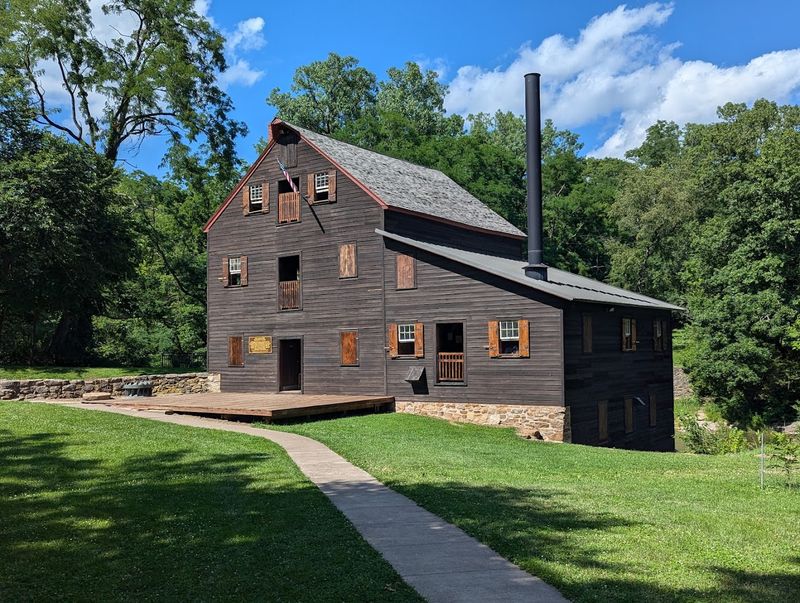
Tucked into a wooded ravine near the town of Muscatine, Wildcat Den State Park is one of those places that feels like it belongs in a storybook rather than the middle of the Midwest.
The park’s most iconic feature is the Pine Creek Grist Mill, a fully preserved 19th-century stone mill that sits beside a rushing creek and looks like it has barely changed in 150 years.
Built in 1848, the mill is one of the oldest surviving structures of its kind in Iowa, and guided tours are occasionally available during the warmer months.
The trail system here is compact but full of character, passing through sandstone canyons, over wooden footbridges, and past rock formations with names like Fat Man’s Squeeze and Steamboat Rock.
Fat Man’s Squeeze is exactly what it sounds like, a narrow passage between two towering rock walls that requires a bit of creative maneuvering to get through.
The creek running through the park is shallow enough for wading on hot summer days, making it a popular spot for families looking to cool off.
Wildflowers bloom along the canyon walls in spring, and the fall foliage here is particularly vivid thanks to the mix of oak, maple, and hickory trees throughout the park.
The park is free to enter and never feels overcrowded, which makes it a peaceful counterpoint to busier destinations on the road trip circuit.
7. Palisades-Kepler State Park, Mount Vernon
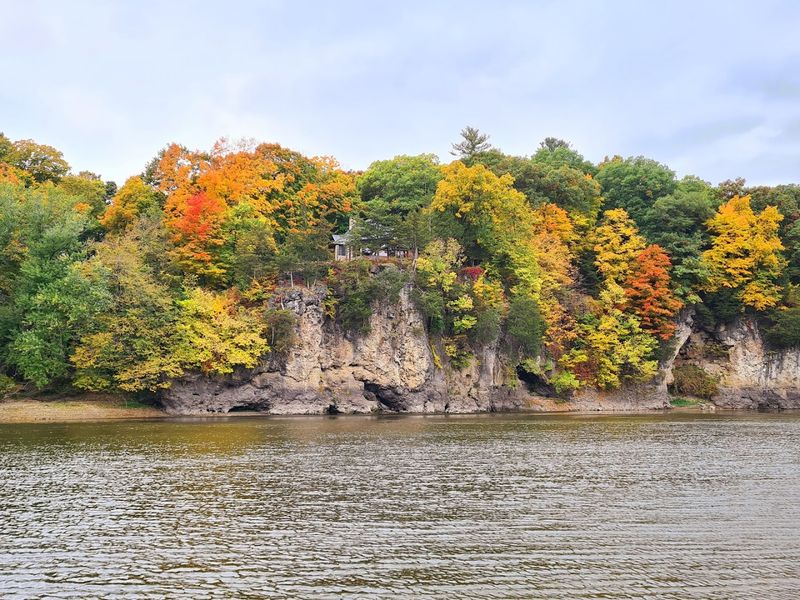
The Cedar River carves a dramatic path through central Iowa, and nowhere does it look more impressive than at Palisades-Kepler State Park near Mount Vernon.
Towering limestone palisades rise straight up from the river’s edge here, creating a landscape that looks more like something from the American Southwest than the rolling Heartland most people picture when they think of Iowa.
The park covers around 840 acres and offers trails that run both along the riverbank and up along the tops of the cliffs, giving you two completely different perspectives on the same stunning scenery.
The cliff-top trails are the real showstopper, with views down into the wooded river valley and across to the palisades on the opposite bank.
Rock climbers use some of the cliff faces here, and watching them work their way up the limestone walls adds a fun layer of activity to any visit.
Fishing is popular in the Cedar River, particularly for smallmouth bass and catfish, and the riverbank has several good access points throughout the park.
Fall is a spectacular time to visit when the forest canopy above the cliffs turns gold and red, reflecting in the river below.
Camping is available on-site, and the park fills up on summer weekends, so booking a campsite in advance is always a good idea.
Mount Vernon itself is a charming small college town worth a quick stop for coffee or lunch before or after your hike.
8. Ledges State Park, Madrid
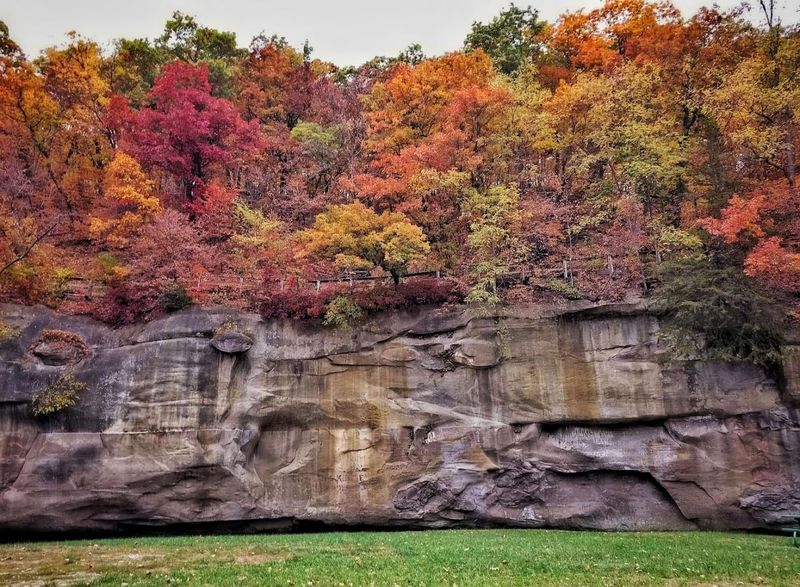
Sandstone ledges stacked like pages of an ancient book line the canyon walls at this beloved central Iowa park, creating a landscape that regular visitors return to again and again without ever getting tired of it.
Ledges State Park sits just outside Madrid, Iowa, and it has been one of the state’s most popular natural destinations since it was established in 1924.
The park’s lower canyon is the main attraction, a narrow gorge carved by Pea’s Creek where the walls rise steeply on both sides and the air stays noticeably cooler even on hot summer days.
Trails wind along the creek bed and climb up to the upper ledges, where the terrain opens into oak savanna with long views across the Des Moines River valley.
The upper ledges section offers some of the best sunset views in central Iowa, especially in late October when the oak trees are at their most colorful.
Spring flooding occasionally closes the lower canyon trails, which is something to check before you go, but the upper trails remain accessible year-round.
The park is a favorite with photographers, and it is easy to see why. Every twist in the trail reveals another composition worth stopping for.
Camping, picnicking, and fishing are all available within the park, and the Des Moines River access makes it a popular put-in spot for kayakers.
Parking fills fast on fall weekends, so a weekday visit is worth planning if your schedule allows.
9. Dolliver Memorial State Park, Lehigh
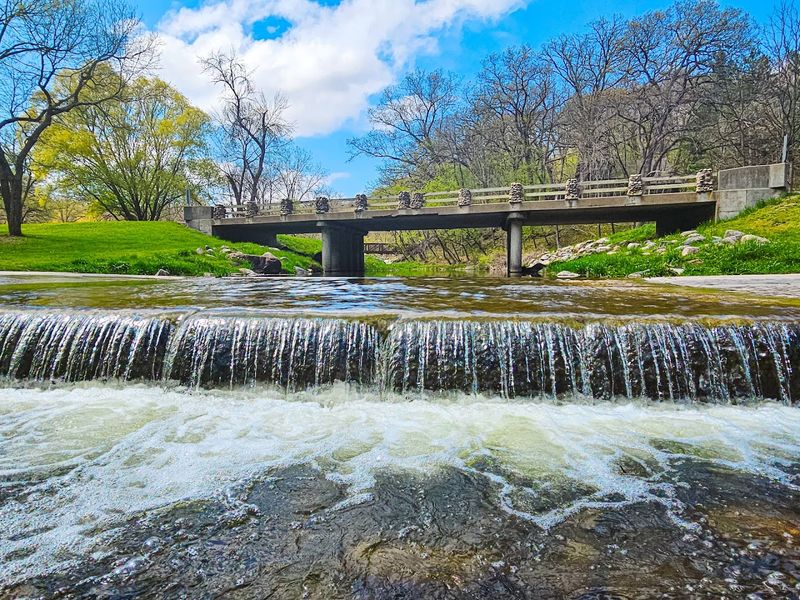
Few spots in Iowa feel as genuinely off the beaten path as Dolliver Memorial State Park, a quiet treasure tucked into the Des Moines River valley near the small town of Lehigh.
The park is named after Jonathan Dolliver, a prominent Iowa senator from the early 1900s, and it preserves a stretch of landscape that looks almost prehistoric in its drama and variety.
Towering sandstone mounds known locally as the Copperas Beds rise from the valley floor in shades of red, orange, and yellow, stained by iron-rich mineral seeps that have been coloring the rock for thousands of years.
These mineral formations are genuinely unusual and worth spending extra time examining up close because the color gradients shift depending on the light and time of day.
The park’s trail system follows the Des Moines River and climbs through wooded bluffs, passing mounds, caves, and prairie remnants that give the landscape a layered, complex character.
Bison once roamed this valley, and the park contains a small interpretive area that explains the ecological history of the region’s tallgrass prairie.
Wildflowers blanket the open areas in late spring, and the combination of prairie blooms against the colorful sandstone makes for some extraordinary photography.
The park sees far fewer visitors than many other Iowa state parks, which means you often have the trails entirely to yourself.
That kind of quiet is increasingly rare and worth driving out of your way to find.
10. Hitchcock Nature Center, Honey Creek
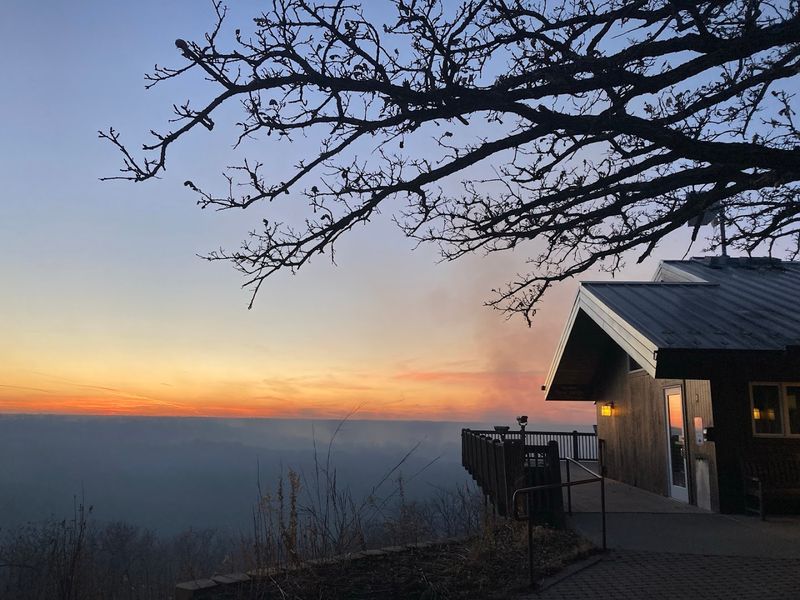
Perched in the heart of the Loess Hills, one of only two such landforms of this scale in the entire world, Hitchcock Nature Center near Honey Creek delivers views that stop most first-time visitors in their tracks.
The Loess Hills were formed by wind-deposited silt left behind after the last Ice Age, and their steep, sharp ridges look unlike anything else in the Midwest.
Hitchcock’s trail system climbs to ridge-top overlooks where the views extend across the Missouri River valley and into Nebraska on a clear day, a perspective that makes the drive here feel very worthwhile.
The observation tower near the summit is a popular spot for hawk watching in September and October, when thousands of raptors funnel through the Loess Hills corridor during their fall migration south.
Trails here range from easy loop walks to more strenuous ridge climbs, and the signage throughout the property is clear and informative.
Overnight cabins are available for rent, which makes Hitchcock a great base for exploring the broader Loess Hills National Scenic Byway that runs along western Iowa.
The nature center building itself has exhibits on the geology, ecology, and wildlife of the Loess Hills that are worth a look before you head out on the trails.
Sunrise from the ridge-top overlook is one of those experiences that is hard to put into words and even harder to forget once you have seen it.
11. Stone State Park, Sioux City
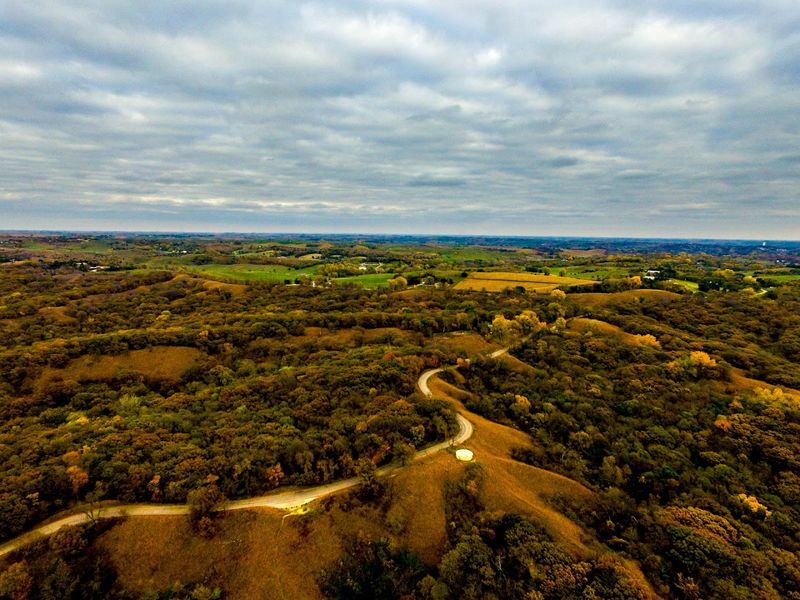
At the far northwestern corner of Iowa, where the Big Sioux River meets the Missouri, Stone State Park rises above Sioux City with ridge-top views that feel like a proper reward for making it all the way across the state.
The park covers over 1,000 acres of Loess Hills terrain, with trails that climb through oak woodland and open prairie before delivering you to overlooks with views into Nebraska and South Dakota on a clear day.
That three-state view from the ridge is genuinely hard to beat and gives the park a grand, wide-open character that feels different from the wooded parks further east in Iowa.
The Dorothy Pecaut Nature Center sits within the park and offers excellent exhibits on the natural and cultural history of the Loess Hills, including hands-on displays that work well for visitors of all ages.
The mix of prairie, woodland, and rugged Loess Hills terrain adds a layer of wildness to the experience without sending you far from Sioux City.
Mountain biking trails wind through the park’s lower sections, and the mix of terrain makes for a fun ride with plenty of scenic payoff.
Wildflower diversity here is impressive in late spring, with native prairie species like coneflowers, blazing star, and wild bergamot covering the open hillsides.
Stone State Park is the kind of finale that makes a cross-Iowa road trip feel complete, and arriving here with all those miles behind you hits differently than any other stop on the list.