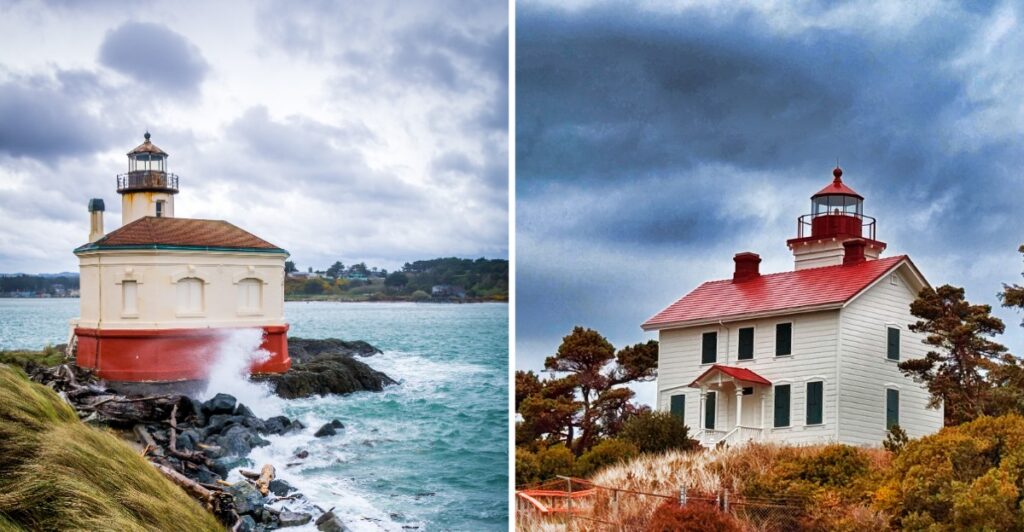
You can swear the last pullout was the final stop.
Then a lighthouse appears.
Fine. One more.
That is how this drive gets you. A white tower peeks above the trees, or a distant silhouette shows up beyond the surf, and whatever progress you were making becomes much less important.
Oregon gives these old coastal landmarks plenty of personality.
Some let you get close enough to study the details. Others keep their distance and make binoculars earn their place in the car.
The wind will probably have opinions too, so bring a layer and expect your hair to lose the argument.
Do not try to collect every tower like stamps.
Let a few surprise you.
The best lighthouse stop may be the one you had no intention of making.
1. Cape Meares Lighthouse
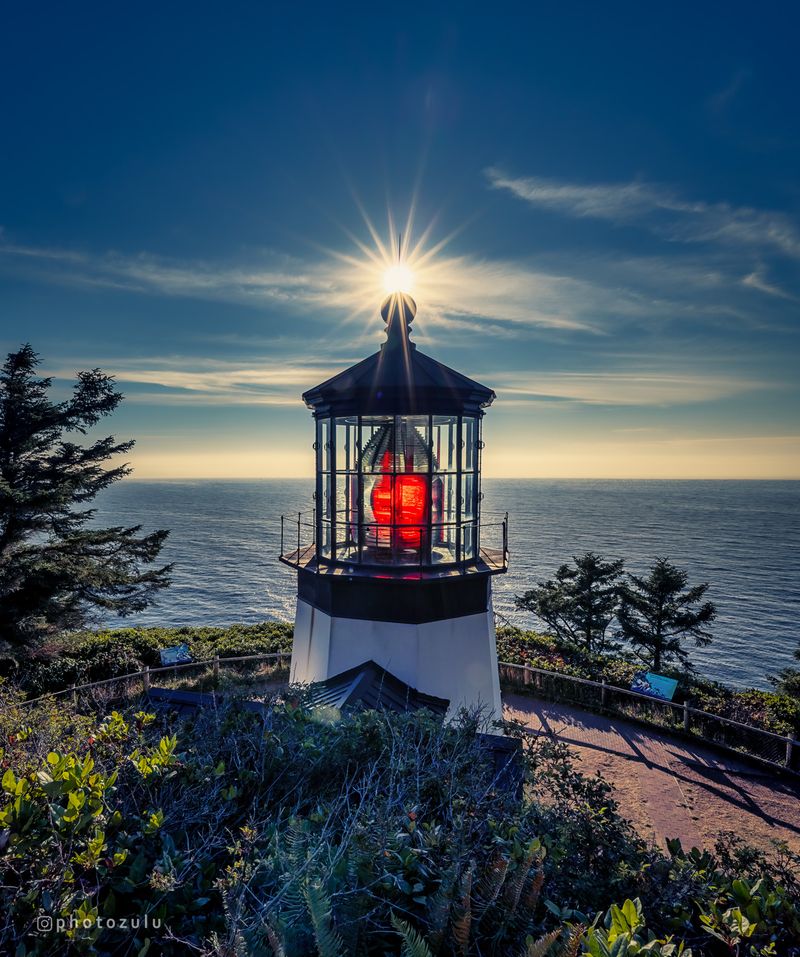
A small tower can make a very big impression. Near Tillamook, the forest opens onto a grassy headland, and the sea seems to fill every available inch of the horizon. The walk here is short enough to leave time for a second look at the cliffs.
At just 38 feet tall, Cape Meares Lighthouse is Oregon’s shortest lighthouse. Its light first shone in 1890, and the original first-order Fresnel lens remains a striking feature. The glass was made in France and sent on a long journey before finding its place above the Pacific.
From the main parking area, follow the paved path for about two-tenths of a mile to reach the lighthouse.
It is a pleasant approach, although coastal weather can make even a brief outing feel chilly. If you enjoy reading the interpretive signs, leave yourself an unhurried half hour.
The lighthouse and gift shop generally welcome visitors from Memorial Day through September, with small-group tower tours during operating hours.
Outside that season, the grounds still offer a reason to visit, even though the building is closed. A parking permit is required for day use.
Keep your eyes on the surrounding forest as well. The unusual Octopus Tree has sprawling, bent limbs, and the viewpoints offer a chance to watch seabirds around the offshore rocks.
Bring binoculars, because the smallest movement far below can turn into an interesting wildlife sighting.
You can build a relaxed Tillamook-area afternoon around this stop without making it a race. Give the lighthouse its moment, wander to another viewpoint, and save enough daylight for the drive back through the trees.
Address: Cape Meares State Scenic Viewpoint, Cape Meares, OR 97141.
2. Yaquina Bay Lighthouse
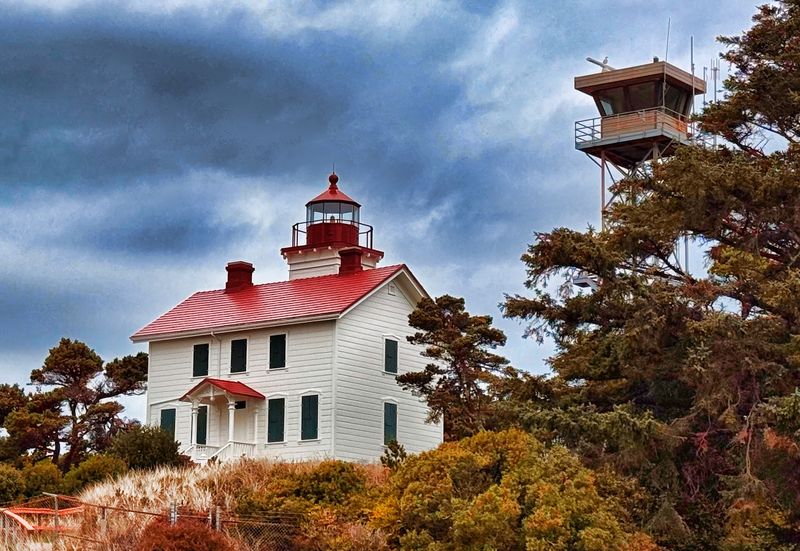
At Yaquina Bay Lighthouse, imagine making breakfast in a house where the light guiding ships is part of the same building. That unusual arrangement gives this Newport landmark a more domestic personality than the tall, separate towers farther along the coast.
The lighthouse began operating in 1871, but its original service lasted only until 1874. The opening of the lighthouse at Yaquina Head made this harbor light unnecessary. The surviving wooden building is still a striking reminder of the people who lived where they worked.
Inside, historic rooms help you picture a keeper’s daily routine: practical furnishings, narrow spaces, and stairs that were part of the job rather than an afternoon diversion.
The lantern room is not open to visitors, but two flights of stairs can lead to the watch room when the building is open.
Set within Yaquina Bay State Recreation Site, the lighthouse is close to a wooded bluff and a viewpoint overlooking the harbor.
The sweeping curve of the Yaquina Bay Bridge provides an easy visual contrast to the older structure. You might arrive for maritime history and linger for the water views.
Public interior hours are generally seasonal, March through November, Wednesday through Sunday from noon to four, with changes possible for weather or volunteer availability. If the doors are closed, the park still offers outdoor space for a short coastal stop.
If you are visiting both Newport lights, treat them as two different experiences. One emphasizes a tall working beacon and exposed headland; this one opens a window onto life inside a keeper’s home. Neither needs a complicated itinerary.
Address: Yaquina Bay State Recreation Site, Newport, OR 97365.
3. Heceta Head Lighthouse
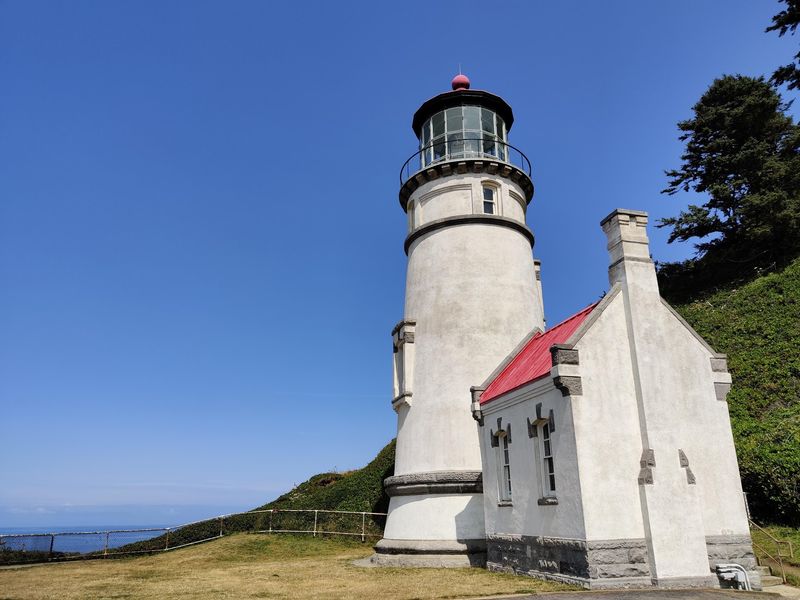
The path starts near a sheltered cove, then rises through greenery toward an ocean view that gradually widens. Take the climb at your own pace. A little wind on your face is almost part of the welcome here.
The lighthouse stands above the water north of Florence. Its light was first shown in the 1890s, and the tower’s white walls and red roof remain familiar features of this stretch of coast. The beacon is known for its powerful reach offshore.
The main approach from the day-use parking area is about a half mile uphill. It is a proper walk rather than a quick step out of the car, so comfortable shoes are a better choice than sandals. Stop where the coastline comes into view and enjoy how the beach shrinks below.
An old assistant keeper’s house stands near Heceta Head Lighthouse and now operates as lodging.
tYou do not need to be staying there to appreciate its setting from the path. The contrast between the tidy historic building and the huge Pacific makes the scene especially memorable.
Tours may be offered when staffing and conditions permit, but access to the tower is not something to assume.
The grounds and outdoor views are the dependable centerpiece. Day-use parking requires a permit, and seasonal weather can bring strong wind and rain even on a promising morning.
For a longer outing, nearby trails connect with the larger coastal trail network. For a lighter day, make the climb, take in the headland, and return to the cove. Either plan leaves plenty to talk about over a late lunch in Florence.
Address: Heceta Head Lighthouse State Scenic Viewpoint, Highway 101, Florence, OR 97439.
4. Umpqua River Lighthouse
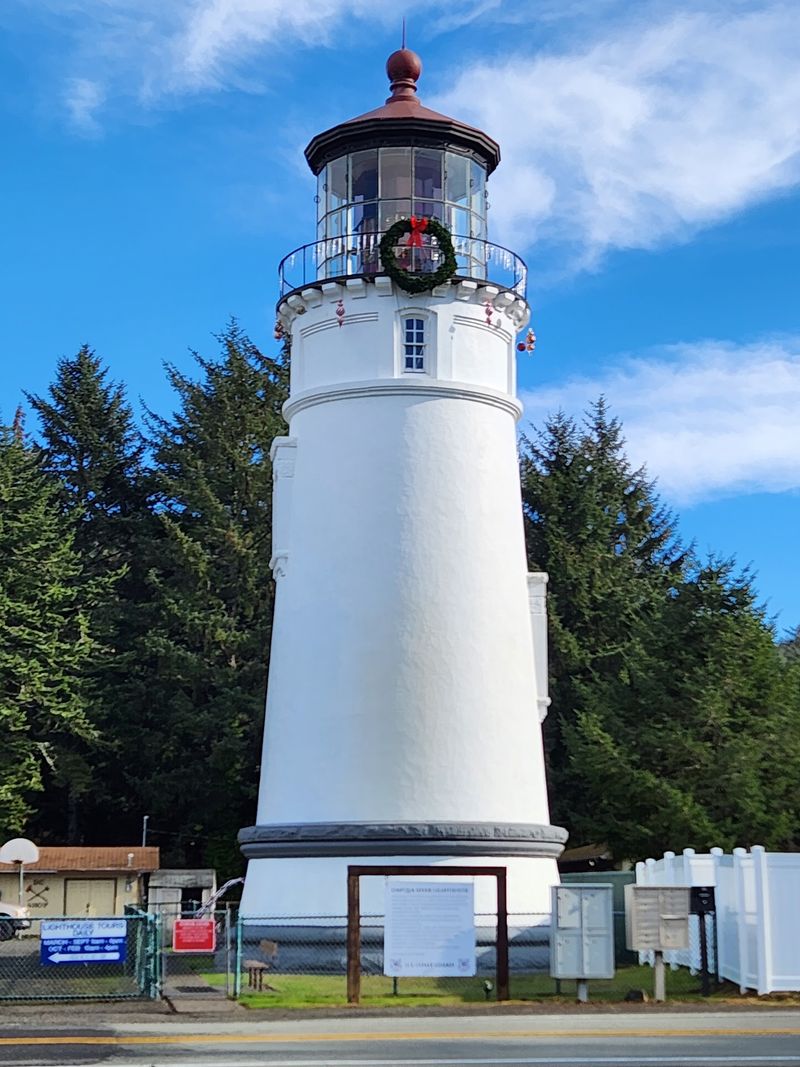
Red and white flashes set this coastal beacon apart from the more familiar plain white light. On the hill above Winchester Bay, it feels closely tied to both shipping history and the everyday rhythms of a seaside town.
The original light near the Umpqua River mouth was established in 1857, but the first structure did not survive.
The present tower dates from the nineteenth century’s closing years, standing safely back from the shoreline and using a remarkable first-order Fresnel lens.
You can see Umpqua River Lighthouse on a guided visit organized through the adjacent museum.
Its large lens, built from hundreds of precisely shaped glass pieces, is an impressive piece of engineering. If lenses and mechanisms catch your interest, this is a stop to linger over.
The museum adds the human story, from maritime rescue to the routines of lighthouse keeping.
Displays help make sense of how navigation changed as ships, equipment, and coastal communities evolved.
Rather than rushing straight to the next viewpoint, budget time for the indoor exhibits.
Tour hours vary by season, and guided visits can be arranged through the museum. Call ahead to choose a time; admission charges apply. If you are traveling with a group, arranging the visit ahead of time makes more sense than counting on immediate access.
There is more coast nearby if you want to stretch your legs afterward. Winchester Bay sits beside dune country, so a lighthouse visit can share the day with a beach walk or a look across the sand. Keep the tower as the historical anchor of the outing.
Address: 1020 Lighthouse Road, Winchester Bay, OR 97467.
5. Coquille River Lighthouse
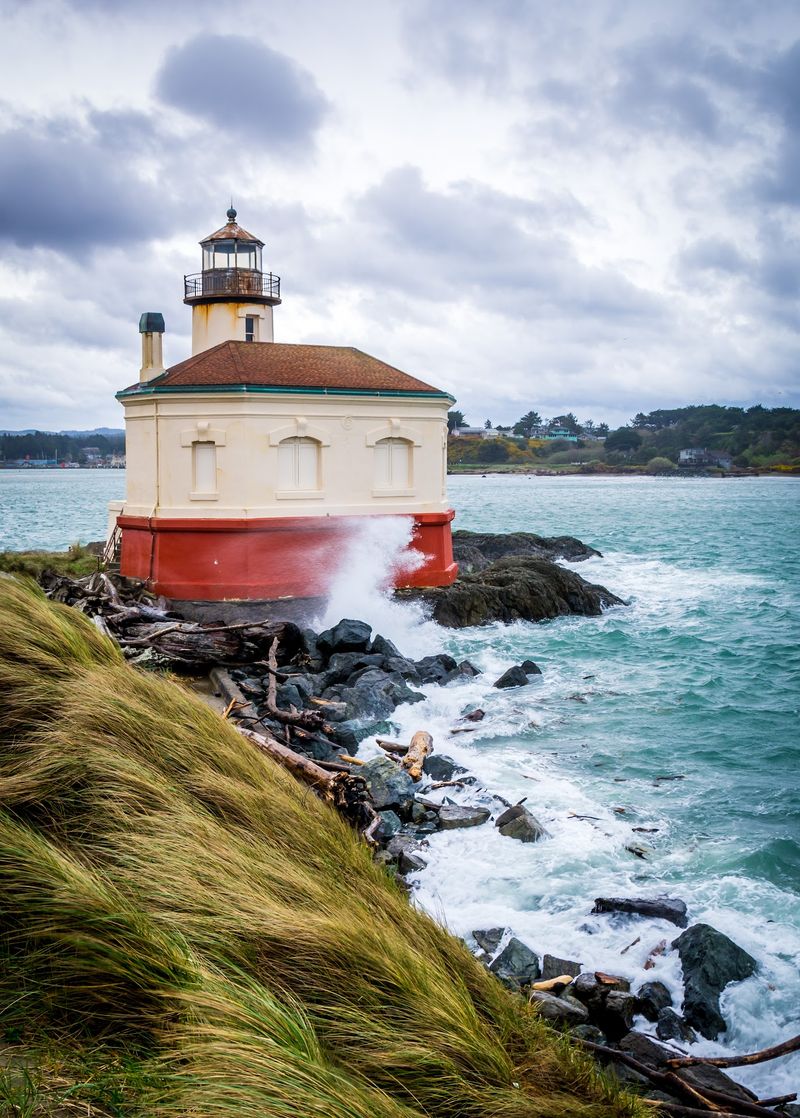
A low red-roofed tower stands where the river reaches the open Pacific, with broad stretches of sand nearby. The setting feels quieter than the headland stations, and a gentle walk is an appealing way to approach it.
The lighthouse was placed in service in 1896 to help mariners navigate the entrance to the river at Bandon. Its operating life ended in 1939 as navigation methods changed. The sturdy building has remained a defining feature of the river mouth.
To reach it, follow Bullards Beach State Park roads toward the river and jetty. The nearby sand can be tempting, but ocean conditions and currents deserve respect. For a simple visit, stay with the park’s designated routes and allow time to look out across the channel.
The signal room opens seasonally, generally from mid-May through September, with volunteer interpretation.
The tower itself is closed to visitors for safety reasons. That distinction is useful if you are imagining a climb: this visit is about the historic setting, exhibits, and views instead.
You could pair Coquille River Lighthouse with an easy park walk or a stop in Bandon across the river. The harbor town offers a different perspective on the same waterway, with working boats and shoreline scenery that make the old navigational problem easier to picture.
A day-use parking permit is required for the state park. Bring a layer that blocks the wind and save some energy for the beach. Even without a tower tour, it is a pleasant place to consider how much a river entrance matters to a coastal town.
Address: Bullards Beach State Park, end of Bullards Beach Road, Bandon, OR 97411.
6. Cape Blanco Lighthouse
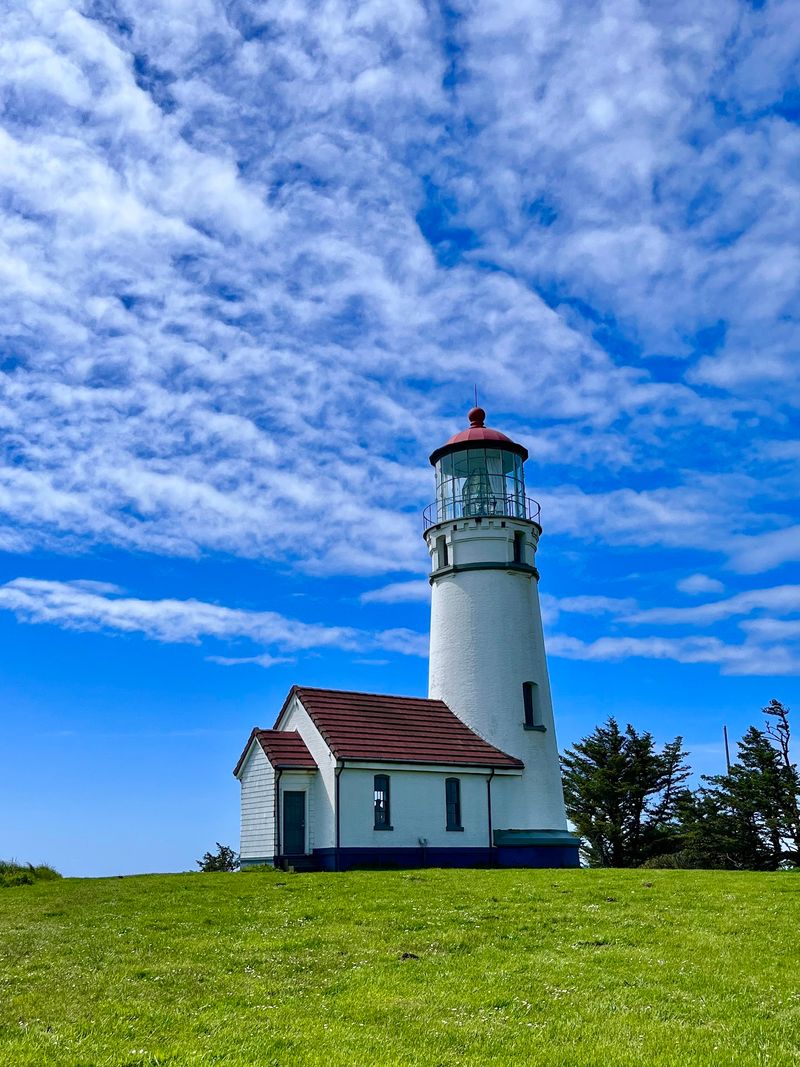
On an exposed bluff near Port Orford, you will want to keep hold of your hat. The grassy headland seems to run straight into the Pacific, and the lighthouse stands where land and weather have a lively ongoing conversation.
The lighthouse began operating in 1870. It is Oregon’s oldest standing lighthouse, positioned on the state’s westernmost point. That location gave its light an important job for ships moving along a coast that could be difficult to read in rough weather.
Cape Blanco Lighthouse is compact and bright against the hills. If a guided tour is operating, the visit brings you closer to the light and the history of those who maintained it.
Tour schedules are seasonal, so check the heritage society’s arrangements before making the drive for an interior visit.
Cape Blanco State Park offers much more than one building. Trails cross open country with broad ocean views, and the historic Hughes House tells a different story about families who lived on the cape.
A lighthouse visit and a house tour can make a well-rounded afternoon when both are available.
The weather is often the deciding factor here. Fog can soften the view, wind can make the bluff feel surprisingly chilly, and a sunny patch can disappear quickly. Pack an extra layer and give yourself permission to change plans if conditions turn rough.
For a low-key stop, admire the tower from the public grounds and enjoy the headland. For a history-focused visit, choose a day when tours are offered. Either way, the drive west from Highway 101 builds a sense of leaving the busy coast behind.
Address: Cape Blanco State Park, near Port Orford, OR 97465.
7. Tillamook Rock Lighthouse
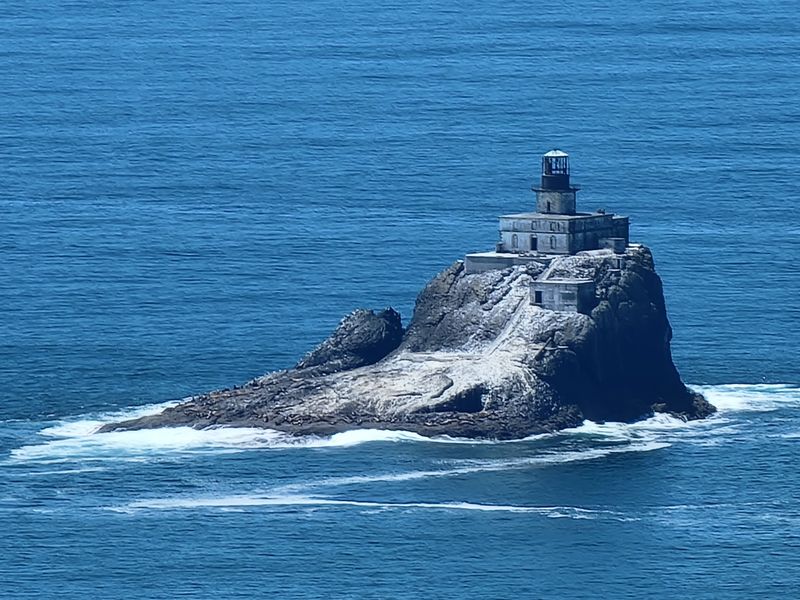
Tillamook Rock Lighthouse sits out past the edge of the mainland, where a dark rock carries a lonely square structure above the waves. The distance makes it look almost miniature, until you picture what it meant to work there through winter weather.
Nicknamed Terrible Tilly, the lighthouse began shining in 1881 and stopped operating in 1957. It sits offshore from Tillamook Head and has long been associated with difficult construction, rough seas, and the isolation of lighthouse keeping.
There is no public access to the island or building. The lighthouse is privately owned, and the surrounding rock is important to nesting seabirds. The sensible way to see it is from land, with binoculars or a camera lens that brings the distant structure closer.
Ecola State Park, near Cannon Beach, provides views toward the lighthouse when skies are clear. The Oregon Coast Trail on Tillamook Head offers other vantage points for walkers comfortable with longer routes.
Choose based on your time and the weather rather than assuming one viewpoint suits everyone.
On foggy days, the rock can slip out of sight altogether. That is a good reason to treat this as part of a wider coastal visit, not an appointment with a guaranteed view. The scenery at Ecola is interesting even when the offshore building disappears.
Keep the shore in your plans and leave the rock undisturbed. A stop at Cannon Beach afterward creates a pleasant change of scale, from one remote point at sea to a lively town full of paths and places to pause.
Address: Offshore of Tillamook Head; view from Ecola State Park, Cannon Beach, OR 97110.
8. Cape Arago Lighthouse
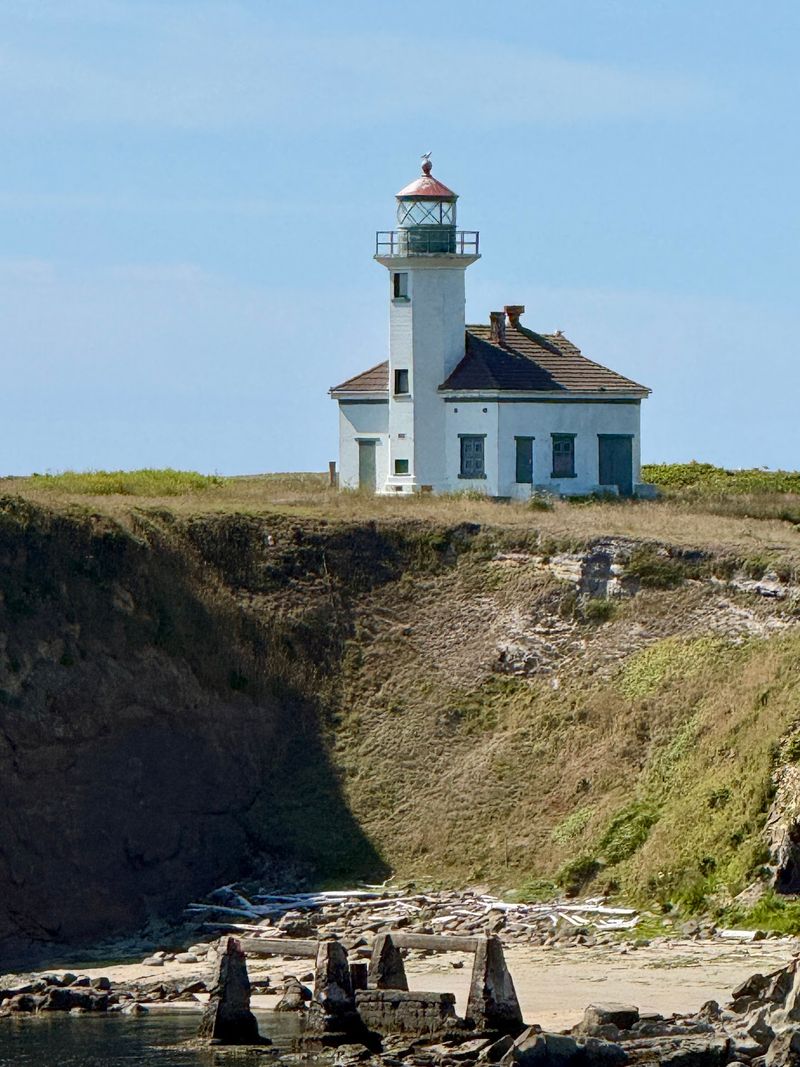
The white structure stands apart on a small island, with water between it and the mainland. You do not need to reach the tower to appreciate its shape against the rocky shoreline; a viewpoint on shore lets the setting tell much of the story.
Three different lights have occupied this site over time. The current lighthouse dates to 1934, and its navigational service ended in 2006. That history spans changes in technology and in the way vessels travel along the southern Oregon coast.
The island and lighthouse were transferred in 2013 to the Confederated Tribes of the Coos, Lower Umpqua, and Siuslaw Indians.
The place carries cultural significance beyond its maritime past. The bridge that once provided access has been removed, and the lighthouse is not open to the public.
Plan to view Cape Arago Lighthouse from public roadside vantage points in the Charleston area rather than trying to approach the island. Shoreline perspectives can vary with vegetation and visibility, so a clear day and a little patience help.
Please respect access boundaries and posted signs.
Nearby Sunset Bay offers a gentler coastal scene, sheltered by headlands. Shore Acres State Park adds gardens and dramatic ocean overlooks, an appealing pairing if your group has different interests.
One person can enjoy the landscaping while another spends longer watching waves.
Cape Arago is a reminder that a lighthouse can be an interesting visit even without a tour or stair climb. Look from shore, consider the changing history of the island, and let the surrounding parks fill out the afternoon.
Address: Chiefs Island offshore of Charleston; view from the Cape Arago Highway area, Charleston, OR 97420.