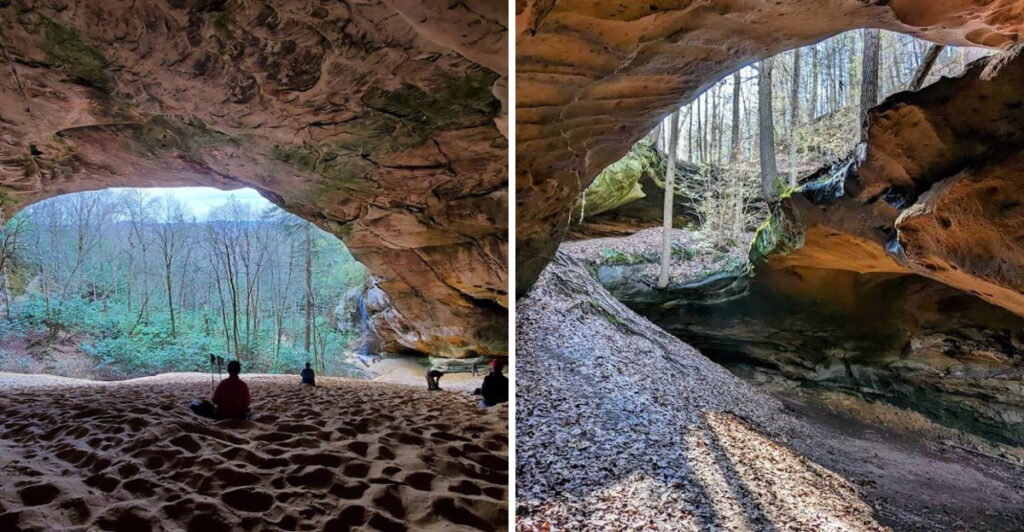
Kentucky keeps its wildest secrets underground, and most people have absolutely no idea. Caves you can hike straight into, sinkholes that drop away without warning, stone arches carved by forces that predate human memory by millions of years.
The scenery moves fast and hits differently than anything you would expect from a standard forest trail. Seven stunning hikes spread across Kentucky are ready to prove exactly that.
Subterranean rivers vanish beneath your feet.
Sandy cave floors stretch wide enough to feel genuinely surreal. Natural bridges rise overhead in formations that stop you completely mid-step.
Beautiful doesn’t quite cover what’s waiting out here. These are trails that rewire the way you see the natural world, and every single one is worth chasing down.
1. Three Bridges Trail, Carter Caves State Resort Park
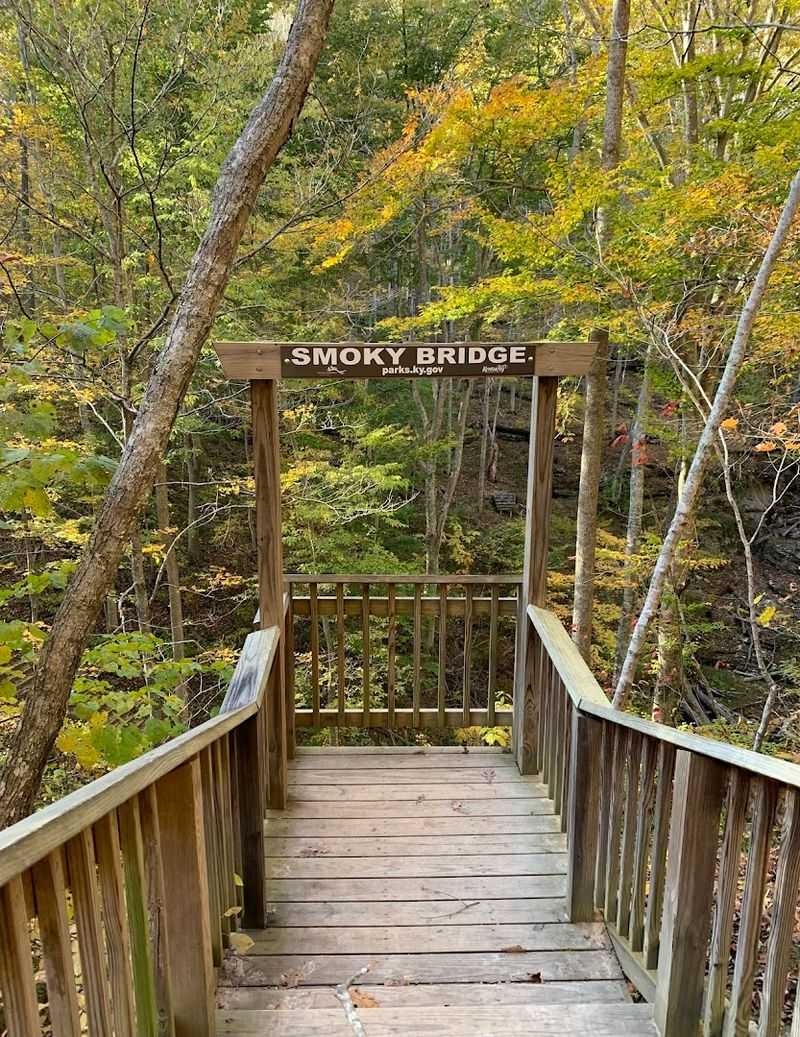
Three natural stone bridges in a single hike sounds like a geological jackpot, and the Three Bridges Trail at Carter Caves State Resort Park absolutely delivers on that promise.
Located at 344 Caveland Dr, Olive Hill, Kentucky, this park is one of the most geologically rich places in the entire state.
The 3.3-mile trail connects three remarkable natural bridges: Smoky Bridge, Raven Bridge, and Fern Bridge. Each one has its own character, shape, and surrounding scenery, so the experience stays fresh from start to finish.
Babbling brooks wind through sections of the trail, adding a peaceful soundtrack to the walk.
Carter Caves State Resort Park is not just about bridges, though.
The park also features canyons, arches, sinkholes, and dramatic cliffs that appear along various trails throughout the property. The caverns within the park are accessible through guided tours, adding an underground dimension to an already impressive destination.
Wildflowers are a seasonal highlight here. Spring brings a colorful burst of blooms along the forest floor, while fall transforms the canopy into a patchwork of red, orange, and gold.
The trail is considered accessible for most hikers, though some sections require attention on uneven terrain.
The park offers camping, lodging, and additional recreational activities, making it a solid base for a multi-day Kentucky adventure. Families, solo hikers, and photography enthusiasts all find something worth stopping for on this trail.
What makes this hike stand out is its variety. Few trails in Kentucky pack this many dramatic geological features into just over three miles, making every step feel like a discovery worth remembering.
2. Lost River Cave Trails, Bowling Green
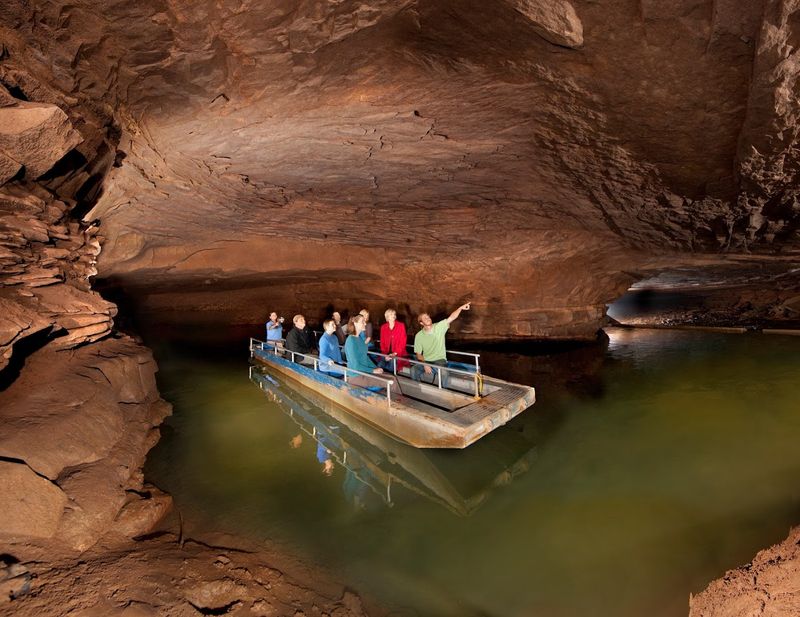
An underground river that once hosted a nightclub sounds like something out of a quirky novel, but Lost River Cave in Bowling Green, Kentucky makes it completely real.
The cave system stretches roughly seven miles underground, and tucked inside its massive cavern is the Blue Hole, a natural pool of water so deep and so vividly colored it borders on unbelievable.
The Blue Hole plunges to remarkable depths that remain difficult to fully measure, and connects to a separate underground river system below.
Its brilliant blue-green color comes from the clarity of the water and the way light interacts with the limestone walls surrounding it. Guided walking tours bring visitors close enough to appreciate its scale without any special equipment.
For those who want a more immersive experience, boat tours travel inside the cave along the Lost River itself. The tours move through a large cavern, passing geological formations and remnants of a mid-20th century entertainment venue, including original staircases and chandeliers that somehow survived decades underground.
It is an eerie and fascinating combination of natural and human history.
Lost River Cave is located at 2818 Nashville Rd, Bowling Green, Kentucky, and the trails on the property are accessible and well-maintained. The outdoor trail network winds through native plant gardens and along the river before leading to the cave entrance.
This destination works well for visitors of various ages and fitness levels.
The terrain is relatively flat, and the guided format ensures everyone gets context for what they are seeing. Few places in Kentucky blend ecological significance with such an unusual backstory quite this effectively.
3. Historic Entrance Trail, Mammoth Cave National Park
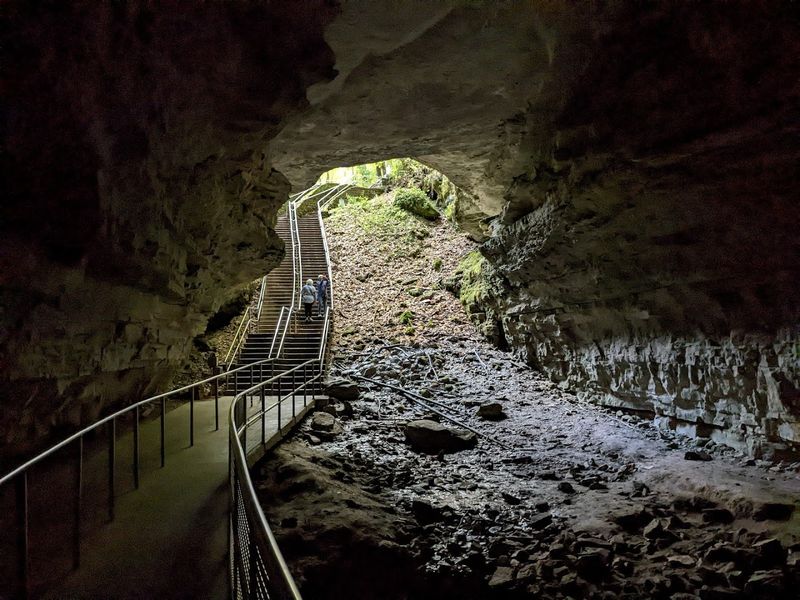
Mammoth Cave has been open for a very long time, longer than recorded history in North America.
Evidence shows that prehistoric people used this entrance for shelter and to gather resources thousands of years before European settlers arrived. Walking down into the Historic Entrance is stepping into one of the oldest continuously used spaces on the continent.
The Historic Entrance Trail at Mammoth Cave National Park gives visitors free access to the cave’s opening, extending roughly 300 feet into the passage.
About 65 stairs lead down into the cave, so comfortable footwear matters more than most people expect. The temperature inside drops noticeably, making a light jacket a practical addition to any visit.
The cave entrance itself is dramatic in a quiet, understated way.
The ceiling rises high overhead, and the walls close in gradually as the path moves deeper. Natural light fades slowly, and the transition from forest to cave feels genuinely theatrical without any artificial enhancement.
Mammoth Cave National Park is a UNESCO World Heritage Site and home to the world’s longest known cave system, stretching well over 400 miles of explored passages.
The Historic Entrance is just one small piece of that enormous underground network, but it provides a powerful sense of the scale below.
The trail above ground leading to the entrance winds through a mature forest with interesting topography shaped by the karst geology underneath.
Sinkholes, depressions, and unusual ground formations appear frequently along the surface, hinting at the hollow world just below.
This is one of those rare places in Kentucky where history, geology, and nature combine in a way that leaves visitors genuinely quiet for a moment, just absorbing what they are standing inside.
4. Sand Cave, Cumberland Gap National Historical Park
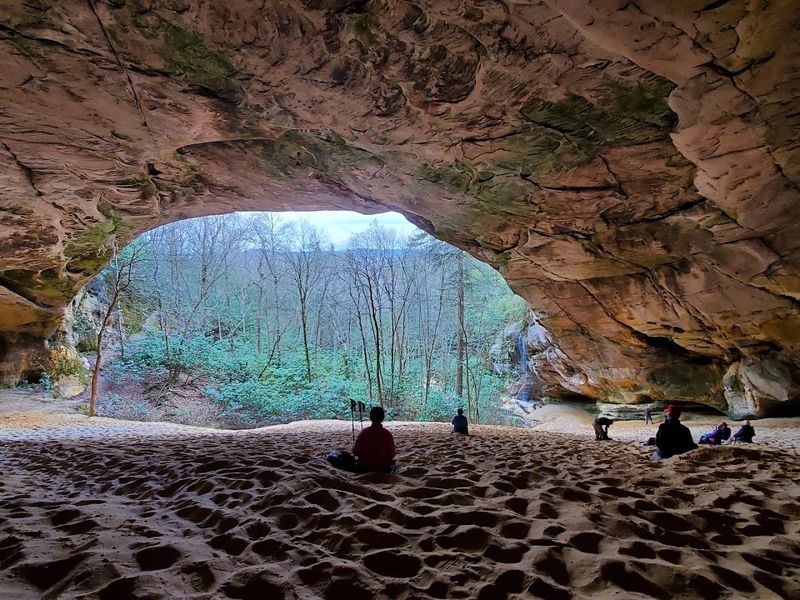
Wind carved this one, and that fact alone makes Sand Cave unlike almost anything else a hiker will encounter in Kentucky.
Most caves form through water dissolving limestone over thousands of years, but Sand Cave at Cumberland Gap National Historical Park was shaped primarily by wind erosion, giving it a dramatically different look and feel.
The cave stretches roughly 250 feet wide and contains an entire acre of fine, beach-like sand covering its floor. Standing inside feels genuinely surreal, like stumbling onto a sandy beach that somehow ended up inside a mountain.
The scale of the opening is impressive enough that natural light floods much of the interior.
Cumberland Gap National Historical Park spans portions of Kentucky, Virginia, and Tennessee, making it one of the more unique multi-state parks in the eastern United States.
Hikers can reach Sand Cave via the Ewing Trail and Ridge Trail, which wind through the Appalachian landscape before delivering this unexpected reward.
The surrounding forest adds context to the journey. Hardwood trees, mountain ridges, and long-distance views make the approach to Sand Cave as enjoyable as the destination itself.
The trails connecting to Sand Cave also pass through historically significant terrain that shaped early
American westward movement.
Visiting during cooler months can be especially pleasant. The cave provides natural shelter from wind and chill, and trail traffic tends to be lighter in fall and winter.
Sturdy footwear is recommended since the Ridge Trail involves some elevation gain and rocky sections.
Sand Cave rewards curiosity. Hikers who take the time to seek it out find a geological oddity that sparks genuine wonder, the kind that makes you want to explain it to everyone back home.
5. Cedar Sink Trail, Mammoth Cave National Park
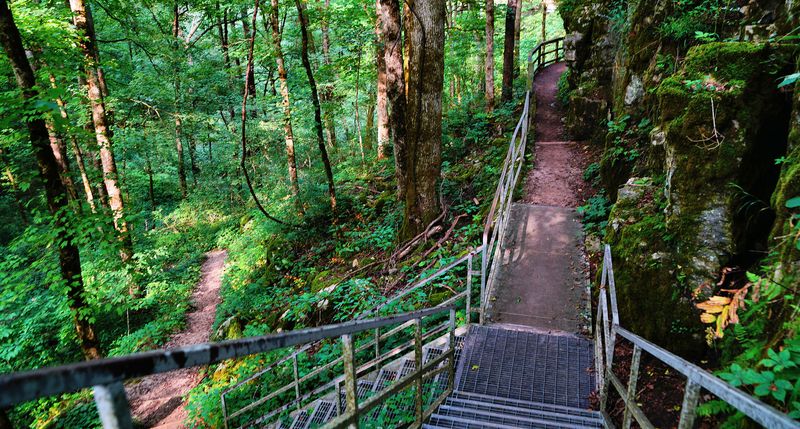
Picture hiking through a quiet cedar forest, then suddenly the ground drops away and you are staring into a massive, bowl-shaped hole in the earth.
That is exactly what the Cedar Sink Trail delivers at Mammoth Cave National Park, located at 1 Mammoth Cave Pkwy, Mammoth Cave, Kentucky.
The sinkhole at the heart of this trail covers roughly seven acres, making it one of the largest karst windows in the region.
A karst window is a rare geological feature where a subterranean river actually breaks through the surface, flows briefly above ground, and then disappears back underground.
Hikers descend into the sinkhole to witness this phenomenon up close, with the trail dropping notably in elevation as it approaches the karst window.
The trail itself is a moderate 1.9-mile lollipop loop. It is not a casual stroll, as steep elevation changes and numerous stairs keep things interesting throughout.
Trekking poles are a smart choice here, especially after rain when surfaces get slippery.
Spring is a particularly rewarding time to visit. Wildflowers bloom along the path, and the underground river runs fuller and faster after winter snowmelt.
The cedar forest canopy provides shade during warmer months, making summer hikes more comfortable than expected.
Wildlife sightings are common along this trail. White-tailed deer, wild turkeys, and various songbirds move through the area regularly.
The sinkhole itself creates a microclimate at its base, supporting plant species that would not typically survive at the surface elevation.
This trail offers something genuinely rare in outdoor recreation: a visible connection between the world above ground and the vast cave system below. It is a short hike with a payoff that feels much bigger than its mileage suggests.
6. Yahoo Arch Trail, Daniel Boone National Forest
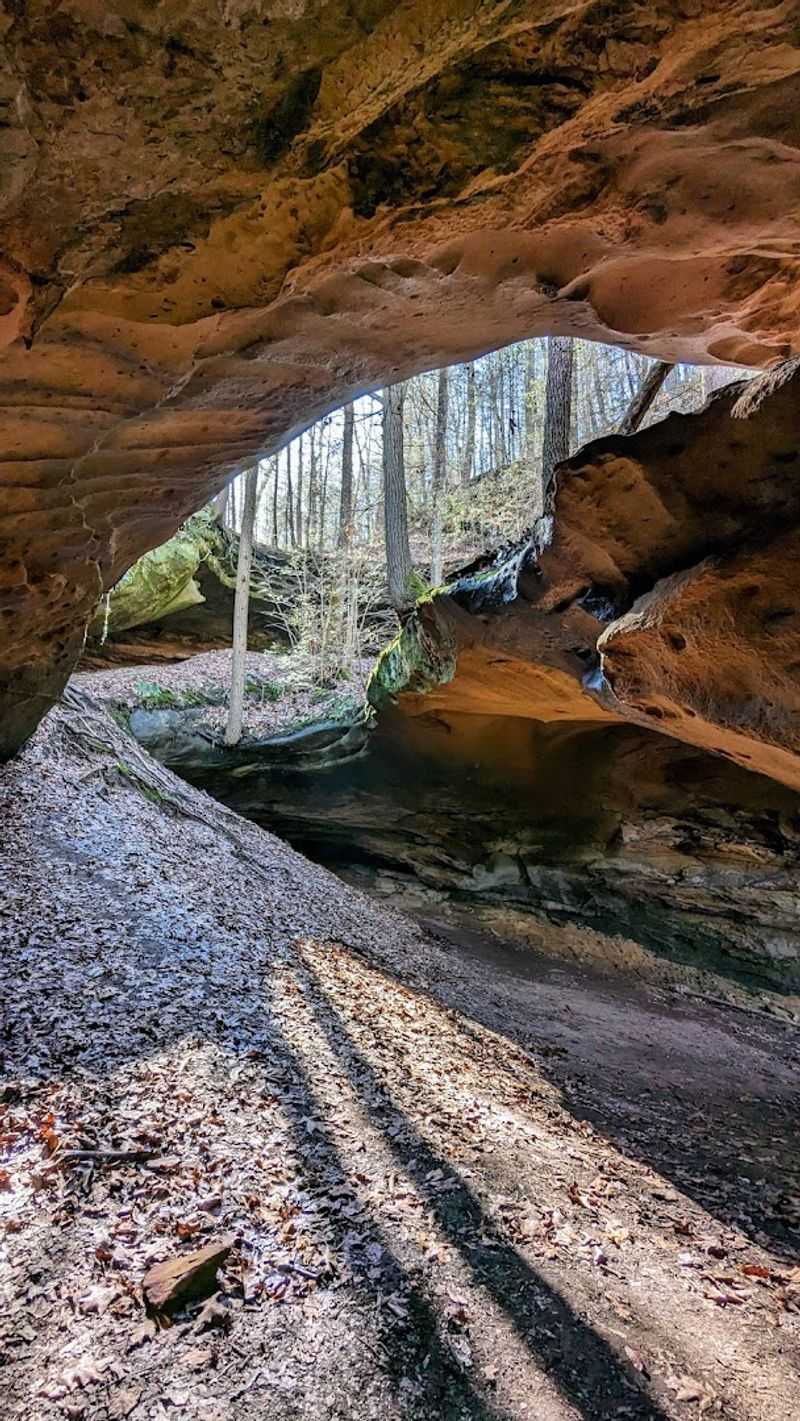
The name alone demands attention.
Yahoo Arch sits inside Daniel Boone National Forest in Kentucky and rewards hikers with one of the most striking natural stone arches in the region, measuring 17 feet high and 70 feet wide. It is the kind of geological feature that makes you stop mid-step and just stare.
The trail leading to Yahoo Arch passes through classic eastern Kentucky forest terrain. Hardwood trees form a dense canopy overhead, and the path moves through sandstone landscapes that feel progressively more dramatic the closer you get to the arch.
Rock formations, waterfalls, and layered cliff faces appear along the route, keeping the scenery interesting throughout.
A smaller secondary arch is also visible near the main formation, giving hikers two natural wonders for the effort of one trail. The juxtaposition of the two arches, one massive and commanding, the other quietly tucked nearby, makes for a compelling stop.
At the far end of the trail, hikers connect with the Sheltowee Trace National Recreation Trail, which runs for hundreds of miles through the Daniel Boone National Forest.
This connection makes Yahoo Arch a logical starting point for longer backcountry adventures for those with more time and energy.
The best conditions for this hike come in late spring or early fall. Wildflowers and rushing water make spring visits especially vivid, while cooler fall temperatures and changing foliage add a different kind of drama to the same landscape.
Yahoo Arch is the kind of place that reminds hikers why Kentucky’s forests deserve far more credit than they typically receive. The arch stands as proof that this state keeps extraordinary things in unexpected corners.
7. Box Canyon Trail, Carter Caves State Resort Park
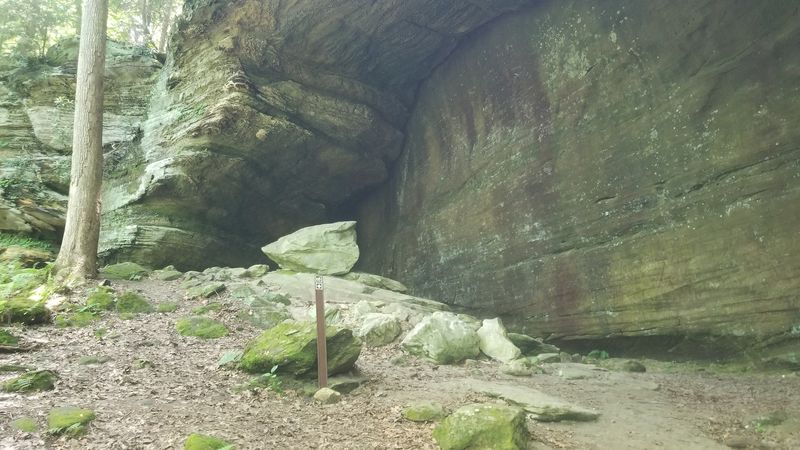
Short trails can still hit hard. The Box Canyon Trail at Carter Caves State Resort Park covers just 0.8 miles, but packs in enough geological drama to rival hikes twice its length.
The trailhead starts at the Cascade Cave parking lot, and things get interesting almost immediately.
The trail showcases three distinct natural features within its compact loop.
The Cascade Natural Bridge spans overhead with quiet authority, the Box Canyon squeezes hikers between towering rock walls, and the Wind Tunnel adds a sensory twist with its channeled airflow. Each feature has its own personality, and the trail moves between them efficiently.
Scrambling over rocks is part of the experience here.
The trail is rated moderate, but the hilly terrain and uneven surfaces require more physical engagement than a standard walking path. Solid footwear with ankle support makes a real difference, especially in sections where the canyon narrows and the ground becomes irregular.
Carter Caves State Resort Park, located at 344 Caveland Dr, Olive Hill, Kentucky, manages to pack an extraordinary amount of geological variety into a relatively small area.
The Box Canyon Trail is one of the shorter options in the park, but it showcases some of the most concentrated and dramatic scenery available.
The canyon walls themselves are worth close inspection. Layers of sandstone and shale reveal millions of years of geological history in visible, tangible form.
Moss, ferns, and moisture-loving plants cling to the rock faces, adding color and texture to the stone.
For hikers who want maximum impact with minimum mileage, this trail delivers exactly that. It is proof that in Kentucky, remarkable things often come in surprisingly small packages.