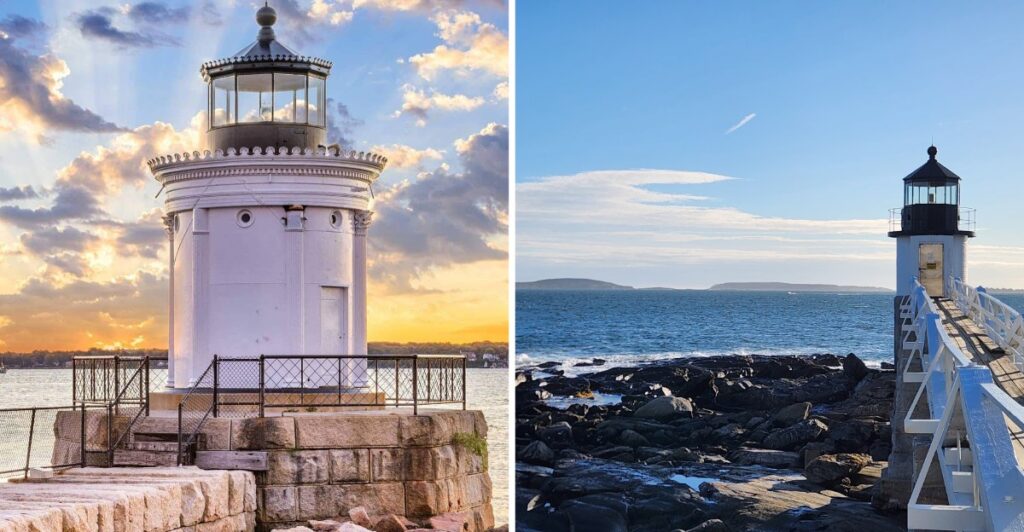
If the road ends at the ocean, do not turn around yet.
That may be exactly where the good part starts.
A lighthouse can appear beyond a rocky point, or at the end of a breakwater that suddenly makes your comfortable shoes feel like a very smart decision.
Maine keeps these stops wonderfully different.
At one, you might wander across a lawn and watch boats move through the harbor. At another, the tower stays farther away and lets the coastline do most of the talking.
You may find a little history nearby too, but there is no need to turn the day into a lesson or a race.
Bring a layer. Expect the wind to participate.
And if the next lighthouse requires walking all the way to the end of the rocks?
Well, you drove this far.
1. Portland Head Light
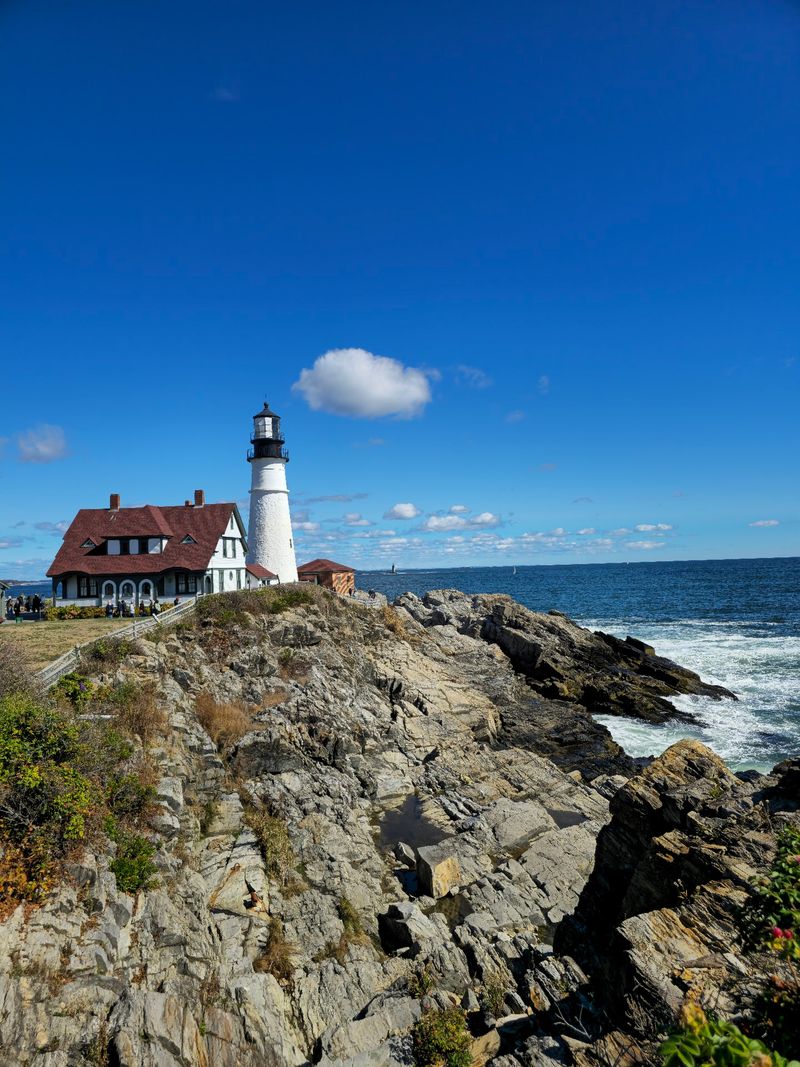
The first glimpse comes around a curve in Fort Williams Park: white masonry above dark rock, a keeper’s house beside it, and the Atlantic stretching past the headland.
It is the sort of view that makes you forget why you were reaching for your phone.
Give yourself a few minutes at the overlook before exploring the paths; the changing angle of the shoreline makes even a short walk feel like a different scene.
Portland Head Light first shone in 1791, making it Maine’s oldest lighthouse. Ships still pass the point on their way to and from Portland Harbor, so the historic beacon has a working waterfront for company.
The surrounding park also preserves old military structures, including remnants of Fort Williams, which add an entirely different chapter to an afternoon by the water.
If your group likes a little history with its sea air, head for the former keeper’s quarters. The seasonal museum contains displays about the light and the people who tended it.
A museum visit is separate from climbing the lighthouse tower; general tower entry is not part of an ordinary visit.
That leaves the grounds, shoreline views, and museum as the main attractions on most days.
You can keep the visit simple with a loop through the lawns and waterfront paths, or linger over a picnic before driving farther along the coast.
The park is spacious, but the best-known overlooks draw plenty of cameras, particularly on fair-weather weekends.
A morning stop offers more room to wander at your own pace, while an extra layer is useful whenever the sea breeze picks up.
Look for changing textures as you walk: smooth painted walls, rough granite, low coastal plants and the moving water beyond. It is an easy place to introduce younger travelers to lighthouse history without making the afternoon feel like a lesson.
Address: 1000 Shore Road, Cape Elizabeth, ME 04107.
2. Pemaquid Point Lighthouse
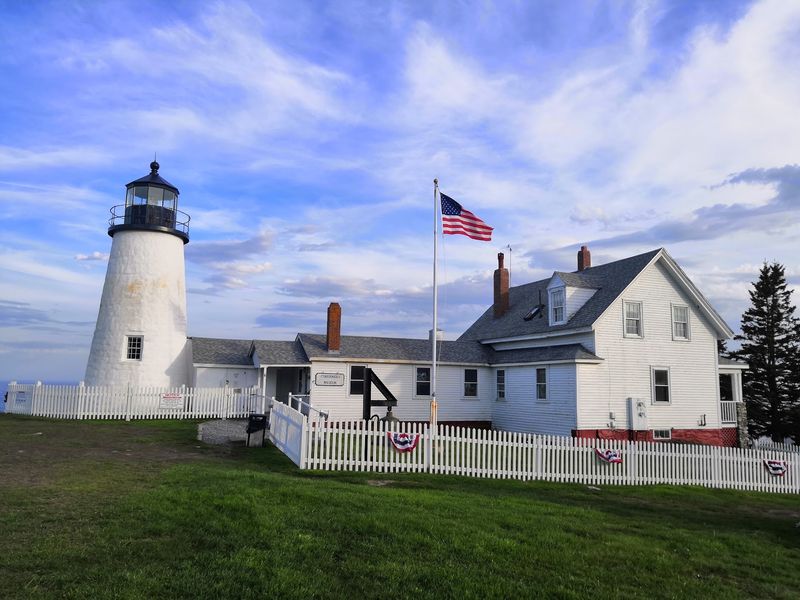
The landscape here has its own stripes. Broad bands of pale granite sweep toward the surf, giving you as much to study underfoot as you have above the shoreline.
There is no need to scramble toward the water to enjoy them: the rock patterns are visible from safe, dry areas, and the combination of stone and ocean changes with every passing cloud.
The lighthouse at Pemaquid Point has watched this stretch of midcoast Maine since the nineteenth century.
The present tower dates to 1835, and its familiar profile also appears on the Maine state quarter.
It is a pleasant little detail to remember when you stop to take a picture: this is one coastal scene that has traveled far beyond its own headland.
Pemaquid Point Lighthouse Park brings several experiences together in a compact area. The Fishermen’s Museum, art displays, and learning spaces let you alternate outdoor views with a few indoor stops during the operating season.
Tower climbing is offered seasonally when volunteers and weather allow, with a height requirement for participants.
Anyone skipping the climb still has plenty to see outside.
Make your first decision before leaving the parking area: a long look at the rocks, or a visit to the museum while it is open? Either works. Families can keep things flexible here, since short stretches of walking link the main sights.
The rocks themselves deserve extra care, though. Wet surfaces and unexpected waves make the edge unsafe, even when the ocean looks surprisingly calm.
If the weather turns breezy, the keeper’s-house exhibits offer a welcome change of pace. On a clear afternoon, stay outdoors and notice how the tower stands against the low horizon rather than a steep cliff.
Address: 3115 Bristol Road, New Harbor, ME 04554.
3. Bass Harbor Head Light Station
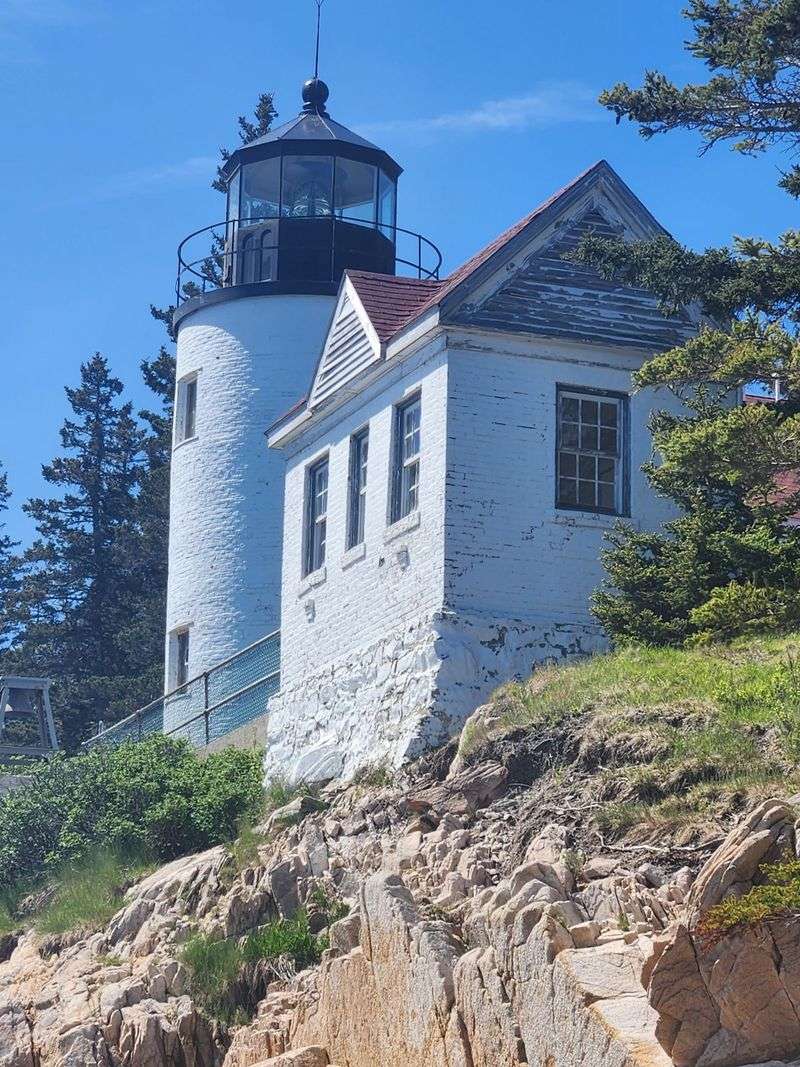
Acadia has its celebrated mountain lookouts, but its quieter southwest corner offers a different kind of coastline.
At Bass Harbor Head Light Station, the coastline shifts from sheltered woods to open Atlantic views.
Spruce trees crowd the headland, pinkish granite edges the water and fishing-boat country is close by.
The appeal here is not a long hike. It is the quick change from a wooded approach to a dramatic view of a working navigational light.
Two viewpoints create two different visits. One accessible packed-gravel overlook provides a direct view of the lighthouse and coast.
A separate route toward the cliff viewpoint involves a gravel path, wooden stairs and broad stone steps, so choose with your footing and companions in mind.
The rocky shoreline below is not a place for casual scrambling.
The light station was authorized in 1858 and remains an active aid to navigation. The National Park Service now owns the historic station, while the Coast Guard maintains the light itself. Its buildings are not open as a walk-through attraction.
This is primarily an outdoor stop, where the scenery and the shifting coastal light do the storytelling.
Arriving late in the day can produce striking colors, although sunset also concentrates visitors at a site with limited parking.
If you would rather avoid planning around a crowded golden-hour moment, go earlier and give yourself space to appreciate the headland.
An Acadia National Park pass is needed to park, and the entrance road is unsuitable for buses, trailers or RVs.
Keep the visit comfortable by carrying an extra layer and allowing a little flexibility for the parking area.
A short stop can fit into a day exploring Mount Desert Island’s western villages. If someone in your group prefers level ground, you do not need to force the stair route to enjoy the place.
Address: 116 Lighthouse Road, Bass Harbor, ME 04653.
4. Marshall Point Lighthouse
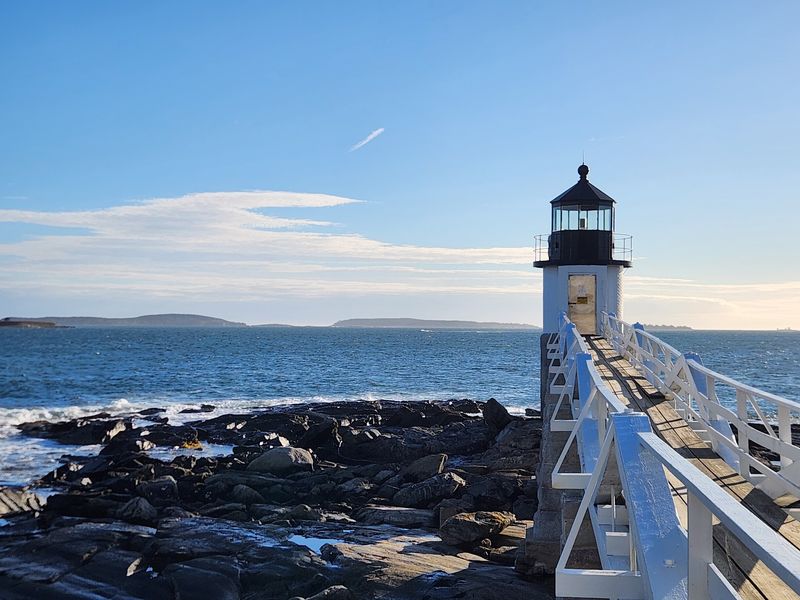
A narrow white tower connected to land by a wooden footbridge makes an especially satisfying photograph, but the shoreline has more than one story to tell.
Around Port Clyde, working boats, granite, and sheltered coves share the frame. Settle onto the grounds for a moment, and you may hear a harbor rhythm that feels quite different from a busy resort beach.
The first beacon here was established in 1832, and the current tower followed in 1857. Movie lovers may recognize the light from a scene in Forrest Gump, though you do not have to know the film to enjoy the walk along the grounds.
The distinctive footbridge is part of the scene, and it is easy to see why generations of travelers pause here.
The lighthouse has a seasonal museum and gift shop in the former keeper’s house.
Exhibits cover local seafaring, quarrying, and community life, so you can connect the tower with the people and industries around it.
The grounds are generally accessible from sunrise to sunset, while indoor spaces follow a more limited seasonal schedule.
Special tower access may be offered at certain times; do not make a climb the centerpiece of your plan.
At Marshall Point Lighthouse, one pleasant way to visit is to walk the grounds first, taking in the view of the tower against the bay, and visit the museum afterward if it is open.
The wooden walkway and the boats offshore give the scene a working-harbor feel. You can also spend a few minutes by the fishermen’s memorial and along the short nature trail.
There is plenty to occupy a relaxed stop without turning it into a long expedition.
The final approach includes a narrow, winding section of road, so take your time rather than rushing toward the water. Once you arrive, let the landscape set the pace. On a clear day, look across the harbor for boat traffic; in cooler weather, keep a jacket handy.
Address: 178 Marshall Point Road, Port Clyde, ME 04855.
5. Owls Head Lighthouse
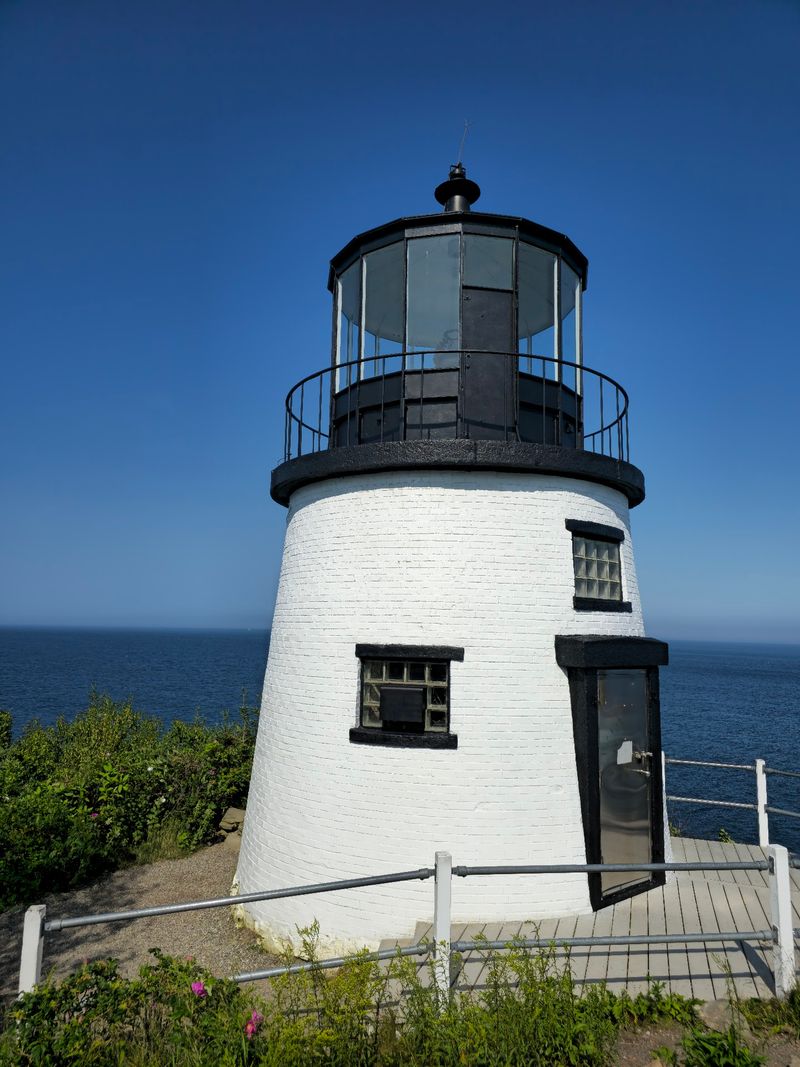
The approach starts modestly enough, with a wooded path from the state park and then stairs rising toward a small tower.
You might expect a lighthouse to dominate the horizon, yet this one keeps its height in the bluff below.
The reward at the top is a broad sweep of Penobscot Bay, dotted with islands and whatever boats happen to be passing.
Owls Head Lighthouse began guiding vessels in 1825; the present tower dates to 1852. Though the structure itself is relatively short, its setting high above the shore gives the light a commanding position.
That contrast makes the place fun to explore: you climb toward a compact building and emerge into an unexpectedly wide ocean view.
For an indoor stop, the keeper’s house hosts an interpretive center and gift shop during the main visiting season. Scheduled tower climbs are sometimes available with volunteers, weather permitting. The climb involves stairs and a ladder, so it is not suitable for everyone.
A visit to the grounds and lookout is a fine alternative if the tower is closed or your group prefers to stay outside.
The story of Spot, a keeper’s dog associated with the station, adds a charming piece of local lore. It gives younger visitors a character to remember alongside the dates and equipment.
Outside, there is more than enough to hold attention: changing light across the bay, tree branches framing the water, and the sight of boats moving toward Rockland Harbor.
Wear shoes that feel secure on the approach and allow time to use the park facilities before heading up; there are no restrooms at the lighthouse itself. If you are combining several midcoast stops, this is a good one for a brief walk with an impressive finish.
Address: 186 Lighthouse Road, Owls Head, ME 04858.
6. Rockland Breakwater Lighthouse
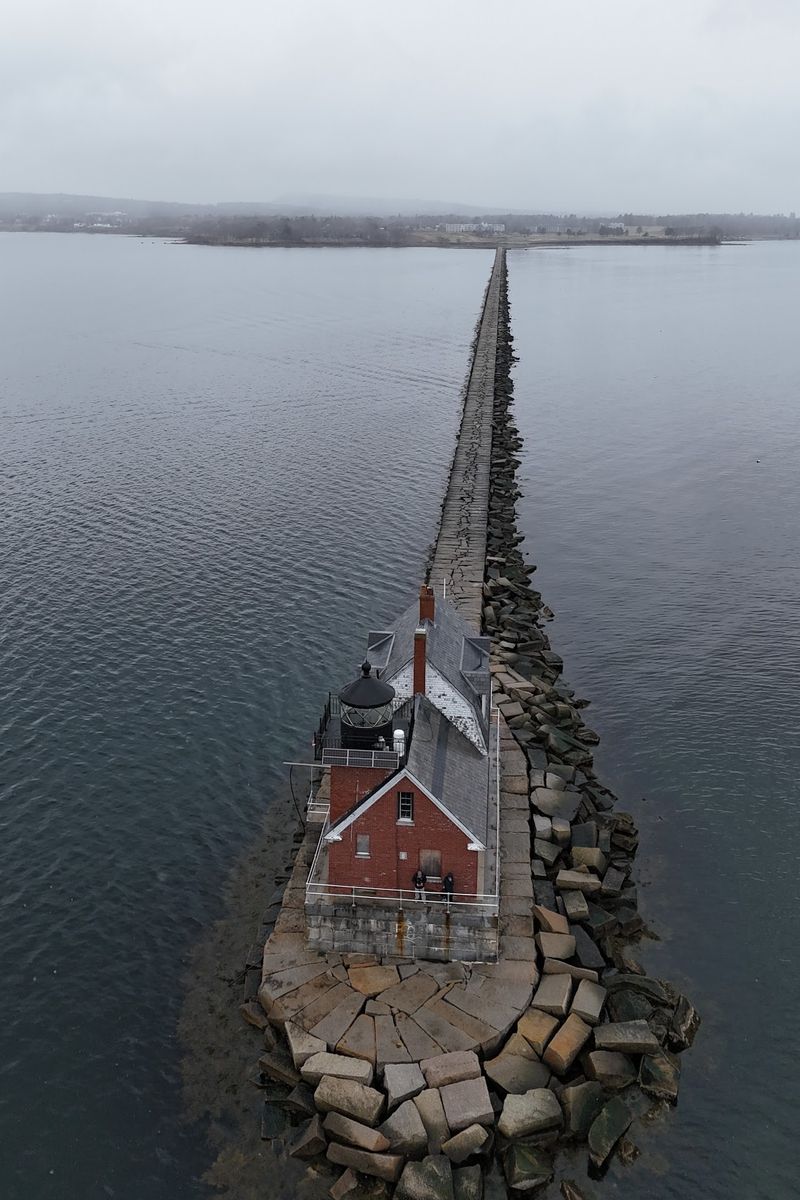
Here, getting to the lighthouse is the experience. A granite breakwater stretches almost a mile into the harbor, and the distant building slowly grows larger as you follow the stone blocks outward.
Water lies on both sides, fishing boats pass in the distance, and each step takes you farther from the bustle of shore.
It feels closer to a harbor walk than a typical lighthouse visit.
Before setting out, pay attention to the weather and tide. The blocks are uneven, gaps separate some stones, and there is no continuous railing to lean on. Waves can wash across the route around high tide.
If conditions look rough or your footing is uncertain, enjoy the view from land instead. The walk is never something you have to complete just because it is there.
Rockland Breakwater Lighthouse has marked the harbor entrance since 1902. The protective granite structure was built to shelter vessels and waterfront activity, and the lighthouse stands at its far end.
The round trip along the breakwater is substantial enough to deserve comfortable shoes and water, even though the route looks perfectly straight on a map.
On a calm day, pause occasionally and turn around. Rockland’s shoreline takes on a different shape as you move out, and the open harbor becomes more prominent. You might see a windjammer under sail or a lobster boat at work.
If you travel with children, keep them close and make the choice about how far to go together; there is no reason to hurry across the stones.
The breakwater is open to the public in suitable daylight conditions, but lighthouse interior access varies with staffing and preservation work.
A special open day does not mean regular walk-in tower tours are available. Treat the building as the scenic destination and any opportunity to go inside as an extra.
Begin at Marie Reed Park on Samoset Road, where a gravel path leads to the breakwater.
Address: Marie Reed Park, 34 Samoset Road, Rockland, ME 04841.
7. West Quoddy Head Lighthouse
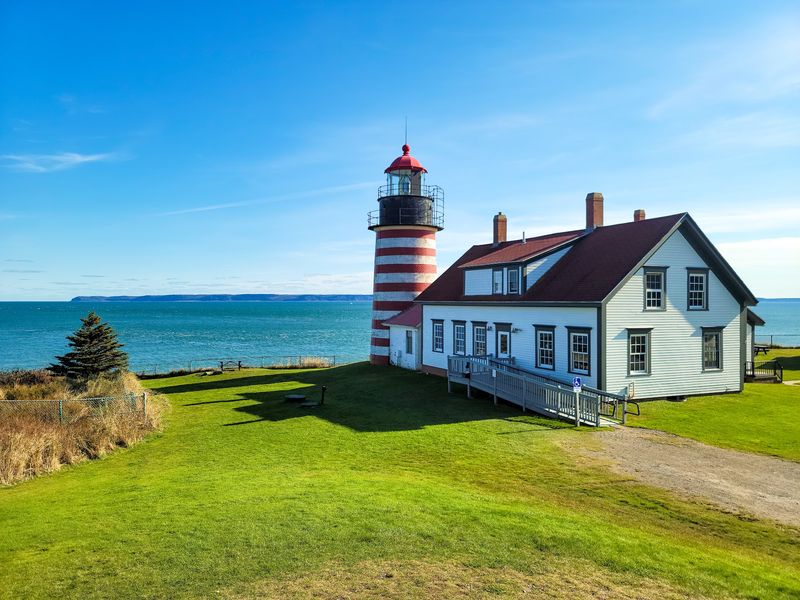
Red and white stripes provide a cheerful contrast to the moody water near Lubec. The surrounding headland is a place of big horizons, misty mornings and coastline that feels a long way from southern Maine.
It is also a good reminder to plan a road trip by geography: this eastern stop deserves more than a hurried drive after a full day elsewhere.
The easternmost point of the contiguous United States sits here on the Maine coast, with Canada visible across nearby waters. West Quoddy Head Lighthouse has its present striped tower dating from 1858.
The striking color scheme makes it easy to recognize, though the headland’s position and maritime history are just as interesting as the painted brickwork.
Quoddy Head State Park offers trails along the coast and through forest, with a boardwalk through an unusual coastal bog.
If you enjoy exploring on foot, allow extra time for a trail instead of merely taking a picture beside the light.
Uneven coastal sections call for solid shoes, and wind near the exposed bluffs can be stronger than it feels farther inland.
Plan on enjoying the lighthouse from outside. The visitor center is closed for restoration work, and tower tours are not currently scheduled. You can still enjoy permitted outdoor areas of the state park when open.
That makes the best plan a combination of coastal views, a short walk, and a look at the light from public ground.
If you are traveling in the quieter season, check park hours and weather before committing to the long drive. Lubec can provide a convenient base for a less hurried visit, particularly if you hope to explore more of the Bold Coast.
Address: 973 South Lubec Road, Lubec, ME 04652.
8. Spring Point Ledge Lighthouse
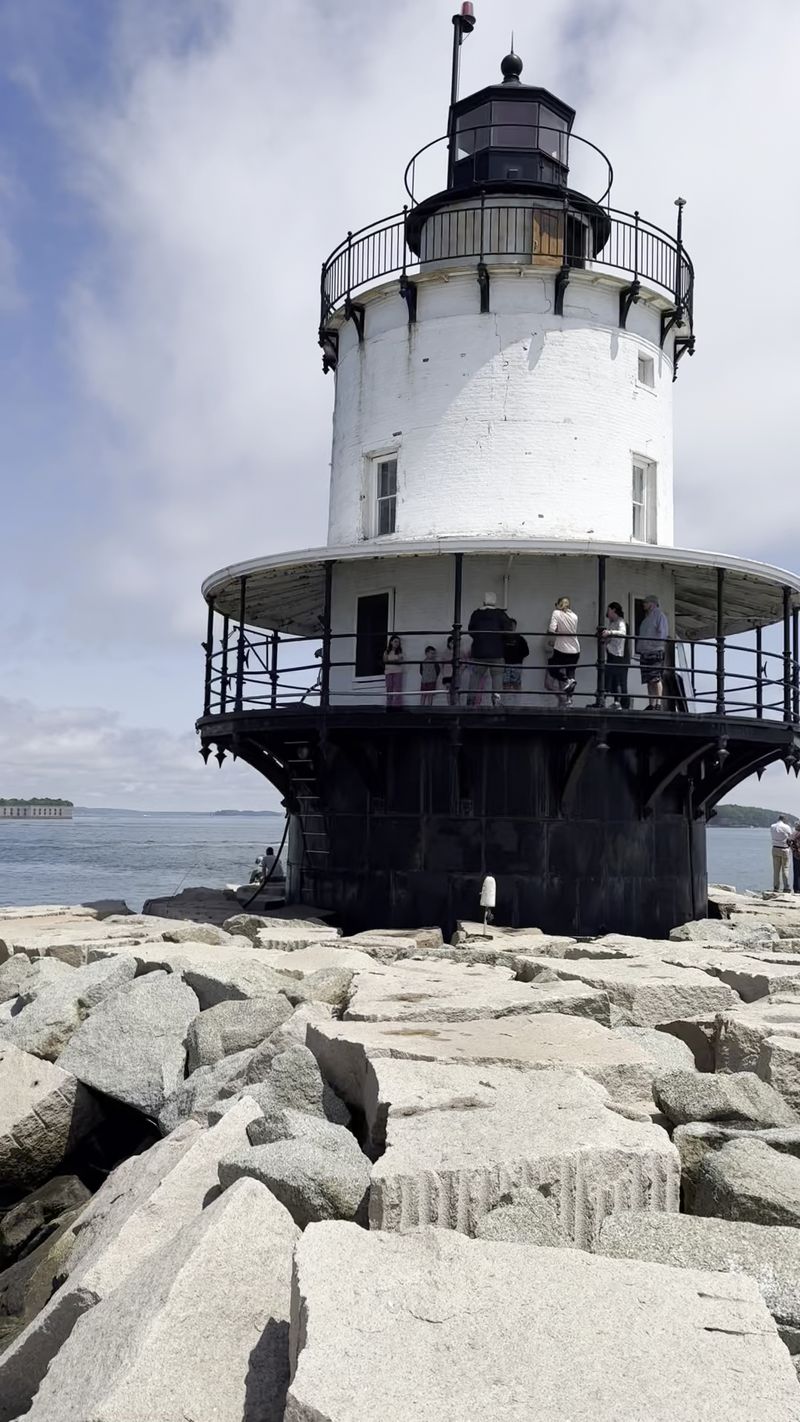
Walk toward Portland Harbor and a round, sturdy-looking lighthouse comes into view at the end of a stone breakwater.
The shape is often called a sparkplug, which seems especially apt when you see it against the much larger boats moving through Casco Bay. It is a compact stop with a sense of adventure built into the approach.
The breakwater provides the main experience, with uneven rocks leading from shore toward the light. Choose a dry, settled day and watch every step; this is not a smooth paved promenade.
If the stones are slick or waves are reaching the path, take in the lighthouse from land instead.
There is no shortage of harbor activity to watch from a safer spot.
Spring Point Ledge Lighthouse began operating in 1897 and remains an active aid to navigation.
The trust caring for the historic structure offers guided tours on selected days during its seasonal opening. These include ladder climbing and a minimum height requirement, so not everyone will be able to go inside.
The seasonal tour program has finished for the year; look for new dates before making an interior visit part of your plans.
Nearby, Fort Preble’s surviving structures add a bit of military history, while the Southern Maine Community College campus marks the approach to the shore.
This makes an appealing choice if you want more than one subject in your camera frame: the circular tower, the harbor traffic, and stretches of old stone are all within a relatively compact area.
Leave yourself time for the walk back and resist treating the breakwater as a race. Sometimes the most interesting moment is a passing ferry or a shaft of sunlight breaking through the clouds.
Address: 2 Fort Road, South Portland, ME 04106.
9. Portland Breakwater Lighthouse
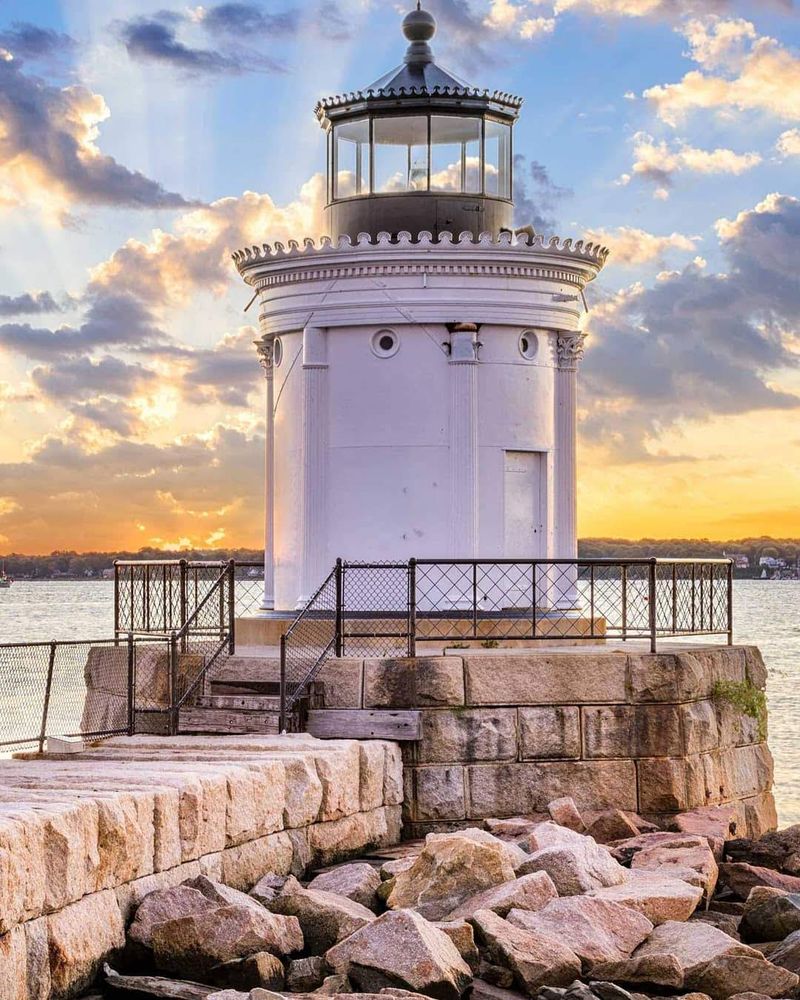
A lighthouse does not have to be tall to make a memorable stop. At Portland Breakwater Lighthouse, a small cast-iron tower with decorative columns stands beside a grassy waterfront park.
It has a little of the look of a classical monument, especially when the afternoon light picks out the details around its base.
Bring a picnic blanket rather than hiking boots for this part of the coast.
The lighthouse is also known as Bug Light, an affectionate nickname inspired by its size. The current structure dates to 1875 and takes design cues from an ancient Greek monument.
A short paved approach lets you admire the outside without navigating long trails or steep staircases, making it one of the easier lighthouse views around Portland Harbor.
Bug Light Park is a place to relax between longer stops. Kites are a familiar sight when the wind cooperates, and the harbor gives you a steady procession of ships, ferries, and small craft to watch.
Settle on the grass, take a slow waterfront walk, or give younger travelers time to stretch their legs after a drive.
None of those choices requires a tight schedule.
The park also remembers the shipbuilding industry that operated along this shoreline during the Second World War. The Liberty Ship Memorial adds context to the waterfront, and a local historical museum is nearby.
If you like your scenic stops with a small piece of history, these landmarks can turn a quick view of the lighthouse into a fuller visit.
The tower is best enjoyed from outside; do not plan on an ordinary public climb. On clear days, Portland’s skyline provides a backdrop, while cloudy weather puts the emphasis on the shape of the tower and moving boats.
Address: Bug Light Park, Madison Street, South Portland, ME 04106.