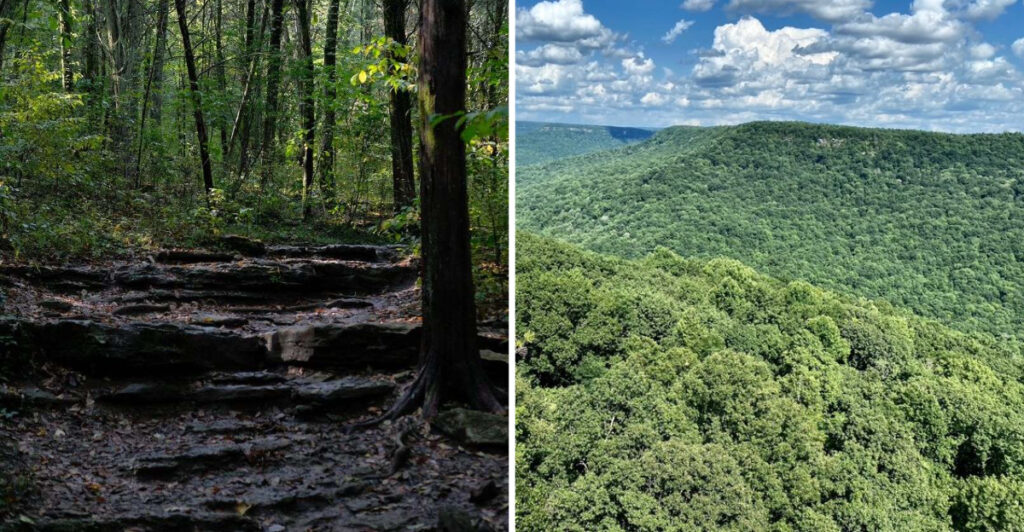
Tennessee trails come with plenty of scenery, and occasionally one very well-camouflaged local.
Copperheads blend into leaves and forest floors so neatly that spotting one can feel like nature’s version of a hidden-picture puzzle.
Even so, most hikers never encounter one, and the snakes usually prefer staying still and unnoticed over causing trouble.
They live across much of the state, especially in wooded areas with rocky cover and nearby water. A little awareness goes a long way when you are stepping over roots or reaching near places you cannot clearly see.
These areas below are not ranked by danger. They simply contain the kind of habitat copperheads may use, particularly during warmer months.
Carry a flashlight after dark, and give hidden corners a quick glance. Then keep enjoying the trail. The waterfalls deserve far more attention than the wildlife hiding under the leaves.
1. Western Highland Rim Hides Plenty Beneath The Leaves
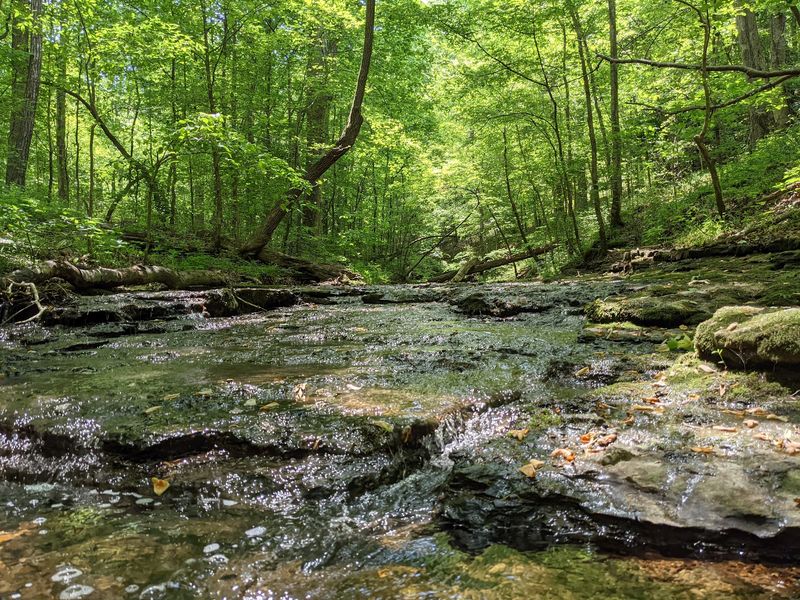
Leaf litter is nature’s camouflage filter, and the Western Highland Rim uses it generously.
This rolling section of west-central Tennessee includes hardwood forests, rocky slopes, creek hollows, and forest edges. Those features match the kinds of places copperheads commonly use for cover, temperature control, and access to prey.
The region name does not mean every trail or backyard carries the same risk. Conditions change from one property to the next, and a sunny open field behaves very differently from a shaded ravine filled with logs and loose rock.
Watch the ground when stepping over fallen timber, crossing a rocky drainage, or moving through piles of leaves. The safer move is to step onto a log first, look beyond it, and then continue rather than dropping a boot blindly into the shaded space on the other side.
Gardeners and homeowners should treat stacked firewood, stone borders, brush piles, and dense ground cover with the same respect. Wear gloves, move materials with tools when possible, and avoid reaching into dark gaps.
The Rim may look peaceful from the road. Down at boot level, the leaves are running a very convincing disguise department.
2. Waterfalls Bring Crowds To Fall Creek Falls
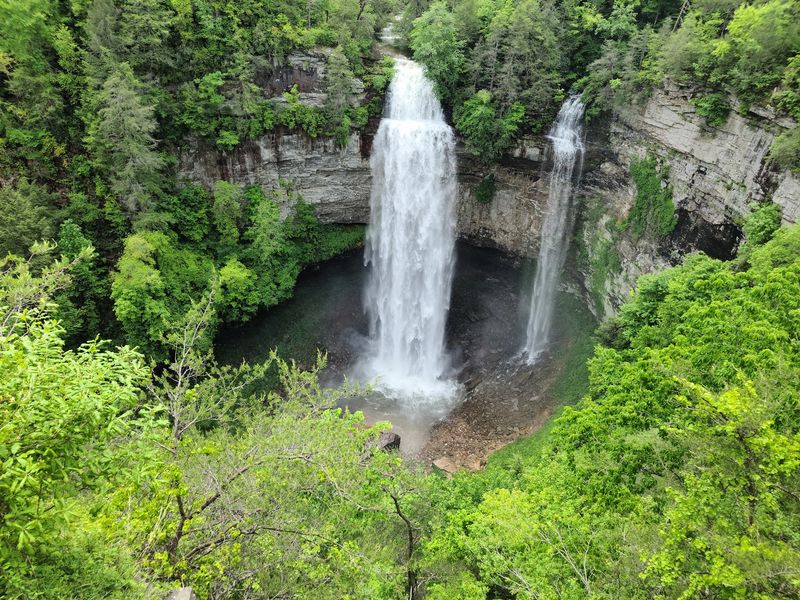
The waterfall gets the photos. The trail edge deserves your attention.
Fall Creek Falls State Park combines forest, rocky overlooks, boulders, streams, and deep gorge terrain. Those habitats can shelter many forms of wildlife, including copperheads, even though most visitors will never see one.
The safest habit is not fear. It is deliberate movement. Pause before sitting on a warm rock, placing a hand on a ledge, or stepping off a maintained trail into leaf-covered ground.
Children can become distracted by water and viewpoints, while dogs naturally investigate brush, logs, and rock openings with their noses. Keep pets leashed, younger hikers close, and do not let anyone scramble into an unseen crevice for a better photo.
Warm-season mornings and evenings can bring more reptile activity, while cool days may draw snakes toward sunlit patches. Weather matters more than a fixed calendar, so stay observant whenever temperatures are comfortable enough for reptiles to move.
A copperhead sighting does not require heroics. Stop, give the snake room, and take another route without trying to move, photograph, or identify it from arm’s length.
The waterfall can keep the dramatic entrance. Your job is to make sure the wildlife gets a quiet exit.
3. Rocky Edges Define The Cumberland Plateau
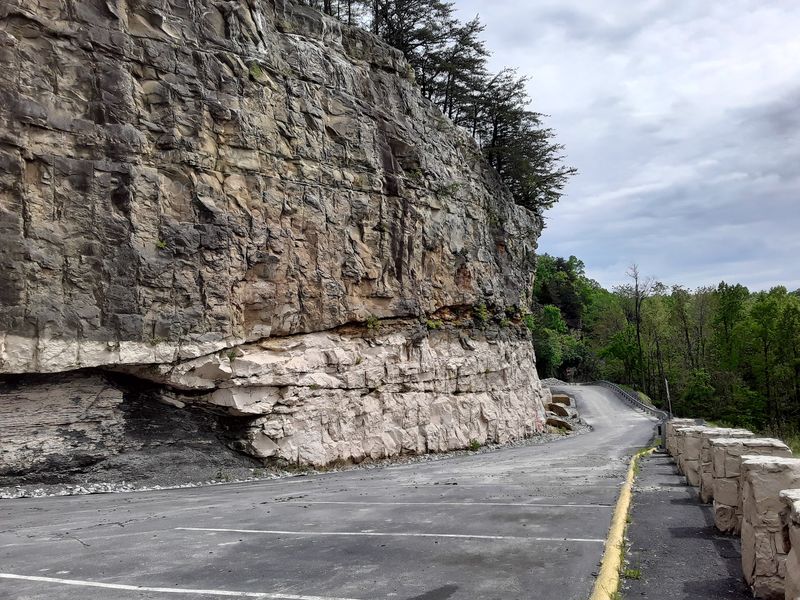
Flat on the map does not mean simple underfoot.
Across the Cumberland Plateau, broad uplands break into ravines, sandstone cliffs, boulder fields, forested slopes, and narrow stream corridors. Copperheads can use rocky cover, fallen wood, forest debris, and sunny openings throughout that patchwork.
The region appears in the third paragraph for a reason: the real issue is terrain, not the label printed on a tourism map. A maintained overlook with clear pavement carries a different exposure than an overgrown side trail bordered by loose slabs and brush.
Do not slide fingers beneath flat rocks, reach into ledges, or use an unseen crevice as a handhold. Climbers and scramblers should inspect placements before committing weight, especially around warm rock faces and shaded gaps.
Summer evening walks deserve a headlamp. Reptiles may be harder to see after temperatures ease, and a phone flashlight pointed several feet ahead is better than discovering the trail one step at a time.
Recently disturbed areas can also create cover through brush, scrap wood, and piled debris. Give those spots extra room rather than treating them as shortcuts.
The Plateau offers magnificent overlooks. Keep your eyes on the horizon when you stop, and on the ground when you start moving again.
4. Savage Gulf Rewards Slow Feet And Smart Hands
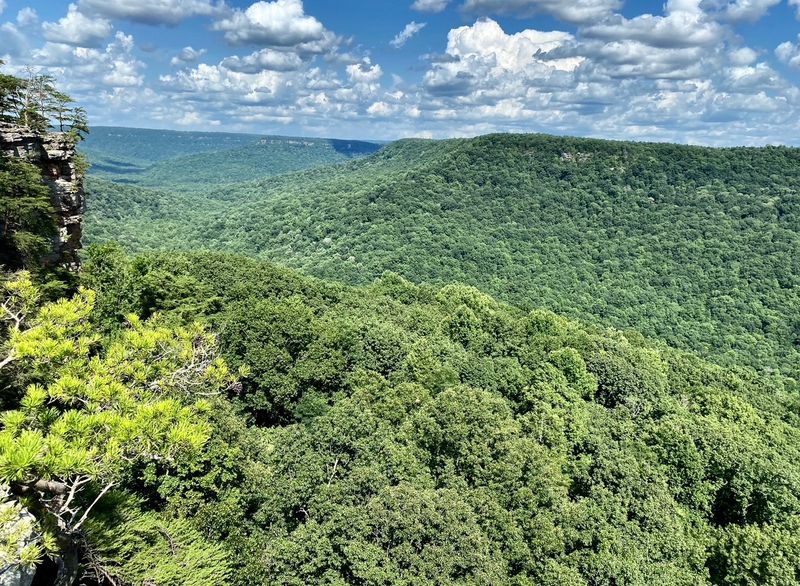
Remote scenery has one strict house rule: mistakes take longer to fix.
Savage Gulf State Park contains rugged gorges, wooded slopes, rocky passages, streams, and stretches where cell service may be unreliable. Copperheads are only one reason careful preparation matters in this landscape.
Fallen logs and leaf-covered trail margins deserve a measured pace. Step where you can see, keep hands out of hollow wood, and avoid pushing through dense vegetation simply because it looks like a faster line to the next viewpoint.
The park name appears here rather than in the opening because the safety lesson should arrive first. In remote terrain, a twisted ankle, heat problem, or snakebite can all become more serious when communication and rescue take time.
Tell someone your route, carry water, pack a map, and bring a charged phone without assuming it will always connect. Evening hikers should add a reliable headlamp and spare power.
If you see a snake, back away slowly. Do not block its path, poke it with a trekking pole, or turn the encounter into a close-range video project.
Savage Gulf delivers the wilderness feeling people drive for. It also expects you to bring judgment along for the ride.
5. North Cumberland Makes Off-Trail Travel A Different Game
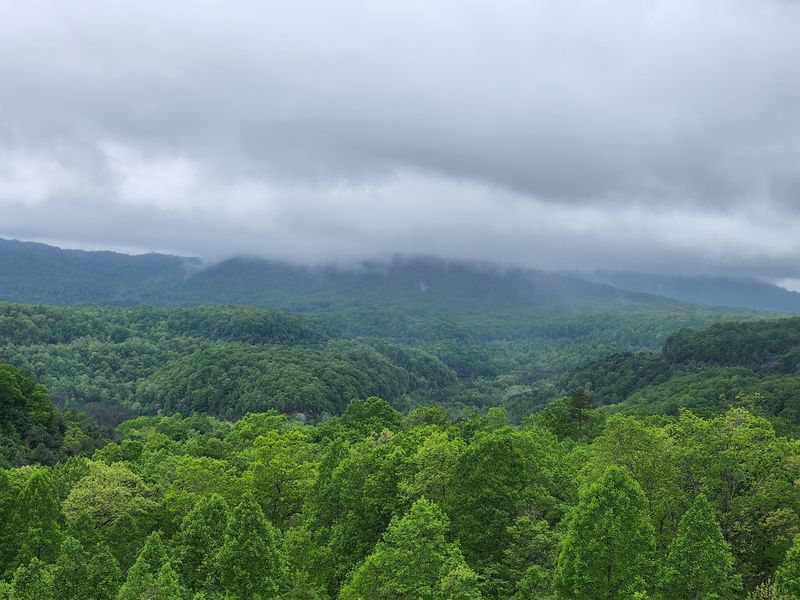
A maintained path is a suggestion in some wild places. In this one, leaving it changes the rules quickly.
North Cumberland Wildlife Management Area covers a vast landscape of ridges, hollows, hardwood forests, roads, and rugged ground used by hunters, riders, and wildlife watchers. The scale alone means conditions vary dramatically across units and access points.
Copperhead habitat can occur around rocky slopes, wooded edges, logs, brush, and drainage areas. The greater concern for many visitors is reduced visibility when they move beyond established roads or trails.
Hunters should look before reaching for gear beside a log, lifting debris, or placing a hand near a rock opening. Tall boots, long pants, and gloves add protection when moving through brush, though no clothing replaces watching where you step.
The Wildlife Management Area name arrives midway through the section because the advice applies before the boundary sign appears. Similar cover can exist on nearby private land, farms, and wooded roadsides.
Carry navigation tools, share your route, and know the rules for the specific unit you plan to enter. Remote acreage can turn a small problem into a long walk very quickly.
North Cumberland gives you room to roam. It does not promise that every patch of ground wants company.
6. The Smoky Mountain Foothills Hide Wildlife In Plain Sight
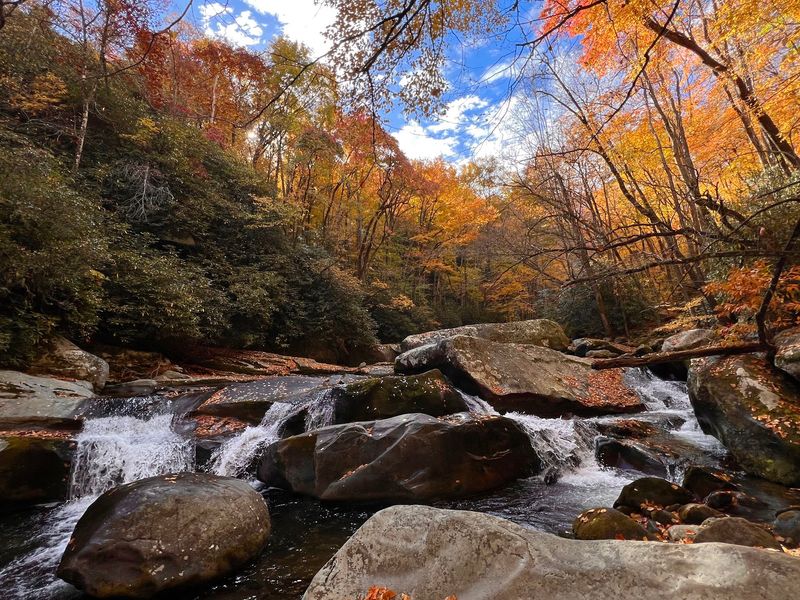
Rhododendron tunnels are beautiful until your eyes spend the whole hike looking up.
The lower slopes and foothills around Great Smoky Mountains National Park combine rocky creeks, dense vegetation, forest litter, and sunlit openings. Northern copperheads are one of two venomous snake species in the park, alongside timber rattlesnakes.
Park officials describe both species as generally shy and note that bites are rare. That context matters because the goal is awareness, not turning every root into a crisis.
Slow down where foliage narrows the trail or rocks interrupt your footing. Use trekking poles for balance, but never jab blindly into brush in an attempt to flush out wildlife.
Keep children on the path and dogs under close control where pets are permitted. A nose pushed into a hollow log can create a problem before a person even notices the hiding place.
The National Park Service advises visitors to watch where they place hands and feet. That small habit works around creek banks, overlooks, picnic areas, and trail edges alike.
The Smokies are famous for animals much larger than a copperhead. The smallest wildlife lesson may still be the easiest one to carry home: look before you lean.
7. Cherokee National Forest Changes With Every Trail
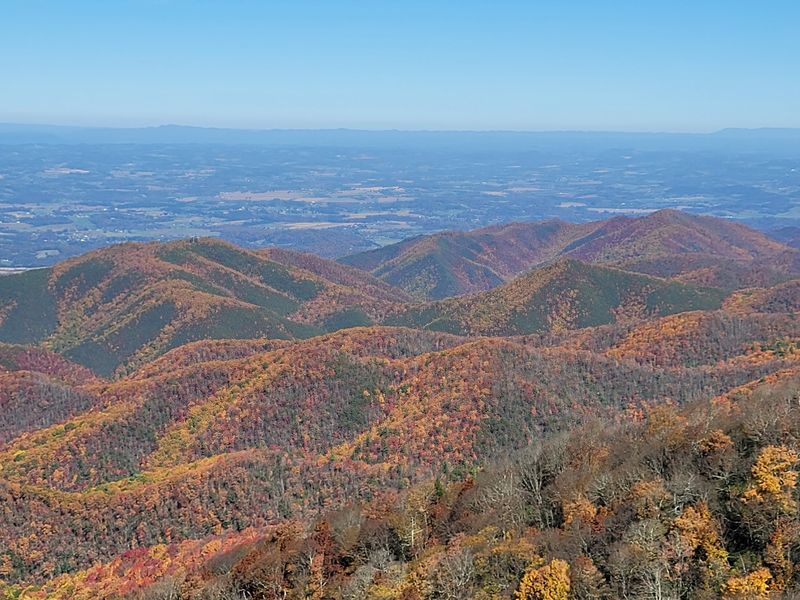
Six hundred thousand acres leave plenty of room for the scenery to change its mind.
Cherokee National Forest stretches across eastern Tennessee in two large sections, with mountain ridges, wooded valleys, streams, lakes, rocky ground, and developed recreation areas. No single description fits every trail.
That variety also means copperhead habitat can appear in scattered pockets rather than as one continuous danger zone. Forest edges, loose rock, downed timber, and leaf-covered ground deserve attention wherever they occur.
Stream crossings are a good place to slow down, but not because every stepping stone hides a snake. Wet rocks are slippery, vegetation reduces visibility, and hikers often focus on balance instead of checking where a hand or foot will land.
Scan the route before stepping, keep fingers out of gaps, and resist the urge to grab the nearest unseen root for support. Popular paths may offer clearer footing, while remote routes require stronger navigation and emergency planning.
The forest name appears late because preparation should not depend on a sign. The same habits protect you on public land, private trails, and wooded campgrounds across Tennessee.
Cherokee National Forest offers enough routes for a lifetime. None of them require treating the ground like an obstacle course played at full speed.
8. Lookout Mountain Adds Rock To The Equation
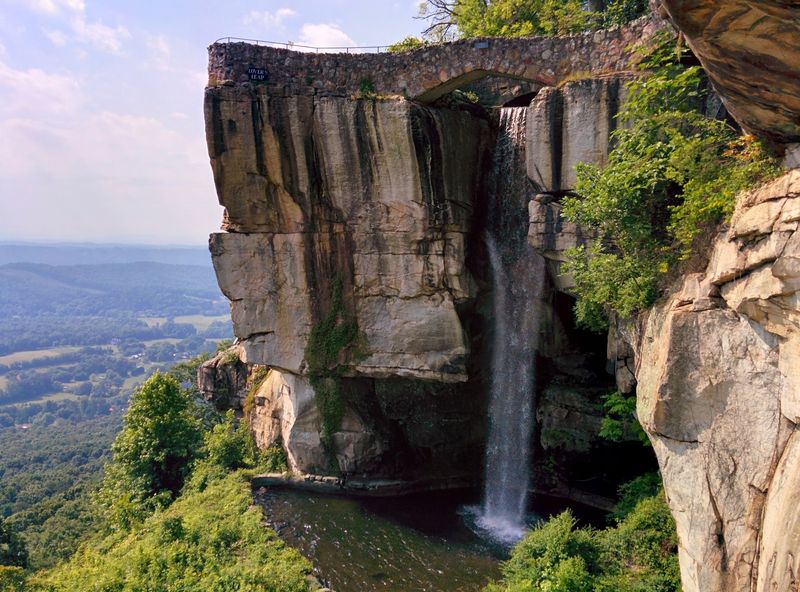
When the trail asks for hands as well as feet, every placement deserves a preview.
Lookout Mountain and the Tennessee River Gorge feature steep slopes, forest, exposed rock, boulder fields, and narrow passages.
Those features can create suitable cover for copperheads and other reptiles, especially where sun-warmed surfaces meet shaded crevices.
Scrambling hikers and climbers should inspect holds rather than curling fingers over a ledge they cannot see. Trail runners can reduce exposure by slowing on leaf-covered turns, rocky descents, and narrow sections bordered by brush.
The gorge itself enters the section here because the practical lesson extends beyond one named trail. Any southern Tennessee hillside with broken rock and dense forest can create similar hiding places.
Do not rely on the snake moving first. Copperheads often remain still when threatened, trusting camouflage until a person or pet gets too close.
If you encounter one, create distance and let it leave. Photographing from a safe position is optional, but forcing a closer angle is not.
Lookout Mountain supplies enough drama through cliffs and river views. The wildlife does not need help staging a surprise.
9. Nashville’s Wooded Edges Bring Habitat Close To Home
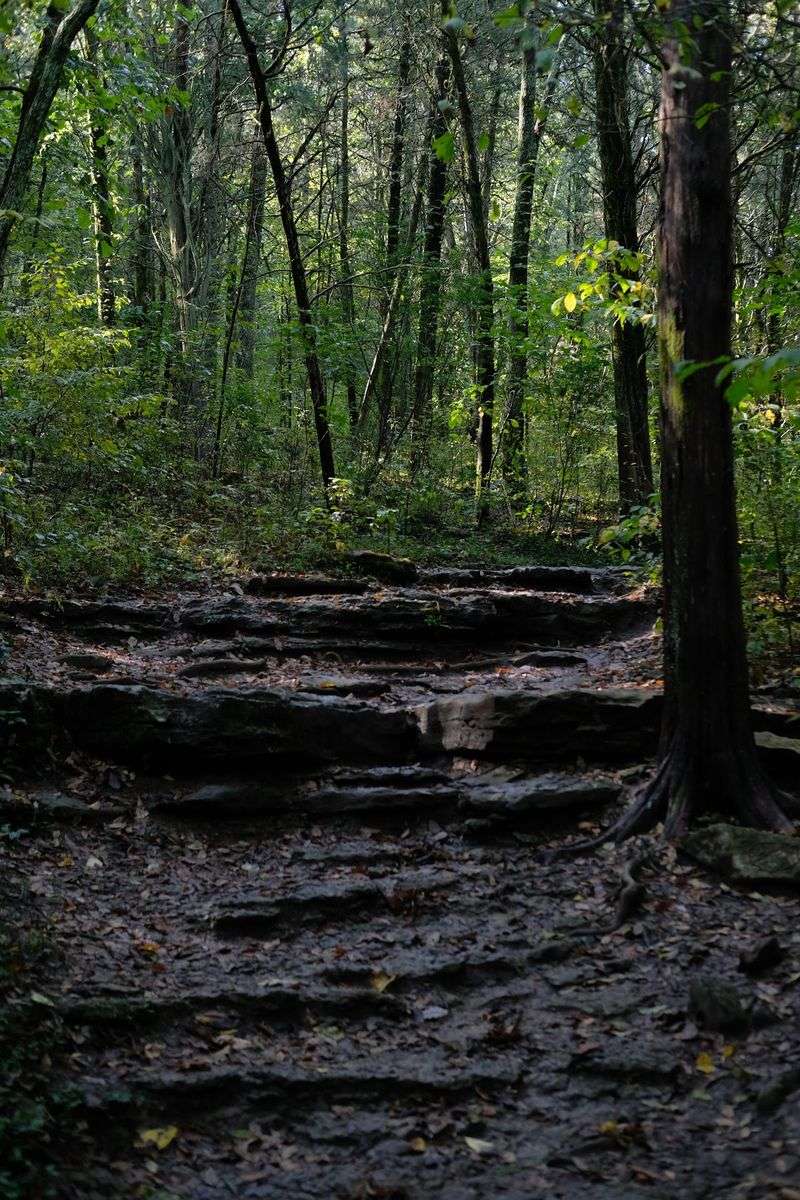
The city limits do not come with a reptile checkpoint.
Around Nashville, wooded parks, creek corridors, suburban tree lines, stone landscaping, brush piles, and backyard sheds can create the same basic shelter copperheads use in more remote forests.
That does not make every garden a hotspot. It means homeowners should remove avoidable hiding places and use care around the ones that remain.
Stack firewood away from the house, keep grass and weeds controlled, reduce rodent attractants, and use gloves when moving leaves, mulch, boards, or landscaping stone.
Never reach under a shrub or into a dark shed corner without looking first.
Parks such as Radnor Lake and the Warner system preserve valuable wildlife habitat inside a growing metro area. Stay on designated paths, give all snakes space, and remember that feeding or handling wildlife helps nobody.
The region name waits until the middle because suburban awareness should feel normal, not sensational. Copperheads do not seek out neighborhoods, but suitable food and cover can bring wildlife closer to people.
Nashville may run on music. Around the woodpile, quiet observation is the better performance.
10. Knoxville And The East Tennessee Valley Need Everyday Awareness
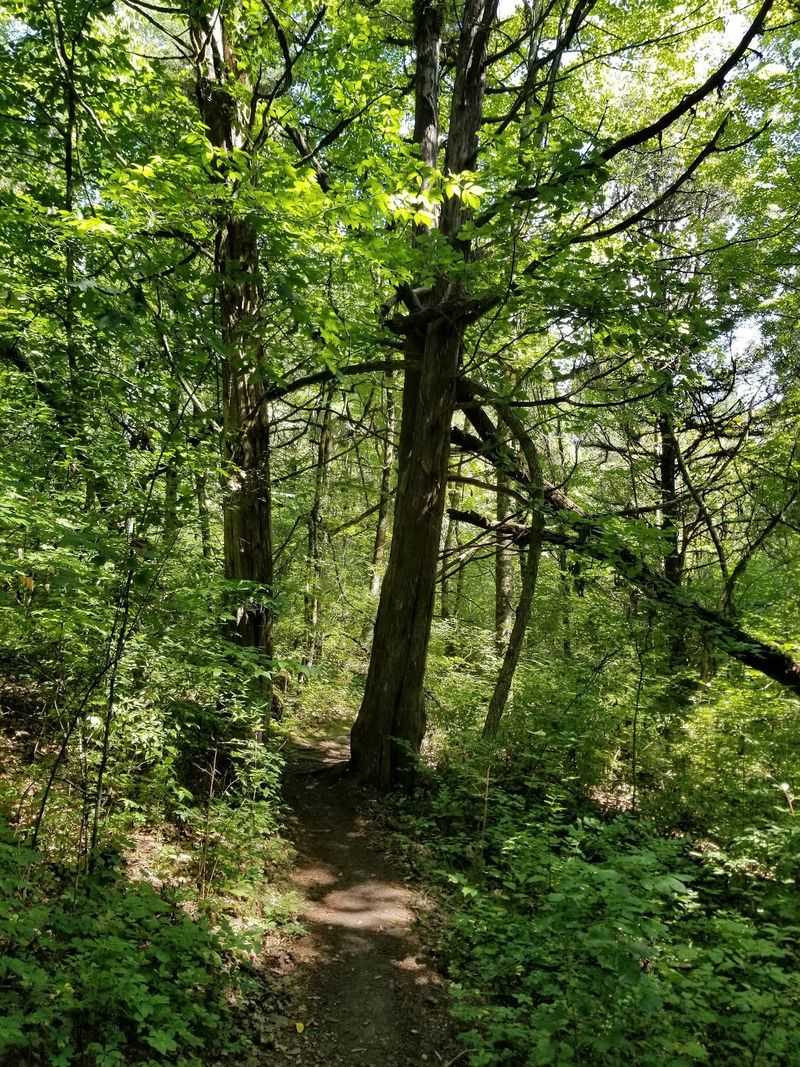
Greenways can feel urban right up to the moment the creek bank reminds you otherwise.
Knoxville and the surrounding East Tennessee Valley contain rivers, tributaries, wooded parks, rocky slopes, neighborhoods, and landscaped edges. Copperheads can occur wherever suitable cover and prey overlap, including places that do not look especially wild.
Walkers should stay on paved or cleared surfaces when possible and avoid cutting through tall vegetation beside a trail. Anglers need to inspect rocks and logs before sitting, reaching for tackle, or placing a hand near the waterline.
At home, watch children and pets around dense shrubs, stacked materials, and gaps beneath outdoor structures. The CDC recommends reducing brush and log piles and controlling rodents because those features can attract snakes or the prey they follow.
If anyone is bitten, move away from the snake, call 911, and seek medical care immediately. Remove rings or tight items before swelling begins. Do not apply ice, cut the wound, suck out venom, or use a tourniquet, and do not try to capture the snake.
The valley name appears early, but the final lesson belongs everywhere in Tennessee: awareness prevents more trouble than panic ever will.