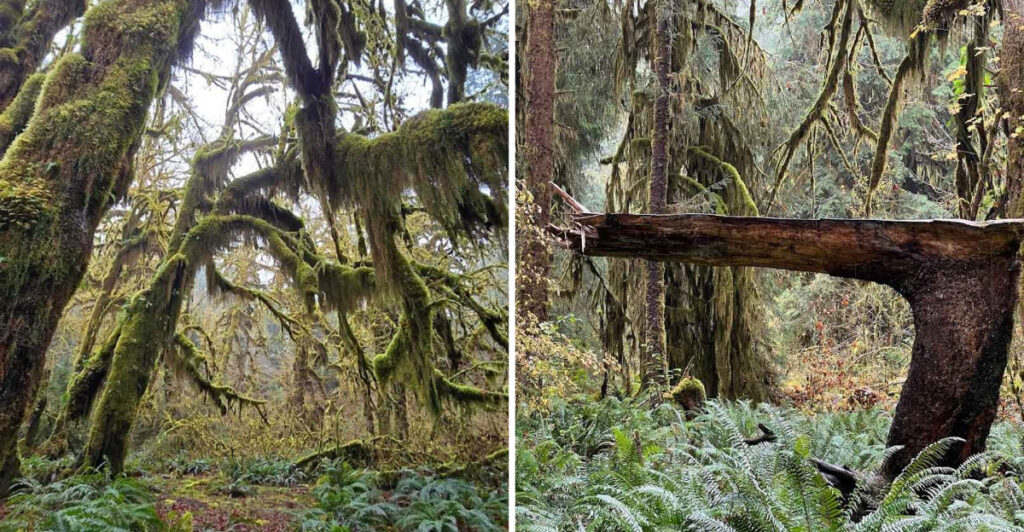
Have you ever walked into a place that feels like it should not exist in real life? Everything here looks softened, stretched, and covered in layers of green that almost seem unreal at first glance.
You start down the trail expecting a quick loop, and within minutes, the surroundings begin to feel completely different from anything you have seen before.
Shapes blur, light filters differently, and the silence settles in a way that makes you slow down without thinking about it. In Washington, forests are nothing new, but this one changes how you experience them entirely.
Washington has plenty of scenic hikes, yet few feel this immersive from the very first step. If you are looking for something that feels less like a hike and more like stepping into another world, this one delivers.
The Forest That Defies Reality
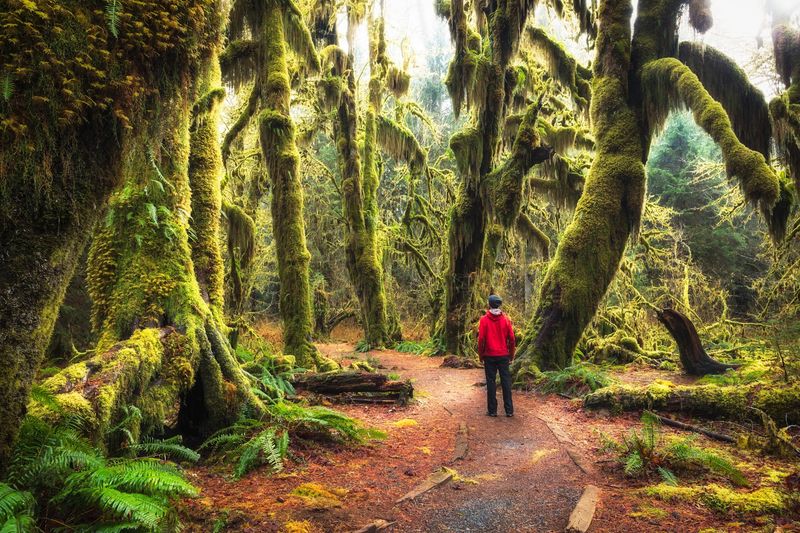
Moss does not just grow here. It takes over, completely and unapologetically, turning ordinary trees into something that looks sculpted by nature over centuries.
The Hall of Mosses Trail sits within the Hoh Rain Forest near Forks in Olympic National Park, Washington. Bigleaf maple trees, some with trunks wider than a car, carry enormous curtains of club moss that hang from every branch like green velvet drapes.
The light filtering through the canopy shifts throughout the day, casting the moss in shades ranging from deep emerald to bright lime. On overcast days, the forest takes on an almost glowing quality that no camera fully captures.
What makes this place feel so surreal is the sheer density of it all. Every surface, every branch, every fallen log is covered in something soft and living.
The ecosystem here is layered, alive, and constantly growing, making each visit feel slightly different from the last.
A Trail Built For Everyone
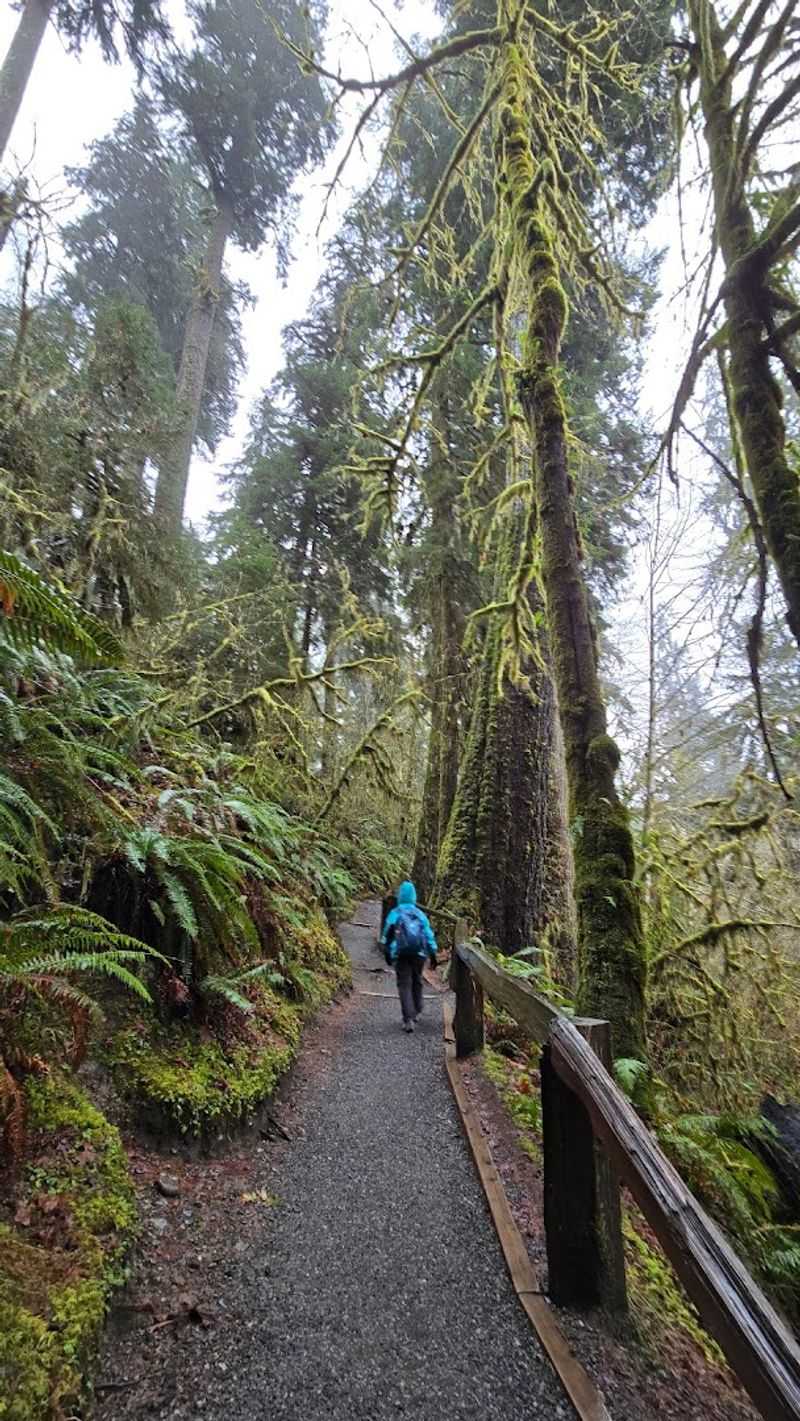
Not every unforgettable hike requires sore knees and a protein bar. The Hall of Mosses loop stretches roughly 0.8 miles with minimal elevation gain, making it genuinely accessible for a wide range of visitors.
Families with young children, older adults, and first-time hikers all navigate this trail comfortably. The path is well-defined and relatively flat, with clearly marked routes that keep walkers on track without any guesswork involved.
That said, the trail can get muddy, especially after rain, which happens frequently in the Hoh Rain Forest. Waterproof boots are a smart choice, and trekking poles can help on slicker stretches near the creek areas.
Pets are not permitted on the Hall of Mosses Trail, so furry companions are best left at home or in the car. The no-pet rule helps protect the fragile moss ecosystem and the wildlife that depends on it.
Despite that limitation, the trail welcomes just about everyone else with open arms and zero steep switchbacks.
The Sound Of Silence (Almost)
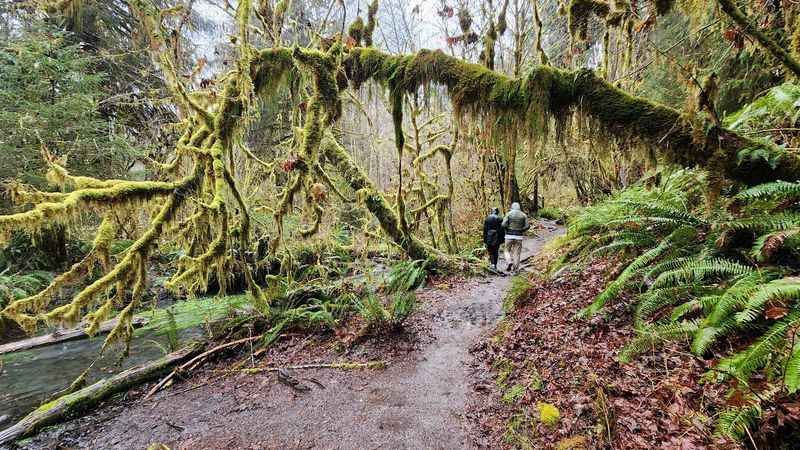
Something unusual happens the moment you step deeper into the trail. The outside world goes quiet, and the moss is partly responsible for that.
Thick layers of moss act as natural sound dampeners, absorbing noise and softening the acoustic environment of the forest. Visitors frequently notice how muffled and peaceful everything feels, even on days when the trail has a fair number of people on it.
Bird calls cut through the quiet in short, clear bursts. The Hoh Rain Forest in Washington is home to a surprisingly rich variety of bird species, and patient walkers often catch glimpses of Canada jays and other forest birds moving through the understory.
Early morning visits tend to offer the most serene experience, when the trail is less crowded and a light mist sometimes drifts between the trees.
That combination of fog, moss, and near-total quiet creates an atmosphere that feels less like a hike and more like stepping into a living painting that breathes around you.
Wildlife Hiding In Plain Sight
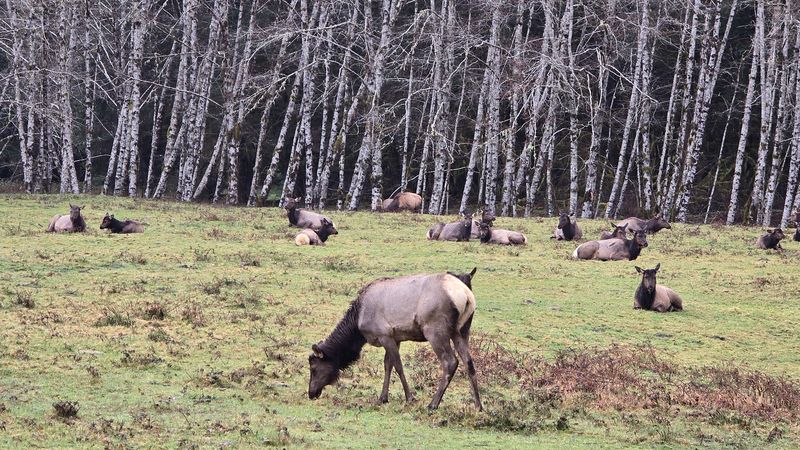
The trees get most of the attention, but the wildlife on this trail is worth slowing down for. Keep your eyes low and your footsteps quiet.
Banana slugs are among the most iconic residents of the Hoh Rain Forest, and they are surprisingly easy to spot along the trail edges and on mossy logs. These bright yellow creatures can grow impressively long and move at a pace that makes them easy subjects for photos.
Roosevelt elk occasionally wander through the area, and while sightings are never guaranteed, the Hoh Valley in Washington has one of the largest Roosevelt elk populations in the country. Squirrels, including the rarely seen flying squirrel, also live within the forest canopy above the trail.
Mushrooms of all shapes push up through the forest floor throughout the wetter months, adding another layer of visual detail to an already rich environment.
The key to spotting wildlife here is patience. Slow down, stay quiet, and the forest tends to reveal its smaller, shyer residents to those willing to wait a little longer.
Best Times To Visit And What To Expect
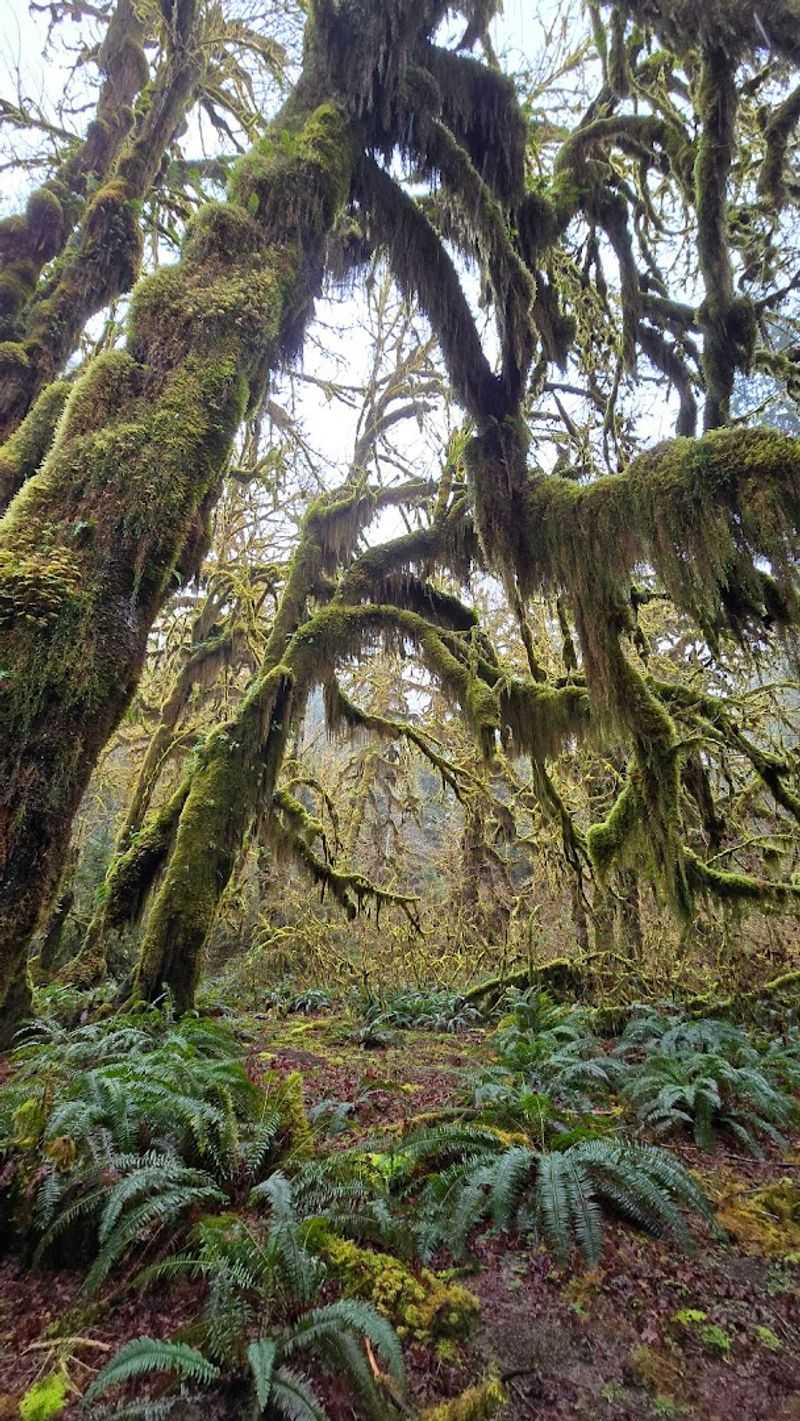
Timing matters more here than on most trails. The Hoh Rain Forest earns its name by receiving a staggering amount of rainfall each year, and that moisture is exactly what keeps the moss so vividly green.
Fall and winter visits tend to showcase the trail at its most lush and saturated in color. Rain keeps the moss hydrated and intensely bright, and the reduced crowds during cooler months mean a quieter, more personal experience on the loop.
Summer draws the largest crowds, and parking can fill up fast, especially on weekends. Arriving before mid-morning gives visitors a much better chance of securing a spot without a long wait.
Wait times to enter the park can increase during peak summer periods, especially on busy weekends.
Spring brings its own charm with fresh growth and active wildlife. Whatever season draws you in, layers and rain gear are always a practical choice.
The weather in the Hoh Valley shifts quickly, and being prepared keeps the experience enjoyable rather than soggy and frustrating.
Getting There And Practical Tips
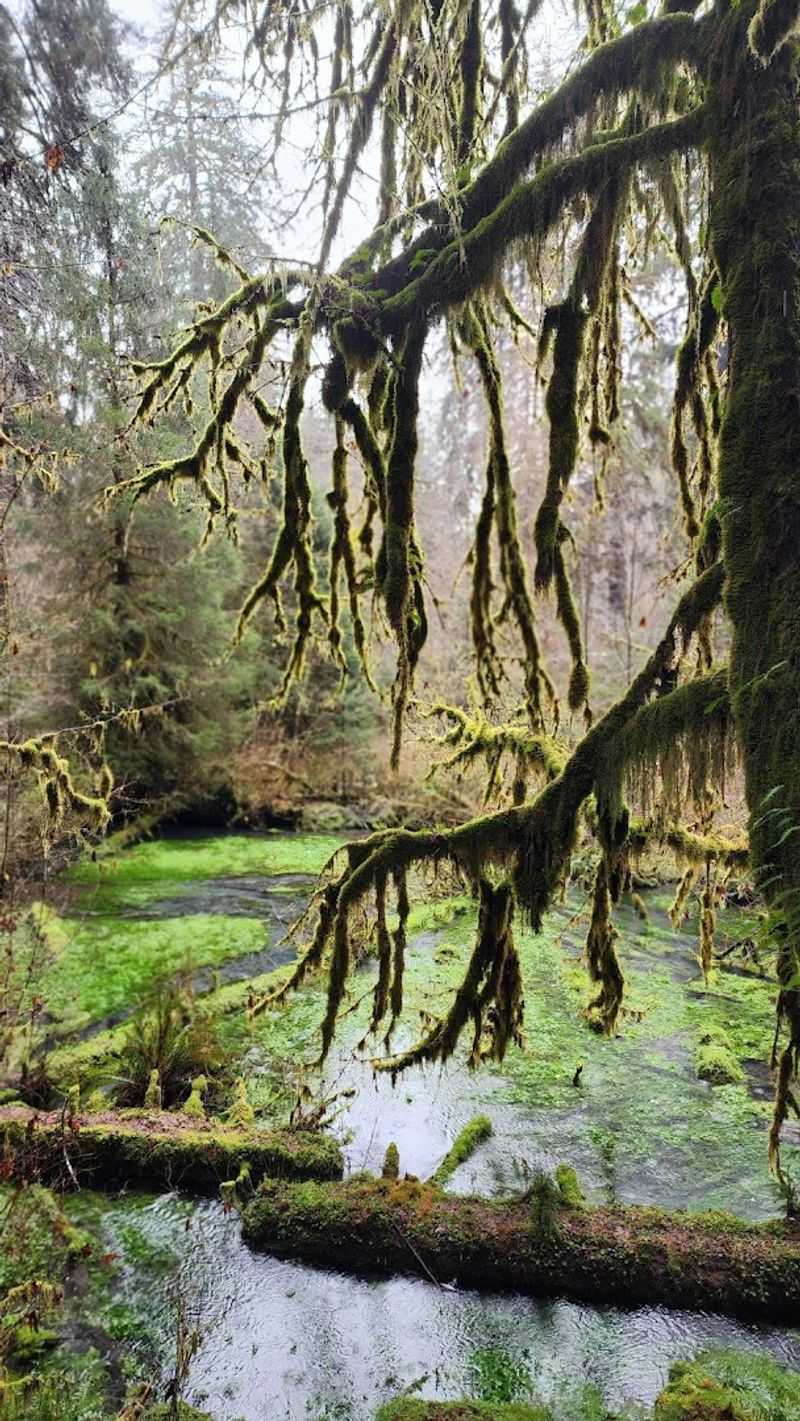
The Hall of Mosses Trailhead is located at 18113 Upper Hoh Rd, Forks, WA 98331, sitting roughly 18 miles off US Highway 101 along a well-paved road through the Hoh Valley. The drive itself is scenic and worth enjoying slowly.
An Olympic National Park pass is required for entry, so having one ready before arrival saves time at the gate. No backpack is necessary for this short loop, and most visitors leave their gear in the car without any issues.
Insect repellent is a smart addition to any pocket, particularly in warmer months when mosquitoes can be active near the creek areas.
Waterproof boots handle the muddy patches far better than sneakers, and a light rain jacket covers the unpredictable weather that Washington forests are known for.
There are restrooms near the trailhead, which is a welcome convenience after the long drive in. Services are limited along the Hoh Valley route, so fueling up before leaving the main highway is a smart move.
The Trees That Earned Their Title
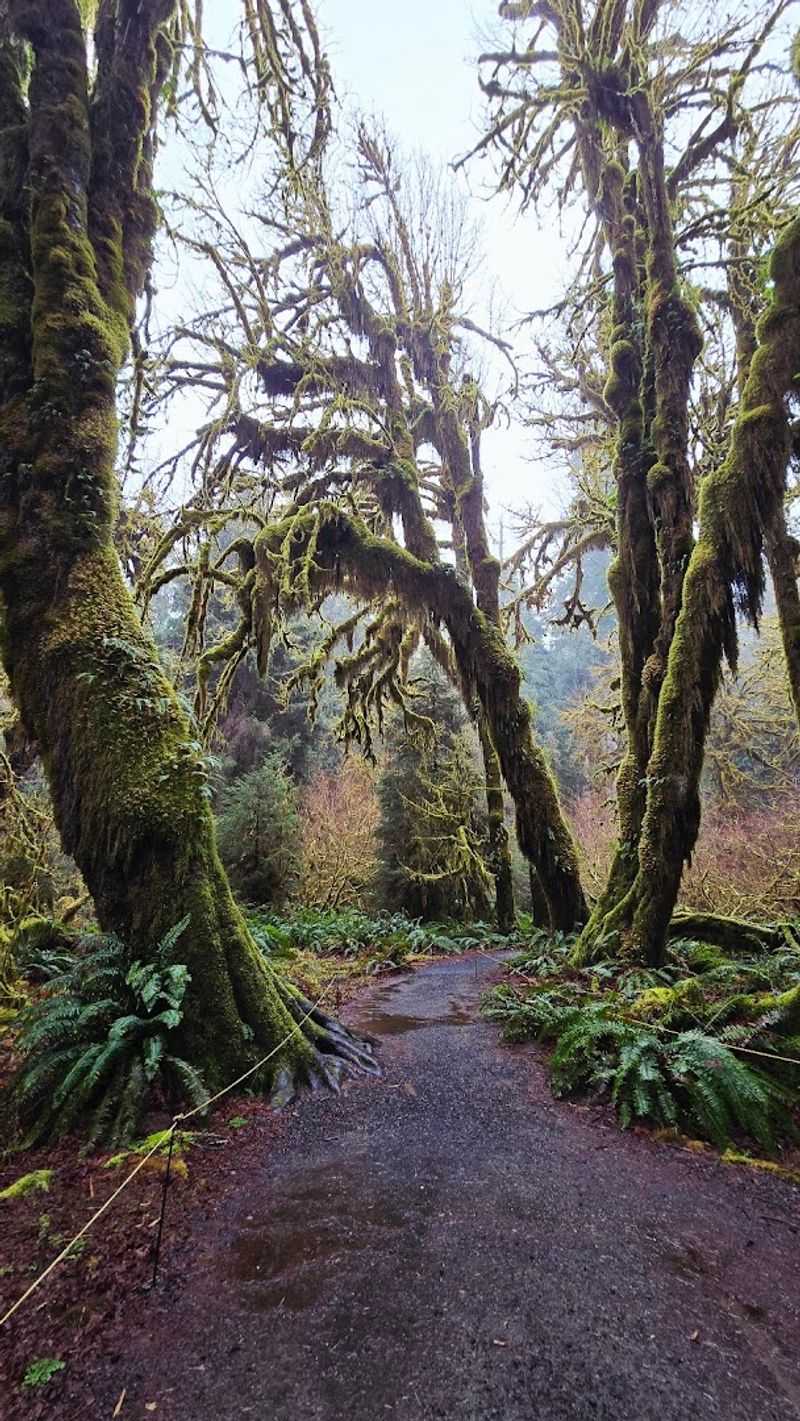
Old-growth forests take centuries to develop, and the trees standing along the Hall of Mosses Trail have been doing exactly that for a very long time.
Sitka spruce and western hemlock dominate the upper canopy, with some specimens reaching heights close to 300 feet and diameters that require multiple people to wrap their arms around.
These are not just big trees.
They are ecosystems unto themselves, supporting mosses, lichens, ferns, and insects across every inch of their bark.
Bigleaf maple trees create much of the iconic imagery associated with this trail, their wide-spreading branches draped so heavily in club moss that the branches themselves become almost invisible beneath the green weight. The effect is theatrical in the best possible way.
Educational signs along the trail explain the layered structure of a temperate rainforest, from the forest floor all the way up to the emergent canopy.
Those signs give context to what the eyes are already processing, turning a short walk into something genuinely educational without ever feeling like a classroom lecture.
Photography On This Trail Is A Whole Experience
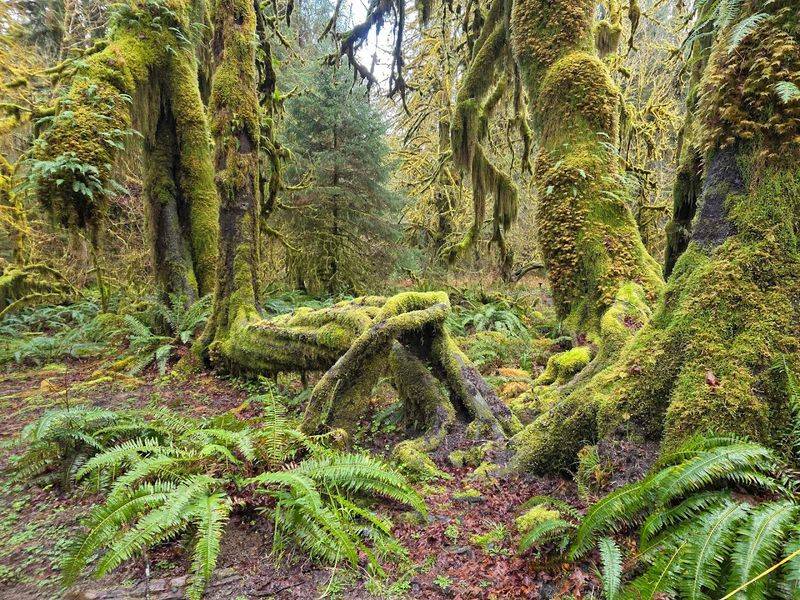
Every bend in this trail offers something worth pointing a lens at. The challenge is not finding a good shot but deciding which one to take first.
Morning light filtering through the dense canopy creates a soft, diffused glow that flatters the moss and ferns beautifully.
Overcast skies, which are common in Washington, actually work in a photographer’s favor here by eliminating harsh shadows and keeping the greens saturated and even.
Wide-angle shots of the arching maple canopy are the most popular framing, but close-up details of individual moss clusters, mushrooms, and banana slugs reward those willing to crouch down and slow down.
The creek running near parts of the trail adds a reflective element that can anchor a foreground nicely.
One honest caveat: no photo fully captures the scale or atmosphere of this place.
The immersive quality of being surrounded by towering moss-covered trees on all sides is something the camera can hint at but never fully reproduce.
Visiting in person is the only way to truly understand what makes this trail feel like another dimension entirely.
Why This Trail Stays With You Long After You Leave
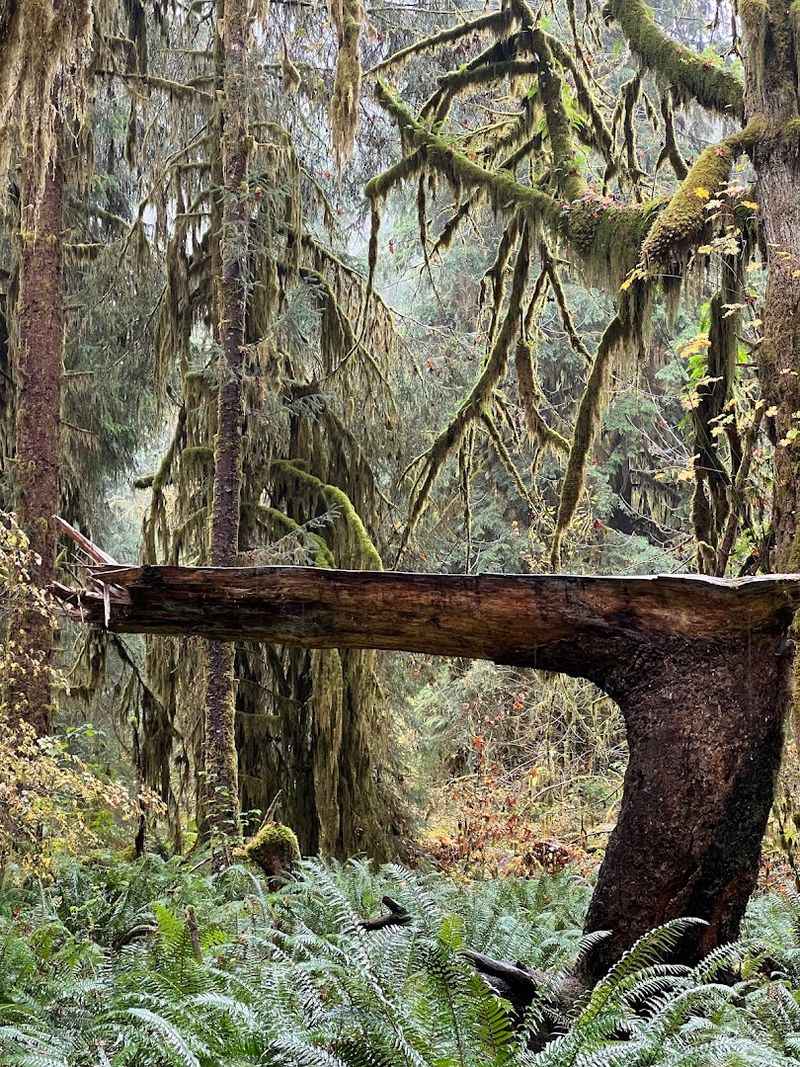
Most short hikes are forgettable by the time dinner rolls around. The Hall of Mosses Trail is not one of them.
There is something about the combination of scale and softness here that lodges itself in memory.
The trees are enormous, but the moss makes everything feel cushioned and close. The forest is ancient, but the colors are impossibly fresh.
That contrast is what lingers.
Visitors who come expecting a quick checkbox on a Washington road trip often leave rearranging their entire schedule to allow for a second loop. The trail is short enough to complete twice in an hour, and many people do exactly that without feeling like they are repeating themselves.
The Hoh Rain Forest in Washington is one of the few remaining temperate rainforests in the world, and the Hall of Mosses Trail sits at the heart of that rare ecosystem. It is the kind of place that makes even reluctant hikers understand why people fall in love with the outdoors.
Some trails take you somewhere.
This one changes the way you see things.