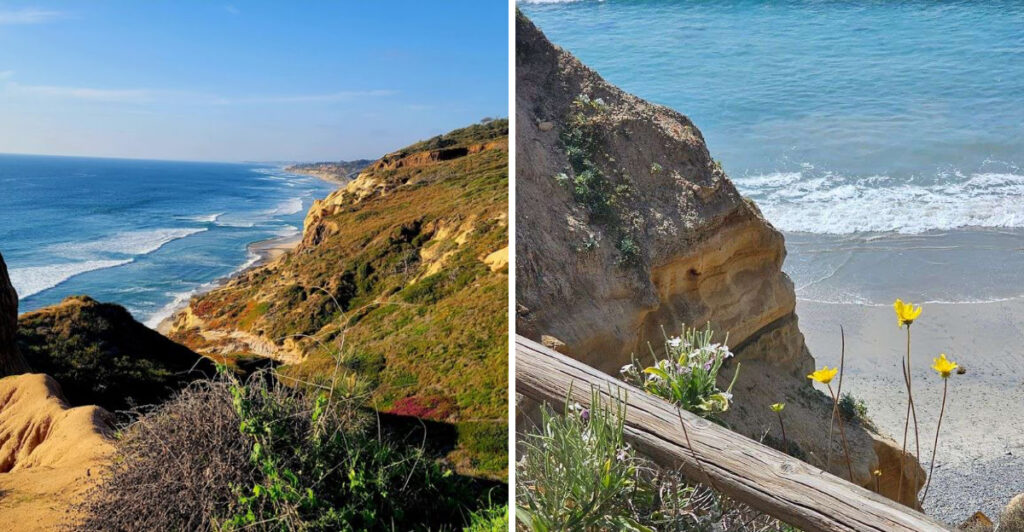
Picture this: red sandstone cliffs crumbling into the Pacific, ancient trees clinging to the edge of the world, and a wild beach that feels like it belongs in another dimension. That is exactly what waits at Torrey Pines State Natural Reserve, tucked along the coast of La Jolla, California.
This 3.5-mile route threads through one of the most dramatic coastal landscapes in the entire state, ending at a stretch of shore so raw and open it barely feels real. If you have been searching for a hike that rewards every step with something jaw-dropping, this is the one to put on your list.
The Reserve That Time Forgot
Before the trails, before the views, there is the story. Torrey Pines State Natural Reserve sits at 12600 N Torrey Pines Rd, La Jolla, CA 92037, and it protects one of the rarest pine trees on Earth.
The Torrey pine grows in only two places in the world: here along the California coast and on Santa Rosa Island offshore. Conservationists fought hard to protect this land from development, and today it stands as one of the last wild coastal reserves in Southern California.
The reserve covers roughly 2,000 acres of cliffs, canyons, lagoons, and beach. Every trail inside it tells a chapter of a much older story, one written in geology and shaped by the sea.
What makes this place feel so removed from modern life is how intact it still is. No shops, no crowds of buildings, just sandstone and sky.
California got lucky when this land was saved.
The Trailhead And What To Expect
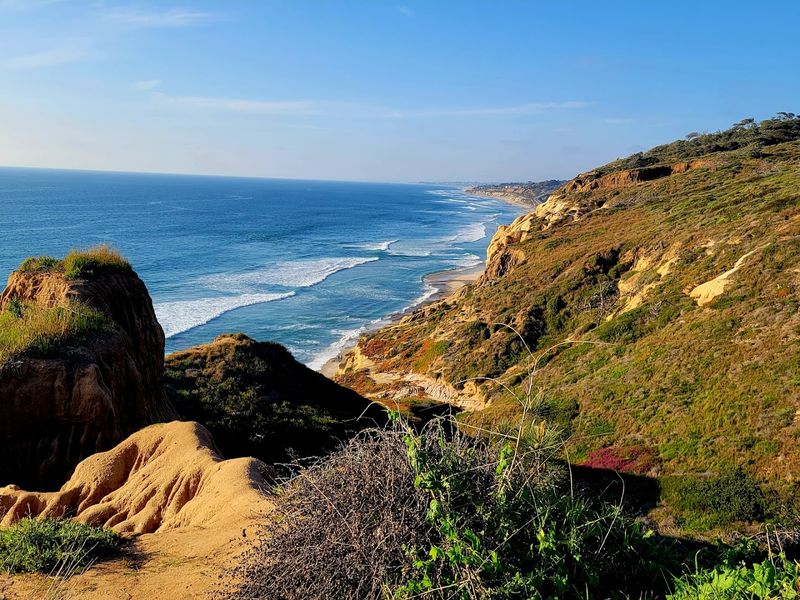
Most hikers start from the upper parking lot near the visitor center, which sits right on top of the cliffs with immediate ocean views. From here, the 3.5-mile route combines several trails into one satisfying loop that touches nearly every landscape the reserve has to offer.
The trail system is well-marked, so getting lost is unlikely even for first-timers. Signs point clearly toward key spots like Razor Point, the Beach Trail, and the Guy Fleming Loop, making it easy to navigate without a map in hand.
Expect the first stretch to feel mostly flat or gently rolling before the terrain begins to drop toward the beach. The descent gets steeper near the end, and the return climb back up will definitely test your legs a little.
Good shoes with grip are a smart choice here. The sandy paths can be loose in spots, and some sections near the cliff edges require steady footing.
Bring water too, as there are no refill stations on the trail.
Razor Point And The Red Cliffs
Few overlooks in California hit quite like Razor Point. The trail delivers you to the edge of a jagged sandstone promontory where the cliffs glow in shades of rust, amber, and deep red depending on the light.
These formations were carved over thousands of years by wind and water, and up close they look almost sculpted. The layers of sediment tell a slow geological story, with each stripe in the rock representing a different era of the Californian coast.
Standing at the tip of Razor Point, the Pacific spreads out in every direction below. On clear days, the Channel Islands appear faintly on the horizon, and dolphins occasionally surface in the water far below the cliffs.
This is one of the most photographed spots in the entire reserve, and for good reason. The contrast between the warm-toned stone and the cold blue ocean is striking in a way that photos struggle to fully capture.
Seeing it in person is a different experience entirely.
The Ancient Trees That Give This Place Its Name
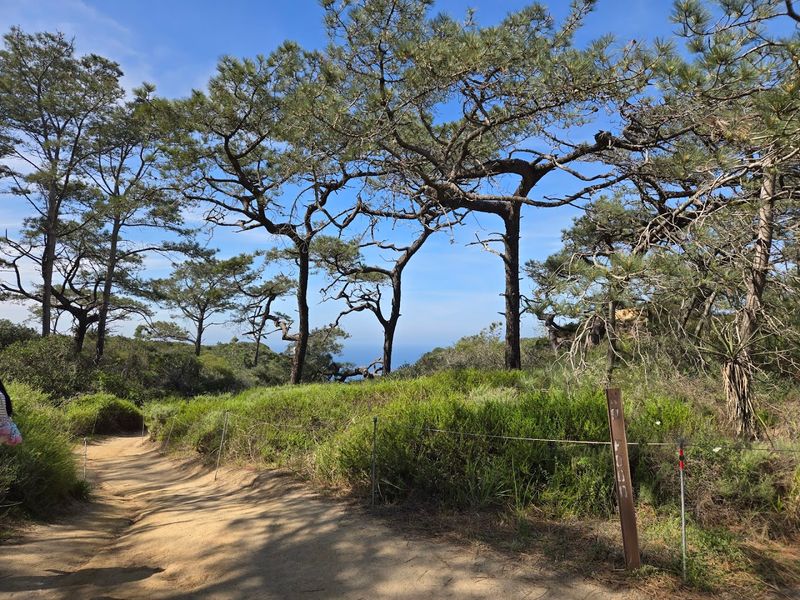
The trees here are not just scenery. They are survivors.
The Torrey pine is the rarest native pine in the United States, and the population growing along these California cliffs is one of only two wild stands left on the planet.
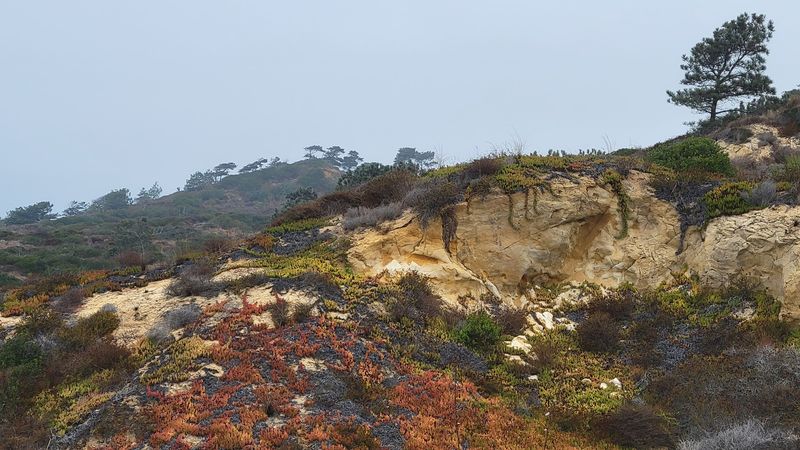
These trees have adapted to the harsh coastal environment over centuries. Their roots grip into sandy, nutrient-poor soil, and their trunks often twist dramatically in response to constant ocean winds.
No two trees look exactly the same.
Up close, the Torrey pine has a wild, almost ancient look to it. Long needles grow in bundles of five, and the cones are thick and heavy.
The bark has a rough, puzzle-like texture that catches the light in interesting ways.
Because the reserve protects this species, visitors are asked to stay on marked trails and avoid touching or damaging the trees. The population here is considered fragile, and even small disturbances can have lasting effects on individual trees and the ecosystem around them.
A Lesser-Known Overlook Along The Trail
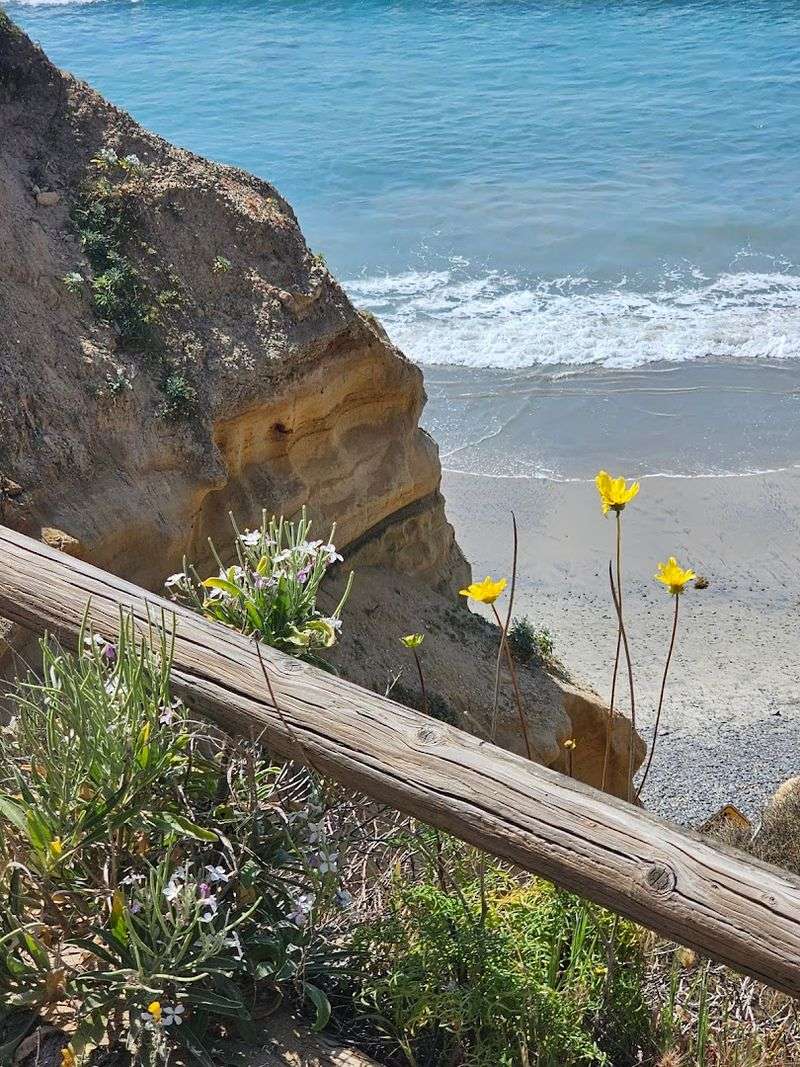
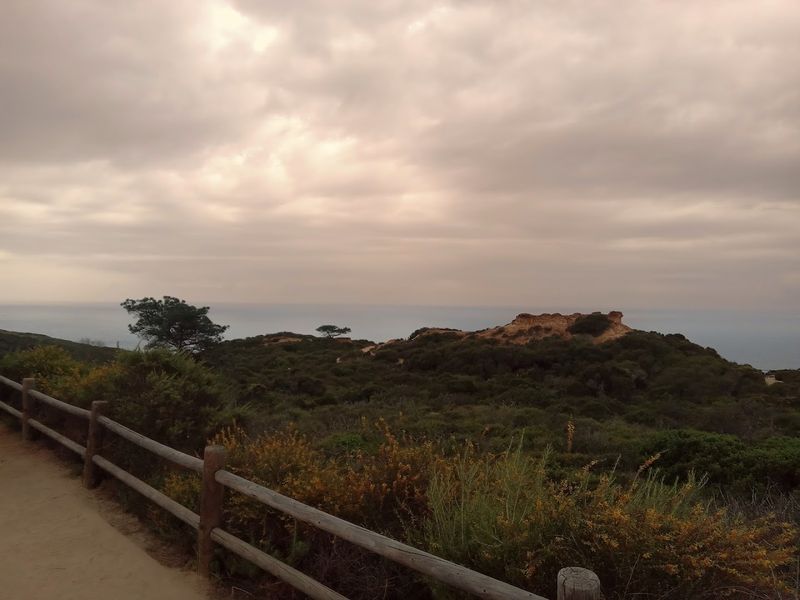
Not everyone makes it to Yuma Point, which is exactly what makes it feel like a secret. This overlook sits slightly off the main flow of foot traffic, and hikers who take the short detour are rewarded with a sweeping coastal panorama that feels almost private.
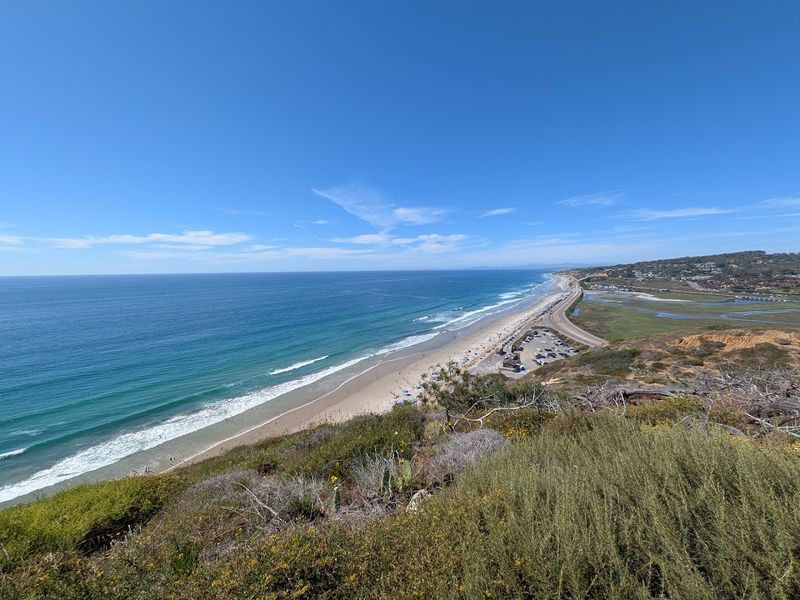
From this vantage point, the reserve stretches out in a patchwork of canyon, cliff, and chaparral. The Torrey Pines Lagoon glimmers to the north, and the white sand beach curves along the base of the cliffs below.
On quieter mornings, the only sounds at Yuma Point are wind, waves, and the occasional call of a red-tailed hawk riding the thermals above the canyon. It is the kind of spot where time seems to slow down on its own.
The overlook is not well-advertised on most trail maps, so many visitors pass right by the turnoff without realizing what they are missing. Paying attention to the smaller trail markers along the route is the best way to find it.
Wildlife You Might Actually See
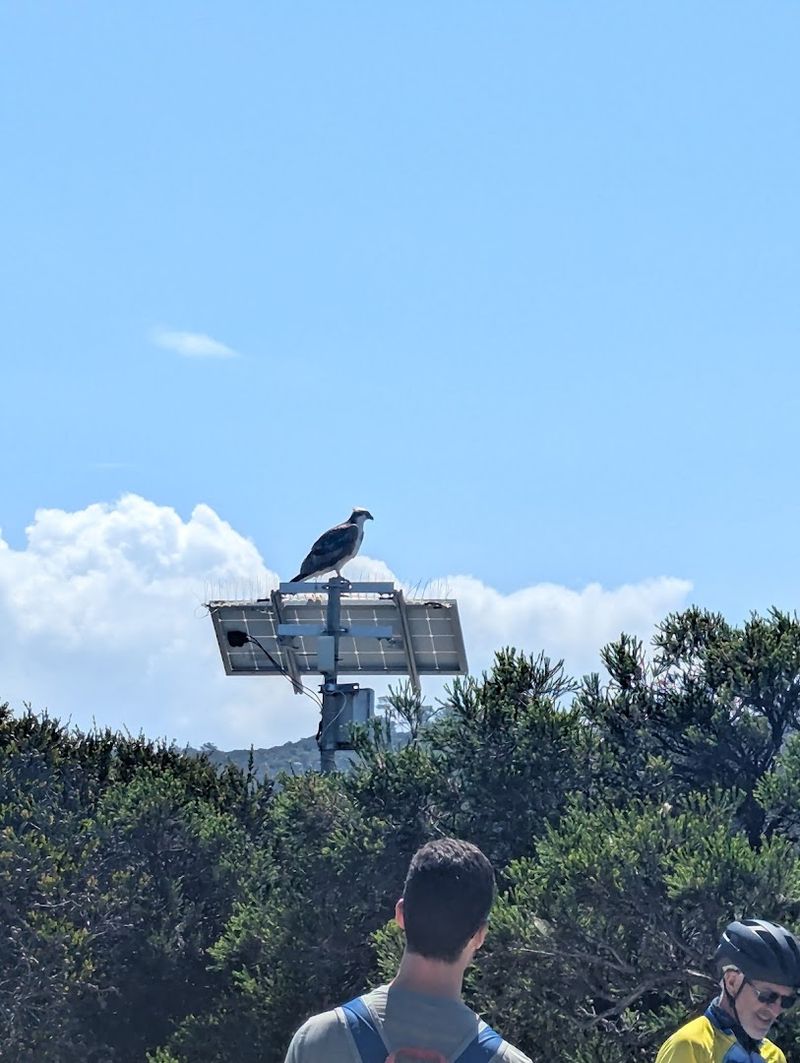
This reserve is alive in ways that become more obvious the longer you stay on the trail. Torrey Pines State Natural Reserve protects a rare coastal ecosystem, and that means the wildlife here is more than background scenery.
Birds are some of the most reliable sightings, with species like red-tailed hawks and Anna’s hummingbirds well documented in the reserve. Along the cliffs and around the lagoon, patient hikers may also spot shorebirds, waterfowl, and other native species moving through this protected landscape.
Mammals are possible too, but they feel more like a bonus than a guarantee. Bobcats do live in the reserve and have been documented there, though sightings are occasional rather than something visitors should expect on every hike.
That unpredictability is part of what keeps the experience feeling wild, especially for a place so close to the city. Out on the water, dolphins are another realistic reward, especially from the higher overlooks where the ocean view opens wide.
If you plan to step into the surf at the bottom, it is also smart to remember the stingray shuffle. California State Parks recommends shuffling your feet through the sand rather than stepping down sharply, which helps avoid surprising a buried stingray.
The Beach Trail Descent
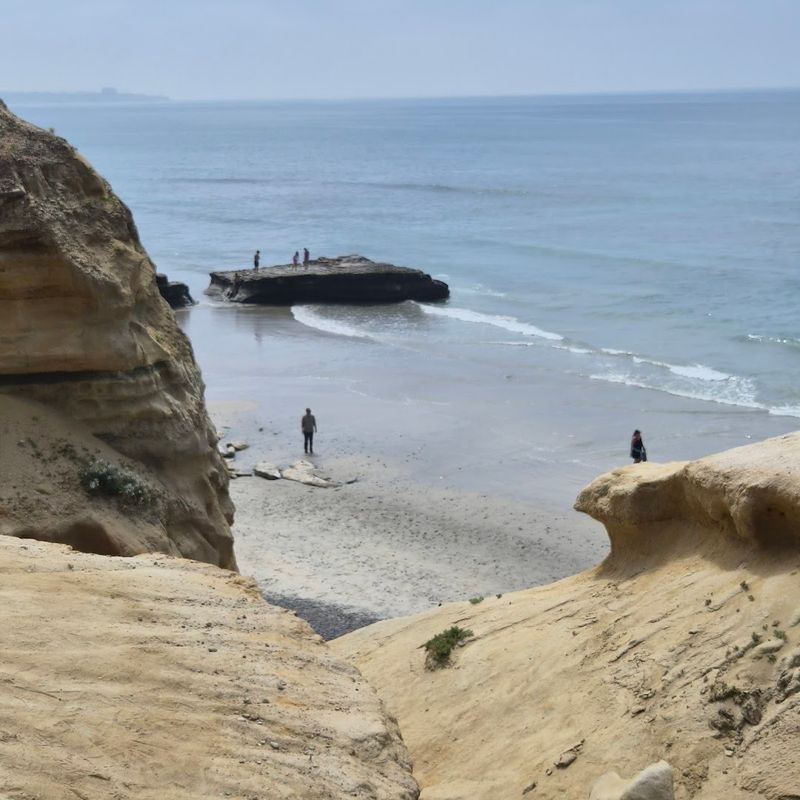
The moment the trail tips downward toward the beach, the whole character of the hike shifts. The descent is steep in places, with loose sand underfoot and the smell of salt air growing stronger with every step.
Carved between towering walls of eroded sandstone, the Beach Trail feels almost canyon-like on the way down. The cliffs close in on both sides, and the sound of waves builds gradually until the beach opens up all at once at the bottom.
It is the kind of trail ending that earns its payoff. After miles of clifftop walking, arriving at the beach feels like stepping into a completely different world, one that is open, loud, and brilliantly lit by reflected water.
The descent requires attention, especially on the steeper sections where the path narrows and footing becomes less predictable. Trekking poles can help, though many hikers manage without them.
The climb back up is where most people really feel the effort, so saving some energy for the return is a smart move.
The Otherworldly Beach At The Bottom
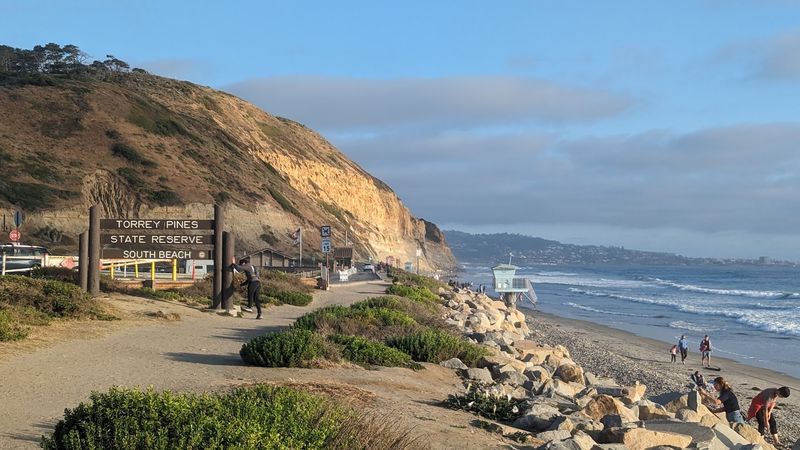
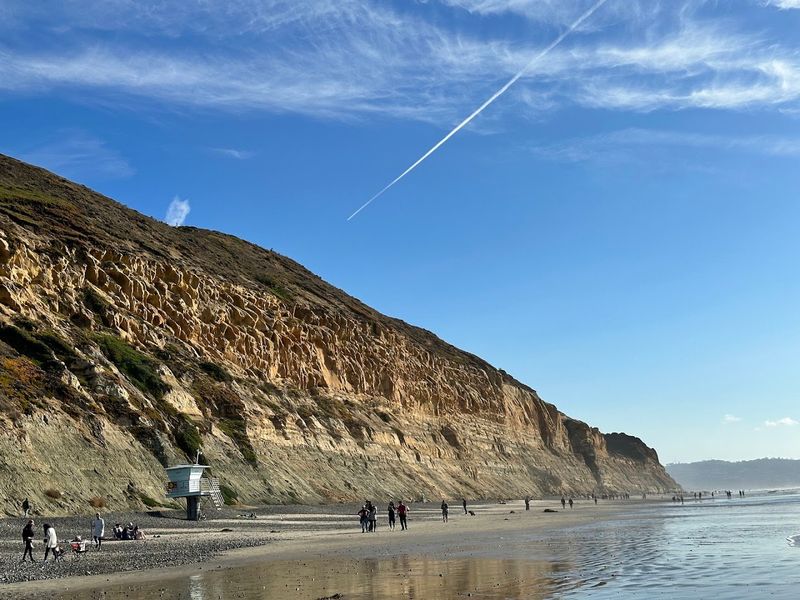
There are beaches, and then there is this beach. The strip of sand at the base of the Torrey Pines cliffs is one of the least developed stretches of shoreline in all of Southern California, and it shows.
No vendors, no boardwalks, no beach chairs for rent. Just sand, cliffs, kelp, and the open Pacific.
The cliffs rise dramatically behind the shore, and their layered red and orange faces reflect in the wet sand near the waterline.
Visitors who make it down to the beach often describe a strong sense of isolation here, even when other hikers are nearby. The scale of the cliffs and the width of the ocean create a feeling of being very small in a very large and ancient place.
Walking back along the beach toward the northern end of the reserve is a popular option for the return trip. The route along the sand offers a completely different perspective on the cliffs, and the light in the afternoon turns the rock faces into something that looks almost painted.
Best Time To Visit And What To Bring
Timing matters at Torrey Pines. Mornings tend to be quieter, especially on weekdays, and the light in the early hours is ideal for photography along the cliffs.
By midday on weekends, the trails can get busy enough that the narrower sections feel congested.
Spring and fall are generally the most comfortable seasons for hiking here. Summer brings marine layer fog in the mornings that often burns off by mid-morning, leaving clear skies and cooler temperatures than inland California.
Winter days can be remarkably clear and uncrowded.
Water is essential. There are no refill stations on the trail, and the combination of sun, wind, and physical effort can leave hikers more dehydrated than expected.
Bringing more water than you think you need is always the right call.
Sunscreen is a must, even on overcast days. The coastal UV exposure at this latitude can be surprisingly strong.
Comfortable walking shoes with grip will handle most of the terrain, though proper hiking footwear makes the steeper sections noticeably easier to manage.
Why This Hike Stays With You
Most hikes offer scenery. This one offers something harder to name.
The combination of rare trees, sculpted geology, open ocean, and a wild beach creates an experience that feels genuinely complete from start to finish.
California has no shortage of beautiful trails, but Torrey Pines delivers a specific kind of drama that is hard to replicate elsewhere. The landscape changes constantly over 3.5 miles, moving through canyon, clifftop, forest, and shore in a way that keeps the experience fresh throughout.
The reserve also carries a quiet sense of importance. Knowing that the trees here exist almost nowhere else on Earth, and that this stretch of coast was preserved against significant pressure to develop it, adds weight to every step on the trail.
People who visit once tend to come back. The light changes, the seasons shift, and the trails reveal something new depending on the time of year.
That quality of staying interesting across multiple visits is what separates a great hike from an unforgettable one.