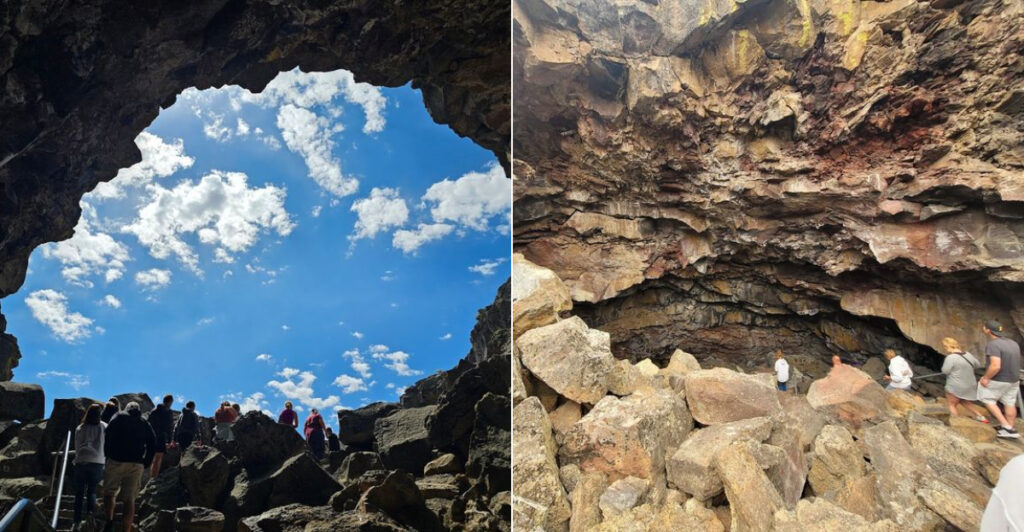
Standing in 90-degree Idaho heat and going into an underground world of ice just a few feet below the surface. That contrast alone is worth the stop, and the story behind it makes the whole experience even better. Ancient volcanic eruptions created these lava tubes roughly 24,000 years ago.
A young boy chasing a lost goat stumbled upon them in the 1880s. And visitors have been completely jaw-dropped ever since. This is the kind of place that sounds almost too good to be true until the cold air hits and the ice comes into view.
No filters needed. Does an underground frozen cave sitting beneath a sun-baked Idaho desert sound like exactly the kind of stop that makes a road trip genuinely unforgettable?
It rewards every curious traveler willing to pull off the highway and find out what is hiding just below the surface. Come see it before moving on.
Ancient Volcanic Origins
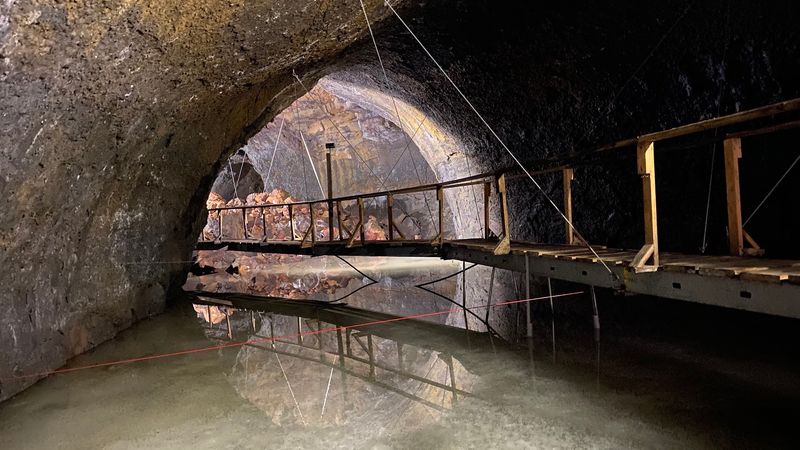
About 24,000 years ago, the earth beneath what is now southern Idaho was doing something spectacular. A massive volcanic eruption from the Black Butte Crater sent rivers of molten lava flowing across the landscape, carving out tunnels that would one day become one of the most unusual attractions.
Here is how it worked: the outer surface of the flowing lava cooled and hardened first, forming a shell. The molten rock inside kept moving, eventually draining out and leaving behind hollow tubes.
Those tubes are what visitors walk through today at the Shoshone Ice Caves.
What makes this place even more fascinating is that subterranean water seeped into these tubes over thousands of years and froze solid due to trapped cold air. The thick basalt walls act like a natural insulator, keeping warm summer air out completely.
The cave maintains temperatures between 23 and 33 degrees Fahrenheit all year long, no matter what the thermometer says outside.
Geologists consider lava tube ice caves rare worldwide, which makes this Idaho site genuinely special. The main cave stretches roughly 1,700 feet long, 50 feet wide, and 45 feet high.
Standing inside and realizing that volcanic fire created this frozen space is the kind of thought that stops you mid-step and makes you stare at the ceiling in quiet amazement.
The Discovery Story
Every great place has an origin story, and this one starts with a lost goat. Back in the 1880s, a young boy was searching for his missing animal somewhere in the high desert of southern Idaho when he stumbled across a dark opening in the earth.
Curious and probably a little nervous, he explored it and found something nobody expected: a cave full of ice sitting right in the middle of the desert. Word spread quickly.
The town of Shoshone soon realized the cave had a very practical value.
Before modern refrigeration, ice was a precious commodity, and locals began harvesting ice directly from the cave to keep food cold. For decades, the cave served as a natural freezer for the surrounding community.
By the 1940s, things had gone sideways. Over-harvesting and poorly placed entry points allowed too much warm air inside, and the ice began melting at an alarming rate.
It looked like the cave might lose its frozen character entirely.
Fortunately, a man named Russell Robinson purchased the property in the 1950s and set about restoring it. He sealed the problematic openings, and slowly the ice returned.
Today, visitors can thank Robinson’s determination every time they feel that sharp cold hit their face at the bottom of those 80 stairs. That kind of comeback story makes the tour feel even more worth it.
The Temperature Shock
Picture walking from scorching desert heat directly into a natural freezer. That is the experience waiting at the Shoshone Ice Caves, and it never gets old no matter how many times visitors describe it.
On a summer day when the surface temperature hits 90 or even 95 degrees Fahrenheit, the inside of the cave sits at a steady 23 to 28 degrees Fahrenheit.
That is a temperature drop of more than 60 degrees in a matter of seconds. Visitors say the cold hits your face before you even reach the bottom of the stairs.
One family reported going from 90 degrees on the surface to 27 degrees inside, and their kids thought it was the coolest thing they had ever experienced.
The science behind it is straightforward but endlessly impressive. Cold winter air sinks into the cave each year and gets trapped by the dense basalt walls.
Because warm air rises and the cave opening is positioned in a way that limits airflow, that cold air simply stays put. Summer heat cannot push its way in.
Have you ever stood in a desert and felt your breath turn to mist? That is exactly what happens here.
A light jacket or long-sleeved shirt is all you need for comfort, and the tour lasts around 45 minutes. Pack something warm in your bag before you head down those stairs, because the cold is very real.
Inside The Guided Tour
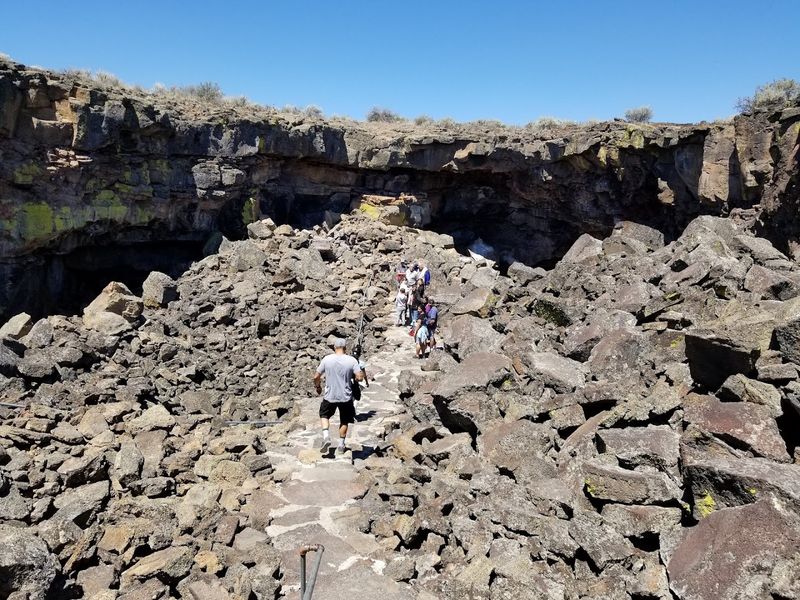
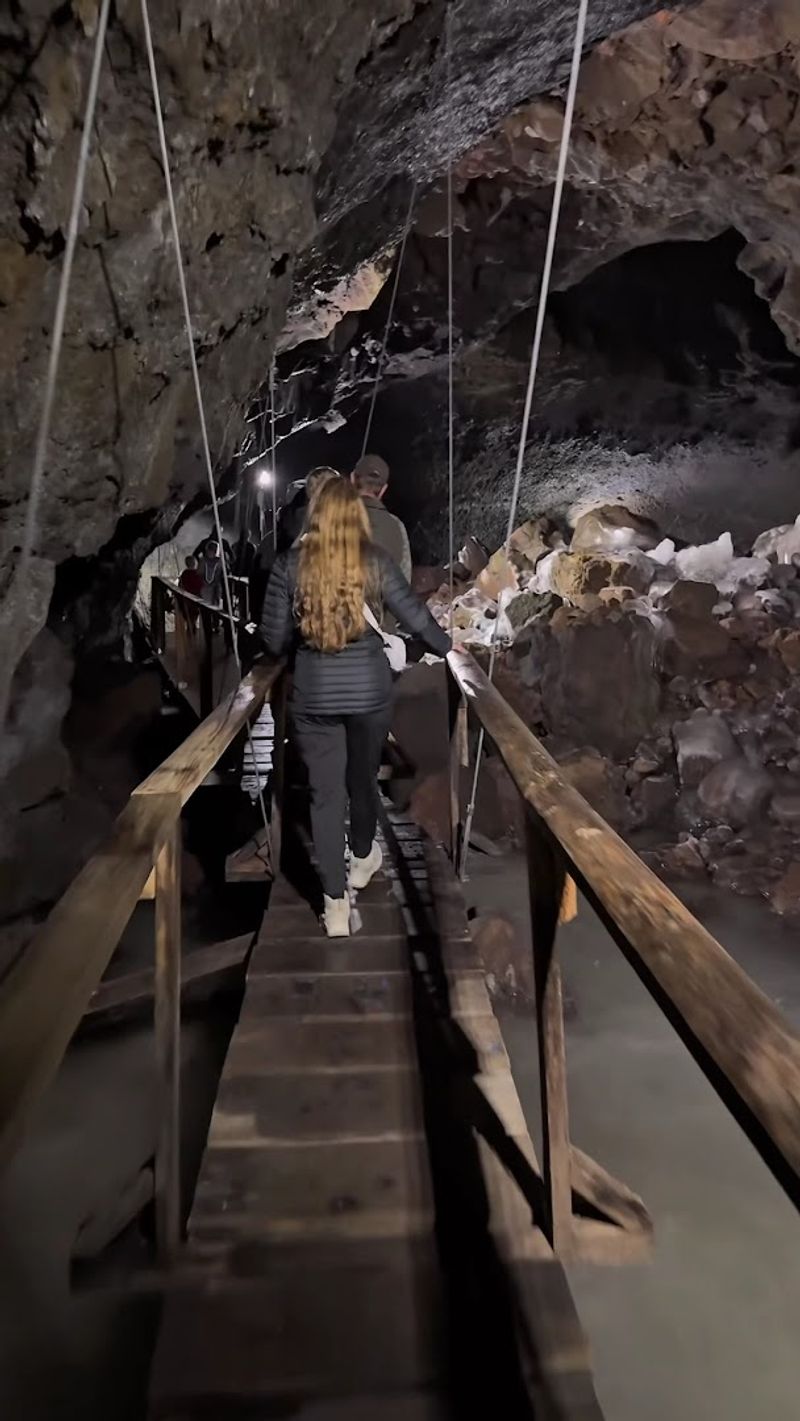
Tours at the Shoshone Ice Caves run once an hour, and each one takes visitors roughly 100 feet below the earth’s surface. A guide leads the group along a wooden walkway built directly over the solid ice floor, pointing out volcanic formations, explaining the cave’s geology, and sharing stories about its history along the way.
The path covers about three-quarters of a mile and includes approximately 80 uneven stairs carved into the lava rock. The cave is well lit, and the wooden boardwalk makes navigation manageable, though the stairs do require some attention.
Visitors with mobility challenges should plan accordingly, as the terrain is genuinely rugged in places.
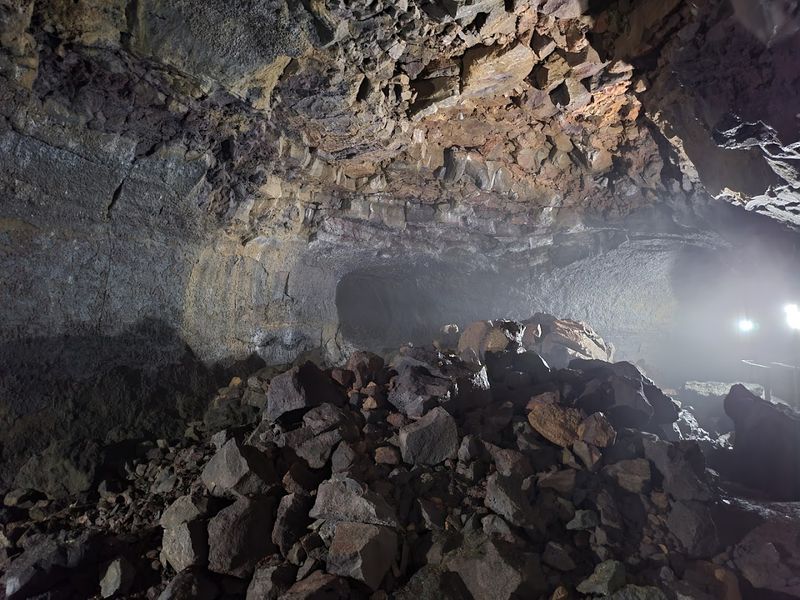
What surprises most people is how wide the cave opens up once you get inside. The ceiling rises to about 45 feet, and the space feels more like a vast underground cathedral than a narrow tunnel.
The ice on the floor can range from 8 to 30 feet deep depending on the season and the year.
Tour guides answer questions and cover everything from volcanic history to how early settlers used the cave as a refrigerator. Children especially respond to the dramatic setting, and parents say the educational value makes the trip feel genuinely worthwhile.
Tours typically run from May 1st through September 30th, so planning ahead is smart. Can you think of a better way to spend an hour on a hot Idaho afternoon?
Ice, Rock, And Wonder
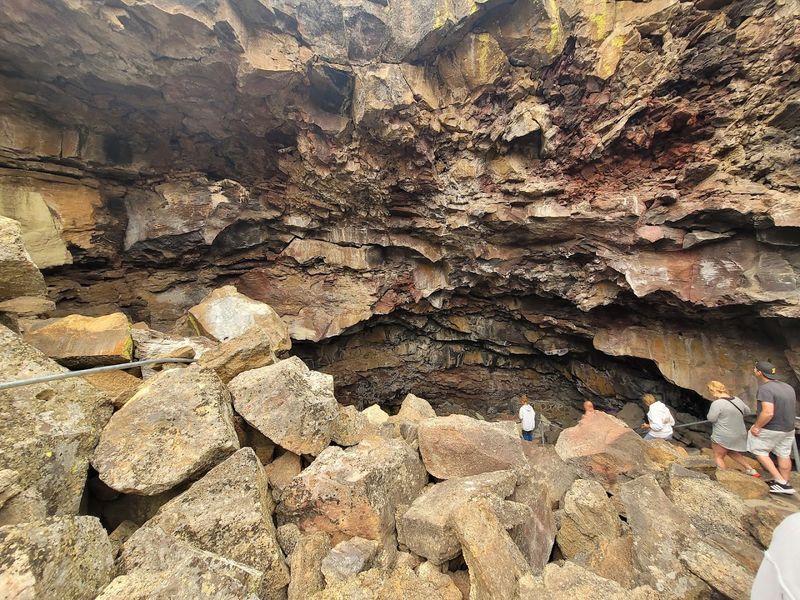
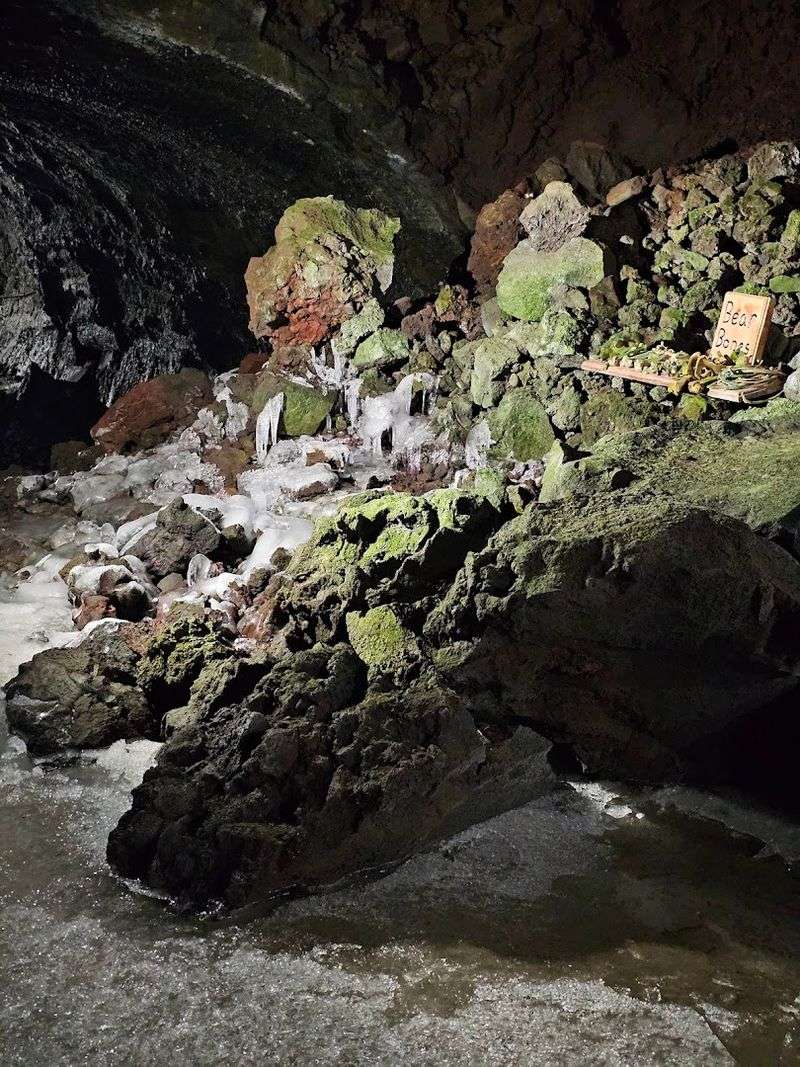
The ice is not a thin glaze on the floor. It is a serious, deep, ancient body of frozen water that has been building and renewing itself for thousands of years.
Depending on the season, the ice can reach depths of up to 30 feet, and in spring it tends to be at its most impressive and most sparkly.
Visitors often describe the ice as almost glowing under the cave lights. The contrast between the dark volcanic basalt walls and the pale blue-white ice creates a visual effect that photographs cannot fully capture.
One visitor described it as looking like something from another planet, which is honestly not far off.
Beyond the ice, the cave itself is a showcase of volcanic geology. The walls are rough and layered, showing the different flows that shaped the tube over millennia.
There is also a natural arch inside the cave that stops most visitors in their tracks.
It is the kind of formation that makes you realize just how much time and force went into creating this space. The cave was even used as a skating rink in the 1950s, and photographs from that era are on display in the small museum on-site.
Olympic skaters reportedly practiced on the ice inside. That detail alone makes the whole experience feel a little more surreal.
Museum And Gift Shop
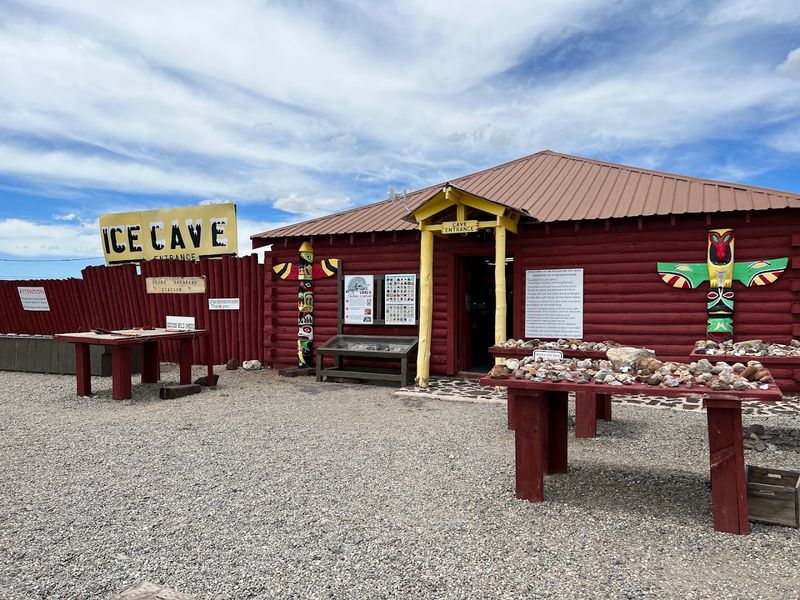
Not every roadside attraction offers something worth exploring before and after the main event, but the Shoshone Ice Caves does. Right on the property, visitors will find a rock and artifact museum that punches well above its size.
The displays include volcanic specimens, geological samples, historical photographs, and artifacts connected to the cave’s long and colorful past.
The photographs of Olympic skaters practicing on the cave ice in the 1950s are a genuine highlight of the museum. Most visitors do not expect to find that kind of story tucked into a small building in the Idaho desert, and it tends to spark a lot of conversation.
The museum also covers the science of lava tubes and the volcanic history of the surrounding Black Butte Crater Lava Field.
The gift shop is stocked with Idaho souvenirs, rocks, geodes that visitors can crack open, jewelry, and various keepsakes. It is the kind of shop where kids linger and adults end up buying something they did not plan on purchasing.
Staff in both the shop and the museum are consistently described as friendly and helpful. There is also a picnic area on the property, which makes the site a natural stopping point for families on a road trip.
Arriving a little early before your tour gives you time to explore everything above ground before heading below. The whole property feels like it was designed to reward curiosity at every turn.
Legends And Local Lore
Every cave worth visiting has a story that goes beyond geology, and the Shoshone Ice Caves has a few that add a layer of intrigue to the whole experience. One of the most talked-about legends involves a group of Shoshone Native Americans who, according to a disputed story, sought shelter in the cave in 1895 and froze inside.
Historians and tribal representatives have largely refuted this account, suggesting it may have been invented to attract early tourists. That kind of origin myth says a lot about how people have always been drawn to mysterious places and felt the need to add drama to them.
The cave does not need invented stories to be compelling, but the legend has taken on a life of its own over the years and still circulates among visitors. More recently, staff and visitors have reported unexplained sounds echoing through the tunnels and shadow figures moving along the walls.
Idaho has a rich tradition of storytelling tied to its landscape, and the Shoshone Ice Caves fits perfectly into that tradition. The cave is old, dramatic, and full of history that is still being interpreted and debated.
Plan Your Visit Right
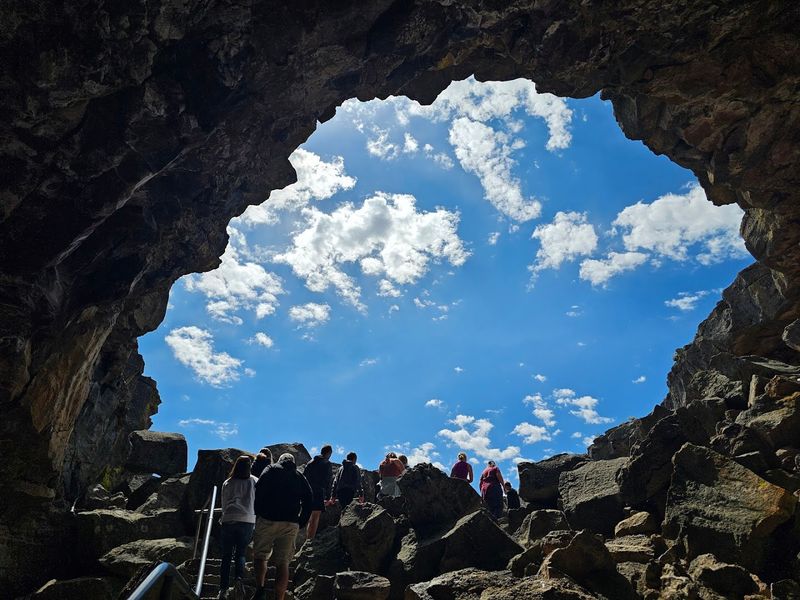
Getting the most out of a trip to the caves takes a little planning, and it is absolutely worth the effort. Tours run on the hour from May 1st through September 30th, with the last tour of the day typically at 4 pm.
Arriving at least 20 minutes early gives you time to look around the museum and gift shop before heading underground.
Price is fair for a 45-minute guided experience that goes 100 feet below the earth’s surface. Calling ahead on weekdays is a good idea to confirm tour times, especially outside of peak summer months.
Wear closed-toed shoes with solid grip since the stairs and lava rock surfaces are uneven in places. A light jacket or long-sleeved layer is all you need for the cold inside, though the temperature difference between outside and underground will catch you off guard if you go in completely unprepared.
The cave is not wheelchair accessible due to the steep stairs. The Shoshone Ice Caves are located at 1561 ID-75, Shoshone, Idaho.
People from all over the world make the trip to this spot in the Idaho desert, and most of them say the same thing afterward: they wish they had come sooner.