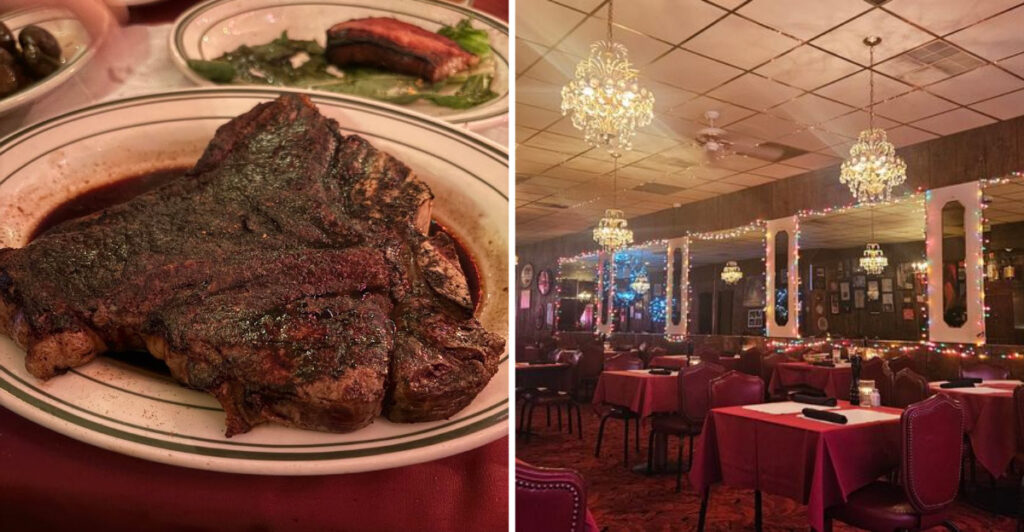
Milwaukee has changed plenty since the 1940s. This steakhouse still knows better than to mess with a winning dinner.
Dark dining rooms, relish trays, and carefully broiled steaks keep the old Wisconsin supper club rhythm alive without turning it into a museum piece.
The evening is meant to unfold slowly. You settle in and eventually face the serious decision between porterhouse or prime rib with butter-sautéed mushrooms.
The steakhouse story dates to 1946, while its name reaches back even farther.
Nearly eight decades later, the formula still works: full plates and a steak that makes the rest of the evening very easy to understand.
A State Street Steakhouse Has Held Its Ground Since 1946
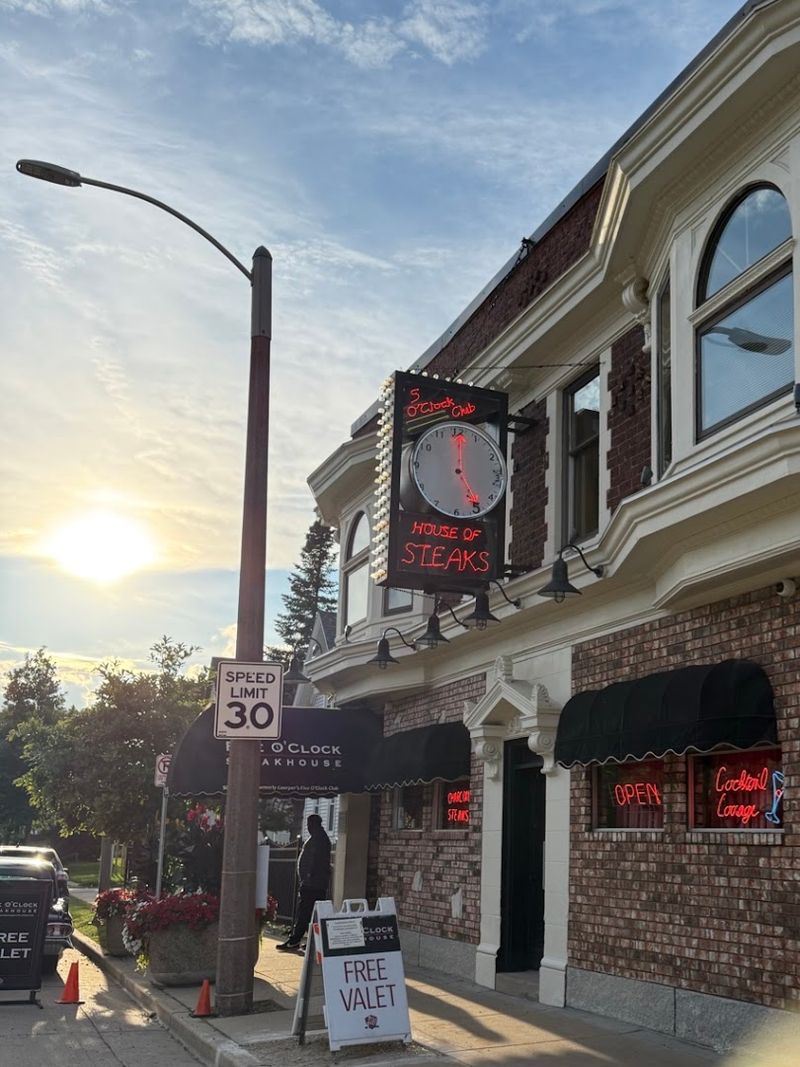
Long before menus lived on phones, the Five O’Clock name was already part of Milwaukee dining history. The current building has housed businesses including a delicatessen, pharmacy, restaurant, bakery, and tavern.
The Five O’Clock Club moved to the State Street site in the late 1930s. The steakhouse dates its operation to 1946, while Wilmer “Bill” Coerper took over in 1948 and later expanded the dining space.
By the time Coerper expanded the operation, the supper club had already begun building its Milwaukee identity. This corner has served generations while countless dining trends arrived, demanded attention, and disappeared.
The Kalkounos family purchased the business from the Coerper family in 2004. Stelio Kalkounos assumed full ownership in 2017 and continued the supper club customs already central to the restaurant.
Wood paneling, red tablecloths, low lighting, and vintage details establish the tone before the menu appears. The room needs no neon slogan explaining that it is classic.
You settle in and understand that dinner is supposed to take its time here. Your table is not a pit stop, and the steak did not dress up for a ten-minute appearance.
The Five O’Clock Cut Gives Porterhouse Top Billing
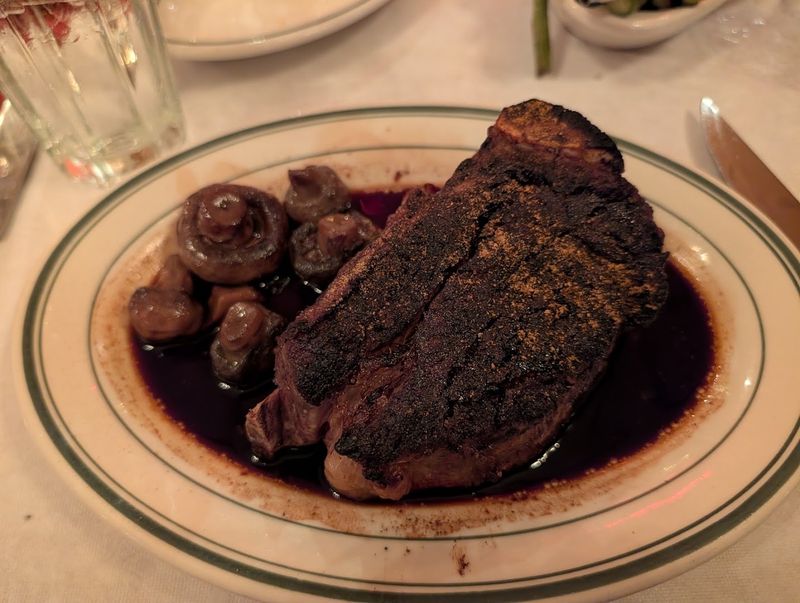
Some steaks enter quietly. The Porterhouse Steak Five O’Clock Cut arrives with its job title printed directly on the menu.
The porterhouse combines tenderloin with New York strip, separated by the familiar T-shaped bone. You get a softer filet side and a firmer strip side carrying a deeper beef flavor.
Five O’Clock lists the cut “for the hearty eater,” which is useful honesty. This is not the moment to claim you only wanted something light before dessert.
The current menu places it beside filet mignon, bone-in filet, New York strip, ribeye, bacon-wrapped filets, and prime rib. Every listed beef cut is USDA Choice or higher, according to the restaurant.
Steaks come with butter-sautéed mushrooms, adding another rich layer without requiring a separate topping. The porterhouse also receives the restaurant’s signature seasoning, basting sauce, high-heat broiling, resting period, and final return to temperature.
That sequence gives the cut its recognizable character before it reaches your table. You still choose the temperature, but the kitchen controls the drama around it.
Can you finish the Five O’Clock Cut alone? Your appetite may answer confidently while the plate waits for evidence.
A 1,800-Degree Broiler Builds The Signature Crust
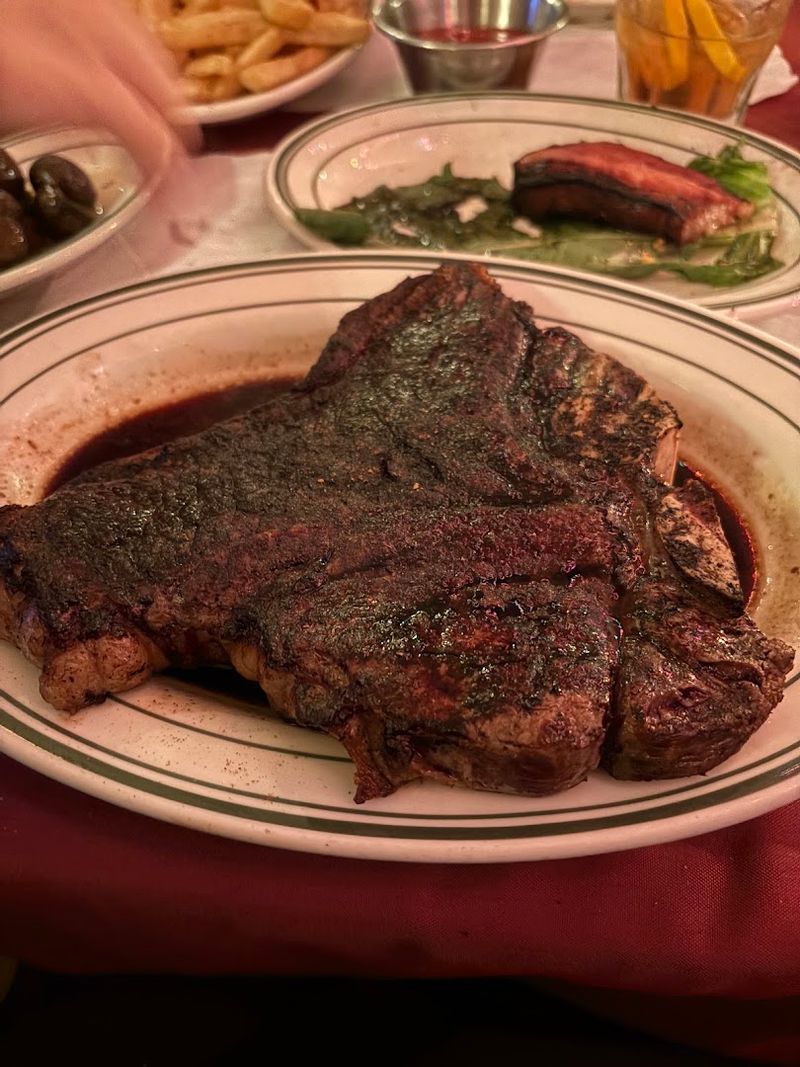
Home ovens rarely enter conversations about 1,800-degree heat. Five O’Clock’s infrared broiler operates in a different league.
The kitchen seasons each steak with a proprietary blend, brushes it with basting sauce, and exposes it to the broiler. A 2021 account from the owner said the restaurant had used that equipment for more than 35 years.
The heat creates rapid browning across the surface. The basting sauce helps produce a dark, savory, caramelized exterior without turning the steak bitter.
A browned crust does not literally seal juices inside meat. The restaurant protects tenderness through controlled cooking, a proper rest, and a careful return to serving temperature.
After broiling, the steaks rest so heat and juices can redistribute. They are then brought back to serving temperature before leaving the kitchen.
That extra step helps explain how a steak can arrive hot without skipping the rest period. It also demands timing because a busy dining room will not pause while one ribeye gathers its thoughts.
You notice the result when the knife passes through the crust and reaches the center. The contrast does the talking, and your dinner companion may stop talking entirely.
Filet, Ribeye, And Strip Keep The Menu Proudly Classic
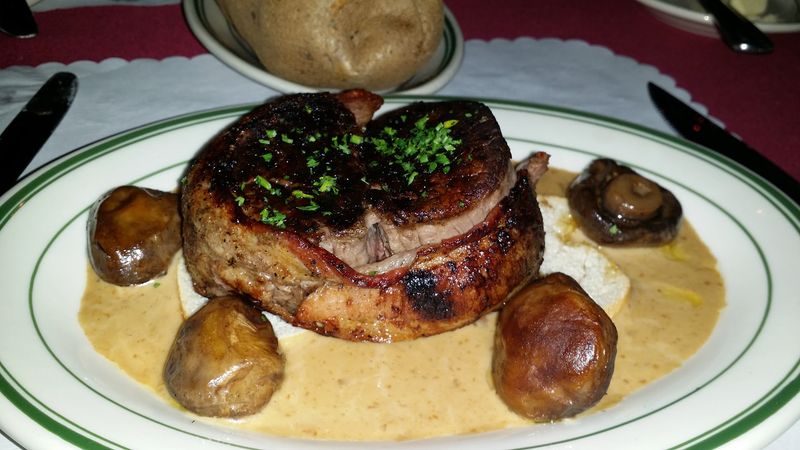
The menu does not chase novelty, but it is broader than one famous porterhouse. Filet mignon, bone-in filet, New York strip, ribeye, and bacon-wrapped filet medallions offer several routes through the beef section.
The eight-ounce filet is the smallest listed steak option. A sixteen-ounce filet doubles the weight, while the bone-in version adds a specialty cut with a richer profile.
The ribeye comes bone-in with the same butter-sautéed mushrooms served beside the other steaks. Its marbling suits diners who want richness with very little hesitation.
The New York strip brings a firmer bite and straightforward beef flavor. Optional Oscar-style preparation adds seafood and sauce without replacing the underlying cut.
Prime rib appears Friday and Saturday in limited quantities. The menu lists it as slow-roasted and served au jus with horseradish cream sauce, so late arrivals should not assume a portion is waiting.
Seafood, pork chops, baby back ribs, and combination plates extend the choices beyond steak. Still, beef holds the center of gravity, and nobody enters wondering whether the kitchen has become fascinated with tiny tasting spoons.
Choose filet for tenderness, ribeye for marbling, strip for a firmer chew, or porterhouse when one cut sounds unnecessarily restrictive.
Relish Trays And Tableside Salad Preserve Supper Club Tradition
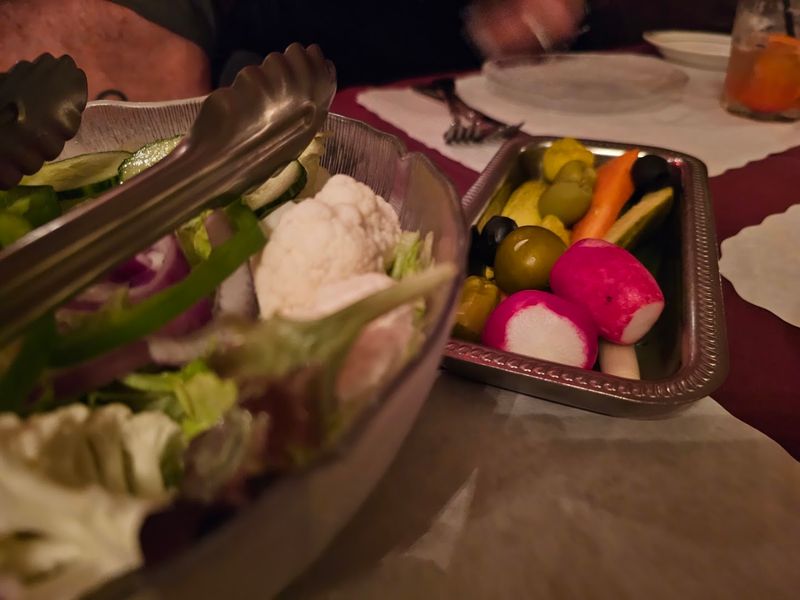
The steak may headline dinner, but the opening act arrives with olives, pickles, and hot peppers. That is how a supper club announces that nobody will be rushed.
Five O’Clock describes its sequence as beginning at the bar, where a host greets diners and takes the order. Guests then move to a table set with salad, warm bread, and a relish tray while the kitchen prepares the entrée.
The current menu confirms that dinner includes a fresh garden salad, dressings served tableside, sourdough bread, honey, butter, and the relish tray. These are included with the entrée rather than assembled as surprise charges.
Tableside dressing gives you control over the salad. The bread, honey, and butter can become a serious distraction if you arrive hungry enough to forget a large steak is coming.
This ritual changes the pace of the evening. You nibble, talk, and watch the meal build instead of treating the first course like an obstacle between you and beef.
Which item disappears first at your table? The pickles have loyal supporters, but warm sourdough with honey can turn reasonable adults into defensive strategists.
Original Recipes Survived A Change In Ownership
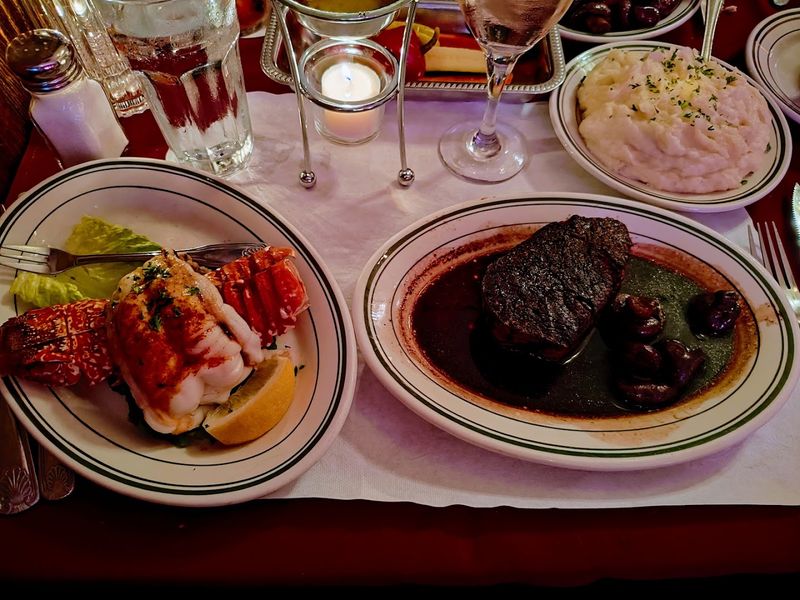
Changing ownership can make regulars inspect every familiar plate for signs of trouble. Five O’Clock took a preservation-first approach when the Kalkounos family bought the business in 2004.
Kalkounos later explained that the buyers obtained the original recipes and kept the preparation the same. That included the proprietary steak seasoning, basting sauce, broiler method, and resting process.
Continuity did not mean freezing the entire menu. Additions such as fried calamari, crab macaroni and cheese, French onion soup, and an eight-ounce filet expanded the choices without removing the steakhouse identity.
That balance protects the dishes longtime customers expect while giving newer diners more ways to build dinner. Tradition stays in charge, but it can move a chair occasionally.
The family ownership shifted again in 2017 when Stelio Kalkounos took full control. The restaurant still describes itself as family-owned and independently operated.
You do not need the seasoning formula to understand why preserving it mattered. Change the crust, sauce, and service rhythm together, and the address would survive while much of the restaurant’s identity disappeared.
Here, the signature methods survived the handover. The steaks kept their accent even when the ownership papers changed.
Milwaukee Still Knows When Five O’Clock Means Steak
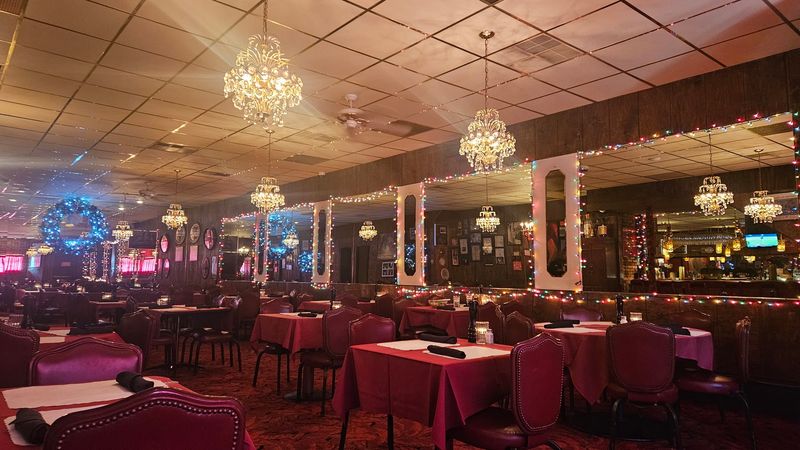
Dinner here begins before the steak touches the table. The supper club format asks you to slow down, order at the bar, and let the evening unfold in stages.
Live music continues on many Wednesday through Saturday nights. The Alley Cat Lounge adds a 1940s-inspired setting, while the dining room keeps its familiar low-lit steakhouse character.
Reservations are available and sensible for a restaurant built around deliberate service. Current hours list Tuesday through Thursday from 4:30 to 8:30 p.m., Friday from 4:30 to 9 p.m., and Saturday from 4 to 9 p.m.
The restaurant is closed Sunday and Monday under its published schedule. Complimentary valet parking removes one small problem before dinner creates several more delicious ones.
You can arrive planning to order quickly, then begin comparing porterhouse, ribeye, prime rib, and filet. By the time the relish tray appears, your original certainty may already be gone.
That indecision is part of the pleasure. Five O’Clock Steakhouse has held its place by serving a full supper club evening rather than trimming the experience to match whatever happens to be fashionable.
The classic cuts have outlasted generations of dining trends because the restaurant still gives them proper attention. Your reservation leads to 2416 W State St, Milwaukee, WI 53233.