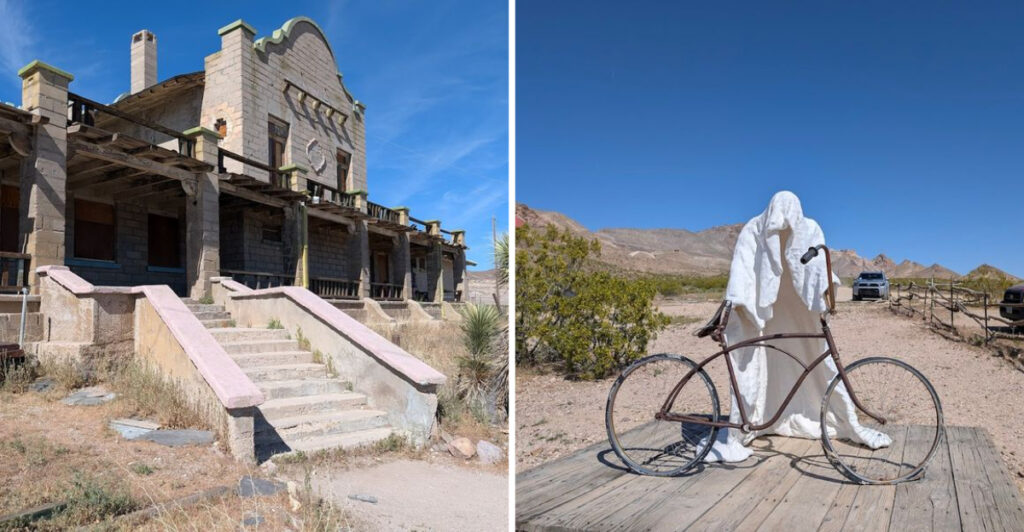
Empty desert, silent ruins, and sculptures that do not quite feel like they belong set the tone right away. In Nevada, strange landscapes are nothing new, but this one leans into that feeling in a way that sticks with you.
Nevada has plenty of wide-open spaces, yet this spot turns that emptiness into something far more interesting. You walk through it slowly, not because you have to, but because something about it makes you pause.
The shapes, the setting, the stillness all work together in a way that feels a little unsettling and a little fascinating at the same time. It is not polished or predictable, and that is exactly why it works.
If you are drawn to places that feel different the longer you stay, this one delivers.
The Ghost Town Setting That Makes Everything Stranger
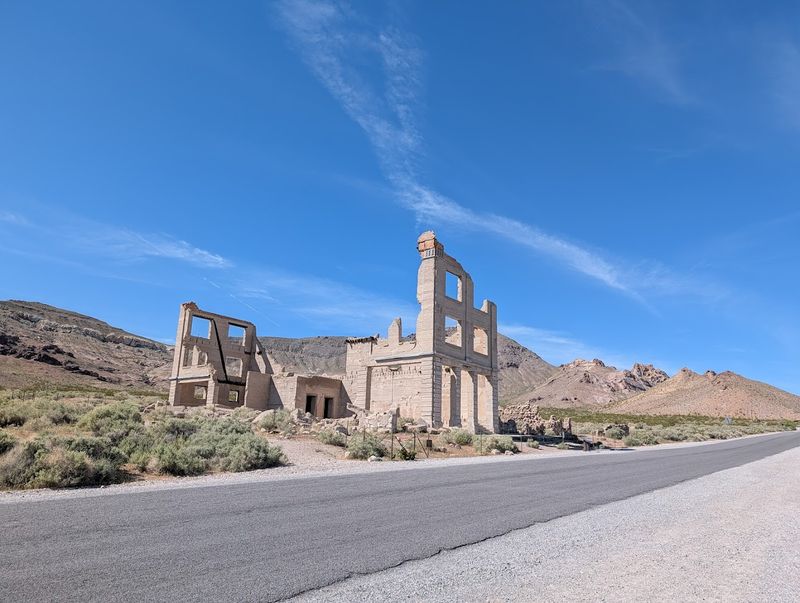
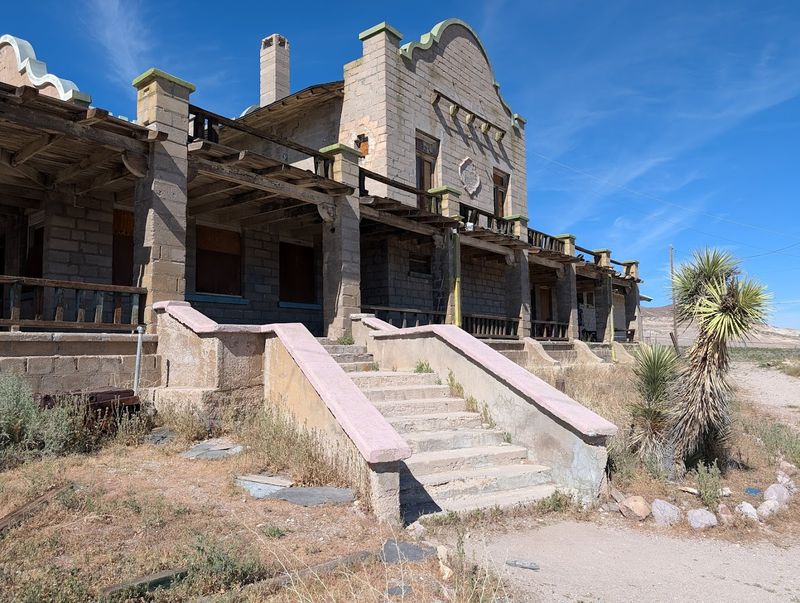
The ghost town setting adds a uniquely eerie atmosphere that enhances the outdoor sculptures. Goldwell Open Air Museum sits at the edge of Rhyolite, a once-booming Nevada mining town that rose and collapsed in just a handful of years over a century ago.
What remains of Rhyolite are stone walls, broken windows, and the kind of silence that feels thick enough to touch. The museum did not choose this setting by accident.
The juxtaposition of modern art against century-old ruins creates a theatrical atmosphere.
Crumbling facades frame the sculptures like a natural stage. The desert light shifts dramatically throughout the day, giving the whole area a different mood at sunrise, midday, and golden hour.
Visitors who arrive in the early morning often find they have the entire place to themselves, which only adds to the eerie feeling. Rhyolite and Goldwell together form one of the most atmospherically charged locations in the entire state.
Wander to this location if you want to experience something unique, 1 Golden St, Beatty, NV 89003.
The Belgian Artists Behind The Sculptures
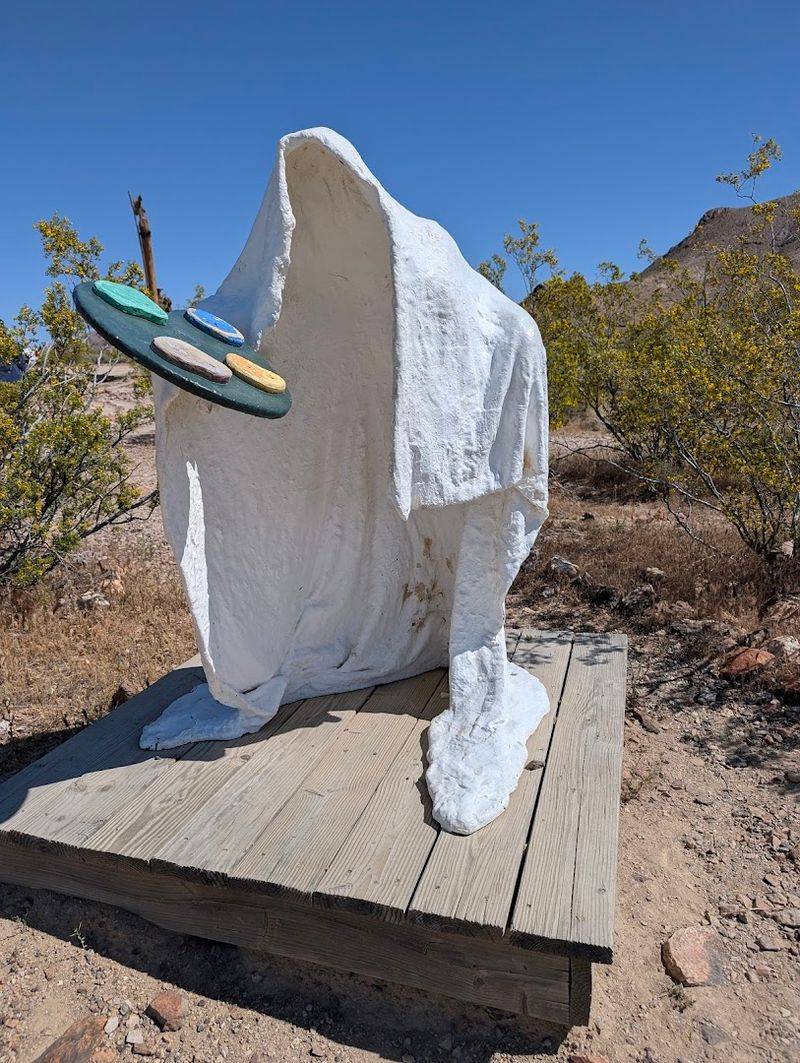
Not many people expect to find Belgian artistic influence in the middle of the Nevada desert, but that is exactly what Goldwell offers. The museum was founded by a group of Belgian artists who were drawn to the raw, unfiltered landscape surrounding Rhyolite.
Their work reflects a distinctly European sensibility, blending surrealism with sculptural boldness in ways that feel completely out of place and yet somehow perfectly suited to the environment.
The choice to plant serious, large-scale artwork in a remote American desert was deliberate and thought-provoking.
The founding artists wanted their creations to exist in dialogue with the landscape rather than inside a controlled gallery space. That philosophy is visible in every piece on the grounds.
The sculptures do not compete with the desert; they inhabit it.
For visitors who take a moment to read the free pamphlets available on-site, the backstory behind each work adds an entirely new layer of meaning to what they are seeing.
The Last Supper Is Definitely The Sculpture That Stops You Cold
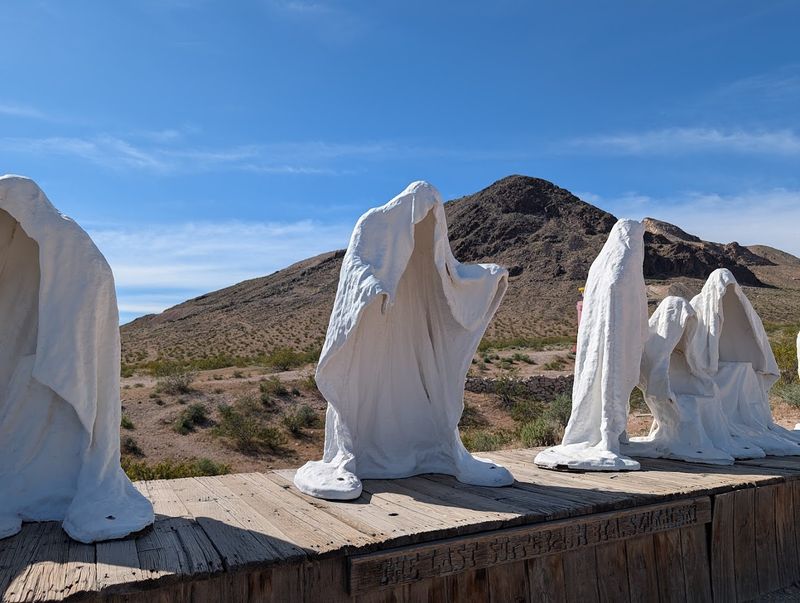
There is one installation at Goldwell that tends to silence even the most talkative visitors the moment they see it.
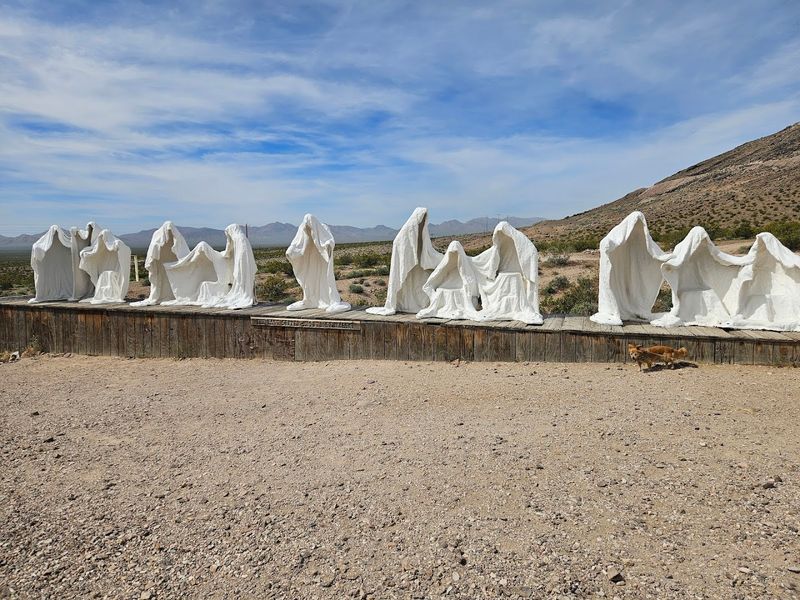
A row of pale, translucent figures arranged in a composition clearly referencing Leonardo da Vinci’s iconic painting stands quietly in the open air, exposed to wind, sun, and the occasional passing cloud.
The figures are rendered in a ghostly white that practically glows against the brown desert earth.
Seen from the front, the reference snaps into focus instantly, and the effect is genuinely startling. There is something deeply strange about encountering this kind of art with no walls, no lighting design, and no museum hush around it.
The raw exposure makes the piece feel more vulnerable and more powerful at the same time. Photographers tend to linger here longer than anywhere else on the grounds, experimenting with angles and light.
The piece earns its reputation as the emotional centerpiece of the entire museum, and most visitors agree it is the one image from Goldwell that stays with them longest.
The Message Hidden In The Dirt Road
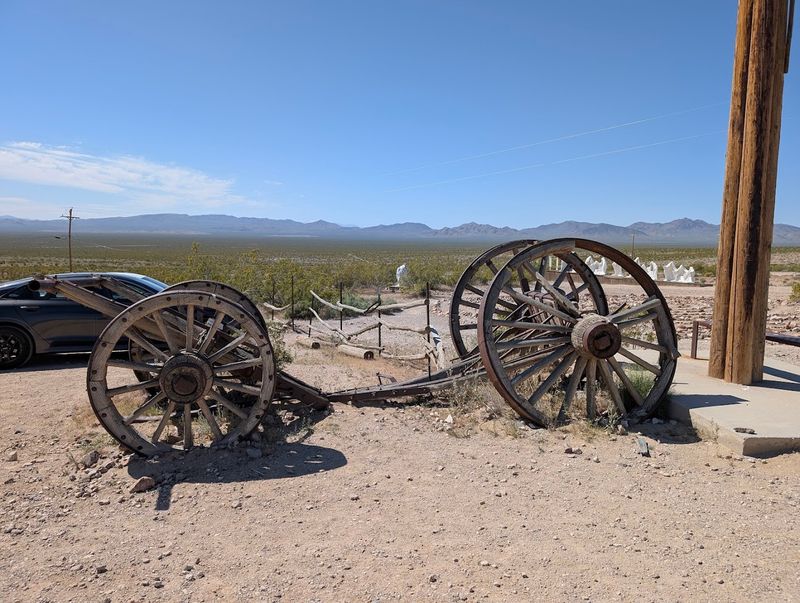
Humor and heart show up together in one of the most quietly beloved pieces on the property.
Near the start of the dirt road entrance to the museum, a simple but striking installation carries the words Keep Going, which manages to function as both an art statement and genuinely useful advice for anyone navigating the rugged approach to the site.
The piece lands differently depending on who is reading it. Road trippers who have been driving for hours through empty Nevada highways tend to find it unexpectedly moving.
Others laugh, which is probably also the right response. It is the kind of work that earns its place not through scale or spectacle but through timing and wit.
The installation is easy to miss if visitors are focused on the larger sculptures ahead, so it rewards those who slow down and pay attention to the full journey rather than rushing straight to the headline pieces.
That sense of discovery is part of what makes Goldwell genuinely fun to explore at any pace.
The Desert As A Living Frame For Every Piece
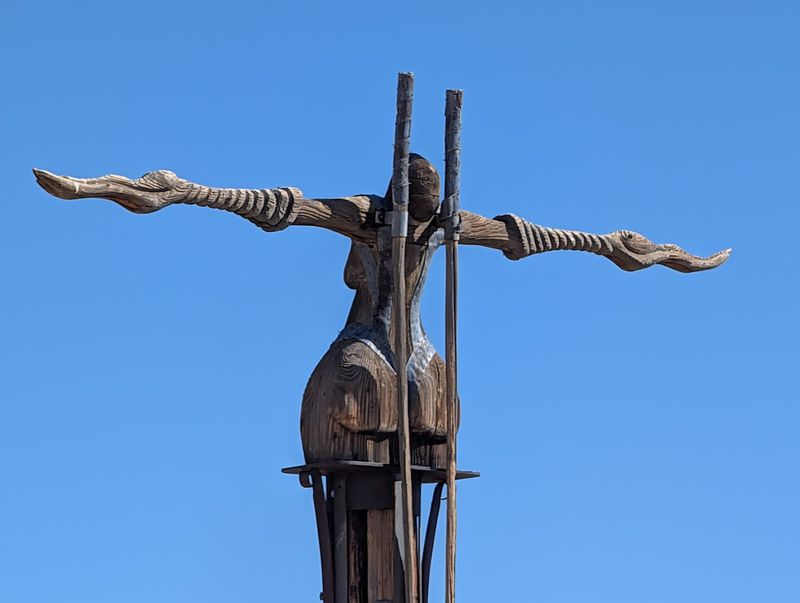
No gallery wall could replicate what the Nevada desert does for these sculptures. The surrounding terrain, marked by scrubby brush, rocky soil, and distant mountain ridges, functions as a constantly changing frame that shifts with the weather, the season, and the time of day.
On clear days, the blue sky behind the white figures creates a contrast so sharp it looks almost digitally enhanced. Lighting conditions change throughout the day, creating different moods from bright midday sun to dramatic sunset shadows.
The light at sunset is particularly dramatic, casting long shadows across the sculptures and warming the pale surfaces with amber and orange tones. Many visitors plan their arrival specifically around golden hour for this reason.
The landscape is not just a backdrop here; it is an active participant in how each piece is experienced, and that relationship between art and environment is central to what makes Goldwell so visually distinctive.
Free To Enter, Priceless To Experience
Goldwell Open Air Museum asks for nothing at the gate. There is no admission fee, no timed entry, and no velvet rope keeping visitors at a respectful distance from the art.
That openness is a core part of its identity.
The museum accepts donations, and there are free printed pamphlets available that explain the significance of each piece. For visitors who want to go deeper, that context transforms the experience from a casual stroll into something genuinely educational and emotionally resonant.
The gift shop carries prints, postcards, and locally inspired art, making it a pleasant stop for those who want to bring something home. The combination of zero cost, outdoor freedom, and genuine artistic ambition makes Goldwell one of the most accessible cultural experiences in Nevada.
It levels the playing field in a way that formal museums rarely manage, inviting everyone regardless of art background or budget to engage with work that is thoughtful, strange, and completely memorable.
Photography Heaven In The Middle Of Nowhere
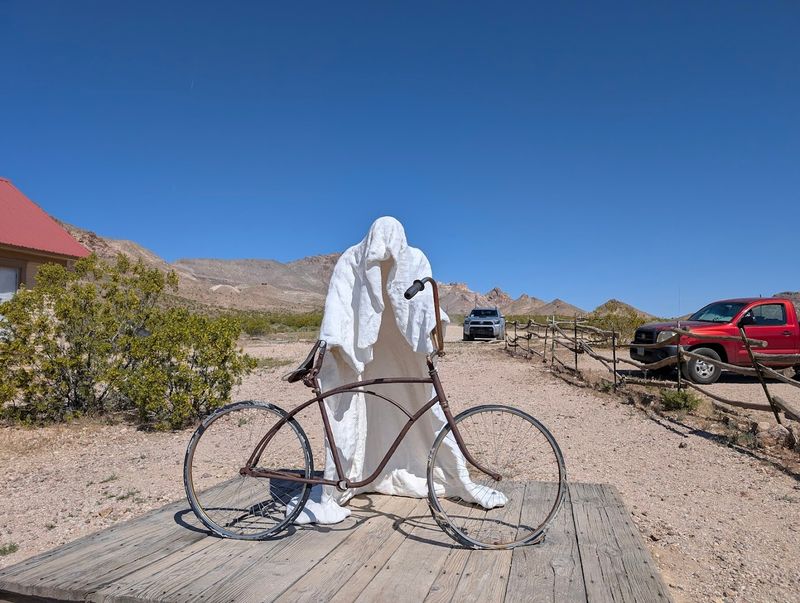
Creative photographers have been quietly spreading the word about Goldwell for years, and it is easy to understand why. The combination of unusual subjects, dramatic natural light, and a completely uncontrolled outdoor environment produces images that are nearly impossible to replicate anywhere else.
The pale sculptures catch and reflect light in ways that shift by the hour, meaning two photographers visiting on the same day but at different times can come away with completely different-looking shots. Early morning light creates long blue shadows and a cool, ethereal mood.
Midday sun bleaches everything into high contrast. Sunset wraps the figures in warm color that makes them look almost alive.
Personal photography is welcome, though commercial use requires permission from the museum. For anyone building a travel photography portfolio, a stop here offers genuinely distinctive material that stands apart from the usual Nevada landmarks.
It is the kind of place that rewards patience and a willingness to wander, rather than a quick snap-and-move approach.
What To Expect On The Road Getting There
Getting to Goldwell is part of the experience, and not always a smooth one. The approach involves a dirt road that can be rough depending on recent weather and road conditions, so visitors arriving in low-clearance vehicles may want to take it slowly and carefully.
The surrounding area near Beatty in Nevada is remote by most standards, sitting not far from the edge of Death Valley National Park. That proximity makes Goldwell a natural addition to any Death Valley road trip itinerary, adding a cultural and artistic dimension to what might otherwise be a purely scenic drive.
Cell service can be limited in this part of the state, so downloading a map or directions ahead of time is a practical move. The drive itself, through open desert with mountain views in every direction, is genuinely beautiful and sets the tone for the strangeness that awaits.
Arriving prepared makes the whole visit more relaxed and enjoyable, especially for first-timers unfamiliar with the terrain.
Why This Spot Sticks With You Long After You Leave
There is a particular kind of travel experience that does not fully register until days after the visit, when a random image surfaces in the mind without warning. Goldwell tends to produce that effect.
The sculptures are unusual enough to be memorable, and the setting is striking enough to feel genuinely surreal in retrospect.
Part of what makes the place linger is the contrast it creates. The art is serious and internationally rooted, yet it sits in one of the most desolate corners of Nevada with no fanfare, no crowd control, and no corporate sponsorship visible anywhere.
That rawness feels increasingly rare in a world where most cultural attractions are carefully packaged and monetized.
Visitors who stop here on a whim often describe it as one of the most unexpectedly meaningful detours of a larger trip.
It is not a place that demands hours of your time, but it has a way of earning more of your attention than you planned to give, and that is the mark of something genuinely special.