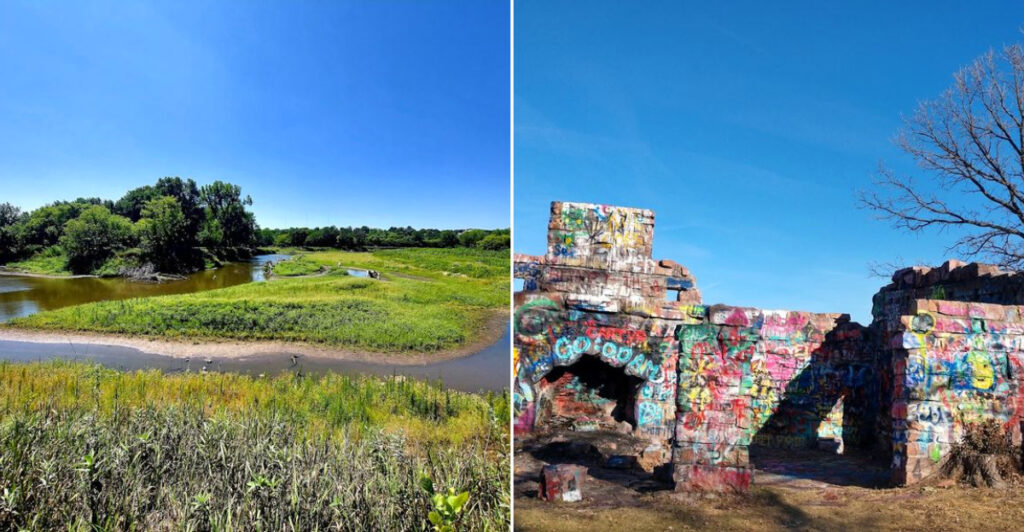
Northwest Iowa has a preserve that feels quiet at first, then slowly starts revealing just how much it is holding.
Ancient quartzite rises from the prairie, the Big Sioux River moves nearby, and the open sky makes every step feel a little more spacious than expected.
The name connected to this land translates to “Great Spirit” or “Great Mystery,” and that meaning fits. Between the 1.6-billion-year-old rock, the riverside trail, the open prairie, and the weathered ruins with a heavy backstory, this is not a typical walk in the grass.
It is calm, unusual, and quietly intense in a way that lingers after you leave. Some Iowa places are pretty at first glance.
This one makes you pay attention.
What Gitchie Manitou State Preserve Actually Is
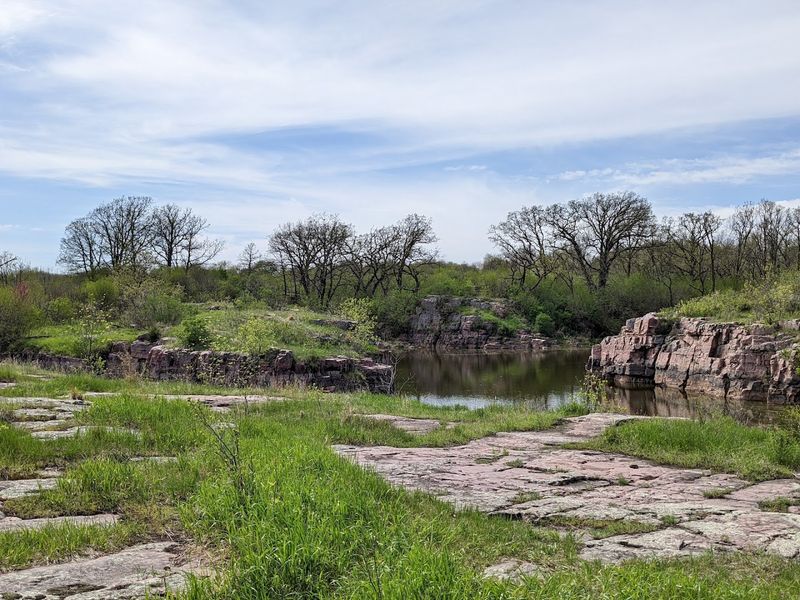
The name alone should stop you mid-scroll. Iowa DNR describes “Gitchie Manitou” as a name meaning “Great Spirit” or “Great Force of Nature,” and once you set foot here, that name starts to make a strange kind of sense.
Gitchie Manitou State Preserve sits at 52141 Adams Ave, Larchwood, IA 51241, right along the Big Sioux River near the South Dakota state line. It is managed by the Iowa Department of Natural Resources and is one of the oldest geological sites in the entire state.
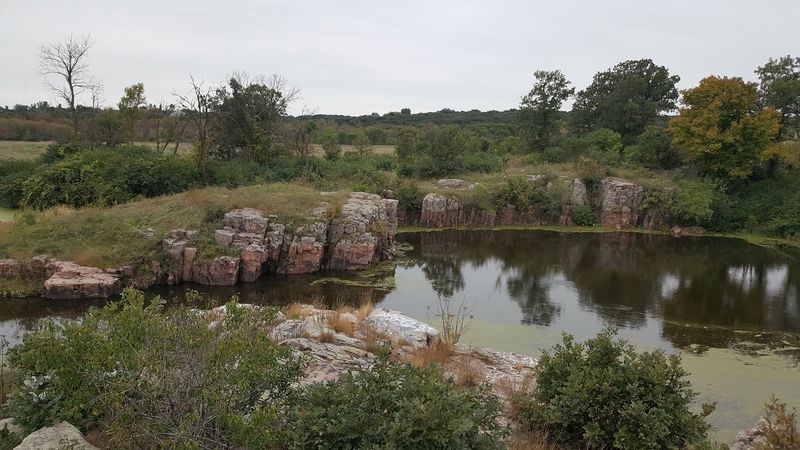
The preserve protects some of Iowa’s most ancient exposed Sioux quartzite, a hard pink-red rock estimated to be around 1.6 billion years old.
That number is almost impossible to wrap your head around, but standing on those outcroppings makes it feel less like trivia and more like a physical fact.
The park opens daily at 4 AM and closes at 10:30 PM, so early morning hikes are absolutely on the table for anyone who wants the prairie light all to themselves.
The Ancient Quartzite That Puts Time In Perspective
Most hiking trails in the Midwest take you through corn-adjacent scenery. The quartzite at Gitchie Manitou is a completely different conversation.
These exposed rock formations are among the oldest surface geology in Iowa, and they were shaped long before anything resembling modern life existed on this continent.
The Sioux quartzite here is the same geological formation found across parts of South Dakota and Minnesota, but seeing it in Iowa feels almost surprising, like finding a piece of another landscape dropped into the prairie.
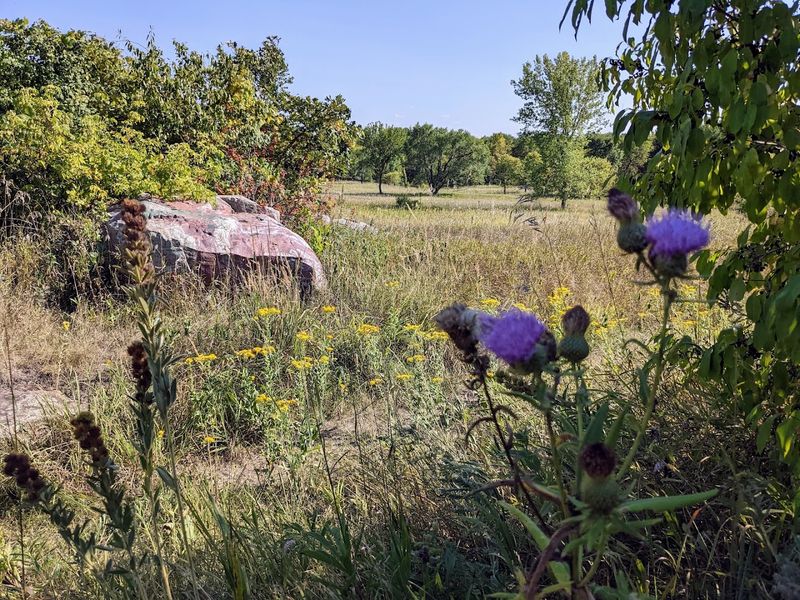
The rock has a distinctive pinkish-red color that shifts depending on the light, and in the late afternoon it practically glows against the dry grass.
Walking across those formations, you can feel the texture underfoot, rough and solid in a way that modern pavement never manages.
The quartzite does not erode easily, which is exactly why it has survived for billions of years while softer rock layers above it wore completely away.
Geologically speaking, you are standing on some of the most durable material in the entire region, and it has the age to prove it.
The Ruins and Their Heavy History
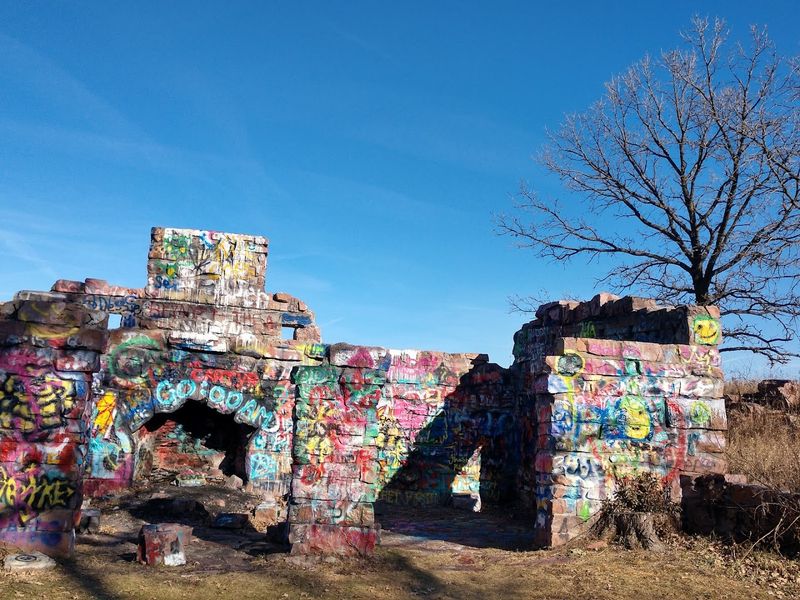
About half a mile down the main trail, past the grasshoppers and the wide-open sky, a set of old ruin-like structures appears through the brush.
They are covered floor to ceiling in spray paint, layered so thickly that the original surface is almost invisible underneath.
The graffiti has divided opinions among people who have visited over the years, with some finding it jarring and others admitting it gives the ruins a surreal, almost gallery-like quality.
The structures are connected to a deeply unsettling chapter in Iowa history from the early 1970s, involving a violent crime that shook the surrounding communities.
The survivor’s story was later told in the book Gitchie Girl, and the story remains one of the more sobering pieces of context you can carry into this landscape.
Knowing that history does change how the silence feels out here. The prairie is quiet in a way that reads as calm on a normal trail, but near the ruins it carries a different weight.
The graffiti, for all its visual chaos, cannot fully cover what happened here, and most people who spend time at the structures come away feeling that contrast in a way that is hard to put into words.
The Trail Itself and What To Expect Underfoot
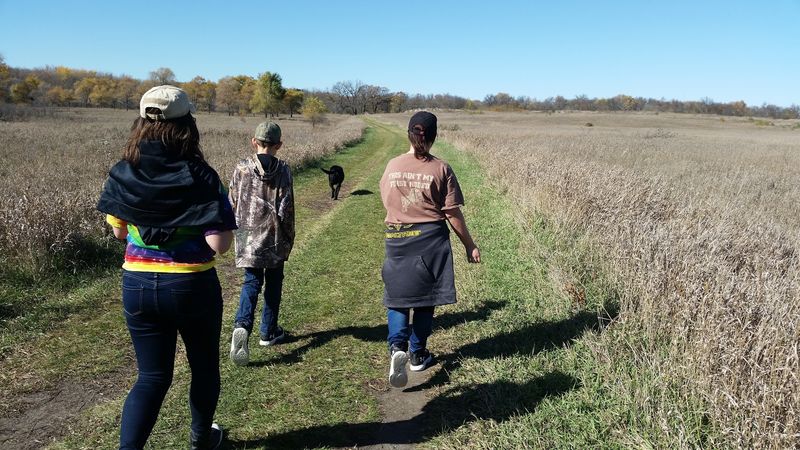
The trail at Gitchie Manitou is not what you would call a manicured path.
It functions more like an old utility road, wide enough to walk comfortably but overgrown in stretches, especially by late summer when the grass closes in from both sides and the burrs start hitching rides on every fabric surface you own.
There are no trail signs pointing the way, which means a little attention goes a long way.
The main route runs roughly half a mile to the ruins, but smaller side trails branch off and lead to river views, quartzite outcroppings, and quieter pockets of the preserve worth exploring.
Taking those detours is genuinely the better strategy here.
Long pants are a smart call regardless of the season, and sunscreen is non-negotiable on clear days because shade is scarce across most of the route. Ticks are a real concern through the warmer months, so a quick check after the hike is a good habit.
The terrain is mostly flat and manageable, making it accessible for a wide range of fitness levels, though waterproof shoes help after rain when the low sections turn soft.
Prairie Wildlife and What You Might Actually See
The grasshoppers are practically a trail feature. Walk the main road in summer and they launch off the ground in waves with every step, which is either delightful or mildly alarming depending on your relationship with insects.
Beyond the grasshoppers, the preserve supports a solid range of wildlife that rewards patient walkers.
Bald eagles have been spotted soaring overhead, which is one of those sightings that stops you mid-stride no matter how many times you have seen one.
The river corridor along the Big Sioux attracts birds year-round, and the prairie itself hosts species not commonly found elsewhere in Iowa, making this a legitimate spot for anyone who keeps a bird list.
The preserve also welcomes dogs on leash, and the trail has seen its fair share of good-natured canine introductions among hikers.
The creek area near the parking lot is a short walk and works well as a first stop, especially for kids who want to poke around the water before tackling the longer route.
Early morning visits in summer give you the best chance of spotting wildlife before the heat settles in over the open ground.
The Big Sioux River and the State Line Sign
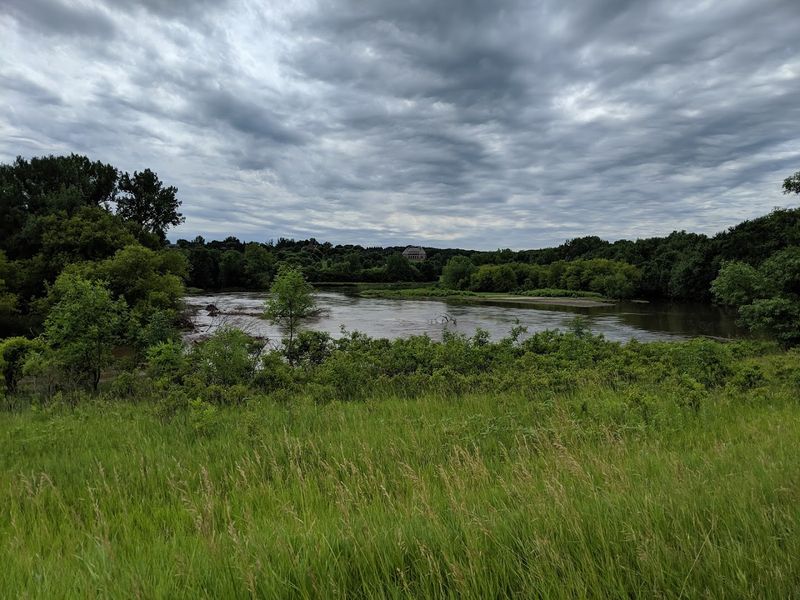
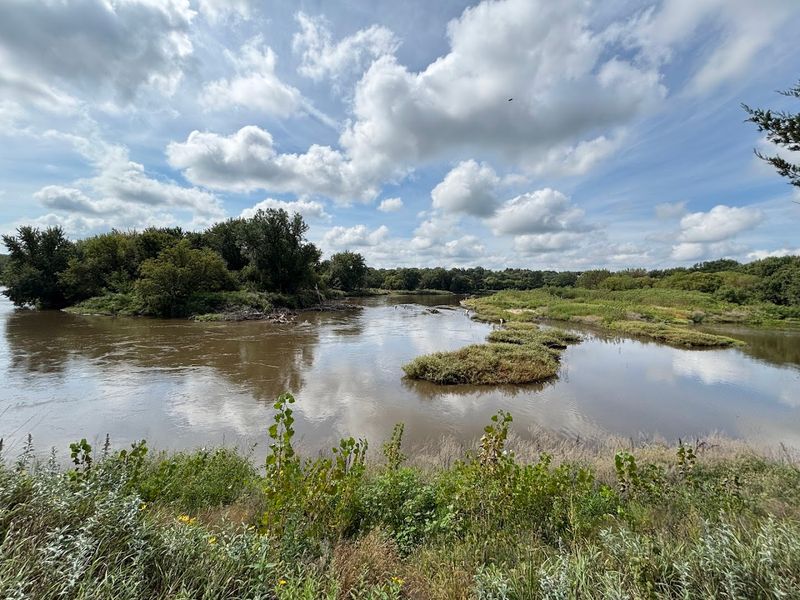
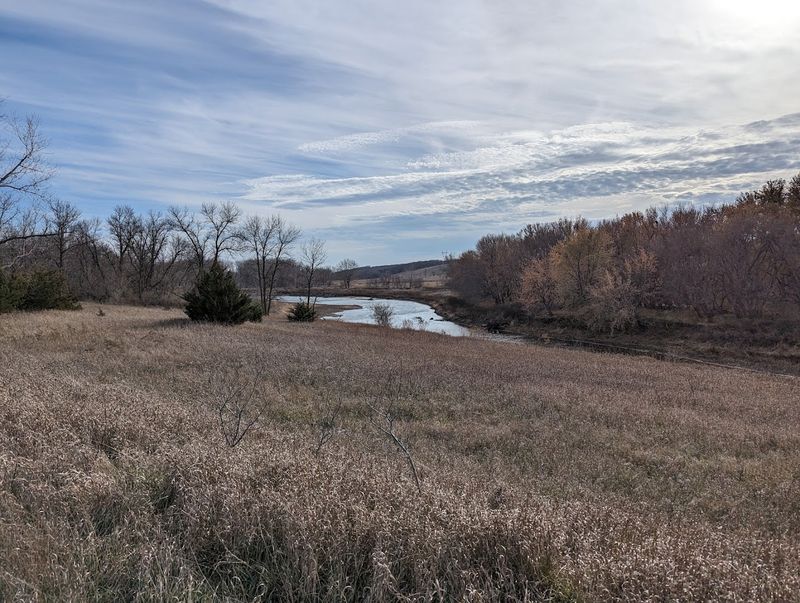
The Big Sioux River runs along the western edge of the preserve, and from certain points on the trail you get clear views down to the water cutting through the landscape.
The river also marks the boundary between Iowa and South Dakota, which means you are essentially standing at the edge of one state looking across to another.
Somewhere along the fence line near the trail, a small state line sign marks the border. It is easy to miss if you are not looking for it, and more than one person has walked right past it without noticing.
Spotting it makes for a good photo, and it adds a satisfying geographic footnote to the hike.
The river views are best appreciated from the elevated sections of the trail where the terrain opens up and the water is visible below.
In spring and early summer, the combination of the flowing river, green prairie grass, and exposed quartzite creates a layered landscape that feels far removed from the flat agricultural fields just a few miles away.
The river also provides a natural soundtrack that softens the otherwise heavy silence near the ruins.
Best Times To Visit and Seasonal Differences
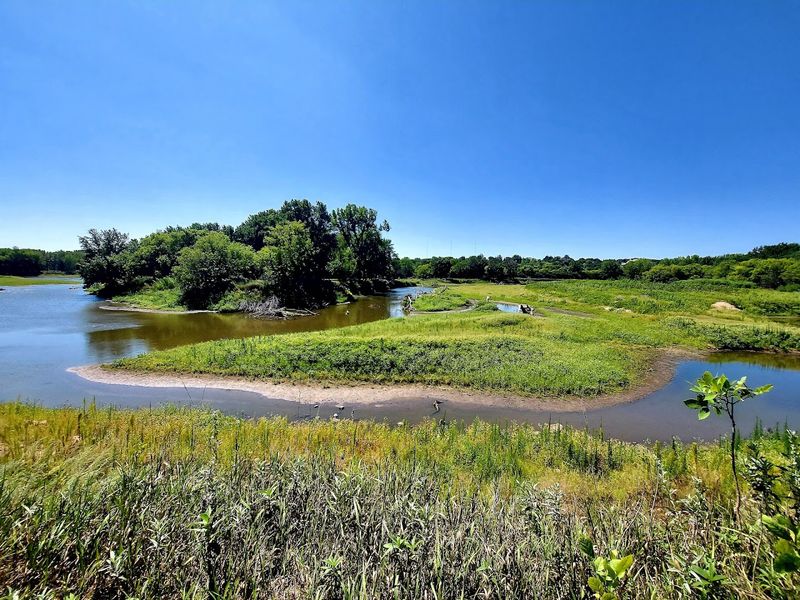
Early to mid-summer is when the prairie earns its reputation. The grasses are tall and green, wildflowers are scattered across the open ground, and the whole landscape has an energy that the dry, brown late-season version simply cannot match.
Anyone who has visited in October and felt underwhelmed would likely feel differently about a June return trip.
Late summer and fall bring their own trade-offs. The vegetation is denser and more overgrown, which increases the tick and burr situation considerably.
On the other hand, the crowds are minimal at any time of year, and autumn light on the quartzite has a warmth that photographers tend to appreciate.
Winter visits are quiet in a way that borders on eerie, especially near the ruins where the bare trees and frozen ground strip away any visual softness the foliage normally provides. Spring is solid for birding along the river corridor.
The preserve opens at 4 AM daily, which means sunrise hikes are a realistic option in any season, and the morning light across the open prairie is the kind of detail that earns the early alarm without complaint.
Practical Tips Before You Go
The GPS situation at Gitchie Manitou deserves a heads-up before you arrive.
Depending on which navigation app you use and which entrance you prefer, the coordinates can drop you in slightly the wrong spot.
The actual parking area is a small gravel lot with only about three spaces, located a couple hundred yards past the main GPS pin. Drive past the coordinates, and you will find it.
The gate at the entrance is often closed, but it is easy to walk around. The preserve is free to enter and no reservations are needed.
Restroom facilities are not a notable feature here, so plan accordingly before leaving the road.
Cell service can be inconsistent in this area, so downloading an offline map before the visit is a practical move.
The park closes at 10:30 PM, which is later than most state preserves in Iowa, giving afternoon and early evening hikers a generous window.
Bringing water is important since there are no facilities on the trail, and the open prairie exposure means the sun and wind work together to dehydrate you faster than you might expect on a warm day.
Family Appeal and Kid-Friendly Angles
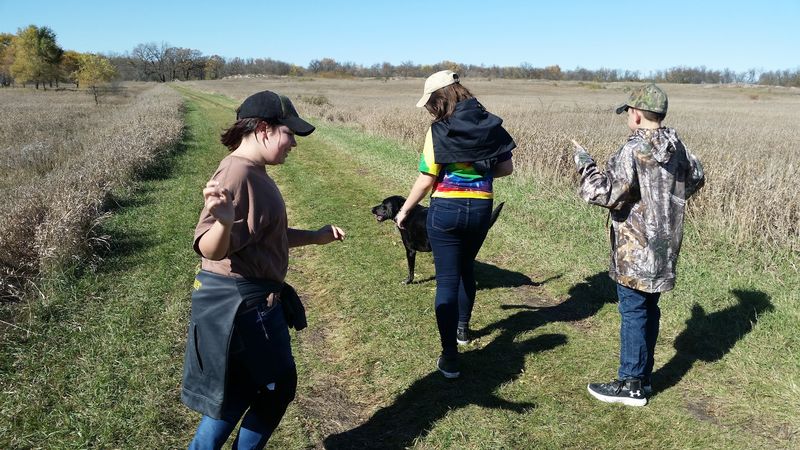
Families with kids have found solid reasons to make the trip here, and the water access near the parking area is the first one.
It is close to the car, the setting is easy to explore, and younger kids can spend a good chunk of time poking around rocks and watching the water without anyone needing to hike the full trail.
The main trail to the ruins is flat enough for older kids to manage without much difficulty, and the graffiti-covered structures tend to generate genuine curiosity rather than boredom.
Explaining the geological age of the quartzite to a ten-year-old and watching them try to process 1.6 billion years is its own small entertainment.
Dogs are welcome on leash, and the trail has seen plenty of family-and-dog combinations over the years. The open prairie setting means kids can spread out and explore without the confined feeling of a heavily wooded trail.
The state line sign near the fence gives families a fun geographic moment, and spotting a bald eagle overhead is the kind of accidental highlight that ends up being the story everyone retells on the drive home.
Why This Preserve Stands Apart in Iowa
Iowa has a lot of pleasant green spaces, but very few that carry this kind of geological and historical weight in one compact area.
The combination of 1.6-billion-year-old quartzite, a river boundary with a neighboring state, open native prairie, and a set of ruins with a story that has not faded with time makes Gitchie Manitou a genuinely unusual place to spend an afternoon.
The preserve does not try to be a polished tourist experience. The trails are rough, the signage is minimal, and the parking lot holds three cars.
That lack of infrastructure is, oddly, part of what makes it feel worth the effort. You have to want to be here, and that filters out the casual drive-through crowd.
The name “Great Spirit” or “Great Mystery” fits the place more accurately than most place names manage.
The quartzite has been here far longer than any human name for it, the prairie is doing what prairie does regardless of who shows up to walk through it, and the ruins carry a weight that no amount of spray paint fully obscures.
Iowa has many quiet corners, but this one has layers that keep revealing themselves the longer you stay.