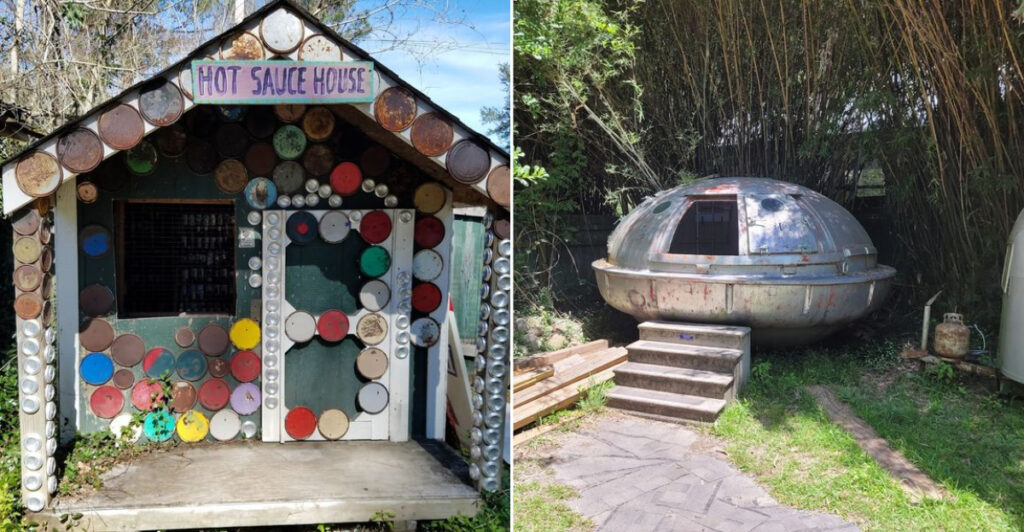
Not every road trip stop plays by the rules. In Louisiana, one roadside attraction turns the usual travel break into something far more memorable.
This wildly creative spot is packed with the kind of sights that make people stop, stare, laugh, and reach for their cameras. There is folk art in every direction. There are oddball creations that seem too strange to be real.
Vintage pieces, tiny structures, and unexpected displays fill the space with nonstop character. Nothing about it feels polished or predictable, and that is exactly the fun of it.
This is not the kind of place you rush through in ten minutes and forget by dinner. It pulls you in, keeps you looking around, and gives you story after story to take home. For travelers who love the unusual, the playful, and the completely unexpected, this Louisiana stop is hard to top.
The Story Behind The Quirkiness
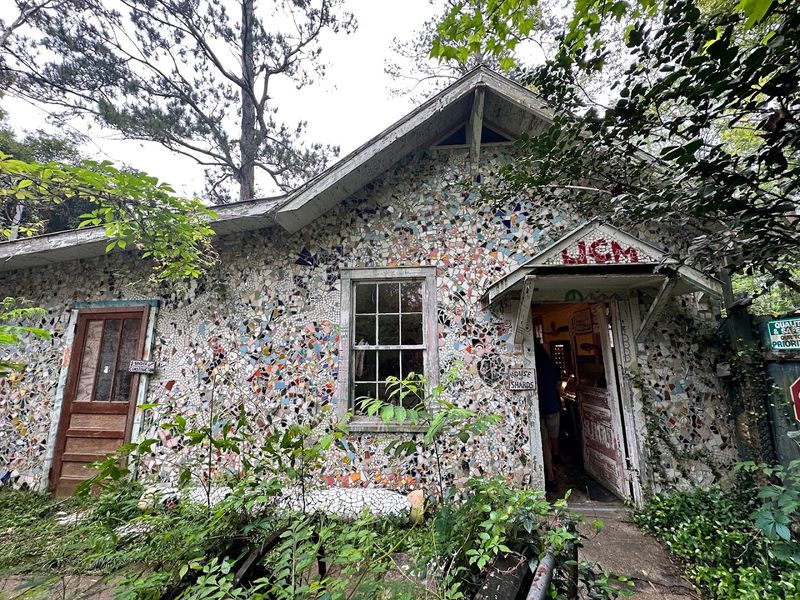
John Preble started this project in 1998, and from the very first day, he had no interest in making it conventional. The name UCM stands for UnderCover Museum, and that name tells you everything you need to know about the spirit of this place.
Preble built the museum as a living art project, adding new pieces, new rooms, and new characters over the years. Nothing here was planned in a boardroom.
Every single item has a story, a reason, and a personality.
The museum grew organically, the way a garden grows when someone truly loves what they are planting. Preble collected discarded objects, roadside finds, and handmade sculptures, then turned them into something that feels both personal and universal.
What makes this place so magnetic is that it never tries to explain itself too much. You are invited to look, laugh, wonder, and make your own meaning.
Have you ever walked into a place and felt like the building itself had a sense of humor? That is exactly what happens here, and it works every single time. The museum is small in size but enormous in personality, and a single visit rarely feels like enough to take it all in.
The World-Famous Bassigator
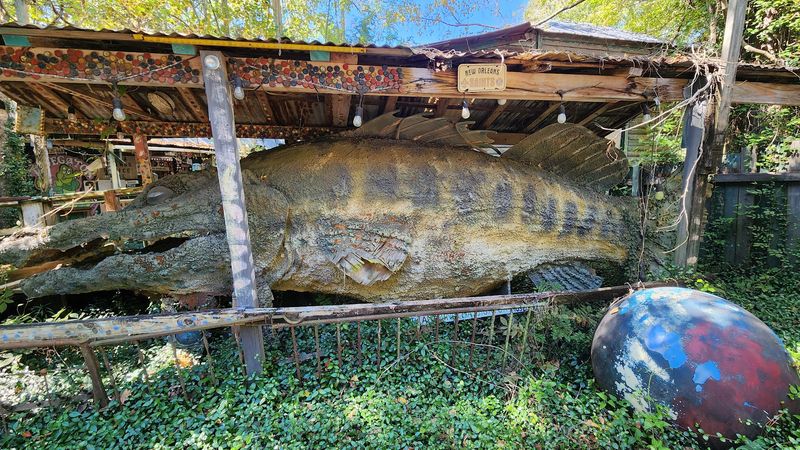
If there is one creature that has become the unofficial mascot of the UCM Museum, it is the Bassigator. Part largemouth bass, part alligator, this taxidermy creation has been photographed by thousands of visitors and has developed a genuine fan following online.
The Bassigator lives in a glass case, posed with the kind of dignity that only a half-fish, half-reptile could pull off. It is absurd, it is brilliant, and it is completely Louisiana in spirit.
Visitors consistently list the Bassigator as one of their favorite moments from the trip, and children especially love it. There is something about seeing a creature that should not exist that makes people laugh and reach for their cameras at the same time.
The museum leans fully into the legend of the Bassigator, selling merchandise and prints that let you take a piece of the myth home with you. Could this be the most photographed fake creature in the entire American South?
It is a strong possibility.
Beyond the laughs, the Bassigator represents something deeper about the museum’s philosophy. This is a place that celebrates imagination over accuracy, creativity over convention, and fun over formality.
The Bassigator is not just a quirky display. It is a statement about what art can be when someone stops worrying about the rules.
A Miniature World You Can Actually Walk Through
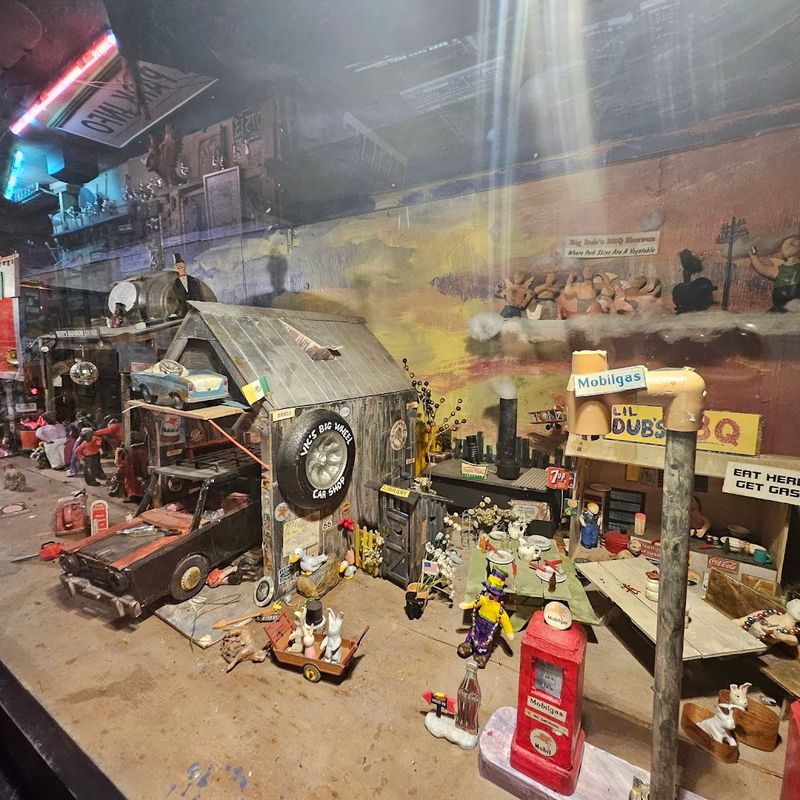
One of the most detailed and time-consuming creations inside the museum is its miniature world. Tiny buildings, small figures, and carefully crafted scenes fill an entire section of the museum, pulling visitors into a scaled-down version of American roadside life.
The miniature displays include vintage gas stations, small-town diners, and scenes that feel like they were pulled straight from a mid-century postcard. Every detail has been considered, from the tiny signs on the buildings to the small vehicles parked outside.
What makes this section so captivating is the patience it represents. Someone spent real hours, real days, and real years building these tiny worlds by hand.
You can feel that dedication when you lean in close and start noticing the small details that most people walk past too quickly.
Kids absolutely love this part of the museum. Can you imagine building an entire town from scratch, one tiny piece at a time?
That question tends to stop young visitors in their tracks and spark real conversations about creativity and craft.
Adults find something nostalgic here too. The scenes feel familiar in a way that is hard to explain, like a memory of a road trip you may or may not have actually taken.
The Art Car And Outdoor Yard Displays
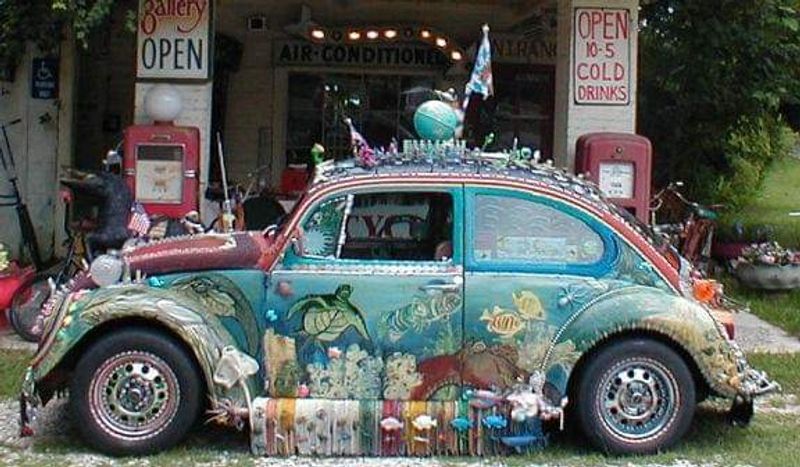
Step outside the main building and the creativity does not stop. The outdoor yard at the UCM Museum is packed with art cars, painted sculptures, and found-object installations that turn the surrounding property into an open-air gallery.
Art cars are vehicles that have been transformed through painting, welding, and the addition of all kinds of unexpected materials. The ones at this place are fully committed to their transformations, covered from bumper to bumper in color, texture, and personality.
Walking around the yard feels like flipping through a visual journal. Each piece has a different energy, a different story, and a different way of catching the light depending on the time of day you visit.
Morning visits offer softer colors, while afternoon sun makes everything pop with intensity. The outdoor space is also a great spot for photography.
Wide angles capture the full scale of the installations, while close-up shots reveal the incredible detail that goes into each piece.
Children run freely through the outdoor area, discovering new objects around every turn. The space feels safe, open, and full of surprises, making it one of the most enjoyable parts of a visit for families traveling with young kids who need room to move and explore.
Inside The Vintage Gift Shop
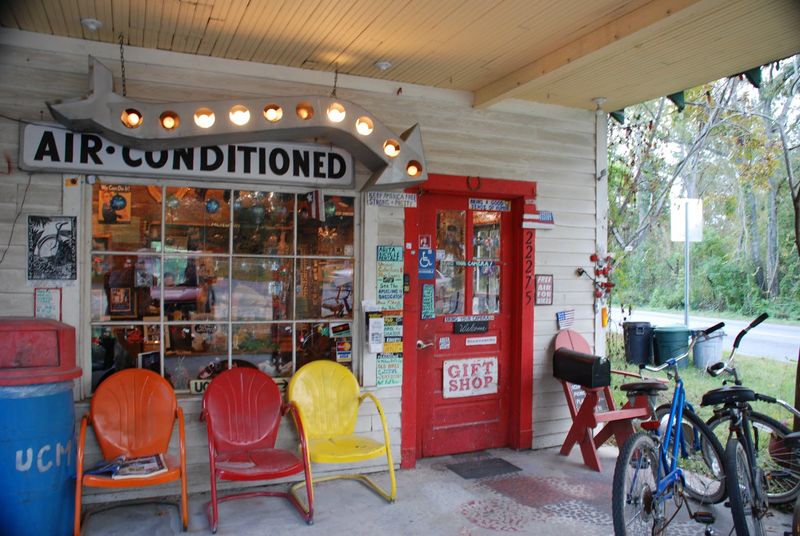
Not every museum gift shop deserves its own section in an article, but the one absolutely does. This is not a place selling generic keychains and magnets.
The shop is stocked with handmade items, original prints, local art, and merchandise that you genuinely cannot find anywhere else.
Bassigator prints are a popular choice, and so are the small folk art pieces created by local artists connected to the museum. Many of the items are made in limited quantities, which means that if something catches your eye, buying it on the spot is always the smart move.
The shop itself is designed with the same visual energy as the rest of the museum. Shelves overflow with color, walls are covered in artwork, and even the ceiling has personality.
Browsing here feels like an extension of the museum experience rather than a commercial break from it.
Prices are reasonable for the quality and originality of what is on offer. Many visitors say the gift shop is where they spend more time than they expected, which is a sign that the curation is genuinely good.
Practical Tips For Planning Your Visit
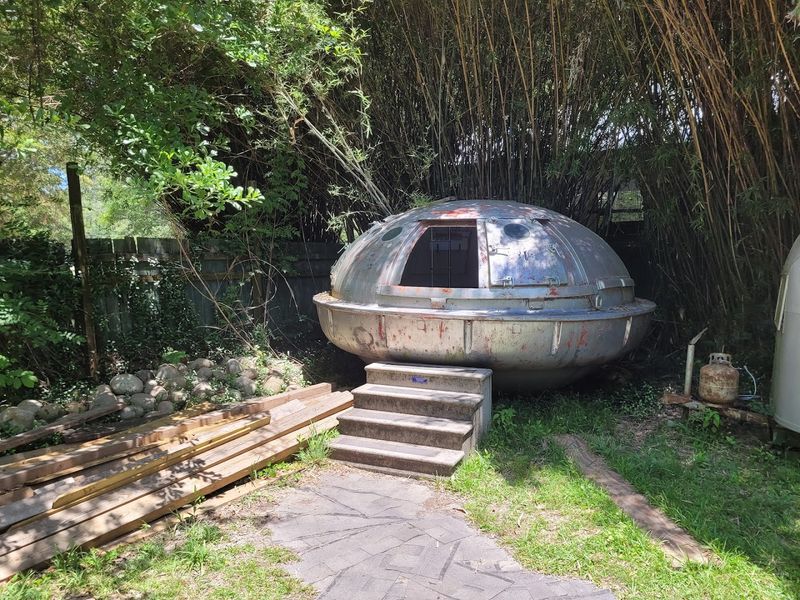
The drive itself is pleasant, taking you through Louisiana’s lush north shore landscape. The UCM Museum is located at 22275 LA-36, Abita Springs, LA 70420, and it is easy to reach by car from New Orleans, which sits roughly 45 minutes to the south.
Admission is affordable, making it a budget-friendly option for families, solo travelers, and couples alike. The museum is not enormous, but plan to spend at least an hour inside to give yourself enough time to actually absorb what you are seeing.
Weekday visits tend to be quieter, which means more time to linger over the miniature displays and outdoor installations without crowds pressing in around you. Weekends attract more visitors, especially during spring and fall when the weather in this part of Louisiana is genuinely lovely.
Comfortable shoes are a practical choice since the outdoor yard involves some uneven ground. Bringing a camera with a charged battery is also highly recommended, because you will want to document far more than you expect.
The museum is open most days of the week, but checking their current hours before you go is always a good idea since schedules can shift with the seasons. Is a 45-minute drive from New Orleans worth it for a place this original?
The Folk Art Tradition That Lives Here
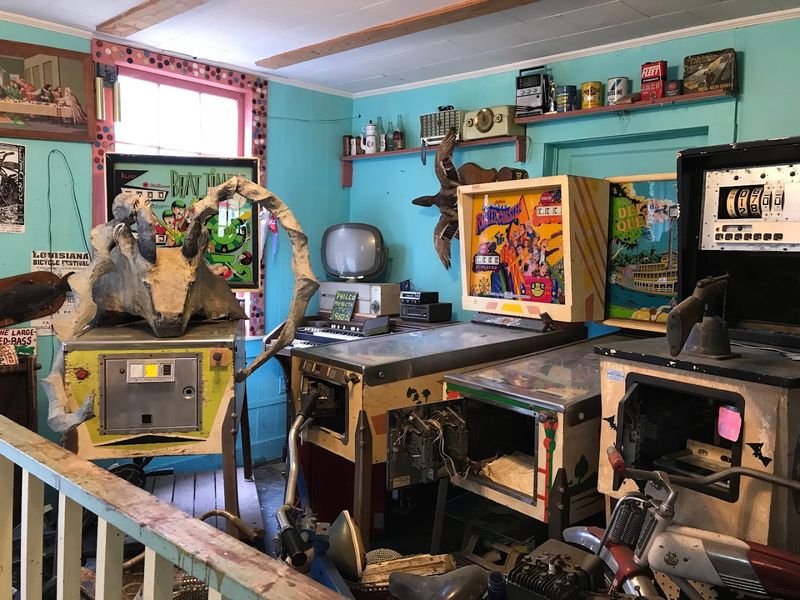
Louisiana has a rich tradition of folk art, and the UCM Museum sits right at the heart of that tradition. Folk art is made by self-taught artists who work outside the formal art world, and it tends to carry a raw emotional honesty that trained fine art sometimes lacks.
The pieces inside the museum reflect the landscapes, stories, and humor of Louisiana life. There are references to local culture, local creatures, and local history throughout the collection, giving everything a sense of place that feels completely authentic.
John Preble’s own work forms the backbone of the museum, but pieces from other regional artists appear throughout the space as well. The result is a collection that feels like a community effort, even if one strong creative voice guides the overall vision.
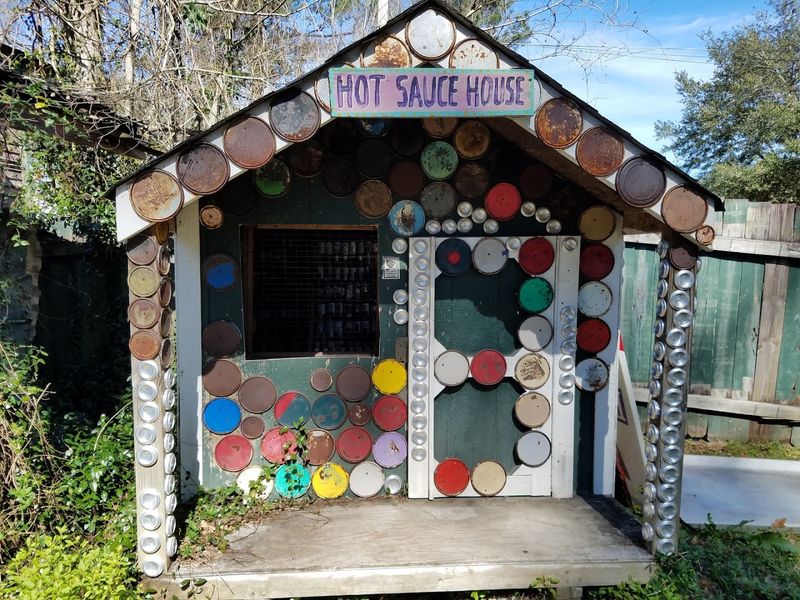
Folk art invites you to look at ordinary objects in new ways. A rusted piece of metal becomes a face.
A collection of bottle caps becomes a mosaic. A broken doll becomes a character in a strange and beautiful story. Do you find yourself looking at everyday objects differently after spending time in a place like this?
The UCM Museum makes a strong case for folk art as one of the most honest forms of human expression.
Why This Place Stays With You Long After You Leave
Most tourist attractions fade from memory within a few weeks. This museum is not one of those places.
Visitors consistently report that they find themselves thinking about it long after they have returned home, telling friends about the Bassigator or describing the miniature town over dinner.
Part of what makes it so memorable is the handmade quality of everything inside. In a world full of digital screens and manufactured experiences, there is something deeply satisfying about being surrounded by objects that were made by human hands with real intention behind every choice.
The museum also has a warmth to it that is hard to manufacture. You sense that the people behind it genuinely love what they have created, and that love transfers to everyone who walks through the door.
That kind of authentic enthusiasm is rare and recognizable.
First-time visitors often feel a mix of laughter, curiosity, and something close to wonder. That combination is not easy to create, and the fact that a small roadside museum in Abita Springs manages it consistently is a real achievement worth celebrating.
If you are building a Louisiana road trip itinerary, the UCM Museum deserves a dedicated spot on your list rather than a rushed stop on the way to somewhere else.