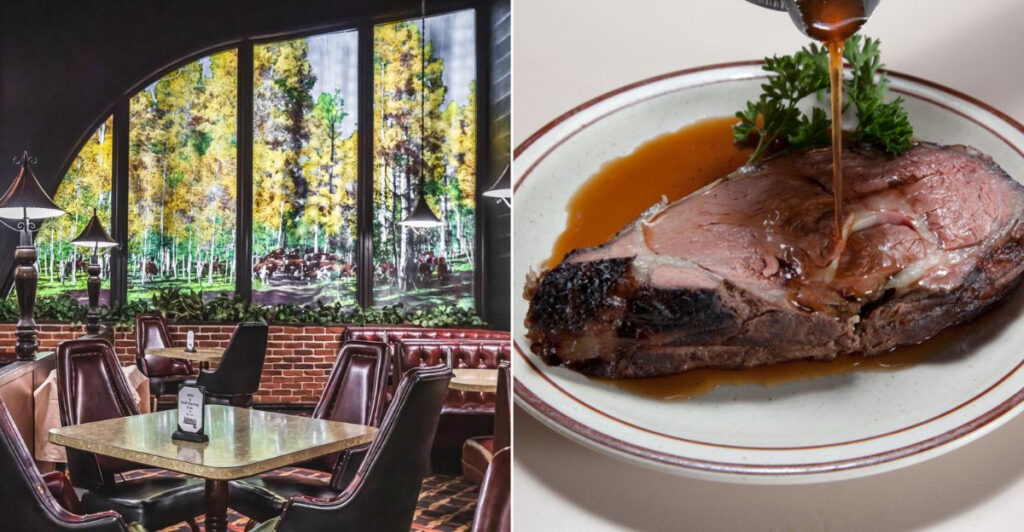
Why are some diners willing to drive across Nebraska for a steak dinner?
The answer begins long before the first order reaches the table. Omaha built much of its identity around beef.
The Omaha beef story spans centuries because it is one of the defining elements of its history. That history left its mark on local menus.
Prime rib, hand-cut steaks, and beef prepared in countless ways became part of the region’s culinary identity.
A century can change almost everything about a city. Restaurants close.
Neighborhoods evolve. Dining trends come and go.
Yet a small number of places keep drawing people back year after year.
When generations of diners choose the same restaurant for that occasion, one question naturally follows.
What keeps them coming back?
South Omaha’s Steak Lineage
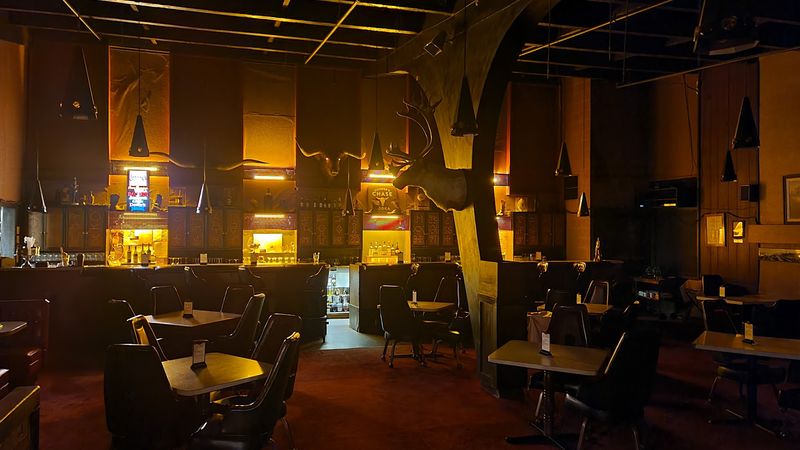
Johnny Cafe’s story connects directly to Omaha’s south side.
There, the meatpacking industry employed thousands of workers and helped establish the city as a major center for beef production.
That industry played a major role in shaping the Omaha known today.
Opened in 1922, the restaurant has operated for more than a century. Few restaurants can point to a timeline that stretches across different centuries.
Its history ties directly to the neighborhoods that grew alongside stockyards, packing plants, and cattle yards.
The surrounding blocks were once shaped by long shifts, early mornings, and people who needed a serious meal without a show. In that setting, beef was not just a menu choice.
It was part of the city’s daily goings-on, tied to work, trade, and the identity Omaha built for itself. That makes the restaurant feel less like a themed steakhouse and more like a living piece of local history.
More than 100 years after opening, the restaurant still places beef at the center of its identity.
For most of us, eating out is a real treat, but this place first answered a practical daily need in one of Omaha’s busiest working districts.
Their message is clear. A steakhouse in Omaha carries expectations.
This one has spent generations answering them.
Omaha’s Original Steakhouse Since 1922
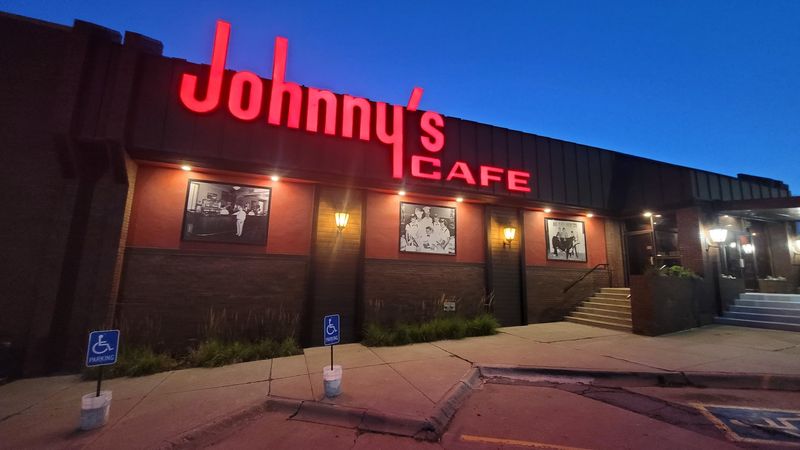
The name behind this story is Johnny’s Cafe. You will find it at 4702 S 27th St, Omaha, Nebraska.
Founder Frank Kawa opened the restaurant in 1922 as a small eight-seat saloon next to the Omaha Stockyards.
That beginning matters because the restaurant did not grow apart from South Omaha’s beef history. It grew right beside it.
As the stockyards expanded, Johnny’s Cafe expanded with them, turning from a tiny stop into a restaurant shaped by the workers, families, and neighborhoods around it.
That connection remains one of the most important facts about Johnny’s Cafe.
The restaurant did not appear after Omaha built its reputation as a beef city.
It was already there during the years when cattle, packing plants, and stockyard traffic helped define South Omaha’s rhythm.
Meals here were deeply tied to the kind of place Omaha was becoming, not just the kind of place visitors later imagined.
It is not simply an old steakhouse with a long-running menu. It is a restaurant whose timeline runs through the same streets, industries, and working routines that helped make Omaha known for beef.
More than a century later, Johnny’s still identifies itself as Omaha’s Original Steak House.
Few restaurants can trace their story directly back to the era of the Omaha Stockyards.
Even fewer can point to the same family ownership across three generations.
That continuity gives the dining room a sense of history you cannot manufacture.
Johnny’s Cafe carries its age quietly, but the story behind it is big.
Prime Rib Served Every Day
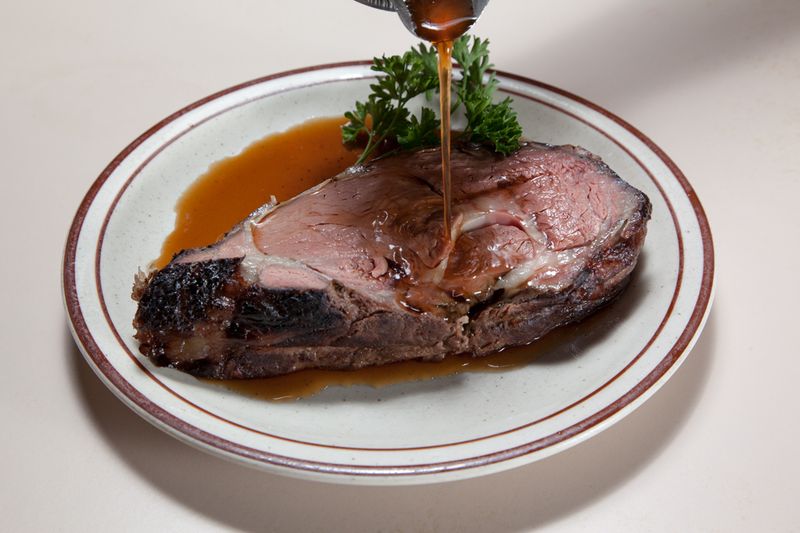
Prime Rib Does Not Wait For Friday
Prime rib gets special-night treatment at many steakhouses, which makes this menu choice sharper.
Johnny’s Cafe does not tuck the cut into a narrow corner of the week.
The menu places Roast Prime Rib of Beef under Everyday Specials, then describes the cut as slow roasted and sliced to order.
That single detail tells you how the kitchen wants diners to read the place. Prime rib leads here.
Here, the order also carries Omaha’s beef-city shorthand without a speech.
The dinner menu gives the Junior Cowboy Cut and Cowboy Cut the same preparation note, slow roasted and hand-cut to order.
Honestly, ordering their prime rib is a form of self-love. The pleasure comes from the structure of the plate, not the decoration.
Au jus keeps the beef tied to its own juices, while the listed soup, salad, and potato turn the order into a full steakhouse meal without burying the table in ceremony.
A restaurant can have a long history. Can it keep the table focused when the menu opens?
This one answers with beef in more than one register.
The steak dinner section lists ribeye, Omaha Strip Steak, Native Filet Mignon, Petite Filet, T-Bone, and Top Sirloin.
Several steaks carry exact sizes on the menu, including a 13-ounce ribeye and a 17-ounce T-Bone. The message here is pretty direct.
Prime rib may anchor the reputation, but the grill has backup.
Start there first, then let the potato choice negotiate the rest properly.
Paying Homage To Omaha’s Beef Heritage
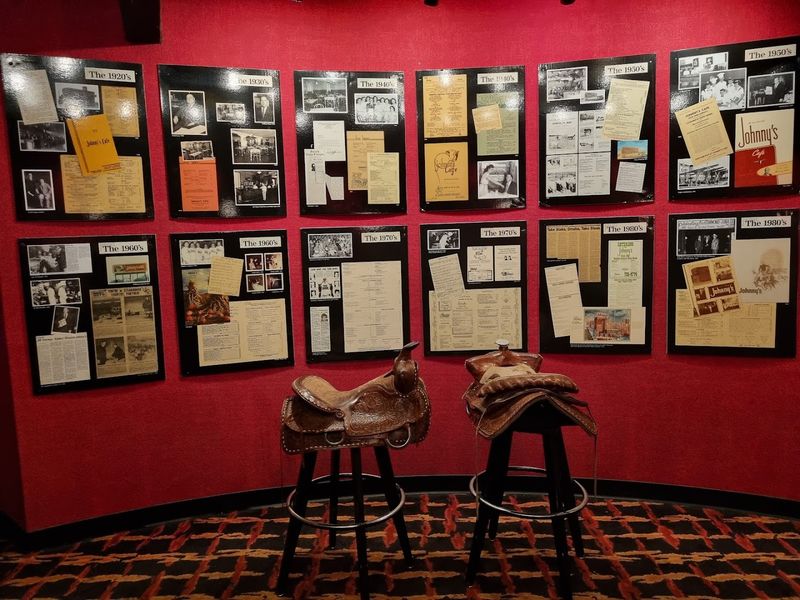
Not every steakhouse can draw a straight line from its menu to the industry that shaped its city.
Johnny’s Cafe can, and the proof does not stop at the dinner plate.
The restaurant opened during the same era that pushed South Omaha into national beef history.
By 1955, Omaha’s livestock market had become one of the largest in the world. That fact gives the dining room more context than a wall of decoration ever could.
Photographs, memorabilia, and historical displays connect the restaurant to the cattle trade, packing plants, and neighboring businesses that built the district.
Paying homage to that past is not a side assignment here.
It gives the restaurant a sense of place, because the story on display leads back to the same South Omaha streets that fed its menu.
A steak order lands differently when the walls explain why beef matters in this part of Nebraska.
The history of this place does not ask for a museum voice.
It simply puts names, images, and industry details near the meal, then lets the connection do its own work.
This approach gives diners more than a plate of prime rib or a cut of steak. It adds a map.
Where did Omaha’s beef reputation come from?
Why did a small restaurant beside the stockyards grow into a steakhouse people discuss by name?
The answer sits in plain view.
Read the walls before the menu wins the argument. Bring a fork, then give the walls a minute.
Beef Has Company On This Menu
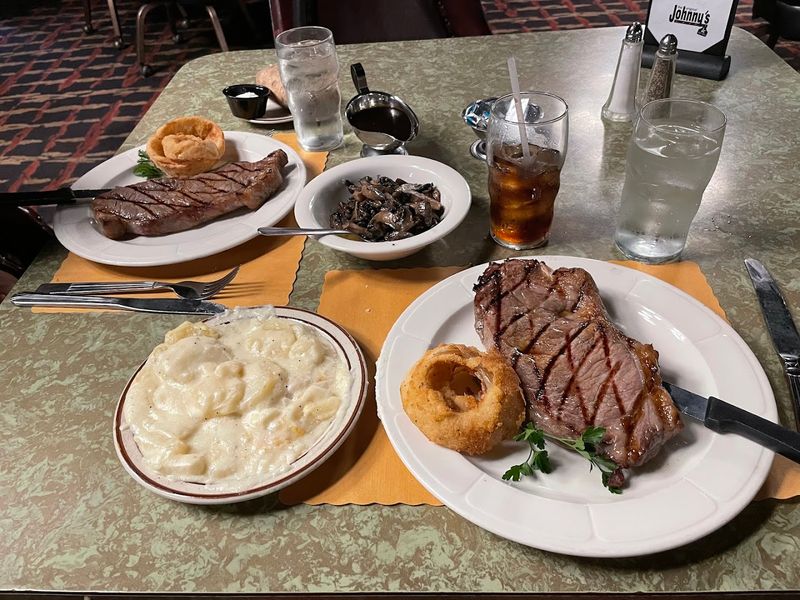
Beef may headline the menu, but the kitchen does not ask every diner to follow the same script.
That matters at a steakhouse with more than a century of beef history behind it.
Johnny’s Cafe also serves seafood, chicken, and pasta dishes, which gives the table more room to move.
The menu includes broiled salmon, fried shrimp, and chicken breast entrees, so the choice does not stop at ribeye, filet, or prime rib.
That range helps explain why a group can share the same table without turning dinner into a negotiation. One person can stay with steak.
Another can order seafood. Someone else can choose chicken and avoid pretending a side salad counts as dinner.
Giving it a new language altogether, the menu treats steakhouse classics as only part of the story.
The restaurant has the skill of creating dishes that are every bit as comforting as home cooking but never something you could actually recreate yourself.
That line matters because the menu does not drift away from its roots. It simply gives the beef room to breathe.
Several long-running menu items keep their place while newer dishes join the lineup over time. That kind of range works best when the kitchen knows what business it serves.
Here, the answer starts with beef, then widens without losing the point.
For diners who arrive convinced they will order a steak, the rest of the menu creates a real dilemma.
Not every difficult decision comes with a side dish, but this one should.
Save Room For Dessert
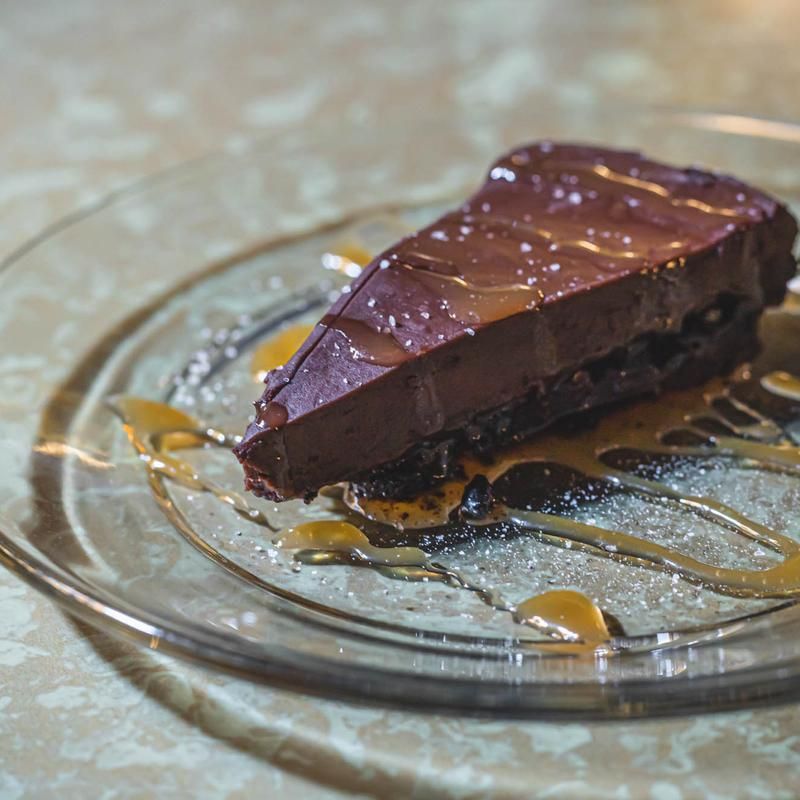
A meal built around steak often ends with one more decision, and this one does not involve choosing a cut.
Johnny’s Cafe keeps dessert in the conversation with a lineup that moves beyond a single predictable slice of cake.
The selection has included bread pudding, cheesecake, Oreo cheesecake, carrot cake, fresh-baked pies, and ice cream pie.
That variety matters, right?
After prime rib, porterhouse, ribeye, or filet, the table does not always want the same kind of finish. Sometimes a table’s orders call for pie because fruit, crust, and a fork can settle a rich meal without adding too much weight.
Other diners go straight for cheesecake, especially when the choice includes a classic version and an Oreo version. Brave souls.
Bread pudding earns attention for a different reason.
It belongs to the old-school steakhouse vocabulary, where dessert does not need tricks to make its point.
Warm, spoonable, and built for a slow finish, it gives the meal a final turn without pulling the spotlight away from the beef.
Lovingly committed to quality on every level, the kitchen extends the menu beyond steaks, potatoes, and side dishes. That detail helps the restaurant avoid the one-note problem many steakhouses create for themselves.
For most of us, an outing has to be a well-rounded story.
Here, dessert gives that story a final chapter with sugar, crust, cream, and just enough indecision.
Save room, or at least pretend you tried.
Getting The Most From A Visit
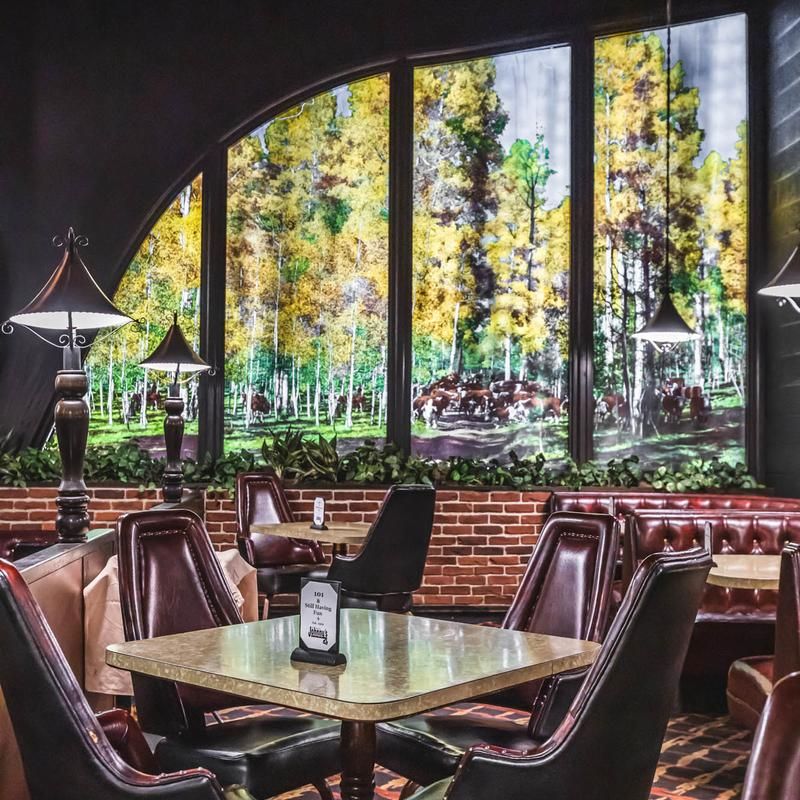
A good steakhouse visit does not need a complicated plan, but Johnny’s Cafe rewards a little menu strategy.
Start with the question most tables avoid until the last second.
Is this a prime rib night, or is this a steak knife night?
That choice matters because the two routes eat differently.
Prime rib brings slow-roasted tenderness and au jus, while a ribeye, filet, or porterhouse puts more focus on the cut itself. Neither choice needs rescuing, so the smarter move comes from balance.
If the main plate leans rich, keep the sides direct. A potato and salad can do more work than a crowded table of extras.
If the table includes more than one appetite, use the menu’s range instead of treating it as a backup plan.
Seafood, chicken, and pasta give the meal a wider shape without pulling it away from the steakhouse lane.
That is where Johnny’s Cafe works especially well for mixed orders.
One plate can stay firmly in beef country while another goes lighter, and nobody has to pretend they came only for garnish. Dessert requires its own kind of honesty.
After a heavy cut, pie makes sense, sure, but after a cleaner plate, cheesecake is a go-to.
The best move?
Do not order like the menu is testing you. Test the menu.
Order like Omaha already gave you the answer, then let the fork confirm it.