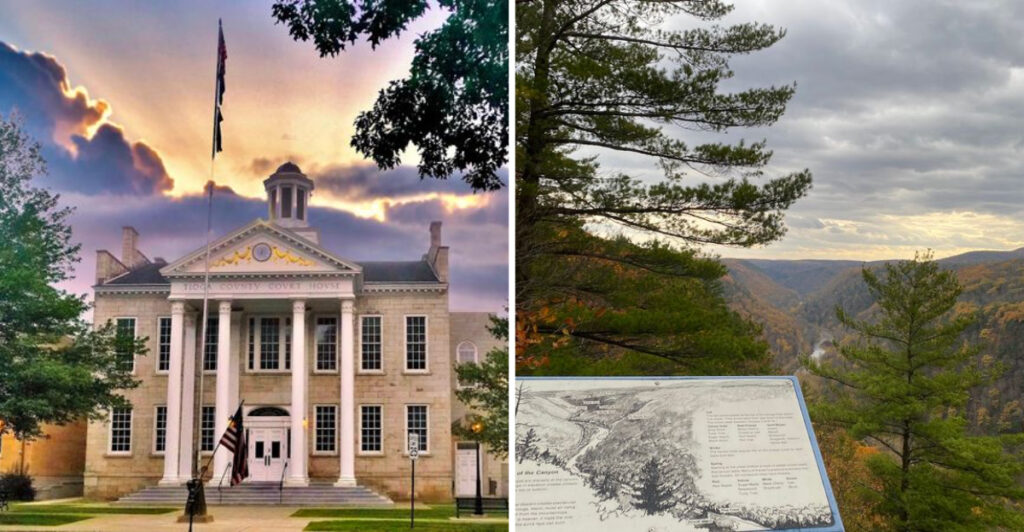
The weekend sometimes begins with one convincing little sentence: “Let’s just go for a drive.”
A few forested miles later, Pennsylvania starts changing the view.
Then a town appears with real gas flames glowing along Main Street. It looks as though modern lighting lost the argument and a Victorian stage crew took over instead.
That would already be enough personality for one stop. This Tioga County borough also has a historic downtown and a canyon just twelve miles away.
One minute, the afternoon involves browsing beneath old-fashioned streetlamps. The next, the ground drops roughly 800 feet toward Pine Creek.
Pennsylvania does not make visitors choose between small-town charm and outdoor drama here. It puts both on the same weekend itinerary and lets the gas lamps handle the closing credits.
Route 6 Makes The Journey Part Of The Weekend
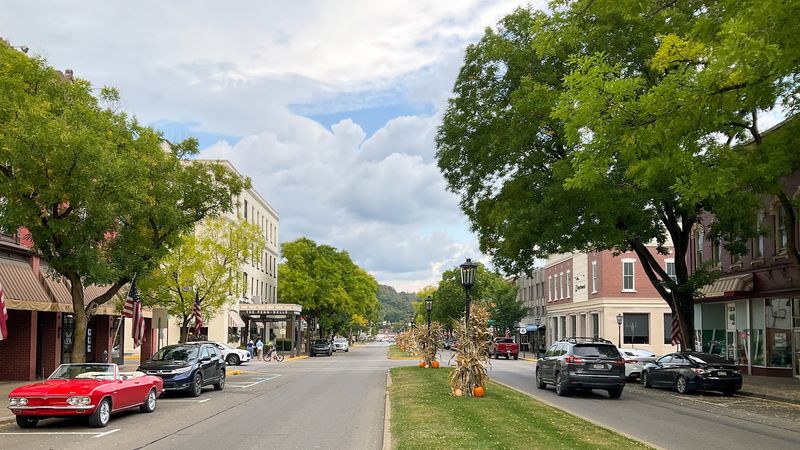
Route 6 is the rare road that refuses to behave like the boring part between departure and arrival. Give it a full tank and a free Saturday, and it starts acting like the main attraction.
This historic highway cuts across northern Pennsylvania through thick forests, open farmland, and small towns that have barely changed in decades. The drive itself becomes an experience worth planning around.
Drivers heading toward Wellsboro on Route 6 move through some of the most underrated scenery in Pennsylvania. The pace is unhurried, and the views keep rewarding patience.
Pennsylvania tourism actively promotes this corridor as a road-trip route. That endorsement is well-earned. The highway connects places that feel genuinely rooted in the region’s character.
Route 6 was once called the Grand Army of the Republic Highway. Its history runs as deep as the forests it passes through.
By the time Wellsboro appears, the journey has already earned its place in the weekend. Keep the windows clear and the schedule loose. This is one road that may persuade you to stop far more often than planned.
Wellsboro Greets Drivers With A Gas-Lit Main Street
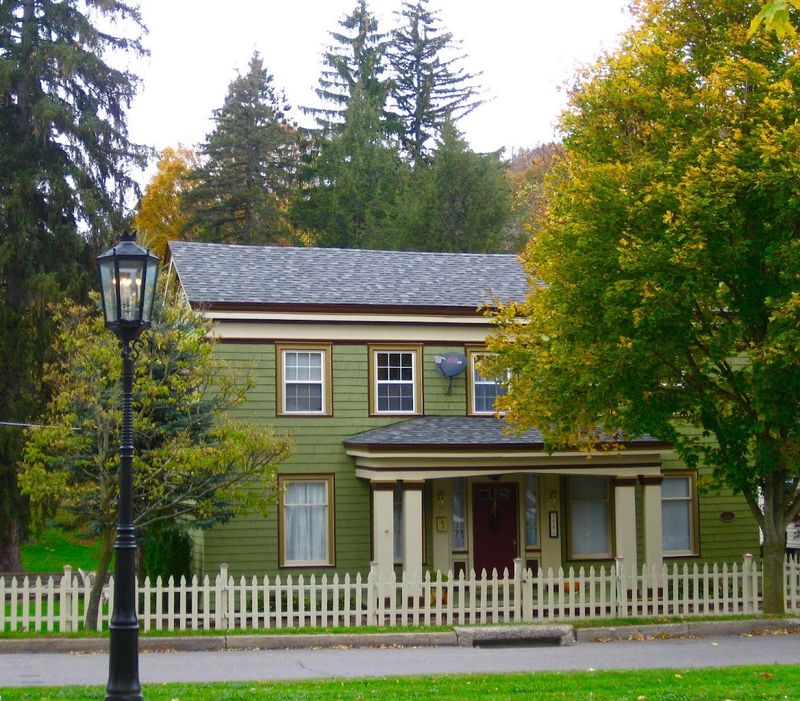
How many towns can make a streetlamp feel like a celebrity sighting? Wellsboro lights Main Street with real gas flames. This quirk makes an evening walk have far more drama than anyone expected from a small Pennsylvania place.
The lamps cast a warm amber glow that makes the commercial strip feel genuinely cinematic. Visitors often slow their pace just to take it in properly.
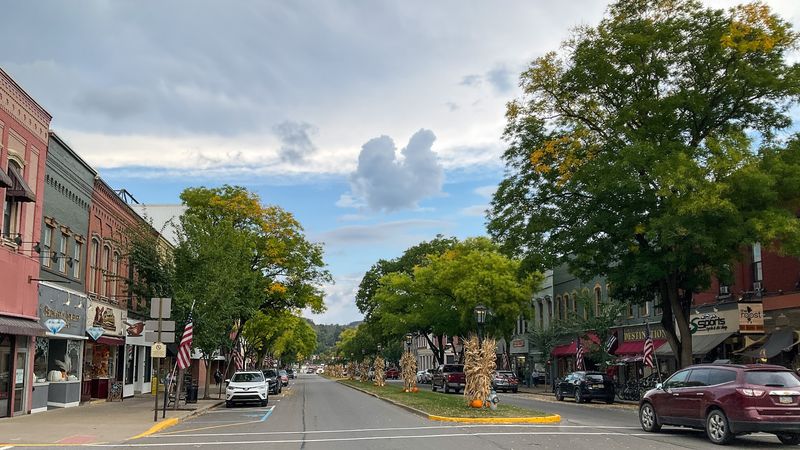
Wellsboro’s downtown is built around a central grassy boulevard that runs down the middle of Main Street. Trees shade the walkway, and the whole arrangement feels thoughtfully designed rather than accidental.
The architecture along the street reflects the town’s 19th-century roots. Brick facades, traditional storefronts, and well-kept facades give the district a coherent, historic character.
The Wellsboro Historic District was added to the National Register of Historic Places in January 2005. The designation covers a substantial portion of the central commercial and residential area.
A Historic Architectural Review Board oversees visible changes within the district. That oversight keeps the streetscape consistent and prevents the kind of mismatched development that erases character in other towns.
Wait until dusk, then watch the flames begin glowing above the sidewalks. Your camera may call it good lighting, but Wellsboro clearly considers it standard evening attire.
The Town Green Keeps Everything Within An Easy Stroll
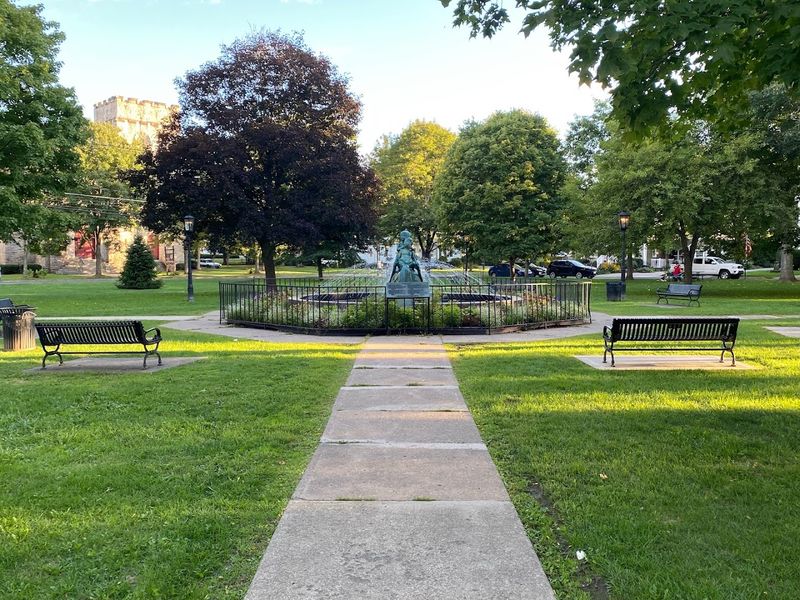
Wellsboro offers a rare vacation luxury: parking the car and temporarily forgetting where you left it. The green keeps the downtown compact enough for your feet to take over without filing a formal complaint.
Benches sit at regular intervals along the green. Mature trees provide shade during warmer months, making a midday stroll genuinely comfortable rather than something to rush through.
The layout means that shops, restaurants, and historic landmarks are all within a short walk of each other. Visitors rarely need to move the car once they arrive downtown.
That walkability is a quiet luxury in a region where most destinations require driving between attractions. Wellsboro rewards those who slow down and move on foot.
The green also serves as a gathering space during the town’s seasonal events. It fills with foot traffic during festivals and becomes a natural meeting point for locals and visitors alike.
Spend the afternoon wandering without trying to beat the clock. As daylight fades, the gas lamps begin to glow above the boulevard. By then, doing very little feels like the smartest plan on the itinerary.
Nearly Two Centuries Of History Shape Downtown
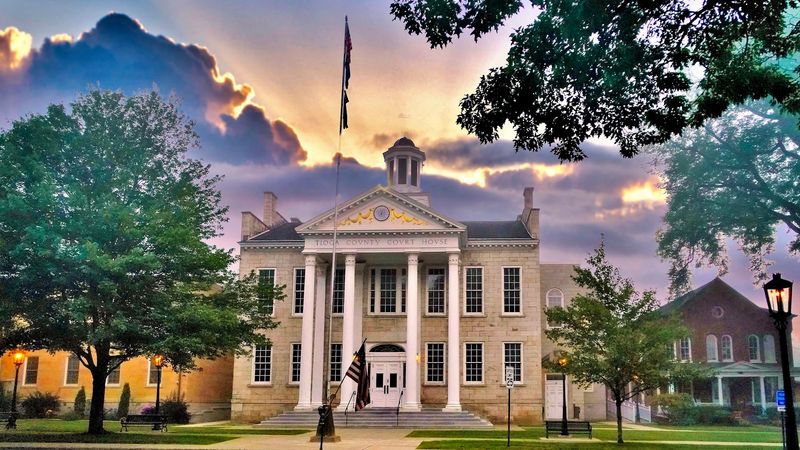
Wellsboro has been collecting history since 1806. And unlike most collectors, it has enough room to display the good pieces across an entire downtown.
The town was named for Mary Wells Morris, the wife of founder Benjamin Wistar Morris, giving the borough a personal origin story that most places lack.
Incorporation as a borough followed in 1830. By then, the town had already begun developing the architectural bones that still define it today.
The Tioga County Courthouse, constructed in 1835, stands as one of the most tangible reminders of that early period. It anchors the downtown with a sense of permanence and civic pride.
The Green Free Library and several 19th-century commercial and residential buildings round out a downtown that reads like a living timeline. Each block adds another layer to the story.
Walking through the Wellsboro Historic District, visitors move through more than two centuries of small-town Pennsylvania life. The buildings are not just old. They are actively maintained and respected.
Look beyond the dates and architectural details, and the history becomes much easier to appreciate. You are not studying a town that used to exist. You are walking through one that still knows exactly who it is.
Pennsylvania’s Grand Canyon Waits Beyond The Storefronts
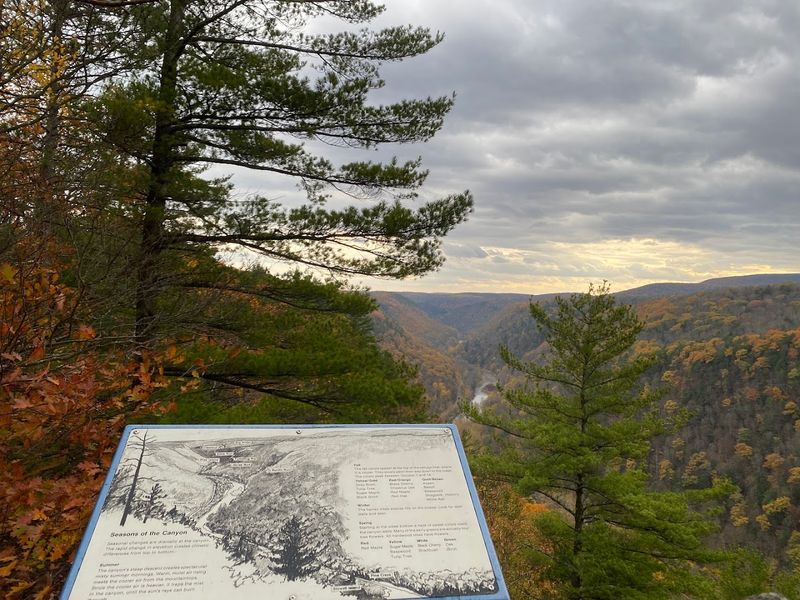
Wellsboro saves its biggest plot twist for twelve miles outside downtown. Just when the weekend seems content with gas lamps and historic storefronts, the ground drops roughly 800 feet.
The scale surprises first-time visitors. Pennsylvania is not typically associated with dramatic canyon landscapes, which makes the gorge feel like a genuine discovery.
Leonard Harrison State Park sits on the eastern rim and provides the most popular access point. The park’s overlooks deliver unobstructed views across the full width of the gorge.
Structures from the Civilian Conservation Corps era still stand within the park. They add a historical layer to the natural spectacle that most visitors appreciate.
In 1922, the heirs of Wellsboro businessman Leonard Harrison donated 121 acres overlooking the gorge to Pennsylvania. That gift became the foundation of the state park that now bears his name.
Colton Point State Park occupies the western rim, offering a different perspective on the same canyon.
Stand at either rim and let the scale do the talking. Wellsboro may call itself “The Heart of the Canyon,” but one look downward will remind you that the canyon has a fairly strong personality of its own.
The Turkey Path Trail Tests Every Hiker’s Resolve
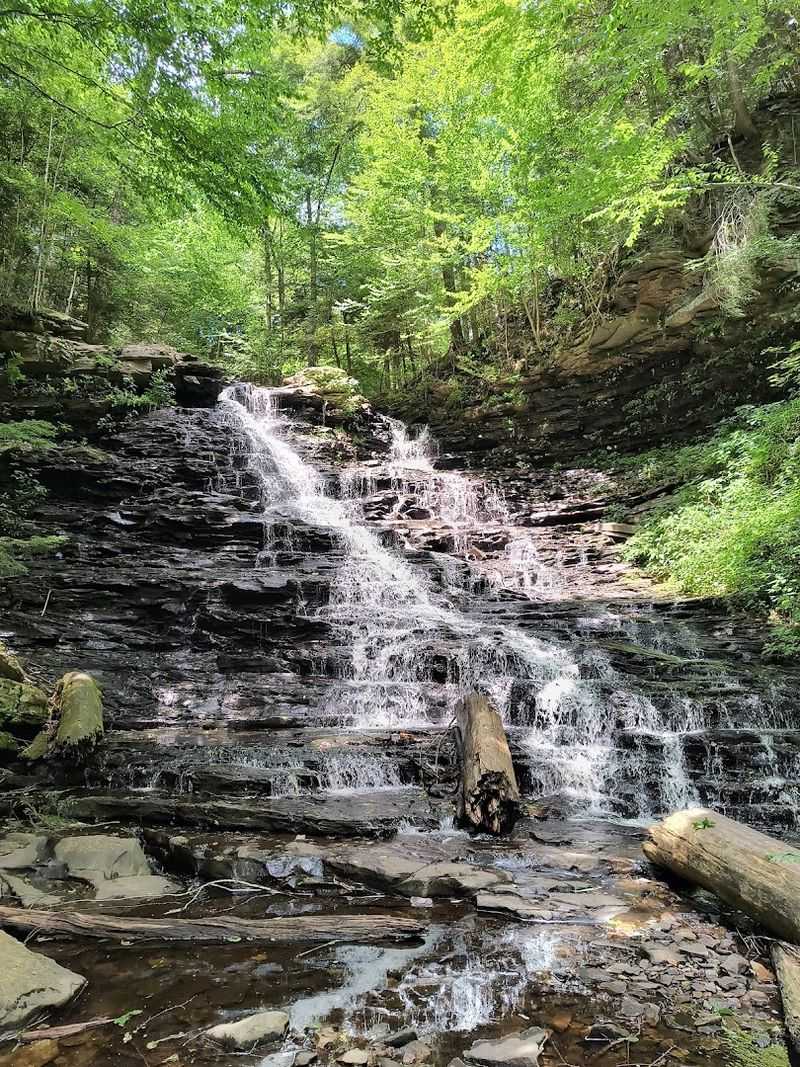
The Turkey Path may be only a mile long, but apparently nobody told it that short trails are supposed to be polite. This one heads steeply downward and saves the real negotiations for the climb back out.
Pennsylvania classifies it as one of the park’s most difficult hikes. The trail drops steeply toward the gorge floor and passes waterfalls on the way down.
The one-mile descent is manageable in distance but demanding in effort. Hikers need proper footwear and a realistic sense of what the return climb will ask of their legs.
Reaching the bottom puts visitors at creek level inside the gorge. The perspective from down there is completely different from the overlooks above, and worth every step of the descent.
The waterfalls along the trail add visual rewards at multiple points during the hike. They are not massive cascades, but they fit naturally into the steep, forested landscape.
The trail also passes structures from the Civilian Conservation Corps era, connecting the physical challenge to a broader historical context.
Take the climb slowly and save a little energy for the return to town. Once you are back beneath Wellsboro’s gas lamps, dinner gets to taste like both a reward and proof that your legs survived.
Dickens Of A Christmas Brings Victorian Magic To Main Street
For most of the year, Wellsboro merely hints that it belongs in another century. During Dickens of a Christmas, the town stops hinting and arrives in full costume.
The streets are closed to vehicles for the celebration. Vendors, performers, and costumed characters take over the boulevard in a way that feels theatrical without feeling forced.
The gas lamps, which are already a year-round feature, suddenly feel custom-designed for the occasion. Their warm glow against winter darkness creates an atmosphere that no amount of modern lighting could replicate.
That kind of longevity signals a community tradition that residents genuinely invest in, not just a tourism event assembled for outside audiences.
Visitors who time their weekend drive to coincide with the festival get two experiences layered into one trip. The town’s historic character is present all year, but Dickens of a Christmas amplifies it dramatically.
Bundle up, leave room in the schedule, and let Main Street handle the time travel. When gas flames glow above a boulevard full of Victorian characters, checking the century starts to feel surprisingly reasonable.