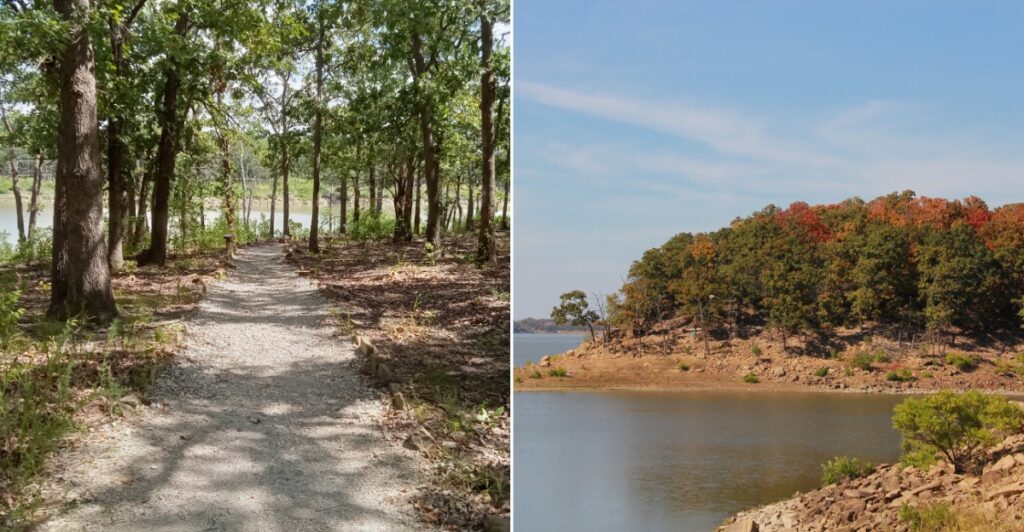
One oak on this short trail was already growing before the United States existed. That fact alone stopped me cold.
These trees started life back in the 1720s and 1730s.
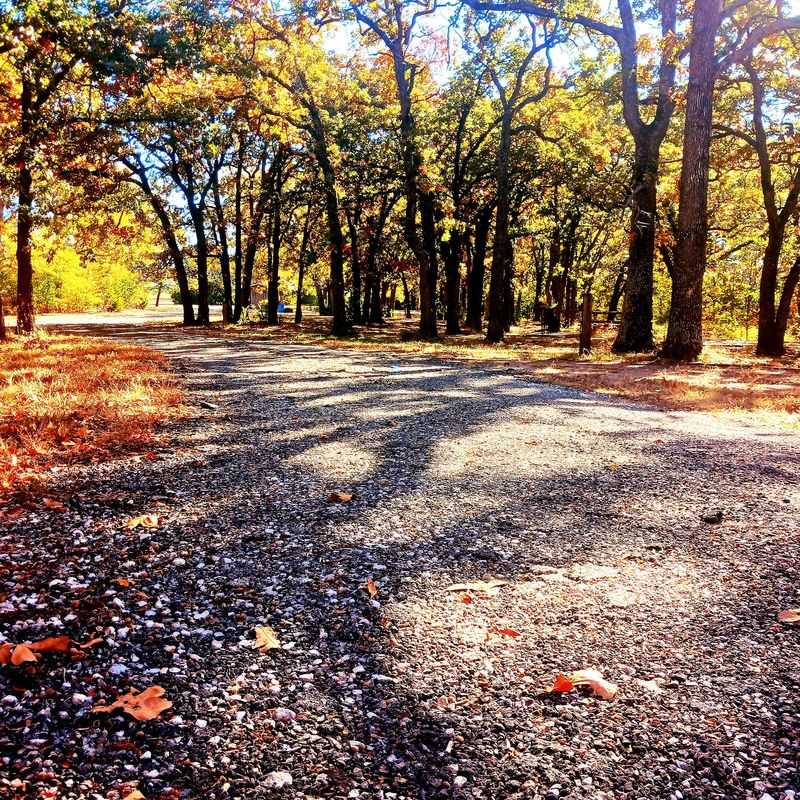
The path runs about a mile and a half through old post oaks and blackjack oaks. Many of them are 300 to 400 years old.
Signs along the way link certain trees to big moments in history.
I like how a quiet walk in the woods turns into a timeline you can touch. Kansas gets teased for being flat and treeless.
This place happily ruins that joke.
There are no bikes allowed here, just your own two feet. That keeps the pace slow and the mood calm.
So how does it feel to stroll past a tree older than the country?
These Oaks Were Already Old When America Was Brand New
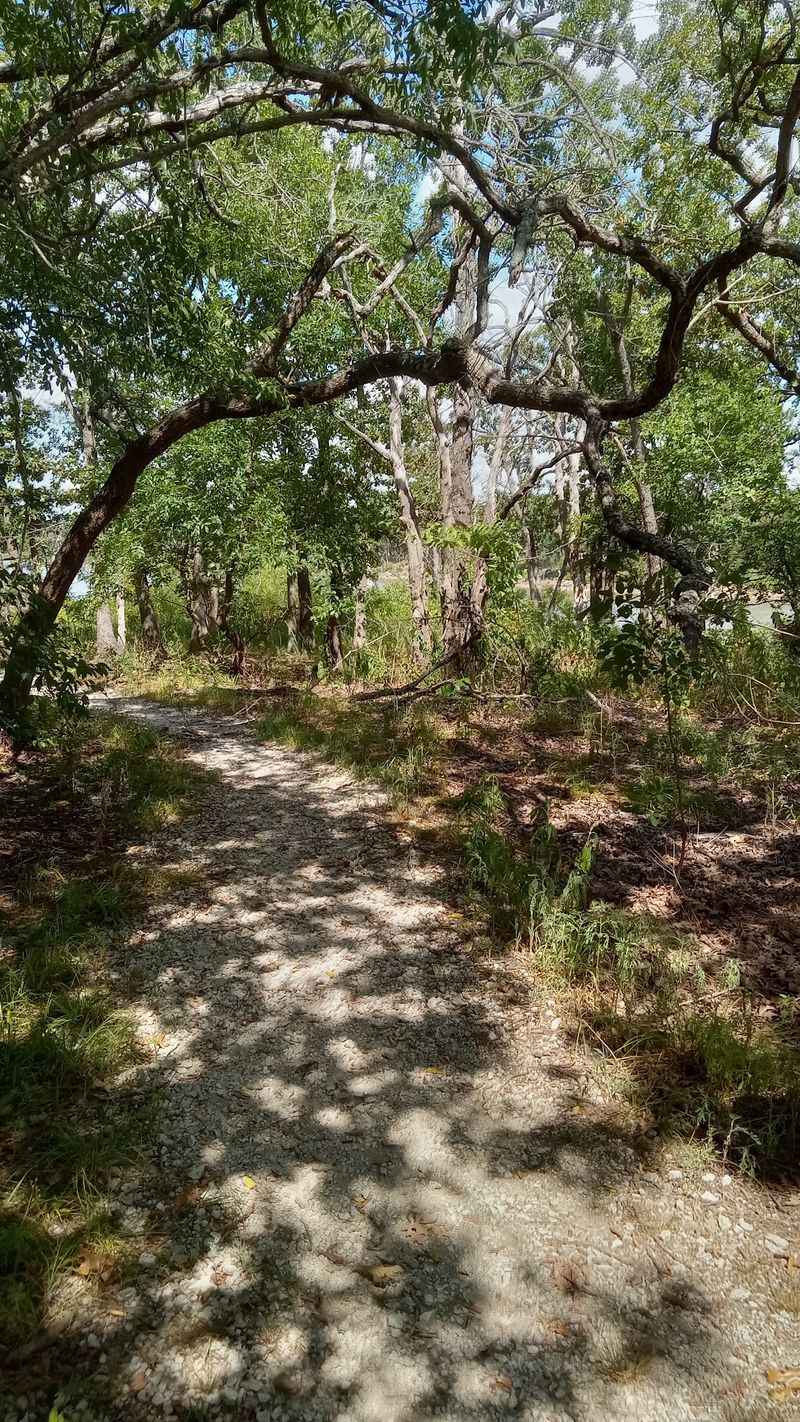
Three centuries is a long time to stand in one spot.
The oaks along the Ancient Trees Trail at Cross Timbers State Park have done exactly that, and some started growing in the 1720s or 1730s.
Researchers have dated some of the post oaks here to more than 300 years old. One tree on the trail is even older than the United States itself.
That fact hits differently once you’re standing beside the trunk. These trees were sprouting while colonists were still decades away from writing any declarations.
Post oaks don’t grow into giant redwoods, so don’t expect skyscraper trunks. Their age shows in twisted limbs and tough, weathered bark instead.
Blackjack oaks have their own rugged charm with dark, chunky bark. Together they create a forest that looks like it has seen a few things, because it has.
Take a moment to slow down near the oldest trees. A trail this short deserves your full attention, not a speed record.
Bring a camera, but also bring some patience. Gnarly old branches make great photos when the light filters through the leaves.
Read The Signs And Watch History Line Up With The Rings
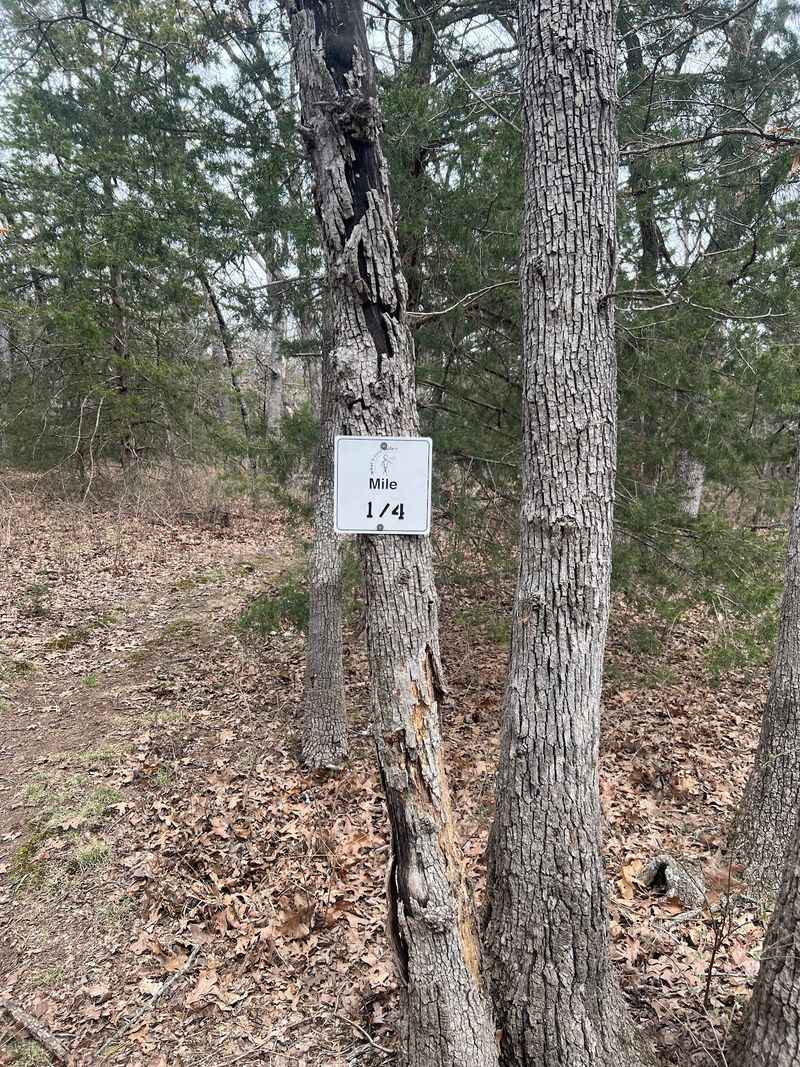
History class never had scenery like this. Interpretive signs along the trail connect specific oak trees to major events in American and Kansas history.
One marker points to a tree that was thirteen years old in 1803. That’s the year France sold the land that included Kansas as part of the Louisiana Purchase.
Think about that for a second. A teenage tree was minding its own business while a giant real estate deal changed the map.
The signs turn a simple walk into a living timeline. Kids who groan at textbooks might actually stop and read these.
Each marker gives you a reason to pause and look closer. The bark, the branches, and the shape of each tree suddenly feel more meaningful.
Here’s a fun game for families. Have everyone guess which historic event each tree witnessed before reading the sign.
You’ll probably guess wrong a few times, and that’s half the fun. Learning sticks better when it comes with fresh air and a little friendly competition.
Take your time at each stop. Rushing past the signs means missing the best part of the story.
Your Legs Are The Only Vehicle Allowed On This Path
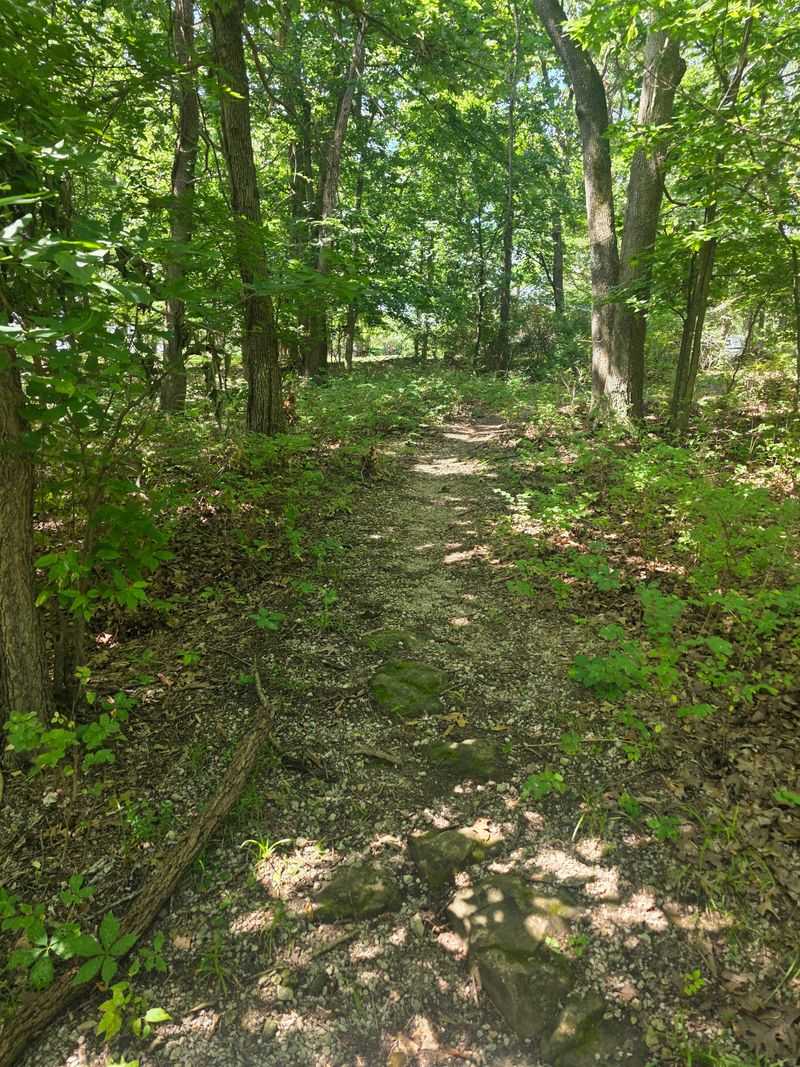
Mountain bikers, sorry, but this one is off limits. The Ancient Trees Trail is reserved for hiking only, which keeps things peaceful.
The loop covers about 1 mile. That’s short enough for most families and long enough to feel like a real outing.
Without bikes zipping past, you can wander at your own speed. Stop for a sign, check out some bark, or just stand still and listen.
The slower pace fits the setting perfectly. Rushing through a 300-year-old forest seems a little rude, honestly.
Wear sturdy shoes with good grip. Wooded trails can get muddy after rain, and roots love to surprise unprepared ankles.
Bug spray is also a smart call during warm months. Mosquitoes and ticks enjoy shady woodlands as much as hikers do.
Pack water even though the trail is short. Kansas summers can get steamy, and a cold drink makes any walk better.
Plan for about an hour if you read the signs. Add more time if you like photos, snacks, or long pauses beneath a shady oak.
Where The Forest And The Prairie Meet In The Middle
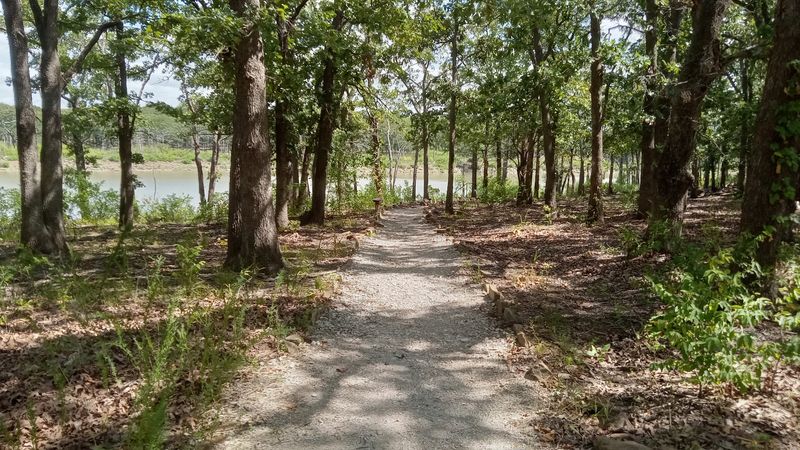
Scientists call it a tension zone, which sounds dramatic for a bunch of trees.
It’s simply where the eastern forest slowly gives way to open prairie.
Cross Timbers State Park sits in the northern reaches of the Cross Timbers region in Kansas. That location explains why the woods here feel so different.
Post oak and blackjack oak rule this landscape. They’re tough trees that handle poor soil and dry spells better than most.
Other species join the mix too. Look for Eastern red-cedar, northern red oak, white oak, white ash, and winged elm.
Hickories show up as well, including bitternut and mockernut. Knowing a few names makes the walk feel like a scavenger hunt.
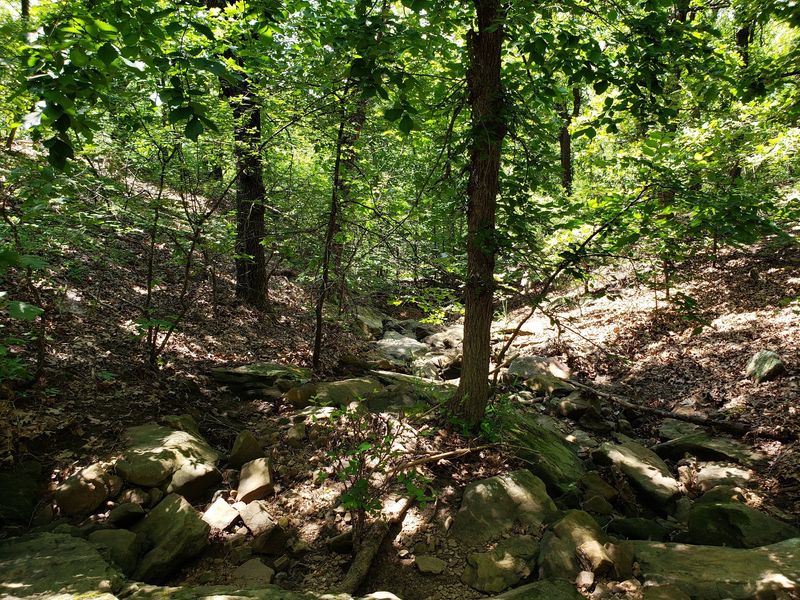
The understory is thick with vines, briars, and shrubs. Staying on the path is wise unless you enjoy fighting with thorny plants.
That tangled growth likely helped protect these old trees over the years. Rough, dense woods weren’t exactly easy to clear.
Bring a tree identification app or field guide. It downloads before you arrive, which matters since signal can be spotty here.
Keep Your Eyes Up For Woodpeckers And Owls
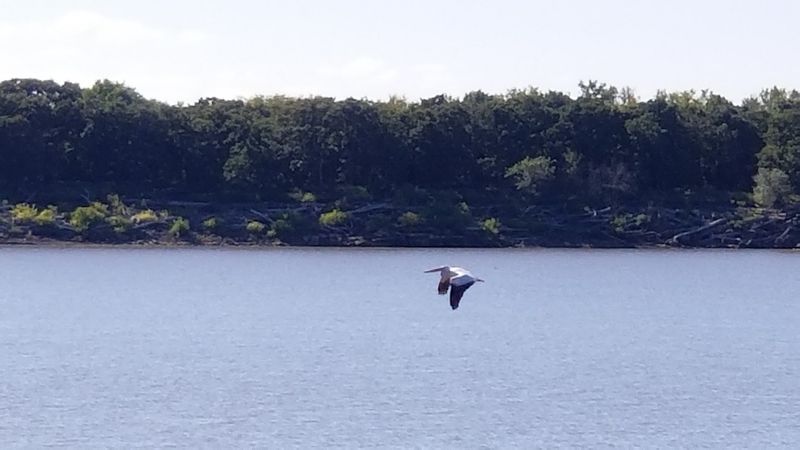
A loud knocking in the woods isn’t a lost hiker. It’s probably one of the several woodpecker species living in this park.
Downy, hairy, red-bellied, and pileated woodpeckers all call the area home. The pileated is the showstopper, with its big body and bright red crest.
Owls live here too, including Eastern screech owls and barred owls. They’re usually more active near dusk, so timing matters.
The park also sits along the Central Flyway. Spring and fall bring migrating birds passing through on their long trips.
Bird lovers should pack binoculars for this walk. Old trees with cracks and hollows make great homes for feathered neighbors.
Other wildlife may appear as well. White-tailed deer, wild turkeys, squirrels, rabbits, and raccoons are common around the park.
Move quietly if you hope to spot animals. Talking softly and walking slowly gives you a much better chance.
Early mornings are often a good choice for wildlife watching. The air is cooler, and the woods tend to feel extra calm before the day heats up.
Turn A Quick Hike Into A Whole Lake Weekend
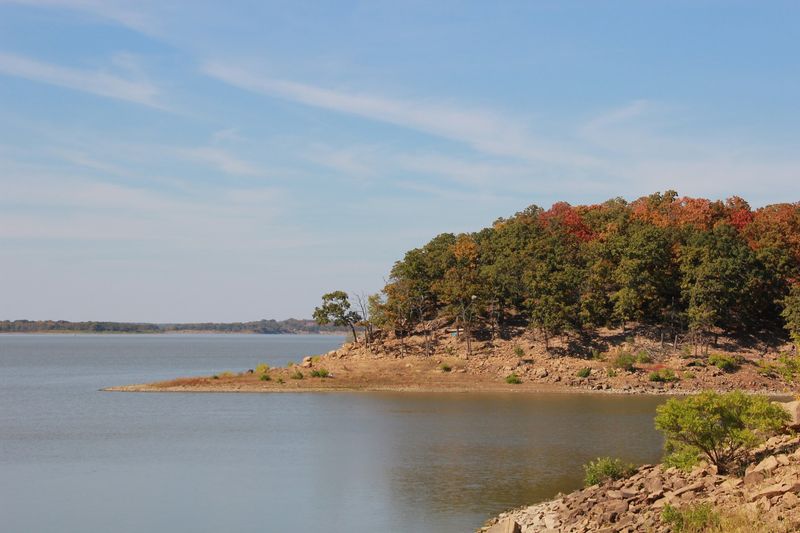
After the old oaks, a big blue lake waits nearby.
Cross Timbers State Park offers many access points to the 2,800-acre Toronto Reservoir.
Boating, fishing, swimming, and picnicking are all popular here. Several boat ramps sit around the reservoir for easy launching.
Anglers have plenty to chase. The reservoir and river hold white crappie, white bass, channel catfish, flathead catfish, black bass, bluegill, and sunfish.
Kayaks have been offered free to borrow at the park. Ask staff about availability before planning your paddle.
Always wear a life jacket on the water. It’s the easiest safety move you can make.
Pairing a morning hike with an afternoon on the lake works nicely. Your legs get a rest while your arms do the paddling.
Picnic areas and playgrounds round things out for families. Kids can burn off energy while adults pack up the snacks.
Lake levels can change with heavy rain, so check conditions before you go. A quick call to the park office helps avoid surprises at the shoreline.
Sleep Close Enough To Visit The Trees At Sunrise
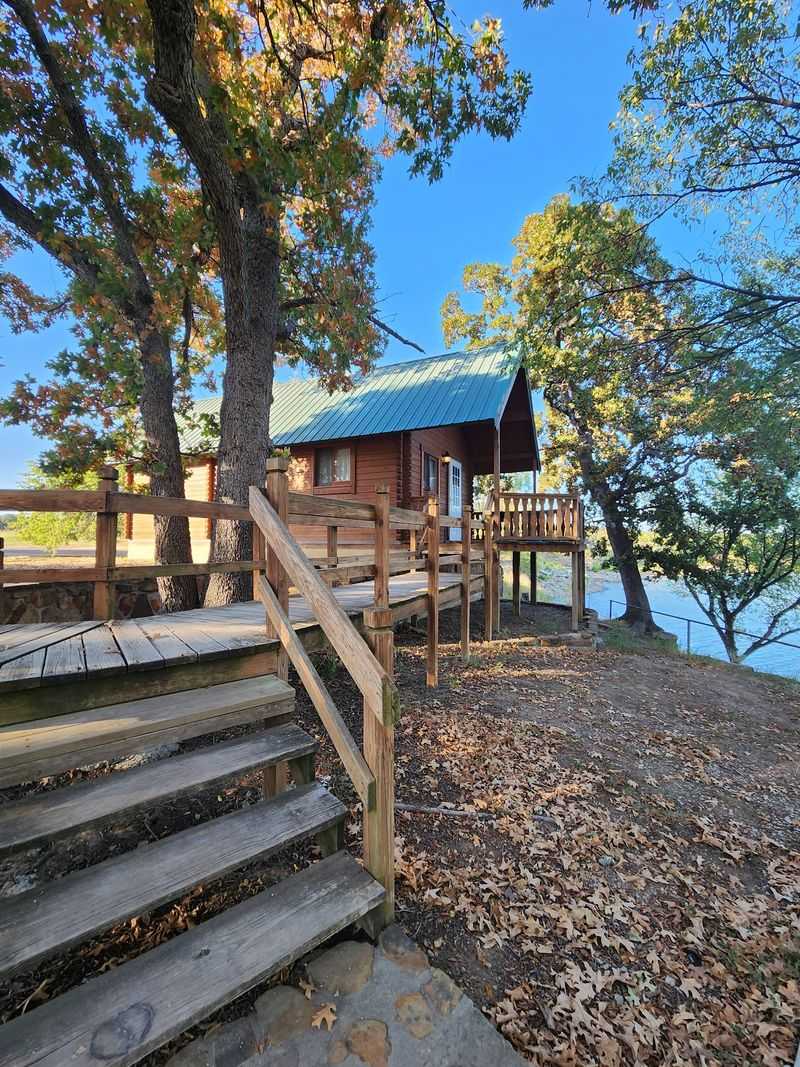
Staying overnight means you can beat the heat on the trail.
Cross Timbers State Park has plenty of ways to spend the night. Four modern cabins offer lake views.
They make a cozy base for anyone who prefers walls over tent fabric.
Campers have even more choices. Options include full RV hookup sites, primitive camping areas, and group camping.
Most campgrounds have modern bathrooms and showers. Mann’s Cove Loop is the exception, with a vault toilet instead.
Backpackers can look into the Chautauqua Hills Trail. Backcountry camping is allowed there with a special permit.
Remember that a state park vehicle permit is needed in addition to camping fees. Sorting that out ahead of time keeps check-in simple.
Cabins tend to be popular, so reserve early when possible. Weekends and holidays usually fill up first.
Waking up near the trail is the real prize. Morning light in the oaks is gentle, quiet, and perfect for unhurried wandering before breakfast.
Still Have Energy? More Trails Are Waiting
Some hikers finish the one-mile Ancient Trees Trail and want more.
Good news, because this park has a whole network of trails to explore.
Unlike the Ancient Trees Trail, the others welcome both hikers and mountain bikers. Watch for riders and share the path kindly.
The Oak Ridge Trail runs half a mile and is rated moderate. The Blackjack Trail covers 1 mile, and both allow hiking and mountain biking.
Want a bit more challenge? The Overlook Trail stretches 1.25 miles, with rocky terrain and steep sections that reward hikers with lake views.
The Chautauqua Hills Trail is another favorite. Its connected loops offer several hiking options, and backcountry camping is allowed on designated segments with a special permit.
The longest route on the Chautauqua Hills Trail spans 11 miles. That’s a serious day, so pack snacks, water, and a good map.
Download trail maps before you arrive. Cell service is close to zero in parts of the park.
Mixing an easy walk with a tougher trek makes for a great weekend. Your calves may complain, but your camera roll will thank you.
Plan Your Route Before The Signal Disappears
Getting here is part of the adventure, so plan ahead.
Cross Timbers State Park sits at 144 Highway 105, Toronto, KS 66777. The park is in southeast Kansas near the small town of Toronto.
It was authorized by the Kansas Legislature in 1960 as Toronto State Park and renamed Cross Timbers State Park in 2002, though its oldest trees predate both milestones by centuries.
Long before the park, this land was a favored hunting and camping ground for the Osage Nation. That history adds depth to every step.
The park office is generally open Tuesday through Saturday in summer and Monday through Friday in winter, so call ahead with questions. An information center is available to help visitors.
Print directions or save offline maps before leaving home. Phones may lose signal once you’re deep in the woods.
The adjoining 4,600-acre Toronto Wildlife Area adds even more open space. Outdoor fans can easily fill a long weekend.
Spring and fall offer comfortable hiking temperatures. Migrating birds also pass through during those seasons.
Bring curiosity and a little patience. A trail full of trees older than America deserves a slow, thoughtful visit, and this corner of Kansas is ready for you.