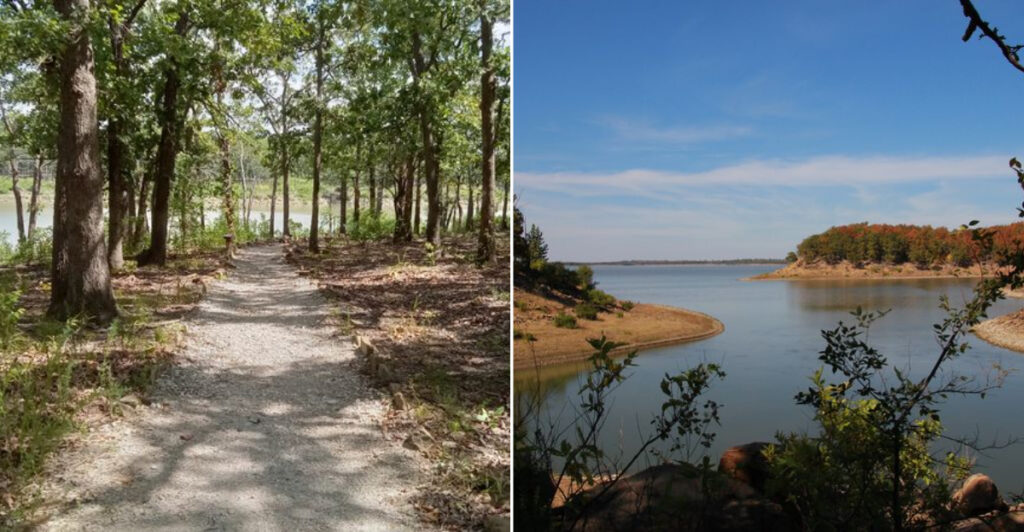
By August, shade can feel more valuable than scenery. Finding both on the same walk is almost unfair.
This Kansas forest trail offers the kind of break hot-weather hikers start craving long before summer is over. Instead of baking in open sun, you can move beneath a canopy that makes the whole outing feel calmer and far more manageable. No wonder locals are not exactly eager to advertise every turn.
The appeal is not complicated. A cooler path gives you permission to slow down, listen more closely, and enjoy the woods without treating every patch of shade like a finish line.
I once chose a shaded trail on a day when the forecast looked downright rude.
Halfway in, I remember thinking I had somehow cheated summer. The air was still warm, but the trees had taken the edge off enough to make the walk enjoyable again.
Ever since, I understand why people get protective of routes like this. Some good spots are hard to share once you know exactly what they save you from.
An Old Forest Hiding In Plain Sight
Most people picture wheat fields and windmills when they hear Kansas, and then a forest like this shows up and quietly rewrites the story.
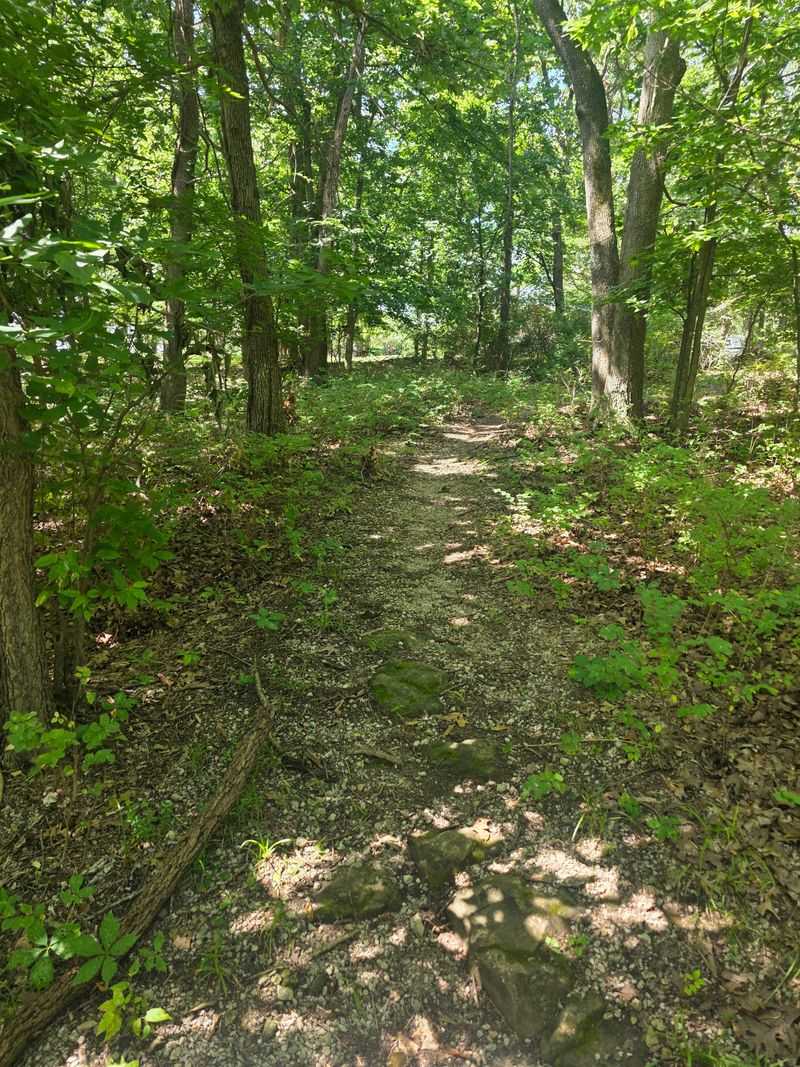
The Ancient Trees Trail runs through part of the Cross Timbers, a band of stubby, tough oak woodland that once stretched across the region.
Post oaks and blackjack oaks grow slowly here because the soil is thin and rocky, so a tree that looks small can be surprisingly old.
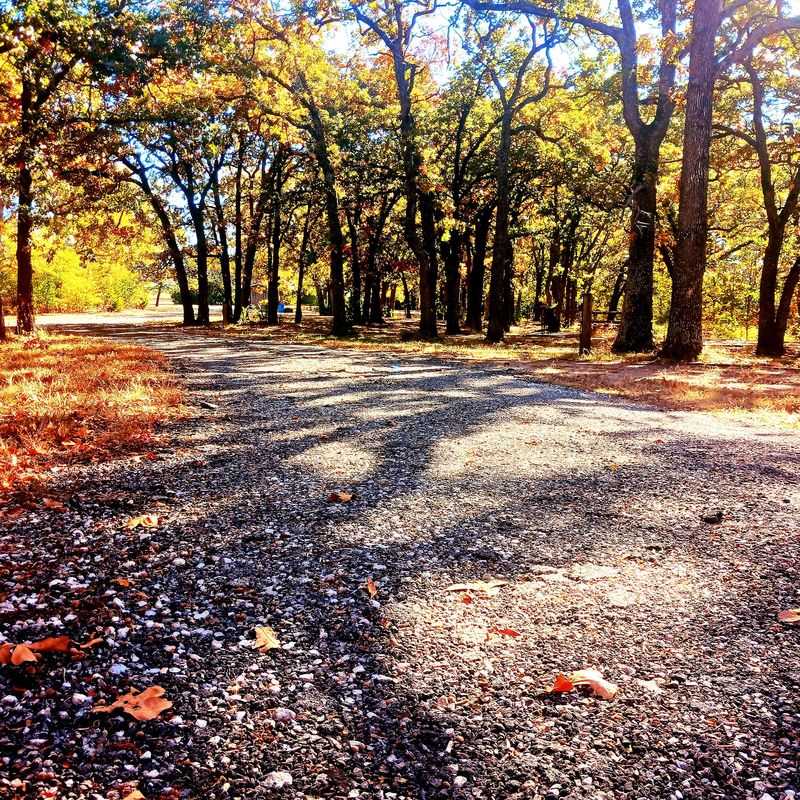
Walking under that low canopy, I kept stopping to look at bark that had clearly weathered a century of storms. The trunks twist instead of growing straight, which gives the whole grove a wonderfully crooked personality.
What makes it feel secret is the setting. You reach it through Cross Timbers State Park near Toronto, Kansas, past campgrounds and a big reservoir, so many visitors never wander off the shoreline.
Give the trees ten minutes of attention and the walk stops being exercise and starts being time travel on foot.
Where To Find The Trailhead
Finding the start is honestly half the adventure, and I say that with affection.
Cross Timbers State Park sits at 144 KS-105 in Toronto, Kansas, spread across several separate areas around Toronto Lake.
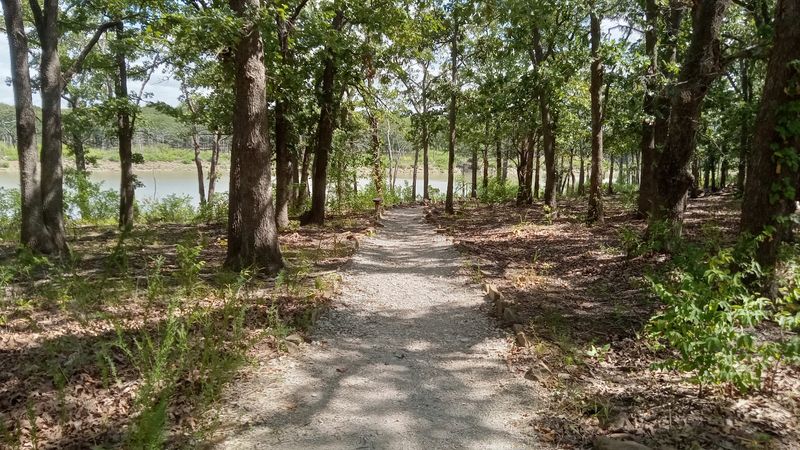
The Ancient Trees Trail is part of the park’s trail network on the Toronto Point side, close to camping loops and the lake edge.
Mapping apps have a habit of routing drivers down gravel back roads, so I plotted my route before leaving pavement. Following the highway signs into the park entrance works far better than blindly trusting a phone.
Once inside, the loops and spur roads can feel like a maze, especially after dark. I drove the paved park roads once as a slow lap just to learn the layout, then parked near the trees and walked in.
A park entrance permit is required for vehicles, and camping costs extra on top of that. Plan the drive, and the hike rewards you instantly.
Shade That Actually Cools You Down
Summer in Kansas can feel like standing next to an open oven, so shade is not a luxury out here.
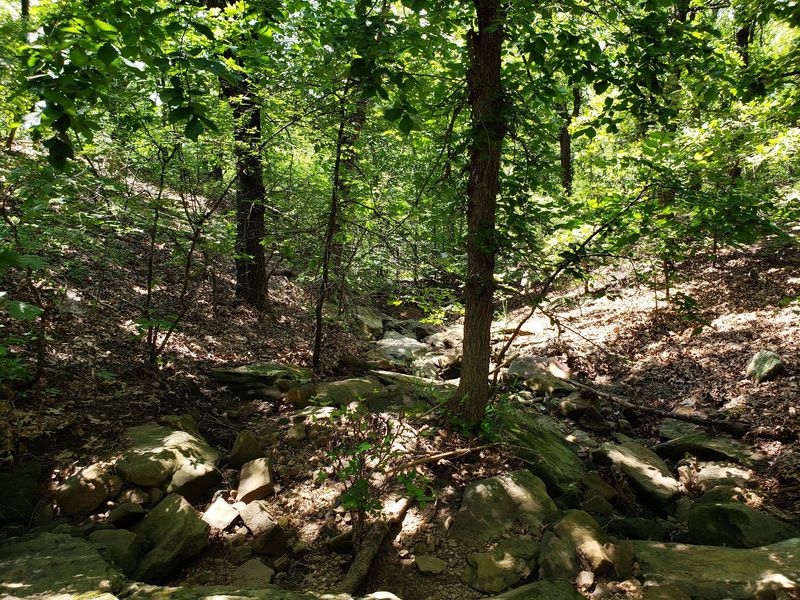
The Ancient Trees Trail winds through hardwood woodland, and that canopy reduces direct sun exposure through the walk.
The shade can make a hot outing feel more comfortable, even though it does not guarantee a measurable drop in air temperature.
Breezes may move through the trees from the lake, but summer heat and humidity still deserve respect.
The park’s shaded campsites are a feature, yet that does not mean visitors can count on naturally cool conditions.
I carried more water than I thought I needed. Shade can make hiking feel easier, but it does not prevent dehydration or heat stress on a warm Kansas day.
Early morning remains the safest bet for cooler conditions and softer light. Come for the trees, enjoy the cover, and treat the shade as help rather than air conditioning.
Rocky Footing And Sandstone Ledges
My ankles noticed this trail before my lungs did, and that is worth knowing in advance.
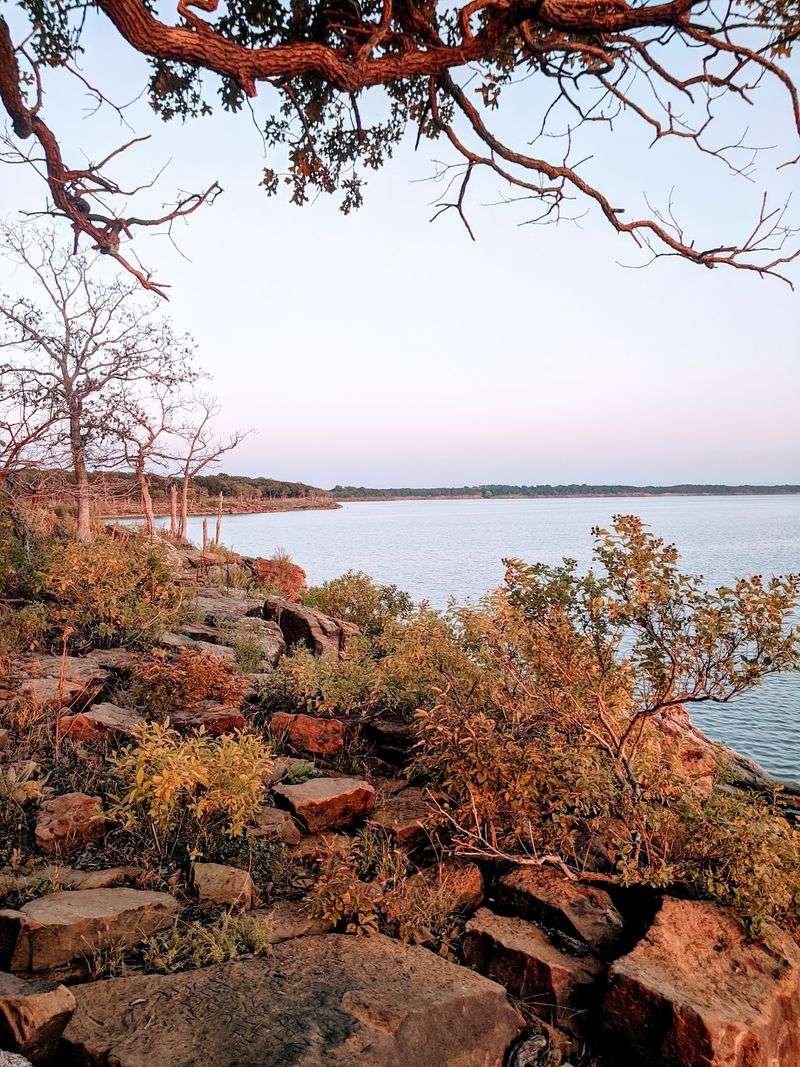
The Chautauqua Hills region is built on sandstone, so the paths here cross exposed rock slabs, loose stones, and low water crossings scattered with boulders. Nothing is technical climbing, but you do scramble in a few spots.
Tree roots braid across the dirt sections, and after rain the rock gets slick enough to demand attention. I found a slow, steady pace far more enjoyable than trying to hurry.
Trail difficulty in the park generally lands in the moderate range for this reason, even on shorter loops. Distance is not the challenge; uneven ground is.
Real hiking shoes with grip beat sandals every single time here. I also brought a light pole for the rockier stretches, which helped on the descents toward the coves.
Step carefully and the sandstone becomes a feature rather than a hazard, complete with natural benches for a snack break.
Mosquitoes And Ticks Deserve A Little Preparation
Here is the fact that separates prepared hikers from the ones who spend the walk swatting.
Ticks and mosquitoes are among the most common disease-carrying vectors in Kansas, and wooded, shaded areas can put hikers in the kind of habitat where precautions make sense.
Ticks deserve particular respect. Kansas health officials recommend staying toward the middle of trails,wearing protective clothing when practical, and checking yourself afterward.
I use an EPA-registered repellent before leaving the car and keep it handy during longer outings. Clothing treated with permethrin is another option for hikers who expect extended exposure.
Do not assume cooler months are completely bite free. Kansas health data notes that adult blacklegged ticks can seek hosts during winter whenever daytime temperatures are above freezing and snow cover is limited.
Long sleeves, tucked pants, repellent, and a careful tick check afterward round out a sensible routine. Prepare for the bugs, then give the old forest your attention instead each time.
Birdsong Worth Standing Still For
Standing still for two full minutes changed my entire impression of this place.
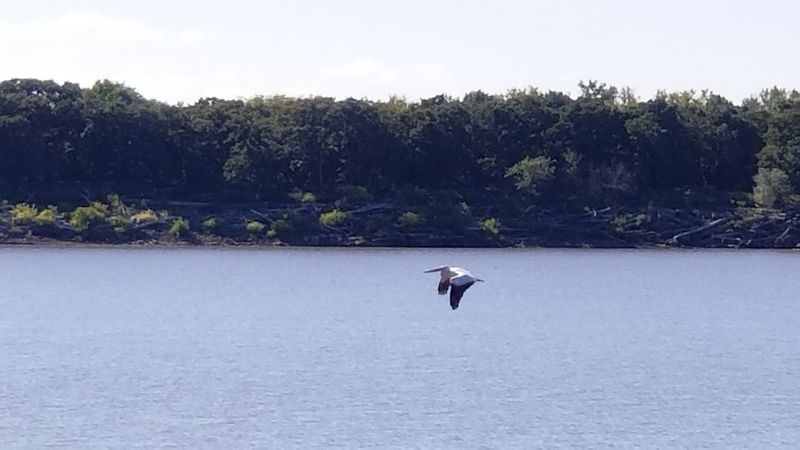
The mix of old woodland, brushy edges, and a large reservoir creates a bird buffet, and the park has a strong reputation among birdwatchers. Woodpeckers hammer somewhere overhead while warblers chatter in the lower branches.
Spring and fall migration bring the biggest variety, since the lake acts as a rest stop for travelers moving through Kansas. Herons and raptors work the shoreline while songbirds fill the trees.
Binoculars are small, light, and absolutely worth the space in a daypack. I also found that walking quietly, then pausing often, revealed far more than steady marching.
Early morning delivers the loudest chorus by a wide margin. By midday the woods hush considerably.
A cheap notebook or a phone app helps you remember what you spotted, though the phone may lose signal.
Trade a little speed for stillness here, and the canopy starts introducing its residents one call at a time.
Coves That Look Like Creeks
One of my favorite surprises had nothing to do with trees at all.
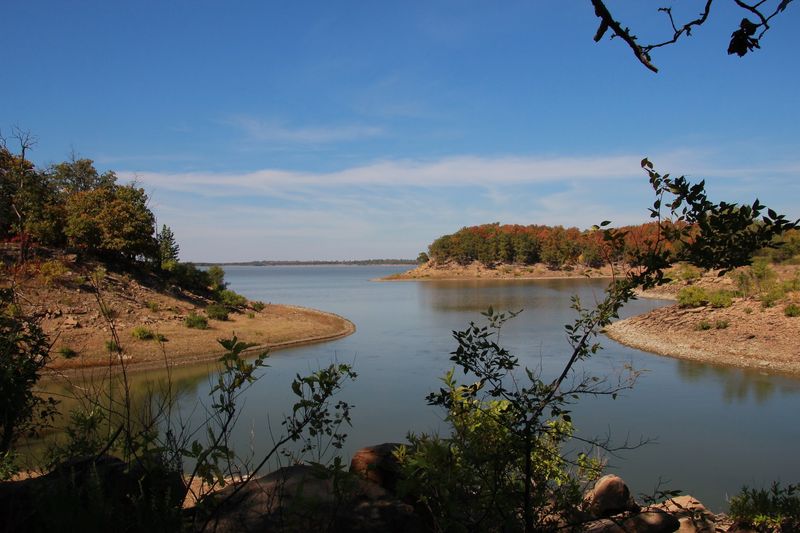
Toronto Lake sends narrow fingers of water deep into the wooded hills, and trails trace along those inlets. Walking beside one, I completely forgot I was near a large reservoir because it looked and sounded like a quiet creek.
Wooden footbridges cross a few of these gaps, and they make excellent spots to stop and listen to water moving over rock. The reflections in the morning are ridiculous in the best way.
Shoreline access here is rocky rather than sandy, so this is a viewing spot more than a wading spot. Water levels also rise and fall depending on rainfall, and low areas can flood after heavy storms.
Checking conditions before a trip saves you from soggy detours. Rain within the previous day usually means muddy footing.
Follow the water long enough and the forest walk quietly turns into a shoreline tour without you ever changing trails.
Wildlife You Might Meet Along The Way

Something rustled beside the path, and I froze like a cartoon character.
Cross Timbers State Park and the neighboring Toronto Wildlife Area support a broad mix of animals, including white-tailed deer, wild turkey, quail, squirrels, rabbits, doves, raccoons, and many songbirds.
That variety fits the landscape. Forest, oak savanna, prairie, farmland, marsh, and reservoir habitat all meet within or beside the park, giving wildlife several different places to feed and shelter.
I kept to the trail and gave every animal room rather than trying to get closer for a photograph. That approach works better for both hikers and wildlife during every visit.
Pets are welcome under Kansas state park rules, but they must remain restrained by a hand-held leash, tether, cage, or other approved restraint.
Basic wildlife awareness still matters, and visitors should never assume every animal encounter is harmless.
Watch the trail, respect the distance, and the forest becomes easier to enjoy without turning ordinary wildlife sightings into unnecessary drama.
Connecting Trails For Longer Days
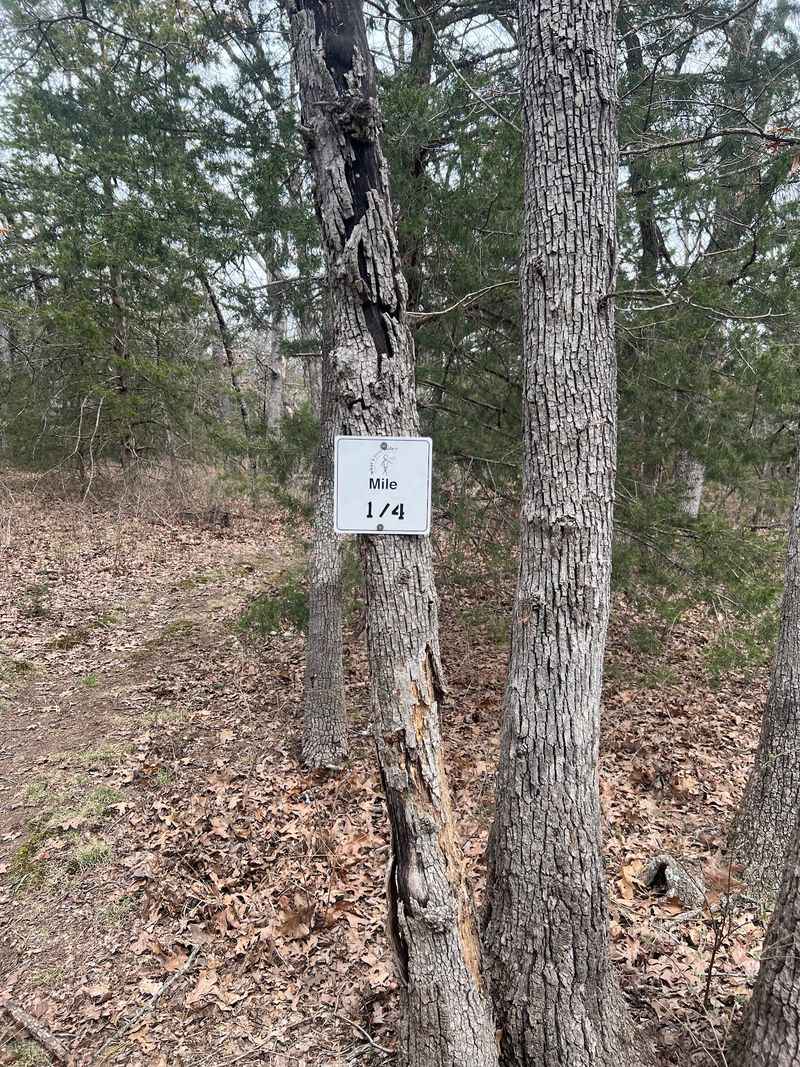
Half a mile in, I realized this park could easily become an all day project.
Cross Timbers State Park holds more than the one-mile Ancient Trees Trail.
The Chautauqua Hills Trail offers four connecting loops, with the shortest route running about 1.5 miles and the longest reaching roughly 11 miles.
The Ancient Trees Trail is reserved for hikers, while the park’s other trails allow both hiking and mountain biking. That distinction matters if you are planning to combine routes.
Trail listings do not identify these routes as equestrian trails, and the park brochure does not describe a nearby rail trail connection. The better extension is another marked park trail.
Mixing the short interpretive walk with part of the Chautauqua Hills system can turn a quick visit into a half day.
Bring water and a park map, then choose mileage based on time and conditions. A few well-chosen loops can fill far more of the day than the first mile suggests.
Timing Your Visit For The Best Walk
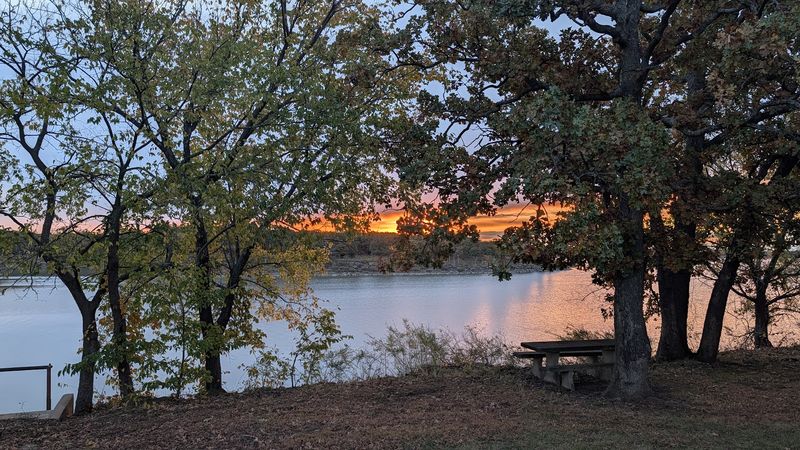
Choosing the right season here is the difference between charming and challenging.
The Ancient Trees Trail is listed as open year-round, but the park office does not keep daily hours.
Summer office hours are Tuesday through Saturday from 8 AM to 4:30 PM, while winter hours are Monday through Friday during the same window.
October and November can be appealing for cooler temperatures and changing oak leaves, while spring brings fresh growth and seasonal wildflowers.
Summer remains workable if you start early, carry enough water, and remember that shade does not eliminate heat risk.
Winter strips much of the deciduous canopy and changes the character of the woodland, while the one-mile trail remains available in seasonally appropriate conditions.
The park currently has four reservable cabins, and its laundry facilities are listed as open year-round. Toronto Point holds most of the park’s developed camping.
Check current park notices before leaving, then choose your timing around weather, trail conditions, and office needs for most visitors.