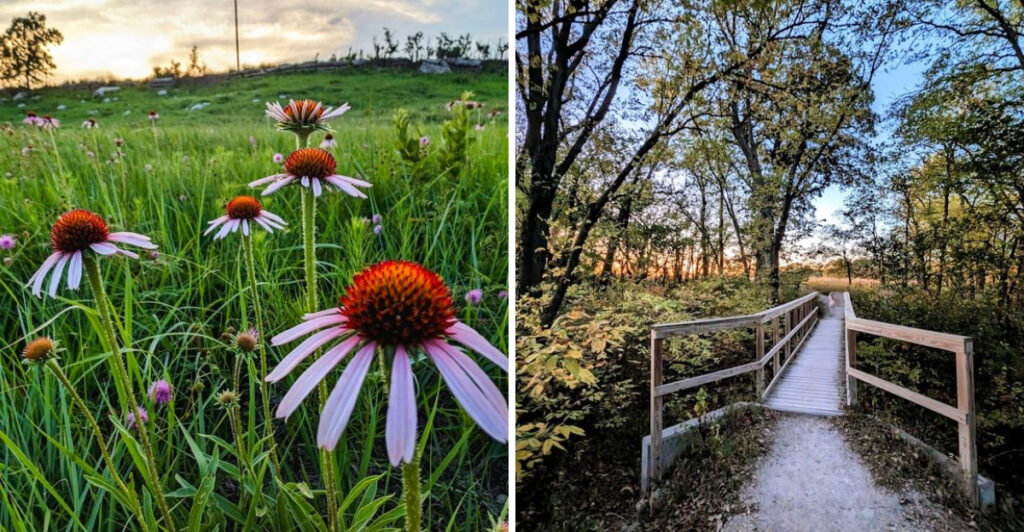
Kansas is not supposed to look like this. Most people picture flat, featureless, and forgettable until they actually stand on a Flint Hills ridgeline and watch the Kansas River Valley unspool below them in every direction.
That is exactly what waits at the top of one of the most quietly spectacular trails in the entire state. Ancient limestone ledges, gallery forests following creek corridors, bison moving across open hillsides, and a panoramic summit view that stops you completely in your tracks.
Kansas holds one of the last intact tallgrass prairie ecosystems in North America right here, and the trails lead you straight through the middle of it. Lace up the sturdy shoes and bring plenty of water because this one is absolutely worth every step.
Where The Trail Begins And What To Expect
Right from the trailhead, the Konza Prairie Nature Trail sets the tone for what lies ahead. The path starts with a calm, grounding energy that feels nothing like a city park.
The preserve sits near Manhattan, Kansas, and the trailhead is located in Ashland Township, KS 66502. A small donation of around two dollars per person is suggested to help keep the trails maintained.
No dogs, bicycles, or other pets are allowed on the trails. This rule exists to protect the ecosystem and support the ongoing scientific research conducted across the preserve.
Three main trail options are available. The shortest is the 2.6-mile Nature Trail, followed by the 4.6-mile Kings Creek Loop, and the longest is the 6.2-mile Godwin Hill Loop.
Each route builds in difficulty and reward. Hikers should arrive prepared with water and sturdy shoes.
The trails are open from dawn to dusk, giving visitors a solid window to explore at a comfortable pace.
The Tallgrass Prairie That Has Never Been Plowed
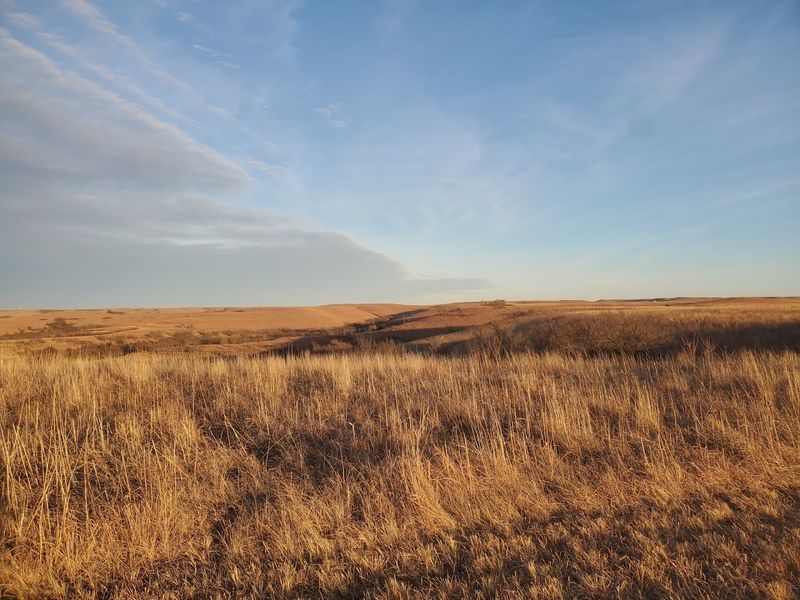
This prairie is the real thing. Unlike most of the land across the Great Plains, the Konza Prairie has never been subjected to plowing, making it one of the last intact native tallgrass ecosystems in North America.
That history matters. The grasses here have deep root systems built over thousands of years.
The soil is layered with ancient organic material that supports an extraordinary web of plant and animal life.
Tallgrass prairie once covered roughly 170 million acres across the continent. Today, less than four percent of that original landscape remains.
Walking through Konza puts hikers directly inside one of the most ecologically significant surviving patches.
The grasses shift color with the seasons. Spring brings vivid green growth.
Summer turns the hills golden. Fall adds warm amber and rust tones that ripple across the ridgelines.
The visual experience alone justifies the visit. Kansas holds this rare piece of natural history with quiet but undeniable pride.
Kings Creek Loop And The Forest In Between
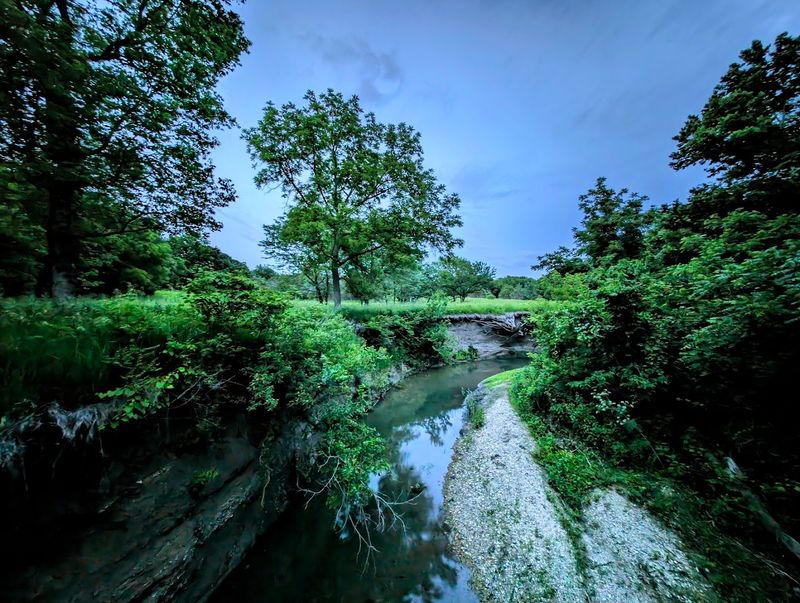
The Kings Creek Loop covers 4.6 miles and offers one of the most varied hiking experiences on the property. It moves through several distinct ecosystems within a single outing.
The trail crosses Kings Creek multiple times. The creek carves through the landscape and feeds a lowland gallery forest filled with cottonwoods, elms, and other deciduous trees.
This section feels surprisingly lush given the open prairie just above it.
Stepping from the shaded forest floor up onto the open limestone ledges creates a dramatic shift in atmosphere. The temperature changes.
The wind picks up. The view suddenly expands in every direction.
Ancient limestone outcroppings line much of the upper trail sections. These exposed rock layers tell a geological story that stretches back hundreds of millions of years.
The contrast between the cool forest below and the sun-baked ridge above is one of the most memorable physical sensations the loop delivers. It rewards hikers with texture and variety at every turn.
The Godwin Hill Loop And Its Big Payoff
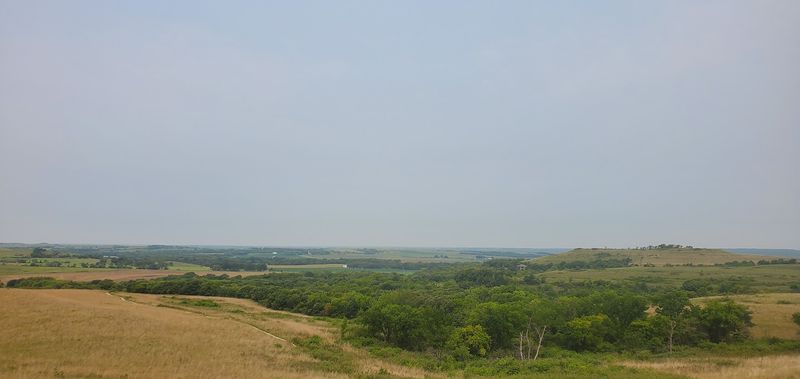
At 6.2 miles, the Godwin Hill Loop is the longest and most demanding trail at Konza Prairie. It is also the one that delivers the most jaw-dropping reward at the summit.
The Konza hills rise between 300 and 400 feet above the surrounding Kansas River plain. That elevation gain might not sound dramatic, but the open terrain amplifies every foot of it.
The views from the upper ridgeline are genuinely stunning.
From the highest points, hikers can see the Kansas River Valley spreading out in full. The city of Manhattan becomes visible in the distance.
Rolling hills fade into the horizon without a building or road interrupting the view.
The trail demands solid footing and a reasonable fitness level. The limestone terrain can be uneven in spots.
Still, the climb is manageable for most hikers who take their time. The payoff at the top makes every uphill push feel like a fair trade.
Few places in Kansas offer this kind of wide-open visual reward.
Wildlife That Shares The Trail With You
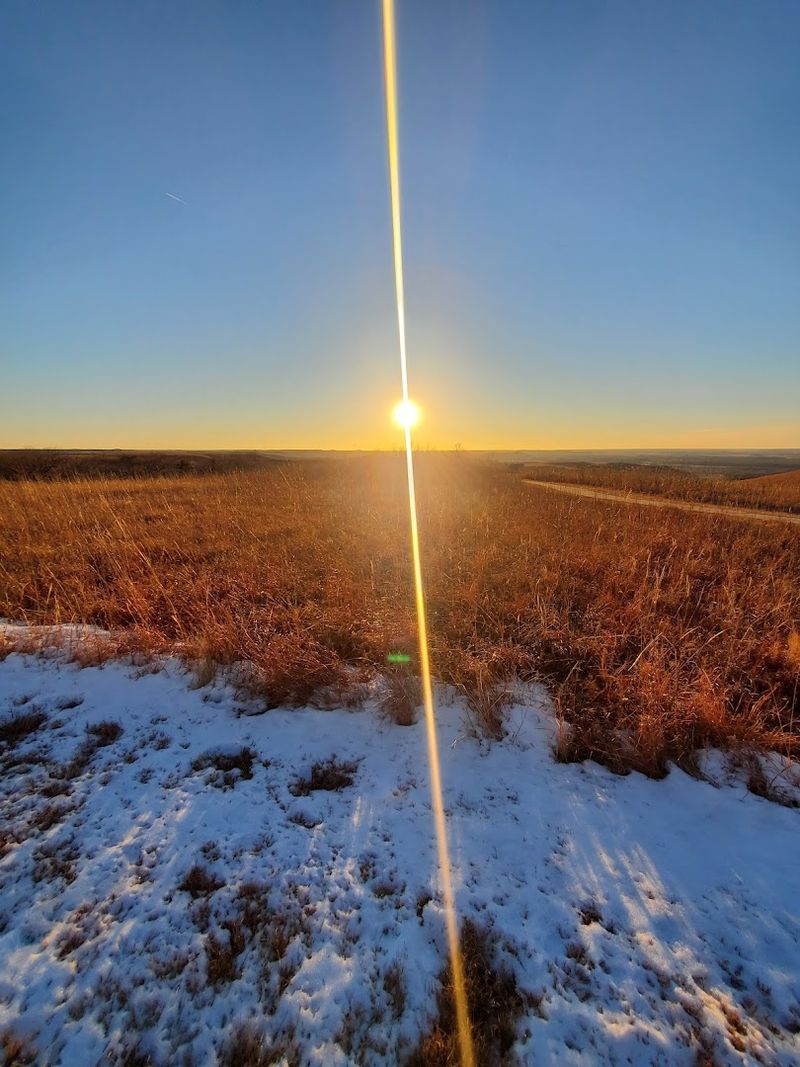
The Konza Prairie is home to an impressive range of wildlife. Hikers should expect to share the landscape with creatures that have roamed these hills long before the trails were ever marked.
Around 300 bison live on the preserve across multiple managed herds. These animals are large, unpredictable, and completely wild.
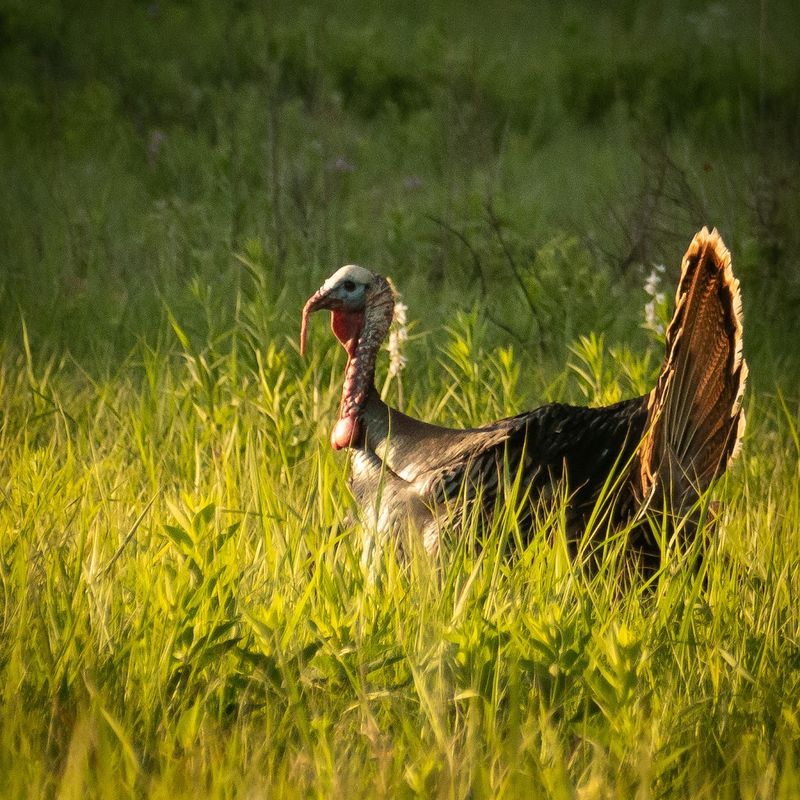
Deer move through the grasslands and forest edges with quiet ease. Wild turkeys and pheasants are spotted regularly along the lower trail sections.
Coyotes are present too, though they tend to stay out of sight during daylight hours.
Bird watchers find this preserve especially rewarding. The mix of prairie, creek corridor, and woodland edge creates multiple habitat zones that attract a wide variety of species throughout the year.
Bringing binoculars is a smart move. The wildlife here is not a side note.
It is a central part of what makes the Konza Prairie experience feel genuinely alive and unpredictable.
The Science Behind The Scenery
Konza Prairie is not just a hiking destination. It is one of the most important ecological research sites in the country.
Kansas State University and The Nature Conservancy co-manage the 8,600-acre preserve specifically for long-term scientific study.
Researchers here study how fire, grazing, and climate interact with the tallgrass prairie ecosystem. Controlled burns are a regular part of the management strategy.
These burns mimic the natural fire cycles that shaped this landscape for thousands of years.
The bison herd plays an active role in the research as well. Scientists track how grazing patterns affect plant diversity, soil health, and water quality across different sections of the preserve.
This scientific foundation means the trails are managed with a level of care that goes far beyond typical park maintenance. Every rule, every restriction, and every trail decision is grounded in real ecological data.
Visitors benefit from that rigor without even realizing it. The landscape stays intact because the science demands it.
Limestone Ledges And The Ancient Ground Beneath Your Feet
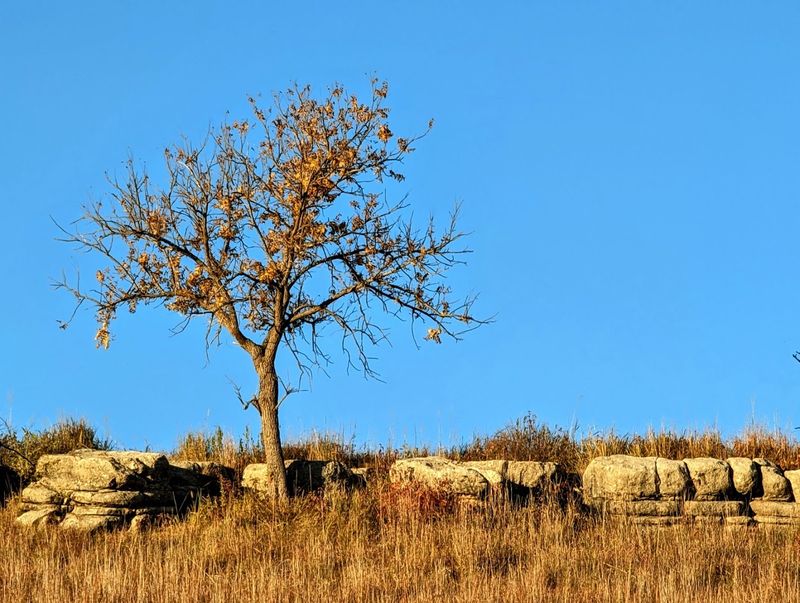
The geology of the Konza Prairie is part of what makes the Flint Hills so visually distinctive. The region sits on a deep layer of limestone and chert that resisted the farming equipment that converted most of the surrounding plains into cropland.
That resistance is the reason this prairie survived. The rocky soil was simply too difficult to plow.
What looked like an obstacle to agriculture turned out to be the best possible protection for one of the most ecologically rich landscapes in Kansas.
Hikers walk directly over exposed limestone ledges on the upper sections of the trail. The rock is layered and ancient, formed during the Permian period when shallow seas covered this part of North America.
The texture of the trail changes noticeably as the elevation increases. Loose soil gives way to solid stone.
The footing becomes more deliberate. But the visual reward of standing on that exposed rock with the valley spread out below is something that stays with visitors long after the hike is over.
Best Time Of Year To Make The Trip
Every season brings something different to the Konza Prairie trails. Choosing the right time depends on what kind of experience a visitor is looking for.
Spring is arguably the most visually dynamic season. Fresh green growth covers the hillsides after the controlled burns.
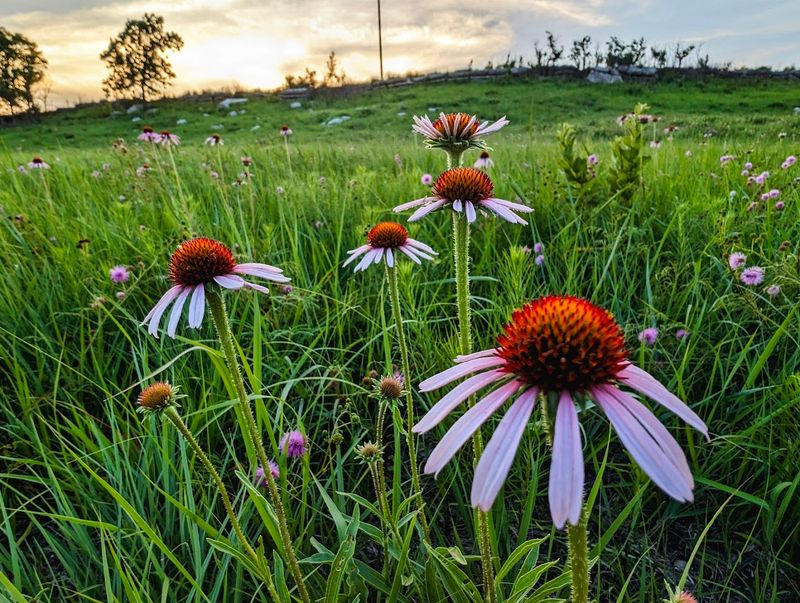
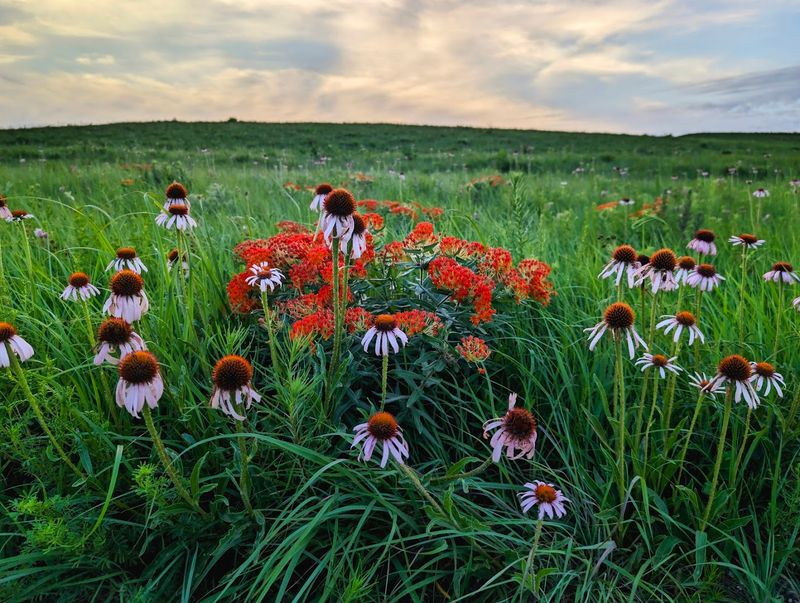
Wildflowers push through the recovering grassland. The creek runs higher and the forest canopy fills in quickly.
Summer offers long daylight hours and the full visual drama of the tallgrass at peak height. The grasses can grow taller than a person in the right conditions.
Heat and humidity can be significant, so early morning starts are strongly recommended.
Fall transforms the hills into warm shades of copper, gold, and rust. The cooler temperatures make for ideal hiking conditions.
Wildlife activity tends to increase as animals prepare for winter.
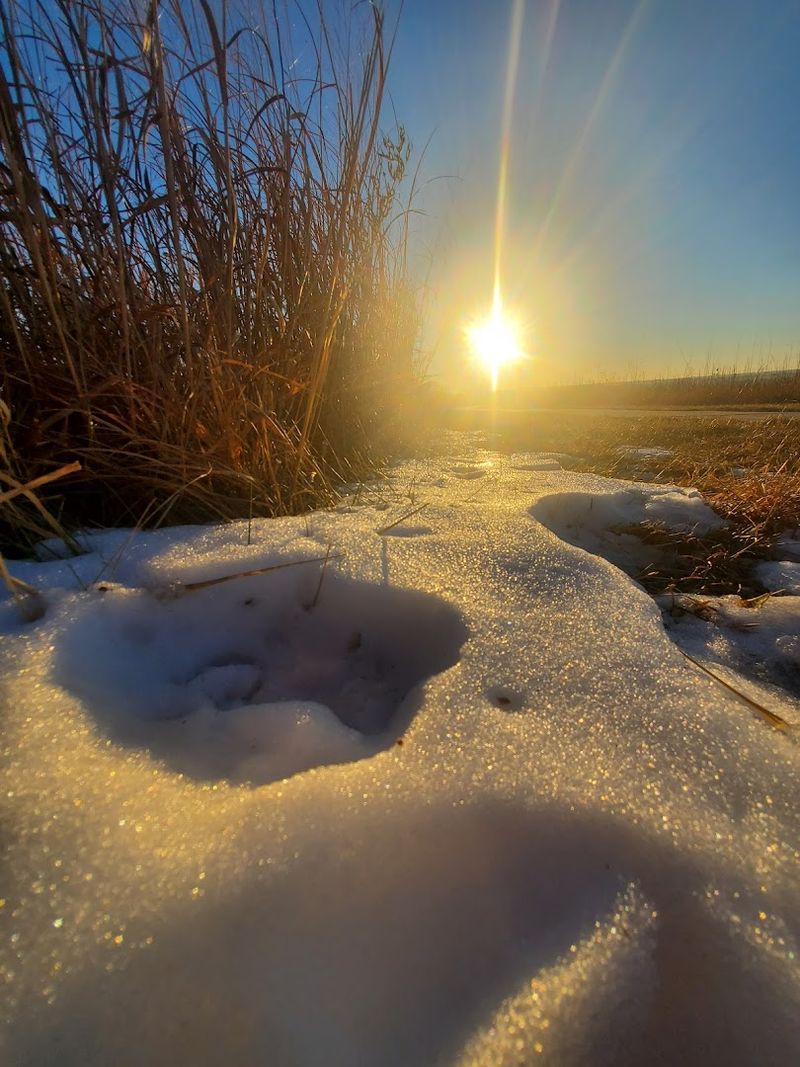
Winter hiking is quiet and stark. The bare trees and dormant grasses reveal the true shape of the landscape.
Each season at this Kansas preserve offers a genuinely different version of the same trail.
The View From The Top Is The Whole Point
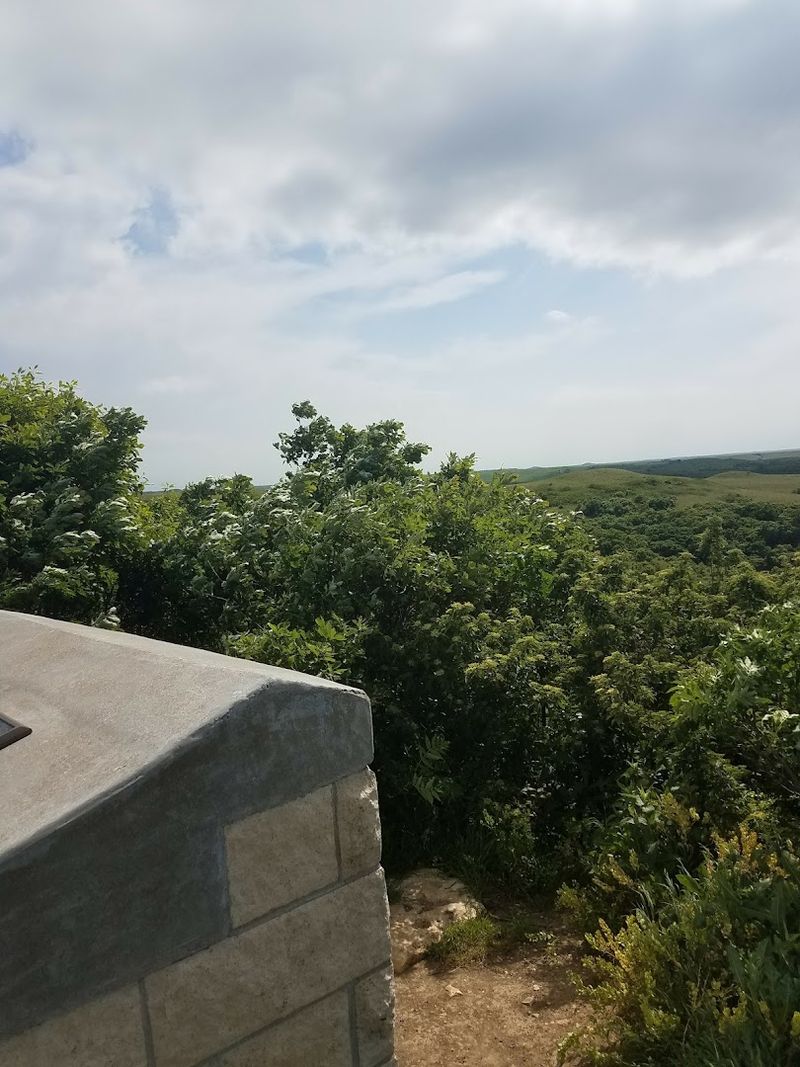
Reaching the high ridgeline on the Godwin Hill Loop is the moment the whole hike builds toward. The landscape opens up in a way that feels almost theatrical.
The Kansas River Valley stretches out below in a wide, sweeping arc. The city of Manhattan sits in the distance, small against the scale of the surrounding hills.
No fences, no billboards, no power lines interrupt the sightline.
The Flint Hills roll outward in every direction. The sense of space is hard to describe without sounding dramatic, but the view genuinely earns the superlatives.
This is the kind of panorama that makes people stop walking and just stand there.
Wind is almost always present at the top. It adds to the sensation of being somewhere genuinely elevated and exposed.
The combination of physical effort, natural silence, and visual scale creates a moment that feels earned rather than handed over. This is why people drive to this corner of Kansas and climb these hills.
Practical Tips Before You Hit The Trail
A little preparation goes a long way at Konza Prairie. The trails are well-marked but the terrain can be demanding, especially on the longer loops.
Water is the most important thing to bring. There are no water stations along the trails.
The sun exposure on the open prairie sections can be intense, particularly in summer. A hat and sunscreen are practical essentials, not optional extras.
Sturdy hiking shoes with ankle support handle the limestone terrain much better than trail runners or sneakers. The rock surfaces can be slippery when wet.
Cell service can be unreliable in parts of the preserve. Downloading an offline map or grabbing a paper trail map at the trailhead is a smart backup plan.
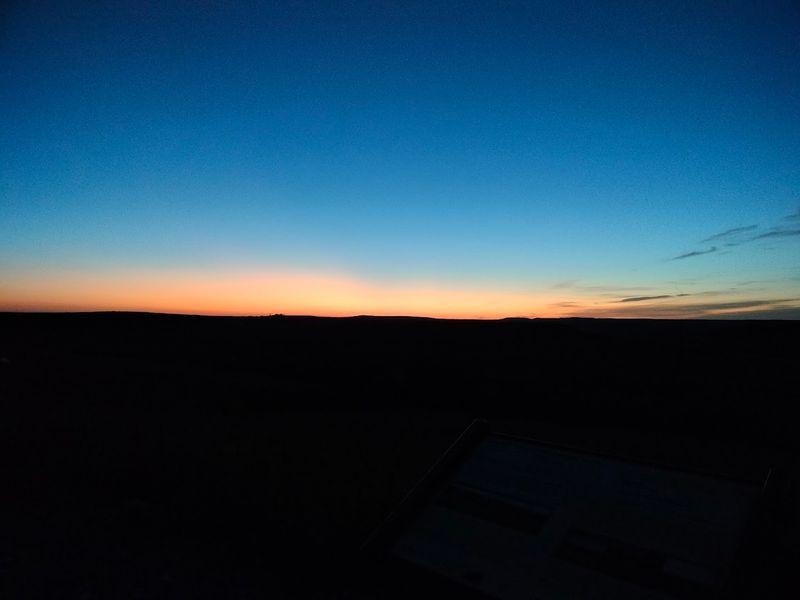
The trails are open from dawn to dusk, so planning to finish well before sunset is a good habit.
The suggested donation of two dollars per person helps fund trail upkeep. It is a small contribution for access to one of the most ecologically significant landscapes in the state.
The Silence That Hits You In The Middle Of The Prairie
There is a particular kind of quiet that exists deep inside the Konza Prairie. It is not the absence of sound.
It is the presence of a very different kind of sound.
Wind moves through the tallgrass in long, slow waves. Insects hum at a steady, low frequency.
Birds call from the creek corridor below. The natural acoustic environment is rich but unhurried.
Most hikers notice the quiet somewhere around the midpoint of the trail. The sounds of traffic and daily life fade completely.
The mental shift that follows is hard to anticipate and surprisingly powerful.
This quality of stillness is increasingly rare. Urban noise pollution has made genuine quiet a kind of luxury.
Out here in Kansas, it is simply the default state of the landscape. It does not need to be manufactured or marketed.
The prairie has always been this way. Standing in the middle of it, with nothing but grass and sky and wind, reminds visitors that not everything worth experiencing needs to be loud or fast or complicated.
Why This Kansas Hike Stays With You Long After You Leave
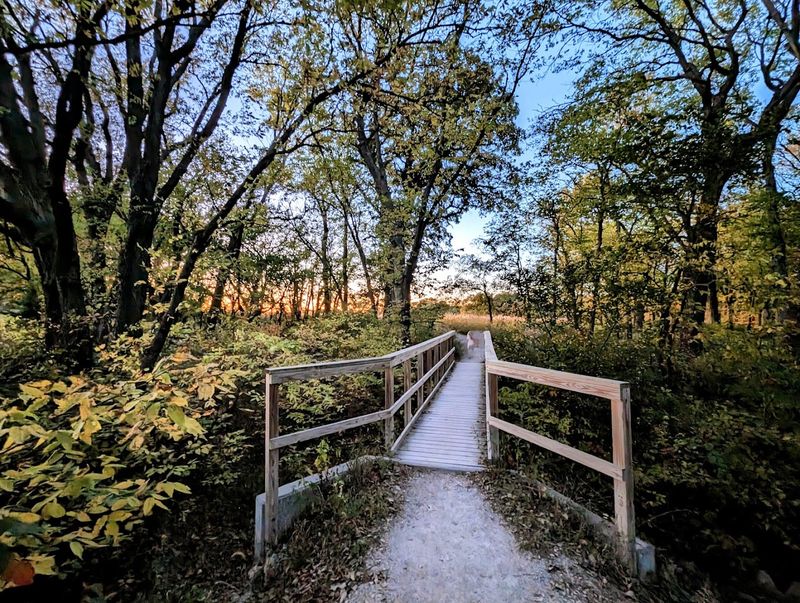
Some hikes are memorable because of a single dramatic moment. The Konza Prairie trails are memorable because of how many different things they deliver in one outing.
The shift from shaded forest to open ridge, the sound of Kings Creek below the limestone ledges, the sight of bison moving across a far hillside, and the panoramic view of the Kansas River Valley all layer on top of each other. The experience builds as the miles accumulate.
The preserve also carries a weight of ecological significance that adds meaning to every step. Knowing that this land has never been plowed, that researchers have studied it for decades, and that it represents one of the last intact tallgrass ecosystems in the country changes how a hiker relates to the landscape.
This is not just a pretty walk. It is a chance to stand inside a living, breathing piece of natural history.
Kansas holds this place carefully. The trail gives it away generously.
That combination is what makes the Konza Prairie Nature Trail genuinely unforgettable.