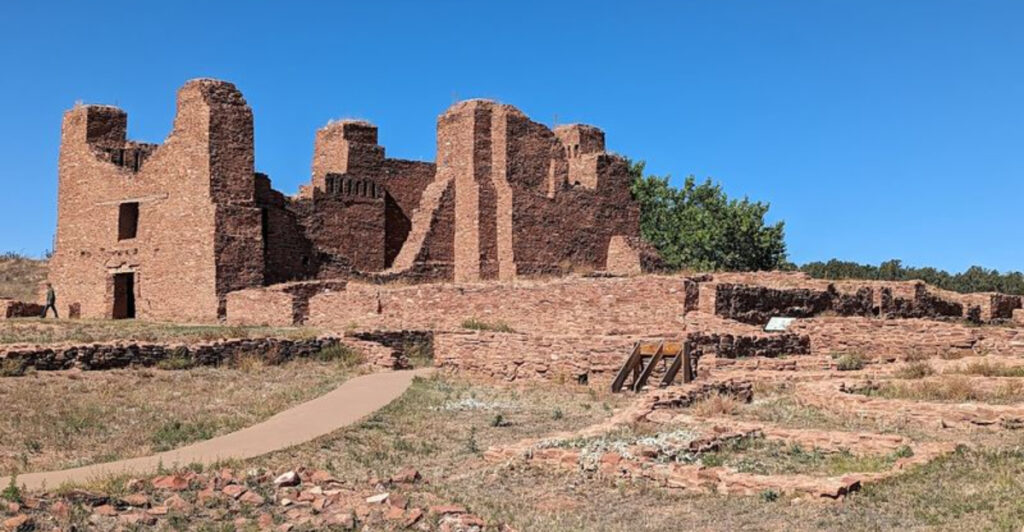
This is the kind of place that sneaks up on you. Not because it is flashy.
Because it is quiet in a way that makes you pay attention.
On a hilltop in central New Mexico, the wind moves through limestone walls that once formed part of a thriving Tompiro-speaking Pueblo city. Thousands of people lived their lives here.
They built homes, traded across long distances, gathered in shared spaces, and carried on traditions that deserve more than a passing glance.
Standing there, I kept thinking about how easy it is to call something a ruin and forget it was once somebody’s whole world.
That thought changes everything. The walls stop looking like leftovers.
They start feeling like witnesses.
This is not a place for rushing. Walk slowly.
Look longer. Let the silence do its work.
Some stories do not need to shout to stay with you after you leave.
Ancient Stone Walls Beneath Endless Sky
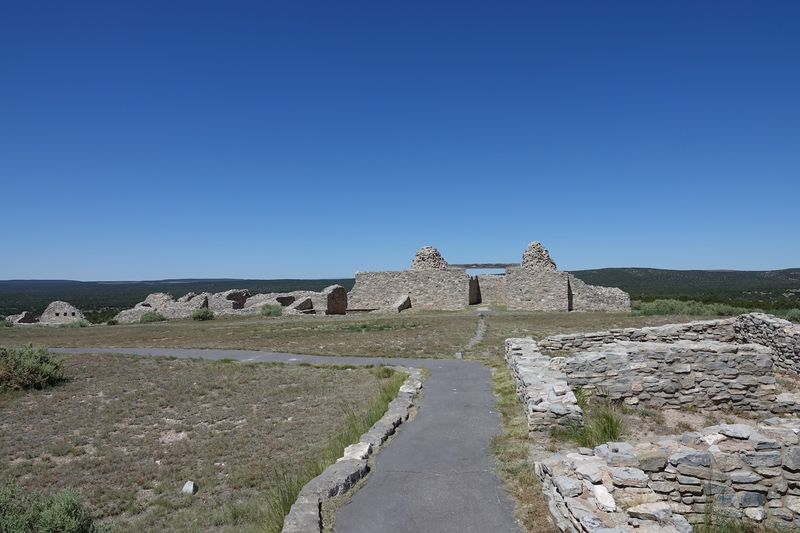
Long before the first Spanish explorers set foot in New Mexico, the people of Gran Quivira were already stacking stone with remarkable precision.
The walls that still stand at this site were built from local blue-gray limestone, quarried and shaped by hand, then set with caliche mortar in a style of masonry that became a regional signature.
Walking among those walls for the first time, I kept running my fingers along the fitted stones, trying to wrap my head around the sheer human effort behind each course.
Settlement here began around 800 AD with pithouse dwellers, but by 1300 AD the Tompiro-speaking peoples had transformed the landscape with multi-story pueblo architecture that redefined what community could look like in this high desert region.
The walls rise against a sky so wide and blue it almost feels theatrical, framing the ruins in a way that no photograph fully captures.
Mound 7, the largest fully excavated pueblo at the site, contains 226 rooms and gives you a real sense of just how organized and ambitious this ancient city once was.
Every stone here carries a quiet authority that stops you in your tracks at Gran Quivira, Salinas Pueblo Missions National Monument, about 26 miles south of Mountainair on NM 55, New Mexico.
Pueblo Paths Through Quiet Ruins
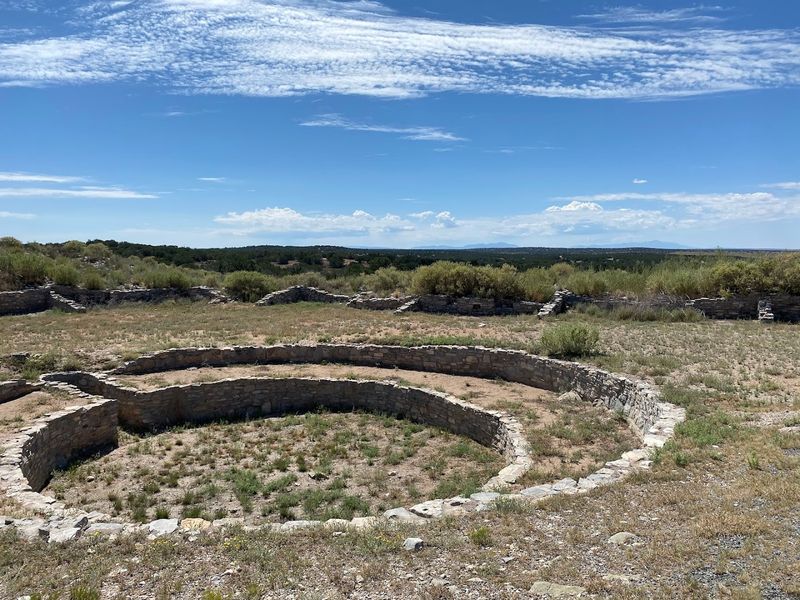
A walk along the paths that thread through the ruins at Gran Quivira can feel almost meditative, with each turn revealing another room outline or kiva edge tucked into the earth.
The site offers an easy route around the main area, and it does not require serious hiking experience to enjoy.
I took my time on the paved path first, reading the posted signage that explained what I was actually looking at, because without context these stone outlines can feel like a puzzle with missing pieces.
The numerous kivas scattered across the site are among the most compelling features, sacred ceremonial structures that were central to Pueblo spiritual life and still carry a certain stillness that feels intentional.
At its peak, this community held around 3,000 people, which makes the silence here today feel all the more striking.
Helpful interpretation at the visitor center made my walk through the ruins feel less like a solo wander and more like a guided conversation with the past.
The paths here are flat, approachable, and completely worth every unhurried step.
Grey Limestone Arches In Desert Light
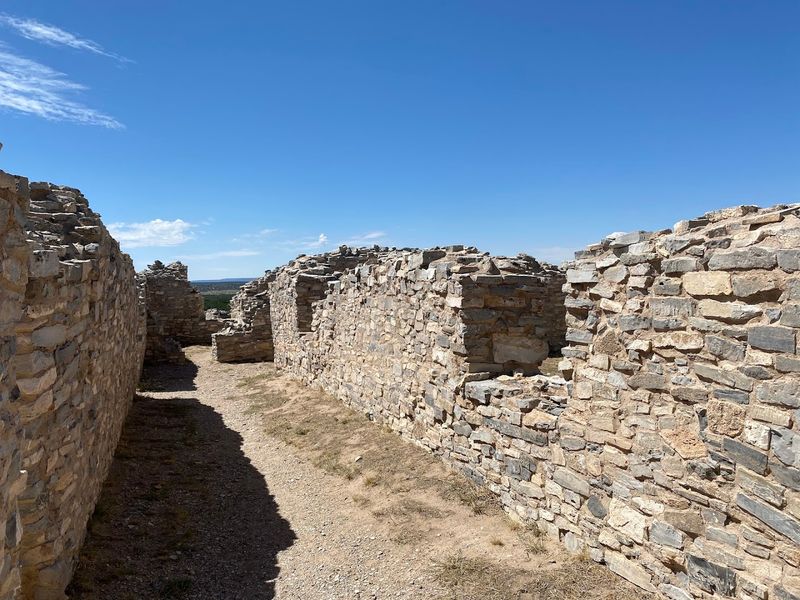
Few sights in the American Southwest hit quite as hard as a roofless stone church standing open to the sky, its arched doorways framing pure blue air where a ceiling once hung.
The mission ruins at Gran Quivira include the remains of two Spanish churches, San Isidro and the larger San Buenaventura, and both leave a lasting impression on anyone who walks through them.
San Isidro was the first permanent mission church built at the site, with construction beginning in 1629 and wrapping up by 1635, a fact that still amazes me when I think about the remoteness of this location.
San Buenaventura was started after 1659 but was never completed, and its unfinished walls somehow add to the poignancy of the whole place rather than taking anything away from it.
The grey limestone catches the desert light in a way that shifts throughout the day, turning warm gold in the late afternoon and almost silver near midday.
Standing inside those arched spaces, I felt the particular kind of quiet that only very old, very serious places seem to generate.
The interplay of shadow and stone here is something a camera can gesture at but never quite fully hold.
Open Plains Around Sacred Stone Remains
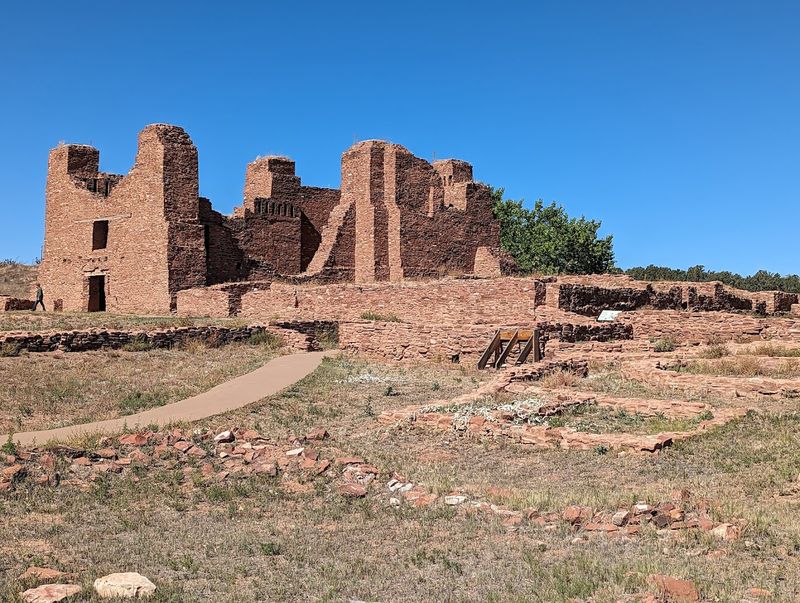
Gran Quivira sits on a hilltop with views that stretch in every direction, and on a clear day the surrounding New Mexico landscape seems to roll outward almost endlessly.
That panoramic reach is not accidental; the Tompiro people who built here chose this elevated position deliberately, giving themselves sightlines across the plains that served practical and possibly ceremonial purposes.
The open landscape surrounding the ruins was also the setting for one of the most remarkable trade networks in pre-contact North America, with Gran Quivira functioning as a major regional hub from around 1000 AD through the 1600s.
Agricultural goods, salt, cotton, and other trade items moved through this place, connecting it to Indigenous peoples from the Plains, the Pacific Coast, and the Great Basin.
From that hilltop, with the flat scrubby terrain spreading away in every direction, it is easy to imagine traders making their way toward these walls.
The sacred kivas embedded in the ground nearby remind you that this was never just a marketplace but a living, breathing spiritual community rooted deeply in the land.
The plains here have a way of making you feel both small and strangely connected all at once.
Mission Ruins Framed By High Desert Silence
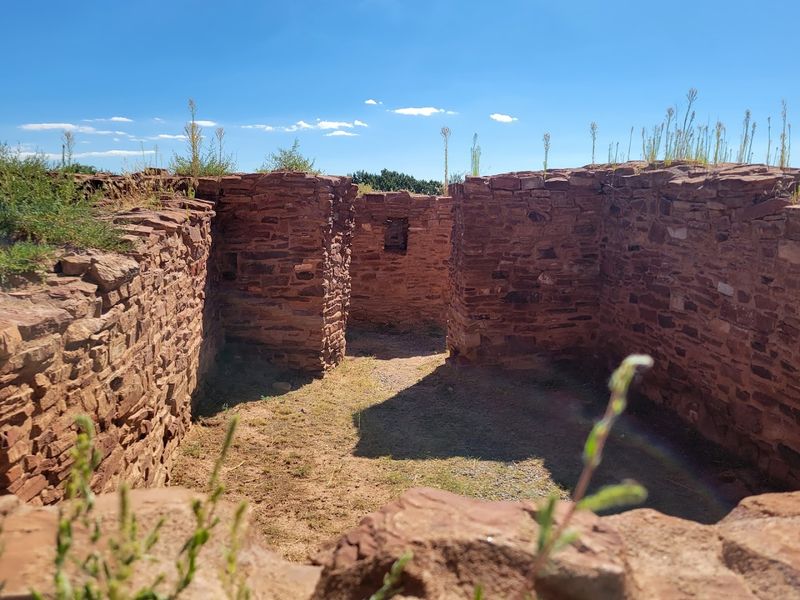
One of the most unexpectedly moving parts of my visit to Gran Quivira was simply the silence, a deep, unhurried quiet that the high desert seems to manufacture naturally out here.
On a weekday morning, the place felt especially still, with only wind moving through the ruins and distant birds calling across the scrubland.
That silence feels earned when you understand what happened here: by 1672, Gran Quivira had been abandoned entirely, the result of a brutal combination of prolonged drought, widespread famine, European diseases, and Apache attacks, including a major 1670 raid that destroyed the mission and pueblo.
A famine in 1668 alone claimed the lives of more than 450 Humano Indians, a statistic that reframes every quiet corner of this site into something more sobering and significant.
The mission ruins, standing roofless and open against the sky, carry that history without melodrama, letting the stone speak at whatever volume the visitor is ready to hear.
The site does not need background noise to fill the gaps; it is just you and walls that have been weathering the same New Mexico desert wind for centuries.
That kind of silence has a texture all its own.
Sunlit Foundations And Forgotten Walkways
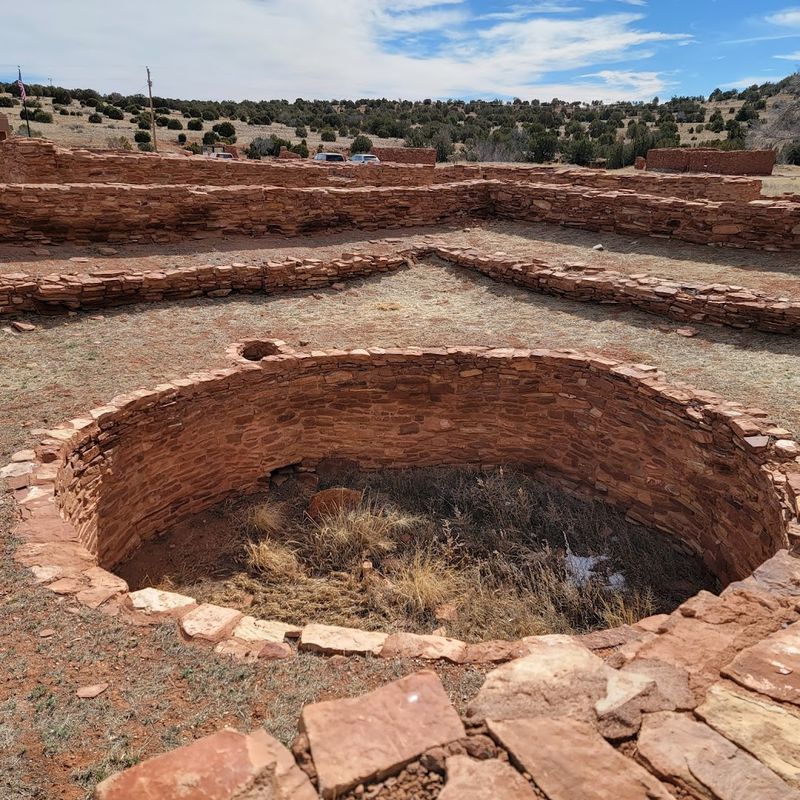
Archaeology has a way of turning what looks like scattered rubble into a perfectly legible map, and Gran Quivira is one of the better examples of that transformation I have personally walked through.
The excavated foundations here reveal room layouts, doorway placements, and connecting passages that make it surprisingly easy to picture daily life moving through these spaces centuries ago.
Mound 7, the 226-room structure that stands as the largest fully excavated pueblo at the site, gives the clearest picture of how densely and thoughtfully this community was organized.
Afternoon sunlight does something special to these low stone walls, casting long shadows across the foundations and turning the whole site into a kind of geometric study in light and ancient architecture.
I noticed that many of the older pueblo structures remain unexcavated, which means what visitors see today is only a portion of what Gran Quivira actually contains beneath the surface.
That thought stuck with me as I traced the outline of a doorway with my eyes, realizing the site is still actively holding secrets that future archaeology might one day reveal.
Walking these sunlit foundations felt less like touring a ruin and more like reading the first chapter of a very long, still unfinished book.
Historic Walls With Wide Horizon Views
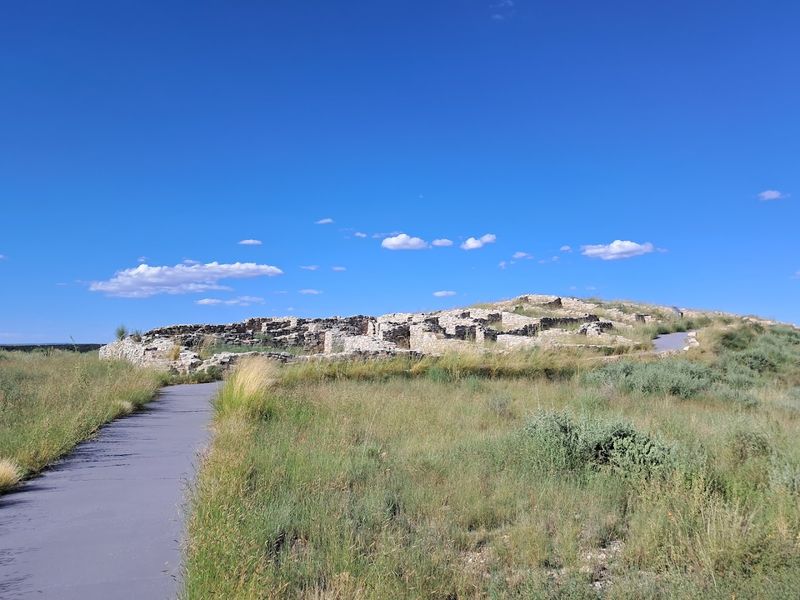
Few historic sites in the United States pair architectural drama with natural scenery quite as effectively as Gran Quivira does from its elevated hilltop position.
The walls here, built from that distinctive local blue-gray limestone, rise against a horizon that seems to go on forever. The combination of human craftsmanship and raw landscape feels more powerful than any museum exhibit ever could.
Spanish contact with this pueblo likely occurred in 1583, and Don Juan de Oñate formally claimed the territory for Spain in 1598, setting in motion a complicated chapter of colonial history that the site interprets with honesty and care.
The visitor center provides a solid introduction to that history, covering the interactions between the Tompiro people, Spanish colonial administrators, and Franciscan missionaries in a way that feels balanced and informative rather than one-dimensional.
The exhibits help the story feel layered and approachable, and I found myself noticing details I might have missed without that context.
The views from the walls themselves are the kind that make you stop mid-sentence and just look outward for a moment.
Bringing a good pair of sunglasses and a water bottle is strongly recommended, because the sun and the scenery both demand your full attention out here.
Remote Desert Trails Through Pueblo History
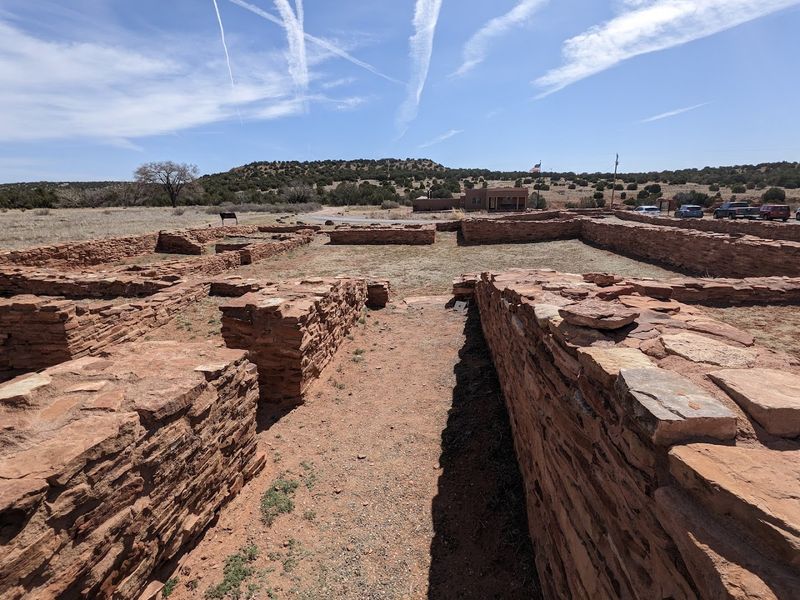
The drive to Gran Quivira takes you through central New Mexico’s high desert, and that remoteness is honestly part of what makes the experience feel so rewarding once you arrive.
The site is generally open daily with seasonal hours, and admission is free. Dogs on leashes are welcome on the trails, which makes it an unusually accessible National Monument for families and pet owners alike.
The walking routes around Gran Quivira include an easy loop through the ruins, giving you a sense of the terrain the original inhabitants navigated every day without modern conveniences of any kind.
One of the most remarkable facts about Gran Quivira is that water was scarce in this dry landscape, and yet its people found ways to support a large community in a place that offered no easy supply.
That ingenuity deserves a moment of genuine appreciation every time you look at the dry scrubland stretching away from the hilltop.
President Taft designated the site as Gran Quivira National Monument in 1909, and it is now part of Salinas Pueblo Missions National Monument.
The trail back to the parking area always feels a little shorter than the walk in, as if the ruins are reluctant to let you go quite so easily.