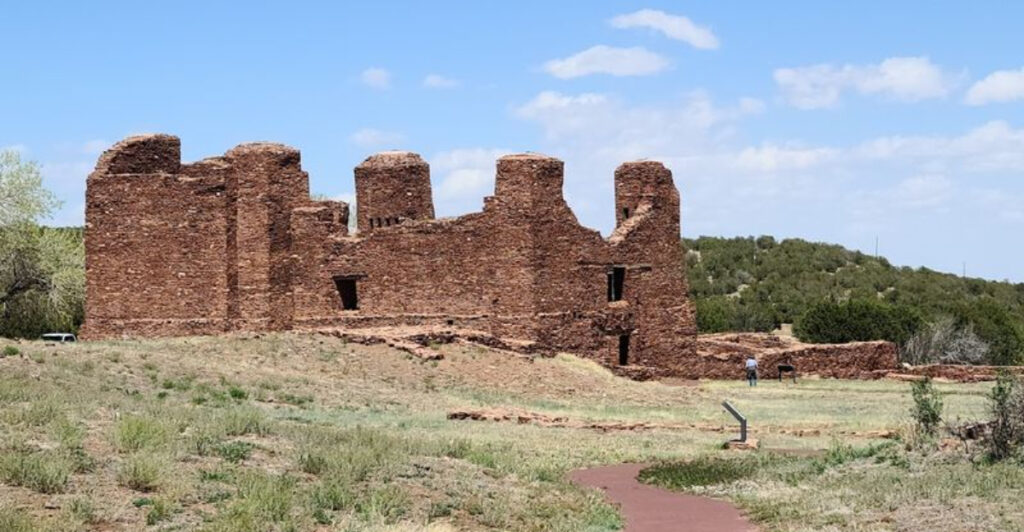
The stop barely registered on my map at first. Then the red sandstone walls rose from the desert like a warning to slow down.
I had seen old ruins before, but this place felt different. No crowd pushing behind me.
No noise fighting for attention. Just stone and the uneasy feeling that I had walked into a story still holding its breath.
New Mexico can do that to you long after. It can turn a simple detour into the part of the trip you keep thinking about later for days.
I kept looking at the broken walls, trying to picture the people who once moved through them. Their lives were not small.
Their choices were not simple. This was a place shaped by belief and survival.
The longer I stood there, the less empty it felt. Keep reading, because these ruins are quietly intense, and they stay with you later.
Stone Walls Beneath Open Skies
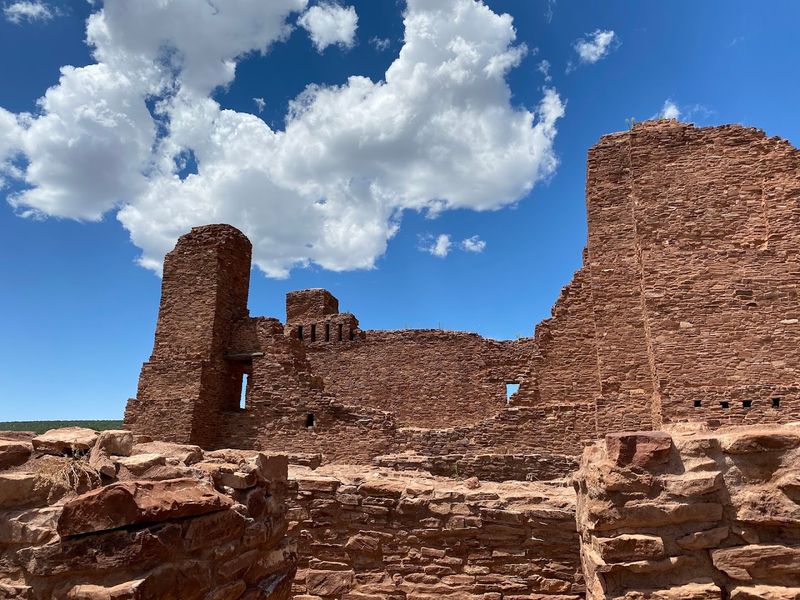
Those thick walls feel almost unreal at first. They have stood through nearly four centuries of desert wind and scorching summer heat.
When I first walked up to the ruins at this site, I genuinely stopped mid-step and just stared for a moment, trying to process what I was looking at.
The red sandstone walls of the mission church, Nuestra Senora de la Purisima Concepcion de Quarai, are believed to have originally reached a height of around 40 feet, with a thickness ranging from 3 to 6 feet at the base.
That kind of construction in the early 17th century, in a remote high desert location, using hand-shaped sandstone blocks, speaks to an enormous amount of human effort and determination.
Spanish Franciscan missionaries began construction of this church in 1627, completing it by 1632, and the scale of what they built alongside the local Tiwa-speaking Puebloan people is genuinely staggering.
Beneath that open sky, with the Manzano Mountains framing the horizon, I kept thinking about all the hands that shaped each block.
You can find this awe-inspiring place at Salinas Pueblo Missions National Monument – Quarai Unit and Visitor Center at 122 Manzano Quarai Road, Mountainair, NM 87036.
Red Ruins In Desert Light
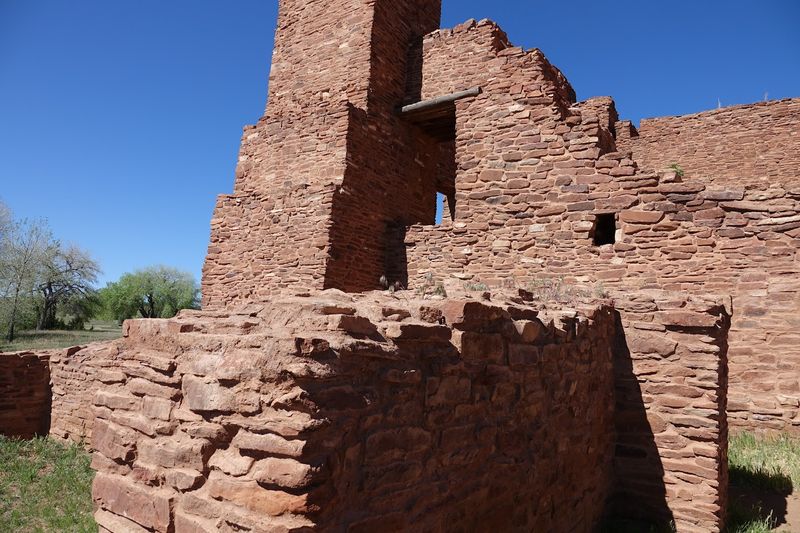
Few things in the natural world match the drama of red sandstone catching the afternoon sun in the New Mexico desert.
At this site, the particular shade of the stone shifts throughout the day from a dusty rose in the morning to a deep, almost amber red as the sun drops toward the mountains in the late afternoon.
The color comes from the iron-rich sandstone that Tiwa-speaking Puebloan residents and Spanish missionaries used to construct the massive mission compound beginning in the 1620s.
I visited on a clear October morning when the light was still low and sharp, and every crack and carved edge in those ancient blocks cast its own small shadow.
Photographers visiting this site will want to time their arrival for either early morning or the last two hours before sunset, when the stone practically radiates warmth.
The contrast between the vivid red walls and the pale blue of the high desert sky creates a natural composition that no filter can improve.
Even a casual visitor with a smartphone can come away with images that genuinely capture the visual power of this extraordinary place.
Quiet Trails Through Ancient Foundations
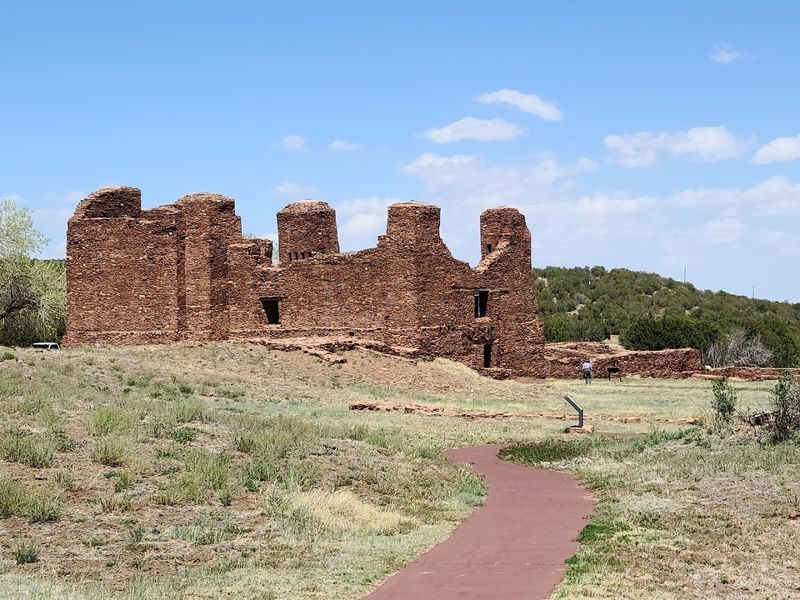
Not every great trail in the American West demands hiking boots and a full water pack, and the paths here are a welcome reminder of that.
The main walkway through the Quarai ruins is paved, flat, and fully accessible, looping visitors past the towering mission walls and through the exposed foundations of what was once a thriving community of 600 to 700 residents.
Interpretive signs placed along the route do a genuinely good job of explaining what each section of exposed stone once was, from living quarters to ceremonial spaces to storage rooms.
For those who want a bit more adventure, the Spanish Corral Trail branches off from the main loop and climbs to a higher elevation, offering sweeping views of the ruins set against the Manzano Mountains.
I took that secondary trail on a morning when I had the path entirely to myself, and the elevated perspective completely changed how I understood the scale of the ancient settlement below.
The trail network here works well for families, older visitors, and anyone traveling with a dog, since pets are welcome on the paths as long as they stay leashed.
Comfortable walking shoes and a water bottle are really all you need to explore this place thoroughly.
Sunlit Arches And Weathered Stone
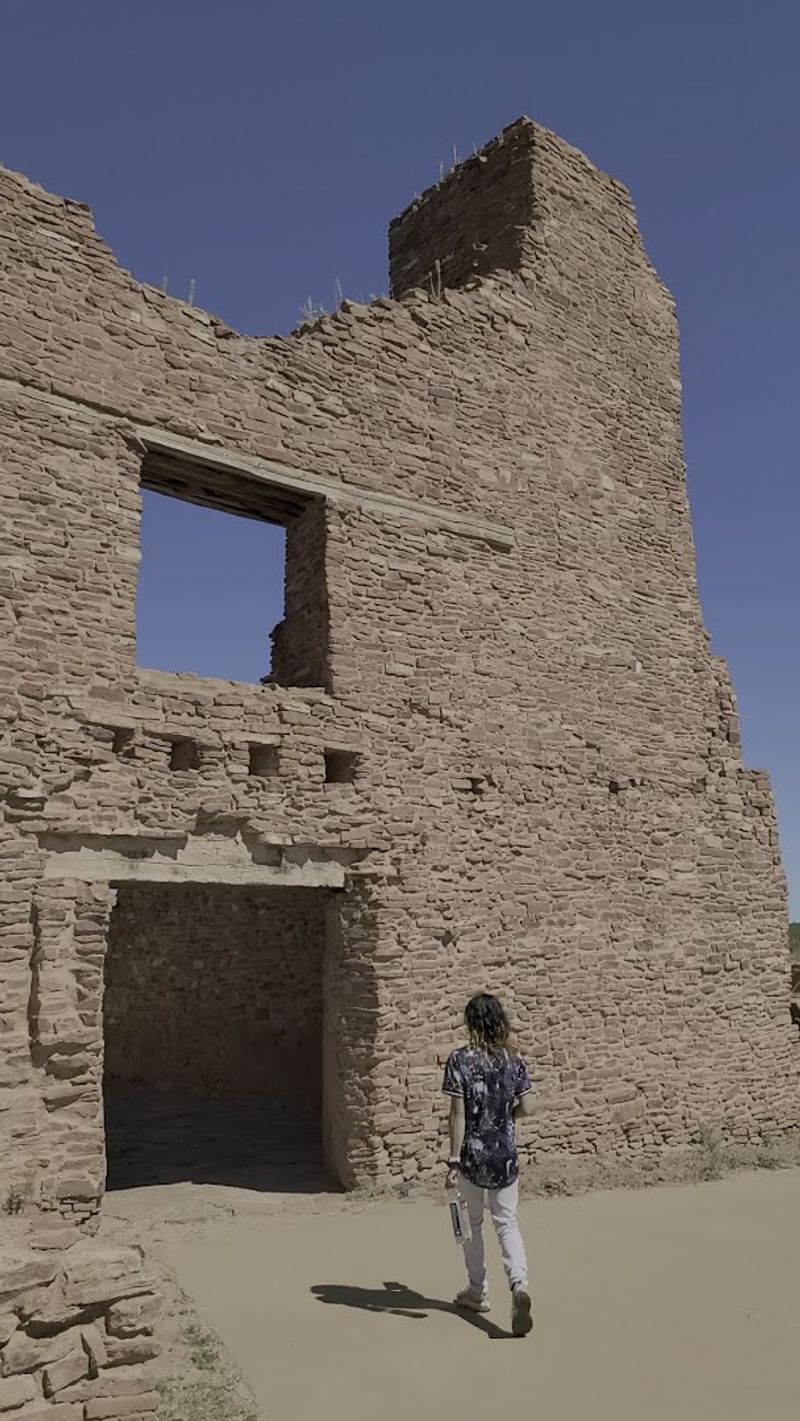
Some architectural details survive the centuries better than others. At Quarai, the remaining arched openings in the mission walls are among the most visually striking features on the entire site.
Sunlight pours through these gaps in the stone at specific times of day and creates pools of light on the ground that almost feel intentional, as if the original builders understood exactly what they were doing with light and shadow.
The walls themselves carry the marks of time in the most honest way possible, with surfaces worn smooth in some places and deeply pitted in others, each variation telling part of the story of nearly four centuries of wind, rain, and freezing desert winters.
Construction of this mission compound began in 1627 under the direction of Franciscan missionaries working alongside the local Tiwa-speaking population, and the craftsmanship embedded in those surviving arches reflects a serious understanding of masonry.
I spent nearly twenty minutes in one spot simply watching the light move across a single section of wall, noticing how the color and texture shifted as clouds drifted overhead.
That kind of slow, attentive looking is exactly what this site rewards, and it costs nothing to stand still and let the place work on you.
Sacred Spaces In The High Desert
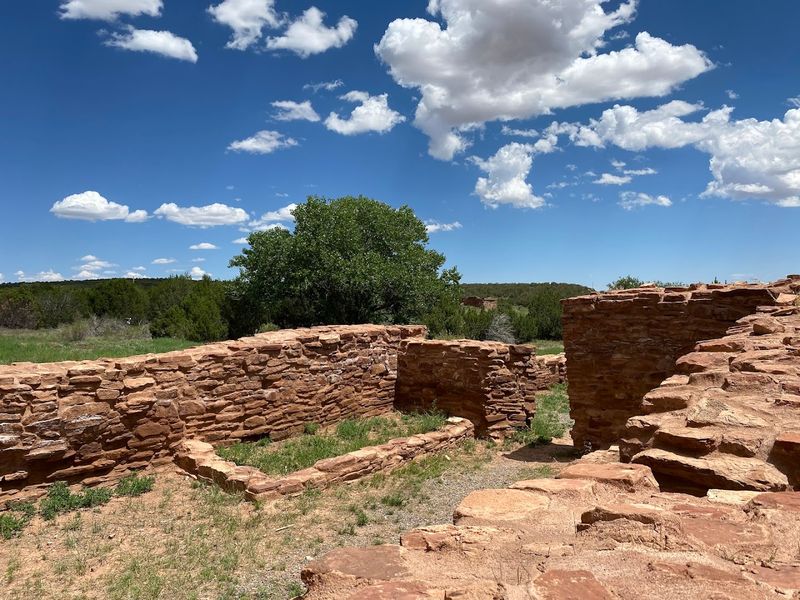
Religion and ceremony have shaped this landscape in ways that are still visible and still quietly powerful when you walk through the roofless nave of the old mission church.
The Franciscan missionaries who arrived at Quarai in 1626 built one of the most ambitious church compounds in 17th-century New Mexico, and even in ruins, the spatial logic of the original structure communicates something of its intended grandeur.
What makes this site especially fascinating from a cultural history standpoint is the discovery of a square kiva built directly within the Spanish mission compound’s convento patio.
A kiva is a subterranean ceremonial structure central to Puebloan religious practice, and finding one inside a Catholic mission courtyard suggests that the two communities living here found ways to maintain their distinct spiritual traditions even while sharing the same physical space.
That kind of cultural negotiation, happening in a remote desert settlement in the 1600s, is not something you read about in most history textbooks, and standing at the actual location makes it feel immediate and real.
The site carries a meditative quality that I did not fully expect, and many visitors I observed seemed to slow down instinctively as they moved through these spaces.
Quiet respect feels like the natural response here.
Pueblo Footprints And Mission Walls
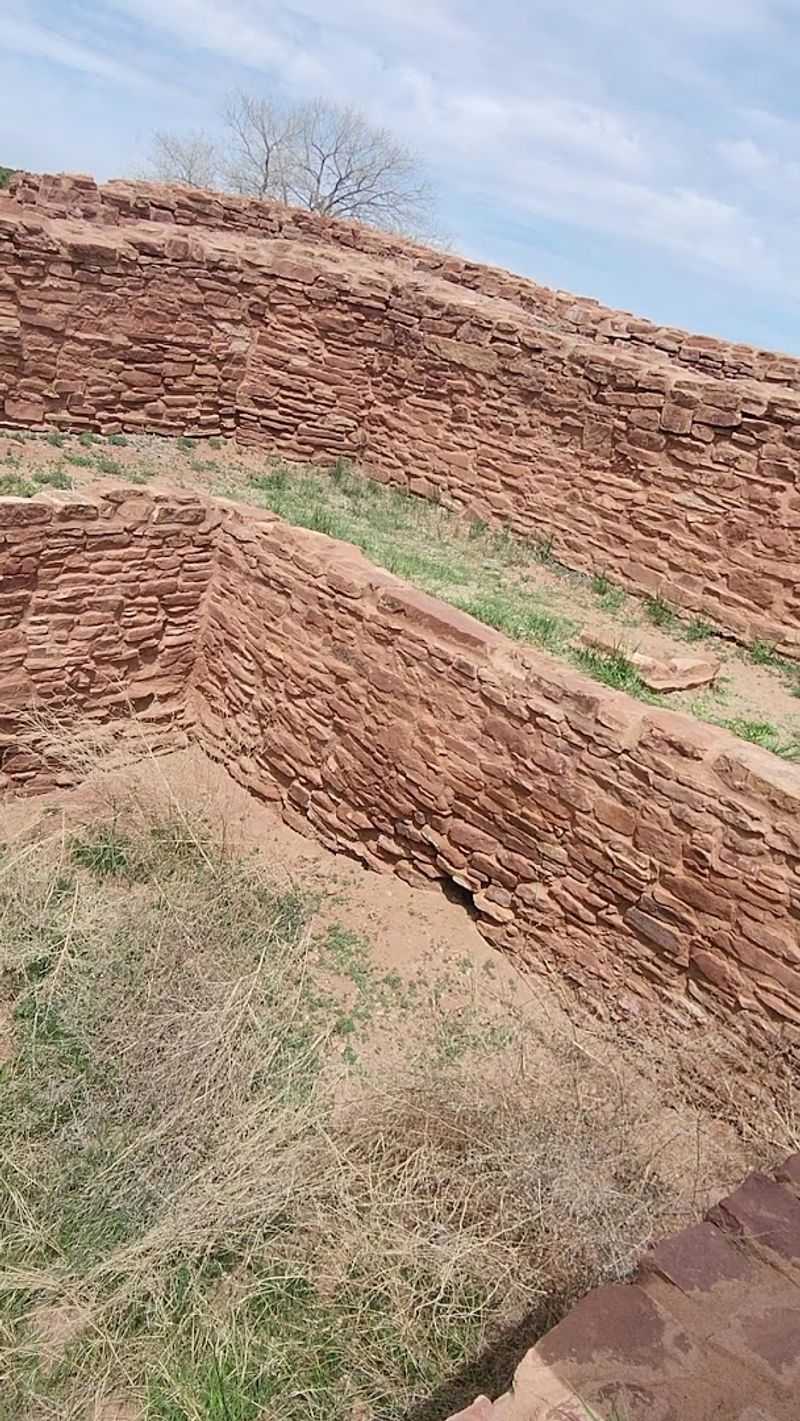
Long before any Spanish missionary set foot in this valley, Tiwa-speaking Ancestral Puebloan people were already building a substantial community here, drawn by a natural spring in the Zapato Canyon sometime around 1250 to 1300 AD.
At its peak, the Quarai pueblo held approximately 1,000 rooms and housed between 600 and 700 residents of both Native American and Spanish descent, making it a genuinely significant population center for its time and place.
The visible ruins today represent only a fraction of what was originally built, since most of the ancient pueblo structures were constructed from adobe and have long since returned to the earth.
What remains above ground tells a story of two distinct architectural traditions meeting in one place, with the massive Spanish sandstone mission walls rising dramatically above the lower, more fragmented outlines of the original Puebloan settlement.
Interpretive signs throughout the site do an excellent job of connecting the visible foundations to the daily life that once filled them, from food storage to communal gathering to trade.
I found myself crouching down to look more closely at the low stone outlines of rooms that once held families, cooking fires, and conversations in a language now largely lost.
History has a way of becoming personal when you are standing directly on top of it.
Stillness Under The Manzano Mountains
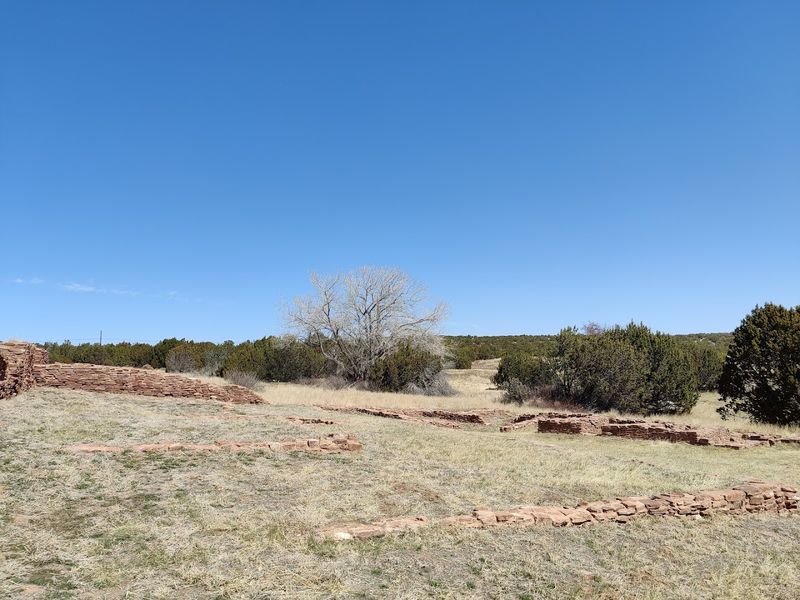
A heavy kind of quiet settles over this site. It feels different from ordinary silence, layered in a way you notice before you can fully explain it.
The Manzano Mountains rise to the west and create a dramatic natural backdrop that grounds the entire landscape, giving the ruins a sense of place and permanence that open desert alone could not provide.
Quarai sits approximately 8 miles north of the small town of Mountainair, far enough from any major highway that the ambient noise of modern life simply does not reach it.
On the morning I visited, the only sounds were wind moving through the dry grass, a few birds calling from somewhere inside the old mission walls, and the distant crunch of gravel under another visitor’s feet.
The site has seasonal hours, with summer hours from 10 AM to 5 PM and winter hours from 9 AM to 4 PM, so it is worth checking the current schedule before you go.
Several picnic tables near the visitor center make it easy to linger over lunch with that mountain view as your backdrop.
This kind of stillness is genuinely rare, and once you have felt it, you will understand why Quarai remains one of New Mexico’s most memorable archaeological sites.
Hidden Corners Of A Vanished Settlement
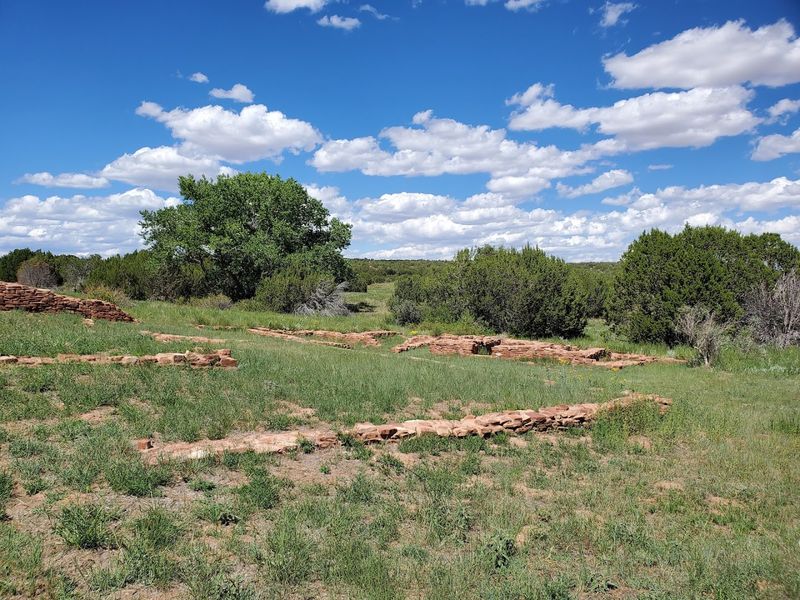
One fact surprised me when I read it on one of the site’s interpretive signs. Much of the original ancient Quarai village is still buried underground, waiting for future archaeological work to bring it back into the light.
What visitors see today, impressive as it already is, represents only the excavated and preserved portion of a much larger settlement that thrived here for several centuries before being abandoned in 1678.
That abandonment came not from a single cause but from a devastating combination of disease, severe droughts, widespread famine, Apache raids, and growing unrest within the Spanish colonial administration, a convergence of pressures that ultimately made the settlement impossible to sustain.
The site is designated as a National Historic Landmark District, encompassing prehistoric settlement remains, the 17th-century Spanish mission compound, and even artifacts from 19th-century Spanish ranching activity, layers of human presence stacked one on top of another.
Along the outer edges of the site, away from the main mission walls, I noticed subtle depressions and mounded earth that hinted at structures still hidden below the surface.
Park interpretation makes clear that the buried portions hold enormous archaeological potential and that research continues at a careful pace.
Some of the most important stories here are still waiting to be told, and that possibility alone makes every visit feel like the beginning of something.