Some restaurants seem to collect attention with glossy campaigns, while others simply keep the tables full and let dinner do the talking.
This list is about the second kind.
Georgia has places where reputations travel through family recommendations, and that one friend who suddenly becomes suspiciously protective of a reservation.
Nobody needs a dramatic sales pitch when the dining room is already busy proving the point.
These restaurants have built loyalty through consistency, memorable cooking, and the kind of experience that turns a first visit into a standing plan.
Some are rooted in historic buildings, others rely on seasonal menus, but every one of them has earned a crowd without leaning on empty noise.
The real challenge is not deciding whether they deserve a visit. It is getting a table before everyone else has the same idea.
Consider this your cue to book early and arrive hungry.
1. The Grey
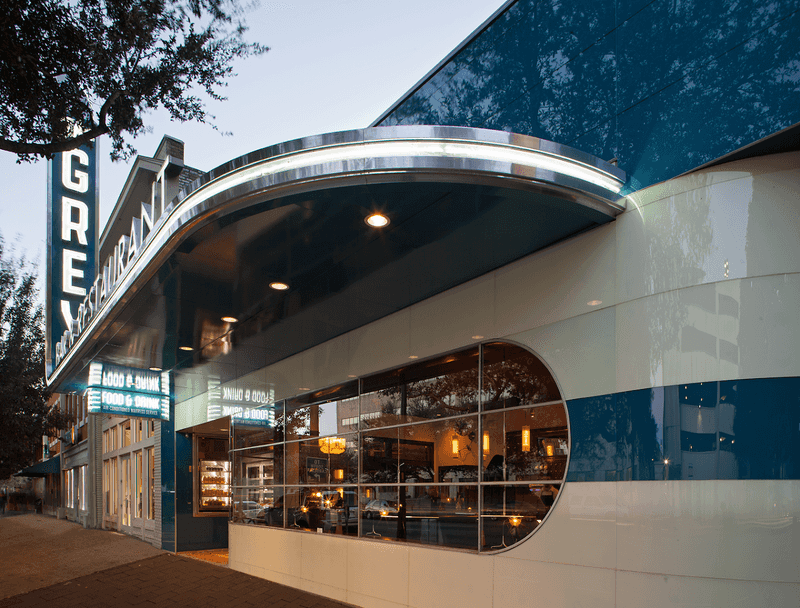
A 1938 Greyhound bus terminal is not the most obvious home for a celebrated Southern restaurant, but The Grey has made that history work in its favor.
The building at 109 Martin Luther King Jr. Boulevard, Savannah, retains its original art deco bones, including terrazzo floors and curved architectural lines that no modern renovation could replicate.
Chef Mashama Bailey leads the kitchen, and her approach draws heavily on the food traditions of the American South, particularly the coastal Georgia region.
Her cooking has earned national recognition, including a James Beard Award, which places her among the most decorated chefs in the country.
The menu changes with the seasons, but the focus stays consistent: ingredients sourced from Georgia farms and coastal waters.
Dishes like pork neck stew and Sea Island red peas have appeared on past menus, rooted in Lowcountry and Gullah Geechee culinary traditions.
The restaurant does not rush the experience.
Tables are spaced generously, and the dining room moves at a pace that lets the food take center stage.
The art deco details overhead and the seasonal plate in front of you create an unusual combination that is hard to find anywhere else in Savannah. Some buildings earn their second act.
2. The Olde Pink House
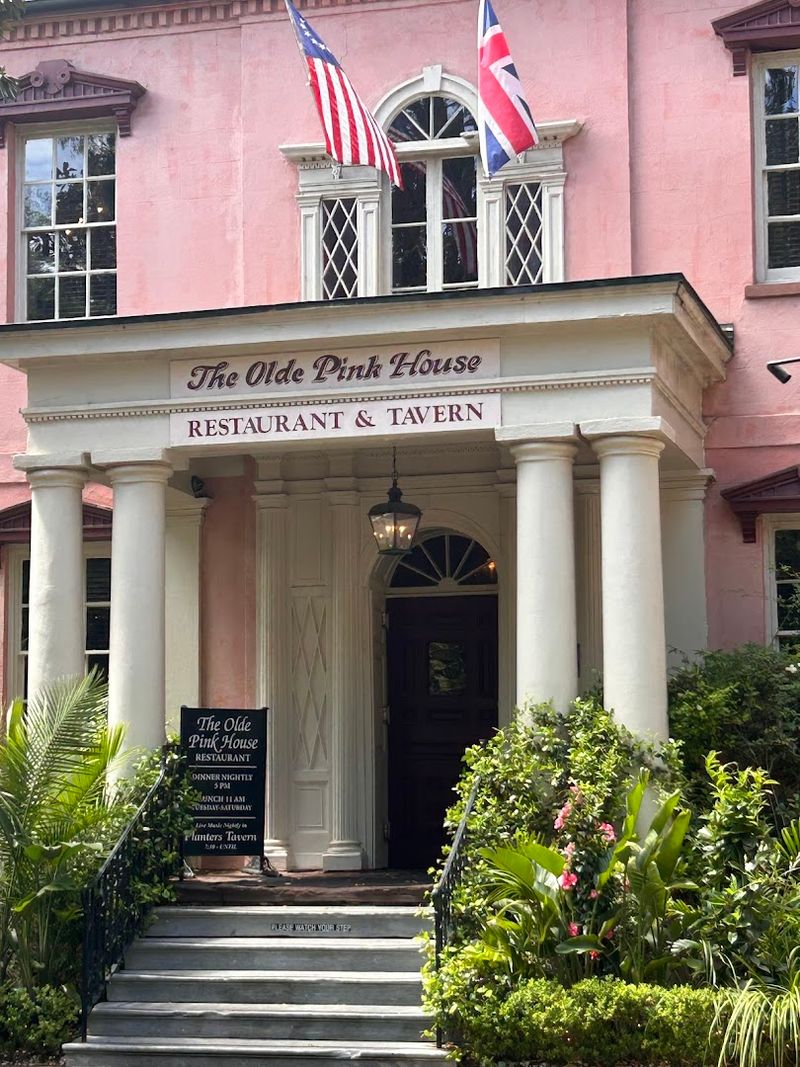
Built in 1771, the Habersham House is one of Savannah’s oldest surviving structures, and today it operates as The Olde Pink House restaurant.
The pink exterior is not a branding choice. The original red bricks bled through the white plaster over time, gradually turning the facade the color it carries today.
Located at 23 Abercorn Street in Savannah, the building sits directly on one of the city’s historic squares.
The structure has served various purposes over the centuries, including as a bank and a private residence, before finding its current identity as a full-service restaurant.
The kitchen focuses on traditional Southern and Lowcountry dishes.
Planked fish, shrimp and grits, and crispy scored flounder are among the menu items most closely associated with the restaurant’s identity. These are not modern reinterpretations.
The cooking style here leans toward preparation methods that have defined coastal Georgia cuisine for generations.
The basement level operates as a separate tavern space with its own menu, giving diners two distinct options within the same building.
Both floors draw consistent crowds, which says something about a restaurant that has been in operation for decades without reinventing itself every few years.
When a building has survived since 1771, the food probably does not need to shout for attention.
3. Common Thread
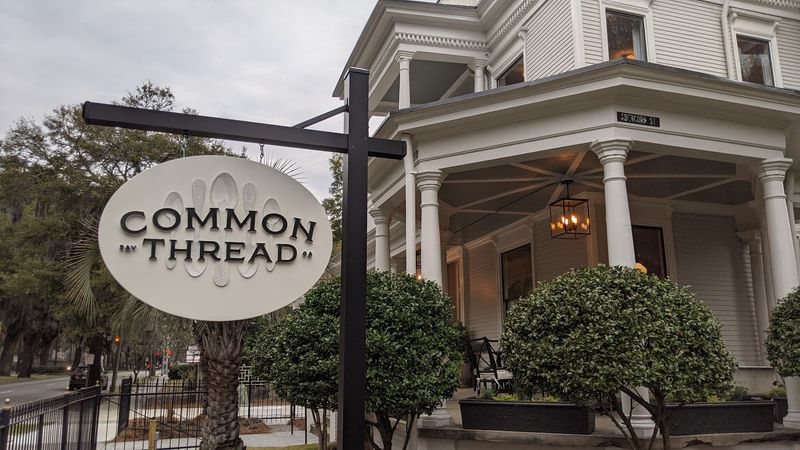
Chef Brandon Carter and his partners opened Common Thread around a commitment to serving locally sourced food shaped by relationships with regional farmers and producers.
The menu at 122 East 37th Street, Savannah, shifts regularly based on what local and regional farms are producing. The plate in front of you in October looks nothing like what was served in April.
That kind of sourcing discipline requires real relationships with growers, and Common Thread has built those connections deliberately.
The restaurant operates in a smaller space than many of its Savannah neighbors, which keeps the kitchen focused and the dining experience personal.
Vegetables are treated as the point of a dish rather than an afterthought.
Proteins are sourced with the same attention given to produce, and the combinations on the plate reflect genuine seasonal thinking rather than menu decoration.
The restaurant earned a spot on various regional best-of lists without much fanfare, largely because the cooking earns attention without needing a publicist.
Small dining rooms either work or they do not, and Common Thread works.
If you have never thought much about where your green beans came from, this kitchen might change that habit.
4. Dovetail
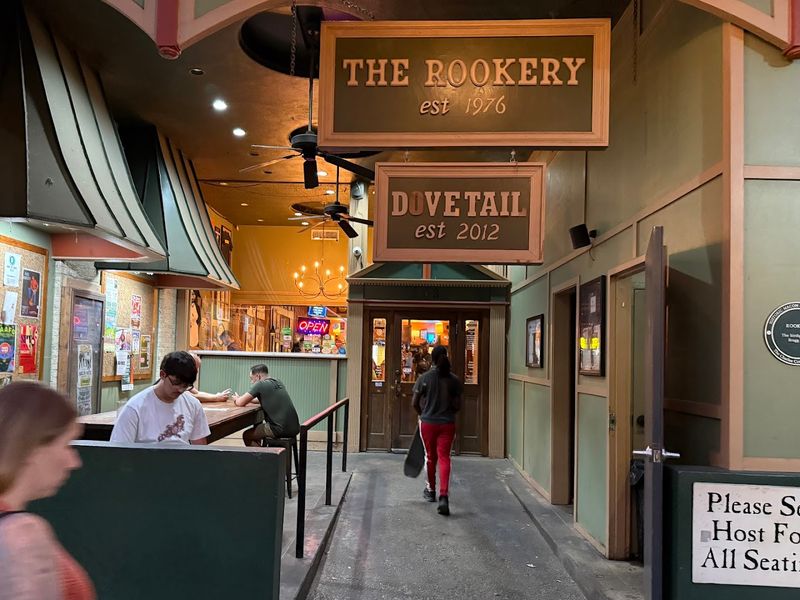
Dovetail is quietly making a case for Macon’s food scene.
The restaurant at 543 Cherry Street, Macon, operates in a renovated downtown space that reflects the broader revitalization happening along Cherry Street.
The kitchen takes a seasonal approach, pulling from regional ingredients and building menus around what is available rather than what is predictable.
Charcuterie, house-made pastas, and locally sourced proteins appear regularly, though the specific offerings shift with the time of year.
Downtown Macon has seen significant investment over the past decade, and restaurants like Dovetail have played a real role in drawing consistent foot traffic back to the urban core.
The dining room fills on weeknights, which is a meaningful signal in a mid-sized city where dining habits can be harder to shift.
The restaurant draws from both traditional Southern technique and contemporary cooking methods, which creates a menu that covers familiar ground without feeling repetitive.
Macon has a rich musical and cultural history, and it is starting to build a food identity to match.
Dovetail is one of the clearer signs that the city’s restaurant scene is not just catching up, it is setting its own pace.
5. The National
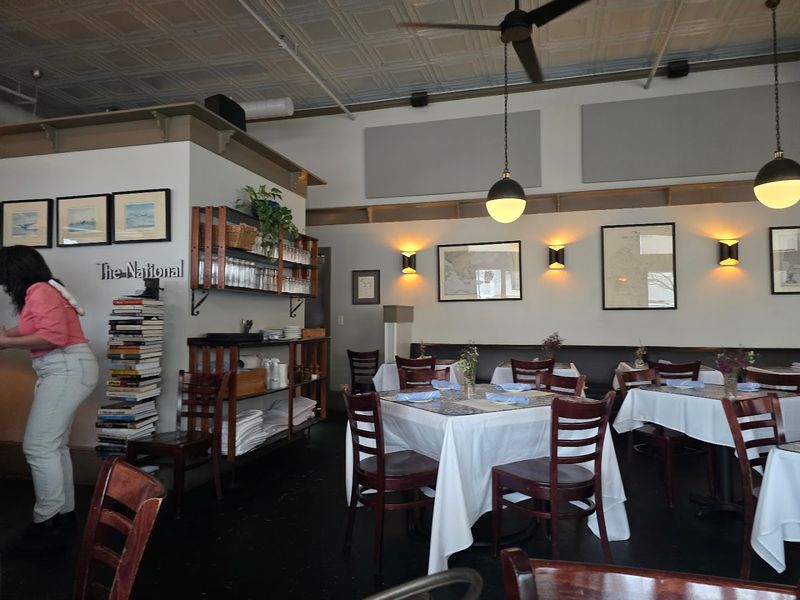
Athens has a reputation built largely on music, but The National has spent years proving the city can hold its own in a kitchen too.
Chef Peter Dale opened the restaurant with a focus on Mediterranean-influenced cooking, a direction that was less common in Georgia when the restaurant launched than it is today.
The menu at 232 West Hancock Avenue, Athens, draws from Spanish, Greek, and broader Mediterranean traditions without committing to any single region.
Small plates and larger shared dishes appear alongside each other, and the menu has always encouraged ordering more than one thing.
Dale has been recognized by the James Beard Foundation, which reflects the seriousness with which the kitchen approaches its sourcing and technique.
The restaurant works with local farms and producers, and that relationship shows in the quality of the vegetables and proteins that anchor each dish.
The National has maintained a consistent identity since opening, which is harder than it sounds in a college town where dining trends shift quickly and student populations turn over every four years.
A restaurant that earns a loyal following among both longtime residents and first-time visitors has clearly figured something out.
In a city that already knows how to fill a room with music, The National fills its own room with something equally worth showing up for.
6. Five And Ten
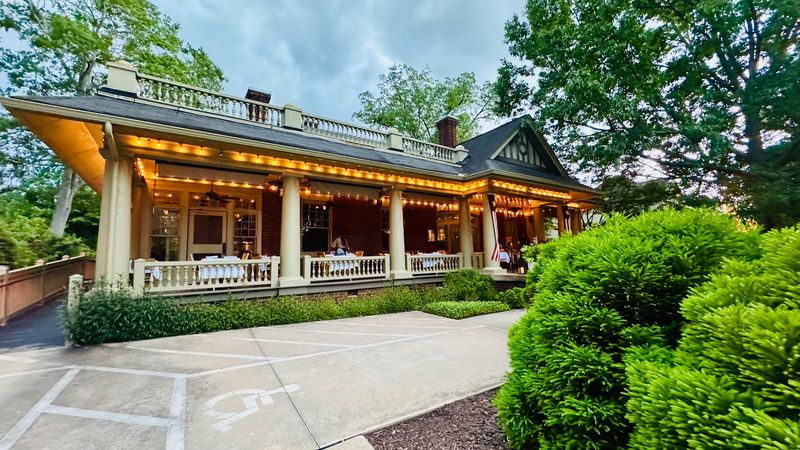
Hugh Acheson opened Five and Ten in 2000, and the restaurant has shaped how people outside Georgia think about Athens as a food destination.
Located at 1073 South Milledge Avenue, Athens, it occupies a converted house near the University of Georgia campus, a setting that fits the neighborhood without calling attention to itself.
Acheson’s cooking blends classical French technique with Southern ingredients, a combination that sounds straightforward but requires real precision to execute well.
The menu has included dishes like braised pork belly with Sea Island red peas and cast-iron roasted chicken, both of which reflect the restaurant’s dual influences.
Five and Ten earned Acheson his first James Beard Award nomination, and the restaurant has remained a reference point for Southern fine dining in the years since.
Longevity in a competitive dining market says more than any single award could.
The restaurant has been written about in national food publications enough times that its reputation extends well beyond Athens, yet the dining room still draws heavily from the local community.
A place that earns both national coverage and neighborhood regulars has clearly found the right balance.
For a building that looks like someone’s front porch from the outside, Five and Ten has produced a remarkable amount of culinary history.
7. Spring Restaurant
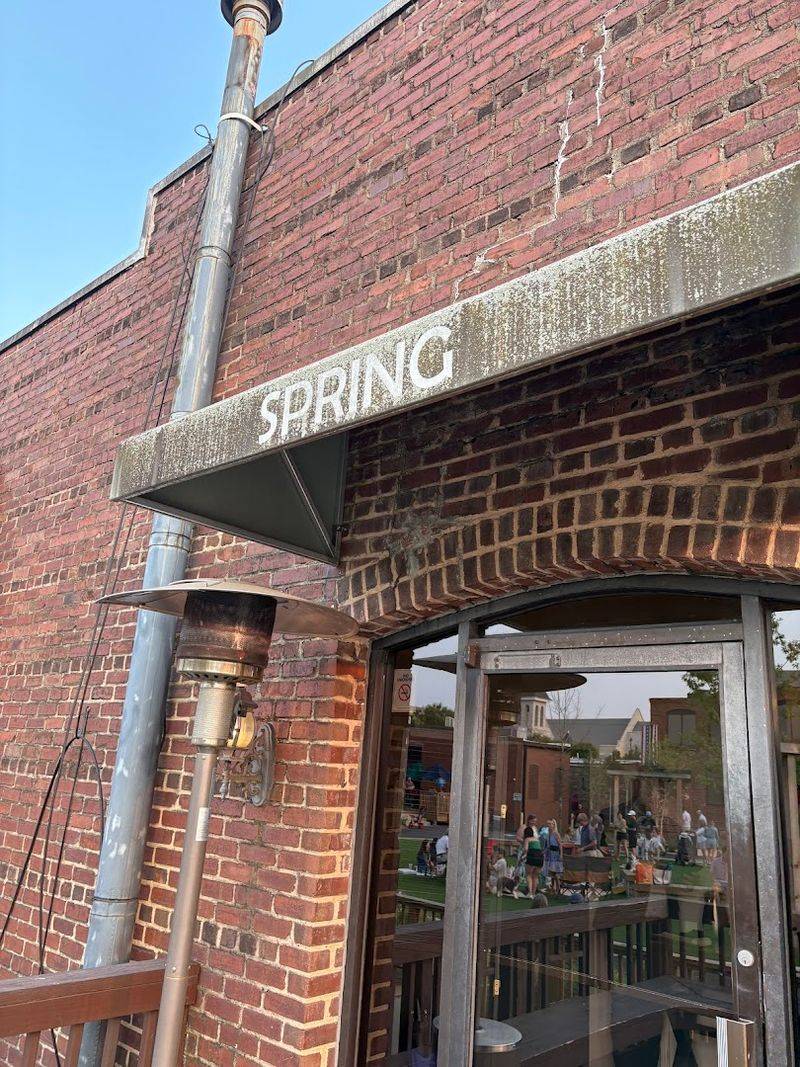
Tasting menus can be a gamble. You hand over the decision-making entirely and hope the kitchen makes good choices on your behalf.
At Spring in Marietta, that gamble has a strong track record.
The restaurant at 36 Mill Street, Marietta, operates primarily as a tasting menu experience, which sets it apart from most dining options in the northern Atlanta suburbs.
Chef Brian So leads the kitchen at Spring Restaurant, where the tightly focused menu changes frequently to reflect seasonal ingredients.
Past menus have featured dishes built around Georgia-grown produce, local proteins, and techniques that reflect both classical training and contemporary sensibility.
The format asks diners to commit to the full experience rather than ordering a la carte.
Marietta’s downtown square draws visitors for its historic character, and Spring has added a dining destination to that mix.
The restaurant occupies a space in the Mill Street corridor, which has seen growing interest from independent businesses in recent years.
Tasting menus work best when the kitchen has a clear point of view, and Spring has one.
The progression of dishes is designed to build on itself, so what arrives first sets up what comes next. That kind of sequencing takes planning and confidence in equal measure.
For a suburb that does not always get mentioned in Georgia’s fine dining conversation, Spring is making a compelling argument for Marietta’s place at the table.
8. Kimball House
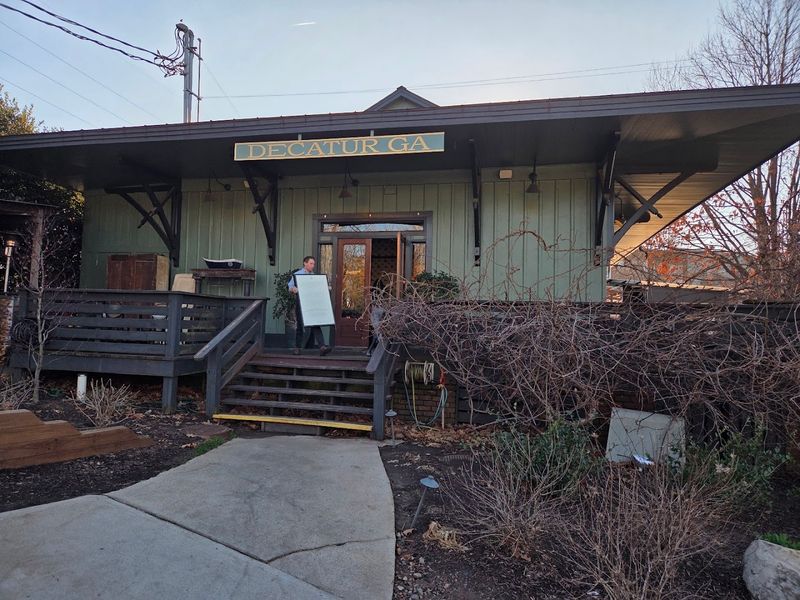
Raw oysters and a historic train depot do not seem like obvious partners, but Kimball House has made that pairing central to its identity.
The restaurant at 303 East Howard Avenue, Decatur, operates inside a restored 1892 railroad depot, and the oyster program is one of the most talked-about in the Atlanta metro area.
The oyster selection rotates based on what is available from East and West Coast producers, with the list sometimes reaching twenty or more varieties at a time.
That rotating selection requires consistent supplier relationships and a staff that understands the differences between regions and harvesting conditions.
Beyond the raw bar, Kimball House runs a full dinner menu that draws from American culinary traditions with a strong emphasis on technique.
Dishes have included hand-cut pastas, whole roasted fish, and charcuterie produced in-house, all of which reflect a kitchen that takes its work seriously across every section of the menu.
The building itself adds a layer of context that newer restaurant spaces simply cannot manufacture.
Original architectural details from the 1892 depot are visible throughout the dining room, giving the space a physical history that predates the restaurant by more than a century.
An oyster program inside a Victorian train station sounds like something someone invented, but Kimball House is very much real.
9. Elizabeth On 37th
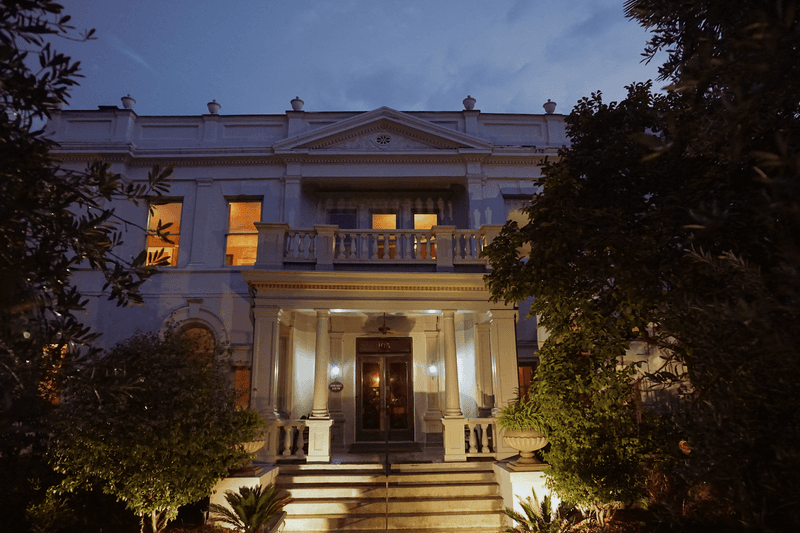
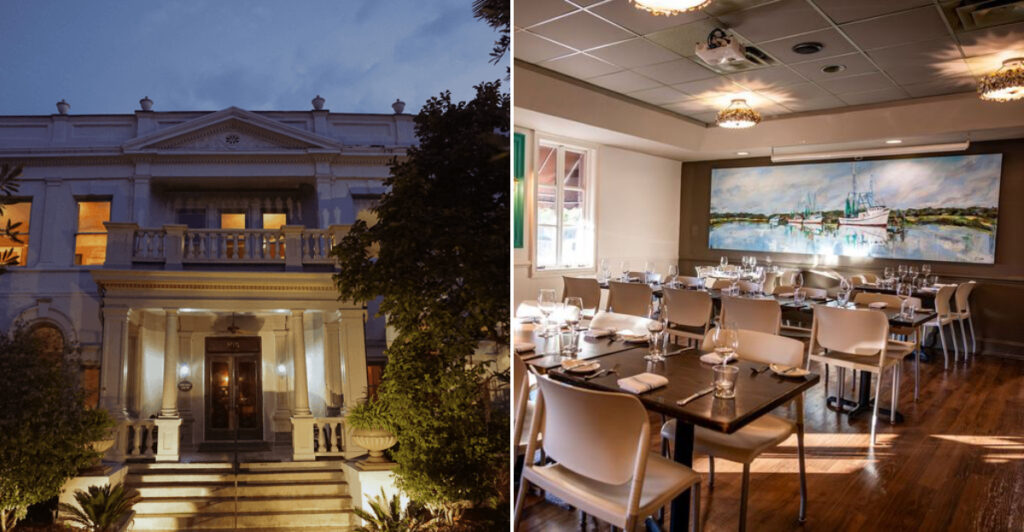
Elizabeth on 37th has been operating since 1981, which makes it one of the longest-running fine dining institutions in Savannah.
Chef Elizabeth Terry opened the restaurant inside a turn-of-the-century Victorian mansion.
The building at 105 East 37th Street, Savannah, still carries the original architectural character that defined the neighborhood more than a hundred years ago.
Terry’s approach was rooted in classic Southern and coastal Georgia cooking, with an emphasis on ingredients that reflected the region’s agricultural and maritime heritage.
Dishes built around Georgia shrimp, local produce, and traditional preparation methods defined the menu during her tenure and shaped what diners expected from upscale Southern dining in the city.
The restaurant has continued operating under different ownership since Terry’s departure, maintaining the formal dining room setting and the Southern-focused menu that established its reputation.
The Victorian house format means the dining experience is divided across multiple rooms, each with a slightly different character.
Elizabeth on 37th holds a place in Savannah’s culinary history that newer restaurants have not yet had the time to match.
Over four decades of service in the same building, with the same city-block address, is a record that speaks for itself.
The mansion has outlasted trends, ownership changes, and every new restaurant that has opened on Savannah’s increasingly competitive dining scene.
10. Abel Brown Southern Kitchen
Augusta is best known internationally for one week in April, but the city’s food scene has been building its own identity independent of golf tournament schedules.
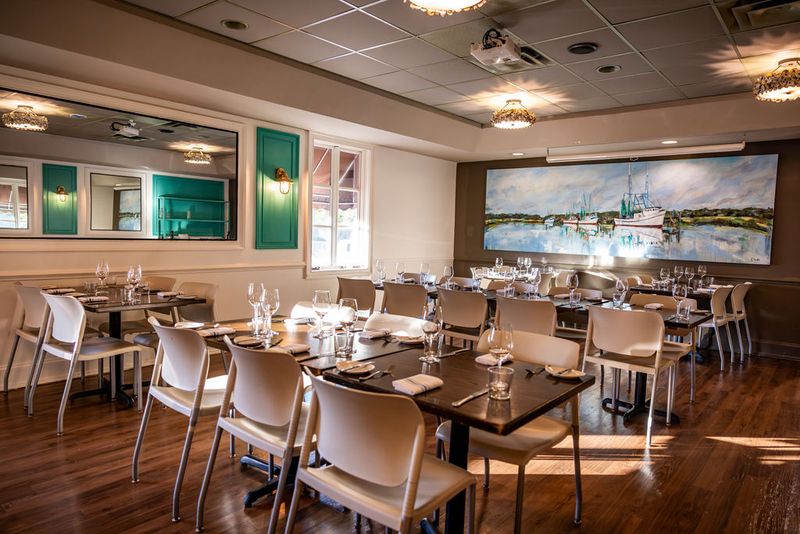
Abel Brown Southern Kitchen at 491 Highland Avenue, Augusta, has become a consistent reference point for genuine Southern cooking in the city’s Summerville neighborhood.
The kitchen focuses on dishes rooted in Georgia and broader Southern culinary traditions.
Fried chicken, shrimp and grits, and seasonal vegetable preparations appear regularly on the menu, all executed with attention to technique rather than novelty.
The sourcing prioritizes regional producers where possible, which keeps the menu connected to what is actually growing in Georgia at any given time.
The Summerville neighborhood has a residential, community-oriented character that shapes how the restaurant interacts with its surroundings.
Abel Brown draws a regular local crowd rather than relying on event-week visitors, which is a meaningful distinction for a restaurant trying to build something durable.
Southern cooking at its most honest does not need elaborate presentation or international influences to justify itself. Abel Brown understands that clearly.
The menu reads like a love letter to Georgia’s food traditions, written by a kitchen that has actually done the research.
Augusta may always lead its press coverage with the Masters, but Abel Brown is quietly building the kind of reputation that lasts well past the second Sunday in April.