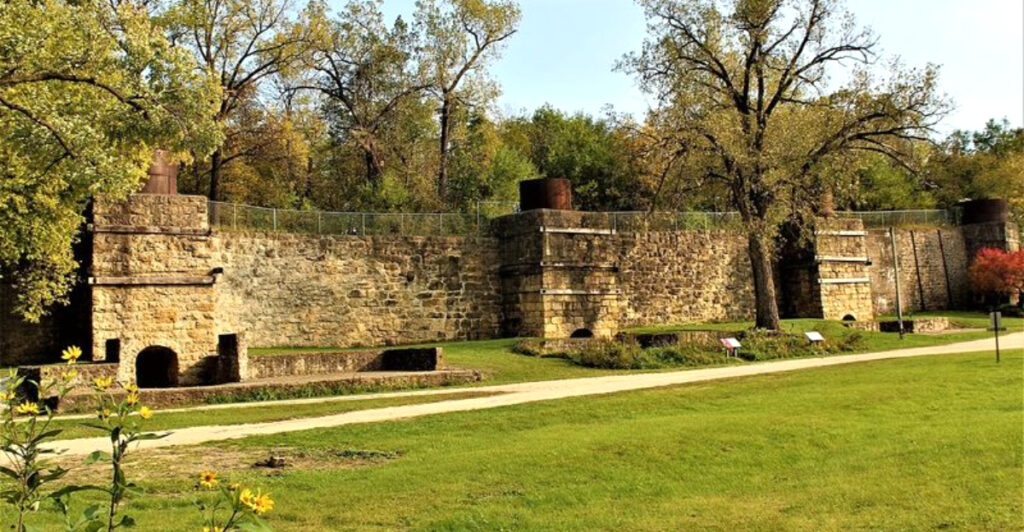
Eastern Iowa has a funny way of catching you off guard. One minute you are driving past quiet roads and open fields, and the next, four towering stone ruins appear near the highway like they have been waiting patiently for someone curious enough to pull over.
That is what makes this stop so interesting. It does not feel like a polished museum exhibit or a place built just for photos.
It feels real, sturdy, weathered, and a little strange in the best possible way.
You can walk right up to the old stone structures, look into the kiln openings, read the signs, and get a quick sense of how much work once happened here. It is history you do not have to squint at from behind glass.
For anyone who likes road trip stops with a little mystery, a little scenery, and just enough history to make the detour feel worthwhile, this is one of Iowa’s most memorable small finds.
What the Hurstville Lime Kilns Actually Are
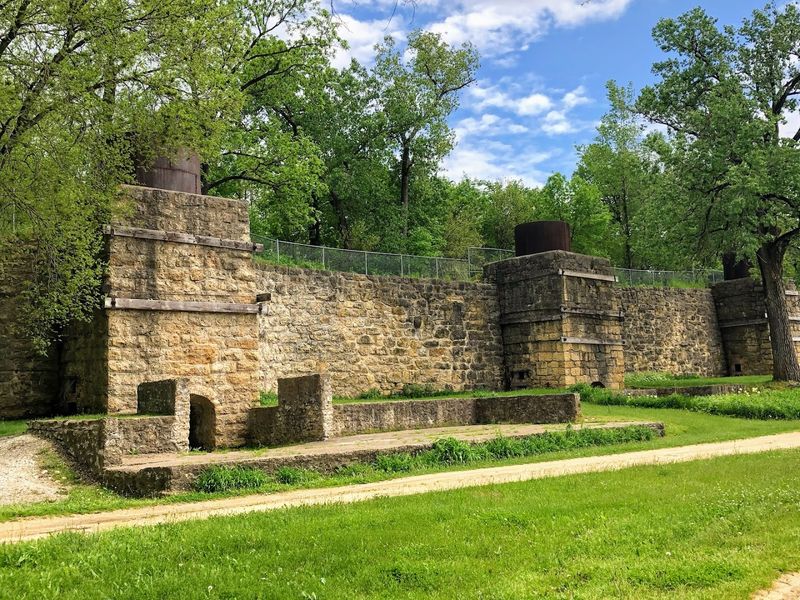
Four stone towers rising out of a well-kept park beside a two-lane road is not something you expect to see in rural eastern Iowa, but that’s exactly what greets you at the Hurstville Lime Kilns.
These are the real deal: industrial furnaces built in the 1870s that were used to heat limestone and convert it into lime, a material essential for construction, agriculture, and plaster during the late 19th century.
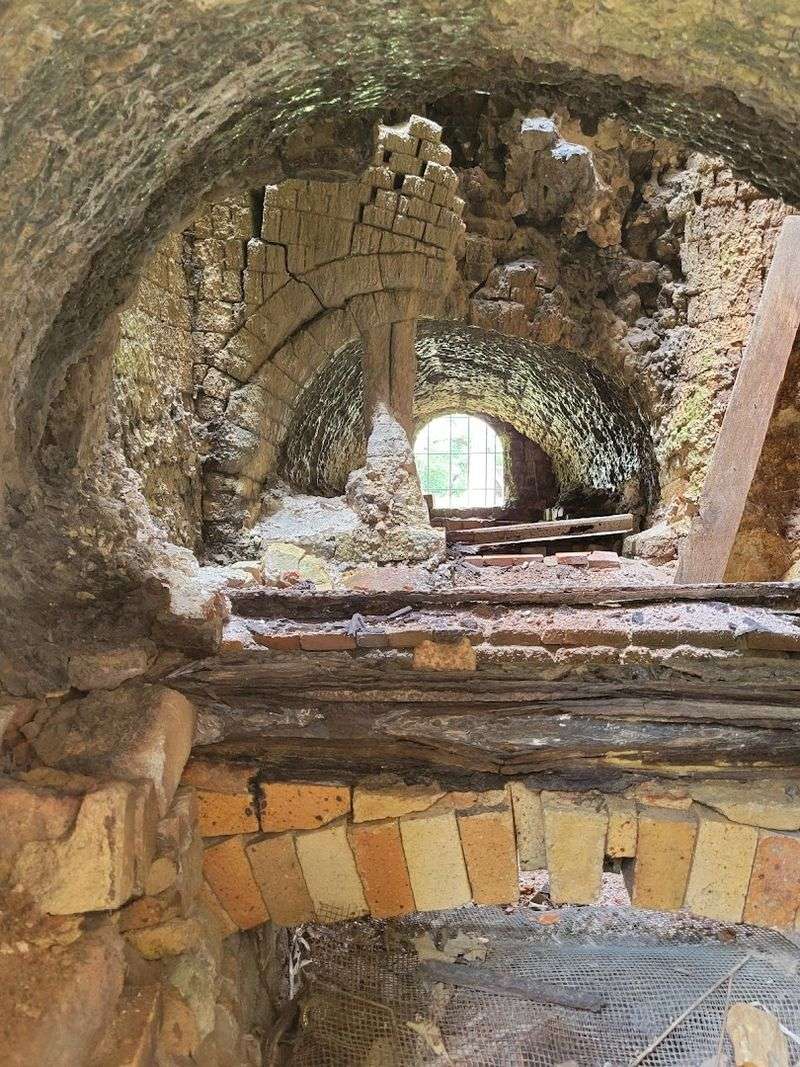
Each kiln is a tall, shaft-like stone structure, wide enough that you can look into its openings and get a sense of just how much heat and labor went into running them.
The structures are made from rough stone, fire brick, and clay, which gives them a rugged texture that photographs well and looks even more dramatic in person.
The kilns operated for decades, supporting an entire community of workers who lived and labored in the Hurstville area.
Managed today as a Jackson County historic site, the full address is 7301 Hurstville Rd, Maquoketa, IA 52060, and it is open year-round from 6:00 AM to 10:30 PM.
The View From the Top of the Kilns
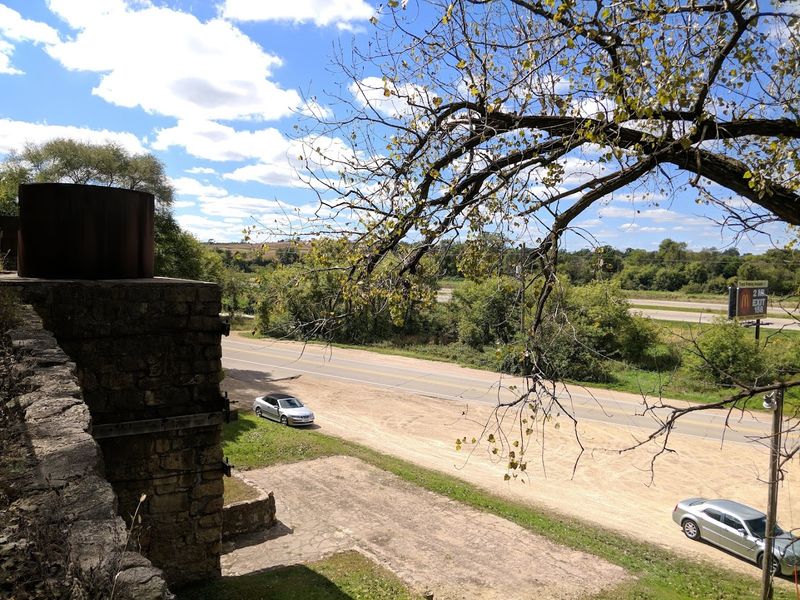
One of the more unexpectedly cool moments at this park is the option to climb up and look straight down into one of the kilns.
A short, steep stairway of about 20 steps leads you up to the top, and from there you can lean over and stare into the hollow stone chamber below.
It’s a little disorienting in the best way. The inside of the kiln is dark, the walls are rough and thick, and the opening at the top frames a perfect circle of sky above your head if you look up from the path below.
It gives you a real sense of the scale and craftsmanship that went into building these structures without any modern machinery.
There’s also a pathway that loops around the property and brings you to the upper level naturally, so you don’t have to tackle the stairs if steep steps aren’t your thing. Either route gets you to the same elevated vantage point.
The combination of stone, shadow, and open sky makes this a genuinely interesting photo spot that rewards anyone who takes the time to climb up.
The History Behind the Stone and Smoke
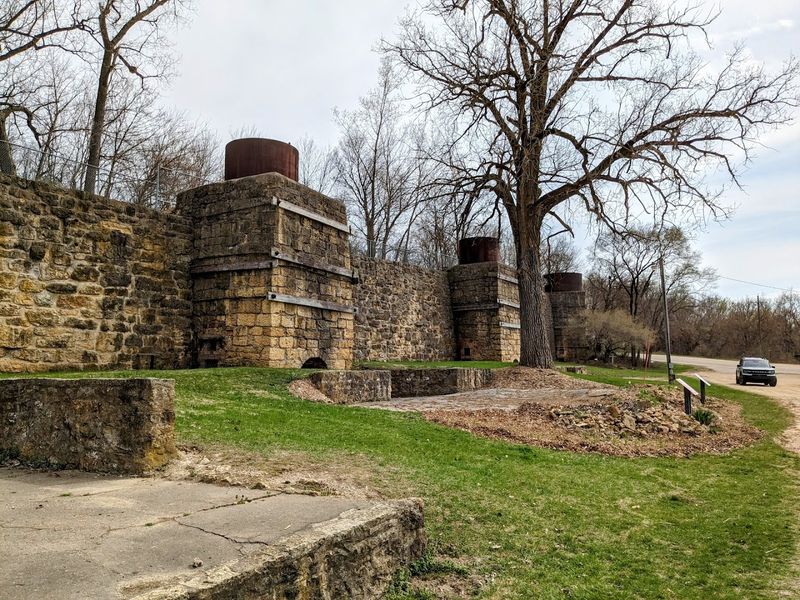
Lime kilns were once a critical part of frontier infrastructure across the Midwest, and the ones at Hurstville are among the best-preserved examples left standing in Iowa.
The process worked by loading limestone into the top of the kiln, then heating it at extremely high temperatures using wood or coal as fuel.
The intense heat drove off carbon dioxide and left behind quicklime, a powdery white substance used in everything from mortar and plaster to soil treatment on farms.
The Hurstville kilns date to the 1870s, with Alfred Hurst building the first draw kiln in 1871 and the other three following soon after.
Iowa was still a young state at that point, and demand for construction materials was high as towns, homes, barns, bridges, and public buildings grew throughout the region.
The Hurstville operation became a major local industry, tied to quarrying, fuel supplies, transportation, and the company town that developed around the work.
Informational plaques posted around the grounds explain the production process in plain language, so even if you have zero background in industrial history, you leave with a clear picture of what this place once was and why it mattered to the people who worked here.
What the Grounds Look Like Up Close
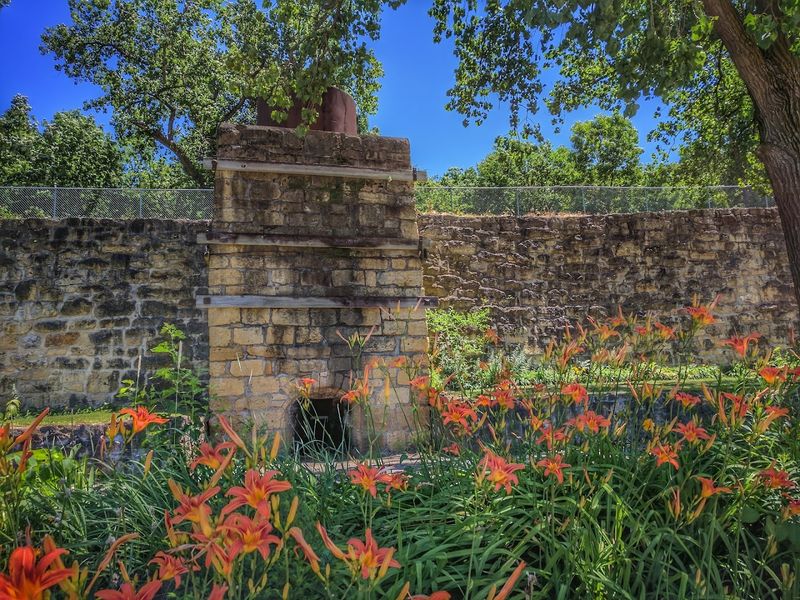
Whatever you might expect from a 170-year-old industrial ruin, manicured flower gardens probably aren’t the first thing that comes to mind.
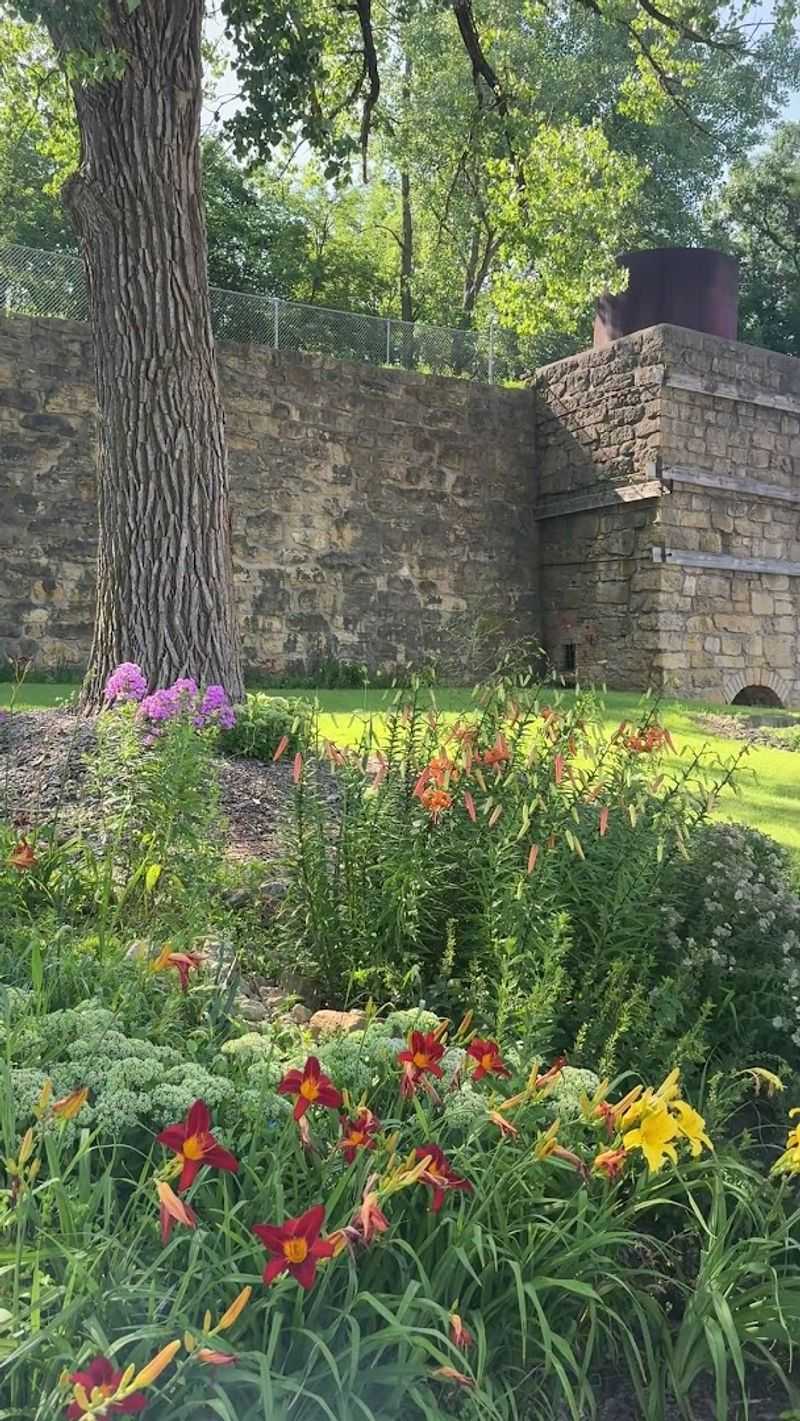
But the grounds at Hurstville are genuinely well cared for, with planted beds, trimmed grass, and a neat picnic shelter that gives the whole property a tidy, welcoming feel that contrasts nicely with the rough stone towers.
The caretakers clearly put real effort into maintaining the landscape. On the visit I made, the flower beds near the base of the kilns were in full bloom, and the walking path around the perimeter was clean and easy to follow.
The contrast between the weathered stone and the bright seasonal plantings is one of those small details that makes the stop feel more polished than you’d expect from a free county park.
A picnic table and covered shelter are available if you want to stop for lunch, which makes this a practical midpoint on a longer drive through eastern Iowa. The terrain is mostly flat near the entrance, with the only real incline being the stairway that leads up to the kiln tops.
Pack a snack, take the loop trail, and plan for about 30 to 45 minutes on the grounds.
Practical Tips Before You Go
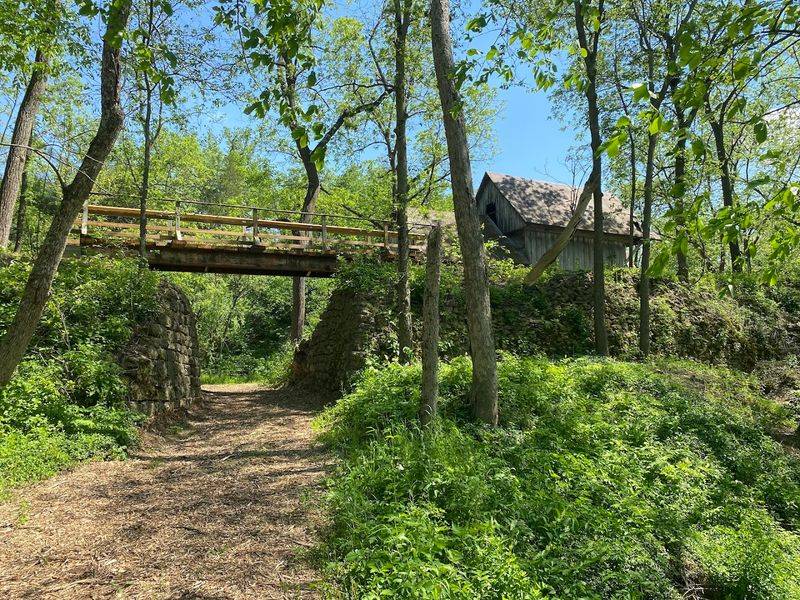
A few things are worth knowing before you pull off the road here. First, restroom facilities are not something you should count on at the kiln site itself.
That detail has caught more than a few road-trippers off guard, so plan accordingly and make a stop in Maquoketa before heading out to the kilns. The town is only a few miles away and has plenty of practical stops nearby.
Parking is easy and free. The lot sits right off the road and can comfortably handle several cars at once.
The site is open year-round from 6:00 AM to 10:30 PM, which still gives visitors a generous window, though the trail loop and stairway are much easier to navigate in daylight.
Cell service in the area is generally fine for GPS navigation, but the surrounding landscape is rural enough that you won’t want to rely on finding a nearby coffee shop if something goes wrong with your route.
The park is managed by Jackson County Conservation, and their contact number is +1 563-652-3783 if you have questions before visiting.
Admission is free, the trail is short, and the whole stop fits easily into a road trip without eating up your afternoon.
How Long You Actually Need Here
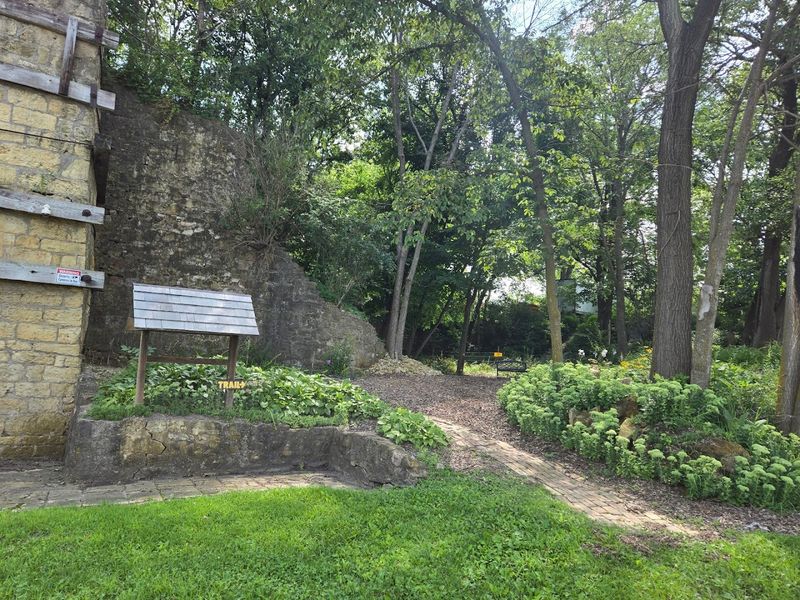
Honest answer: most people spend between 20 and 45 minutes at the Hurstville Lime Kilns, and that’s plenty of time to see everything the property has to offer.
The loop trail is short, the number of structures is manageable, and the informational plaques are brief enough to read without feeling like homework.
That said, if you’re traveling with kids who want to climb the stairs, peer into the kiln openings, and run the trail a few extra times, you could easily stretch the visit to an hour.
The grounds are open enough that children have room to move around, though parents should keep a close eye near the kiln openings and the elevated walkway, since the edges aren’t heavily guarded.
Road trippers tend to use this stop as a leg-stretcher between longer destinations, and it works perfectly for that purpose. The kilns are right off the main road, the parking is immediate, and you’re back in your car before the engine cools down if you need to be.
For history fans or curious travelers who want a fuller look at the original building above the kilns, add a few extra minutes to your plan.
The Original Structure Still Standing Nearby
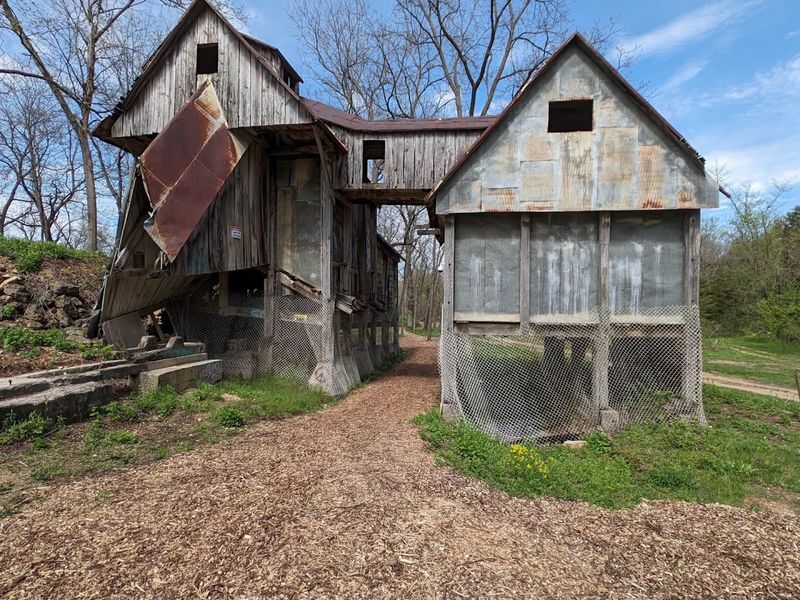
Beyond the four kilns themselves, there are surviving pieces of the broader Hurstville industrial story that are easy to overlook if you only make a quick pass through the lower grounds.
Historical records note a rock-crushing and storage structure near the kilns, along with other company buildings that once helped support the larger lime operation.
Those remaining traces give a clearer sense of what the full complex once looked like when workers were on site processing limestone, moving materials, and keeping the operation running.
The structures around the historic district share the same practical, no-nonsense character as the kilns themselves.
Standing near them, you get a small but real sense of the scale of this place during its working years, when the area around Hurstville was a functioning industrial community rather than a quiet historic stop.
The upper area of the property is accessible via the stairway or the looping path, both of which bring you level with the tops of the kilns.
Most of the interpretive signage is located near the main viewing areas, but taking a little extra time rewards you with a better perspective on how the whole complex was laid out and used during the 1800s.
What Makes This Stop Different From a Typical Park
Most county parks in Iowa offer trails, picnic tables, and maybe a pond. Hurstville offers all of that, plus four industrial ruins from the late 19th century that you can walk up to, study closely, and photograph from multiple angles.
That accessibility is a big part of what makes the stop feel different from a typical roadside landmark.
You’re not just reading about these structures from a distance.
You can stand near the base of the kilns, look at the stonework up close, follow the trail, and use the stairway to see the site from a higher vantage point.
The physical closeness to something that old and that industrial is not something you get at every historical park in the Midwest.
The interpretive plaques add context without overwhelming the experience. They’re informative enough to satisfy the curious and short enough that even casual visitors will actually read them.
The combination of free access, long public hours, and close-up views of genuine 19th-century industrial architecture is what separates Hurstville from the kind of historical markers you drive past without stopping.
Why This Place Is Worth the Detour
Free, historically significant, open for long daily hours, and just far enough off the main highway to feel like a discovery rather than an obligation.
That combination is harder to find than it sounds, and the Hurstville Lime Kilns deliver on all four points without asking anything of you except a willingness to pull over.
Iowa doesn’t have many standing industrial ruins from the 1870s. The fact that these four kilns are still intact, still publicly accessible, and still maintained with enough care that the grounds feel welcoming rather than neglected is worth acknowledging.
The Jackson County Conservation Board has kept this property in good shape, and it shows in the condition of the walking areas, planted spaces, and historical signage.
My honest take: if you’re passing through eastern Iowa on any route that puts you within 15 miles of Maquoketa, the kilns are worth the small detour.
You’ll spend less than an hour, spend zero money, and leave with a clearer picture of what Iowa looked like in one of its early industrial chapters.
Bring a camera, wear comfortable shoes for the stairway, and pack out anything you bring with you.