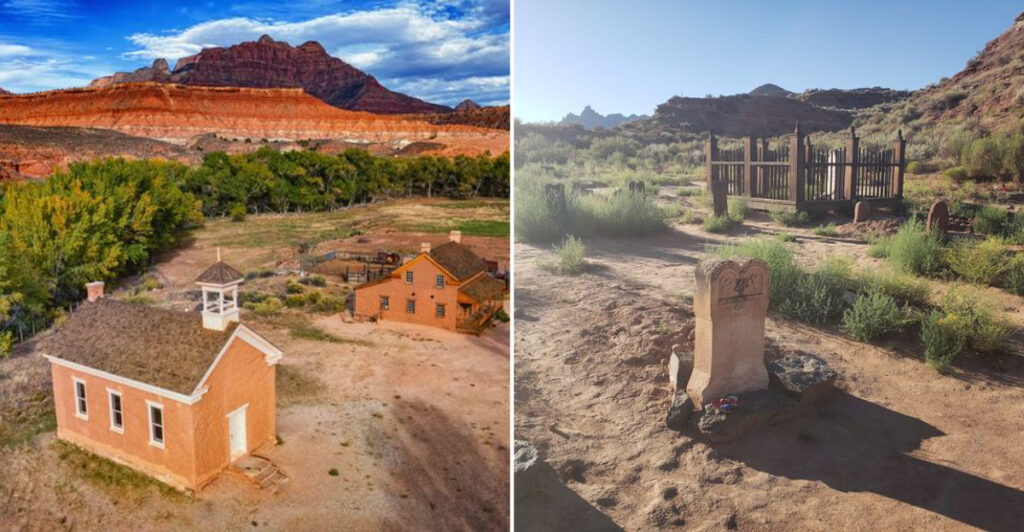
Tucked beyond a winding dirt road, this quiet ghost town feels less like a tourist stop and more like a conversation with the past. Weathered walls, empty windows, and sunbaked silence tell the story of settlers who tried to build a life where the river could be both blessing and bully.
Utah is full of dramatic landscapes, but places like this add grit, heartbreak, and human stubbornness to the scenery. You can almost picture wagon tracks, muddy boots, nervous hope, and families measuring each hard season against the dream they refused to release.
Floods came, conflict came, and eventually the town emptied, but the feeling of effort still lingers in the dust. It is haunting without being gloomy, beautiful without trying, and strangely easy to love.
In southern Utah, abandoned places can feel alive, as if every broken wall is still holding one more story for careful visitors today, quietly.
The Road That Earns Your Arrival
Some destinations hand themselves to you on a silver platter. This is not one of them, and honestly, that is exactly why it works.
The unpaved road leading out to the site from Springdale, UT 84767, is bumpy, dusty, and in wet weather, impressively muddy. But it filters out the casual and rewards the curious.
Visitors who make the drive consistently note that the journey itself sets the mood. Red rock formations rise on either side, the landscape opens up in ways that feel almost theatrical, and by the time the first historic structure comes into view, you already feel like you have traveled somewhere genuinely apart from the modern world.
One practical note worth flagging before you roll out: there are no restrooms at the site. Stop at a gas station before you take the turnoff, because the road is long enough to make that decision matter.
Any vehicle can handle the route under normal conditions, so no off-road rig is required. The road is simply a character in the story, not a barrier to entry.
Pro Tip: Go early in the morning to catch the light on the buildings and avoid the midday heat that southern Utah delivers without apology.
A Pioneer Settlement Frozen in the 1860s
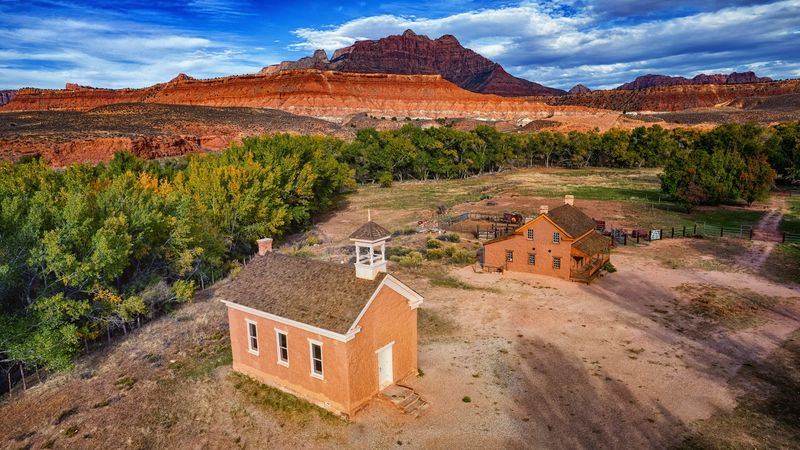
Grafton was established by Mormon settlers in the 1860s along the Virgin River, making it one of the oldest ghost towns in Utah. The community faced repeated flooding, attacks during the Black Hawk War, and the grinding difficulty of farming in unforgiving desert terrain.
Eventually, residents gave up and left, but the buildings did not follow their lead.
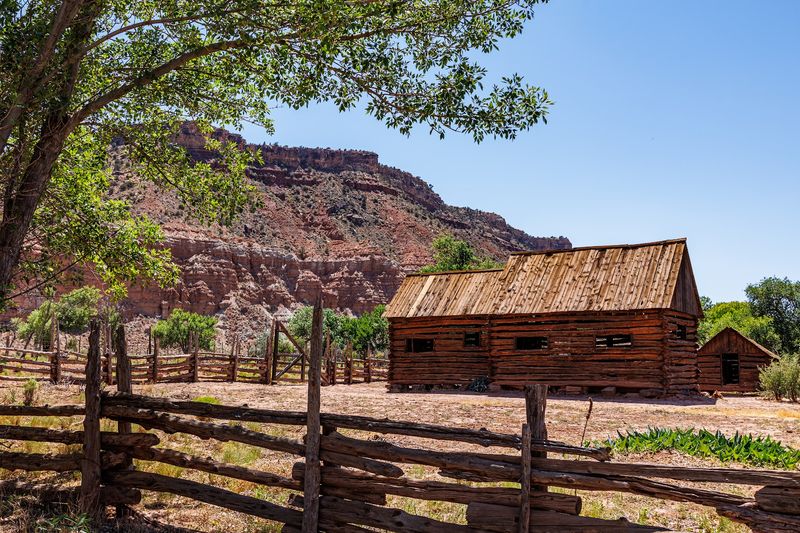
What makes Grafton unusual among ghost towns is the quality of preservation and active restoration. The Grafton Heritage Partnership has worked to stabilize and restore several structures, meaning visitors are not just squinting at rubble.
You can actually step inside some of the old homes and read the informational signs that explain who lived there and what daily life looked like during the 1865 era.
The church and schoolhouse building is locked to protect the interior, but there is a photograph of the inside posted on the door, which is a thoughtful touch that keeps curiosity satisfied without risking damage. The restored homes nearby are open for exploration, and the grounds still show traces of the original homestead, including old fruit trees, grapevines, and what appears to have been a livestock pen.
Why It Matters: This is living history that you can walk through, not behind glass.
The Cemetery That Tells the Real Story
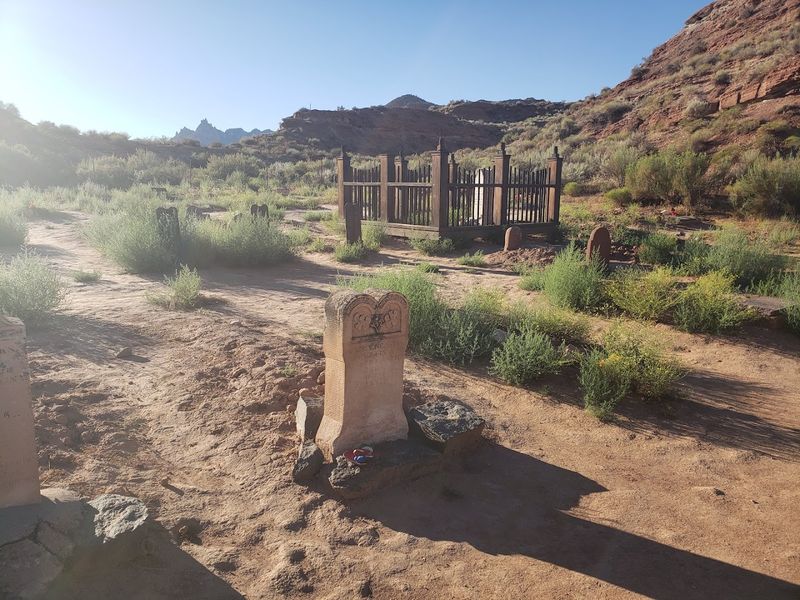
If the restored buildings are the headline, the cemetery is the paragraph that changes everything. Located just off to the left as you approach the main site, the Grafton cemetery is small, quiet, and more informative than most history books written about this region.
The headstones carry names, dates, and in some cases, brief notes about the people buried beneath them.
Visitors who take ten minutes to walk through consistently describe it as the most affecting part of the entire stop. The dates alone tell a story about how hard this life was.
Children, young mothers, men in their prime, all recorded in stone against a backdrop of canyon walls that have not changed in the slightest since the settlers first arrived.
Reading about the hardships these families faced has a way of resetting your perspective on what counts as a difficult week. There is nothing morbid about visiting, quite the opposite.
The cemetery functions as a kind of honest monument to ordinary people who attempted something extraordinary and paid a steep price for the attempt.
Best For: History enthusiasts, families looking for a meaningful conversation starter, and anyone who appreciates the kind of place that does not need embellishment to leave an impression.
Where Butch Cassidy Rode Through the Frame
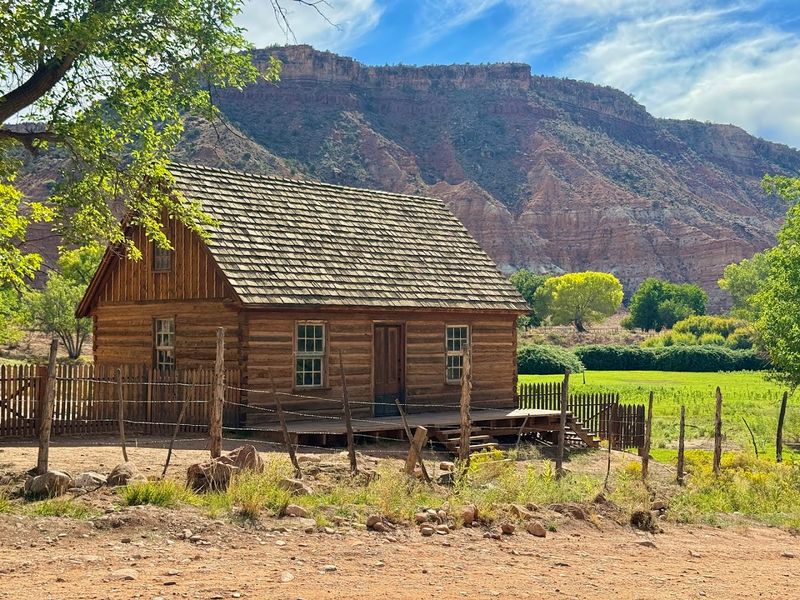
Not every ghost town can claim a Hollywood credit, but Grafton can. The 1969 film Butch Cassidy and the Sundance Kid used the site for a portion of its filming, and that fact has become one of the more enjoyable footnotes in the town’s layered history.
Visitors who grew up watching Paul Newman and Robert Redford bicycle across the screen get a particular kick out of standing in the same dusty frame.
The buildings that appear in the film are among those still standing today, which gives the location an odd double life as both genuine historical artifact and accidental movie set. It is the kind of detail that makes a place feel larger than its footprint, connecting a remote Utah settlement to a piece of American pop culture that most visitors already carry around in their memory.
Occasionally, visitors have even encountered relatives of the original Grafton families at the site, people who can speak firsthand about what the town meant to their ancestors. That kind of unscripted human connection is not something any tour operator can schedule, which makes it all the more valuable when it happens.
Fun Fact: The film was shot largely on location, and Grafton’s weathered authenticity was apparently exactly what the production needed.
How the Grafton Heritage Partnership Keeps It Alive
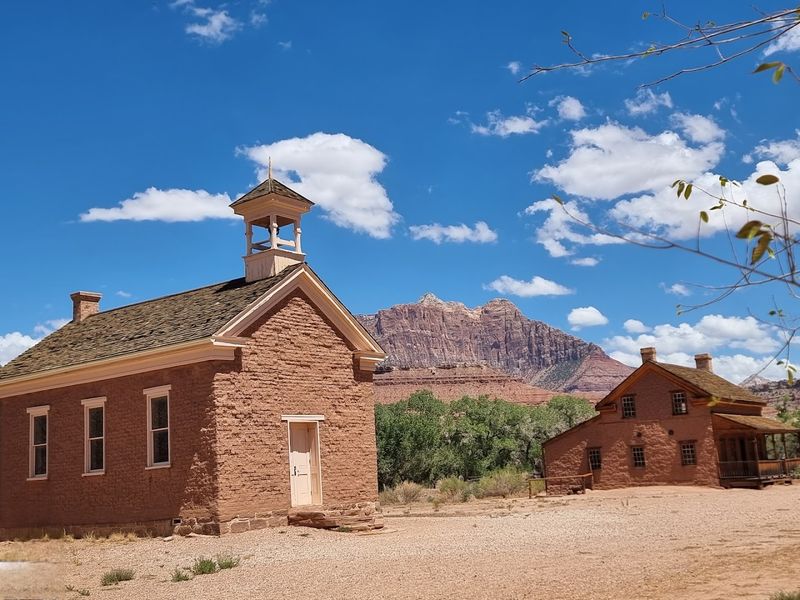
Ghost towns usually go one of two ways. Either they collapse into photogenic rubble that draws drone photographers, or someone decides the history is worth saving and rolls up their sleeves.
Grafton landed firmly in the second category, thanks to the Grafton Heritage Partnership, which manages the site and funds ongoing restoration through donations.
The work they have done is visible and genuinely impressive. Four homes have been fixed up to a standard that allows safe interior exploration.
Informational signs are posted throughout, offering context on the architecture, the families, and the broader story of what it meant to build a life in this particular corner of Utah. The grounds are well maintained, parking is clearly marked, and the whole site operates on a trust model that feels refreshingly old-fashioned.
Admission is free, but donations are actively welcomed and directly support continued preservation. The website at graftonheritage.org offers additional background for anyone who wants to do a little reading before or after the visit.
This is not a place running on a municipal budget or a corporate sponsorship. It survives because people who care about it keep showing up and contributing what they can.
Insider Tip: Bring a few dollars to donate. The site earns it, and the gesture keeps the buildings standing for the next visitor.
Making It a Proper Half-Day Outing
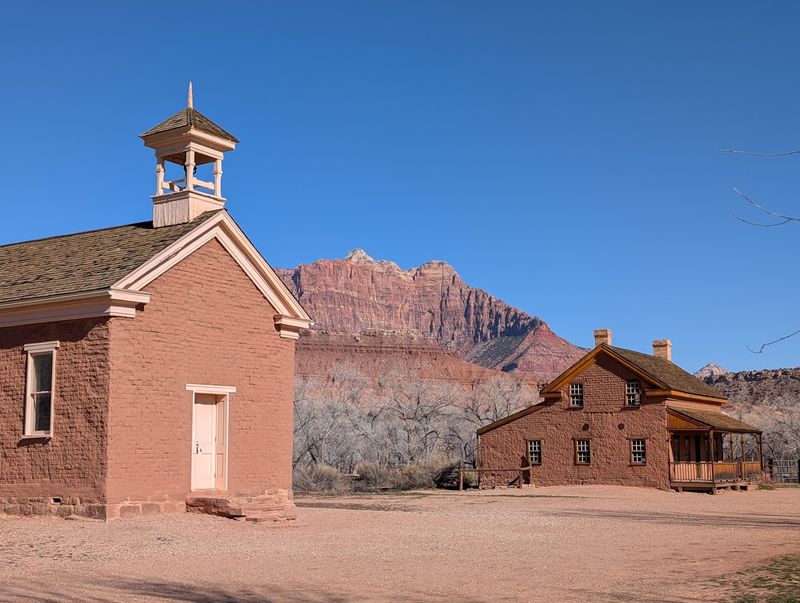
Grafton works beautifully as a standalone stop or as part of a broader Zion National Park area day. The site sits near Springdale, which serves as the main gateway town for Zion, and the drive out to Grafton takes you along roads that deliver views worth the trip on their own.
Many visitors treat it as a natural complement to a lighter hiking day, the kind of afternoon when the legs need rest but the brain still wants something interesting to chew on.
A typical visit runs about an hour, which is long enough to tour the buildings, read the signs, walk through the cemetery, and take a reasonable number of photographs without feeling rushed. Families with curious kids tend to find the open-entry buildings especially engaging, since children can actually walk inside and imagine the space rather than just looking through a window or a fence.
Couples and solo visitors will appreciate the unhurried pace. There are no guided tours, no ticket lines, and no scheduled programming.
You move at your own speed, which in this landscape, naturally slows down to something close to a comfortable amble. Pair it with a stop in Springdale afterward for a proper meal and you have a low-effort, high-return afternoon sorted without any complicated logistics.
Planning Advice: Allow at least 60 to 90 minutes to see everything without feeling like you are rushing past the good parts.
The Ghost Town That Justifies the Detour
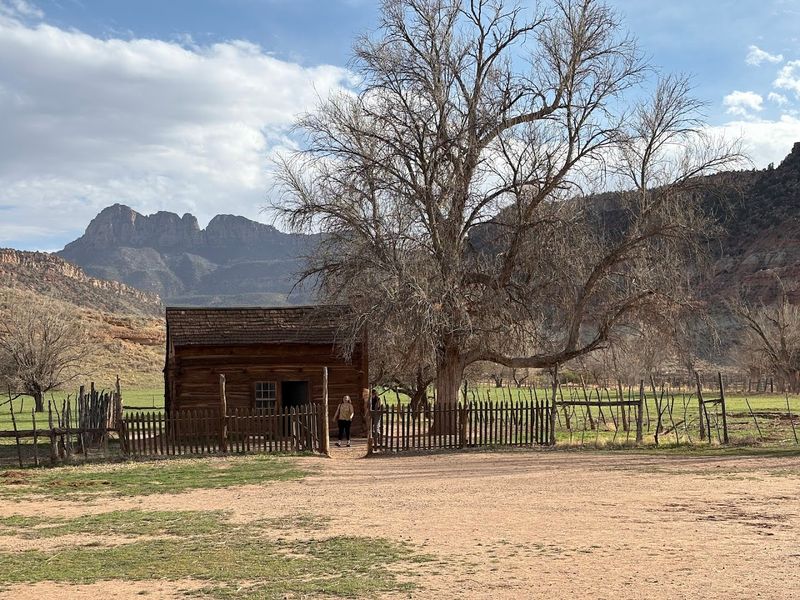
Grafton Ghost Town earns its reputation the honest way, through actual substance rather than manufactured atmosphere. The buildings are real, the history is documented, the landscape is spectacular, and the whole experience costs nothing beyond the fuel to get there and the willingness to navigate a bumpy road without complaint.
That is a genuinely rare combination in a region full of pay-to-enter attractions competing for the same tourist dollar.
The site is open 24 hours, which means early risers can catch it in the soft morning light and late afternoon wanderers can watch the canyon walls turn amber as the sun drops. Both are worth experiencing if the schedule allows.
The 4.5-star average across nearly 1,500 visitor responses reflects a place that consistently delivers on its quiet promise.
Think of Grafton as the trip within the trip. You came to Utah for Zion, or for the red rocks, or for the wide-open sky, and then someone local mentioned a ghost town down a dirt road and you almost skipped it.
Do not skip it. This is the kind of place you describe to people back home and watch their eyes go slightly wide, the best possible outcome for any detour.
Key Takeaways: Free entry, open daily, no tickets required, bring water, skip the restroom stop and you will regret it, and leave a donation on your way out.