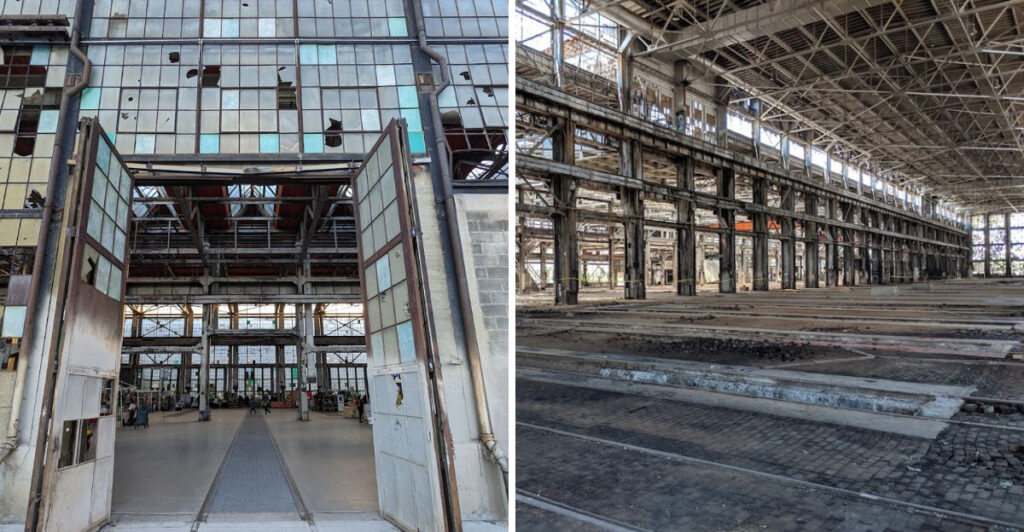
Some buildings whisper their history. This one practically lets it echo off the steel.
The place feels enormous the second you step close, with brick walls, industrial windows, hanging cranes, and ceilings that seem built for a different scale of life. It once carried the weight of railroad work, but today it has a second life that feels surprisingly alive.
Markets fill the old spaces. Light cuts through the windows.
Art and history sit side by side without making a big speech about it. New Mexico is known for desert views and old stories, but this place gives both a harder edge.
You can feel the city’s railroad past in the concrete, the metal, and the shadows. The best part is how little the site tries to hide its age.
It lets the rust, brick, and space do the talking, and they have a lot to say.
Sunlight Through Soaring Steel Windows
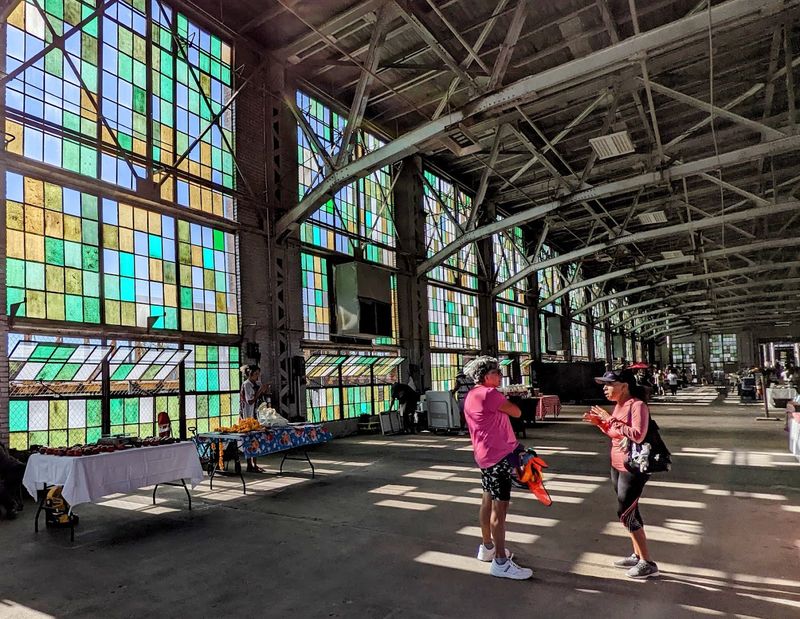
Nobody warned me about the light, and honestly, that might have been the best part.
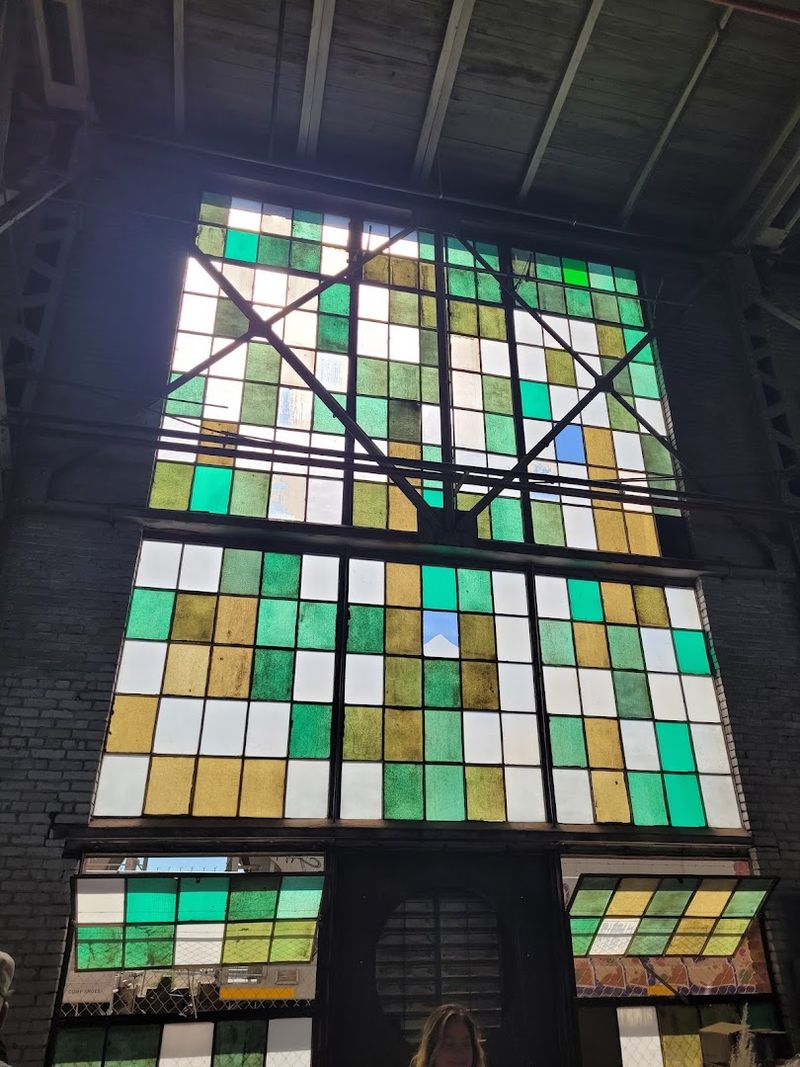
The moment I stepped inside one of the massive structures, I was hit by a wash of color that felt completely out of place in an industrial building, and yet absolutely perfect at the same time.
Huge grids of steel-framed windowpanes, many fitted with colorful plexiglass panels where clear glass once sat, scatter the sunlight into shifting pools of warm and cool tones across the rough concrete floors below.
The effect is genuinely arresting, the kind of visual experience that makes you stop mid-step and just look up.
Every hour brings a slightly different display as the sun moves across the New Mexico sky, meaning no two visits feel quite the same.
The interplay between the rugged old steel frames and the vibrant new panels captures the entire spirit of this place in a single image.
Old meets new, industrial meets artistic, and the result is something that feels almost sacred without trying to be.
Few architectural moments I have encountered anywhere have landed with this kind of quiet, unexpected power at Albuquerque Rail Yards at 777 1st St SW, Albuquerque, NM 87102.
Where Brick Walls Hold Railroad History
Brick does not lie, and the walls here have been telling the truth for over a century.
Many of the structures throughout the complex were built between 1914 and 1924, constructed to handle the relentless demands of railway maintenance at a time when the railroad was the lifeblood of the American Southwest.
Buildings like the Blacksmith Shop and the Fire House still stand with their original brick intact, each one a tangible record of the thousands of workers who passed through these gates every single day.
Running my hand along one of those walls, I found myself genuinely moved by the texture of it, the unevenness, the patches of soot, the sheer weight of accumulated time.
These are not reconstructed facades dressed up for tourists but real working structures that have simply endured.
The preservation of the original brickwork gives the entire site an honesty that polished museum exhibits rarely achieve.
New Mexico has a deep tradition of honoring its layered past, and this complex fits naturally into that tradition.
Every weathered corner here earns its place in the story of a city that grew up around the railroad.
A Grand Hall With Industrial Soul
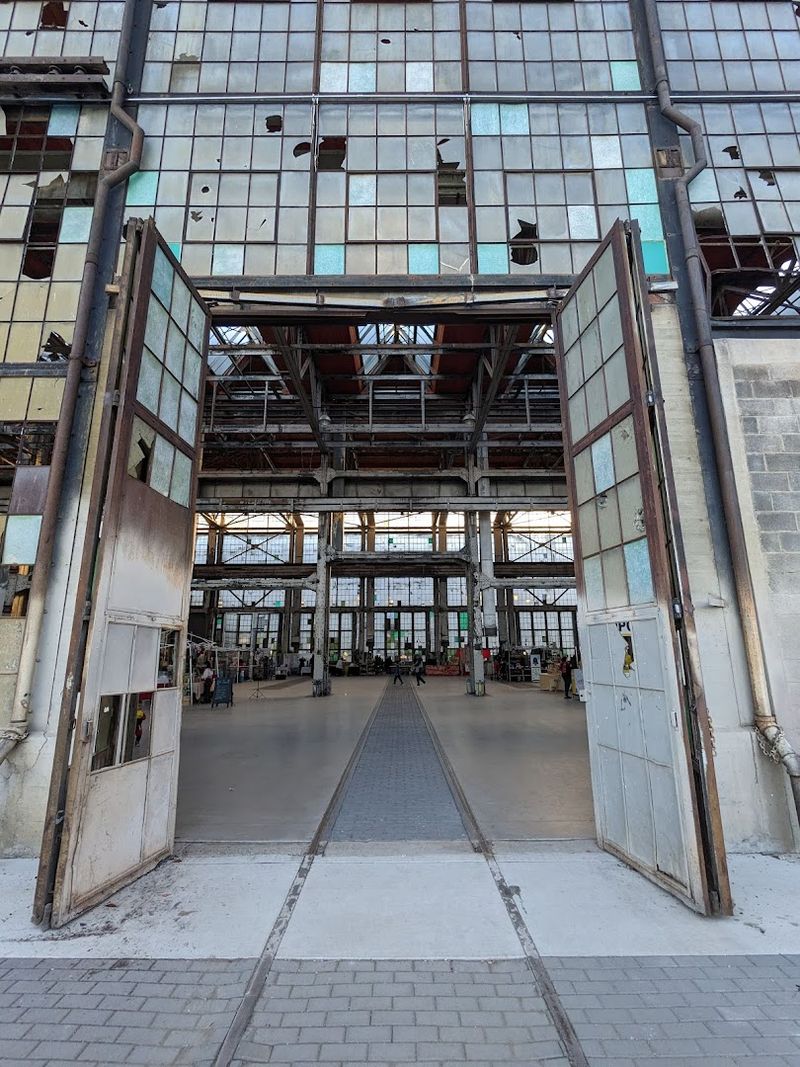
Some spaces make you feel small in the best possible way, and the main Machine Shop here is exactly that kind of place.
At roughly 165,000 square feet, this enormous hall once serviced up to 40 locomotives every single month, a figure that is almost impossible to picture until you are standing inside it.
Two-story traveling cranes, capable of lifting up to 250 tons, still hang overhead as permanent fixtures of the architecture, frozen mid-task like giant industrial relics from another age.
I stood beneath one of those cranes and tried to imagine the noise, the heat, the organized chaos of a full workforce moving through this space at peak production, and found I simply could not do it justice.
The scale defeats the imagination in the most satisfying way.
Today, this grand hall hosts large community events, market days, and cultural gatherings that fill the space with a very different but equally energetic kind of activity.
The soul of the building has not changed so much as shifted, trading mechanical roar for human conversation and live music.
A space this large could easily feel hollow, but somehow it always manages to feel full.
Weathered Beams Under Dramatic Shadows
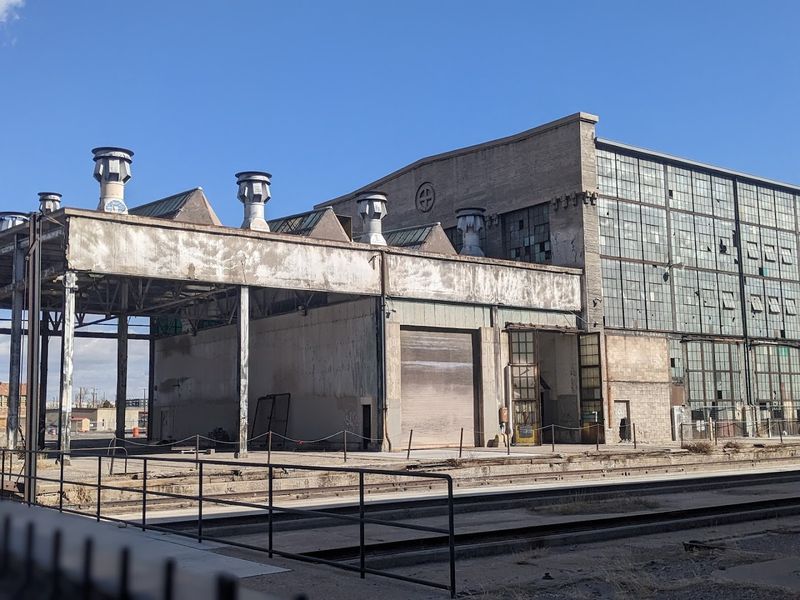
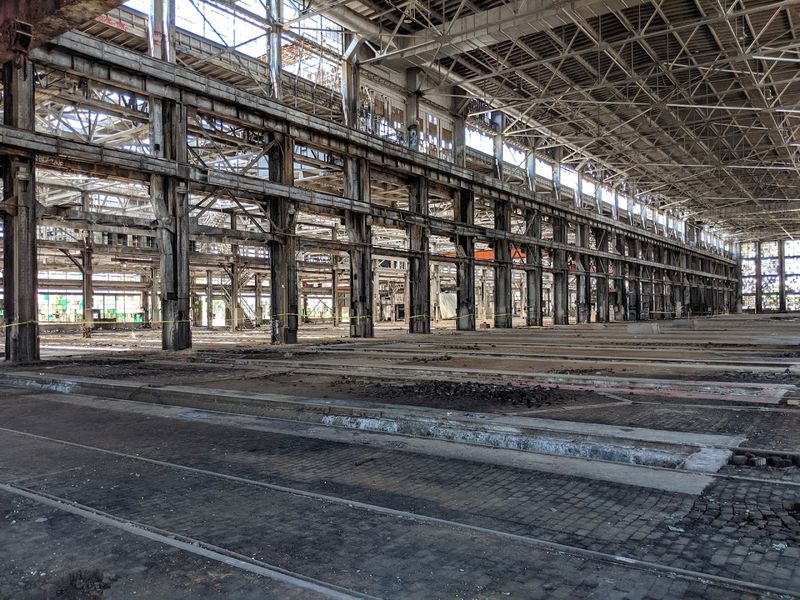
Look up in any of the main structures here and the ceiling becomes the most compelling thing in the room.
The network of weathered beams stretching overhead carries every year of its long life visibly in its grain and color, darkened by decades of heat, steam, and industrial grime that no restoration effort has tried to scrub away.
As the light shifts through the day, those beams throw long, angular shadows across the floors and walls below, turning the interior into something that feels more like a living painting than a building.
Parts of the roofing above the boiler and tender repair shops have been carefully replaced to protect the structure, but the original framework underneath was deliberately kept intact.
That decision to preserve rather than replace gives the space its particular emotional weight.
You get the sense that the people behind the restoration genuinely respected what they found here and chose to work around it rather than over it.
The aged timbers are silent witnesses, holding the memory of an era when this place ran at full industrial capacity day and night.
Every shadow they cast feels like punctuation in a very long and interesting sentence.
Inside A Monument To New Mexico’s Rail Past
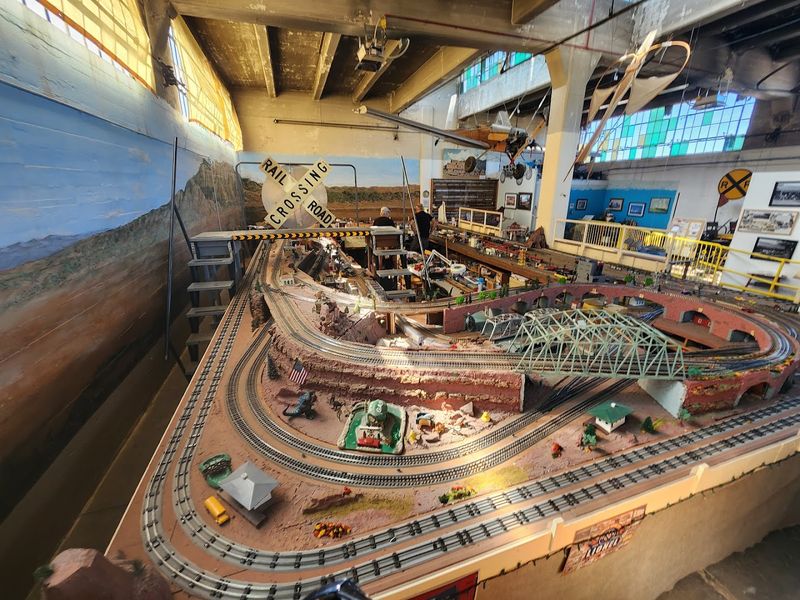
At its peak, this complex employed nearly one quarter of the entire workforce of Albuquerque, a statistic that reframes how you look at every building on the property.
The railroad did not just pass through this city; it built it, shaped it, and gave it an economic identity that lasted for decades.
The Wheels Museum, located on-site, preserves that story with antique vehicles, model trains, an airplane, a fire truck, photos, and smaller artifacts that bring the daily reality of rail yard life into sharp focus.
I spent longer in there than I planned, which seems to be a common experience based on the conversations I overheard between other visitors doing the same thing.
What struck me most was how the exhibits do not romanticize the past but simply present it, letting the objects speak for themselves without excessive commentary.
New Mexico has always had a complicated and fascinating relationship with industry and land, and this site sits right at the center of that history.
Walking through the museum and then stepping back out into the rail yard itself creates a seamless connection between the artifacts inside and the living structures outside.
The monument and the place are one and the same thing.
Beautiful Old Bones Beneath The Desert Light
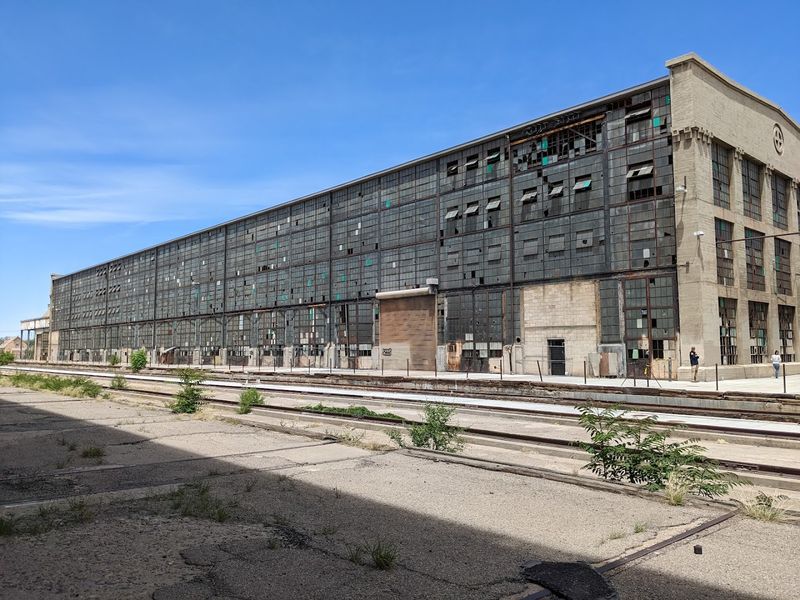
There is a specific quality of light in the high desert that makes old structures look both fragile and eternal at the same time, and this complex catches that light better than almost anywhere I have visited.
The buildings here were considered technologically advanced for their era, pushing industrial design into territory that most facilities of the time had not yet attempted, and that ambition is still readable in the proportions and structural choices throughout the site.
Despite years of disuse before the restoration effort began, the core architecture held together with a stubbornness that seems almost intentional in hindsight.
Strong bones, as builders say, and these structures have them in abundance.
The juxtaposition of the harsh, bright desert sky pressing down on these weathered industrial forms creates a visual tension that photographers and casual visitors alike seem to find irresistible.
I took more pictures here than I planned for, and none of them fully captured what the eye actually sees in person.
The rugged elegance of these buildings does not translate easily into a frame.
You really do need to stand inside the space and let it work on you directly to understand what all the quiet fuss is about.
A Historic Space Reimagined For The City
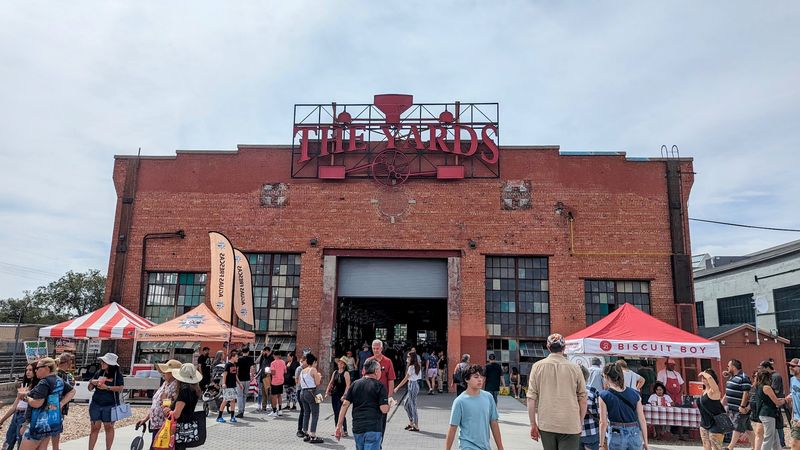
Adaptive reuse is one of those planning terms that sounds dry until you see it working beautifully in person.
The Rail Yards Market runs from May through October on Sunday mornings and draws a genuinely diverse crowd of local vendors, artists, food trucks, bakers, jewelers, and produce growers who fill the industrial spaces with color, noise, and the smell of fresh food.
I wandered through the stalls on a warm Sunday and found microgreens, handmade jewelry, fresh tacos, baked goods, and live music all happening simultaneously within the same weathered brick walls that once echoed with the sound of machinery.
The contrast is not jarring but surprisingly harmonious, as if the building always knew it would end up serving the community in this particular way.
Beyond the market, part of the Rail Yards is being transformed into a media production and education hub to support the production industry that New Mexico has attracted.
The site has already served as a filming location for major productions, adding another layer to its evolving identity.
The redevelopment plan keeps the surrounding neighborhoods in mind, aiming to connect rather than isolate.
History and forward momentum rarely share a space this gracefully.
Towering Ceilings With Grit And Grace
A ceiling can define how a space feels more than any other architectural element, and the ceilings here make an argument for that idea that is hard to dispute.
The main repair shops climb to heights that feel almost disorienting when you tilt your head back, a vertical scale that was engineered for function but landed squarely in the territory of the spectacular.
Raw concrete, exposed metalwork, and structural steel all reach upward together in a way that is simultaneously rough and refined, carrying grit and grace in equal measure.
New roofing has been installed over some of these soaring spaces to ensure their continued use without compromising the visual drama of the interiors below.
The result is a series of rooms that feel both protected and open, sheltered but not enclosed.
Art installations placed within these spaces benefit enormously from the vertical scale, which gives even modest works a monumental presence they might not carry elsewhere.
Community events held here take on a heightened atmosphere simply by virtue of where they happen to be taking place.
The Albuquerque Rail Yards belong to a place where the ceiling alone is worth the visit.