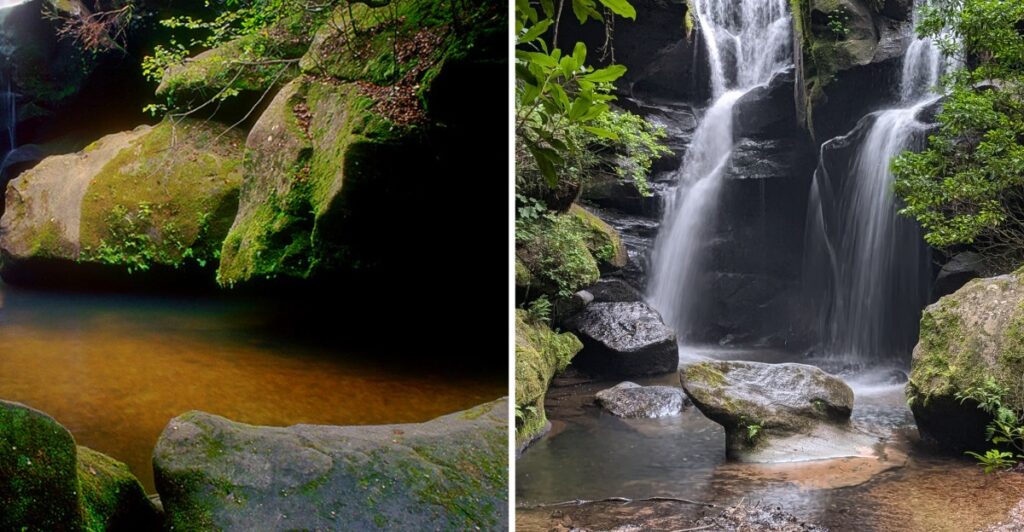
This canyon has a night shift.
During the day, you are down among sandstone walls, waterfalls, and trees that make the world above feel surprisingly far away.
Then darkness changes the assignment.
Tiny lights begin appearing along damp canyon walls, and suddenly the flashlight is not the most interesting glow in sight.
That little after-dark surprise is only part of what makes this Alabama gorge feel so removed from the countryside above it.
The main trail stays down on the canyon floor, where giant rocks and shaded passages keep interrupting any attempt to hurry.
Good shoes are the smart move.
So is giving yourself time.
Personally, I would want to see the canyon twice.
Once before sunset, and once after it starts glowing back.
A National Natural Landmark Since 1974
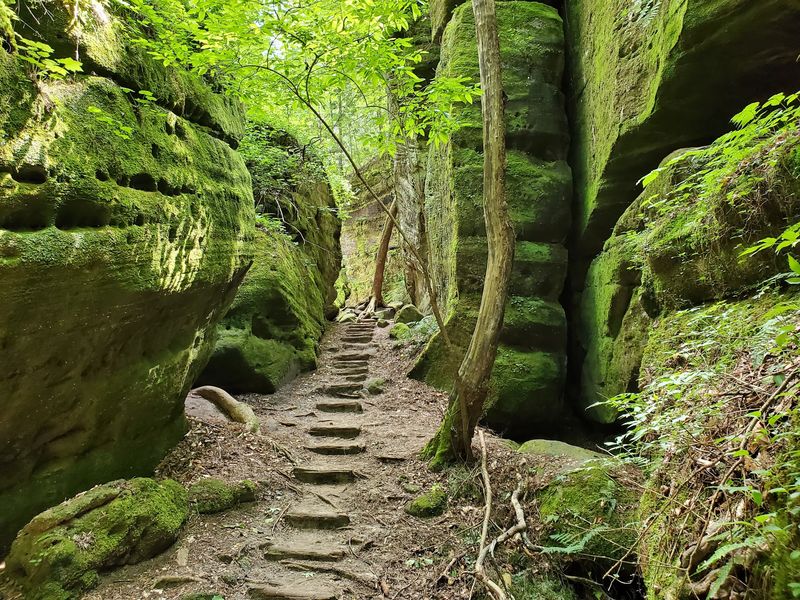
Dismals Canyon was designated a National Natural Landmark in 1974.
The canyon is privately owned rather than part of a state or national park system. Admission is charged for access to the conservatory, and operating days can vary through the year, so checking the current schedule before driving to Phil Campbell is a sensible first step.
Near the entrance, the visitor area includes the Country Store and Soda Fountain. That gives you a place to stop before or after the trail without needing to leave the property.
Daytime canyon access and night-tour arrangements follow separate schedules, so combining both can take a little planning. Leave enough time between the daytime hike and an evening program rather than treating them as one continuous walk.
The 85-acre preserve protects sandstone formations, old-growth forest, stream habitat, native plants, and the damp canyon environment used by Dismalites.
If you are making a full day of it, begin with the canyon-floor trail while there is plenty of daylight. That leaves time for a break before an evening tour and keeps the more demanding rocky sections out of the final minutes before dark.
The Canyon-Floor Trail Runs About A Mile And A Half
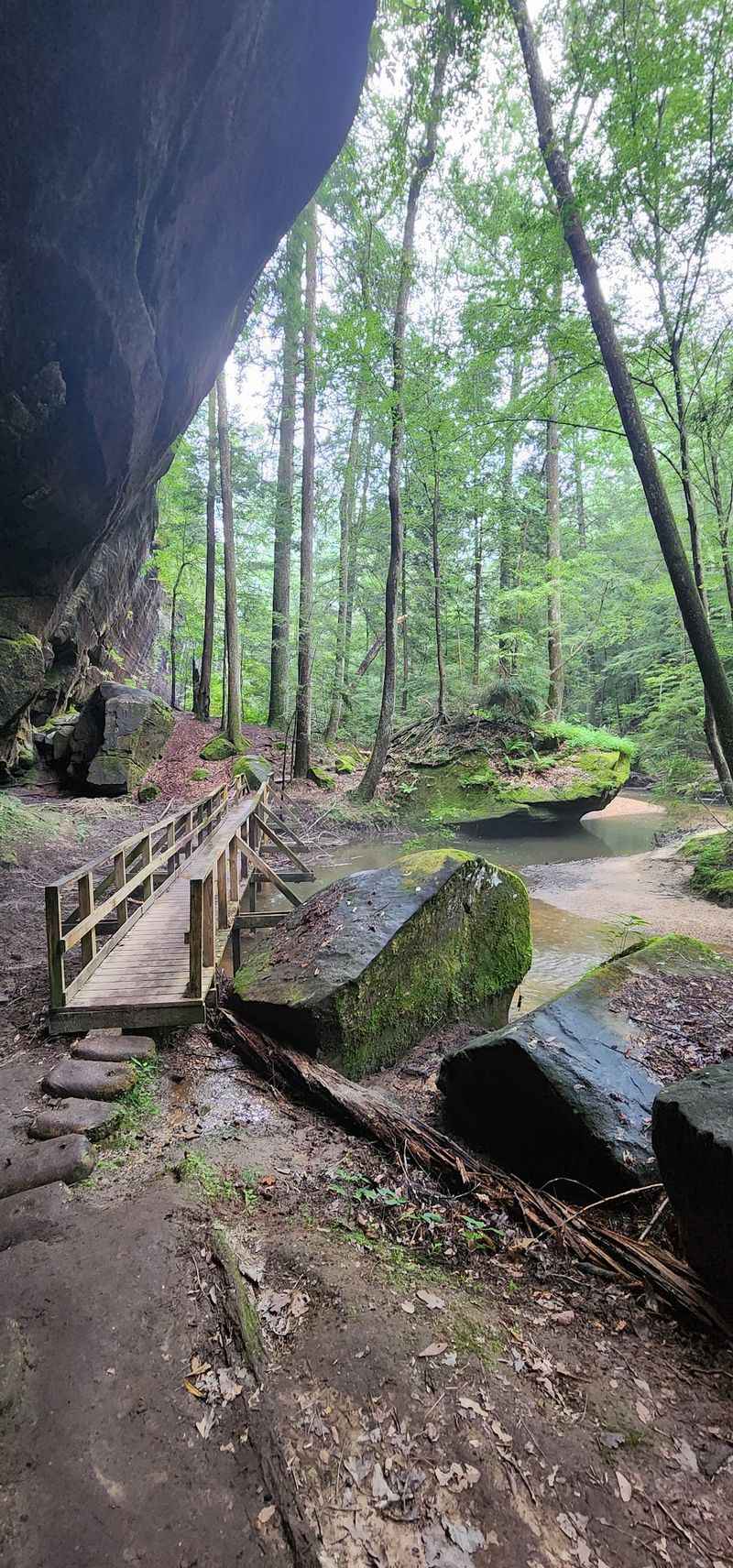
The main canyon-floor trail runs about 1.5 miles, but this is not a flat paved loop.
Expect stairs, large roots, rocks, mud, slippery surfaces, and places where water may reach ankle depth. Bridges are limited, so the route asks you to pay attention to footing rather than simply follow a smooth walkway.
Allow a couple of hours if you want time to move carefully, stop at major formations, and take photos without hurrying. The distance is short enough to sound easy on paper, yet the terrain makes pace more important than mileage.
Wear shoes you do not mind getting wet or muddy. Secure footwear with useful traction makes more sense than anything slick-soled, especially after rain or near stream crossings.
Bring drinking water even though much of the canyon stays shaded. Humidity, stairs, and uneven ground can make a short trail take more energy than its mileage suggests.
The route is not wheelchair accessible. If you are visiting with children, consider their comfort with stairs, wet rock, narrow passages, and uneven footing before heading below the rim.
A trail map can help with orientation. Move steadily, watch your footing, and give yourself enough time to stop without holding the whole visit to a strict hiking pace.
Rainbow Falls Marks The Entrance Of Dismals Branch
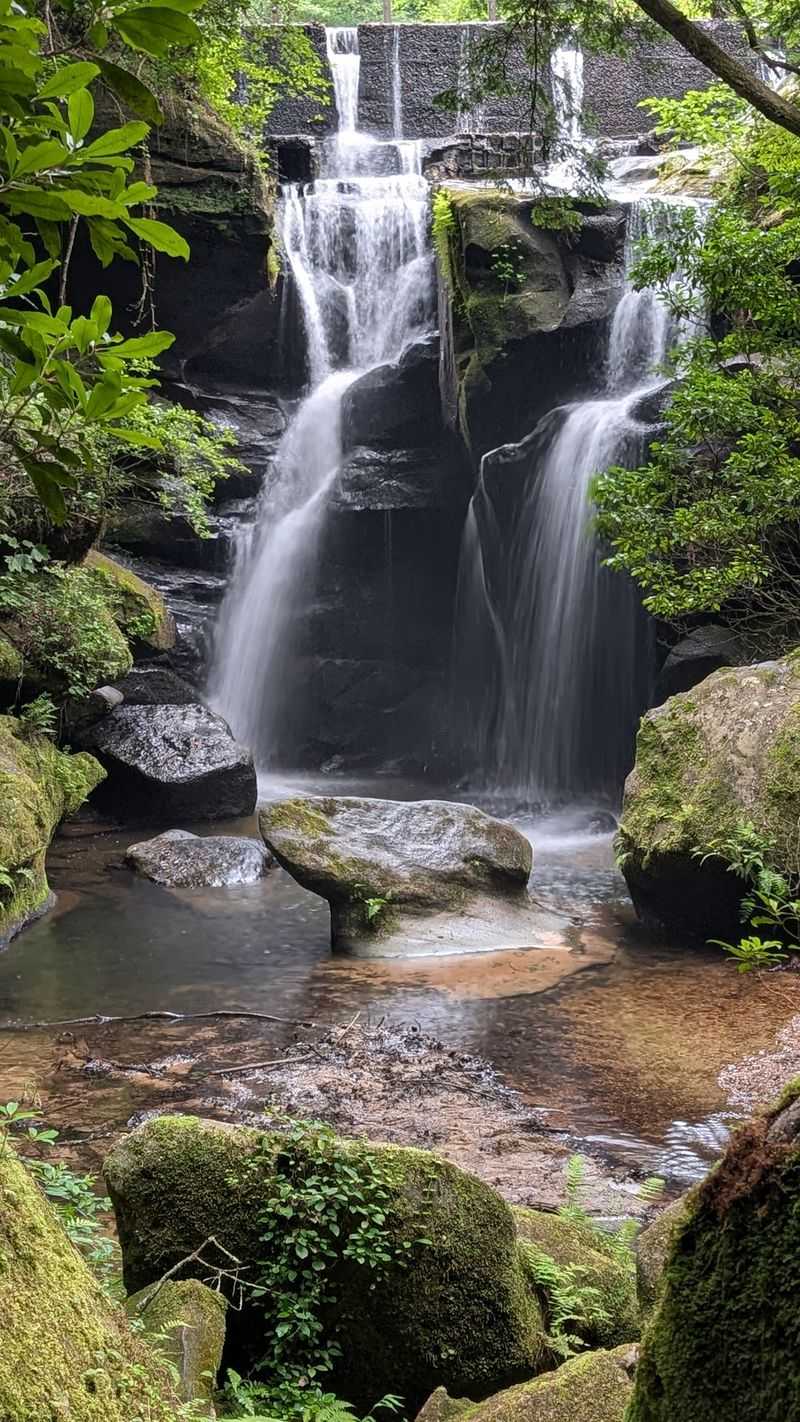
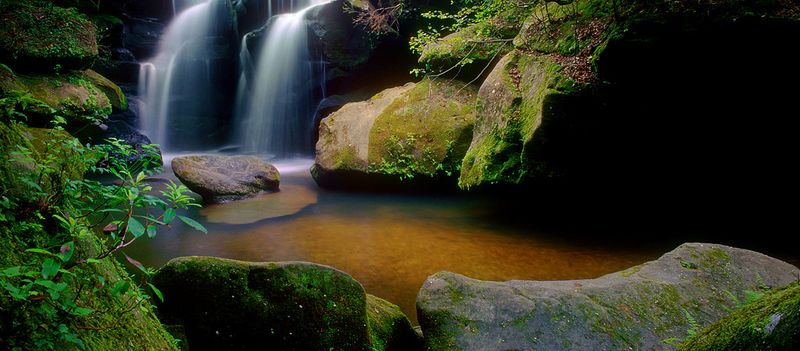
Rainbow Falls marks the point where Dismals Branch enters the canyon.
Water spills over sandstone near the upper end of the gorge, with moss, trees, and rock surrounding the falls.
The falls also have a piece of local history attached to them. Water here once powered a mill and water wheel before flooding destroyed them in the 1950s.
Keep your footing in mind around the falls. Wet rock, moss, and uneven surfaces can be slick, so stay on the intended route rather than reaching for a closer angle from unstable ground.
If you are carrying a camera, pack light enough to keep your hands available for balance on stairs and rocky sections.
Take a moment to look at how the stream enters the gorge before continuing farther along the trail. From here, Dismals Branch remains part of the route as the canyon narrows, widens, and passes between larger sandstone formations.
The waterfall makes a natural early stopping point, but there is plenty of trail left beyond it, including the boulders, grottos, forest, and streamside sections deeper in the canyon.
House-Size Sandstone Boulders Line The Route
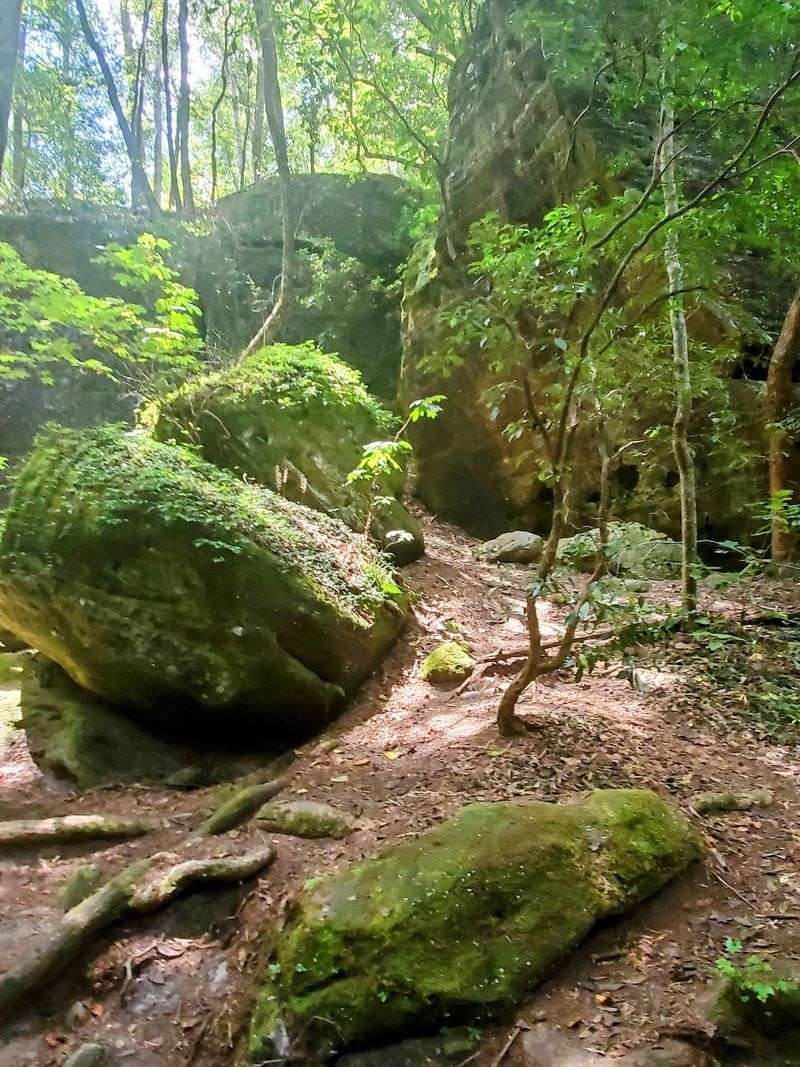
Some sandstone formations in Dismals Canyon are as large as houses.
The trail winds among huge boulders, natural bridges, grottos, overhangs, and narrow rock passages. In places, the route feels compressed by stone before opening again into broader forested sections.
The sandstone landscape developed over immense spans of geological time as rock fractured, shifted, weathered, and eroded.
Pack light enough to move comfortably through tighter passages. A bulky backpack can become awkward where the route narrows or where careful steps are needed around rock.
Use the formations as places to slow down rather than as climbing features. Staying on the trail protects both visitors and the canyon.
One section may place you beside a single massive block of sandstone, while another sends the path through a narrower opening where the rock walls sit much closer together.
Damp conditions can make stone surfaces slick, particularly near the stream or after rain. Short steps and secure footing matter more here than keeping a quick pace.
If you stop for photos, choose a stable place on the marked route before reaching for a camera or phone. The boulders are easier to appreciate when you are not trying to balance on wet rock at the same time.
Moss Ferns And Hemlocks Fill The Shaded Gorge
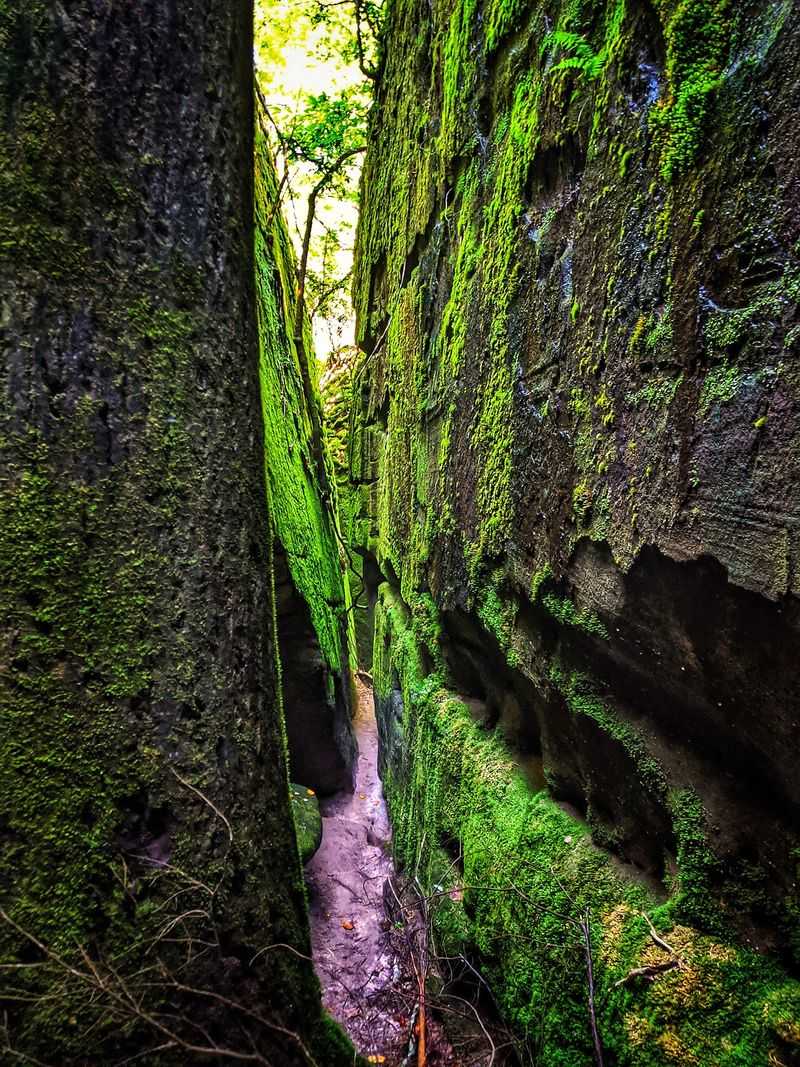
Below the rim, the canyon supports a cooler, wetter forest community than the surrounding uplands.
Hemlock, tulip poplar, sweetgum, bigleaf magnolia, and beech grow here alongside mosses, ferns, and other native plants. Shaded sandstone walls and the stream corridor help maintain the damp conditions used by these species.
Hemlocks grow among the broadleaf trees, ferns, and mosses along the canyon floor.
Moss covers many shaded rock surfaces, while ferns grow from cracks, ledges, and moist ground. The canyon keeps much of its shaded character throughout the trail.
Stay on the marked route and avoid touching, peeling, or removing moss, plants, rocks, or other natural features.
If photography is part of the visit, work from the trail rather than stepping onto moss-covered rock or planted areas for a better angle.
Slow down enough to notice the smaller details between the larger formations. Ferns can grow beside enormous boulders, moss follows damp rock faces, and tree roots work around stone close to the stream.
The combination of mature trees, shade, sandstone, and water keeps this section visually different from the open landscape above the canyon rim.
Dismals Branch Runs Through The Gorge
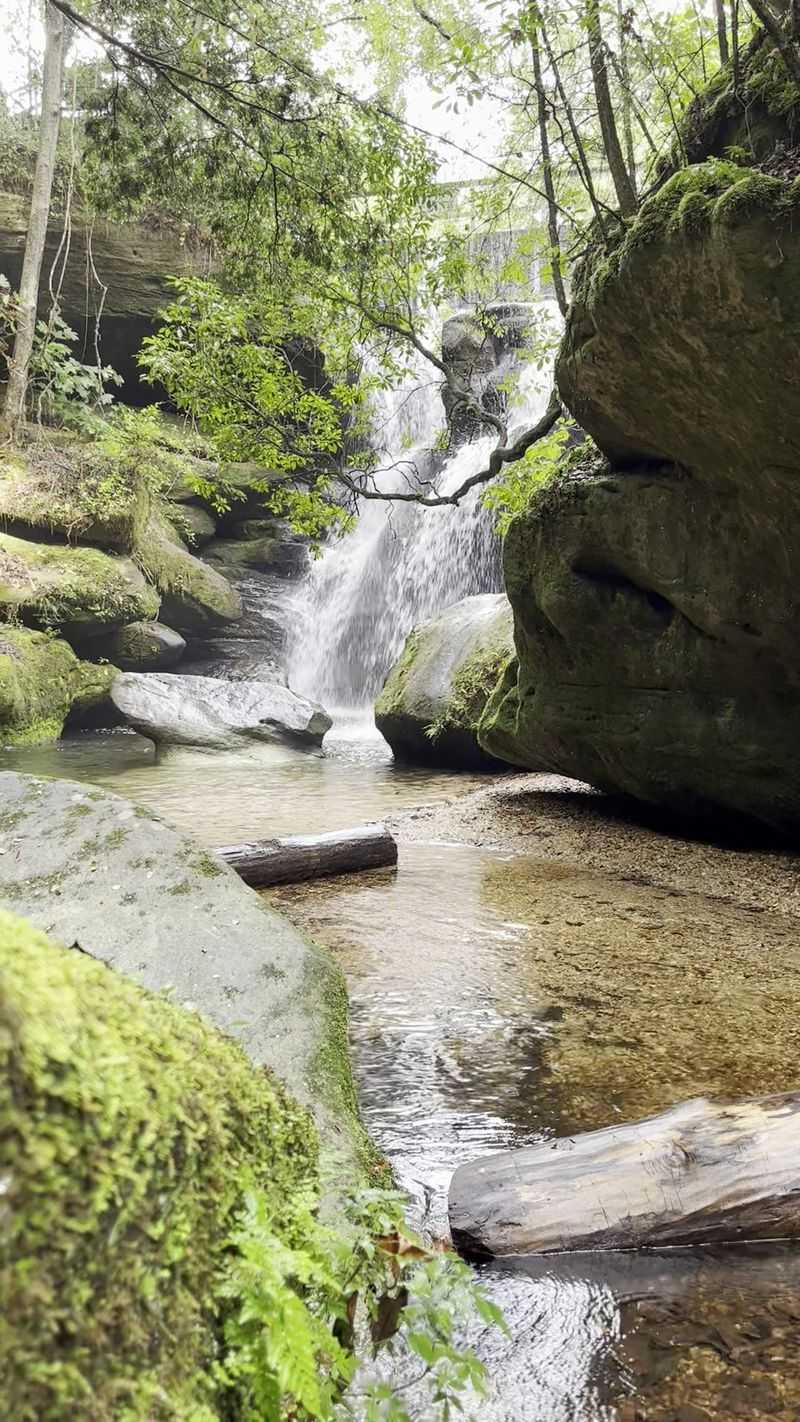
Dismals Branch runs through the gorge and stays close to much of the canyon-floor trail.
The stream enters at Rainbow Falls and continues past rock formations, shaded banks, and forested sections. Depending on conditions, parts of the route may involve wet or muddy footing and ankle-deep water.
Shoes with secure traction that can handle mud and water make the trail easier to manage. Pack an extra pair for the drive home if you would rather not spend the return trip in damp footwear.
Wooden crossings appear in some places, but bridges are limited, so expect much of the route to remain close to natural ground.
Wildlife may also appear near the stream and along the canyon floor. Snakes and other animals live in the area, so watch where you place your hands and feet and leave wildlife undisturbed.
The visitor entrance is at 901 Hwy 8, Phil Campbell, AL 35581. Use that address for the conservatory itself and confirm the current operating schedule before setting out.
As you continue beside Dismals Branch, the water links several major parts of the canyon. Falls, damp rock, moss, forest, and narrow sandstone passages all appear within the same stream corridor.
Give wet sections extra time rather than trying to keep shoes dry at all costs. The trail is built around natural canyon terrain, not around avoiding every patch of water.
After Dark Dismalites Glow Along The Canyon Walls
After sunset, Dismals Canyon offers guided tours focused on Dismalites, the bioluminescent larval stage of Orfelia fultoni.
These tiny native insects produce a blue-green glow and live in damp areas along the canyon walls. Their light is faint, so tours include periods when flashlights are turned off, and visitors allow their eyes to adjust.
Guided night tours typically last about 45 minutes. Reservations are highly recommended because groups are kept small, and the program operates seasonally rather than every night of the year.
Bring a flashlight, preferably one with a red filter. Red light preserves night vision better than bright white light while the group moves through the dark canyon.
The strongest viewing periods generally fall in late April through May and again from late September into early October, though conditions and activity can vary within those windows.
Night tours are not suited to very small children. Older children should be comfortable following instructions and moving over rocky terrain after dark.
The same roots, stone, stairs, and uneven surfaces crossed during daylight are still there at night, so secure footwear matters just as much for the evening program.
For the easiest schedule, hike the canyon during daylight first and return for a night tour only if the terrain feels comfortable. By then, Rainbow Falls, Dismals Branch, the boulder passages, and the general shape of the canyon will already be familiar.