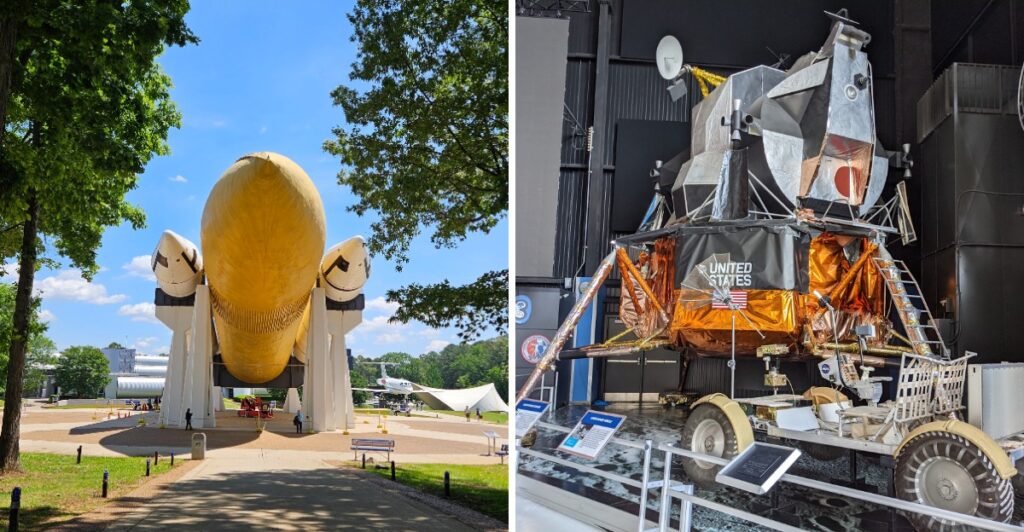
A real Saturn V rocket hangs overhead inside one Alabama building, and only three authentic ones survive anywhere. It’s a National Historic Landmark, and the fact that it fits indoors still rearranges my brain a bit.
This one was a full-scale test vehicle for the Apollo program, built with stages never meant to fly. Outside, a full-scale replica stands upright against the sky, so one visit delivers two Saturn Vs.
Kids can crawl through a space station replica and invent gadgets in a hands-on lab. Grown-ups get a tower ride that launches them 140 feet straight up.
Between the rocket and the lab, I’m already shopping for a helmet in my size. Astronauts trained for years, and this tower gives you the short version in 2.5 seconds.
Stand Under A Moon Rocket And Try Not to Gasp
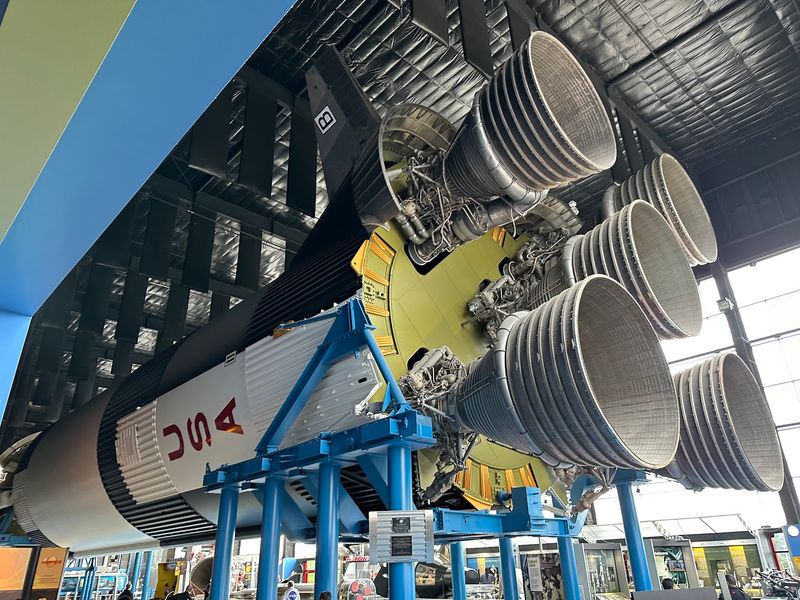
Three hundred and sixty-three feet of rocket is a lot to fit under one roof. The U.S. Space & Rocket Center pulled it off in the Davidson Center for Space Exploration.
Inside, you’ll find one of only three authentic Saturn V rockets left anywhere on Earth. It’s a National Historic Landmark, and it earned that title.
This particular rocket was a test vehicle. It was built as a full-scale test vehicle for the Saturn V program, using test stages that were not intended for flight.
Restoration work on the indoor Saturn V was completed before its public display in 2008. That means the rocket looks sharp for its age, which is more than most of us can say.
The rocket lies on its side, split into stages. You can walk its full length and see each section up close.
Start at the giant engine bells if you want the biggest reaction. Then stroll toward the nose and feel how far you’ve traveled.
Give yourself time here instead of rushing to the next exhibit. Kids and adults both tend to look up a lot, so watch your step.
Bring a wide-angle camera setting if your phone has one. Fitting this whole rocket into one photo is its own small mission.
Rocket Park Is Basically A Garden That Grows Toward Space
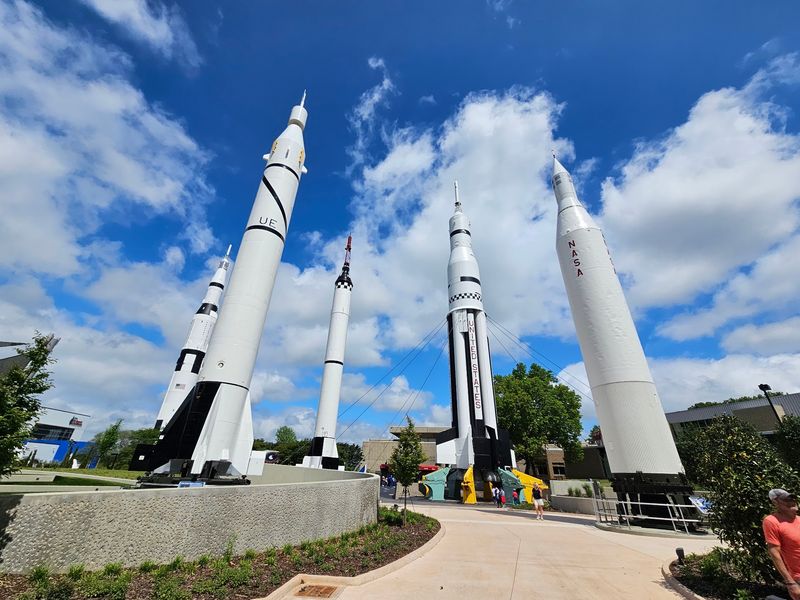
Most gardens grow tomatoes. This one grows rockets, and they’re all pointed straight at the clouds.
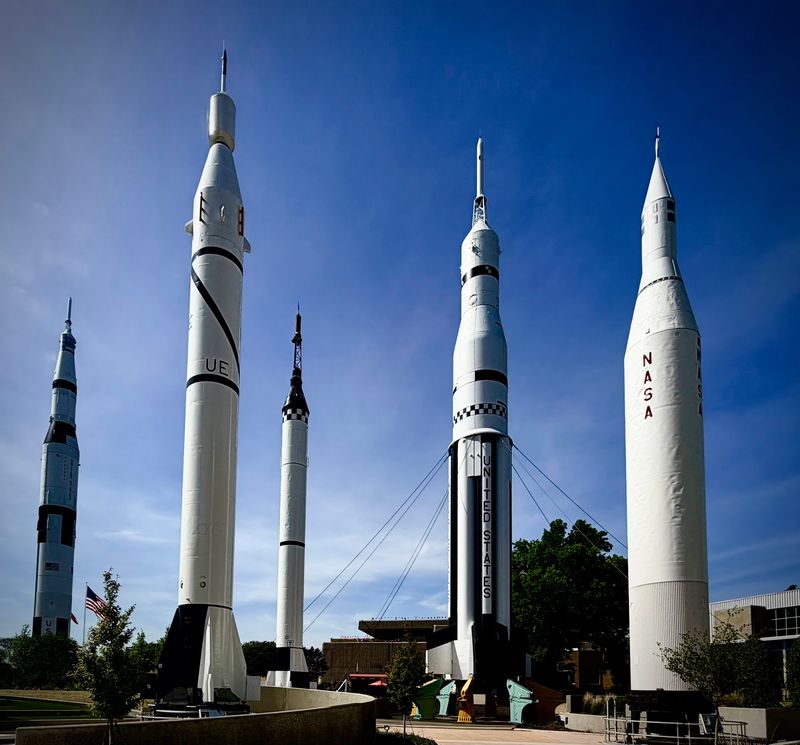
Rocket Park sits outdoors and shows off a lineup of real space history. You’ll spot the Mercury Redstone, Juno II, Jupiter, and Jupiter C.
The U.S. Army Redstone and Saturn I stand in the collection too. A section of the SLS Core Stage Pathfinder joins them, connecting the past to today.
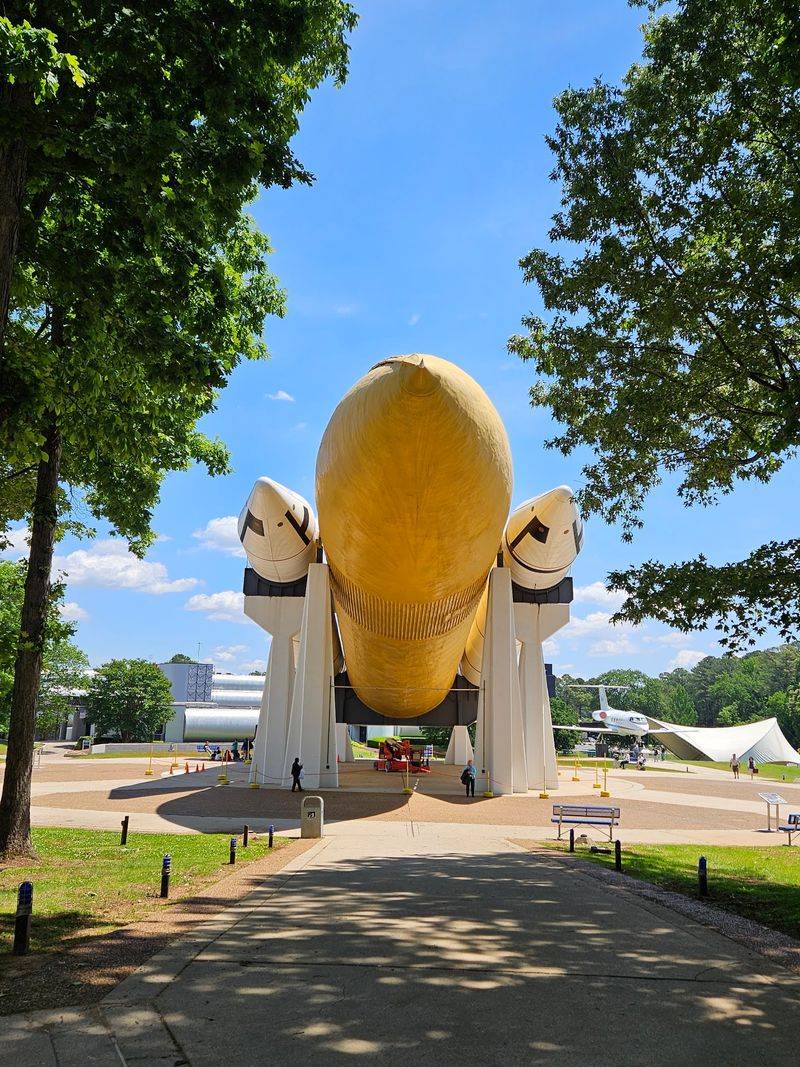
Nearby, the full-scale Saturn V replica towers over everything. It’s a landmark you can see well before you park.
Walking through here feels like flipping through a timeline. Early rockets look slim and simple, then the sizes grow dramatically as you go.
Huntsville, Alabama, played a huge role in building many of these machines. The city earned its nickname, Rocket City, for good reason.
Plan this part for a comfortable time of day. Summer sun in the South can be fierce, so morning visits feel easier.
Wear good shoes and carry water. You’ll want to stop for photos often, and the rockets make patient models.
Your Stomach Will Have Opinions About the Moon Shot
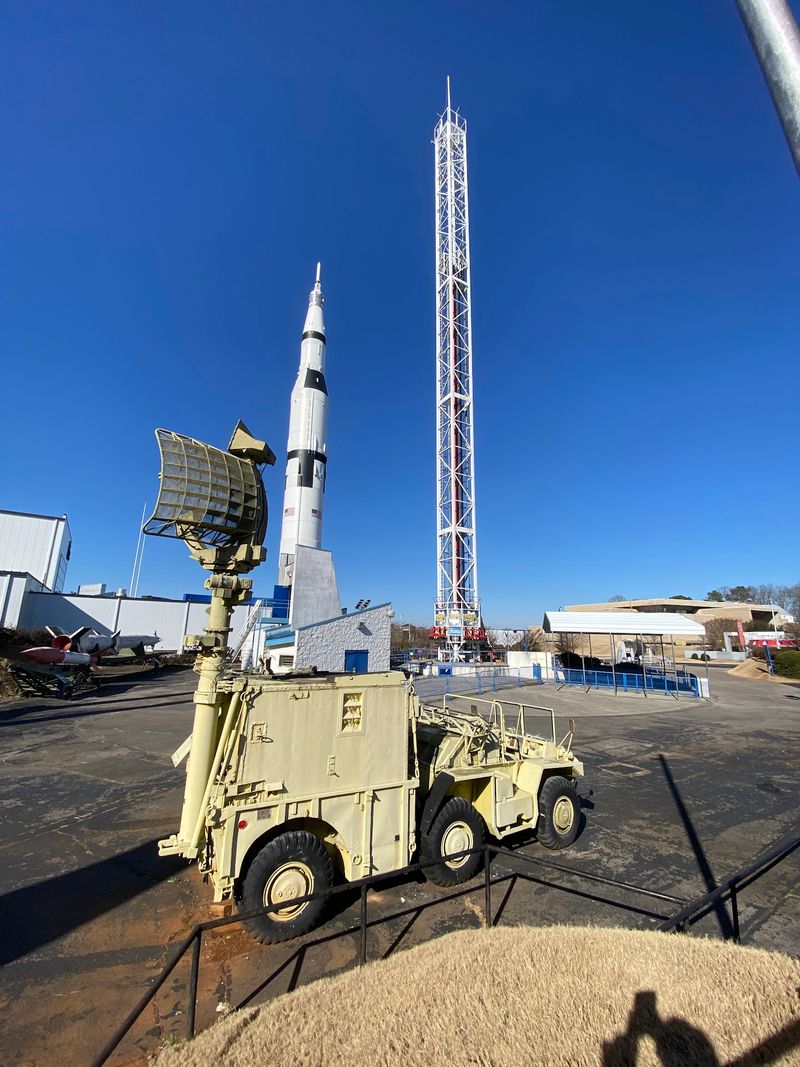
One hundred and forty feet in 2.5 seconds. That’s the Moon Shot, and it doesn’t ask if you’re ready.
Riders feel 4 Gs of force on the way up. Then comes a brief moment of weightlessness that makes everyone laugh or yell, sometimes both.
You’ll need to be at least 54 inches tall to ride. It runs when temperatures sit between 50 and 101 degrees and the weather cooperates.
Prefer spinning to launching? The G-Force Accelerator simulates three times the force of gravity, with a 48-inch height minimum.
The Multi-Axis Trainer tumbles you in several directions, and 48 inches or taller is suggested. Other options include the 1/6th Gravity Chair and the Micro-Gravity Wall.
The 5 Degrees of Freedom and Hanging Harness round out the list. These carry a 260-pound maximum weight limit.
The Moon Shot and G-Force Accelerator are included with general admission, while certain other simulator experiences cost extra. Picking one or two favorites keeps the day fun and your wallet calm.
Eat lunch after the rides, not before. Trust the physics on this one.
Live Like An Astronaut For A Few Minutes In The Space Station Exhibit
Ever wonder where astronauts sleep, eat, or brush their teeth? The International Space Station: Science on Orbit exhibit answers those questions in full size.
It features full-scale mockups of station modules. You can see how crews live and work while circling the planet.
Seeing the tight spaces helps everything click. Suddenly, sharing a bathroom with siblings doesn’t sound so tough.
The exhibit shows the science side too. Astronauts run experiments up there, and the displays explain why that work matters back home.
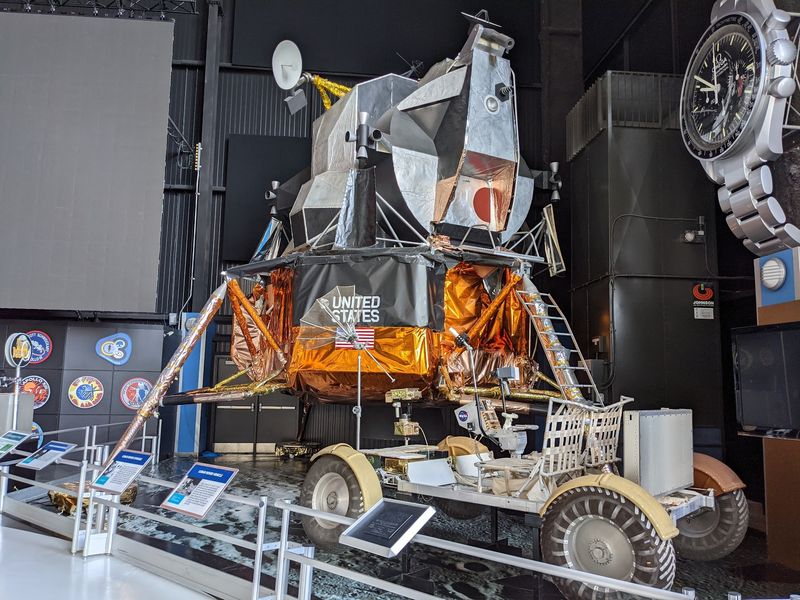
History fans have more to explore nearby. The Skylab orbital workshop trainer gives a look at America’s first space station program.
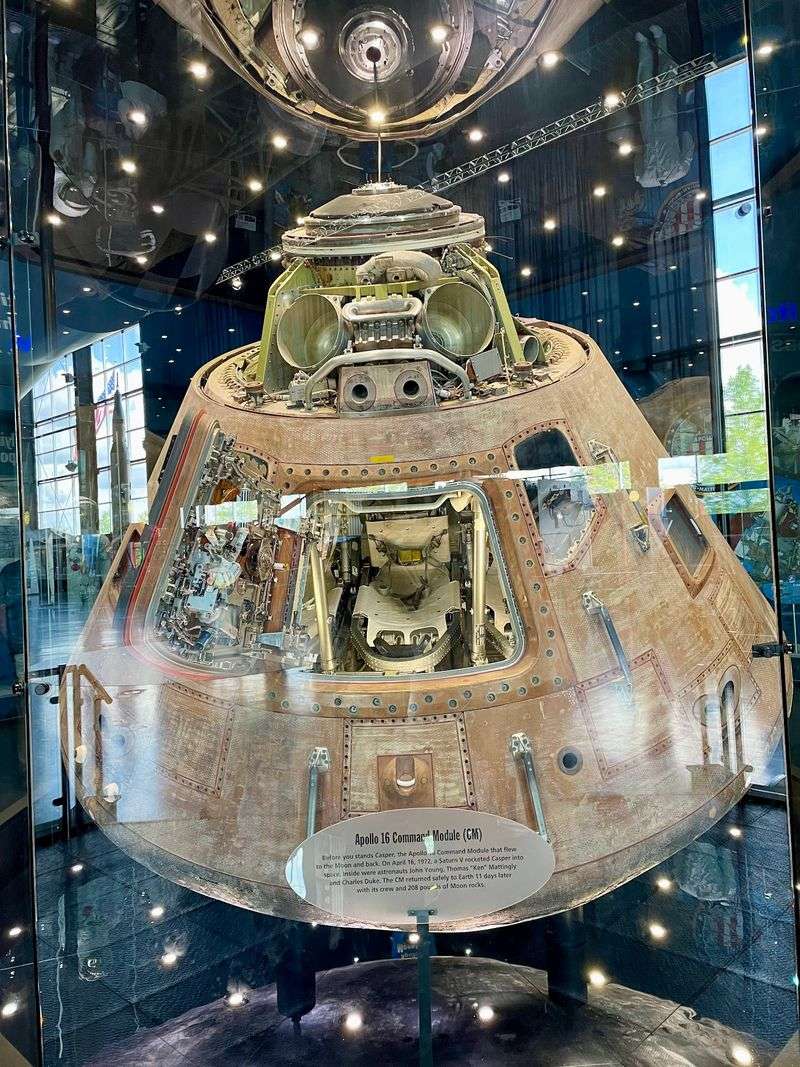
The Apollo 16 Command Module is on display as well. It’s a real spacecraft that carried astronauts, and it’s smaller than most people expect.
Don’t skip the moon rock sample either. It’s a tiny piece of another world, and it traveled a long way to sit there.
Take your time reading the signs in these areas. The stories behind the hardware are often the best part of the U.S. Space & Rocket Center.
Little Explorers Get Their Own Moon To Climb Around On
Tiny astronauts need room to roam. KidSpace and Kids Cosmos were built just for them.
Young visitors can explore a simulated lunar surface at KidSpace. They can also slide and crawl through a replica of the International Space Station.
That’s a smart move for parents of wiggly kids. Reading museum signs is great, but exploring a simulated lunar surface is better when you’re six.
Over at Spark!Lab, the whole family becomes inventors. It’s a hands-on workspace that walks you through the process of creating something new.
Activities include Invent-A-Vehicle and Marble Run. Both turn science ideas into building challenges that feel like playtime.
Grown-ups often get pulled into these projects too. Nobody’s judging if your marble run is more ambitious than your child’s.
Plan breaks in these areas between the big exhibits. They give younger kids a chance to burn energy before the next round of rockets.
Families with toddlers and school-age kids can both find something here. That mix makes the museum easier to enjoy as a group.
The Sky Gets A Whole Lot Closer In The Planetarium
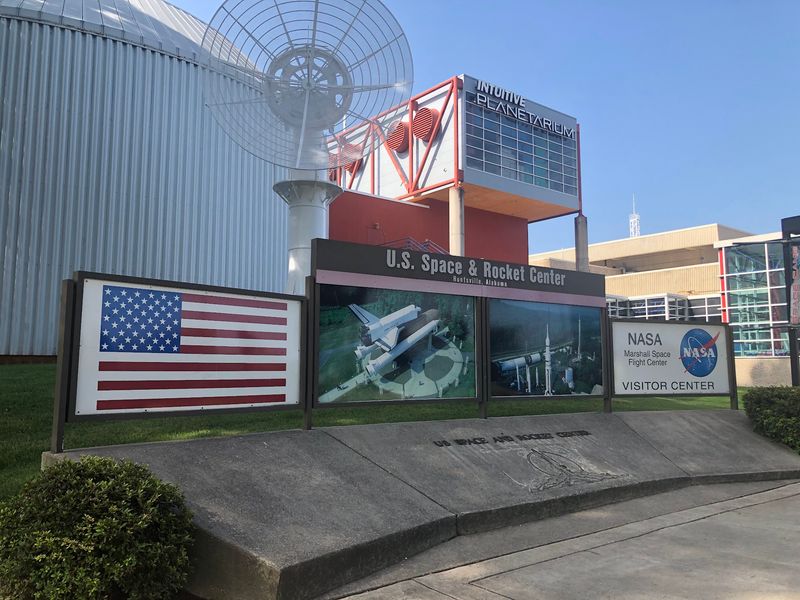
Lean back, look up, and let the solar system show off. The INTUITIVE Planetarium offers immersive shows that travel through space and beyond.
It’s one of the most popular extras at the U.S. Space & Rocket Center. Shows are scheduled at set times, so check the lineup when you arrive.
Booking your planetarium time early helps you plan the rest of your day. You can explore exhibits first, then head over before showtime.
The National Geographic Theater adds even more screen adventures. Its shows bring big visuals and big stories to the audience.
Both theaters give your feet a break. After hours of walking around rockets, a comfy seat feels like a reward.
Shows usually require a separate ticket from general admission. Bundling them into your plan keeps surprises to a minimum.
Kids who think space is just dots of light may change their minds here. Seeing planets fill a dome is hard to forget.
Arrive a few minutes early to settle in. Nobody wants to miss the opening of a trip across the galaxy.
Space History Here Comes With A Few Surprising Stars
Two monkeys named Able and Baker were spaceflight pioneers. Their story gets its own exhibit, Able & Baker: Primate Pioneers, complete with the Jupiter Reentry Capsule.
It’s a reminder that early space travel took bold steps. Those first flights helped prepare the path for human astronauts.
The Space Craze exhibit shows how rocket fever spread through everyday life. It’s a fun look at how space shaped toys, style, and imagination.
Big history lives here too. The museum opened in 1970, shortly after the Apollo 12 Moon landing.
Dr. Wernher von Braun envisioned the center. His team helped turn Huntsville, Alabama, into a hub for aerospace research.
Those engineers developed rockets that launched America’s first satellite. They also powered the Moon missions that made history.
The center even keeps archives of von Braun’s papers and those of other rocket scientists. That’s a lot of brainpower stored in one place.
With over 1,500 artifacts, you won’t see everything in a quick lap. Pick a few stories that grab you and follow them.
Smart Planning Makes Launch Day Go Smoothly
Good missions start with a good plan. Yours begins at 1 Tranquility Base, Huntsville, AL 35805, which might be the coolest address in Alabama.
From March 1 through October 31, the center opens daily from 9 AM to 5 PM. From November through February, hours shift to 10 AM to 4 PM.
It closes on Thanksgiving, Christmas Eve, Christmas Day, and New Year’s Day. Mark those on your calendar before packing the car.
Hungry crew members can refuel at the Galaxy Grill. The grill closes at 3 PM, while grab-and-go items stay available until 4 PM.
From May through October, Thursday evenings bring the Biergarten from 5 to 7:30 PM. Entry is free, with live music and food for purchase.
The center also runs Space Camp, Aviation Challenge, and Space Camp Robotics. U.S. Cyber Camp is offered too, with programs for kids and adults.
Plan on spending several hours to see the main highlights. Arriving early gives you the most time with the rockets.
Leave space for the gift shop on your way out. A mission patch makes a pretty great souvenir.