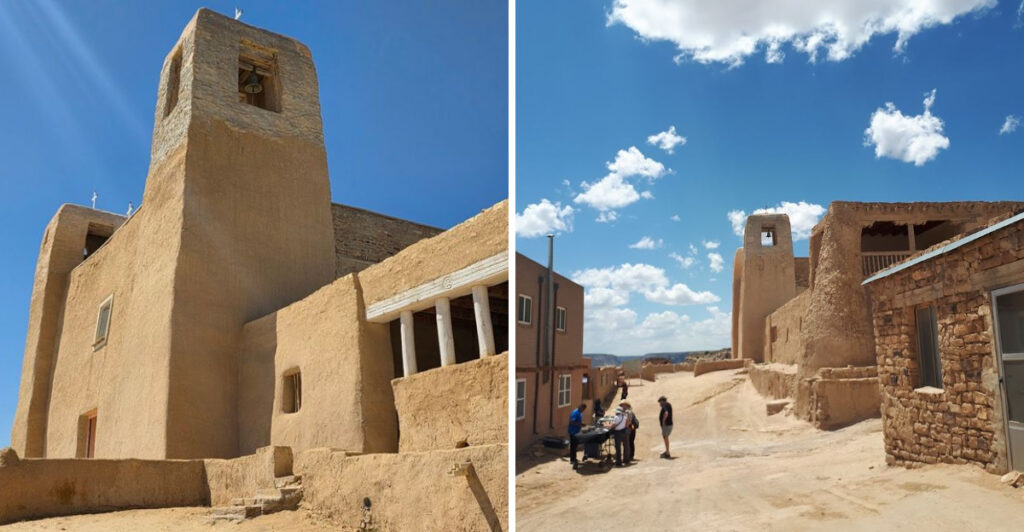
A mesa-top church can sound like something built for a postcard, but this one carries far more than a pretty view. It rises above the desert with a presence that feels quiet at first, then slowly gets under your skin.
New Mexico is full of places that make history feel close, but this site makes it feel almost physical. The drop below the mesa is steep, the sky feels enormous, and the church itself seems rooted into the earth.
Once you learn how it was built, the view becomes even more powerful. Beams were hauled across long desert distances by hand, and adobe walls rose through years of labor.
People still live around this sacred place, which keeps the whole experience alive. Keep reading, because the story waiting up here is bigger than the photographs make it look to anyone arriving for the first time.
The Mesa Views Feel Almost Unreal
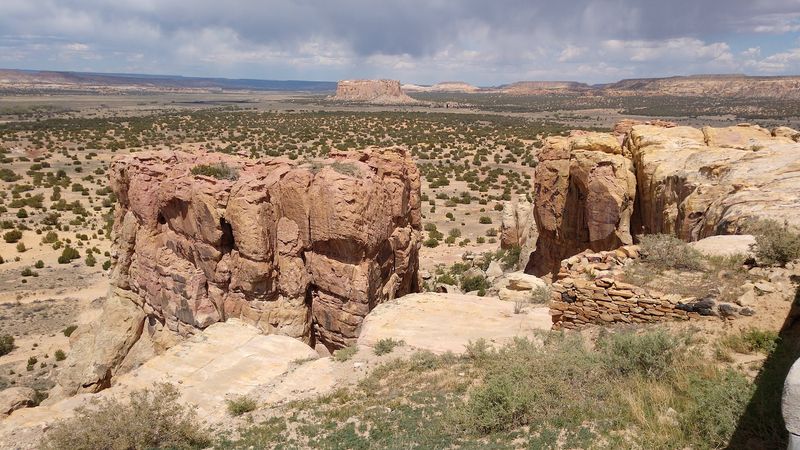
At the edge of the Acoma mesa, the desert below unfolds in every direction like a painting that forgot to stop. The drop is nearly 357 feet straight down, and your eyes keep reaching farther than feels possible, pulling in red rock formations, pale sand flats, and ridgelines that blur into the horizon.
Nothing quite prepares you for the scale of it.
I had seen photos before arriving, and I still felt genuinely caught off guard by how raw and open the landscape felt up there. The air carries a kind of stillness that big spaces tend to hold, and you find yourself going quiet without meaning to.
Visitors often say the photos simply do not capture it, and after standing there myself, I have to agree completely.
The mesa has been home to the Acoma people since around 1100 A.D., making it one of the longest-inhabited spots on the continent. Every glance outward reminds you that generations of people chose this dramatic, sky-high perch as their home.
That choice starts to feel less like a mystery and more like an obvious answer the longer you stay up there at San Estévan del Rey Mission Church Historic Site in Acoma Pueblo, NM 87034.
Adobe Walls That Hold Centuries Of Memory
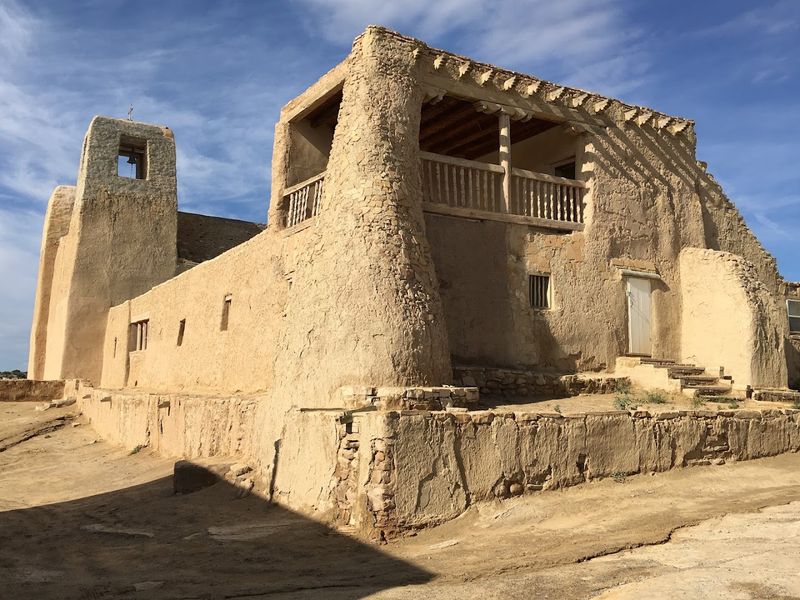
Few walls in the American Southwest carry as much quiet weight as the ones surrounding the San Estévan del Rey Mission Church. At the base, these adobe walls stretch up to seven feet thick, and they rise to a height of 35 feet, creating a structure that feels less like a building and more like a small geological feature.
The texture is rough, warm, and deeply human.
Every inch of that earthen mass was shaped and carried by Acoma hands, a fact that settles over you slowly as you walk alongside the exterior. The construction ran from 1629 to around 1641, and during that entire period, no mechanical equipment existed to ease the labor.
The community built this with their bodies, their time, and their skill, and the walls have not forgotten that.
Touching the surface, even briefly, feels oddly meaningful. The adobe holds heat from the afternoon sun and releases it slowly after dusk, the same way it has for nearly four centuries.
These walls also survived the Pueblo Revolt of 1680 largely unharmed, which makes them a rare and remarkable survivor in the landscape of New Mexico mission history.
A Sacred Landmark Above The Desert
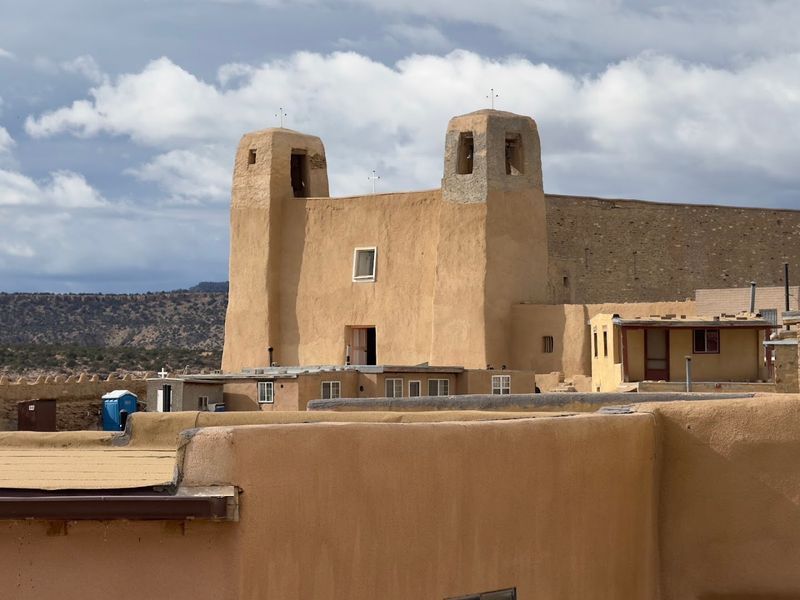
Built under the direction of Franciscan Fray Juan Ramirez, this church carries the spiritual ambitions of a 17th-century world pressed into earthen walls and timber beams. The mission was designated a National Historic Landmark in 1970, and it also holds a place on the National Register of Historic Places.
Those designations feel earned the moment you see the structure in person.
The church continues to function as an active mission within the Acoma community, which gives it a living quality that most historic sites simply cannot claim. Services still take place here, prayers still echo inside those thick walls, and the building still serves the people whose ancestors raised it.
That continuity is what sets it apart from a preserved relic.
Scholars and historians describe it as one of the finest surviving examples of hybrid Spanish Colonial and Puebloan adobe architecture in existence. The blend of European religious design with indigenous construction methods created something that belongs to both traditions equally.
Visiting this sacred landmark above the desert floor is one of those experiences that stays with you long after the drive home.
Walking Through A Living Sky-High Village
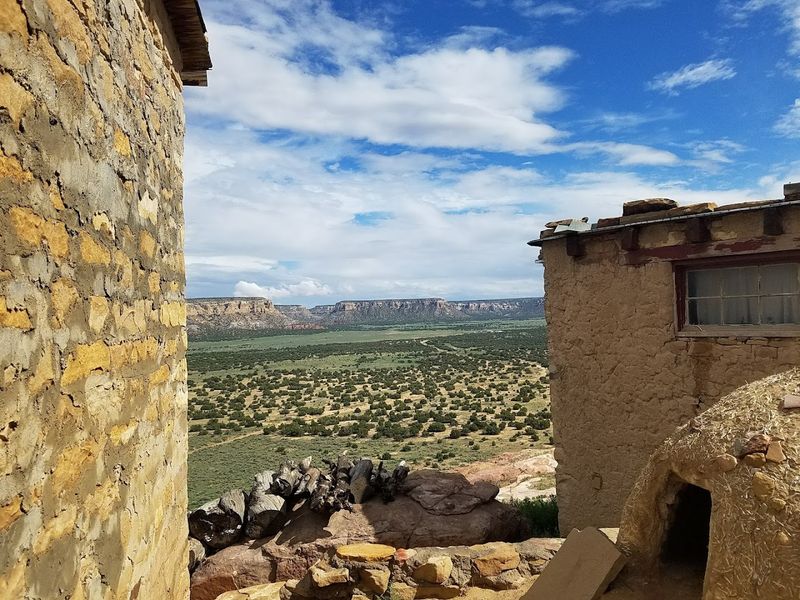
Sky City is not a reconstruction or a museum exhibit dressed up to look authentic. People actually live here, and that reality changes the feeling of every step you take through its narrow passages.
The village sits atop the same mesa it has occupied for roughly 900 years, and the architecture reflects that relationship with the land.
Tours currently run Monday through Sunday from the Sky City Cultural Center, with departures hourly from 9:30 a.m. to 3:30 p.m. A guide accompanies every group, sharing the history and stories that give the physical space its meaning.
I found myself listening more carefully than expected today, partly because the setting made everything feel more real.
Local artists sometimes display their pottery along the pathways, and the craftsmanship is genuinely striking. The geometric patterns and hand-coiled forms reflect a tradition passed down through Acoma families.
Walking through this village is not simply sightseeing. It is moving through a community that has kept its identity intact across centuries of pressure and change, and that quiet strength is felt in every corner of the mesa top above.
Bell Towers Rising Over Quiet Rooftops
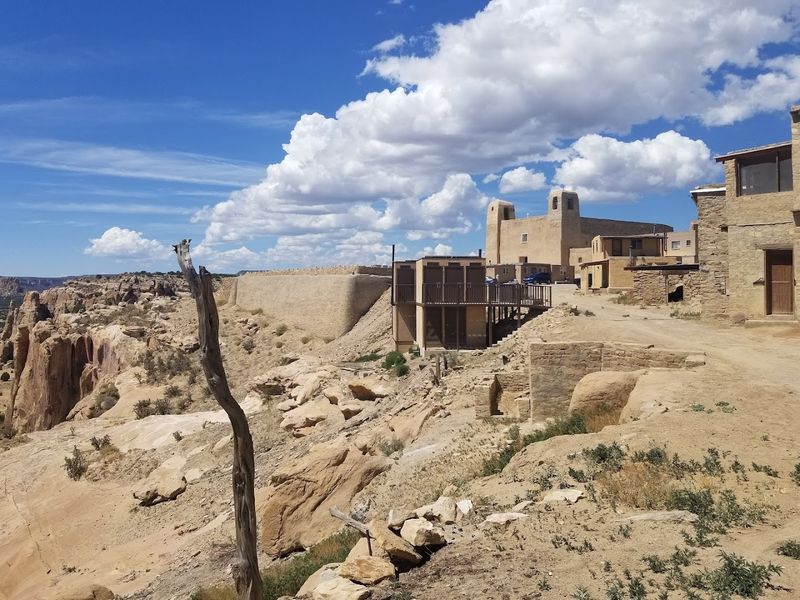
The twin bell towers of the San Estévan del Rey Mission Church are the first thing your eyes find when you approach the church from within the pueblo. They rise with a kind of confident simplicity, squared off and solid, completely at home against the enormous sky that surrounds them.
No ornamentation competes with the desert backdrop behind them.
What strikes me most about those towers is how well they communicate without saying anything. They mark the church as a place of gathering and ceremony, visible from the surrounding desert far below the mesa edge.
For centuries, the bells called the Acoma community to services, and the sound must have carried impressively across that open landscape.
The towers represent the Spanish Colonial side of the church’s architectural identity, while the adobe construction and the overall massing reflect the Puebloan tradition that shaped its bones. That combination is precisely why the building gets described as a hybrid masterpiece by architectural historians.
The bell towers do not dominate the scene so much as anchor it, holding the eye steady while the sky does everything else around them.
Sunlit Streets Carved Into The Mesa
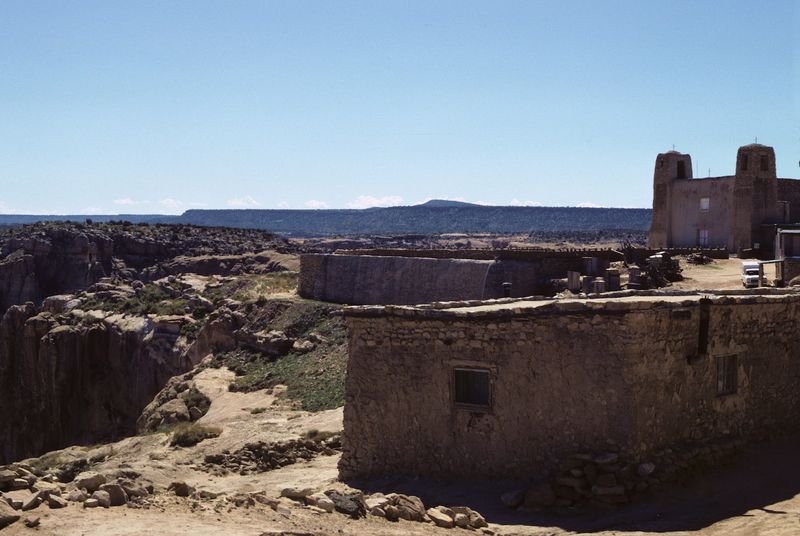
The pathways of Sky City do not follow a grid. They curve and narrow in response to the rock beneath them, shaped over centuries by foot traffic rather than any planner’s blueprint.
Walking them in the afternoon, when the sun drops low and the adobe walls glow orange, feels like moving through a place that time decided to treat gently.
Every surface up here was built from the mesa itself, or from materials carried up by hand from the desert below. The effort required to level ground, haul soil, and shape walls on top of a 357-foot sandstone formation is almost impossible to picture.
Yet the result looks organic, as though the village simply grew out of the rock like a slow-moving plant.
The sunlight behaves differently at this elevation, sharper and more direct, and it makes the textures of the earthen walls pop in a way that photographers clearly appreciate. I watched several visitors stop mid-step just to look at the light on a particular wall or doorway.
The streets here are not grand or wide, but they carry a quiet beauty that rewards anyone who slows down enough to actually notice it.
Desert Silence Around Every Corner
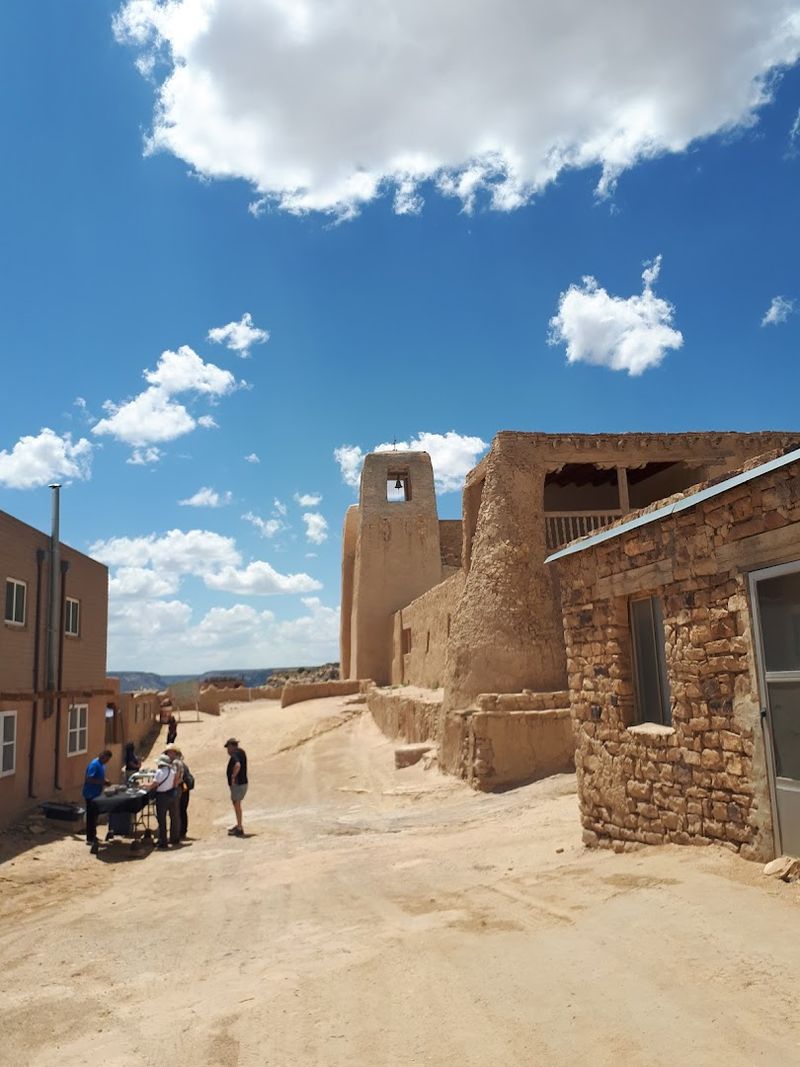
Up on the mesa, the silence has a physical quality to it. The wind moves through occasionally, and you can hear it clearly because there is almost nothing else competing for your attention.
No traffic, no background hum, no ambient city noise, just the desert doing what deserts do when left to themselves.
That silence is part of what makes a visit here feel so different from most historic sites. There is no gift shop soundtrack or recorded narration floating through speakers.
The quiet is genuine, and it creates space for the place to speak in its own way. I found myself standing still more often than I usually do at any destination.
The Acoma people have lived with this silence for centuries, and it clearly shaped the pace and rhythm of life on the mesa. The church itself amplifies that stillness when you stand near its exterior walls, which absorb sound the way thick earth tends to do.
New Mexico has no shortage of dramatic landscapes, but few places deliver this particular brand of deep, unhurried quiet the way Sky City does on a calm midweek morning.
A Historic Church With A Powerful Presence
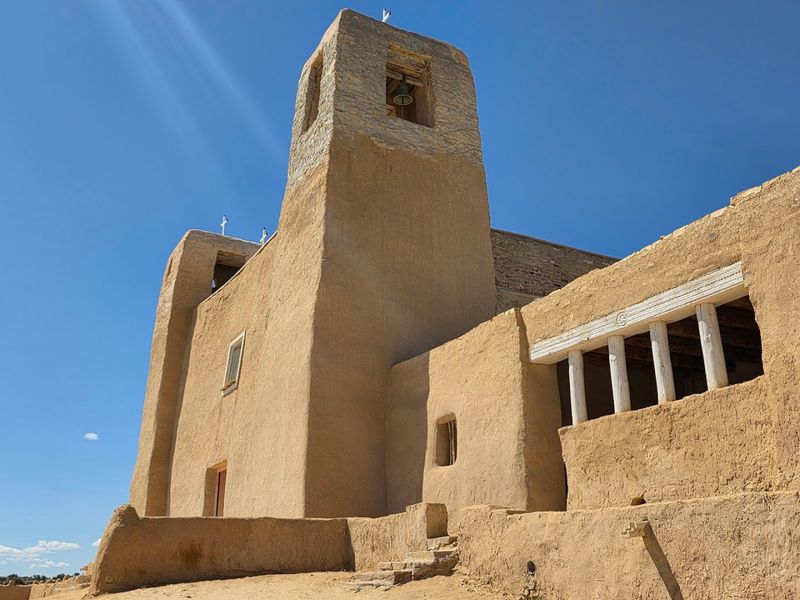
Some buildings announce themselves loudly, and others simply stand there and let you figure out how significant they are. The San Estévan del Rey Mission Church belongs firmly to the second group.
Its presence on the mesa is understated from a distance, but the closer you get, the more the scale and age of the structure begin to register in your chest rather than just your eyes.
The interior features massive 40-foot Ponderosa pine vigas spanning the ceiling, each one carried by hand from mountains 25 to 40 miles away. No wheeled carts made it up the mesa.
Every beam was hauled by the Acoma people themselves, a feat of collective determination that the ceiling still quietly commemorates. Photography inside the church is not permitted, which means you carry the image of those beams only in your memory.
The wooden altar, the adobe floor, and the thick whitewashed walls create an interior atmosphere that feels genuinely different from any other church I have entered. This is the place formally known as San Estévan del Rey Mission Church Historic Site in Acoma Pueblo, NM 87034, and its presence on that ancient mesa is something no photograph has ever fully managed to explain.