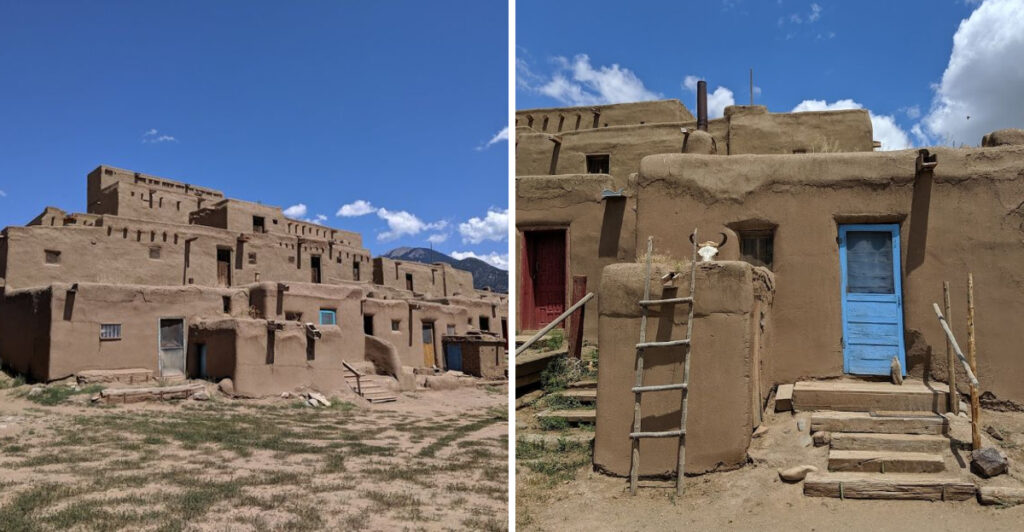
More than 1,000 years have passed, yet families still wake up each morning inside this ancient village in northern New Mexico. The adobe walls are thick, weathered, and impossibly beautiful at sunrise.
Smoke drifts above the rooftops. Creek water cuts through the settlement exactly as it did centuries ago.
I expected silence when I arrived. Instead, I heard conversations, footsteps, laughter, and doors opening.
Residents were hauling supplies, greeting neighbors, and preparing for another ordinary day in a place most people only read about in history books. That contrast hits hard.
This is not a reconstruction or a preserved attraction designed to imitate the past. The community never stopped living here.
Ceremonies continue. Traditions remain active.
Generations still care for homes built by their ancestors. Visitors come for the architecture, but they leave talking about something else entirely.
Few places on Earth make history feel this immediate, personal, and alive.
Sunbaked Adobe Towers Beneath Snowcapped Peaks
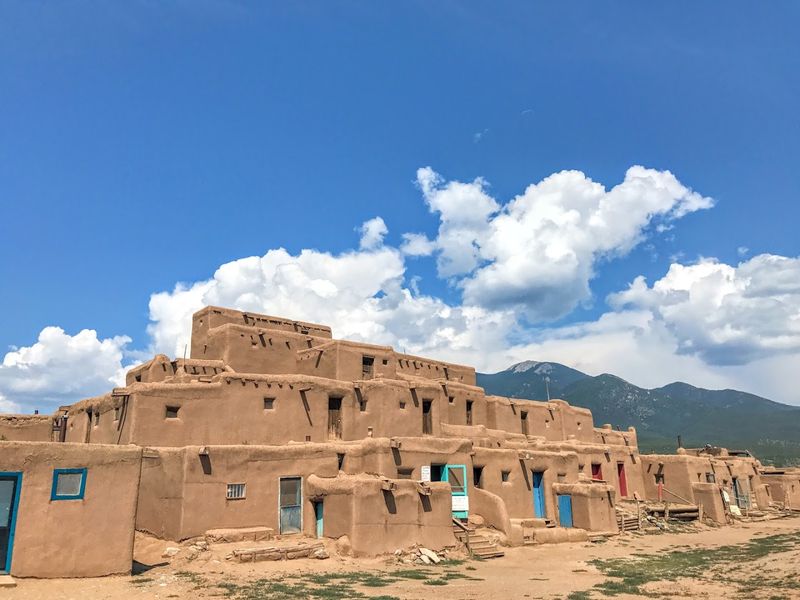
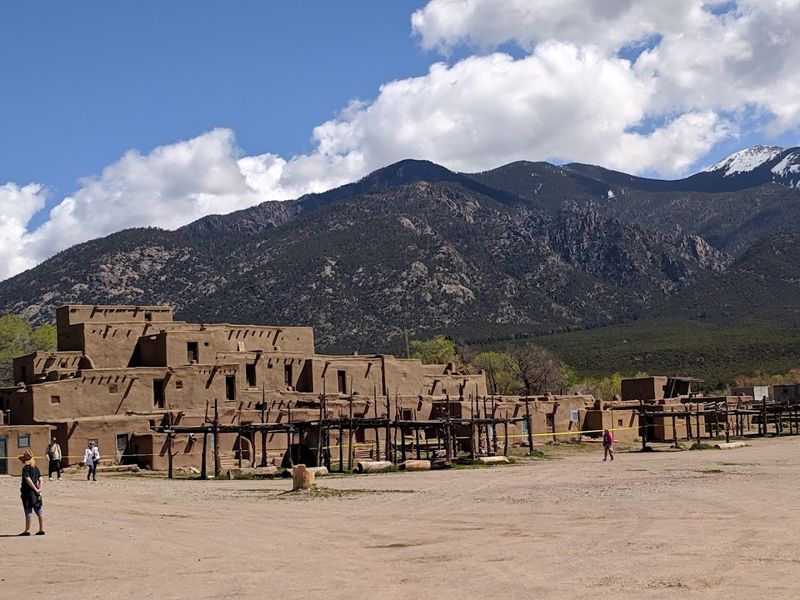
Standing at the base of those towering adobe walls with Taos Mountain looming behind them, I felt like I had stepped into a painting that nature and human hands had collaborated on for centuries.
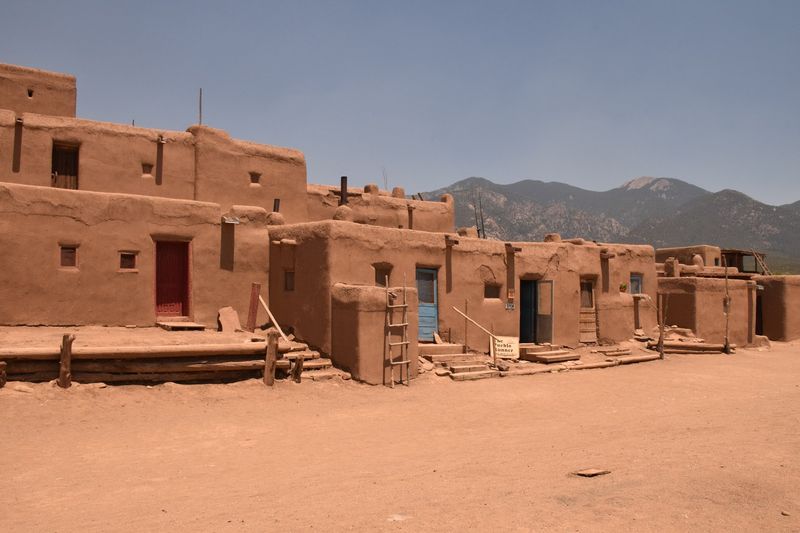
The structures rise in stacked tiers, their sun-warmed surfaces glowing amber and rust against a sky so blue it almost looks artificial.
What strikes you first is the contrast: the soft, curved earthen walls below and the hard, jagged snowcapped peaks above, forming a composition that no architect could deliberately plan.
The largest structures at the pueblo, known as Hlauuma (North House) and Hlaukwima (South House), stand several stories tall and represent some of the oldest continuously occupied buildings in North America.
Morning light hits the adobe at a low angle, pulling out every texture in the mud plaster and making the walls seem almost alive with warmth.
Photographers plant themselves at the creek crossing and refuse to move, and honestly, I do not blame them one bit.
Few places on Earth offer a backdrop this dramatic while also carrying this much real human history inside every single wall, and that is exactly what makes Taos Pueblo in New Mexico unforgettable.
Sacred Traditions Preserved Across Centuries
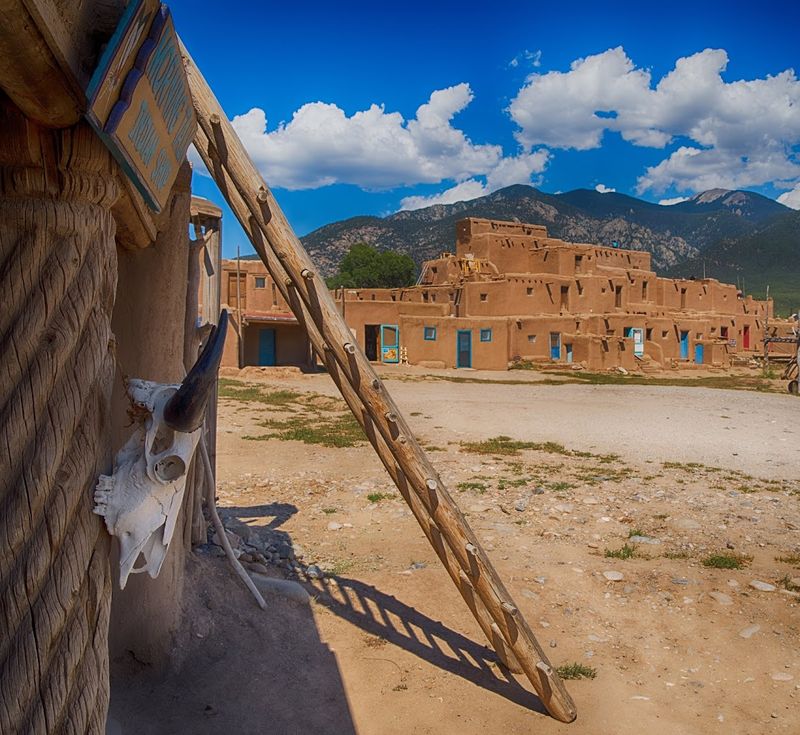
Long before the United States existed as a nation, the people of Taos Pueblo were already maintaining a calendar of ceremonies, dances, and spiritual practices that connected them to the land and to each other.
Those traditions have not faded.
The Taos people observe feast days, corn dances, and ceremonial gatherings throughout the year, some of which visitors may witness respectfully during designated public events.
A traditional drum circle echoed through the plaza during my visit, and the rhythm settled somewhere deep in my chest, a physical reminder that this culture is not a museum exhibit but a living, breathing reality.
Elders pass knowledge to younger generations through direct experience rather than textbooks, and that unbroken chain of transmission is precisely what has kept these traditions intact through centuries of outside pressure.
The pueblo community makes deliberate, thoughtful decisions about what to share with visitors and what to protect, a balance that deserves admiration.
Every ceremony I was allowed to observe felt like a privilege, and I left with a much deeper respect for what it means to preserve a culture across a thousand years.
Earthen Walls Maintained By Generations
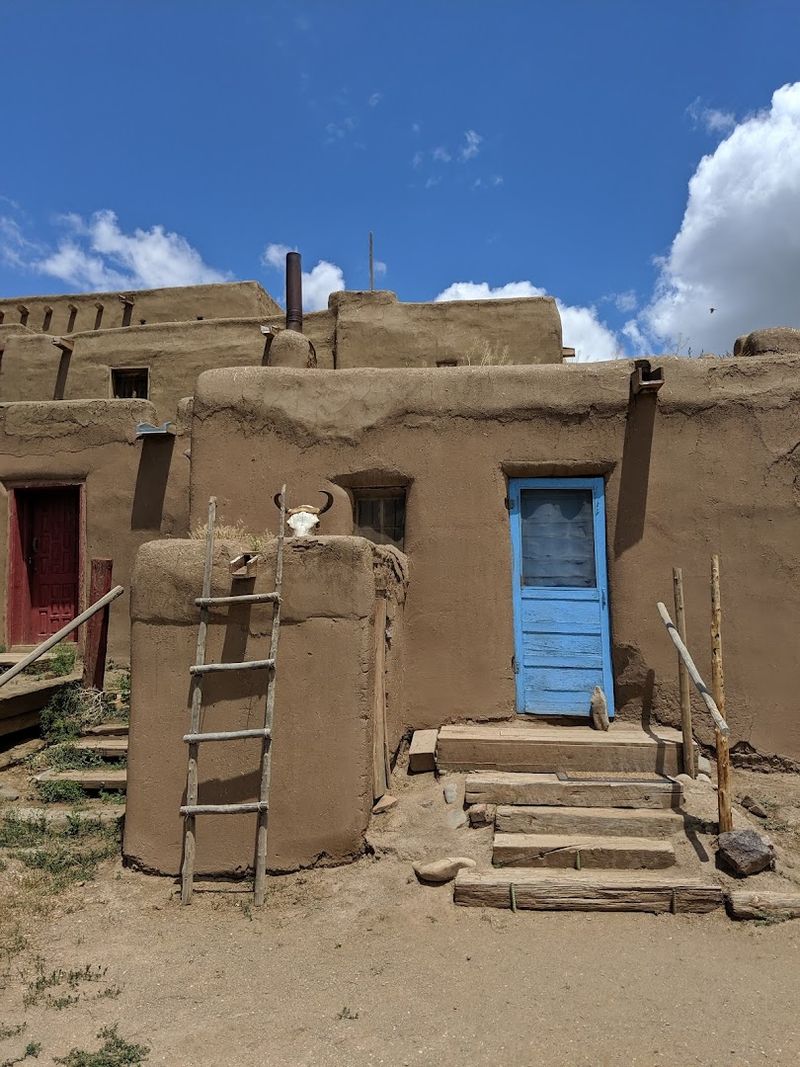
Every few years, the residents of Taos Pueblo replaster their homes by hand, mixing mud, straw, and water just as their ancestors did over a thousand years ago, and the result is walls that look both ancient and freshly cared for at the same time.
This is not restoration work performed by outside contractors.
The community itself takes ownership of the process, gathering to repair and maintain the structures that have sheltered their families across dozens of generations.
One resident smoothed fresh mud onto a lower wall section with practiced, easy strokes during my visit, explaining that the technique had been passed down through multiple generations of her family.
The walls contain no steel reinforcement, no concrete, and no modern binding agents, yet they have stood through earthquakes, snowstorms, and centuries of harsh New Mexico weather.
Wooden vigas, the rounded beams that poke through the exterior walls, remain key structural elements and are replaced only when absolutely necessary.
Building materials drawn directly from the earth give the pueblo a quiet sense of permanence while allowing the structures to age naturally alongside the landscape over time.
Red Willow Waters Sustaining Pueblo Life
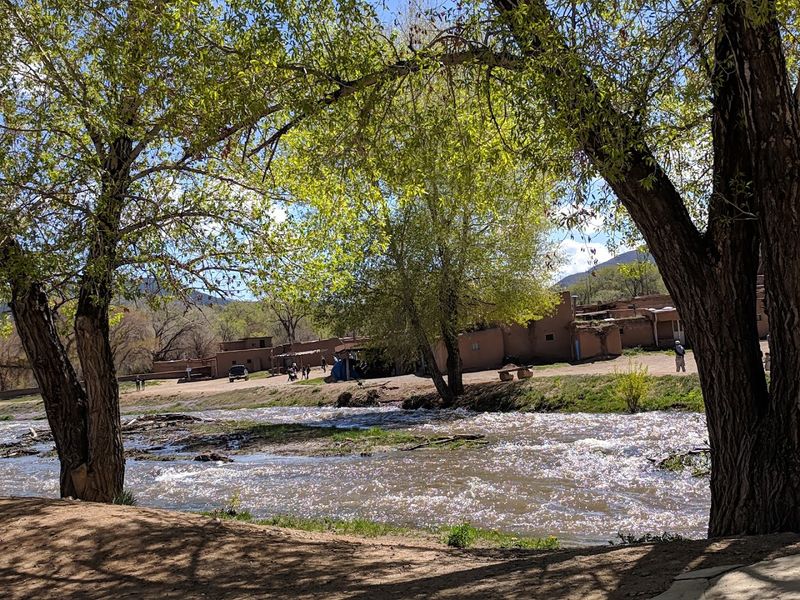
A clear, cold stream runs right through the heart of the pueblo, and its presence explains everything about why people chose this exact spot to build a permanent settlement over a millennium ago.
The Taos people call themselves the Red Willow People, a name drawn directly from the red willow trees that grow along the banks of this stream, known formally as the Rio Pueblo de Taos.
That water originates high in the Taos Mountains, fed by snowmelt and springs, and it arrives at the pueblo clean and cold enough to feel like it comes from another world entirely.
Residents still use this stream as their primary water source, and it remains protected from development or diversion by tribal law and deeply held cultural values.
When I crossed the small footbridge on my visit, I stopped to watch the water move over smooth stones, and a local guide told me that the mountains feeding the stream are considered sacred and are off-limits to outsiders.
That boundary is not arbitrary; it reflects a philosophy of reciprocal care between people and the natural systems that keep them alive.
The stream is as much a part of the pueblo story as any wall or ceremony.
Ceremonial Practices Protected From Outsiders
Not everything at Taos Pueblo is open to the public, and that boundary is one of the most important aspects of what makes this community so culturally intact after all these centuries.
Certain ceremonies, spaces, and practices are deliberately kept private, and the tribal government enforces these boundaries firmly and without apology.
Cameras are prohibited in many areas, and visitors are expected to follow posted signs and the guidance of tribal staff at all times during their visit.
Staff members at the entrance gate provided a clear and friendly explanation of what was permitted and what was not, and that transparency made the entire experience feel more respectful rather than restrictive.
The kivas, which are circular underground ceremonial chambers central to Puebloan spiritual life, are completely off-limits to non-tribal members, and their interiors remain carefully protected parts of the community’s spiritual traditions.
This kind of cultural sovereignty is not just admirable; it is essential for any indigenous community hoping to maintain identity across generations of outside contact.
Respecting those boundaries is the single most important thing any visitor can do when spending time at this extraordinary place.
Multi-Story Homes Built Using Ancestral Techniques
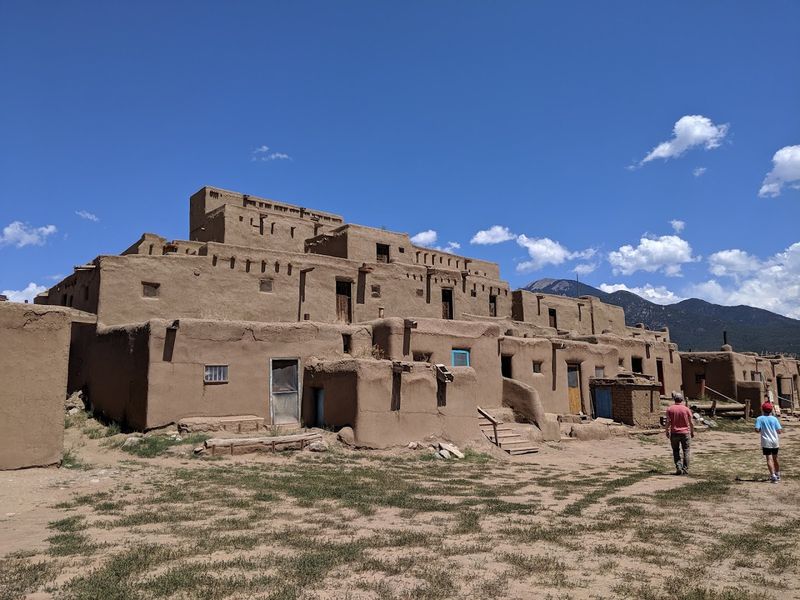
Before elevators and steel frames, the people of Taos Pueblo were already engineering multi-story residential buildings that remain among the oldest continuously inhabited structures in North America.
The north and south house complexes climb four to five stories in places, with each level set slightly back from the one below, creating a stepped profile that is both practical and visually striking.
Originally, the upper floors were accessed only by wooden ladders that could be pulled up in times of conflict, a clever defensive design that also gave the buildings their distinctive silhouette.
Adobe bricks are made from a mixture of local soil, water, and organic material, then dried in the sun before being stacked and sealed with additional mud plaster applied by hand.
The thermal mass of these thick walls keeps interiors cool during hot summers and warm during bitterly cold winters, a passive climate control system that modern architects still study and admire.
During my visit, I climbed a short section of exterior stairs and pressed my palm against the wall, feeling the warmth stored in the adobe from hours of direct sunlight.
Centuries of accumulated knowledge live inside those walls, layer by layer.
Indigenous Heritage Surviving Spanish Colonization
Spanish explorers first entered the Taos region in 1540, and the decades that followed brought forced labor, religious suppression, and violent conflict that tested the pueblo community to its absolute limits.
The Pueblo Revolt of 1680 stands as one of the most significant acts of indigenous resistance in North American history, and Taos Pueblo played a central role in organizing and carrying out that uprising against Spanish rule.
A Taos religious leader named Popé helped organize the revolt, which successfully drove Spanish colonizers out of the region for over a decade and preserved crucial elements of Puebloan culture and religion.
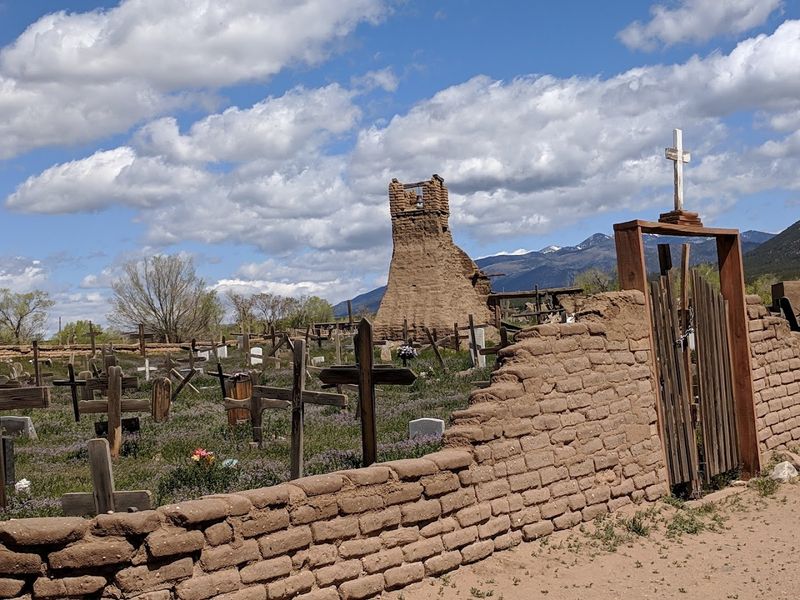
The ruins of the original San Geronimo Church, destroyed during the 1847 Siege of Pueblo de Taos, still stand within the pueblo grounds as a quiet reminder of that complicated history.
A newer church built in the same location serves the community today, reflecting the complex relationship between introduced Catholicism and traditional spiritual practices that many Taos people continue to navigate.
A tribal member explained this history while I stood near the church ruins, and the experience gave me a perspective on resilience that no textbook had ever fully communicated.
Survival here was never passive; it was fought for, planned, and earned.
A Living Village Older Than The United States
Most places that claim to be ancient are really just old buildings with a plaque out front, but Taos Pueblo feels different because real families still wake up inside those walls every single morning.
Archaeological evidence suggests the present pueblo structures were constructed around 1400 CE, while earlier settlements in the Taos Valley date back closer to 1000 CE, supporting the community’s long history of continuous occupation.
The United States, by comparison, has existed for fewer than 250 years, which puts the age of this community into a perspective that is difficult to process while standing inside it.
UNESCO recognized Taos Pueblo as a World Heritage Site in 1992, joining a global list that includes the Great Wall of China and the historic center of Rome.
About 150 people are often cited as living within the historic pueblo full-time, while many other tribal members live nearby and continue using the pueblo for ceremonies and community gatherings.
Visiting hours, admission fees, and photography policies are all managed by the tribe, and the revenue directly supports community programs and preservation efforts.
You can find this remarkable, living testament to human continuity at Taos Pueblo, located approximately one mile north of the city of Taos, New Mexico.