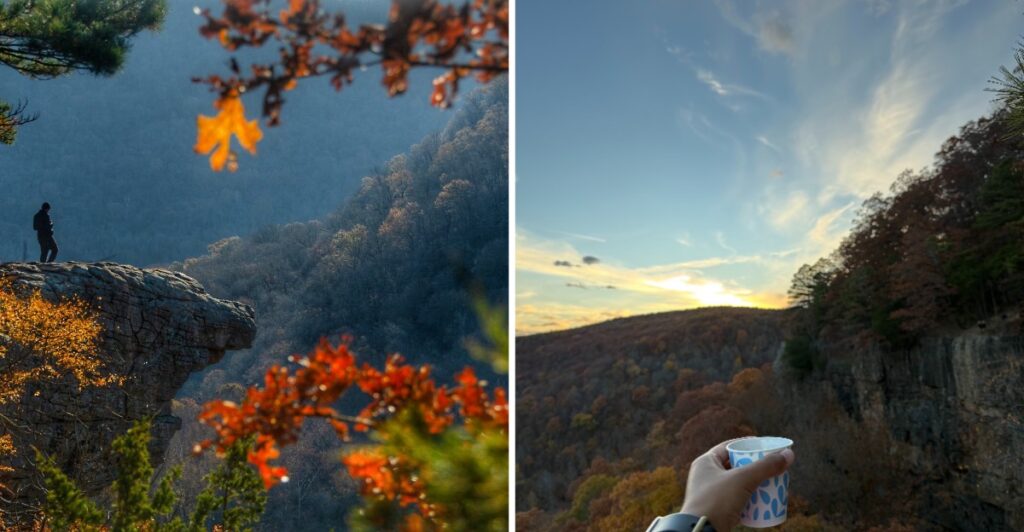
A rock ledge shaped like a hawk’s beak hangs out over open air, high up in the Arkansas Ozarks. Below it, a steep bluff drops roughly 150 to 200 feet toward the forested canyon floor.
The hike out runs only about three miles round trip, beginning at the end of a bumpy gravel road. That feels like a fair trade for standing this close to the sky without any climbing gear.
Honestly, I’m a little jealous of anyone who catches that canyon glowing orange, red, and gold in autumn. Early mornings can add mist floating through the valley, and that makes a sunrise alarm feel completely reasonable to me.
A Rock That Looks Ready To Take Flight
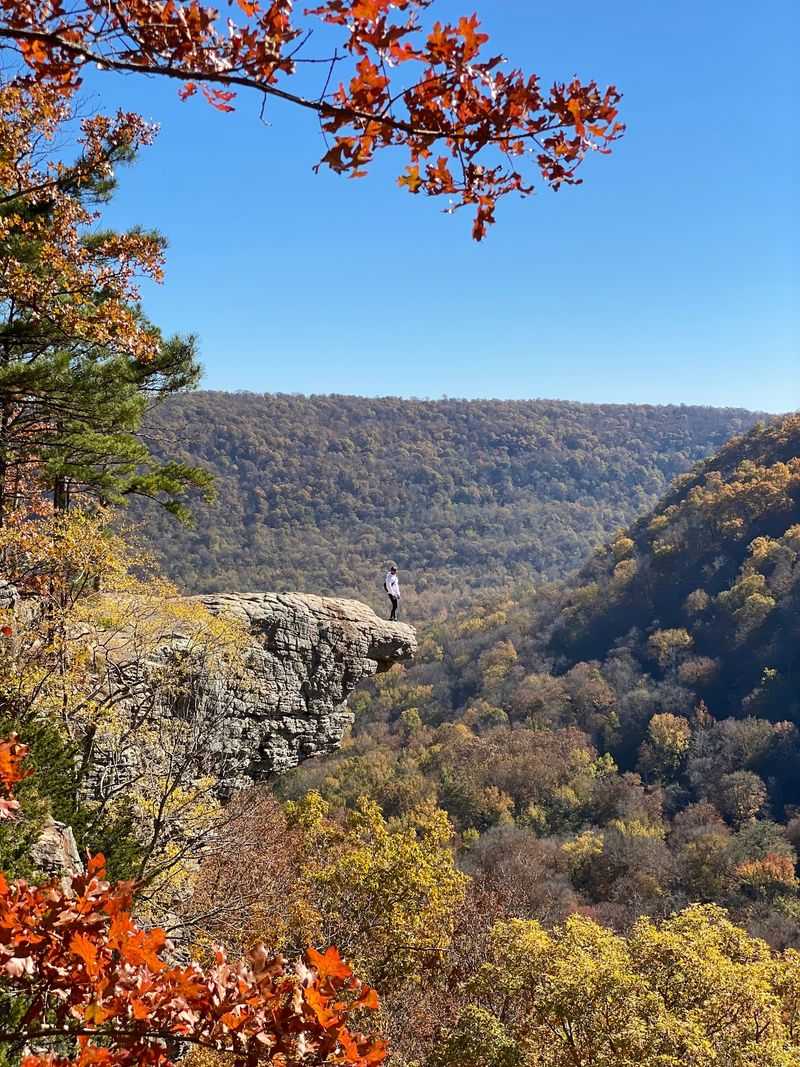
Some rocks just sit there. Hawksbill Crag, also called Whitaker Point, looks like it’s about to lift off and soar across the valley.
The sandstone overhang has the profile of a hawk’s head and beak. That shape gave the crag its popular name, and you’ll spot the resemblance quickly.
It juts out from a long bluff line inside the Ozark National Forest. Below it, the land drops into a deep canyon carved by Whitaker Creek.
That creek is where the older name, Whitaker Point, comes from. Both names point to the same famous ledge, so don’t let the double identity confuse you.
The crag ranks among the most photographed natural features in Arkansas. Once you see the shape against the open canyon, the reason feels obvious.
Here’s a smart move for your visit. Pause on the bluff before you reach the tip and look back at the crag from the side.
That angle shows the beak shape best. It’s also where most classic photos are framed, with a tiny person standing on the edge.
Bring a friend with a camera. Someone has to stay back and capture the shot while you play hawk.
Fall Turns The Canyon Into A Color Explosion
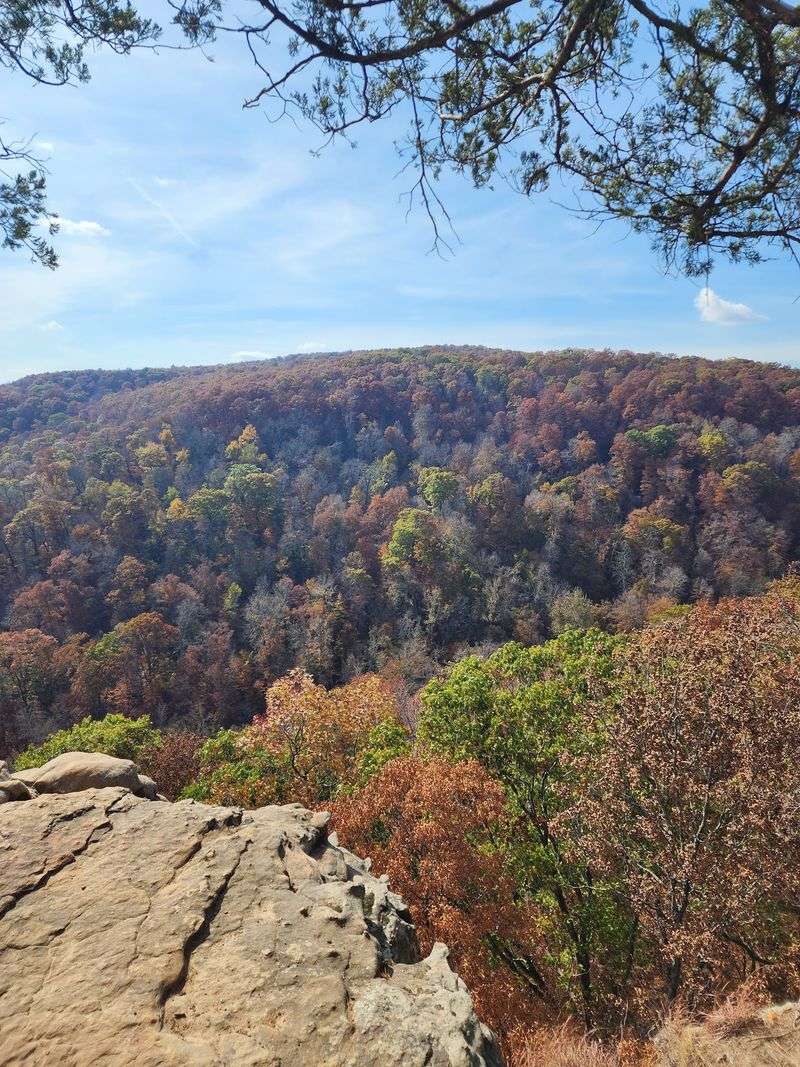
October changes everything here. The hardwood forest below the crag shifts into reds, oranges, and yellows that stretch across the canyon.
Peak color in the Ozarks usually lands from mid-October through early November. The exact timing moves around each year, depending on weather and temperatures.
That window is when photographers flock to Hawksbill Crag. The combination of jutting rock and blazing trees makes a picture that’s hard to beat anywhere in the state.
Early mornings can bring an extra bonus. Mist sometimes drifts through the valley in fall, softening the colors and making the scene look almost painted.
Want the best shot at that magic? Plan a sunrise hike and bring a headlamp, because the trail gets tricky in the dark.
Keep an eye on fall foliage reports before you go. A week early or late can mean green leaves or bare branches.
Also, layer up. Ozark mornings in autumn can start chilly, then warm up fast once the sun clears the ridges.
Patience pays off at this time of year. The colors won’t wait forever, but they’re absolutely worth chasing.
The Hike Is Short, But Your Legs Will Notice
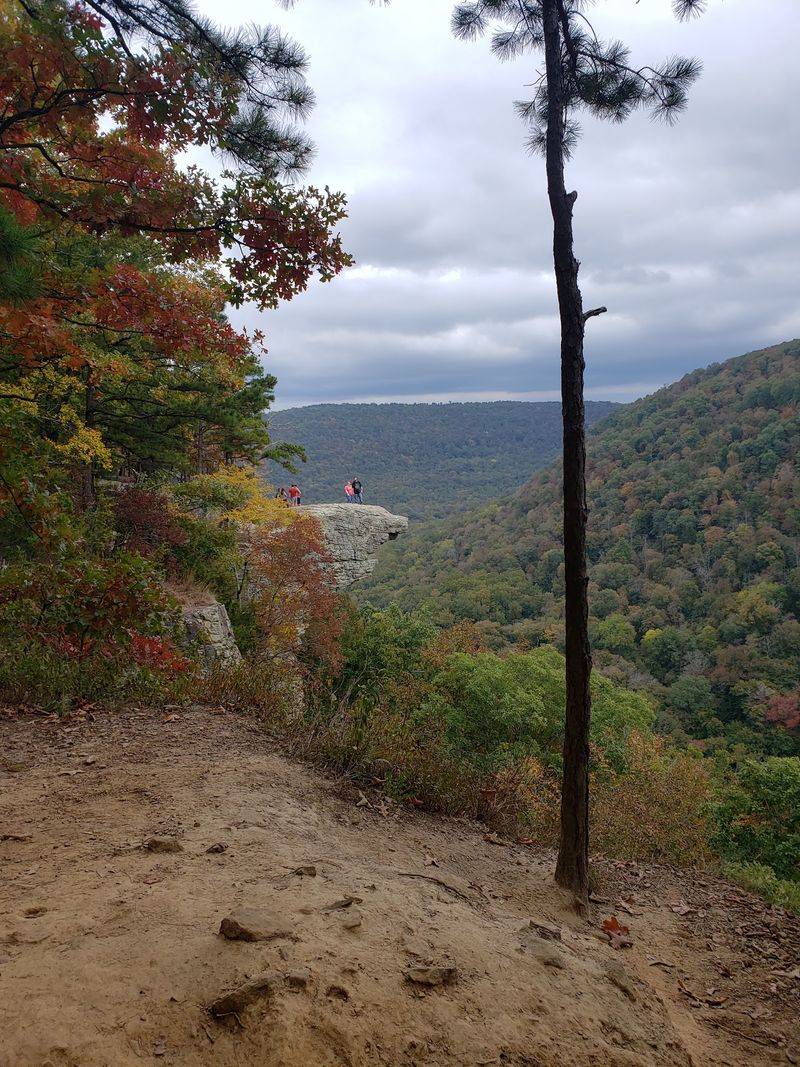
Good news first. The trail to the crag runs about 2.7 to 3 miles round trip as an out-and-back hike.
Most guides rate it easy to moderate. That sounds breezy, but there’s a twist that catches people off guard.
The walk in heads mostly downhill. That means the return trip climbs back up, right when your legs feel the miles.
The path itself is dirt and rock. Expect uneven stretches, plenty of tree roots, and large rocks waiting to test your ankles.
Sturdy shoes make a huge difference. Hiking boots with ankle support beat flimsy sneakers on this kind of ground.
Pack plenty of water, too. There are no facilities at the trailhead, so bring snacks and anything else you’ll need.
Along the way, smaller ledges and overlooks pop up before the main event. Each one gives you a preview of the canyon views ahead.
Take your time and enjoy those stops. The trail isn’t a race, and the uphill finish rewards anyone who saved a little energy.
Think of it as a walk with dessert in the middle.
Respect The Edge, Because It Is Seriously Tall
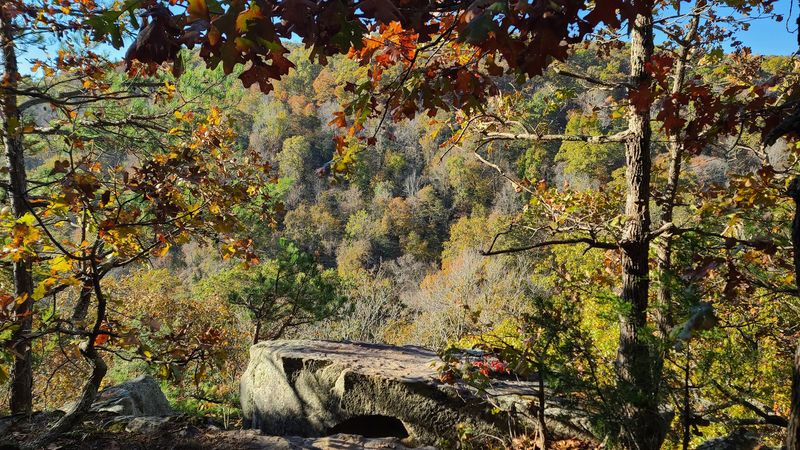
No railings. No fences. Just open air and a sandstone drop that plunges toward the canyon floor.
The trail runs close to the edge of a tall bluff. A fall from that height could be fatal, so this part matters more than any photo tip.
Stay on the established trail at all times. Wandering toward the rim for a better angle isn’t worth the risk.
Families should keep kids close and within arm’s reach. Little explorers love edges, and this one doesn’t forgive mistakes.
Dogs need tight control as well. A leash keeps curious pups from chasing a squirrel straight toward the drop.
Wet rock gets slick, so watch your footing after rain. Fallen leaves in autumn can hide loose stones too.
On the crag itself, be thoughtful with others waiting. Snap your photos, enjoy the view, and then give the next group a turn.
Courtesy keeps the mood friendly on busy days. Everyone hiked the same trail for the same moment.
Treat the cliff like a stunning neighbor you never turn your back on. Admire it, but always keep some distance.
Getting There Is Its Own Bumpy Adventure
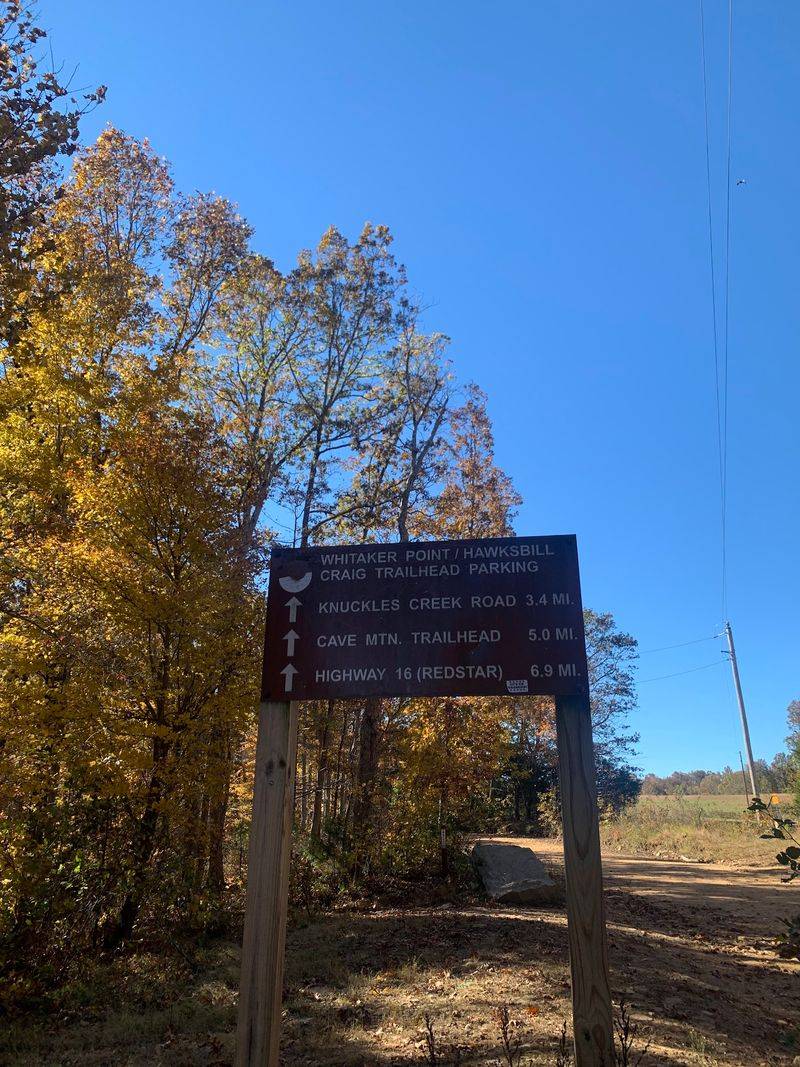
Your car is about to earn its keep. The trailhead sits about 6 miles up Cave Mountain Road, a steep, rough gravel and dirt route.
The road is also identified as County Road 5 or County Road 9560 on some maps, and visitors can reach the trailhead by following it approximately 6 miles from Highway 21 near Boxley Valley.
A 4WD or AWD vehicle is recommended, especially after rain. Plenty of regular cars make it, but higher clearance brings real peace of mind.
Cell service often drops out completely here. Download offline maps before you leave town, because GPS can get confused on these back roads.
Ponca, Arkansas, is often cited as the nearest town. It makes a handy reference point while planning your route through Newton County.
Drive slowly and watch for oncoming traffic on narrow stretches. Steep grades and loose gravel deserve full attention.
Leave early so you’re not rushing. The bumpy ride takes longer than the mileage suggests.
Consider it a warm-up for the hike. By the time you park, you’ll already feel like you’ve gone somewhere wild.
Beat The Crowds With An Early Start
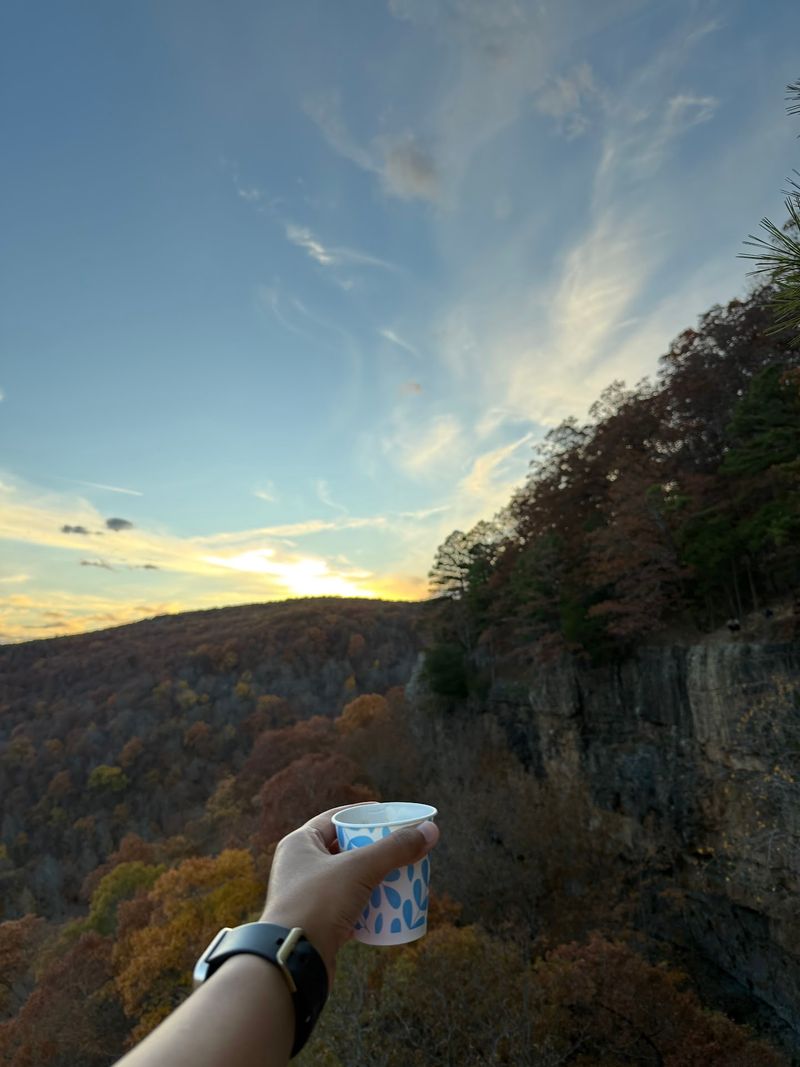
Parking at the trailhead is designated and limited. Once those spots fill up, things get complicated fast.
If the parking areas are full, check posted restrictions before parking along the dirt road. Nobody wants that souvenir after a gorgeous hike.
Fame brings company, and Hawksbill Crag stays popular all year. Peak fall foliage weekends draw the biggest wave of hikers and photographers.
The easiest fix is timing. Arrive early in the morning, or plan your trip for a weekday when the trail feels calmer.
Sunrise hikes come with an extra perk. You might catch soft light and drifting mist over the canyon before the crowds arrive.
Because the area is National Forest land, it’s generally open for hiking year-round. Winter and early spring can offer quieter trails and clearer views through bare trees.
Got flexible plans? Watch the forecast and pick a clear weekday morning for the sweet spot.
Bring a backup plan in case the lot is full. Nearby Ozark scenery offers plenty to explore while you wait for another chance.
A little planning means more time enjoying the view and less time circling for parking.
Wilderness Rules Keep This Place Wild
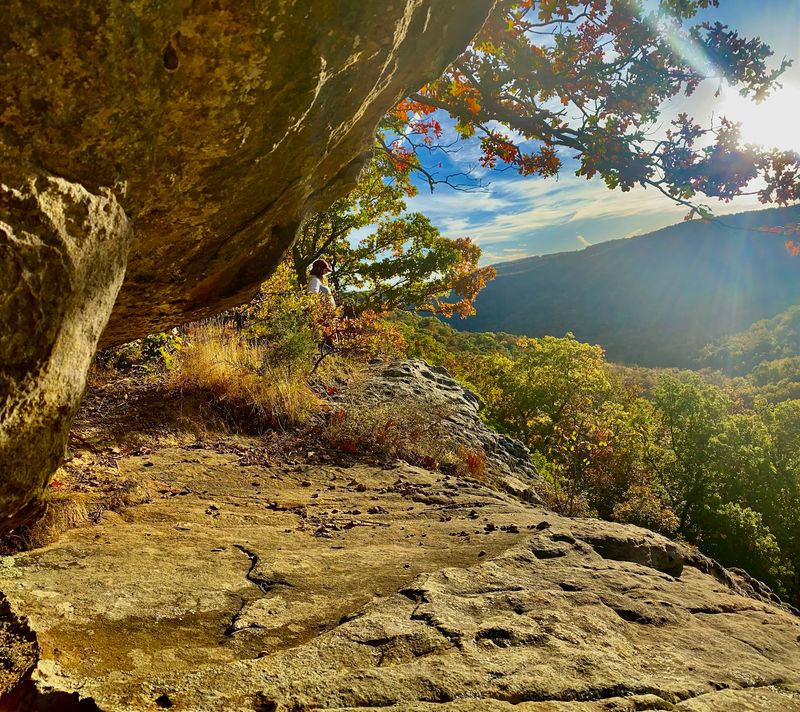
Back in 1975, this land got a special label. The Upper Buffalo Wilderness Area was officially established on January 3 of that year.
Hawksbill Crag sits inside that protected wilderness, within the Ozark National Forest. The designation helps keep this corner of Newton County rugged and natural.
Whitaker Creek, the stream below the crag, flows into the Buffalo River. That connects your hike to one of the most celebrated waterways in Arkansas.
Wilderness means fewer conveniences. You won’t find restrooms or trash cans, so pack out everything you bring in.
Leave No Trace habits matter here. Stick to the trail, leave rocks and plants where they are, and keep noise friendly.
Wildlife calls this place home too. Give animals space and store food carefully if you’re camping nearby.
Little choices add up when so many people visit. Every hiker helps protect the view for the next one.
Treat the forest like a library of trees. Quiet respect keeps the story going for future generations.
Your Camera Will Thank You For These Tips
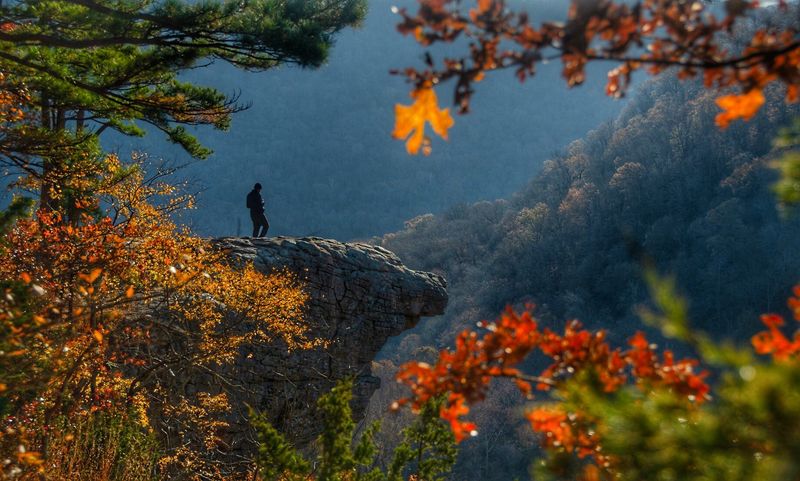
Every great photo here starts with stepping back. The iconic Hawksbill Crag shot usually comes from a spot along the bluff, well before the tip.
From there, the beak shape stands out clearly. A person on the end looks tiny against the huge canyon, which makes the image pop.
Wide-angle lenses help fit everything in. A zoom lens also works if you want a tighter frame from farther back.
Light changes the mood dramatically. Sunrise brings warm color and possible valley mist, while midday light feels brighter and flatter.
Fall foliage adds the biggest wow factor. Still, foggy winter mornings and green summer days have their own charm.
Charge your batteries before you leave. With no cell service, your phone may also drain faster while searching for signal.
Safety beats any picture. Never step closer to the edge just to improve your framing.
Share the crag with fellow photographers too. Quick turns keep everyone happy and the line moving.
Honestly, even a phone snapshot looks impressive here. The Arkansas scenery does most of the heavy lifting for you.