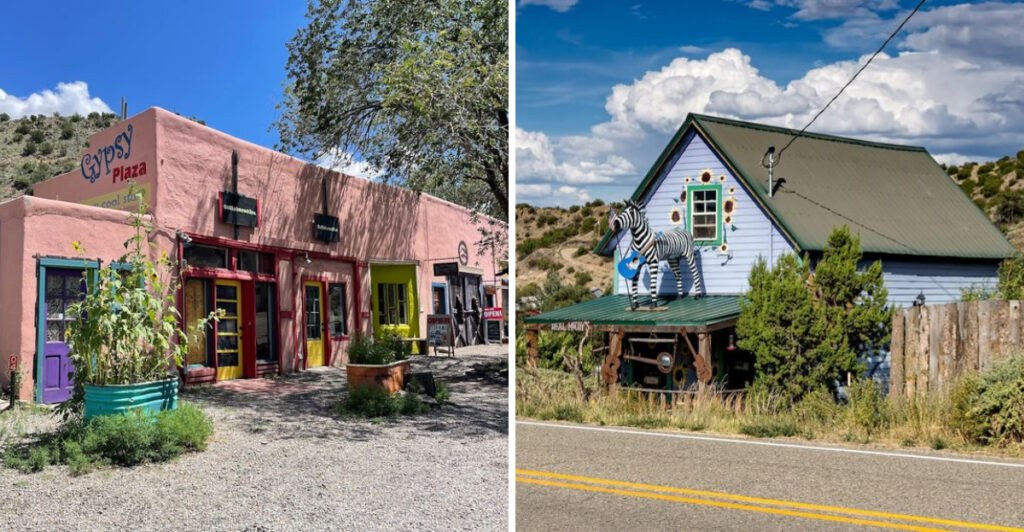
This little New Mexico town shows up almost out of nowhere. One minute the highway is all desert hills and open sky.
The next, colorful storefronts, old wooden porches, motorcycles parked outside cafés, and artists selling work beside the sidewalk appear. The smell of green chile hangs in the warm air while music drifts through the street.
The town feels louder, busier, and more creative than you might expect from a single main road. Travelers stop for coffee and end up wandering through antique stores for hours.
Every building seems packed with odd treasures, handmade jewelry, or stories from another era. Plenty of visitors pull out their phones before they even park because the whole place feels made for photos.
Nothing here feels corporate or overdone. Quirky, colorful, slightly chaotic, and full of surprises, it’s impossible to forget once the road trip moves on again.
Desert Backroads With Cinematic Views
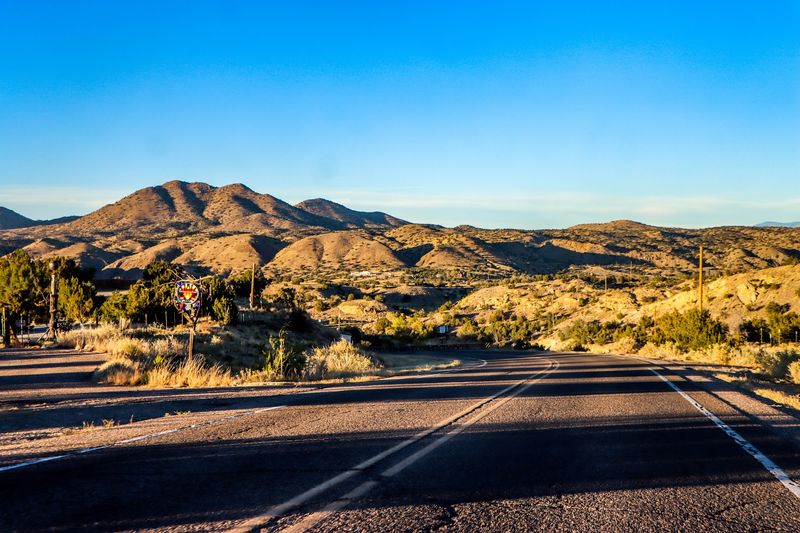
Some roads earn their reputation one curve at a time, and the backroads surrounding this high desert community do exactly that with every mile.
The terrain shifts from scrubby flatlands to dramatic ridgelines without much warning, which keeps your eyes working overtime just to take it all in.
I pulled over three times on my first drive out here because the light hitting the sandstone formations was almost too good to leave in the rearview mirror.
Photographers, hikers, and road-trippers all seem to find their way to these routes for the same reason: the landscape feels raw and wide open in a way that a lot of the American Southwest has lost.
The elevation shifts give you sweeping views across valleys that stretch so far you start to feel pleasantly small.
Mule deer and hawks also appear regularly along some of the quieter stretches of road.
A visit to Madrid, New Mexico 87010 puts these backroads practically at your doorstep, ready to reward anyone curious enough to follow them past the last familiar landmark.
Vintage Storefronts Filled With Rare Finds
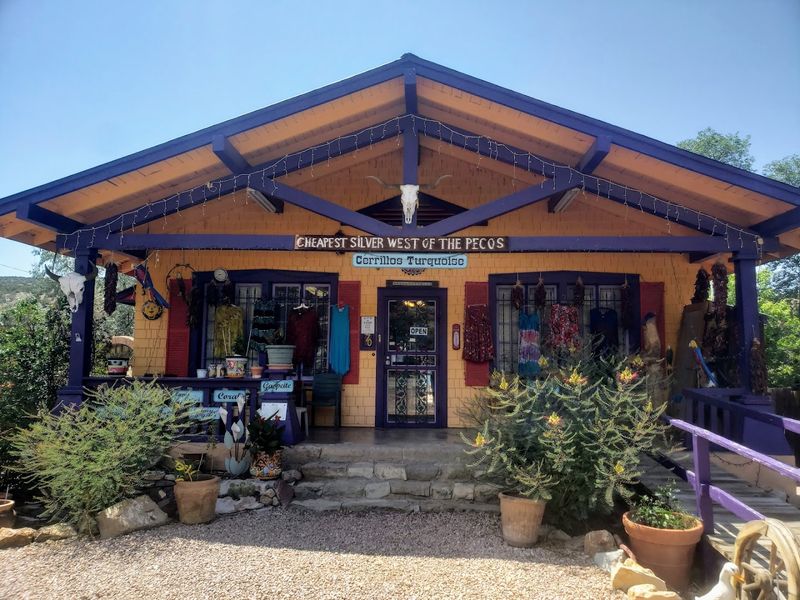
One of Madrid’s antique shops can feel less like a store and more like someone handing over a carefully packed memory box to explore at your own pace.
Shelves lean under the weight of hand-painted pottery, turquoise jewelry, old tin signs, hand-stitched quilts, and furniture that clearly has a story it is not ready to tell yet.
I spotted a set of hand-carved wooden santos in one corner shop sitting quietly behind a rack of vintage postcards, completely unbothered by how remarkable they were.
The dealers here tend to know their inventory deeply, so asking questions almost always leads to a mini history lesson you did not expect but absolutely needed.
Prices range from reasonably affordable to collector-level serious, which means both casual browsers and dedicated hunters leave with something worth carrying home.
Many of the storefronts themselves are historic structures that add an extra layer of atmosphere to the whole browsing experience.
Every time I leave one of these shops, I am already mentally rearranging a shelf at home to make room for whatever caught my eye this time around.
Creative Studios Inside Historic Buildings
Art does not just hang on walls in Madrid; it gets made here inside buildings that have been part of the community for decades.
Former company-owned structures from the old coal mining era have been converted into working studios where painters, sculptors, jewelers, and other artists create pieces right in front of visitors.
I watched an artist set a piece of raw turquoise into a cuff bracelet one afternoon, and the focus on her face was the kind of quiet intensity that reminds you real craft takes real time.
Many studios double as galleries, so the line between watching someone work and actually buying their art is refreshingly thin.
The buildings themselves carry character in every warped floorboard and hand-plastered wall, giving the creative work inside a grounded setting that a purpose-built gallery simply cannot replicate.
Weekend visits give you the best chance of finding multiple artists on-site and actively working throughout the day.
Madrid has cultivated a reputation as one of New Mexico’s most respected art communities, and stepping into these studios makes it easy to understand why that reputation has lasted.
Colorful Storefronts Along A Historic Main Street
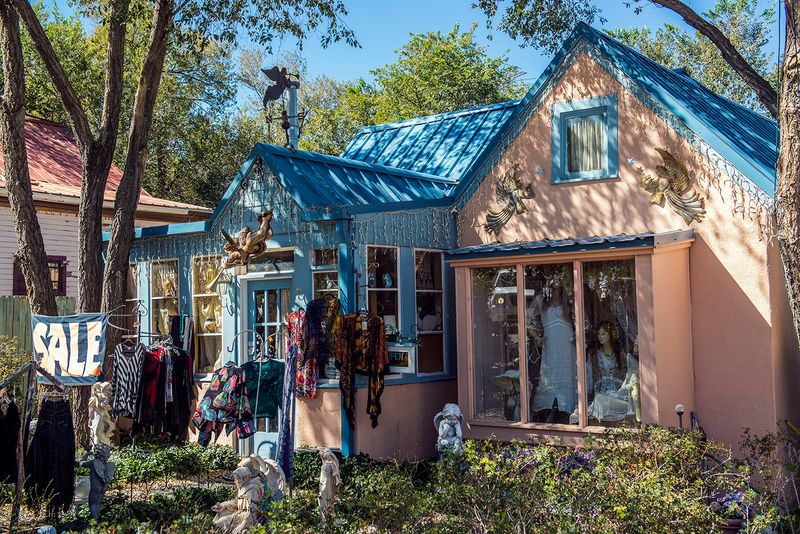
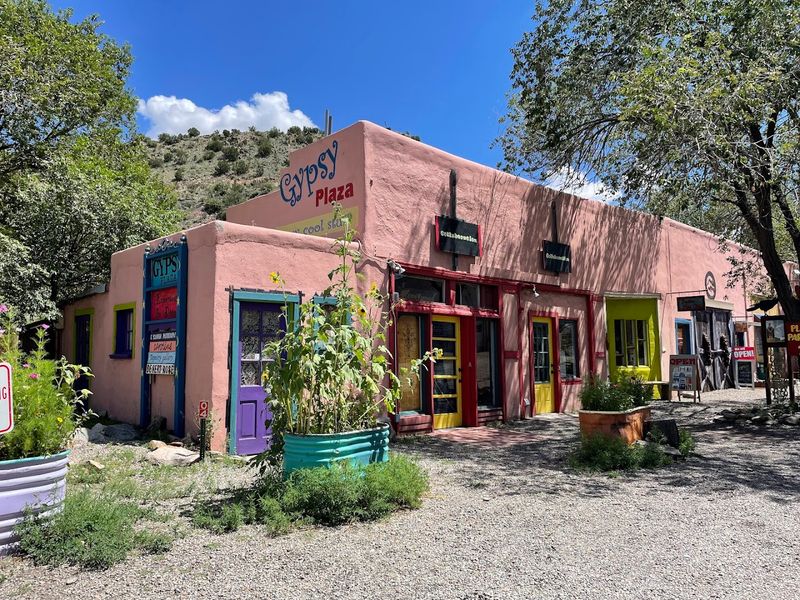
Madrid’s main street does not really allow dull buildings, and that feels intentional with every coat of paint added over the years.
Storefronts in shades of turquoise, adobe red, sunflower yellow, and deep forest green line both sides of New Mexico State Road 14, creating a visual rhythm that is easy to photograph and even easier to fall in love with.
Handmade signs, mosaic tile accents, and outdoor displays of art and furniture spill onto the sidewalks in a way that makes the whole street feel like one long, curated gallery.
I spent nearly an hour just walking the strip slowly, stopping to read every hand-lettered sign and peek into every window, and I still felt like I missed things.
The storefronts shift with the seasons too, with decorations and displays reflecting whatever the community is celebrating at any given time.
Foot traffic is friendly and unhurried here, which makes casual conversations with shop owners surprisingly common and enjoyable.
That stretch of Route 14 through Madrid is the kind of main street that reminds you small towns still know how to put on a show.
Eclectic Cafés Serving Southwestern Road Trip Favorites
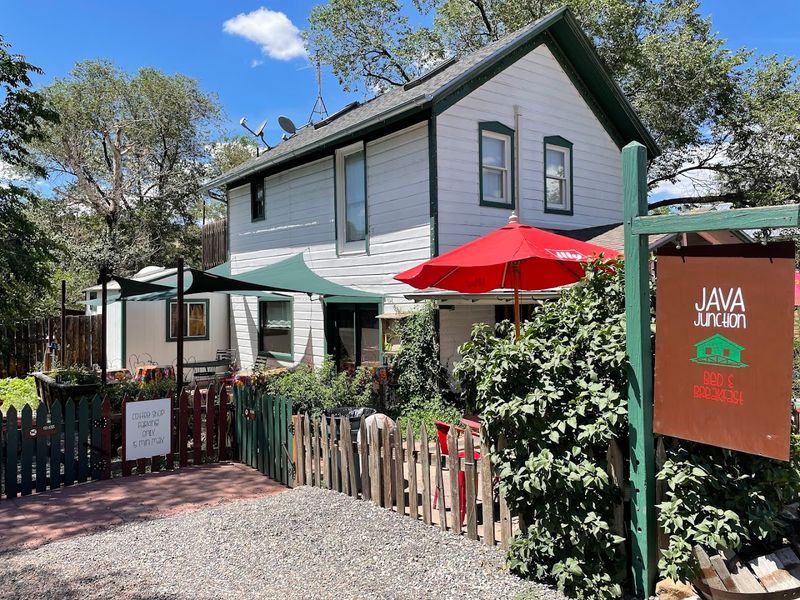
Road trip hunger hits differently when you know a plate of green chile stew is waiting somewhere just a few miles ahead on the highway.
Madrid’s cafes operate with a personality all their own, mixing Southwestern comfort food with an anything-goes decorating style that makes each spot feel like a curated living room someone forgot to close to the public.
I ordered a breakfast burrito at one spot that arrived wrapped in foil the size of a small pillow, stuffed with scrambled eggs, roasted green chile, and enough flavor to carry me through the rest of the afternoon drive.
Seating tends to be a mix of mismatched chairs, outdoor picnic tables, and the occasional vintage booth that looks like it was rescued from a diner three states away.
Local art covers the walls, menus are written by hand, and the staff usually has a solid opinion on what you should order if you ask nicely.
Coffee is taken seriously here too, with several spots offering espresso drinks that hold their own against anything you would find in a bigger city.
Stopping for a meal in Madrid turns a road trip pit stop into a genuine highlight of the whole journey.
Coal Mining History That Shaped The Community
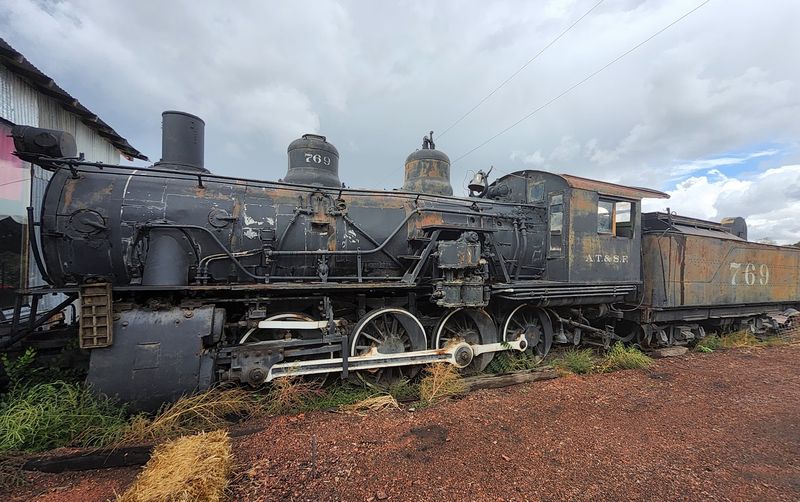
Madrid spent years as a working coal town long before artists moved in, and traces of that industrial past still show up throughout the community.
The Albuquerque and Cerrillos Coal Company once ran the entire town as a company community, meaning the company owned the houses, the stores, the ballpark, and just about everything else residents needed to live.
At its peak in the early twentieth century, Madrid was producing significant amounts of coal and drawing workers from across the region to settle into its narrow valley.
When the coal industry declined after World War II, the town was essentially abandoned, leaving behind empty buildings and a strange, quiet stillness that lasted for decades.
Artists began moving in during the 1970s, drawn by cheap rent and the raw creative potential of all those empty structures waiting to be reimagined.
Local storytelling, a small museum, and scattered mining artifacts still preserve pieces of the old company-town history today.
Understanding that layered past makes the town’s current creative energy feel even more earned, like something rebuilt carefully after a very long silence.
Christmas Lights That Once Drew National Attention
Long before drive-through holiday light shows became a standard suburban tradition, Madrid was already doing something so spectacular it earned widespread attention.
During the 1930s, the town staged elaborate Christmas light displays that attracted visitors from around the region, turning this small coal mining community into one of the most talked-about holiday destinations in the American Southwest.
The company that ran the town provided electricity at no cost to residents, which meant the community had both the means and the motivation to go completely over the top with holiday decorations.
Entire streets were strung with thousands of lights, and elaborate themed scenes were built using mining equipment, local craftsmanship, and an apparent community-wide agreement that restraint was simply not an option.
Trains and cars brought visitors from Albuquerque and Santa Fe specifically to see the display, and the reputation spread far enough that publications around the country took notice and ran features on the tiny glowing town.
The tradition faded when the coal industry collapsed and the population left, but the story has become one of Madrid’s most treasured pieces of local lore.
That chapter of the town’s past proves that even the smallest communities can create something big enough to echo across generations.
Scenic Stops Along The Turquoise Trail
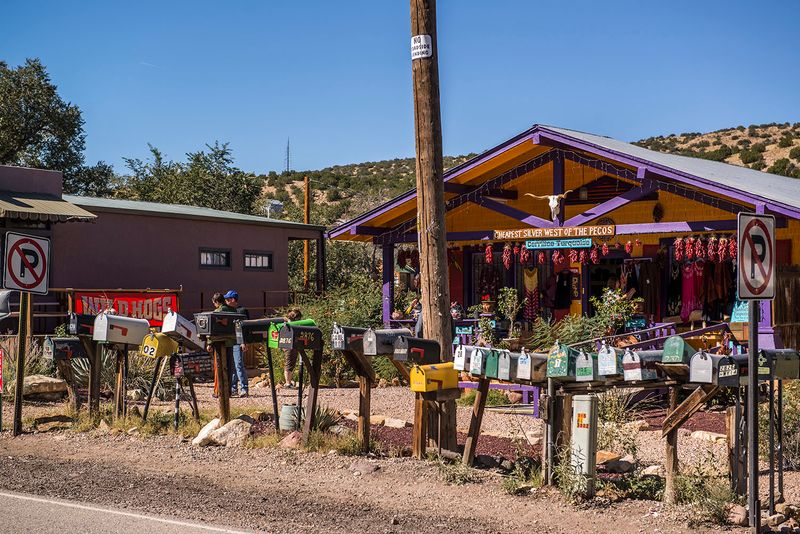
The Turquoise Trail earns its place on road trip itineraries not because it is the fastest route anywhere, but because the scenery makes every mile feel worth slowing down for.
Designated as a National Scenic Byway, New Mexico State Road 14 connects Albuquerque to Santa Fe through a stretch of high desert terrain that trades interstate efficiency for striking views at nearly every bend.
Madrid sits roughly at the midpoint of the trail, which makes it a natural pause on the drive and, more often than not, the stop that people remember most vividly afterward.
Along the way, you pass through Cerrillos, another historic mining village, and get views of the Sandia Mountains and the Ortiz Mountains that shift color and mood depending on the time of day.
The trail takes its name from the turquoise mines that once operated in the area, some of which date back to pre-Columbian times when the stone was already considered deeply valuable.
Pullouts along the route create quiet moments with the landscape that feel almost meditative against the backdrop of that enormous New Mexico sky.
Once you have driven the Turquoise Trail even once, the idea of taking the interstate back starts to feel like a very poor life decision.