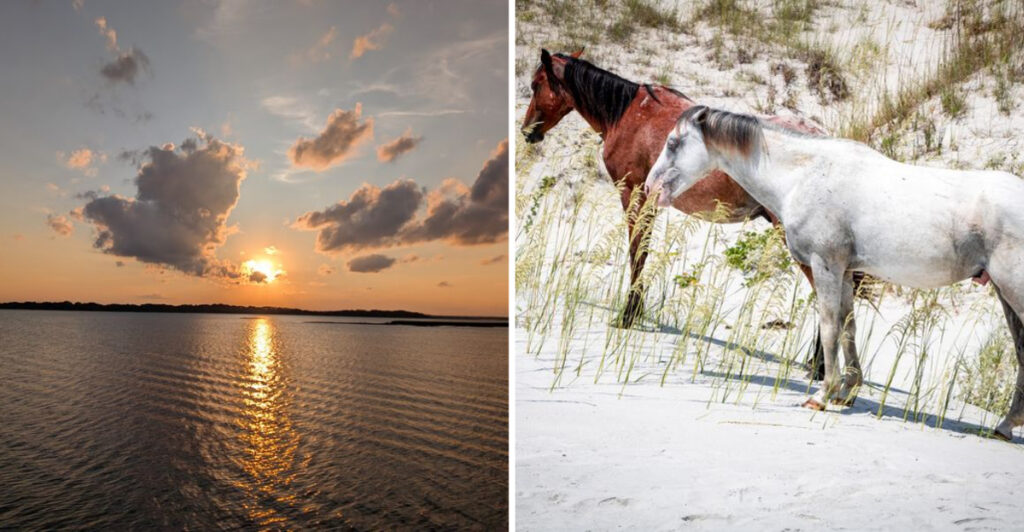
Your tropical escape just traded airport security for a ferry ticket.
Off the Georgia coast, one wild island swaps hotel towers for oak tunnels, empty beaches, and horses that clearly missed the memo about personal space.
Once ashore, the road disappears. Spanish moss hangs overhead, while saw palmettos crowd the ground.
This Georgia adventure rewards preparation. There are no snack bars waiting beyond the trees, and the ferry will not adjust its schedule for your beach nap. So, pack well, watch the time, and stay curious.
Ready to see how far one boat ride can take you without ever needing a boarding pass?
A Ferry Ride Makes The Mainland Disappear
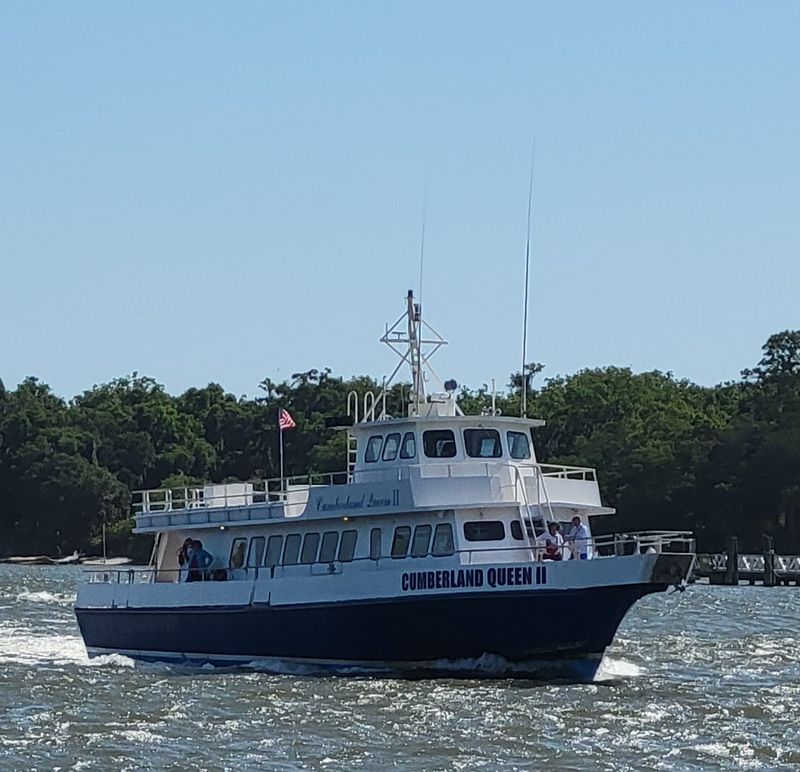
The vacation mood starts before your shoes ever touch the sand. Cumberland Island is only accessible by boat, and the passenger ferry from downtown St. Marys turns the crossing into the first chapter of the day.
The trip takes about 45 minutes. Marshes, tidal creeks, working docks, and open water replace city streets as the boat moves away from shore. You may spot dolphins, seabirds, or other wildlife along the way, but sightings are never guaranteed.
Reservations are highly recommended because space is limited and the operating schedule changes by season. Check-in begins one hour before departure at the mainland visitor center, and passengers who arrive too late risk losing their reservation.
The boat does not carry cars, kayaks, or pets.
That rule helps set the tone immediately. You are not bringing the mainland with you. You are leaving most of it behind.
By the time the dock shrinks in the distance, the escape has already begun. Who needs a runway when salt air can do all the heavy lifting?
Sea Camp Puts The Beach Within Easy Reach
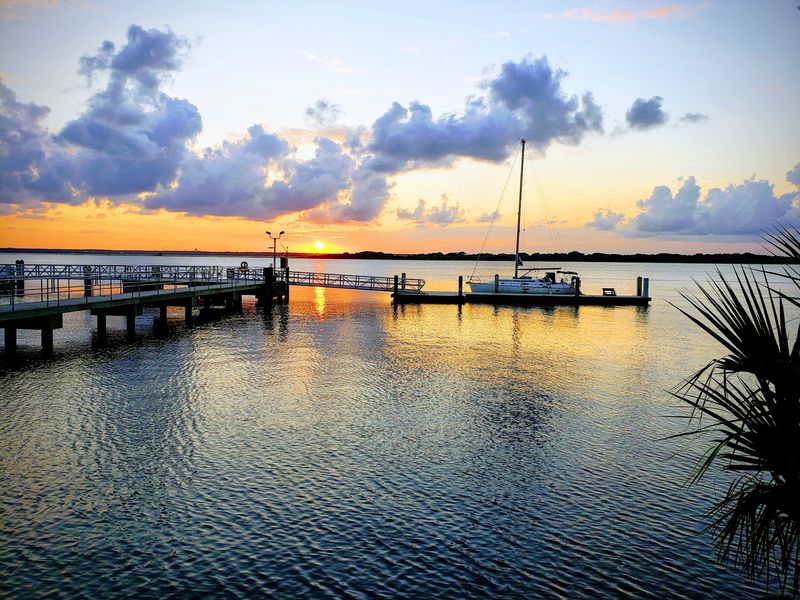
Half a mile can feel wonderfully short when the Atlantic is waiting at the other end. From Sea Camp dock, the quickest route to the beach crosses the island through maritime forest and follows marked trails and boardwalks toward the dunes.
The path is easy to follow, but the scenery keeps it from feeling like a simple transfer. Live oaks, saw palmettos, patches of shade, and glimpses of island wildlife turn the walk into part of the experience.
Then the trees thin, the light widens, and the beach appears with almost theatrical timing.
Ferry check-in takes place at the visitor center near 113 St. Marys Street, St. Marys, GA 31558. Arriving early gives you time to check in, pay any remaining entrance fee, hear the safety orientation, and board without sprinting toward the dock.
Treated water is available on the southern end of the island at Sea Camp and Dungeness, but you should still carry a refillable bottle and enough food for the day.
The route may be only half a mile, but it delivers a full change of scenery. One moment you are under twisted branches, and the next the Atlantic has taken over the entire horizon. Not bad for a walk shorter than most grocery-store trips.
The Forest Delivers The Tropical Plot Twist
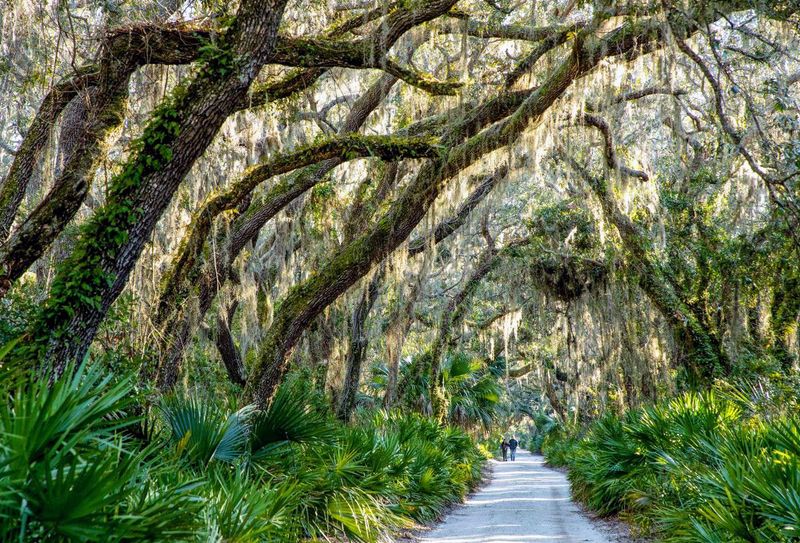
The beach is not the first surprise. The forest is. Cumberland Island’s maritime woodland gives the southern end of the island a lush, almost subtropical character before the dunes ever come into view.
Live oaks form broad canopies over sandy paths, while saw palmettos crowd the lower layers with fan-shaped leaves.
Spanish moss adds movement overhead, and vines, shrubs, and salt-tolerant plants fill the spaces between. The combination creates a scene that looks far removed from the highways waiting across the water.
Maritime forest helps protect the interior from salt spray and wind, while nearby wetlands and marshes support a wide range of wildlife. Trails pass through these environments and connect beaches, historic districts, campsites, and other parts of the island.
More than 50 miles of trails and roads cross Cumberland Island. Day visitors will only sample a fraction of that network, which is one reason the island can support repeat trips without feeling repetitive. Pay attention to the transition as you walk.
The cool green tunnel does not slowly fade into the coast. It steps aside, and the sand makes a grand entrance like it has been waiting for applause. Can a forest pull off a better opening act?
This one certainly tries.
Miles Of Undeveloped Shoreline Silence The Crowd
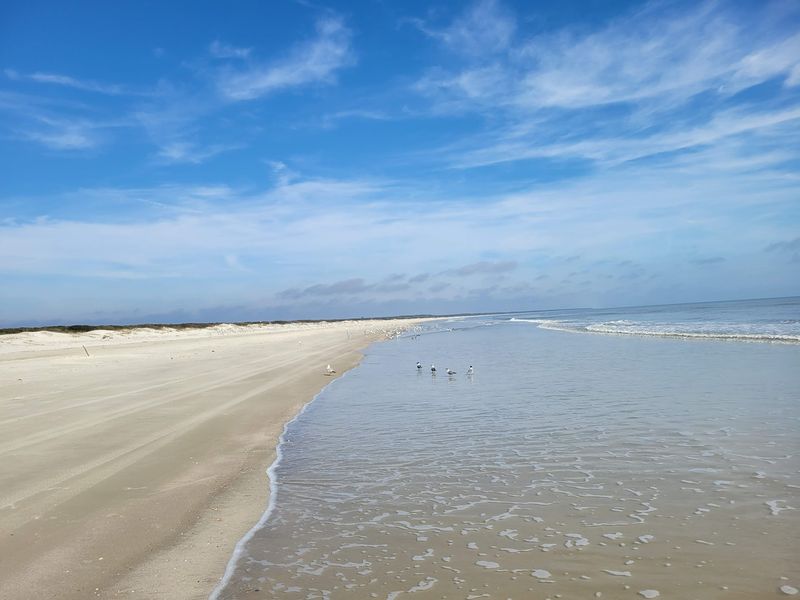
Condominiums do not interrupt this skyline. Neither do restaurants, rental umbrellas, or music drifting from a beach bar. Cumberland Island protects nearly 18 miles of undeveloped beach, with 17 miles described by the National Park Service as uninterrupted shoreline.
What does not vary is the experience: a long, broad Atlantic beach without commercial buildings breaking the view.
Swimming is allowed, but there are no lifeguards. Tides, currents, rip currents, weather, and marine wildlife all belong to this open-ocean setting. Check the surf forecast, stay within your limits, and do not mistake an empty beach for a risk-free one.
Beachcombing is another popular reason to wander. You may take unoccupied seashells and fossilized shark teeth in small quantities, but plants, animals, artifacts, and other natural or historic materials must remain where you find them.
Carry sun protection, water, lunch, and anything else you will need.
There are no stores or restaurants on the island, and there are no trash cans away from the mainland ferry area. Pack it in, pack it out, and let the beach keep the only souvenir that matters: your footprints until the next tide.
Feral Horses Add An Unscheduled Headliner
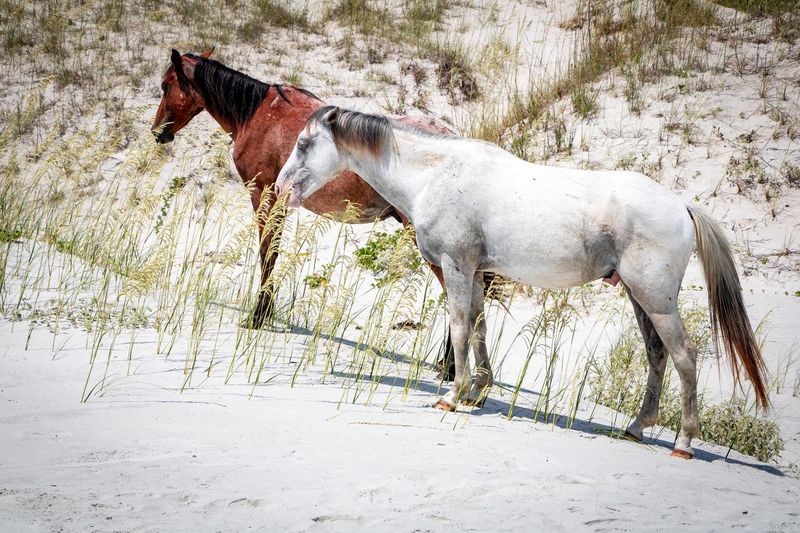
A horse can stop an entire trail without saying a word. Cumberland Island’s feral herd moves through dunes, roads, marsh edges, fields, and historic lawns, giving visitors one of the island’s most memorable and least predictable sights.
By the time the national seashore was established in 1972, they had become feral. Today, the herd is unmanaged, meaning the animals do not receive regular food, water, veterinary care, or population control from the park.
That independence requires distance. The National Park Service instructs visitors to remain at least 50 feet away, never feed or touch the horses, and move out of their path if they approach.
Most day visitors have their best chance of seeing horses around the Dungeness Historic District, although they may appear anywhere and are never guaranteed.
You could walk for hours without spotting one, then round a bend and find several grazing in complete indifference to your travel plans.
Let them keep that indifference. Would you walk toward a stranger who interrupted your lunch? The horses deserve the same courtesy.
Keep your distance, let your camera do the approaching, and enjoy the rare travel moment that requires absolutely no staging.
Dunes Guard More Than A Pretty View
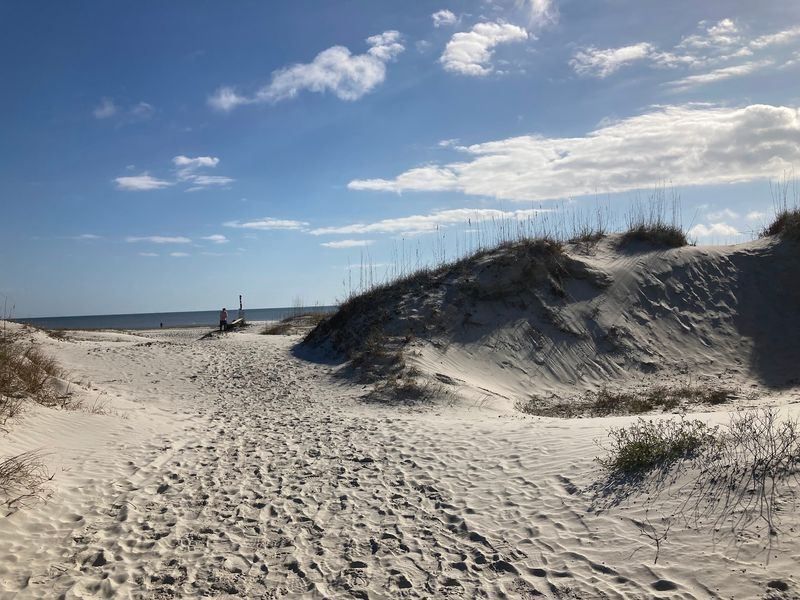
The dunes are working even when the beach looks perfectly calm. Cumberland Island’s mature dune system helps absorb wind and wave energy, shelters interior habitats, and supports plants and animals that depend on this narrow strip between forest and ocean.
Sea oats grow deep roots that help stabilize the sand. Walking through vegetated dunes can damage those roots and create weak points where erosion gains ground. Marked crossings and boardwalks are not fussy rules placed between you and the water.
They are the safest route across a living barrier.
Park staff monitors the beach from May through October, locating nests, protecting them from predators, and evaluating success after hatchlings emerge. Cumberland Island can account for roughly a quarter or more of Georgia’s loggerhead nesting total in a strong year.
Artificial lighting is restricted on the beach during nesting season because bright light can disturb or disorient adult turtles and hatchlings. Use the designated crossing, pause where the view opens, and look in both directions.
Ocean on one side, maritime forest on the other, and a strip of sand quietly holding the island together.
That is a lot of work for something people keep calling scenery. The dunes deserve better billing.
Cumberland Island Rewards The Well-Packed Traveler
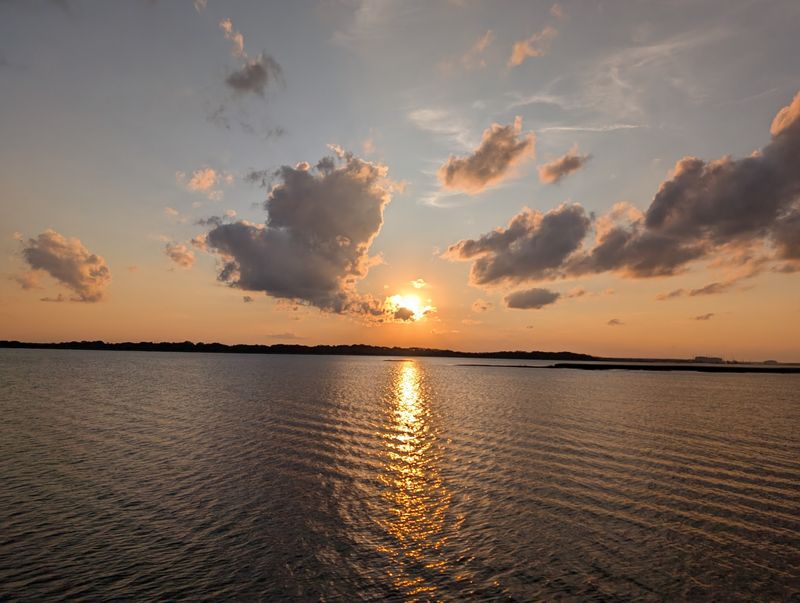
This escape does not come with room service. The island has restrooms and treated water in limited southern locations, but no stores, restaurants, or full-service visitor facilities waiting after you step off the ferry.
Bring lunch, snacks, refillable water bottles, sunscreen, insect repellent, comfortable shoes, and layers suited to the forecast.
Mosquitoes, sand gnats, ticks, heat, afternoon storms, and rapidly changing coastal weather can all influence the day. Choose your ferry stop based on your plan.
Dungeness is useful for historic ruins and one of the more likely horse-viewing areas. Sea Camp is better for the quickest beach access, camping, and several trail connections.
Return boats leave at set times, so keep the schedule with you instead of trusting beach-brain to remember it.
Camping opens the door to sunset, darker skies, quieter trails, and more of those 50-plus miles of routes, but permits and ferry logistics require advance planning.
Cumberland Island does not need palm-tree resorts to deliver an island escape. It gives you marsh, moss, horses, dunes, and Atlantic surf, then asks only that you arrive prepared and leave lightly. The airfare stays at zero.
The memories still travel first class.